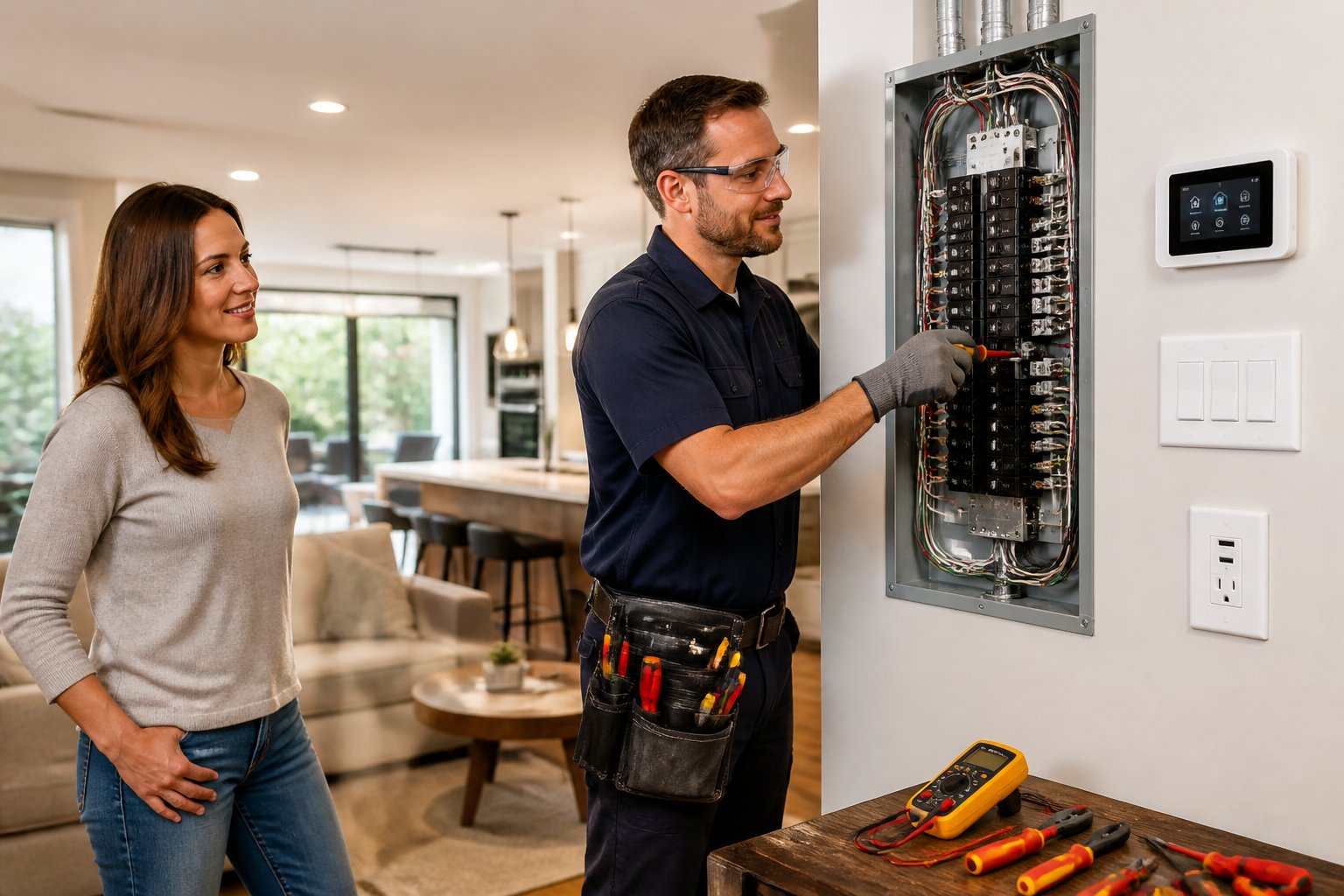
Planning exterior lighting wiring in Horseshoe Bay might seem daunting at first, but with a bit of know-how and the right help, you can get safe, code-compliant results. Magnify Electric’s licensed electricians take care of everything—from swapping out a single fixture to installing full outdoor lighting systems, smart controls, EV chargers, and panel upgrades. Your project will meet local rules and actually work the way you want. Here, you’ll find tips for planning layouts, picking weatherproof junction boxes and outlets, and choosing wiring that holds up against the storms and humidity you get around the lake.
We’ll also walk through installation steps, smart lighting options like Lutron systems, and easy troubleshooting tricks to keep your lights glowing year after year. Magnify Electric works throughout Horseshoe Bay and Central Texas, handling both residential and commercial electrical jobs, emergency support, inspections, and upgrades. Whether you just want a few path lights or a sprawling automated system, you’ll have real pros on your side.
Understanding Exterior Lighting Wiring in Horseshoe Bay
Here’s what you need to know about the basics of wiring, local weather and code factors, and the common types of outdoor lights you’ll run into in Horseshoe Bay. Knowing this stuff makes it easier to pick safe equipment and understand what’s coming during installation or repairs.
Basic Electrical Principles
Outdoor lighting runs on either 120V circuits or low-voltage systems (usually 12V) for landscape fixtures. 120V is what you want for wall sconces and security lights. Low-voltage setups use a transformer near your panel or meter, sending lighter-gauge cable to fixtures—safer and more energy-efficient for accent lighting.
Grounding and GFCI protection are non-negotiable. Exterior circuits require GFCI protection to prevent shocks near wet areas. Metal boxes and fixtures need a continuous ground back to the panel. Use outdoor-rated cable (UF) or run THWN wires in conduit where needed.
Stick to proper wire sizes: 14 AWG for 15A circuits, 12 AWG for 20A. On long runs, watch for voltage drop—heavier gauge or closer transformers can help. Label all outdoor junction boxes and keep them sealed tight.
Unique Local Considerations
Horseshoe Bay’s lakefront homes get hit with humidity, salt spray, and plenty of sun. Go for corrosion-resistant fixtures and stainless or brass hardware. Sealed, gasketed junction boxes and marine-grade coatings make a difference near water.
Local codes require weatherproof boxes and listed outdoor fixtures. You’ll probably need permits for new circuits or panel work. Sometimes arc-fault or tamper-resistant devices are required, depending on where and what you’re installing. Always check with city or county inspectors before starting—rules can change.
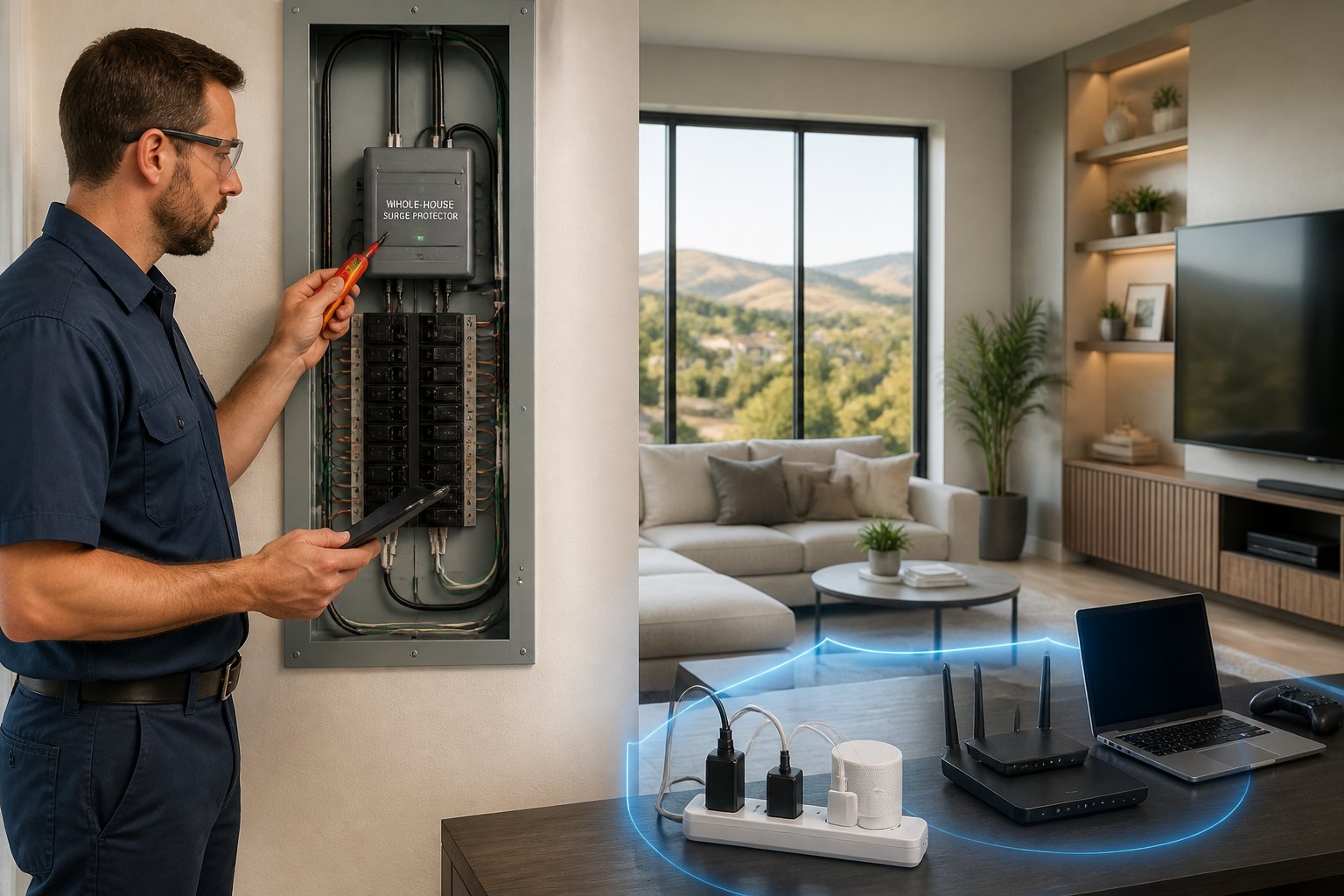
Storms are pretty common, so surge protection is a smart move. Install whole-home surge protectors at the panel, plus point-of-use protection for sensitive smart systems. Magnify Electric’s licensed electricians can handle permits, code compliance, and storm-ready installs across Horseshoe Bay and Central Texas.
Common Lighting Types
Path and landscape lights usually run low-voltage with a transformer and simple wiring. They keep walkways safe and use buried cable with sealed connectors. Transformers need to stay in ventilated, raised spots.
Security and flood lights run on 120V and can include motion sensors or dusk-to-dawn photocells. These need solid mounting and waterproof connections, and you’ll want to aim them carefully to avoid blinding your neighbors. Sometimes a dedicated circuit is best for reliability.
Accent, step, and deck lights come in low-voltage or LED 120V versions. Smart outdoor systems—think Lutron or Wi-Fi controls—let you schedule scenes and automate everything. You can tie in automated lighting, EV charging outlets, and surge protection on the same service panel. Magnify Electric installs and services all these systems for homes and businesses in Central Texas, from quick swaps to full smart-home setups.
Planning Your Exterior Lighting Project
Start by figuring out where you want lights, outlets, and power sources. Consider visibility, safety, and how each fixture will connect to power and controls.
Assessing Your Property Layout
Walk your yard at different times—night and day—and look for problem spots like dark walkways or tricky steps. Measure from your main panel to each fixture to plan wire runs and avoid long, exposed cables. Before digging, call the local utility locate service to steer clear of buried lines.
Check existing outlets, garage panels, and any exterior junction boxes you can use. Measure runs between fixtures and transformers for low-voltage setups. If you have trees, water features, or steep slopes, plan for weatherproof fittings and vibration-resistant mounts.
Think about how you’ll maintain things. Where will you want a light switch or photocell? Jot down fixture types, heights, and wiring paths on a rough site sketch—it doesn’t have to be pretty, just useful.
Choosing the Right Fixtures
Pick fixtures made for outdoor use and the Horseshoe Bay climate. Look for UL wet- or damp-location ratings, depending on whether they’re under eaves or out in the open. LEDs are a great choice for long life and low power.
Match the style to your space—path lights for walkways, floods for driveways, accents for trees or the house. Don’t forget controls: timers, photocells, or Lutron smart dimmers for group control and energy savings. Want motion sensors? Place them to avoid false triggers from traffic or critters.
Choose mounts and box covers that won’t rust. For landscape lighting, pick a transformer sized for your total wattage and put it somewhere dry and easy to reach.
Estimating Electrical Load
Add up the wattage of every light, transformer, and accessory you’ll run at once. For LEDs, use their actual watt rating. For transformers, use the secondary load. Add a 20% buffer to avoid overloading circuits and stay within code.
Check your panel’s capacity and see how many breaker slots are open. If you’re near the limit, think about a subpanel or upgrade. Don’t forget other outdoor loads like EV chargers or pool gear that may need their own circuits.
It’s smart to have a licensed electrician double-check your math and look over circuit protection, GFCI needs, and conduit runs. Magnify Electric’s licensed electricians handle everything from fixture swaps to full panel upgrades, smart home systems, EV charging, and emergency support throughout Horseshoe Bay and Central Texas. If you want fast, code-compliant work and peace of mind, we’re here.
Installation Requirements and Best Practices
Before you start, plan for local rules, safety, and weatherproofing. Make sure wiring routes, box locations, and fixtures match code, use the right materials, and allow for future repairs.
Local Codes and Permits
You have to follow Texas and Horseshoe Bay electrical codes for outdoor installs. Pull a permit for new circuits, outdoor panels, or hardwired fixtures—inspectors will check conduit type, burial depth, box ratings, and breaker sizing.
Use GFCI protection for outlets within 20 feet of water and for most outdoor circuits. High-draw stuff like EV chargers or outdoor subpanels need their own circuits. Keep neutral and ground separate at subpanels and follow bonding rules.
Label circuits clearly at the panel and on permit paperwork. Hang on to permits and inspection reports—they’re handy for future buyers or service calls. If you want someone else to deal with it, Magnify Electric’s licensed electricians handle permits, inspections, and code-compliant installs across Central Texas.
Safety Precautions
Always shut off power before working—double-check with a voltage tester. Lock out and tag breakers so nobody accidentally flips them back on while you’re outside.
Use approved wire types (UF-B for direct burial or THHN in conduit) and the right gauge for your circuit. Protect wires with conduit where exposed and bury them at the required depth (usually 18–24 inches, but check your local code). Install GFCI and AFCI protection where needed.
Mount boxes so you can get to the covers later. Secure fixtures to something solid, not just siding. If you’re not sure, just call a licensed electrician—Magnify Electric offers troubleshooting, repairs, and emergency support for homes and businesses.
Weatherproofing Techniques
Go for weather-rated fixtures and boxes with the right NEMA or wet-location rating for your climate. Use gasketed covers and silicone caulk at fixture bases to block wind-driven rain.
For buried runs, pressurized conduits or welded PVC joints keep water out. Use dielectric grease and proper connectors for outdoor splices. Keep transformers and drivers under cover or in ventilated, weatherproof enclosures to prevent overheating.
Raise outdoor outlets and junction boxes above flood or wash levels. Add drip loops on leads and keep drainage clear around boxes. Check seals every so often and swap out failing gaskets to keep things dry and rust-free.
Step-by-Step Guide to Wiring Outdoor Lights
Here’s how to choose the right cable, run it safely from your panel to the fixtures, and make connections that last through Horseshoe Bay’s wild weather. Stick to local code, use the right tools, and know when to call a licensed electrician.
Selecting Wiring Materials
Buy cable rated for outdoor and in-ground use. UF-B works for direct-burial runs; THWN wires go inside PVC or metal conduit. Match wire gauge to circuit load: 14 AWG for 15A, 12 AWG for 20A, 10 AWG for 30A. Copper wires are best for the long haul.
Pick GFCI or outdoor-rated breakers for outlets and circuits that serve wet areas. Use weatherproof junction boxes and fixtures listed for wet or damp locations. Grab outdoor wire connectors and silicone-filled wire nuts. Keep receipts and product labels—inspectors might ask.
Magnify Electric’s licensed electricians can help you pick the right stuff and handle permits and inspections anywhere in Central Texas.
Running Cables Safely
Shut off power at the breaker first—don’t skip this. Plan your route from the panel or subpanel to each fixture, steering clear of irrigation and gas lines. For buried runs, follow code depth: usually 18 inches for conduit, 24 inches for UF-B without conduit (but check your local code).
Use conduit where cables go through walls or are exposed. Strap conduit securely and use sealed bodies at bends. Pull THWN wires through PVC to help with future repairs. Label both ends of long runs and leave a service loop at each box for maintenance.
If you need trenching, conduit runs, or to tie into an existing circuit, call Magnify Electric. We handle installs and repairs all over Horseshoe Bay and beyond.
Connecting Fixtures
Strip wires gently—don’t nick them. Match colors: black (hot) to fixture hot, white (neutral) to fixture neutral, green or bare to ground. Twist wires together and use outdoor-rated wire nuts. Wrap with electrical tape for extra insurance if connections are exposed.
Mount fixtures to weatherproof boxes with a gasket to keep water out. Use silicone around the base where it meets the wall. Test with a voltage tester before turning power back on. Install GFCI protection where needed and test it after wiring.
If you’re adding smart controls or automated lighting, use a neutral bundle and compatible dimmer or smart switch. For complex setups or commercial jobs, it’s safest to bring in a licensed electrician.
Smart Exterior Lighting Solutions
You can boost security, save energy, and make your yard easier to manage with automated controls and modern LEDs. Smart timers, motion sensors, and LED fixtures offer precise control and long-term savings.
Integrating Timers and Sensors
Programmable timers make it easy to set on/off schedules that fit your routine or follow sunrise and sunset. No more wasted run time, and you can automate seasonal changes without fiddling with manual resets.
Motion sensors are a good call for high-traffic or dark areas like driveways and side gates. Set them up so lights only trigger when someone or a vehicle is actually there—no need to light up the yard for every stray cat. Adjustable sensitivity and time-delay settings help keep things just right.
Pairing sensors with timers gives you more flexibility. Maybe keep pathway lights on a dusk-to-dawn timer, but add motion sensors to perimeter lights for security. Honestly, unless you love troubleshooting, let a licensed electrician handle the wiring and sensor placement. They'll keep everything up to code and running smoothly.
Energy-Efficient LED Options
Stick with LED fixtures rated for outdoor use—look for wet-location or damp-location labels. LEDs use a fraction of the energy of halogen bulbs and give you reliable color temperature all night.
Check for high efficacy (lumens per watt) and pick a color temperature that matches the vibe you want—2700K to 4000K is the usual range. Warmer tones feel cozy on patios, cooler ones are great for security. If you want flexible brightness, go with dimmable LEDs. Integrated LED fixtures can save you time on maintenance too.
Our team at Magnify Electric installs and wires LED systems, smart switches, and Lutron integrations for homes and businesses in Central Texas—Horseshoe Bay and the surrounding area included. We handle everything from swapping out old fixtures to full lighting upgrades, panel repairs, EV charger wiring, surge protection, and emergency support. We want your system safe and efficient, whether it’s a small fix or a big overhaul.
Troubleshooting Common Exterior Lighting Issues
Most exterior lighting problems show up as power issues, bad connections, or visible damage. Sometimes it’s as simple as tightening a screw, but if it’s a wiring or breaker issue, you’ll probably want to call a licensed electrician.
Diagnosing Faulty Connections
Always turn off the circuit at the breaker before you start poking around. Check the fixture base, junction box, and switch for loose wire nuts, corroded terminals, or insulation that’s seen better days.
Watch for flickering lights, intermittent operation, or a single fixture out while the rest work fine. Use a non-contact voltage tester to make sure the power’s off, then gently tug on wire connections and re-secure with the right size wire nuts. If you spot green or white corrosion on copper wires, swap in new connectors and short pigtails.
If a switch feels hot, sparks when you flip it, or the breaker trips, stop and call a pro. Working in wet conditions or messing with buried conduit isn’t worth the risk—let a licensed electrician handle it.
Repairing Damaged Wiring
Check for visible wire damage: nicks, crushed insulation, animal bites, or water inside fixture boxes. Cut back to clean, solid wire ends and use weatherproof wire nuts, plus exterior-rated heat-shrink or rubber gaskets for splices.
When running new cable, pick outdoor-rated UF or conduit-protected THHN wires. Always keep splices inside a listed, gasketed exterior junction box. For underground runs, maintain proper burial depth and use conduit where wires might get bumped or exposed.
If you find a corroded or overloaded outdoor subpanel, melted insulation, or smell burning, stop right there and call Magnify Electric. Our licensed electricians handle wiring repairs, panel upgrades, outdoor lighting installs, smart-home lighting, EV charging, surge protection, and emergency support across Horseshoe Bay and Central Texas. We take on everything from quick fixes to full upgrades, using code-compliant parts and thorough testing.
Maintenance and Upgrades for Long-Term Performance
Keep your exterior lighting in good shape with routine checks and smart upgrades. Focus on fixture condition, wiring safety, and controls. It’ll cut outages, save energy, and boost curb appeal.
Regular Inspection Tips
Take a look at fixtures every 3–6 months and after storms. Cracked lenses, corroded metal, loose mounts, or water in junction boxes? Time to fix or replace. Replace worn gaskets and tighten screws to keep out moisture and critters.
Check bulbs and LED drivers for flicker or dimming. Swap out burned bulbs with the right wattage and outdoor-rated replacements. Test photocells and timers—make sure dusk-to-dawn and schedules are still working.
Look over wiring and conduit for wear, rodent bites, or UV damage. If insulation is brittle or connections are exposed, bring in a licensed electrician. Test GFCI outlets and breakers at the outdoor panel, too.
Trim landscaping back from fixtures—overgrown plants block light and trap moisture. Clean lenses with mild soap and water to keep output strong without damaging finishes.
Upgrading for Enhanced Curb Appeal
Swap old halogen or incandescent fixtures for LED-rated outdoor fixtures. You’ll save on energy and maintenance. Warm-white color (2700–3000K) makes things feel welcoming, and integrated LEDs last longer.
Add smart controls like timers, photocells, or Lutron-compatible switches to automate scenes and cut run times. Motion sensors help security and save energy by only turning on lights when needed.
Try layered lighting: path lights for safety, wall washers for architecture, accent spotlights for trees. Stick to low-voltage systems or properly rated outdoor circuits for safety and code compliance.
Magnify Electric’s licensed electricians can handle upgrades, panel work, smart-home integration, and rewiring. We offer expert service for automated lighting, EV chargers, surge protectors, smoke/CO₂ detectors, and more—serving Horseshoe Bay, Austin, Lakeway, Bee Cave, Leander, and nearby Central Texas communities. We aim for fast inspections, safe installs, and reliable follow-up.
Frequently Asked Questions
Here’s a quick rundown on wiring choices, code requirements, weatherproof fixture selection, timers and controls, safety steps, and how often to inspect exterior lighting in Horseshoe Bay.
What type of wiring is required for outdoor lighting?
Use outdoor-rated cable or conduit with copper conductors. For standard hardwired fixtures, 14-3 or 12-2 NM works for branch circuits inside walls, but for exposed or buried lines, go with UF cable or THHN/THWN in conduit.
Low-voltage landscape lighting usually takes 12- or 14-gauge low-voltage cable and a transformer sized for the total fixture wattage. Match wire gauge to run length and load to avoid voltage drop.
Is there a specific code to follow when installing exterior lights in Horseshoe Bay?
Follow the National Electrical Code (NEC) as adopted by Texas and your local Horseshoe Bay building department. NEC covers grounding, GFCI protection, burial depth for underground cable, and weatherproofing for exterior boxes.
Pull permits if needed and get work inspected. Licensed electricians know the local rules for Horseshoe Bay and nearby cities.
How do I choose the best outdoor lighting fixtures for harsh weather conditions?
Pick fixtures rated for exterior use—look for at least IP44, but IP65 or higher is better for heavy rain or wind-driven dust. Corrosion-resistant materials like marine-grade aluminum, stainless steel, or UV-resistant plastic hold up best.
Go for sealed fixtures and use wet-location rated junction boxes and gaskets. LED fixtures run cooler and need less maintenance, but make sure the driver and seals are outdoor-rated.
Can outdoor lighting be installed on a timer, and how is that done?
Absolutely. Plug-in timers, digital in-wall timers, or smart timers integrated into lighting controls all work. For whole-home or hardwired systems, put a timer or relay at the fixture feed or breaker panel.
Smart systems like Lutron or Wi‑Fi timers let you set schedules, scenes, and control lights from your phone. For wiring, load calculations, and integration, it’s best to hire a licensed electrician.
What safety precautions should I take when installing outdoor lighting?
Shut off power at the breaker and double-check with a voltage tester before touching anything. Use GFCI protection for outlets and any circuits near water.
Stick with weatherproof boxes and connectors, maintain burial depth for underground cable, and follow grounding and bonding rules. If you’re not sure, get a licensed electrician for safe, code-compliant work.
How often should exterior lighting systems be inspected for maintenance?
Give your fixtures, wiring, and connections a look at least once a year. Take a minute to check the seals, test GFCI outlets, and swap out any corroded hardware or dead LEDs as soon as you spot them.
If you’re near the coast or in a spot with rough weather, it’s smart to check things twice a year. Got a commercial system or a setup with fancy smart controls? Bring in a pro for a yearly inspection and some thorough testing.
Magnify Electric’s licensed electricians handle both residential and commercial jobs. Honestly, our team’s done it all—automated lighting, ceiling fans, light switches, Lutron smart home systems, EV charging outlets and wall chargers, outdoor lighting installs, outlet fixes, recessed lighting, TV mounting, surge protectors, wiring upgrades, panel repairs, troubleshooting, electrical repairs, generator hookups, smoke and CO₂ detectors, and a bunch of other electrical tweaks. We work all over Central Texas: Spicewood, Austin, Bee Cave, Lakeway, Dripping Springs, Georgetown, Leander, Round Rock, Kyle, Cedar Park, Liberty Hill, Westlake, The Hills, Briarcliff, Horseshoe Bay, Sunset Valley, Hutto, and just about anywhere nearby.