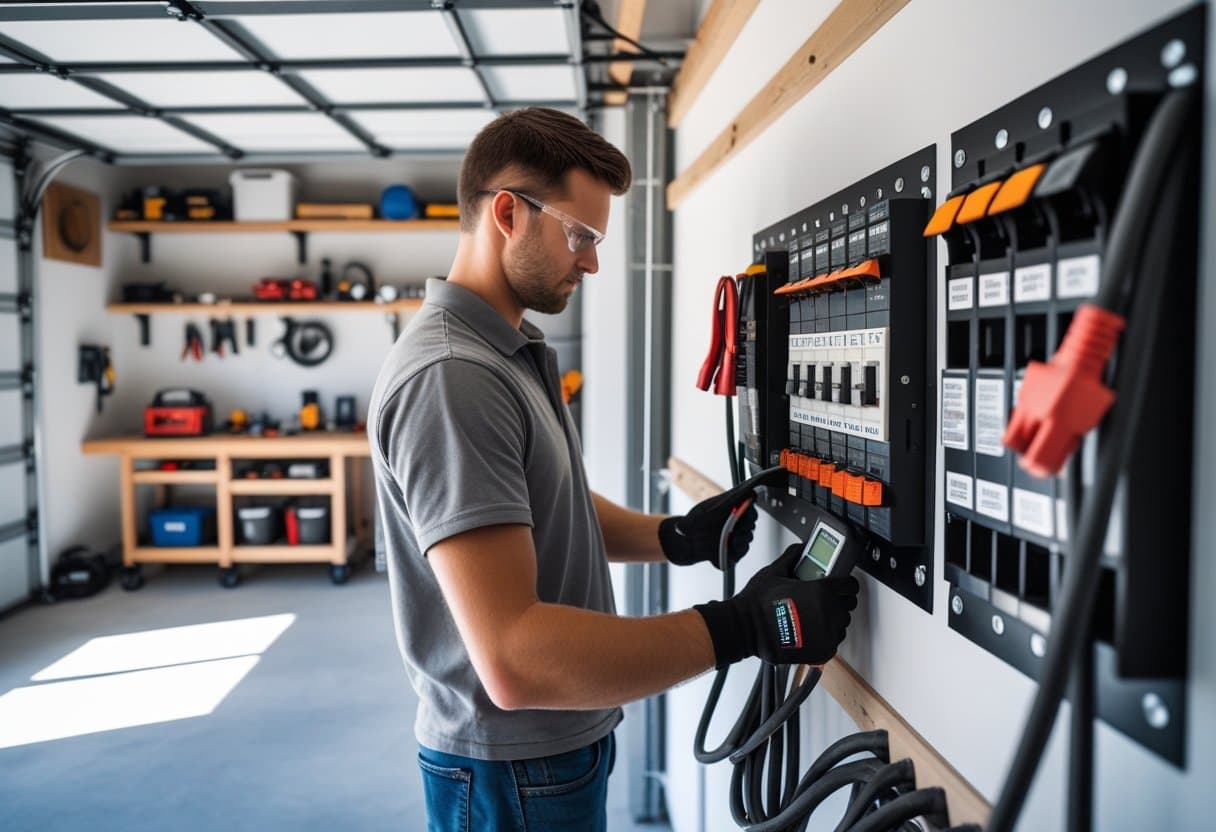
If you use a garage workshop for power tools and machines, keeping your circuits from overloading is key for safety and smooth work. Overloading happens when too many devices draw power on one circuit, causing breakers to trip and creating hazards. Knowing how to spread out your appliances and manage your electrical load helps prevent this problem.
You might need a subpanel or extra circuits to handle the added power safely. AAA Electrical Services, serving Sacramento and nearby areas, can help you upgrade your system with same-day service and clear, flat-rate pricing. When your circuits work properly, you get peace of mind and avoid costly repairs down the road.
Understanding Your Garage Workshop Electrical Load
To keep your garage workshop circuits safe, you first need to know how much power your tools and appliances use. You also need to figure out the types of equipment you have and how many circuits are necessary to handle everything without overloading.
Identifying Power Requirements
Each tool or machine in your workshop uses a specific amount of electricity, measured in amps or watts. Check the labels or manuals of your equipment to find these numbers. High-powered tools like table saws or welders use more electricity than small hand tools.
Add up the power needs of the tools you expect to use at the same time. If two tools have high power demands and you use them together, their combined load can overload one circuit. It’s better to plan your circuits to spread out the load safely.
Consider future additions too. If you want to add heavier machinery later, your current setup might not be enough.
Types of Tools and Appliances Used
Workshops usually have a mix of tools, such as drills, sanders, compressors, and lighting. Each tool draws a different amount of power. For example:
- Drills and saws: Medium power, about 5 to 15 amps
- Air compressors: High startup current; can peak around 20 amps
- Lighting: Low power but constant use, usually 1 to 5 amps
Heating equipment and dust collectors often need their own circuits since they draw steady, higher power. Knowing which tools are the big energy hogs helps you decide which circuits need bigger breakers or special wiring.
Calculating Circuit Needs
Start by listing all your electrical devices and their power ratings. Calculate total amps by dividing watts by your outlet voltage (usually 120 volts).
Tool TypeEstimated Amps Small Tools5 - 15Large Power Tools15 - 30Lighting1 - 5
Don’t run circuits at full capacity all the time. The National Electric Code suggests using only up to 80% of a circuit’s rated capacity. So, on a 20-amp circuit, don’t go over 16 amps for continuous use.
If your planned load is high, think about installing a subpanel with multiple circuits. AAA Electrical Services can help you design and install the right panel to keep your workshop safe and running smoothly.
Recognizing Symptoms of Overloaded Circuits
Knowing when your garage workshop circuits are overloaded helps you avoid electrical hazards and interruptions. The signs can be subtle at first but they’ll get worse if you ignore them. Understanding what causes overloads helps you keep everything running safely.
Warning Signs to Watch For
Watch for breakers that trip often, especially when you turn on power-hungry tools like saws or compressors. Flickering or dimming lights in your garage are also warning signs. If outlets feel warm or you notice a burning smell near the panel, unplug your devices right away and call a professional.
Sometimes outlets stop working or reset when you unplug something. Overloaded circuits cause these symptoms because the breaker cuts off power to protect your home. Paying attention to these signs can help you catch problems before they get serious.
Common Causes of Overloading
Overloading usually happens when too many devices run on the same circuit at once. Plugging a space heater, a drill press, and a compressor into one breaker? That’s probably too much. Using several power tools together or stacking up extension cords and power strips makes it worse.
Heavy appliances like welders or air compressors need their own circuits. Don’t stack power strips or use long daisy-chained extension cords; that just piles up demand on one spot. If you’re not sure about load balancing or breaker size, AAA Electrical Services can help with upgrades and repairs to keep your garage safe.
Safety Measures to Prevent Circuit Overload
Keeping your garage workshop circuits safe means managing how you use your tools, planning your work times, and using the right safety devices. These steps help stop electrical overloads and keep your home protected.
Best Practices for Tool Usage
Try not to run several high-power tools at the same time. Tools like table saws, compressors, and welders can use a lot of electricity. To keep your circuit from overloading, plug in only a few tools at once and unplug anything you aren’t using.
Check your tools for the power they need, usually listed in amps or watts. Make sure your workshop circuits can handle the combined load. If you often push your circuit limits, adding a subpanel can help spread out the power demand.
AAA Electrical Services recommends using tools that are in good condition and properly grounded to lower the risk of shorts or electrical faults.
Organizing Work Schedules
Plan your tool use so heavy-load equipment isn’t running at the same time. You can schedule your work in blocks, using one or two machines, then turning them off before starting others. This lowers the odds of tripping a breaker.
It helps to keep a list or chart of when you use each tool and which circuits they’re on. That way, you don’t accidentally overload a circuit with too many devices at once. Even small shifts in your routine can help prevent outages.
Using Surge Protectors and Circuit Breakers
Surge protectors are handy for guarding your tools against sudden power spikes. Use power strips with built-in overload breakers for smaller gear. These can cut power automatically if a circuit gets close to overload, adding a safety net.
Check that your circuit breakers are the right size for your workshop’s load. If breakers keep tripping, don’t just reset them and forget it. Have someone like AAA Electrical Services take a look and upgrade your panel if needed. Their licensed techs offer same-day service and treat your home with care.
Key tips:
DevicePurposeSafety Benefit Surge ProtectorPrevents electrical spikesProtects tools and wiringCircuit BreakerShuts off power on overloadPrevents fires and damage
Using these safety measures helps your garage workshop run smoothly and keeps your family safe.
Installing Dedicated Circuits and Upgrading Electrical Systems
Adding dedicated circuits and upgrading your electrical system can help keep your garage workshop running safely. Knowing when to install new circuits, picking the right breaker size, and working with experts ensures your power stays balanced and reliable.
When to Add Dedicated Circuits
Add dedicated circuits when you have tools or appliances that use a lot of power. Big tools like table saws, compressors, or welders usually need their own circuit. That way, they don’t have to share power with other devices, which helps prevent breaker trips and overheating.
If your lights flicker or breakers trip often, your current setup probably isn’t enough. Dedicated circuits spread out the load. For heavy-use areas like garages or workshops, dedicated circuits keep your tools running safely without risking damage or fire.
Choosing the Right Breaker Size
Breaker size depends on the tool or appliance you want to power. Most power tools need a 15 to 30 amp breaker. Larger machines or heavy equipment might need up to 50 amps or more. If you use a breaker that’s too small, it’ll trip all the time. Too big, and it might not protect your system.
Check each tool’s manual for its electrical needs or ask a pro. Breakers are there to protect your wiring from overheating. Picking the right size keeps your system safe and avoids expensive repairs.
Working with Licensed Electricians
Licensed electricians know how to safely install circuits and upgrade panels. When you hire a pro, they follow safety codes and check your system for hidden problems. This lowers your risk of electrical hazards.
AAA Electrical Services offers same-day service with fully licensed techs who respect your home and put safety first. Their vans are stocked with parts to fix most issues in one trip. Trusting experts means your workshop circuits get done right and your family stays safe.
Maintaining a Safe and Efficient Workshop
Keeping your garage workshop safe and running smoothly means staying on top of your electrical system and equipment. Regular checks and timely upgrades help prevent circuit overloads and keep your tools powered properly.
Routine Electrical Inspections
It’s smart to have your workshop’s wiring and circuits inspected regularly. Watch for things like flickering lights, warm outlets, or tripped breakers. These can warn you that your system’s overloaded or damaged.
A licensed electrician can check your panel and circuits to make sure everything’s safe. Getting things checked out helps you avoid expensive repairs or fire risks later. In places like Sacramento and Roseville, AAA Electrical Services offers same-day inspections with flat-rate pricing. Their techs come ready with parts, so repairs are quick if you need them.
Regular inspections also make sure your subpanel can handle your tools’ power needs and prevent overloads. You want steady power so your equipment runs safely and efficiently.
Updating Equipment and Wiring
Old wiring can’t always handle today’s electrical needs. If your workshop still uses outdated breakers or thin wires, it’s probably time for an upgrade. Swapping these out lowers the risk of circuit trips and overheating.
Installing a dedicated subpanel with 60-100 amps for your workshop is a smart move. This keeps your workshop circuits separate from your house and helps prevent overloads when you run lots of tools. Your electrician can help you pick the right size and setup.
AAA Electrical Services can update your wiring and panels with safety as the top priority. Their licensed, insured techs treat your home with care. Upgrading wiring and breakers now saves headaches later and keeps your workshop ready for anything.
Frequently Asked Questions
Keeping your garage workshop circuits safe means knowing how to spot overloads, split circuits properly, and use the right equipment. Understanding these details helps protect your tools and home from electrical issues.
What steps can I take to prevent circuit breaker overload in my workshop?
Don’t plug too many heavy tools into one circuit. Use a subpanel rated for 60-100 amps to give your workshop its own power. Check wiring and outlets regularly to catch any hidden issues.
How can I split an existing overloaded circuit to improve safety?
Add a subpanel or install new circuits to separate power-hungry tools. This lightens the load on each breaker. If you’re not sure how, call a licensed electrician.
What are some signs of circuit overload to look out for, even if the breaker hasn't tripped?
Watch for flickering lights, warm outlets or switches, and buzzing sounds. These can mean the circuit’s struggling even before the breaker trips. Using power cautiously helps avoid bigger issues.
Can you suggest methods to fix a circuit overload without professional help?
You can unplug some tools or move them to different outlets. That’s about it for safe DIY. Don’t mess with wiring or breakers yourself; leave repairs and upgrades to the pros at AAA Electrical Services.
Which types of power strips are best suited for heavy duty use in a garage to prevent overloading?
Pick power strips with built-in circuit breakers and surge protection. Look for models rated for the amps your tools need. Skip the cheap ones—they can actually make overloads more likely.
Are there any long-term risks if a circuit frequently becomes overloaded?
Absolutely. When circuits keep getting overloaded, wires can overheat, outlets might stop working, and honestly, the fire risk just goes up. Staying on top of maintenance and upgrading your setup helps keep your workshop safer—and let's be real, that's a lot better for your family's peace of mind.