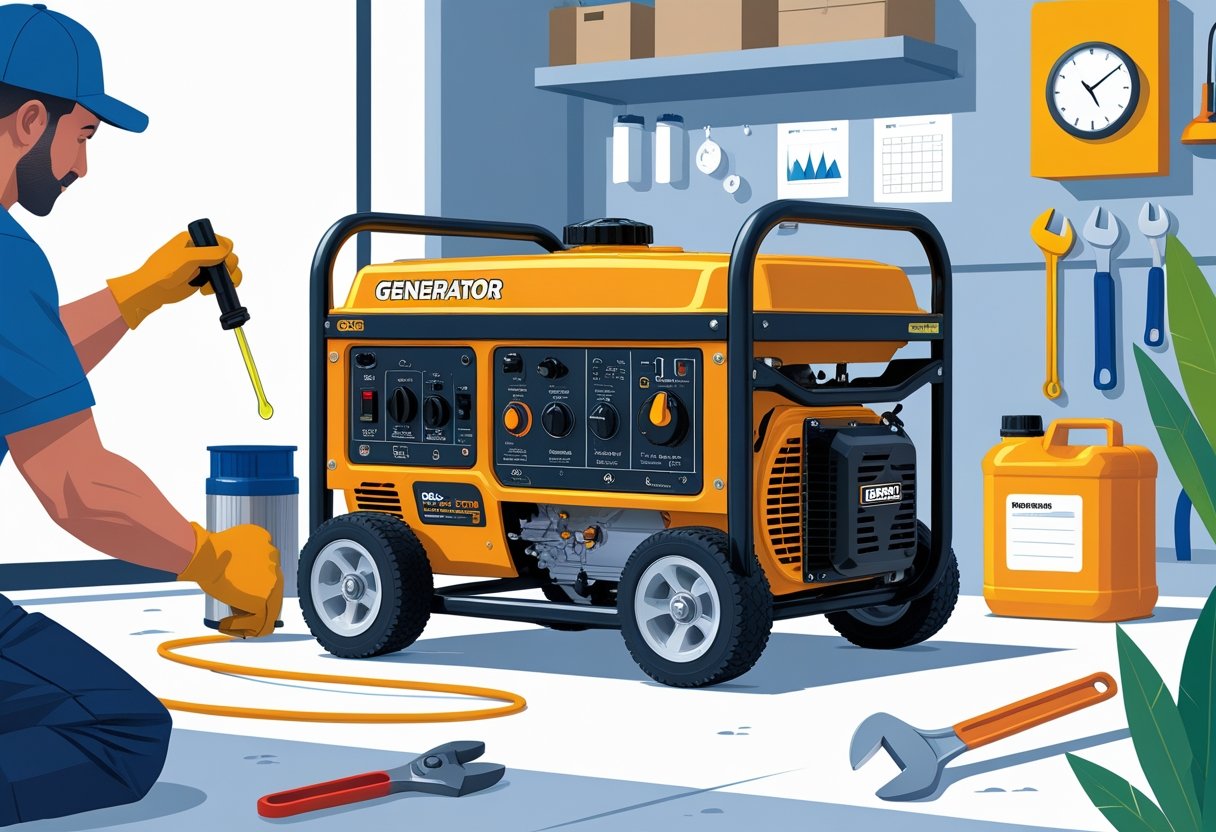
If you want your generator to last longer and work when you need it, regular care is key. Routine maintenance and quick repairs help avoid breakdowns and keep your generator running smoothly for years.
Simple checks like changing the oil, cleaning filters, and testing the battery can make a big difference. Your generator might only run during power outages, but it still needs attention even when it’s sitting idle.
Taking time to inspect and maintain your unit helps catch small problems before they turn into costly repairs. This keeps your generator reliable and ready whenever you need backup power.
Routine Generator Maintenance
To keep your generator working well and lasting longer, check it often, keep it clean, and make sure its parts move smoothly. These steps help prevent problems before they happen.
Regular Inspection Schedule
Inspect your generator at least once a year or after heavy use. Look for signs of wear, leaks, or loose connections.
Check the fuel system and battery condition. Write down what you find during inspections so you can track issues and fix them early.
If you spot anything unusual, have a technician take a closer look. Run your generator sometimes, even if you don’t need power, to keep the engine and parts working.
Cleaning and Debris Removal
Keep your generator clean to avoid damage. Remove dirt, dust, leaves, and other debris from vents and the outside.
Dirt can block airflow and cause overheating. Use a soft brush or cloth for cleaning, and avoid water to prevent electric problems.
Clean around fuel tanks and battery compartments carefully. Make sure your generator is off and cool before cleaning.
Keeping debris out helps your generator run smoothly and safely.
Lubrication of Moving Parts
Your generator has parts that need oil or grease to work well. Without lubrication, these parts can wear out fast.
Check the owner’s manual to find out how often to lubricate. Focus on the engine, bearings, and other moving areas.
Use the right type of oil or grease recommended by the manufacturer. Lubrication reduces friction and heat, helping your generator last longer.
Don’t skip this step, even if your generator doesn’t run often.
Proper Storage and Operation
Taking care of your generator means storing it well, using the right startup and shutdown steps, and making sure you don’t put too much load on it. These actions help your generator work longer and avoid damage.
Storing in Appropriate Conditions
Store your generator in a dry, cool place with good ventilation. Avoid areas with high humidity or direct sunlight, as moisture and heat can damage parts.
If you keep your generator outside, use a waterproof cover but ensure air can still flow. Never store fuel inside your home or where the generator sits.
Before storing it for a long time, drain the fuel tank or add a fuel stabilizer to stop the gas from getting stale. Disconnect the battery to prevent it from dying.
Correct Startup and Shutdown Procedures
Always follow the manufacturer’s instructions when starting your generator. Before starting, check the oil, fuel level, and filters.
Turn on any connected appliances or systems after the generator runs smoothly. For shutting down, shut off all appliances first.
Let the generator run for a few minutes on no load to cool down. Then switch off the engine and close the fuel valve if there is one.
Avoid sudden starts and stops. Doing these steps correctly helps prevent engine wear and makes your generator last longer.
Preventing Overloading
Overloading your generator can cause serious damage. Know your generator’s power limit and never exceed it.
Use a simple power meter or add up the wattage of appliances you plan to run. Prioritize essential devices to keep your load within safe limits.
If you need more power, consider running appliances one at a time instead of all together. Most generators can handle short spikes, but constant overloading reduces lifespan and may cause breakdowns.
Keep these tips in mind:
- Check wattage of devices before use
- Avoid running too many devices at once
- Use power meters or labels on appliances
This will help your generator run safely and reliably.
Fuel Management Strategies
Taking care of the fuel in your generator helps keep it running longer and avoids damage. Use good fuel, replace it on time, and store it correctly to protect the engine and maintain power.
Using Quality Fuel
Always use fresh, high-quality fuel designed for your generator type. Gasoline that is old or mixed with dirt and water can clog the engine and cause it to stall.
For best results, use fuel with the right octane rating, as stated in your generator’s manual. Avoid buying fuel from stations with low turnover or unclear storage because it might be contaminated.
When fueling, keep the gas cap tight and the fuel tank clean to stop dirt from getting in.
Regular Fuel Replacement
Fuel doesn’t last forever, even if your generator is used rarely. Gasoline starts to break down in as little as 30 days, which can lead to engine problems like hard starts or rough running.
Replace the fuel in your generator every 3-6 months if it sits unused. If you use a fuel stabilizer, it can extend this period but don’t rely on it for more than 6 months.
Mark your calendar or set a reminder to check the fuel regularly.
Proper Fuel Storage
Store your generator’s fuel in clean, approved containers made for fuel. Keep these containers in a cool, dry place, away from direct sunlight or heat sources.
Heat speeds up fuel breakdown and may cause vapors to build up. Label your fuel containers with the purchase date to know when to replace the fuel.
Avoid storing fuel inside living spaces to prevent health risks and fire hazards. Using sealed containers prevents moisture and air from degrading the fuel quality.
Electrical System Care
To keep your generator working well for a long time, pay attention to its electrical parts. Take care of the battery and check all the wiring and connections regularly.
Both are small tasks that can prevent big problems later.
Battery Maintenance
Your generator’s battery is key to starting it when you need power. Check the battery’s charge every month.
Use a voltmeter to make sure it reads around 12.6 volts when fully charged. Keep the battery terminals clean and free from corrosion.
If you see buildup, gently clean it with a mix of baking soda and water. Tighten the terminal clamps so they are secure but not too tight.
Replace the battery every 3 to 5 years, even if it looks fine. Batteries lose strength over time and can fail without warning.
Run your generator at least once a month for 15 to 20 minutes to keep the battery charged.
Inspecting Wiring and Connections
Look over all the wiring and connections for signs of wear or damage. Loose or frayed wires can cause your generator to stop working or even create safety hazards.
Check for discoloration, cracks, or exposed wires. Make sure connectors are tight and not rusted.
If you find damaged wires, replace them immediately. Use electrical tape or wire nuts on any exposed wires to prevent shorts.
Keep the wiring dry and away from heat sources, which can cause insulation to crack or melt. Regular inspections help catch problems early.
Cooling and Ventilation Efficiency
Proper cooling and ventilation keep your generator running longer and prevent overheating. Focus on how air flows around the generator and the levels of coolant inside it.
These two factors work together to maintain the right temperature.
Maintaining Airflow
Good airflow helps your generator stay cool during use. Make sure nothing blocks the vents or air intakes.
Remove leaves, dust, or debris that might pile up near the generator. Place your generator in an open space.
Avoid tight corners or enclosed areas where hot air can get trapped. Fresh, cool air should move freely around all sides of the machine.
Check the fan and air filters often. Clean or replace dirty filters to keep air moving well.
If the fan isn’t working right, the generator can overheat quickly.
Checking Coolant Levels
Your generator may use liquid coolant to control temperature. Check the coolant level regularly, especially before heavy use.
Low coolant means the engine could get too hot and damage itself. Use the type of coolant recommended by the manufacturer.
Too much or too little coolant can cause problems. Always check for leaks around hoses and the radiator.
If you find low coolant, refill it carefully to the correct level. Never open the radiator cap when the engine is hot; wait until it cools down to avoid burns.
Professional Servicing and Upgrades
Keeping your generator in top shape means regular professional care and timely parts replacement. Schedule thorough check-ups every year and update any worn-out components to avoid breakdowns.
Scheduling Annual Inspections
Get a professional to inspect your generator once a year. During this check, they test everything from the engine to the fuel system to catch small problems before they grow.
Expect these inspections to include cleaning, checking fluids, and testing battery life. The service also ensures safety features work right, preventing hazards.
Booking an annual inspection reduces the risk of unexpected failures. It keeps your generator ready for when you need it most, especially during power outages.
Upgrading Worn Components
Parts like filters, spark plugs, and batteries wear out with use. Replacing these quickly keeps your generator running smoothly and avoids damage to other parts.
Work with a pro so they can spot which components need an upgrade. Newer parts might also improve your generator’s efficiency and reduce noise.
Upgrade key parts based on the manufacturer’s advice or the technician’s recommendation. Keeping these fresh helps your generator last many years.
Usage Best Practices
To get the most from your generator, use it regularly. Run it for about 20-30 minutes every month to keep the engine parts lubricated and ready to work when you need them.
Avoid running your generator at full power all the time. Use only what you need.
Overloading can cause damage and reduce its lifespan. Always let your generator cool down before refueling.
Fuel spills can be dangerous if the engine is hot, and cooling helps prevent accidents. Keep your generator clean and dry.
Dirt and moisture can cause rust or block important parts. Use a cover when it’s not in use to protect it.
Be mindful of where you place your generator. Set it on a flat surface with plenty of air around it.
This helps avoid overheating and improves performance.
Here’s a quick checklist to follow:
Best PracticeWhy It Helps Regular monthly runKeeps engine parts lubricatedAvoid overloadingPrevents damageCool down before fuelReduces fire riskKeep it clean/dryStops rust and blockagesGood ventilationPrevents overheating
Monitoring and Early Detection of Issues
Keeping an eye on your generator helps catch problems before they get worse. Regular checks can save you time and money by avoiding big repairs.
Look for warning signs like strange noises, frequent shutdowns, or changes in performance. These often point to underlying issues that need attention.
You can create a simple checklist for your routine checks:
What to CheckWhy It Matters Fuel levelPrevents running out during useOil and coolant levelsKeeps engine parts from overheatingBattery conditionEnsures the generator starts easilyAir filtersMaintains clean airflow and efficiencyFuel leaks or smellsSigns of potential safety hazards
Listen closely while the generator runs. Odd sounds like knocking or grinding mean you should call a professional.
Track your generator’s run hours. Many models have hour meters.
Knowing how long it has run helps you schedule timely maintenance. Use a maintenance log to record checks and repairs.
This keeps you organized and helps spot recurring problems faster. By paying attention and acting early, you help your generator last longer and work better when you need it most.
Long-Term Generator Storage Tips
When you store your generator for a long time, proper care keeps it working well. First, clean your generator by removing dirt, dust, and debris.
Cleaning stops corrosion and damage while the generator sits unused. Next, drain the fuel tank or add stabilizer.
Fuel left inside can go bad and clog the system. If you use stabilizer, run the generator for a few minutes so it spreads through the engine.
Store your generator in a dry, cool place. Moisture can cause rust and damage the engine.
If possible, cover it with a breathable cloth to keep dust out and allow air flow. Remember to remove the battery if your generator has one.
Batteries lose power over time and can leak, which harms your generator. Store the battery separately in a safe spot.
Check your generator every few months while it is in storage. Turn it on for a short time to keep the engine parts lubricated and make sure everything runs smoothly.
StepWhy It's Important Clean generatorPrevents rust and damageDrain or stabilize fuelAvoids fuel clogs and engine issuesStore in dry placePrevents moisture damageRemove batteryKeeps battery healthy and safeRun every few monthsKeeps engine parts lubricated
Frequently Asked Questions
Keeping your generator running well requires regular oil changes, cleaning air filters, and checking spark plugs. How often you run it and how you store it also make a big difference.
What regular maintenance tasks can prolong the life of my generator?
Change the oil and replace the oil filter regularly, usually every 50 to 100 hours of use. Clean or replace the air filter to help your generator run smoothly.
Check and replace spark plugs when needed to keep things working well.
Can using synthetic oil help in extending my generator's lifespan?
Yes, synthetic oil protects your generator better in extreme temperatures. It reduces engine wear and helps your generator run cleaner, which can extend its lifespan.
How often should I run my generator to ensure it stays in good condition?
Run your generator for about 20 minutes every month. This keeps the engine parts lubricated and lets you check that it starts and runs properly.
What are the best storage practices to keep my generator in top shape for longer?
Store your generator in a dry, cool place to avoid rust and damage. Drain the fuel or use a fuel stabilizer if you won’t use it for a long time.
Cover it with a breathable cover to keep dust away.
How can I tell if my generator needs a professional service check?
If your generator makes unusual noises, doesn’t start easily, or runs unevenly, it may need a professional check. If it has been a long time since your last full service, a professional can spot problems before they get worse.
Are there any specific operating tips that can help reduce wear and tear on my generator?
Do not run your generator at full load all the time. Let it warm up before you add a heavy load.
Allow it to cool down before you turn it off. This reduces stress on the engine parts.