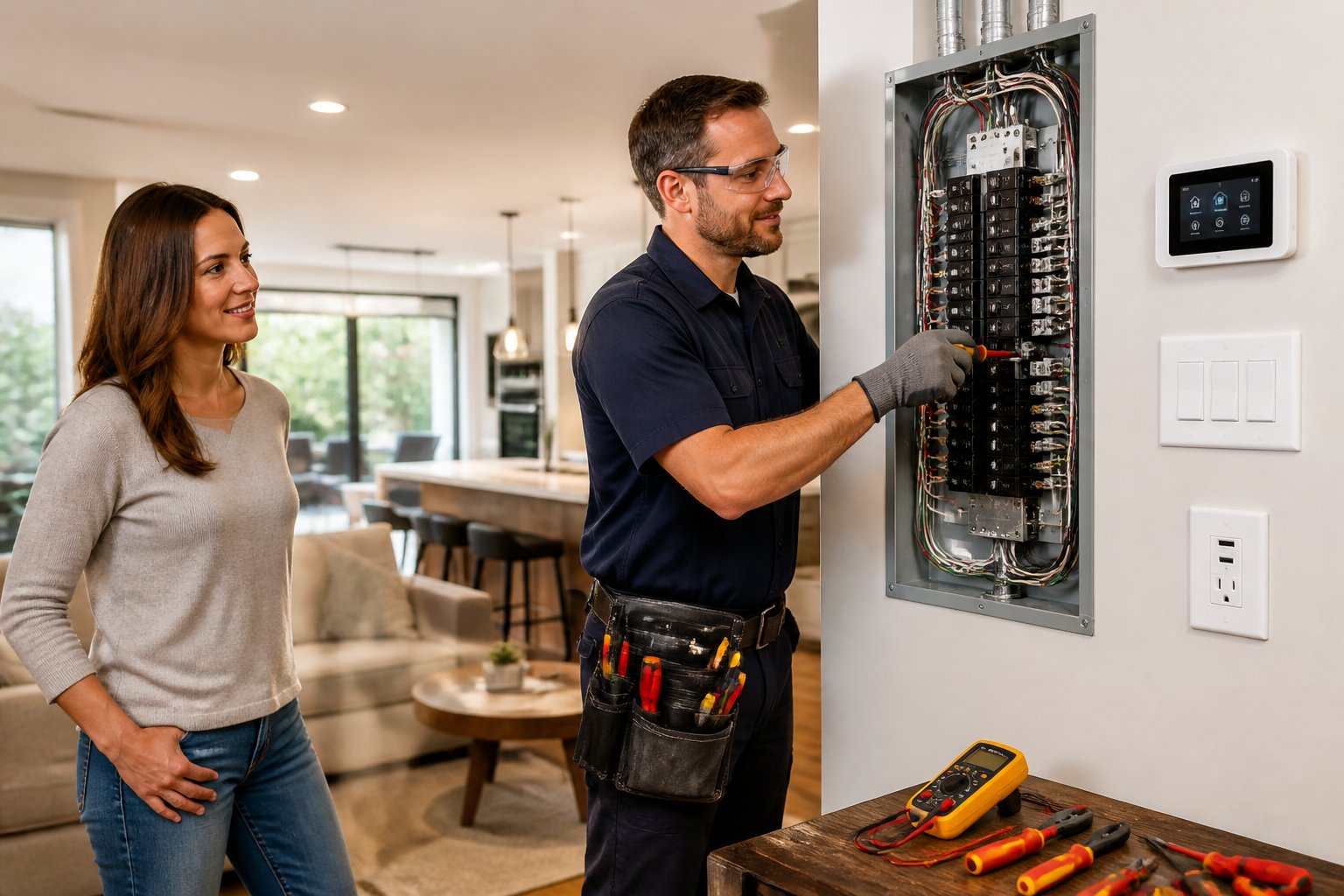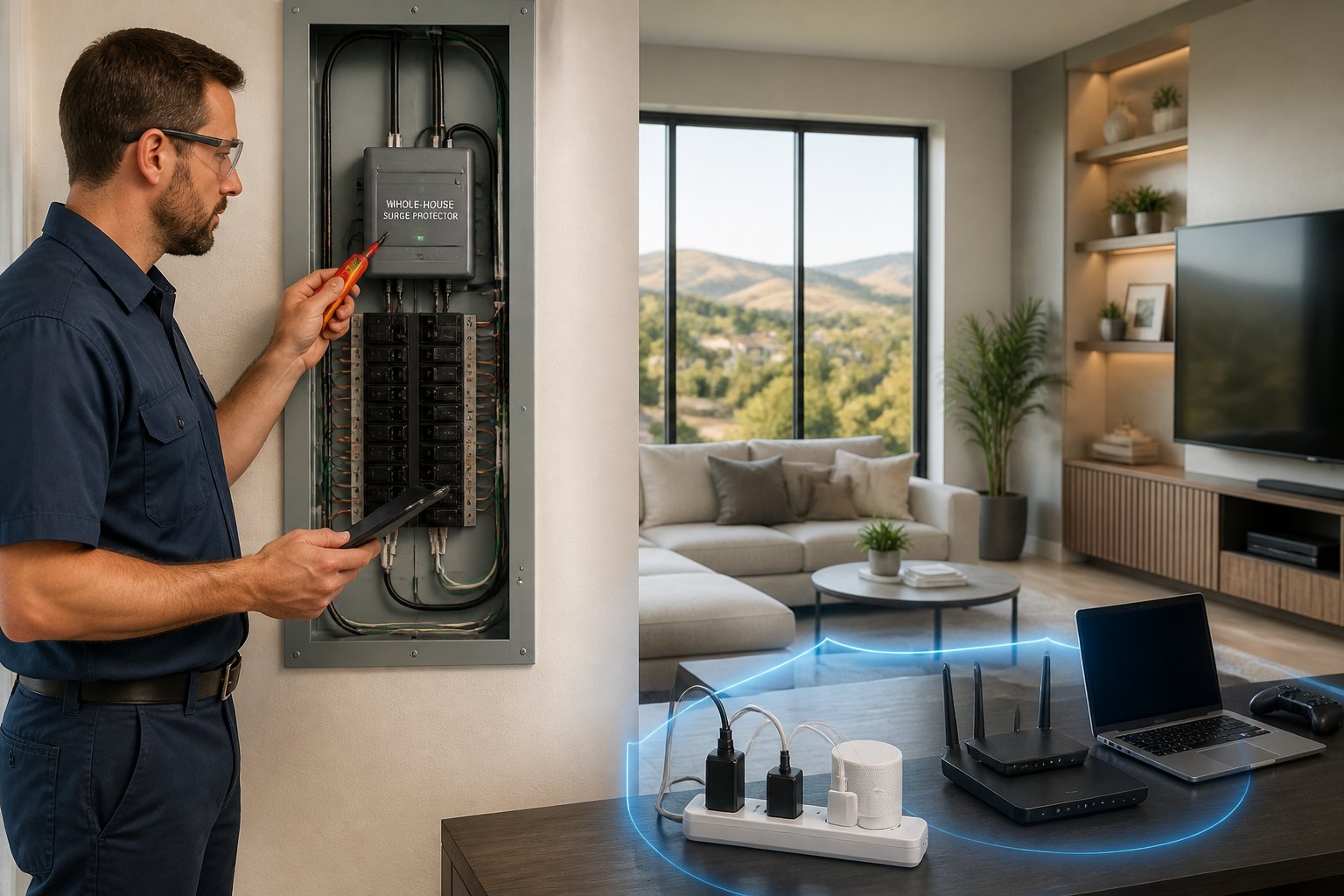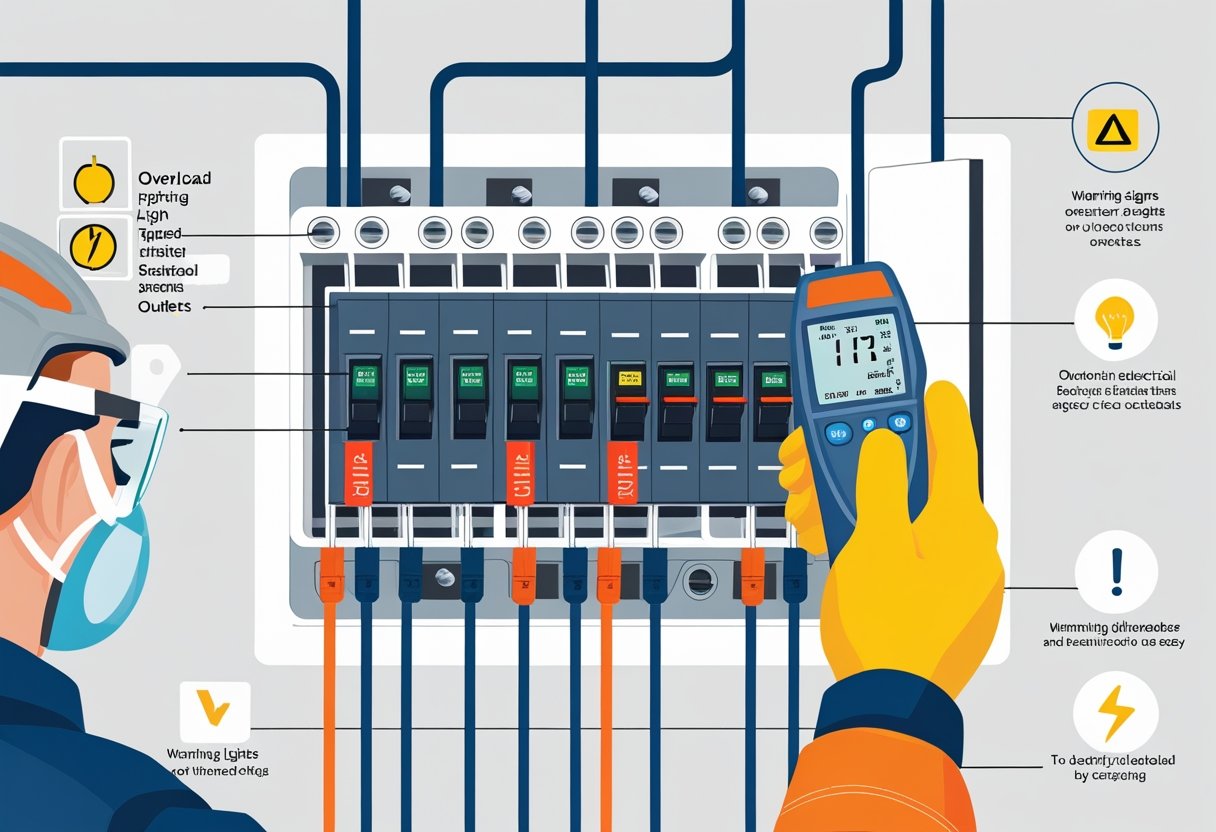
If your circuit breaker keeps tripping or you notice flickering lights when using multiple devices, you might have an overloaded circuit.
An overloaded circuit happens when too many electrical devices draw more power than the circuit can safely handle. This can cause your breaker to shut off power to prevent damage or fire.
You can spot an overloaded circuit by paying attention to signs like burning smells near outlets, warm wall plates, or frequent breaker trips in a specific area of your home. These signs help you avoid bigger electrical problems and keep your home safer.
Understanding Circuit Overload
A circuit overload happens when more electrical devices use power than the circuit can handle. This causes the circuit breaker to trip or the fuse to blow.
Knowing what causes this and why it’s risky can help you keep your home safe.
What Is an Overloaded Circuit
An overloaded circuit occurs when too many appliances or devices draw power on the same circuit. Each circuit is designed to handle a certain amount of amperage.
When this limit is exceeded, the wiring heats up and can cause damage. You can usually spot an overloaded circuit if your breaker trips often or lights flicker when you turn on appliances.
It means the electrical flow is too high for that circuit. Fixing it means reducing the number of devices or upgrading your electrical system.
Common Causes of Electrical Overload
Using too many devices on one outlet, especially high-power items like heaters, microwaves, or air conditioners, can overload a circuit. Old wiring or electrical panels can also contribute if they aren’t rated for today’s power needs.
Temporary use of many devices at once, like during a party, can also overload a circuit. Faulty or damaged appliances that draw more current than normal can cause overloads.
Using extension cords improperly increases the risk as well.
Risks and Dangers of Overloading
Overloaded circuits create heat, which can damage wiring insulation and start fires. This is a serious safety risk for your home and family.
Circuit breakers are designed to prevent this by shutting off power, but repeated overloads can weaken them. Burning smells, warm outlets, or sparking are warning signs of an overloaded circuit.
Ignoring these signs can lead to electrical shocks or fires. Always take a tripping breaker seriously and reduce the load or call an electrician.
Recognizing the Signs of Overloaded Circuits
Overloaded circuits usually give specific warnings before causing serious problems. You might notice changes in how your electrical system works or see physical signs that things are not right.
Spotting these early can help you keep your home safe.
Frequent Circuit Breaker Trips
If your circuit breaker trips a lot, the circuit is likely overloaded. This happens when too many devices are plugged in and drawing more power than the circuit can handle.
Each time the breaker trips, it cuts off power to prevent damage or fire. Pay attention if the breaker trips every time you turn on certain appliances.
This can tell you exactly where the overload is. Replacing old breakers or moving devices to other circuits can help fix this.
Dimming or Flickering Lights
Lights that dim or flicker when you turn on a device are a common sign of an overloaded circuit. The circuit can't provide enough power for all the devices at once.
If you notice this often in certain rooms or when using specific appliances, the circuit needs less load. Using fewer devices at once or spreading them across circuits may stop the flickering.
Hot or Discolored Outlets
Outlets that feel warm or look discolored are serious warning signs that the circuit might be overloaded. Heat or discoloration can mean the wiring is damaged or carrying more current than it should.
If you touch an outlet and it is hot or see dark marks around it, avoid using it until an electrician checks it. This can prevent potential fire hazards and electrical failures.
Testing for Overloaded Circuits
You can check if a circuit is overloaded by measuring electrical load and current. Using the right tools helps you see if too many devices strain the circuit.
You’ll learn how to use an electrical load tester, calculate total load from your devices, and identify overload signs with a multimeter.
Using an Electrical Load Tester
An electrical load tester measures how much power a circuit is using. You plug it into an outlet or connect it to the circuit panel.
It shows the total current being drawn in amps. If the reading is near or above the breaker’s rating, the circuit is overloaded.
For example, if a breaker is rated for 15 amps and your tester shows 14 or higher, it’s close to overload. Be careful to avoid touching live wires during testing.
If unsure, ask a professional to help. This test lets you see real-time current and prevents problems like flickering lights or tripping breakers.
Calculating Total Electrical Load
To figure out the total load on a circuit, add up the wattage of all devices running on it. You can find this number on appliance labels or manuals.
Use this formula to convert watts to amps:
Amps = Watts ÷ Volts
For example, a 600-watt appliance on a 120-volt circuit uses 5 amps (600 ÷ 120 = 5). Add up amps from each device in the room or on that circuit.
If the total amps exceed the breaker’s limit, the circuit is overloaded. Knowing this helps you plan what to plug in and avoid breaker trips or electrical hazards.
Identifying Overload With a Multimeter
A multimeter is a tool that measures voltage, current, and resistance. To check for overload, set it to measure current (amps) and connect it safely to the circuit.
If the current reading is close to or above the breaker’s rating, the circuit is under strain. Watch for signs like flickering lights or breaker trips while measuring.
Testing with a multimeter requires some safety knowledge. If you’re not comfortable, call an electrician.
Using this tool lets you catch overloads before they cause damage or safety issues.
Preventing and Addressing Circuit Overloads
Keeping your electrical system safe means spreading out power use, fixing old wiring, and knowing how to work with your circuit breakers.
You can reduce the chance of problems by managing how much electricity each part of your home uses.
Balancing Electrical Loads
Avoid putting too many devices on the same circuit. When many high-power appliances like microwaves, heaters, or air conditioners run together on one circuit, it can cause an overload.
Try to distribute heavy devices across different outlets. For example, plug your microwave and toaster into different circuits.
Check your breaker panel to see which outlets are grouped together. Using a power strip won’t fix the problem if the whole circuit is overloaded.
That only adds more plugs to the same circuit. Spread things out to keep the load balanced and reduce trips.
Upgrading Electrical Circuits
Sometimes, your current wiring can’t handle the amount of power you use daily. Older homes often have circuits that aren’t strong enough for modern appliances.
If your breakers trip often or outlets feel warm, you may need an upgrade. This might include installing new circuits or a bigger electrical panel.
Hire a licensed electrician to evaluate your system. They can add circuits or increase your panel’s capacity to safely handle your power needs.
Using Circuit Breakers Properly
Circuit breakers are your home’s safety guards. They cut power when they sense overloads or short circuits to prevent fires and damage.
Don’t keep resetting a breaker without checking the cause. Frequent trips often mean the circuit is overloaded or there’s a fault.
If a breaker trips often, unplug some devices and avoid plugging too many into one outlet. Also, test your breakers with a voltmeter if you suspect they might be faulty.
Make sure appliances with high energy use have dedicated outlets to prevent overloading the breaker.
When to Call a Licensed Electrician
If your circuit breaker trips often or your lights flicker, you might have an overloaded circuit. If this keeps happening, call a licensed electrician.
An expert can check for bad wiring, worn panels, or unsafe connections that you might not spot. They have the right tools and skills to fix problems safely and quickly.
Look out for these warning signs:
- Frequent breaker trips
- Flickering or dimming lights
- Burning smells or unusual noises near outlets
- Warm or discolored outlets and switches
If you see any of these, don’t wait. It means something might be wrong with your home's electrical system.
You should also call an electrician if your electrical panel is old or damaged. Signs include rust, corrosion, or breakers with multiple wires attached.
Trying to fix these issues yourself can be dangerous. Electricians know how to protect you and your home from electrical hazards.
If you’re not sure, it is safer to get a professional opinion. Your home’s electricity is important, and a licensed electrician will help keep it working safely.
Long-Term Safety Tips for Electrical Circuits
Keeping your home’s electrical circuits safe means regular care, smart use of devices, and making sure everyone in your household knows the basics.
These steps help prevent hazards like overloads and electrical fires.
Regular Home Electrical Inspections
Have a licensed electrician inspect your home’s wiring at least every few years. They will check for signs of worn-out wires, loose connections, and outdated panels that could cause problems.
Look for warning signs like frequent breaker trips or flickering lights. These often signal that your circuits are overloaded or damaged.
Catching issues early can help you avoid costly repairs and keep your home safe. Keep records of inspections and repairs to track the health of your electrical system over time.
Safe Use of Extension Cords
Extension cords are handy but should not be used as a permanent solution for extra outlets. Using them long term can cause overheating and increase the risk of fire.
Only use extension cords that are rated for the devices you plug in. Avoid overloading cords by plugging multiple high-power items into one cord.
Check cords regularly for damage like cracks or frays. Replace any damaged cords immediately.
Never run cords under rugs or tight spaces where heat can build up unnoticed.
Educating Household Members
Make sure everyone in your home knows basic electrical safety. Teach them why overloading outlets is dangerous and how to spot warning signs like sparks or burning smells.
Explain the importance of unplugging devices when not in use and not using damaged cords or appliances. Show children the dangers of electricity and keep outlets covered if they are too young to understand.
Regular conversations about safety help prevent accidents and create a safer home environment for everyone.
Frequently Asked Questions
What are the signs of an overloaded electrical circuit?
You might notice flickering or dimming lights when using appliances. Outlets or switches could feel warm to the touch.
You may also hear buzzing sounds or smell burning near outlets.
How can you fix an existing circuit that frequently overloads?
Start by unplugging some devices on the circuit to reduce the load. If the problem continues, have an electrician check for faulty wiring or consider adding more circuits to spread out the power use.
What steps can you take to prevent your circuits from becoming overloaded?
Avoid plugging too many devices into one outlet or power strip. Spread out high-power appliances across different circuits.
Regularly check your home's electrical system for updates or damage.
Why might a circuit still be overloaded if the breaker hasn't tripped?
Some breakers can handle short spikes in power without tripping. Old or faulty breakers might not work properly.
The circuit's wiring could also be struggling, but not enough to cause a trip yet.
What's the best way to split an overloaded circuit safely?
Hire a licensed electrician to add a new circuit breaker and run new wiring. This spreads the electrical load and follows safety codes.
Avoid trying to split circuits yourself to prevent hazards.
How does an electrical overload relay work?
An overload relay senses when a circuit draws too much current for a long time.
It then opens the circuit to stop the flow of electricity. This action protects the wiring from damage.