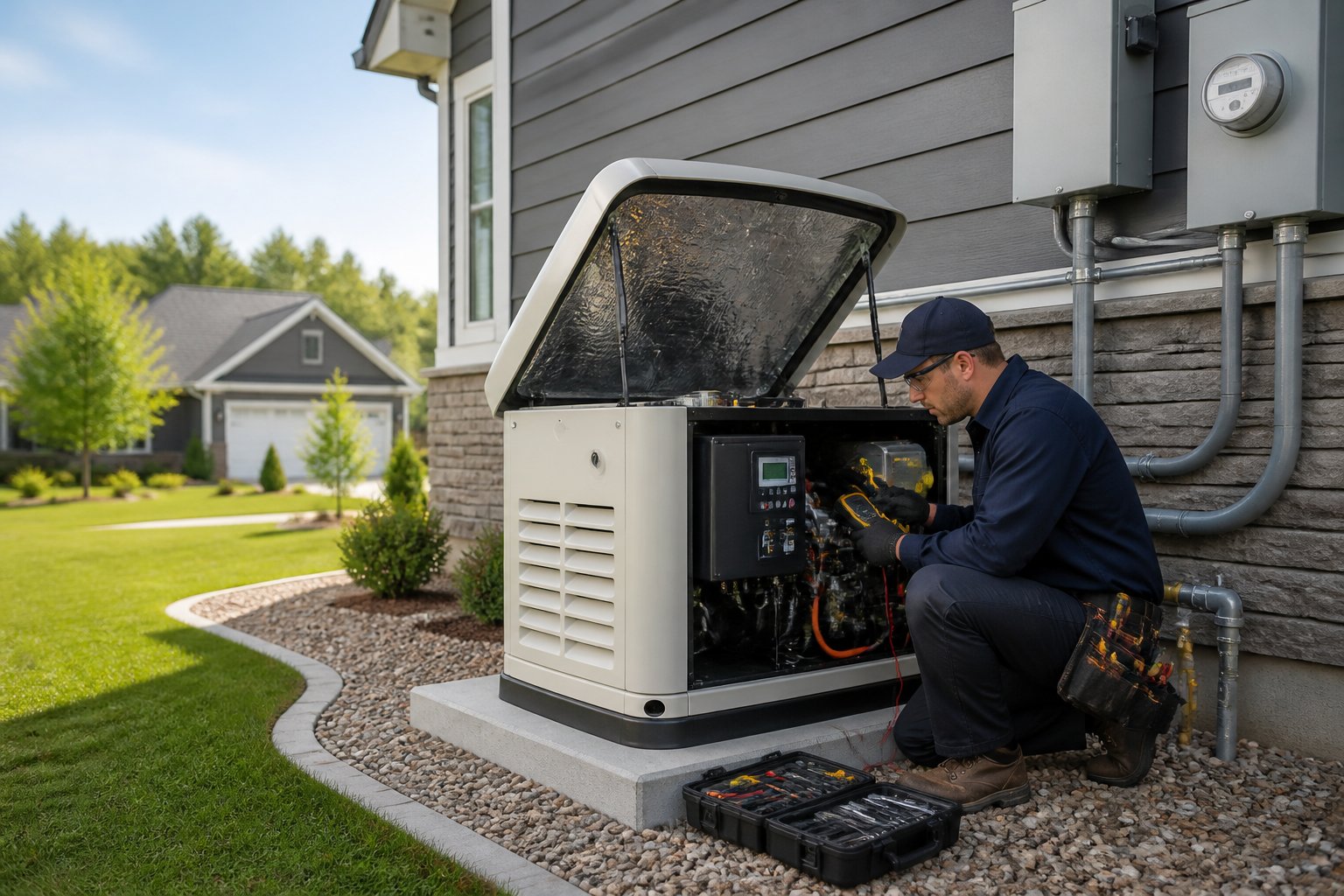
When you own a home generator, keeping it in good shape is important for when the power goes out. Residential generator maintenance services help make sure your generator will start and run smoothly when you need it most.
Regular checks and tune-ups can prevent breakdowns and costly repairs later on. You might not notice small problems until your generator fails during an outage.
Maintenance includes oil changes, filter replacements, and testing the system to catch issues early. By using professional services, you can feel confident your backup power is ready to keep your home safe and comfortable.
What Are Residential Generator Maintenance Services?
Maintaining your home generator means doing a set of important tasks to keep it running well. These tasks depend on the type of generator you have.
Regular care helps your generator work efficiently when you need backup power. You need to check and replace oil regularly to keep the engine working smoothly.
Changing air and fuel filters stops dirt from causing problems. Testing the battery and charging system ensures your generator starts without trouble.
It’s also important to run your generator occasionally. This helps keep the parts moving and avoids fuel system issues.
Checking for leaks or worn parts lets you fix small problems before they cause bigger issues. A service technician may also inspect spark plugs, belts, and other parts to make sure everything is in good shape.
Types of Residential Generators
Generators come in different types based on their fuel and usage. The most common are standby generators, which run on natural gas or propane.
These start automatically when the power goes out. You might also see portable generators.
These run on gasoline and need manual starting. They’re useful for short-term power or camping but need more frequent maintenance.
Some homes have inverter generators. These are quieter and more fuel-efficient but usually provide less power.
Knowing your generator type helps you follow the right care plan to keep it ready.
Importance of Regular Maintenance
Skipping maintenance can cause your generator to fail when you need it most. Dirt, old fuel, and worn parts reduce efficiency and might cause breakdowns.
Regular maintenance helps you avoid emergency repairs and extends your generator’s life. It also makes sure your home stays powered safely and consistently during an outage.
Benefits of Professional Generator Maintenance
Keeping your generator in good shape helps it last longer, work safely, and be ready when you need it most. Regular check-ups catch problems early and keep everything running smoothly.
Prolonged Equipment Lifespan
When you get professional maintenance, trained technicians check all parts of your generator. They clean, adjust, and replace small pieces before they cause bigger damage.
This stops wear and tear from getting worse. Without regular care, parts like filters, spark plugs, and batteries can wear out faster.
Professionals know the right schedules for oil changes and other tune-ups that keep your generator from breaking down early. Taking care of your generator this way means it can last 20 to 40 years.
Improved Home Safety
A generator must work safely to protect your family and home. Professionals make sure your generator is installed and maintained to avoid risks like carbon monoxide leaks or faulty wiring.
During maintenance, technicians test all safety features. They check automatic shut-offs and fuel systems to prevent fires or dangerous gas buildup.
Safe operation also means less chance of damage to your home's electrical system during power outages. You get peace of mind knowing your generator won’t cause accidents or harm.
Reliable Backup Power
Your generator is only useful if it starts and runs when the power goes out. Professionals run tests and repairs that keep your system ready for unexpected blackouts.
They inspect the fuel supply, battery, and control panel to ensure quick, smooth starts. This helps you avoid inconvenient or unsafe outages.
Good maintenance means your lights stay on, your food stays fresh, and essential devices keep running.
Routine Maintenance Checklist
To keep your generator running smoothly, you need to check a few important things regularly. This helps avoid unexpected failures and keeps your generator ready when you need it.
Paying attention to certain parts like oil, batteries, and performance tests ensures your generator works safely and efficiently.
Visual Inspections
Start by looking over your generator for any visible issues. Check for leaks under or around the unit, such as oil or coolant.
Make sure the fuel lines and connections are secure with no cracks or wear. Look at the air filters and vents.
Dirt and debris can block airflow and cause overheating. Clean these areas to keep your generator breathing easy.
Inspect the battery terminals for corrosion. A quick wipe with a cloth helps maintain good electrical contact.
Changing Oil and Filters
Regular oil changes are key to preventing engine damage. Follow the schedule in your generator's manual, usually every 100 to 200 hours of use.
Change the oil filter along with the oil. Filters trap dirt and particles, so replacing them keeps your engine oil clean.
Use the right oil type recommended by the manufacturer. Check the oil level before running your generator to avoid low oil, which can hurt the engine.
Battery Testing and Replacement
Your generator’s battery powers the start-up, so it must be reliable. Test the battery monthly, especially if the generator isn’t used often.
Use a multimeter to check the voltage—it should be around 12.6 volts when fully charged. If it drops below 12 volts, the battery may need charging or replacement.
Check the battery terminals for corrosion or loose connections. Clean and secure them for better contact.
Batteries usually last 3-5 years. Keep a replacement ready so you’re never caught without power when an outage happens.
Load Bank Testing
Load bank testing checks if your generator runs properly under a working load. This simulates real power use and helps find weak spots in the system.
Run the generator with a load bank device for about an hour every 6 to 12 months. This helps avoid wet stacking, where fuel buildup damages the engine.
Testing allows you to verify the generator can handle actual power needs, not just idle. It also highlights issues with the engine or electrical parts that need repair.
Signs Your Generator Needs Service
If your generator isn’t working right, it often shows clear signs. These include strange noises, trouble starting, or warning lights.
Catching these early can help you avoid bigger problems later.
Unusual Noises or Smells
If your generator makes grinding, knocking, or rattling noises, it might mean parts are loose or worn out. Don’t ignore hissing or burning smells either.
These could signal overheating or electrical issues. Strange sounds or odors often mean your generator needs a checkup soon.
Acting quickly can stop damage and keep your home powered safely.
Difficulty Starting
When your generator won’t start or takes a lot of tries, it could be a sign of fuel problems, battery issues, or engine wear. If it starts but runs rough or shuts off, that’s another warning.
Regular testing helps spot these issues before they leave you without power. If your generator struggles to start, schedule a service to find and fix the problem.
Warning Lights or Error Codes
Many modern generators have lights or displays that show error codes when something is wrong. These might include low oil, battery failure, or system faults.
Learn what the warning signals mean for your model. If lights turn on during regular use or after startup, don’t ignore them.
Contact a service technician to diagnose and repair the issue.
How to Choose a Generator Maintenance Provider
Choosing the right generator maintenance provider means looking at the company’s skills, the service plans they offer, and what other customers say about them. These areas will help you find a trustworthy service that fits your needs and budget.
Certifications and Experience
You want a provider with proper certifications and real experience. Certifications show that the technicians have met industry standards and know how to work safely and correctly.
Look for licenses from recognized organizations or local authorities. Experience matters because it means the team has dealt with different generator brands and problems before.
Ask how long they have been working with residential generators. A provider with 5+ years of experience is usually a safe bet.
Make sure the technicians are trained regularly. Generators change over time, and ongoing training keeps the team up to date on the latest models and fixes.
Service Agreements and Contracts
Service agreements outline how the provider will care for your generator. These contracts often include regular checkups, oil changes, battery tests, and system updates.
Reading these carefully helps you know what’s included and what costs extra. Look for plans that offer scheduled maintenance visits at least twice a year.
This helps catch small issues before they become big problems. Some providers also offer emergency repair as part of the contract.
Check the length of the contract and cancellation policies. You should be able to make changes if your needs change.
Transparent pricing is important so you don’t face surprise fees later.
Customer Reviews
Customer reviews give you a real look at how the provider operates. Look for feedback on communication, punctuality, and quality of work.
If many customers mention quick response times and clear explanations, that’s a good sign. Both good and bad reviews can teach you something.
Pay attention if a provider consistently solves issues or if they leave customers annoyed with slow service. Try to find reviews on trusted sites or local business pages.
You can also ask the provider for references. Talking to current customers can give you peace of mind before you commit.
DIY vs. Professional Maintenance
Maintaining your generator involves tasks you can do yourself and those that need professional attention. Knowing the difference helps keep your generator running safely and efficiently.
Tasks Homeowners Can Handle
You can perform simple checks like inspecting the oil level, cleaning debris, and testing the battery. Running the generator regularly helps keep it in good shape.
Changing the air filter and spark plugs can also be done at home if you follow instructions carefully. These tasks help your generator run smoothly and extend its life.
Always read the manual before starting any maintenance. If something seems complicated or risky, it's better to hold off.
When to Call the Experts
Call a professional if your generator won’t start, runs irregularly, or shuts down unexpectedly. Electrical and fuel system repairs are also best left to licensed technicians.
Professionals have the right tools and knowledge to handle complex issues safely. They can also perform routine maintenance that prevents costly breakdowns.
Hiring a trusted service means your generator is checked thoroughly, keeping your home powered when you need it most.
Maintenance Scheduling and Costs
Keeping your generator in good shape means knowing when to schedule service and what the costs might look like. Regular checks help your generator work well when you need it, and understanding pricing helps you plan your budget.
How Often to Schedule Service
You should schedule maintenance for your generator at least once a year. Many experts recommend doing this before storm or winter seasons when power outages are more likely.
Some models, especially whole-house standby generators, may need more frequent visits, like every six months. During these visits, your technician will check fuel levels, oil, batteries, and other critical parts.
Running your generator periodically, even if you don’t need it for power, helps keep it ready and prevents breakdowns. Staying on a regular schedule can extend the life of your generator and reduce emergency repair costs.
Typical Pricing Structures
Generator maintenance costs vary but usually fall between $150 and $500 per visit. The price depends on factors like the generator type, its size, and the services included.
Some companies charge a flat fee for routine checkups, while others may add hourly labor for extra repairs. Here’s a quick look at typical costs:
Service TypePrice RangeNotes Annual Maintenance$150 - $300Basic tune-up and inspectionSemi-Annual Service$250 - $400Includes more detailed checksLabor (additional work)$60 - $150 per hourRepairs or extra parts replaced
Setting up a maintenance plan with your service provider can often save you money and hassle.
Seasonal Maintenance Tips
Keeping your generator ready depends on preparing for different weather times. You should check key parts and fluids before storms and take steps to protect your unit when colder weather arrives.
Preparing for Storm Season
Before storm season, inspect your generator closely. Look for any leaks, rust, or damage on the outside.
Check fuel levels and make sure your fuel is fresh. Old fuel can cause problems when you need power most.
Test your battery and replace it if it’s weak. Clean or replace the air filter to keep the engine running smoothly.
Turn on the generator and run it under load for at least 30 minutes. This helps you catch problems early.
Keep the generator area free of debris. Make sure the exhaust is clear.
Have the contact info of a repair service handy in case you need quick help during a storm.
Winterizing Your Generator
When winter comes, cold weather can make your generator harder to start and run. Drain old fuel or add a fuel stabilizer to prevent damage.
Check oil levels and change the oil if it looks dirty. Inspect spark plugs and clean or replace them if needed.
Cold can cause batteries to lose charge faster. Test your battery now and again during the colder months.
Cover your generator with a weatherproof cover to protect it from snow and ice. Keep vents open for airflow.
If you live in a very cold area, consider a generator heater or an enclosure designed for winter use. This helps you avoid freezing parts.
Common Generator Problems and Solutions
When your generator isn’t working right, the problem usually comes down to fuel or electrical issues. Knowing what to look for can help you fix things faster.
Fuel Issues
Fuel problems are a common cause of generator failure. If your generator won’t start or runs roughly, check the fuel first.
Old or contaminated fuel can clog the system and stop the engine from running smoothly. Use fresh fuel and change it regularly.
Inspect fuel lines and filters for dirt, cracks, or leaks. A blocked fuel filter will reduce flow and cause the generator to stall.
If your generator uses propane or natural gas, verify the gas supply is on and the connections are secure. Fuel issues often show up as hesitation during startup or engine sputtering while running.
Electrical Malfunctions
Electrical problems can cause your generator to run erratically or fail completely. Common issues include dead batteries, faulty wiring, and bad circuit breakers.
Check the battery charge and terminals to ensure power flows correctly. Damaged wires or loose connections can interrupt electricity and cause shutdowns.
Test the circuit breakers and fuses. If these trip repeatedly, there may be a short circuit or overload.
Keep your electrical parts clean and dry. Regular inspections can catch problems before they become bigger failures.
Eco-Friendly Generator Maintenance Practices
Taking care of your generator in an eco-friendly way helps both the environment and your home. You can reduce waste and pollution by following simple maintenance habits.
Use clean fuel. Avoid old or contaminated fuel because it can cause more emissions and damage your generator.
Natural gas is a cleaner option compared to diesel or gasoline. Check your generator for leaks regularly.
Leaks can waste fuel and create hazardous spills. Fix any leaks as soon as you spot them to protect your yard and groundwater.
Keep your generator clean. Dust and debris can reduce its efficiency and make it burn more fuel.
Wipe down parts and clean filters often to help your generator run smoother. Use energy-efficient parts when you replace components like air or oil filters.
These parts can improve performance and lower fuel use. Schedule regular maintenance at least once a year.
Preventive care keeps your generator working properly and avoids major repairs.
Eco-Friendly TipsWhy It Matters Use clean, fresh fuelReduces harmful emissionsFix leaks quicklyProtects the environmentClean your generatorImproves fuel efficiencyChoose energy-efficient partsSaves fuel and cuts costsRegular professional check-upsPrevents bigger problems and waste
Frequently Asked Questions
Knowing when to service your generator and spotting repair signs can keep it running well. Finding the right technician and understanding what checks are needed helps make sure your generator is ready when you need it.
You can handle some maintenance yourself, but some tasks are best left to experts.
What's the recommended frequency for servicing my home generator?
You should have your home generator serviced at least once a year. If you use it often or after a long run, an extra checkup is a good idea.
How do I find a reliable technician for my Generac generator maintenance?
Look for technicians with experience and good reviews in your area. Ask for recommendations or check with official Generac service providers.
Make sure they offer the specific service you need for your model.
What should be included in a standard residential generator service checklist?
A typical service includes checking the oil and filters and testing the battery. Your technician should inspect the coolant level and look for leaks or wear.
They should also test the generator under load to make sure it works properly.
Are there specific signs that indicate my portable generator needs repair?
Yes. If your generator won’t start, makes unusual noises, runs unevenly, or produces smoke, it likely needs repair.
Low power output or frequent shut-offs are also warning signs.
What's the best way to perform routine maintenance on my home generator?
Keep the area around your generator clean and dry. Check oil and coolant levels regularly and replace filters as recommended.
Start your generator monthly to keep parts lubricated and batteries charged.
Can I service my home generator myself, or should I always hire a professional?
You can handle simple tasks like checking the oil and keeping the generator clean. For detailed inspections, repairs, and load tests, hire a professional to avoid damage and stay safe.