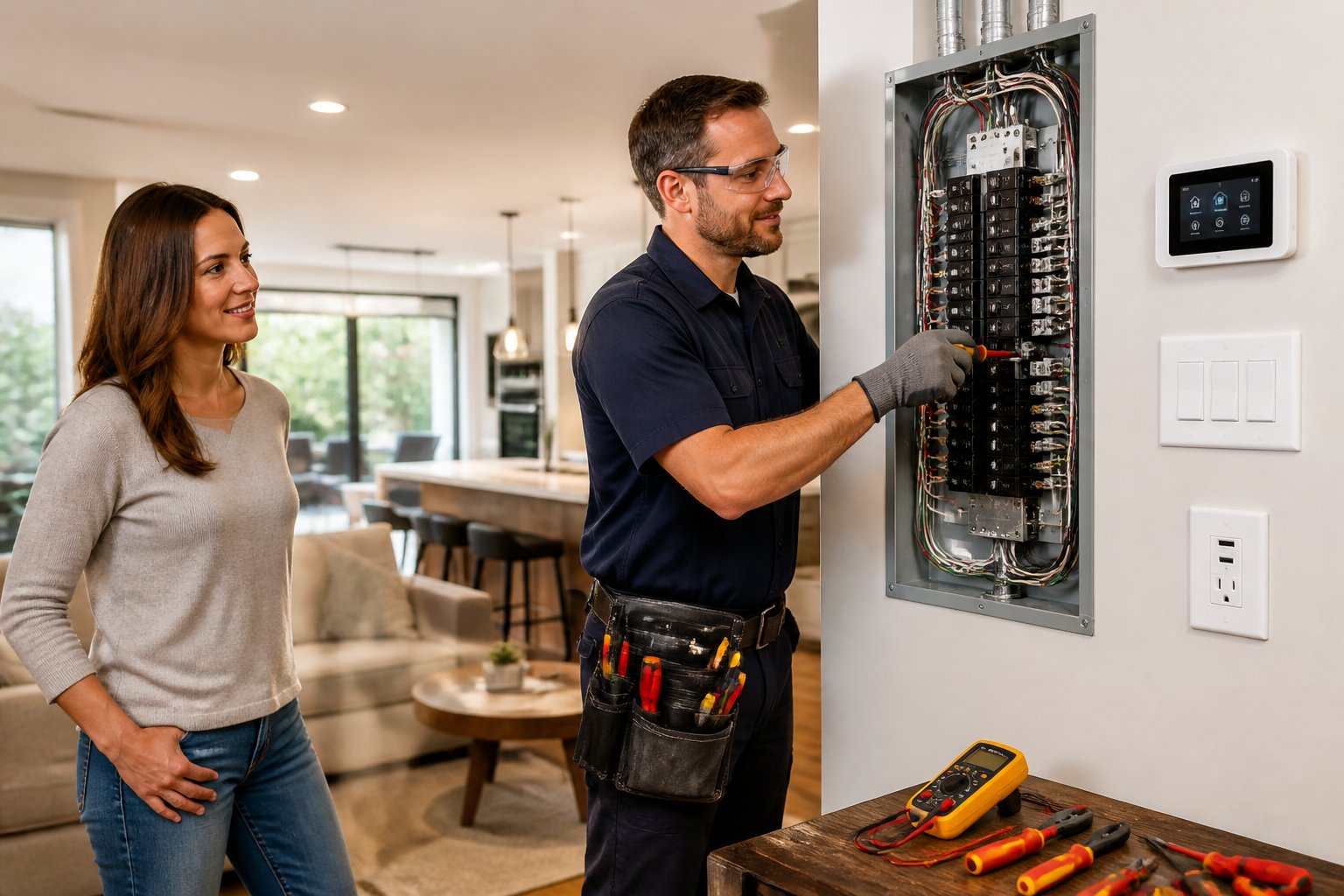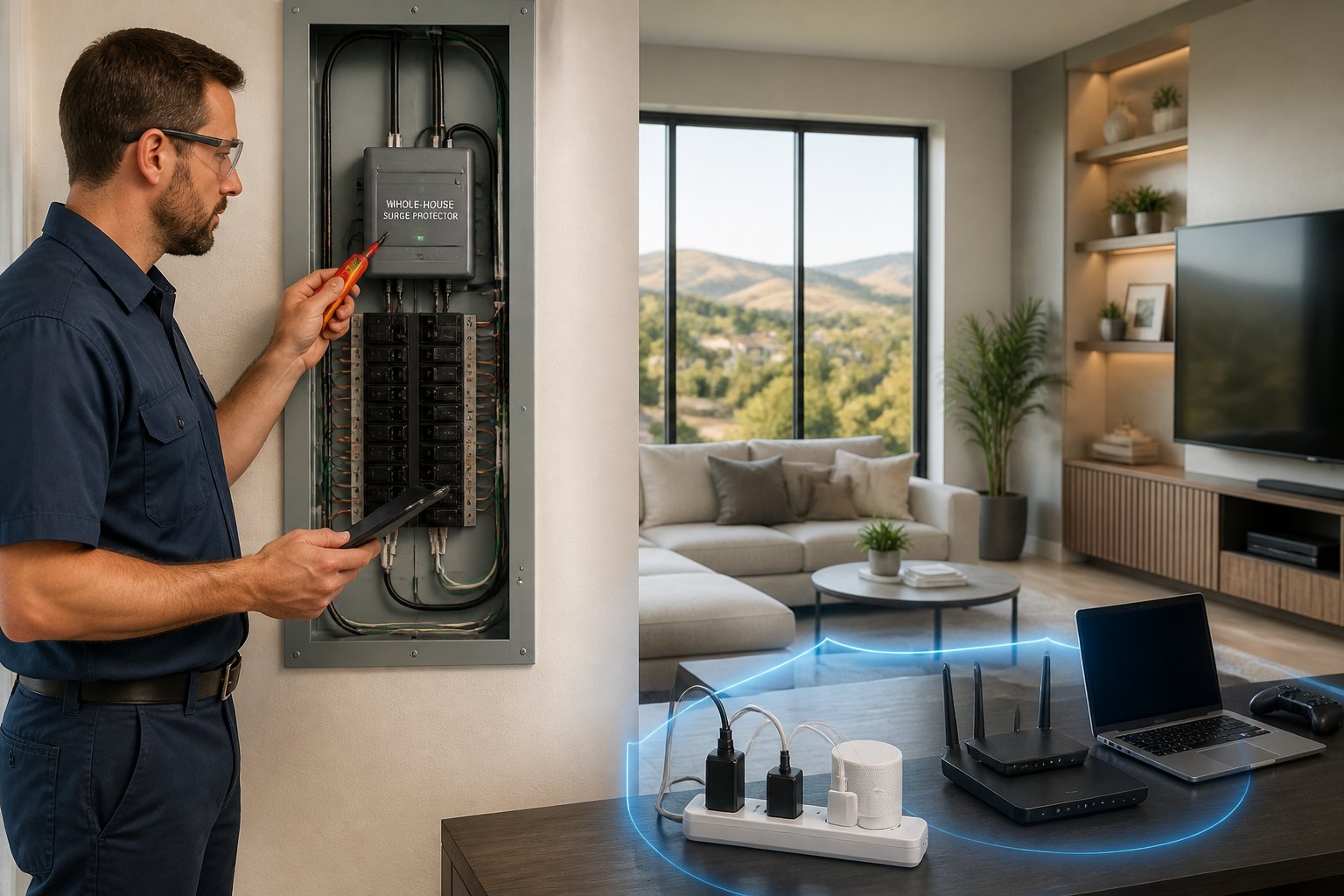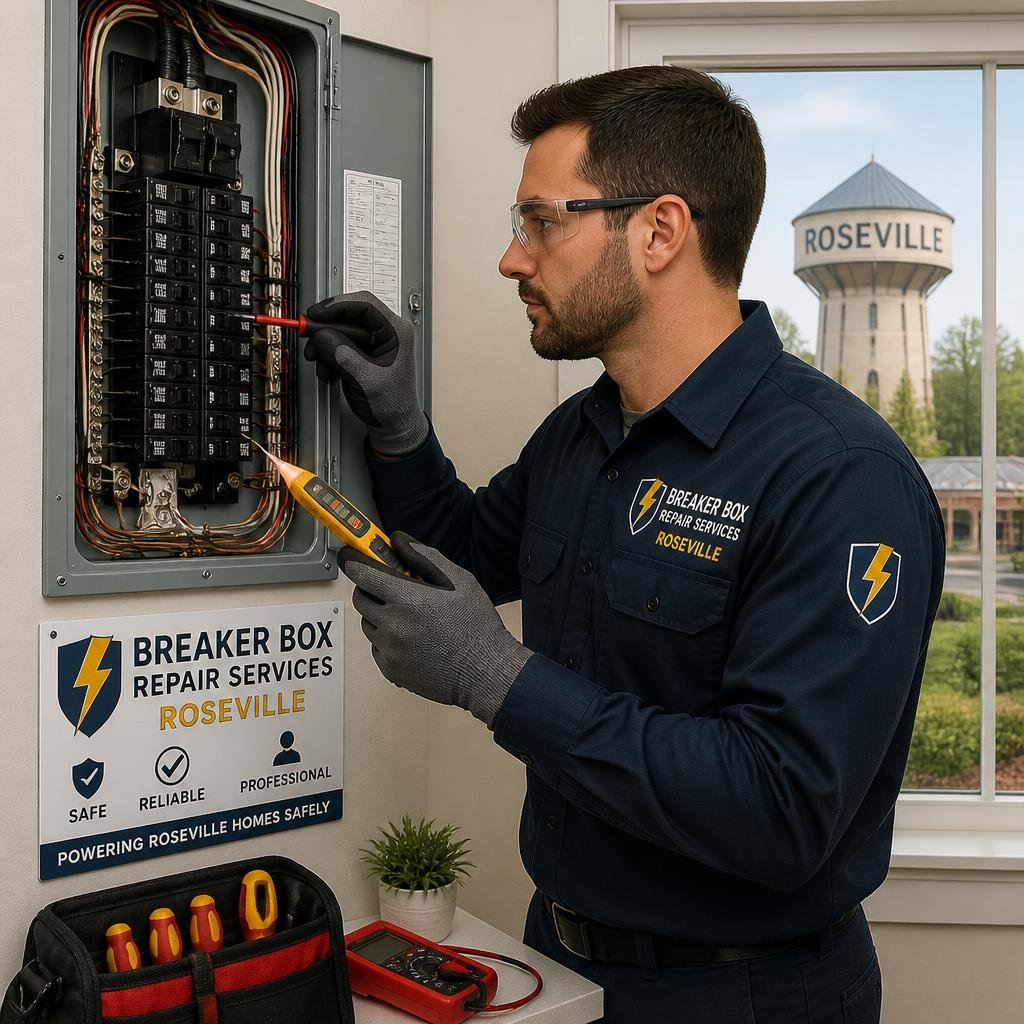
If you’re searching for breaker box repair services Roseville, let’s be real—you probably just want your power back on fast and safely, and you’d like someone to actually explain what’s wrong without all the jargon. In most homes, the culprit is often a worn breaker, a loose connection, an overloaded circuit, or just an old panel that can’t keep up with modern life.
A good repair job starts with a safety check—looking over the panel, the wiring, and how much power your home is actually using. That way, you’re less likely to deal with the same headache again or, worse, a fire hazard.
When you call for breaker box repair, expect a licensed electrician to run some tests, break down the cause in straightforward terms, and let you know if a repair will cut it—or if a panel upgrade is the smarter move. In Roseville, older homes or houses loaded up with new appliances and electronics often run into these issues.
Common Breaker Box Problems in Roseville Homes
Breaker box trouble usually gives you a heads-up before things get serious. Maybe you spot frequent trips, notice weak power in certain rooms, or hear weird noises from the panel. If your place still has a fuse box, you might see even more quirky symptoms.
Frequent Breaker Trips
If a breaker trips once in a while, it’s probably just doing its job. But if it keeps tripping, you might be dealing with an overloaded circuit, a worn-out breaker, or something that’s just drawing too much juice.
This pops up a lot in Roseville kitchens, garages, laundry rooms, or anywhere you’ve got space heaters or window AC units. If you’re resetting the same breaker over and over, it’s time for a closer look.
Flickering Lights and Partial Power Loss
Lights that flicker when something like the microwave kicks on? That’s usually a loose connection, a tired breaker, or a circuit that’s stretched thin. If some outlets work while others don’t, something’s probably up inside the panel or with the wiring on that branch.
These issues might seem like minor annoyances at first, but they tend to get worse with time, heat, and vibration.
Burning Smells, Heat, or Buzzing Sounds
If you catch a burning smell near the panel, feel warm cover plates, or hear buzzing from the breaker box, don’t ignore it. Those signs mean there could be arcing, overheating, or a breaker failing under load.
If you notice any of this, shut off power to the area (if it’s safe) and call for service right away. Don’t take chances with the panel.
When an Old Fuse Box Becomes a Safety Concern
A fuse box can still function in some homes, but age really does matter. If you’re blowing fuses all the time, or you see overheating signs, your system probably isn’t up for today’s electrical needs.
Old fuse boxes just don’t match up with how most people use their homes now. More gadgets, more appliances—sometimes you just need more capacity and better protection.
When a Repair Is Enough and When You Need More
Some issues only need a breaker replacement, a tightened connection, or a simple part swap. But sometimes, there’s a bigger problem, and panel upgrades are the safer bet.
A sharp electrician will look at what’s happening and why. That way, you’re not stuck paying for fixes over and over when the real problem is a panel that’s just too old or too small for your needs.
Repairing a Faulty Breaker or Connection
If just one breaker is bad, swapping it out might fix everything. Loose lugs, worn terminals, or damaged slots can also be repaired—assuming the rest of the panel’s in decent shape.
Targeted repairs like these work best when the panel isn’t falling apart and the circuit isn’t overloaded. Sometimes, a quick fix is all you need.
Signs the Electrical Panel Is Overloaded
Do your lights dim when you turn on big appliances? Are you tripping breakers during normal use, or relying on power strips everywhere because you’re out of outlets? Your panel might be overloaded. Heat at the panel is another red flag.
An overloaded panel isn’t just annoying—it can wear out breakers faster and set you up for bigger electrical headaches.
When Panel Upgrades Make More Sense Than Repeated Repairs
If you’re constantly fixing new problems, it might be time for a panel upgrade. This is especially true if the panel’s outdated, corroded, or just can’t handle what you’re throwing at it.
One-off repairs are fine for isolated issues. But if you’re seeing a pattern, the panel itself might be on its last legs.
How Added Appliances, EV Chargers, and Remodels Change Capacity Needs
Adding new appliances, a hot tub, an EV charger, or doing a remodel can push your electrical load way up. Sometimes, just one high-demand device is enough to tip an older panel over the edge.
If you’re planning upgrades, think about your power needs now—before the work’s done. It’s way easier to add the right support up front.
What an Electrician Will Check During Service
A thorough service call is more than just flipping breaker handles. You should expect real testing, a careful inspection, and a load check so the cause is clear before anyone grabs a screwdriver.
The electrician will also check the panel’s condition, nearby wiring, and look for water or corrosion. If you’ve still got a fuse box, they’ll give that the same careful once-over.
Breaker Testing and Load Evaluation
The electrician will test the breaker to see if it’s tripping for a reason or just failing. They’ll check how much load the circuit carries and see if a specific device is causing the issue.
This helps figure out if you’ve got a bad breaker or a real overload—two problems with very different fixes.
Wiring, Moisture, and Corrosion Inspection
Loose wires, rust, stains, or any moisture around the panel are trouble. Corrosion weakens connections and makes everything less reliable.
If there’s ever been water near the panel, the electrician will want to know where it came from. Even a slow drip can lead to bigger issues down the line.
Checking for Code and Safety Issues
They’ll look for missing knockouts, bad labeling, outdated breakers, or cramped spacing. All this affects how the panel performs and whether it can be serviced safely in the future.
If your home needs a panel upgrade, code issues often pop up during this inspection. A good review helps you plan next steps—hopefully with fewer surprises.
Recommendations After Diagnosis
After the electrician finishes testing, you should get a straightforward rundown: what failed, what can be fixed, and what you might want to keep an eye on. If your panel’s on its way out, they should just say so.
A solid recommendation should focus on safety, capacity, and what makes sense for your home. You’ll want to know if it’s a quick fix or if a bigger update is the smarter investment.
Repair Timing, Cost Factors, and Service Expectations
How long and how much breaker box work takes depends on the problem, the panel’s shape, and how easy it is to get to everything. Some repairs are quick, but bigger jobs—especially panel upgrades—can stretch out.
You should expect upfront pricing and a clear plan before work starts. For a lot of folks, that’s just as important as the repair itself.
What Affects the Final Price
Costs shift based on breaker type, panel age, wiring condition, and whether you need new parts. Labor time adds up, especially if the panel’s stuffed or tucked away in some weird spot.
If it’s just one breaker, you might get off easy. But if there’s damaged wiring or signs of wear, the bill can grow.
Same-Day Repair vs. Multi-Step Work
Some problems get fixed the same day, especially if the electrician has the right parts on hand. Stocked vans really help—no one likes waiting for a second visit.
If they uncover deeper issues, repairs might happen in stages. That could mean testing first, fixing something small, then coming back for a bigger update if needed.
When Permits or Utility Coordination May Be Needed
Swapping out a breaker usually doesn’t need much red tape. But bigger panel jobs, service changes, or panel upgrades might require permits—or even utility company coordination.
That process keeps everything safe and up to code. Your electrician should fill you in on what’s needed before starting.
How to Prevent Repeat Electrical Issues
You can dodge a lot of future breaker headaches by spreading out your power use and getting things checked now and then. Small tweaks today can save you from bigger outages down the road.
If your home’s getting older or you’re planning big upgrades, it pays to think ahead. Sometimes, a smart panel upgrade now saves a lot of hassle later.
Reducing Circuit Overloads
Try not to pile high-demand gadgets on the same circuit. Space heaters, microwaves, hair dryers, and laundry machines can max things out fast.
If one room always trips the breaker, maybe it’s time to plug in elsewhere or look at improving that circuit. Sometimes, just moving things around really helps.
Planning for Safer Home Upgrades
Thinking about an EV charger, new appliance, or remodeling? Ask about your panel’s capacity before you start. The right plan might mean panel work, new circuits, or a bigger panel upgrade.
It’s just easier (and safer) to build in extra capacity than to scramble for it later.
Scheduling Inspections for Older Systems
Older electrical setups really benefit from regular checkups, especially if the house has had additions or patchwork repairs. A tired fuse box or aging panel can hide problems you won’t notice until something goes wrong.
An inspection can catch loose connections, corrosion, or overloads before they turn into outages. For older homes, that peace of mind can be worth a lot.
Frequently Asked Questions
How much does it typically cost to repair an electrical panel issue?
It depends on what’s wrong, how old the panel is, and if you need new parts. Swapping a breaker is usually cheaper than fixing damaged wiring or dealing with corrosion.
Who should I call when a circuit breaker keeps tripping and won’t reset?
Call a licensed electrician right away. If the breaker won’t stay on, you could have a bad breaker, an overloaded circuit, or something wrong in the wiring.
What are the most common signs that an electrical panel needs repair?
Watch for frequent breaker trips, flickering lights, warm panel surfaces, buzzing, and burning smells. If you’re losing power in part of the house, get the panel checked soon.
Does homeowners insurance usually cover electrical panel repair or replacement?
It varies by policy and why the damage happened. Insurance might help if it’s from a covered event, but normal wear and tear or old age usually aren’t included.
Can I upgrade my electrical panel without rewiring the entire house?
Yes, often you can get a panel upgrade without tearing out all the wiring. The electrician will check if your current wiring is safe and compatible before suggesting bigger changes.
How quickly can an electrician respond to a breaker box problem at a home?
It really depends—sometimes electricians can swing by the same day if it’s urgent, like if your breaker keeps tripping, you smell something burning, or you’ve lost power. If they’ve got the right parts on their truck and a gap in their schedule, you might not have to wait long at all.