Bathroom exhaust fan installation in Elk Grove is honestly one of those practical upgrades that just makes sense—especially if your bathroom always feels damp, foggy, or just tough to keep smelling fresh. If your mirror stays fogged up forever or you catch a musty whiff after a shower, odds are your fan isn’t moving enough air.
Solid bathroom exhaust fan installation keeps ventilation on point, protects your indoor air, and helps you dodge that sneaky moisture damage that creeps up over time. In Elk Grove, where folks want a comfy home and reliable work, both the fan and the installation need to be right.
When the job’s done well, you don’t just get a quieter bathroom. You’ll notice better moisture control, fresher air, and less wear on paint, drywall, trim, and fixtures.
When a Bathroom Needs an Exhaust Fan
Bathrooms need dependable ventilation any time steam, humidity, or odors stick around longer than you’d like. In California, if there’s a tub or shower, code expects proper ventilation—usually with an exhaust fan.
If what you’ve got isn’t cutting it, the signs tend to creep in quietly. Catching them early can save you a headache (and money) later.
Signs Your Current Ventilation Isn’t Enough
Maybe your fan’s too small, too noisy, or just venting poorly. You might spot lingering steam, peeling paint, condensation on the windows, or that damp, swampy smell after showers.
And if your mirror stays fogged long after you’re done, or the room still feels clammy 15-20 minutes later? The fan’s probably not keeping up.
Why Moisture Buildup Gets Worse Over Time
Moisture doesn’t just vanish. It seeps into drywall, softens caulk, and sets the stage for mildew.
That humidity can even spill into nearby rooms if the bathroom isn’t venting well. What starts as a minor comfort issue can quietly become a real repair job.
How Better Airflow Protects Surfaces
Good ventilation pushes wet air outside before it can settle on anything. Less strain on paint, less swelling in trim, fewer stains around vents and ceilings.
It also helps metal fixtures, mirrors, and lighting last longer. In homes with shared HVAC, it can keep unwanted humidity from drifting through the house.
Choosing the Right Fan for Your Space
Pick a fan that fits your room size, ceiling height, and how much you use the bathroom. The best fan isn’t always the strongest—it’s the one that moves enough air without blasting your ears.
Features matter, too. Good exhaust fan installation should support air quality and actually fit how you use the space.
Fan Sizing by Bathroom Layout and CFM
CFM (cubic feet per minute) tells you how much air the fan moves. Smaller powder rooms need less airflow than full baths with showers or tubs.
Long bathrooms, high ceilings, or layouts with a separate water closet might need a beefier fan. If you take lots of steamy showers, sizing really starts to matter.
Quiet Models, Lights, Timers, and Sensors
A quiet fan actually gets used—because it’s not annoying. That alone helps with moisture.
Timers and humidity sensors are handy. A timer keeps the fan running long enough after you shower, while a sensor can flip it on when things get too damp.
Fan Placement and Duct Routing
Where you put the fan impacts how well it pulls steam out. Usually, it works best near the shower or tub, but you have to work with what the framing and wiring allow.
Duct routing is just as important. A short, straight run to the outside beats a long, twisty one every time. It’s worth planning before any ceiling fan or exhaust work.
What the Installation Process Usually Involves
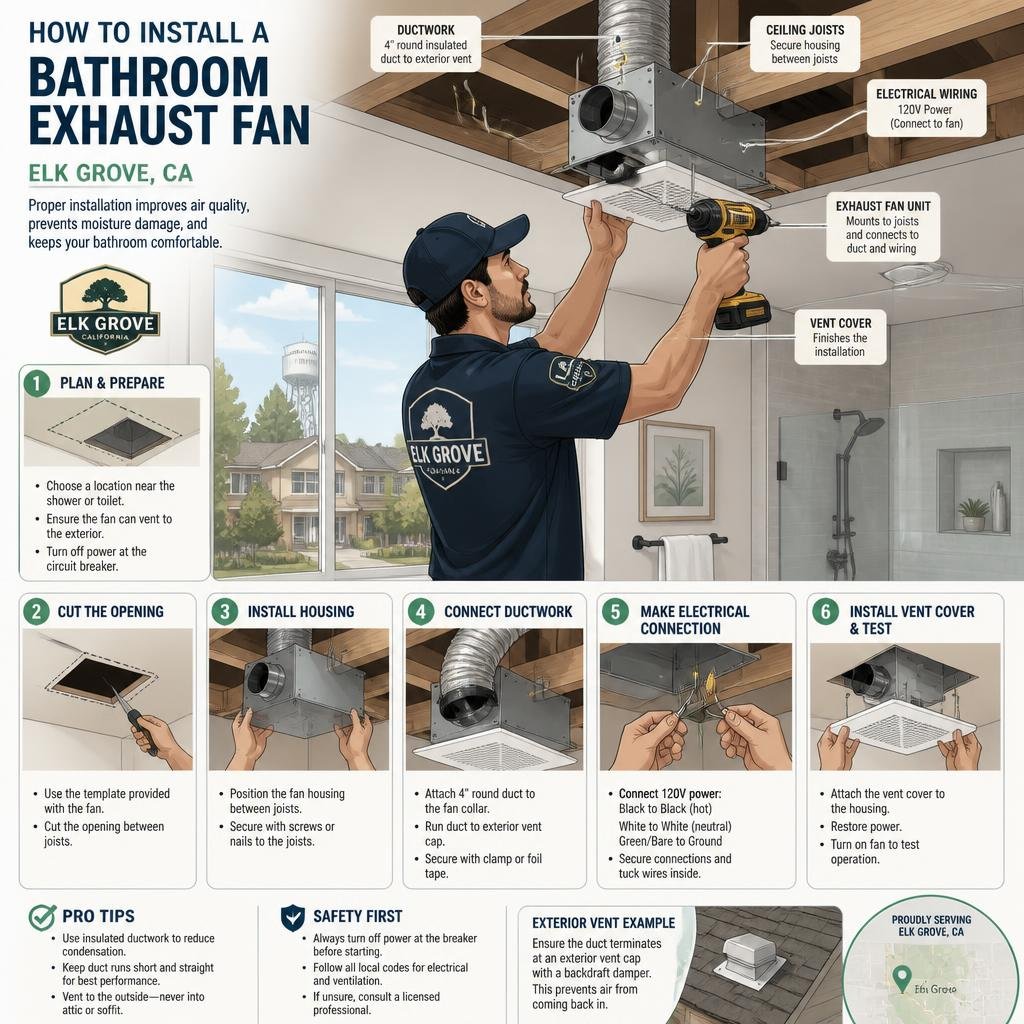
Exhaust fan installation is more than just swapping a cover or plugging in a new unit. It usually means electrical work, ceiling or wall access, ducting, and venting to the outside.
You want that moist air going outdoors—not into your attic or some other closed space. That’s where careful work really pays off.
Electrical Connections, Switches, and Circuit Stuff
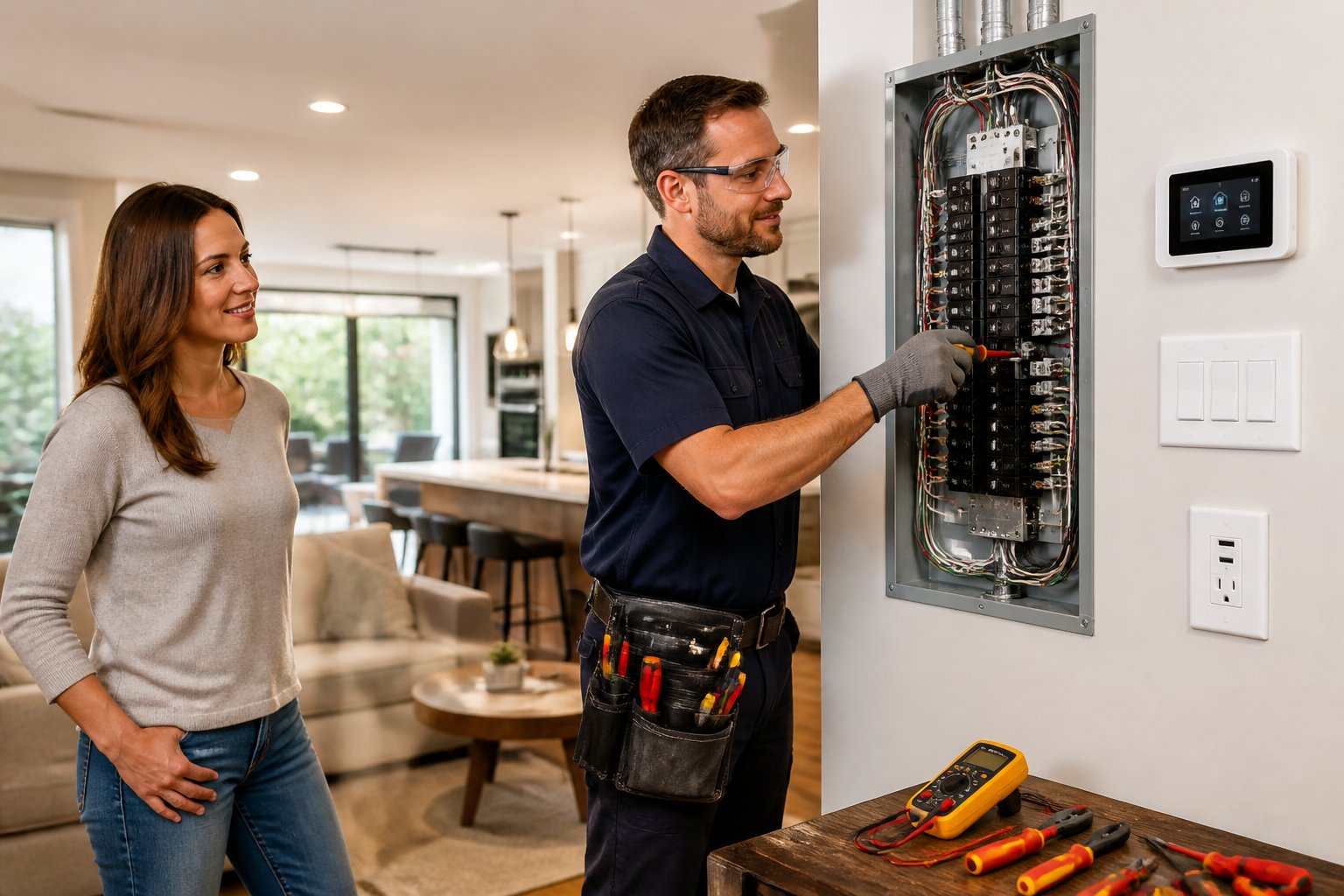
Installers check the circuit breaker, wiring, and switch setup first. Sometimes they can use the old wiring, but other jobs need a new switch, a stronger circuit, or a dedicated control.
Safe electrical work is key since the fan ties into your home’s power. If there’s a light or heater, wiring gets trickier.
Cutting the Opening and Mounting the Fan
If the space is ready, they’ll pull the old fan and fit the new one. For new installs, they’ll cut the opening, secure the housing, and make sure it’s mounted right.
Measuring matters. A loose mount rattles, makes noise, and wears out faster.
Venting Outside—Not Into the Attic
The duct should go straight outside through a roof or wall vent. Sending air into the attic just moves the moisture problem.
A good install keeps the duct sealed, insulated where needed, and angled to avoid condensation. That protects both the fan and your house.
Final Testing for Airflow and Noise
Once the fan’s in, test it at the switch and at the vent exit. You want steady airflow, normal sound, and no rattles.
A pro will check that the fan starts and stops as it should. At AAA Electrical Services, licensed pros handle the electrical work with clean workmanship and honest pricing.
What Affects Price in Elk Grove
Exhaust fan installation cost in Elk Grove depends on whether you’re replacing an old fan or starting fresh. The electrical setup, duct route, and access to the attic or roof can all change labor time.
A clear scope lets you compare bids for real, not just chase the fastest quote.
New Install vs. Replacing an Old Fan
Replacing an existing fan is usually easier if the wiring, switch, and duct are fine. New installs take longer—they might mean opening the ceiling, adding wiring, and routing vents.
If the old fan’s damaged or too small, replacement may still need extra repairs. That can raise the price, especially if there’s hidden damage.
Wiring, Ductwork, and Vent Complexity
If the installer has to work around tricky framing, insulation, or tough-to-reach exits, the price can go up. Long duct runs and tricky roof access add labor.
If you need a circuit breaker upgrade or wiring fix, that bumps up the cost. Fans with lights, timers, or sensors also cost more than a basic swap.
Why a Detailed Scope Matters
A detailed scope tells you what’s included before anyone starts. It should list labor, materials, vent routing, and any electrical changes.
That’s the best way to avoid surprises and compare exhaust fan installation in Elk Grove fairly. Honest pricing. No gotchas.
Safety, Code, and Hiring Stuff
Bathroom ventilation and electrical work really need to be handled right—they both tie into home safety. The fan has to work, connect properly, and vent outside in a way that fits code and your home’s setup.
Picking the right installer matters. You want someone who actually knows HVAC and electrical basics, not just someone with a saw and a screwdriver.
Why Bathroom Ventilation and Electrical Work Need to Be Right
Bad wiring can cause breaker trips, fan failures, or unsafe connections. Bad venting can dump moisture into your attic, and that’s a recipe for mold and insulation headaches.
Done right, installation supports good ventilation and protects your home for the long haul. Plus, you get peace of mind every time you use the bathroom.
What to Look for in Installers
Look for licensed, insured, background-checked techs who actually install bathroom exhaust fans regularly. Experience with breakers, wiring, and venting is a must.
You should get clear communication and neat work. Teams with stocked vans can often knock out more jobs in one visit, which keeps things moving.
Questions to Ask Before Booking
Ask if the fan vents outside, if you can use existing wiring, and if the quote covers drywall repair. It’s also smart to ask who handles any permits or inspections.
If you’re calling AAA Electrical Services, ask about same-day service, flat-rate pricing, and that $35 off first-service deal for new Elk Grove customers.
Maintenance and Replacement Tips
A bathroom fan lasts longer if you keep it clean and use it right. Small habits help air quality, moisture control, and just make your space nicer.
If the fan starts acting up, don’t wait. Weak fans rarely fix themselves.
How to Keep a Bathroom Fan Running Well
Turn the fan on before or at the start of your shower, and let it run long enough to clear the steam. Wipe dust off the cover and grill every few months.
If your model has a washable grille or filter, clean it as recommended. Dust and lint can choke airflow faster than you’d think.
When Noise, Weak Airflow, or Odors Mean It’s Time to Replace
A noisy fan might mean worn bearings or a dying motor. If the airflow’s weak even after cleaning, the unit could be too small or just old.
Lingering odors, repeated moisture, or breaker trips are also red flags. At that point, new exhaust fan installation is usually a better fix than another patch.
Simple Habits for Long-Term Comfort
Keep the bathroom door cracked after showers if you can. That helps moisture clear faster and takes some strain off the fan.
Watch for condensation on walls, ceilings, and mirrors. Those are your clues about how well ventilation is working.
Frequently Asked Questions
How much does it usually cost to have a bathroom exhaust fan installed?
Costs depend on whether you’re swapping an old fan or doing a brand-new install, plus how tough it is to run wiring and ductwork. Simple replacements are often modest; new installs with electrical or vent changes cost more.
Do electricians or plumbers install bathroom exhaust fans?
Electricians usually handle the wiring, switches, and circuits. Some HVAC or general home pros may install fans, too, if they do both electrical and venting.
Can a handyman install a bathroom exhaust fan, or do I need a licensed pro?
Some basic swaps look simple, but the electrical and venting still matter. If you need new wiring, circuit changes, or a new duct to the outside, go with a licensed pro.
What factors affect the total price of a bathroom fan installation?
Fan size, wiring needs, duct length, attic or roof access, and whether you need a new switch all matter. Features like lights, timers, and sensors can bump up the price too.
How long does a typical bathroom exhaust fan installation take?
A basic replacement might take just a few hours. A new install with electrical work, ceiling cutting, and exterior venting takes longer—especially if there’s tight framing or hidden damage to work around.
Do I need a permit to install or replace a bathroom exhaust fan?
Whether you need a permit really depends on what you're doing and what your local codes say. If you’re adding new wiring, changing circuits, or making structural changes, it’s probably a good idea to ask before scheduling. Elk Grove might have its own take on these rules, so checking ahead saves headaches later.