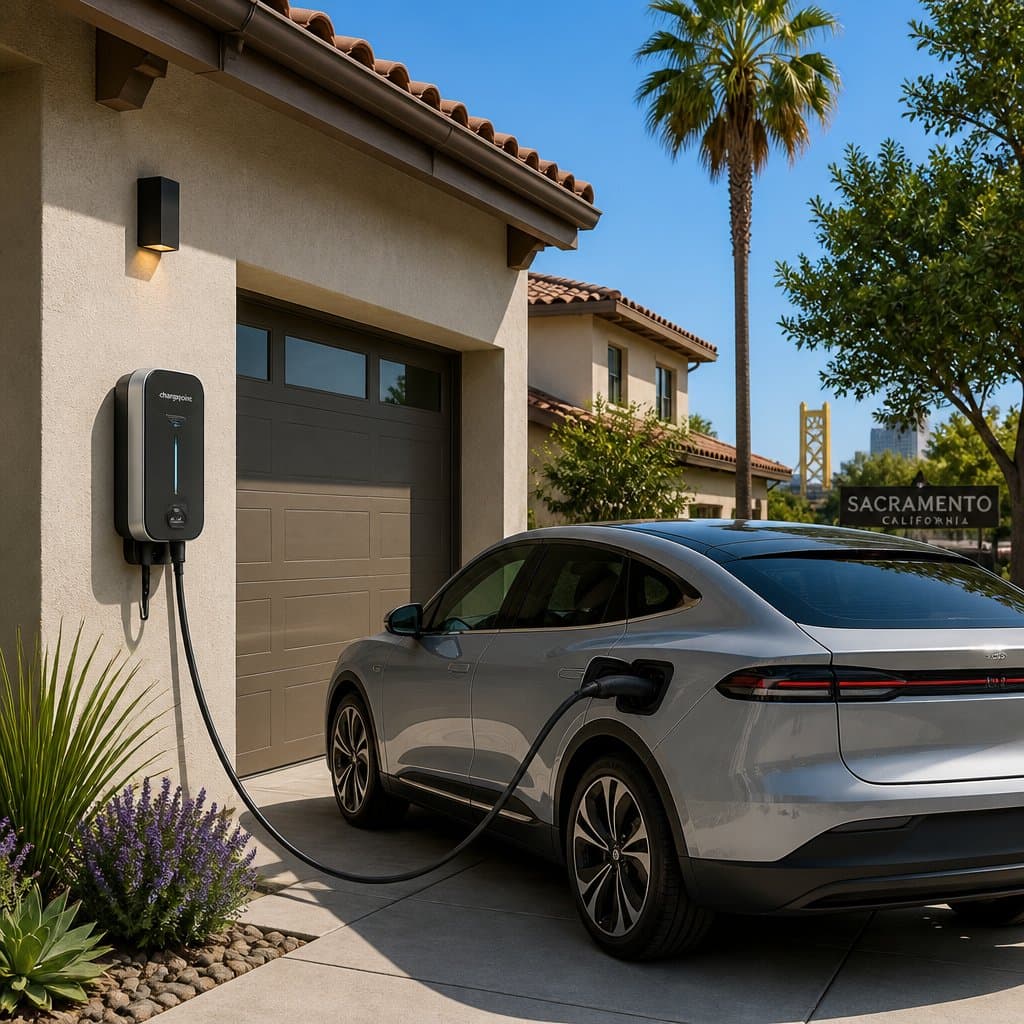
EV home charger setup in Sacramento, CA is honestly one of the best upgrades you can make if you drive electric and want to avoid the grind of public charging. With a little planning, you can set up a system that fits your daily routine, works with your home’s electrical setup, and spares you from waiting in line at public stations.
The right home EV charger setup means safer charging, more convenience, and a system that’s ready for your routine now—and whatever comes next. If you’re thinking about getting a charger, the main steps are pretty straightforward: check your panel, pick a charger, install a dedicated circuit, and test everything before you plug in for the first time.
For most homes, the process is simple—especially when you call in certified electricians. AAA Electrical Services sticks to a family-safety-first approach, with honest pricing, same-day service when possible, and flat-rate quotes to keep surprises out of the picture.
How Home Charging Works for Sacramento Drivers
A home EV charger lets you plug in overnight and wake up to a much more predictable battery level. For most folks in Sacramento, home charging isn’t about blazing speed—it’s about having a reliable routine that fits work, errands, and the occasional weekend trip.
The best setup depends on your daily miles, how long your car parks at home, and whether your electrical system can handle a dedicated circuit. That’s why it pays to compare charger types before picking your setup.
Level 1 vs. Level 2 Charging at Home
Level 1 chargers use a regular 120-volt outlet and, honestly, they’re slow. They can work for plug-in hybrids or if you don’t drive much, especially if your car sits parked for long stretches.
Level 2 chargers use a 240-volt circuit and get the job done much faster. For most households, a Level 2 charger just fits better—it keeps up with daily commutes and busy family schedules.
How Long Overnight Charging Usually Takes
Charging time depends on your car, battery size, and how much juice you have left when you get home. Level 1 might only add a modest amount of range overnight. Level 2? It usually restores a lot more in the same time frame.
If you come home with a low battery and need to be out again in the morning, Level 2 is usually the safer bet for daily convenience. It’s really about matching your charger to your actual driving patterns—not just chasing the fastest option.
When a Dedicated Home Charging Station Makes Sense
A dedicated home charging station starts making sense when charging with a basic outlet just isn’t cutting it. If more than one person in your household drives an EV, you’ll really notice the difference.
Dedicated equipment gives you neater cable management, better safety, and more reliable charging than any extension-cord workaround. In a lot of Sacramento homes, a dedicated charger just feels like the obvious long-term move.
What Your Home Needs Before Installation Begins
Before anyone installs an EV charger, your electrician should check your panel, the wiring path, and where you want the charger. A safe setup starts with a real look at your system—not just picking equipment off a shelf.
For many homes, professional installation is a breeze. Sometimes, though, your electrical system needs a little work before you can safely add a new circuit.
Electrical Panel Capacity and Load Calculations
Your panel needs enough spare capacity for the charger and everything else running in your house. Certified electricians check the load to make sure the new charger won’t overload the system when other appliances are on.
This matters more in older homes or places with a lot of big electrical loads already. Careful calculations help avoid nuisance breaker trips and bigger headaches.
When an Electrical Panel Upgrade Is Needed
You might need a panel upgrade if your current one is full, outdated, or too small for a Level 2 charger. Homes with older 100-amp service? Those definitely need a closer look before you start.
Upgrading your panel can also prep you for the future—think another EV, a hot tub, or other high-demand gear. That’s where professional installation pays off down the road, not just right now.
Best Placement for Garage, Driveway, or Outdoor Setups
Garage installs are usually the easiest—the wiring path is short, and the charger’s protected. Driveway and outdoor setups can work too, as long as the charger is rated for outdoor use and mounted right.
Placement depends on how you park, cable reach, and whether there’s shelter from weather or the risk of damage. Good placement makes daily charging safer and way less of a hassle.
The Installation Process From Assessment to Final Testing
A solid install follows a clear sequence, from the first visit to the final test. That keeps the job neat, code-compliant, and ready for daily use.
Most installers start by checking your electrical system and finish with a live test of the charger. Certified electricians should also walk you through the app or controls before heading out.
Site Visit, Quote, and Charger Selection
First up is a site visit to check your panel, parking spot, and cable route. That helps the electrician give you a flat-rate quote based on what’s actually needed.
Pick a charger that fits your vehicle, driving habits, and your home’s electrical capacity. You don’t need the most powerful model—just one that matches your needs.
Permits, Code Compliance, and Dedicated Circuits
A lot of Sacramento installs need permits and must meet local codes. A qualified installer usually handles permits and puts the charger on its own circuit.
Dedicated circuits cut overload risk and keep your charger from sharing power with other stuff. That’s just basic, safe installation.
Testing, App Setup, and Safe First Use
Once everything’s mounted and wired, the electrician tests voltage, charging function, and breaker performance. If the charger uses an app, now’s the time to connect it and walk through the basics.
A safe first use means checking cable reach, making sure the unit starts charging, and knowing how to stop it if needed. Don’t let anyone rush you here—take your time.
Costs, Upgrades, and What Changes the Price
EV charger costs really do vary. The charger itself is only one piece—labor, wiring, and upgrades can shift the final price.
Most installation services quote based on distance, equipment, and whether your panel can handle the new load. If upgrades are needed, you should get those costs up front.
Distance From Panel to Charger Location
The farther the charger is from your panel, the more wire, conduit, and labor it takes. A short garage run is usually cheaper than a long trek to a detached driveway or side yard.
Outdoor setups can tack on weatherproofing and extra work. Those details often explain why a home charger install costs more than just the hardware.
Panel, Breaker, and Wiring Upgrade Costs
If your panel is full or outdated, upgrading it might be part of the project. Sometimes, breaker and wire size need to be bumped up to match the charger’s demand.
These upgrades add to the cost, but they also boost safety and set your home up for future charging needs. When it’s done right from the start, things just work better for years.
Value of Doing EV Work Right the First Time
Cutting corners on EV work? That’s a recipe for overheating, tripped breakers, or code issues. A proper install gives you safer charging and fewer headaches later.
That’s why so many people go with a pro installer instead of a quick DIY patch. When the job uses the right materials and gets tested properly, your setup just runs smoother.
Choosing a Safe and Future-Ready Setup
A good install should fit your current EV and leave some wiggle room for changes. If there’s a chance you’ll add another vehicle or need more power, plan for it now.
Safe, future-ready charging really depends on the installer’s skill and how well the equipment fits your property. This kind of planning matters for bigger properties and commercial setups too.
Planning for a Second EV or Higher Charging Demand
Thinking about a second EV? Ask about load management or a panel that can handle more later. Planning ahead now can save you from another big upgrade soon.
If you see more remote work, more driving, or a bigger battery car in your future, it’s worth thinking about. A little planning now saves a lot of hassle later.
Why Certified Installation Protects Your Home
Certified electricians know how to size circuits, protect wiring, and meet local code. That lowers the risk of hidden problems that could affect safety.
AAA Electrical Services sends out licensed, insured, background-checked, state-certified techs. That’s important when you’re adding a high-demand load to your house. Safety-first work by real pros just gives you more peace of mind.
Options for Homes, Multi-Unit Properties, and Small Businesses
The basics don’t really change whether you’re charging at a house, a multi-unit building, or a small business. The equipment and planning just scale up to fit the site.
A commercial charger setup might need more capacity and different planning than a home install, but the goal stays the same—reliable charging that’s safe, efficient, and ready for daily use.
Frequently Asked Questions
How much does it usually cost to install a Level 2 charger at home?
A Level 2 install can land all over the map price-wise. Charger cost, wiring distance, and your panel’s condition all play a part. Simple setups cost less, but if you need a panel upgrade or a long wire run, expect to pay more.
Do I need an electrical panel upgrade before adding a home EV charger?
Not always. If your panel has enough space and capacity, you might be able to add a charger without a big upgrade. Still, a load calculation is a must.
Which home charger is best for my EV, including Tesla, and my daily driving needs?
The best charger matches your vehicle, your daily miles, and your home’s electrical setup. Tesla and most other EVs work with the right home charging station, so focus on what fits your routine—not just the brand.
How long does a typical home EV charger installation take from start to finish?
A lot of installs wrap up in about a day if the site’s ready and no major upgrades are needed. If you need permits, panel work, or long wiring runs, it can take a bit longer from the first visit to final testing.
Are permits and inspections required for a home EV charger installation, and who handles them?
In most Sacramento jobs, permits and inspections are required. A pro installer usually handles the paperwork and makes sure everything meets local code before you get the green light.
What does the 80/20 rule mean for EV charging at home?
The 80/20 rule is pretty simple: most folks charge their EV battery from roughly 20% up to around 80% for regular driving. Sticking to this range usually covers daily needs and keeps the battery from hanging out at a full charge all the time—which, honestly, isn't great for its long-term health.