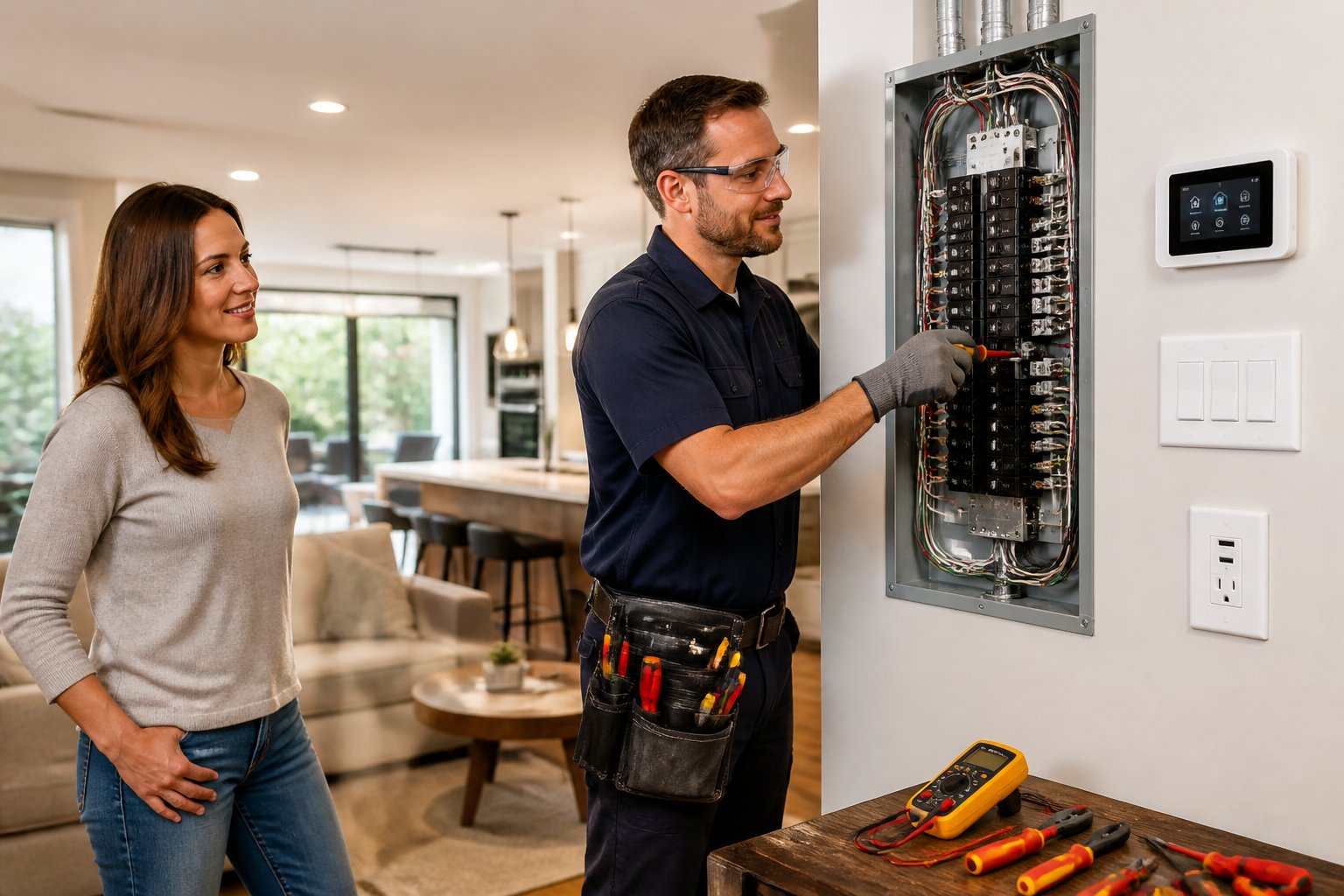
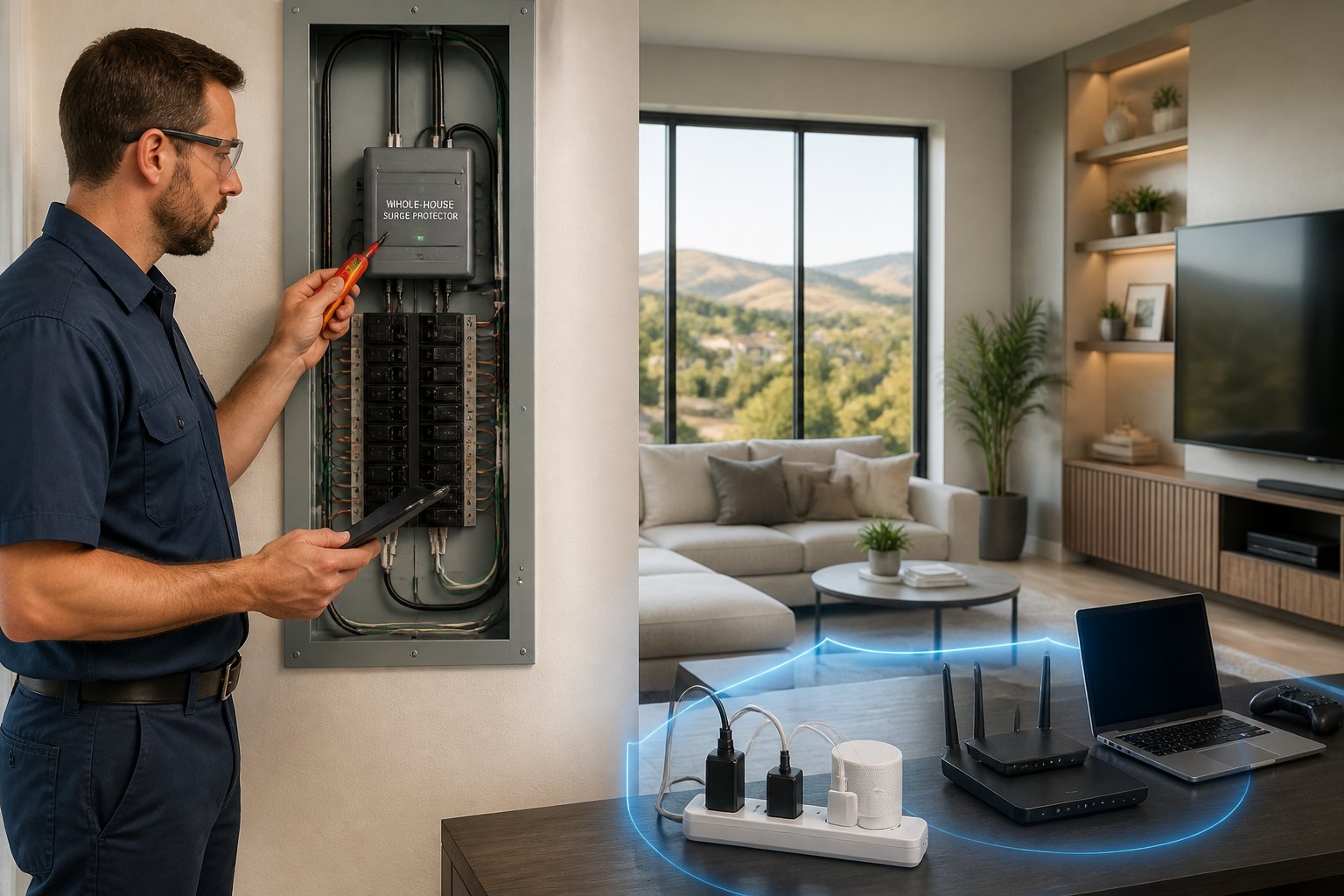
Your circuit breakers do more than just cut the power when something’s off. They’re like little messengers about your home’s electrical health—especially if a breaker starts tripping more often, feels warm, or acts up in odd ways. If you keep an eye on breaker performance, you can spot safety issues early, protect your stuff, and dodge big repairs down the road.
That’s especially true in Sacramento, where older panels, brutal summers, and modern upgrades all put extra pressure on your system. Even a tiny red flag in the panel can mean overloaded circuits, a tired breaker, or a load problem that needs a pro’s attention.
Key Takeaways
- Small changes in breaker behavior can hint at bigger problems.
- Sacramento’s heat and new gadgets can push your panel hard.
- Acting early keeps your family and home safer.
What Breaker Performance Tells You About Home Safety
Circuit breakers are there to protect your wiring and your devices from dangerous overcurrent. By paying attention to how they act, you get a sense of whether your home’s electrical system is running safely—or quietly wearing out.
How Circuit Breakers Protect Wiring And Appliances
Breakers shut off power when a circuit pulls too much current. This keeps wires from overheating and shields your appliances, outlets, and gadgets from damage.
Good breaker performance means it trips when it should, and otherwise just minds its business. If a breaker keeps protecting the same circuit, maybe it’s just doing its job—or maybe that circuit needs a closer look.
What Poor Circuit Breaker Health Can Look Like
When breakers are struggling, you might see frequent nuisance trips, heat around the panel, buzzing sounds, or breakers that don’t reset cleanly. A breaker performance monitor can flag these weird patterns before they become outages or real hazards.
You might notice lights dimming, breaker handles that feel warm, or a panel that seems to work overtime when you’re just using regular appliances. It’s tempting to shrug these off, but they’re worth checking out.
Why Repeated Tripping Should Not Be Ignored
When a breaker trips over and over, it’s not just being annoying. It might be warning you about an overloaded circuit, a dying breaker, a loose wire, or trouble with an appliance.
If the same breaker keeps tripping, treat it as a safety issue, not just a hassle. A licensed electrician can check the circuit, figure out what’s wrong, and recommend a safe fix.
Why Monitoring Matters In Sacramento Homes
Keeping tabs on your breakers gives you a better sense of how your panel handles daily life—especially with changing seasons or new equipment. Real-time or online monitoring can show stress before something fails.
Older Panels And Aging Electrical Components
Lots of Sacramento homes still have older panels and parts that weren’t built for today’s demands. As breakers, bus bars, or connections age, they get less reliable—even if everything seems “fine” on the surface.
Breaker monitoring can help you spot signs of wear, especially in neighborhoods around Sacramento, Carmichael, Fair Oaks, and Rancho Cordova where many panels are already close to their limits.
Summer Cooling Loads And Seasonal Power Stress
Sacramento summers are no joke for electrical systems. Air conditioners, fans, fridges, pool pumps—they all run hard and long.
During those peak heat waves, monitoring helps you see when your panel is running close to its limit. Repeated heat stress can wear out breakers and other parts faster than you’d think.
Newer High-Demand Upgrades That Change Electrical Load
EV chargers, hot tubs, kitchen remodels, home offices, solar gear—all of these can change your home’s electrical needs. Sometimes a house that never had issues starts having breaker problems after an upgrade.
Breaker monitoring lets you see if your panel still fits your household. That’s especially handy if you’re planning upgrades in Elk Grove, Folsom, Roseville, or Natomas.
Common Warning Signs Homeowners Can Catch Early
Preventative maintenance helps you catch problems before they turn into emergencies. Predictive maintenance goes a step further, spotting warning patterns so you can act before something fails.
Buzzing Heat And Burning Odors Near The Panel
If you hear buzzing, feel heat, or smell burning near your panel, don’t ignore it. These can mean loose connections, failing breakers, or overheating inside.
Odors that are sharp, smoky, or plastic-like? That’s a big red flag. Turn off the affected circuit if you can do it safely and call for help right away.
Flickering Lights And Intermittent Power Loss
Flickering lights, outlets that cut out, or brief power loss can point to a breaker or connection problem. Sometimes it’s just one circuit, other times it hints at bigger panel or wiring issues.
Watch for these in older homes—little electrical quirks can quietly get worse over time. Getting them checked early can save you from surprise blackouts.
Breakers That Feel Loose Weak Or Unreliable
A breaker that feels loose, weak, or inconsistent when you reset it is probably on its way out. You shouldn’t have to force it, and it shouldn’t feel wobbly.
If a breaker won’t stay set, trips too easily, or just feels “off,” get a pro to check it. It’s a simple move that can save you a lot of stress.
How Modern Monitoring And Testing Help Prevent Failures
Modern tools offer more than just a quick look—they give you real data on how breakers behave under load, making troubleshooting way more accurate.
The Difference Between Visual Checks And Measured Data
A visual inspection can catch obvious stuff like scorch marks or loose covers. But measured data shows how breakers actually perform when your home is using power.
A lot of electrical problems don’t show up just by looking. Real-time monitoring can catch weird timing, load spikes, or gradual performance drift—often before a breaker fails.
How Waveform Capture Helps Diagnose Hidden Problems
Waveform capture records what’s really happening during breaker operation. It can spot odd trip patterns or inconsistent behavior that you’d never catch during a quick peek.
If you’re stumped by a tricky circuit, waveform capture gives your electrician better info to work with. That means faster, more accurate repairs (and less guesswork).
When Condition-Based Maintenance Makes Sense
Condition-based maintenance is all about servicing things when they actually need it, not just on a timer. It’s especially smart for homes with heavy electrical use, new upgrades, or chronic breaker issues.
If you want reliability without gambling on when something might fail, this approach just makes sense. It helps you plan ahead and skip the unpleasant surprises.
What Applies To Homes Versus Larger Electrical Systems
Some monitoring comes from commercial or utility setups—not every tool works the same in a house. Still, the ideas behind asset managers, mccb systems, eum tools, and Schneider Electric gear can help you see where home monitoring fits in.
Where Asset Managers And Utility-Style Monitoring Fit
Asset managers usually deal with fleets of equipment and long-term reliability across lots of sites. That’s more a commercial thing than a single-family home.
For homeowners, it’s simpler: you just want enough monitoring to spot risks, keep your family safe, and avoid surprise failures.
How MCCB And Smart Breaker Concepts Relate To Residential Panels
MCCB and smart breaker ideas come from bigger systems, but the core idea is the same at home: know what each circuit is doing and if it’s healthy. That helps you make safer choices about upgrades and repairs.
Residential panels use different hardware, but having better visibility always helps. When your electrician can see real behavior, you get better advice and fewer “let’s try this and see” repairs.
When An EUM Can Help Track Circuit-Level Demand
An eum helps track detailed circuit-level demand—a big plus if you want to know how specific loads (like EV chargers or kitchen circuits) behave.
For Sacramento homeowners, this kind of insight helps with smarter load planning and future upgrades. It also makes it easier to see if a breaker issue is just one appliance or the whole panel.
When To Schedule Professional Service Or Panel Upgrades
If breaker problems keep coming back, it’s time for more than band-aid fixes. Preventative maintenance and monitoring can point you toward a real solution—repair, replacement, or even a new panel.
Situations That Need Same-Day Attention
Call for same-day help if you smell burning, see sparks, feel a hot panel, deal with repeated tripping, or lose power to important circuits. Don’t wait on these.
AAA Electrical Services can send licensed electricians with well-stocked trucks, so you get faster, safer repairs when it counts. Quick action can cut risk and keep your home livable.
When Repairs Are Enough And When Replacement Is Safer
Sometimes a single worn breaker or loose wire just needs a fix. If your panel’s old, overcrowded, or showing lots of weak spots, a full replacement might be safer in the long run.
It really comes down to your system’s age, the condition of the breakers, and your current electrical load. Honest recommendations and flat-rate pricing can make that decision less stressful.
How Ongoing Maintenance Supports Long-Term Reliability
Regular maintenance keeps your panel reliable as your needs change. It also gives you a record of breaker history, making future troubleshooting quicker and more accurate.
Routine breaker monitoring supports long-term reliability—especially in homes with new appliances, EV chargers, or solar gear. That kind of attention gives you more peace of mind every day.
Frequently Asked Questions
How can I tell if a circuit breaker is starting to fail before it trips?
You might notice heat, buzzing, weak resets, or more frequent trips. These can all point to wear, even if the breaker hasn’t totally failed yet. A licensed electrician can test it and catch problems early.
What are the most common signs of an overloaded circuit in an older Sacramento home?
Frequent trips, dimming lights, warm outlets, and losing power when you run several appliances at once are classic signs. Older Sacramento homes often have less capacity than people realize, so load balance and panel checks matter a lot.
Can a whole-home energy monitor help spot unusual breaker activity or power spikes?
Yep—a whole-home energy monitor can show patterns that hint at circuits drawing too much power or acting odd. It’s not a replacement for electrical testing, but it’s a handy clue, especially if you want to track sudden usage changes.
Do smart breakers or smart panels actually help reduce electric bills with SMUD?
They can help you use electricity more wisely by showing where power goes and when demand peaks. That can lead to better habits, load shifting, and smarter upgrades, which might lower your bill over time. Savings depend on your setup and how you use the info.
Why would my utility replace my meter, and does it affect what I see on my usage data?
Utilities swap meters to improve accuracy, communication, or work with new billing systems. That can change how fast you see usage data and whether it’s real-time or delayed. Your electrician can still help you track breaker-level demand if you need it.
What’s the best way to track the energy use of a single circuit, like an EV charger or HVAC?
Honestly, if you want to keep tabs on just one circuit, like your EV charger or HVAC, you’ll want a circuit-level monitor or a panel-based system that keeps an eye on that specific load. You’ll get way more useful data than just looking at your whole-home numbers. It makes sense, especially if you’re planning upgrades, sorting out an issue, or just really curious about how much juice one thing is pulling.