You count on your emergency power system to keep your family safe and your home comfortable when the grid lets you down. The tricky part? Generators can sit for months, looking fine, then let you down the second you need them. Routine generator testing helps you catch sneaky problems early, keep your backup power reliable, and cut the risk of a failure when the lights go out.
That’s true whether you’re in Sacramento, Roseville, Elk Grove, Folsom, or anywhere nearby where storms, heat, or utility hiccups can mess with daily life. A tested system is just way more likely to start up, carry the load, and keep running when you actually need it.
Key Takeaways
- Small issues can snowball into failures during an outage.
- Load and transfer testing catch problems you’d never spot by eye.
- A steady testing routine protects both safety and peace of mind.
How Testing Stops Backup Power Failures Before An Outage
Routine testing works best alongside proper generator maintenance, not just a quick startup check. Preventive generator maintenance and emergency testing help you spot weak points before your system’s put to the test.
Why Standby Systems Fail After Long Periods Of Inactivity
Standby generators fail a lot just from sitting around. Batteries lose juice, fuel gets stale, and moisture or corrosion can sneak into connections. Even if the unit looks ready, hidden wear can stop it from working when you need it most.
How Routine Checks Catch Small Problems Early
Regular checks spot things like low battery voltage, dirty fuel, loose wiring, clogged filters, and cooling issues before they become a crisis. Fixing these early is usually straightforward and less stressful than dealing with a shutdown mid-outage. For homeowners, that means fewer surprises.
Why Emergency Readiness Depends On More Than A Quick Start
Just because a generator starts doesn’t mean it’ll keep your home running. True readiness means stable voltage, the right frequency, steady fuel delivery, and the ability to run for hours—not just a few minutes. That’s why a real testing plan matters for long-term peace of mind.
What Should Be Tested In A Home Generator System
A home generator system isn’t just a machine—it’s a whole setup. Fuel, starting parts, and safety systems all affect generator lifespan and performance.
You want to know the unit’s ready for a real outage, not just a quick exercise run.
Battery Fuel And Engine Health
The battery needs to hold a charge, the fuel system should be clean, and the engine should start up smoothly. Testing should also check oil, fluids, and obvious signs of wear that could cause weak starts or sudden shutdowns. If you smell stale fuel or notice slow cranking, it’s time for a service call.
Cooling Exhaust And Electrical Connections
Cooling and exhaust need clear airflow, clean parts, and solid connections. Loose wires, dirty terminals, or blocked vents can cause overheating or unstable output. Ignore these and you’ll probably shorten your generator’s life.
Control Settings And Safety Shutdowns
Control settings should fit your home’s needs, and safety shutdowns need to work as designed. Testing checks alarms, breakers, and automatic protections to make sure they kick in when needed. That way, both your home and your equipment stay protected.
When Load Testing And Load Bank Testing Matter
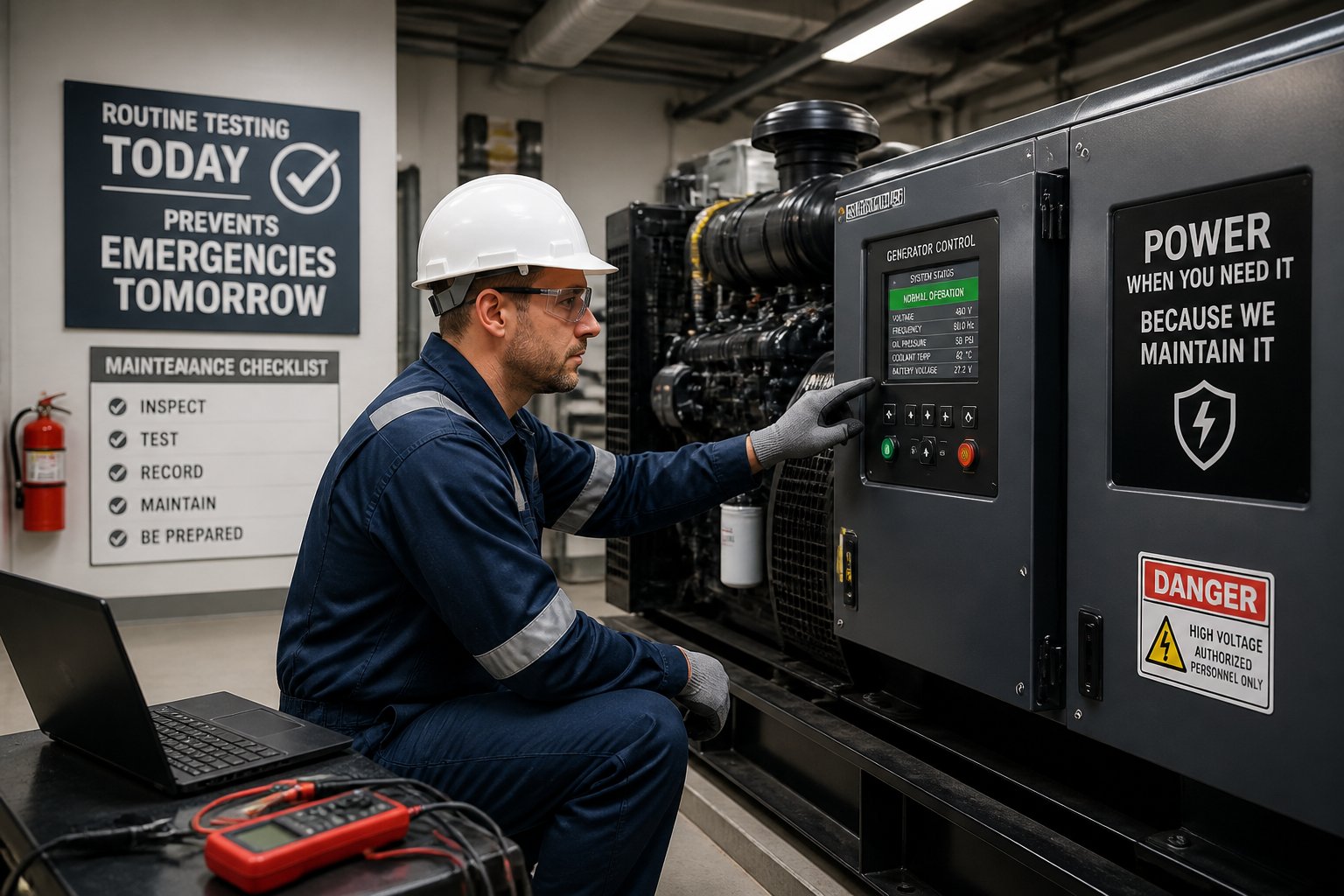
Load testing shows what your generator can really do under a real electrical load—not just idling. Load bank testing goes further, using a controlled artificial load so you can see how the system handles stress before you’re in trouble.
The Difference Between Exercise Runs And Real Performance Testing
Exercise runs help keep things moving and confirm it’ll start, but they don’t prove the generator can handle a real load. An annual full-load test gives a much better sense of how it’ll perform when you actually need it. If you want to know your generator’s real output and stability, an annual load bank test is hard to beat.
How A Generator Load Bank Simulates Demand Safely
A generator load bank creates a safe, measurable load that mimics household demand—without risking your appliances. It lets you see if the generator can handle what you’ll really throw at it, without overheating or dropping output. For most systems, load bank testing is the gold standard for confirming readiness.
How Testing Helps Prevent Wet Stacking And Output Problems
Generators that rarely see heavy use can develop wet stacking—basically, unburned fuel and carbon build up because the engine never gets pushed. Routine load testing burns off those deposits and keeps things cleaner. It also helps catch output problems you’d never notice with a quick startup.
Why Transfer Equipment Needs Attention Too
Your generator’s just one piece of the backup puzzle. The transfer switch, wiring, and controls decide how quickly—and safely—your home switches from utility to emergency power.
If any of that fails, your generator might be fine but your house still goes dark.
How The Transfer Switch Affects Backup Power Response
The transfer switch tells your system when to change power sources. If it’s slow, worn out, or damaged, your home might see a delay or no transfer at all. That’s why the transfer switch deserves just as much attention as the generator.
Why Automatic Transfer Switch Problems Cause System Failures
Automatic transfer switches fail for all sorts of reasons: corrosion, loose contacts, control glitches, or busted internal parts. When that happens, your generator might start but never actually send power to your circuits. That means your lights, fridge, and essentials stay off during an outage.
What Transfer Switch Testing Confirms
Transfer switch testing checks that the unit senses outages, switches over properly, and returns to utility power when it’s safe. It also checks wiring, timing, and control function. That gives you some real confidence your whole system will work the way it should.
Testing Schedules Standards And Compliance Basics
A good schedule keeps testing on track and easy to remember. Monthly exercise, annual deeper checks, and keeping up with code and documentation all help keep performance solid.
If your system backs up life safety needs or critical loads, the schedule matters even more.
How Monthly Exercise Supports Reliability
Monthly exercise keeps the engine moving, circulates fluids, and gives you a chance to spot warning signs early. You might catch starting issues, battery slumps, or alerts on the control panel. For many folks, this simple habit is the difference between a reliable unit and an unexpected breakdown.
When Annual Supplemental Testing Is Recommended
Annual supplemental testing gives you a deeper look at real performance. It’s the time to check load handling, inspect transfer gear, and review the past year’s records. If your generator doesn’t run much, that annual test matters even more.
Where NFPA 110 Applies And Why It Matters
nfpa 110 is the go-to standard for emergency power systems, especially where reliability and safety are non-negotiable. Even if your home setup isn’t regulated like a big facility, this standard still sets a strong bar for testing discipline. Honestly, regular testing just lowers risk and keeps things dependable when the power goes out.
Signs It Is Time To Schedule Service
You don’t have to wait for a total breakdown before calling for help. Warning signs usually show up in small ways first, and catching them early protects both safety and reliability.
Same-day service comes in handy when your system’s acting up and you want fast answers from a licensed electrician.
Hard Starts Strange Noises And Warning Lights
If you’re getting hard starts, weird noises, or stubborn warning lights, something’s probably wearing out or out of adjustment. That could mean battery issues, starter trouble, or something mechanical inside. A good technician can check it out and walk you through your options.
Voltage Fluctuations Leaks And Breaker Trips
Voltage swings, leaks, and repeated breaker trips all mean it’s time for a closer look. These problems can mess with appliances, damage electronics, and shake your trust in backup power. Fast repairs—especially from techs with stocked vans—usually solve the most common issues.
Why Prompt Service Protects Safety And Reliability
Getting service quickly helps you dodge bigger failures and keeps small stuff from turning into major headaches. Honest recommendations also make it easier to decide what to fix now and what can wait. That’s the kind of support folks in Sacramento, Folsom, Rocklin, and nearby get from AAA Electrical Services.
Frequently Asked Questions
How often should an emergency generator be tested under load to make sure it will work when needed?
You should test a home emergency generator under load regularly—most people do monthly exercise and at least one solid annual load test. If your backup power is critical, more frequent load testing gives extra peace of mind.
What kinds of hidden problems can routine generator testing uncover before a real outage happens?
Routine generator testing can catch weak batteries, stale fuel, loose wires, clogged filters, cooling problems, and control faults. It’ll also reveal output instability or transfer equipment issues you’d never spot with a quick startup.
What are the key steps in a proper load bank test for a standby generator?
A good load bank test starts with a safe inspection, then controlled loading in steps while you watch temperature, voltage, frequency, and overall performance. You want to see the generator handle demand without overheating or going unstable.
What does NFPA 110 require for generator testing and load bank testing frequency?
NFPA 110 calls for a set routine of maintenance and operational testing, with regular exercise and periodic full-load testing based on the system and its use. Basically, you need a documented schedule and deeper tests when reliability really matters.
What is the 80% rule for generators, and how does it affect testing and sizing?
The 80% rule says you shouldn’t push a generator to max capacity for long stretches. Keeping some reserve helps with starting loads, reduces wear, and makes testing more realistic (and safer) for your equipment.
How much does generator load bank testing typically cost, and what factors change the price?
The cost really swings based on a few things: how big your generator is, how long the test goes on, if the site’s tough to reach, the kind of equipment involved, and whether you want transfer switch testing or extra services thrown in. Usually, a licensed electrician will check out your setup first and then quote you a clear, flat rate for the testing you need.