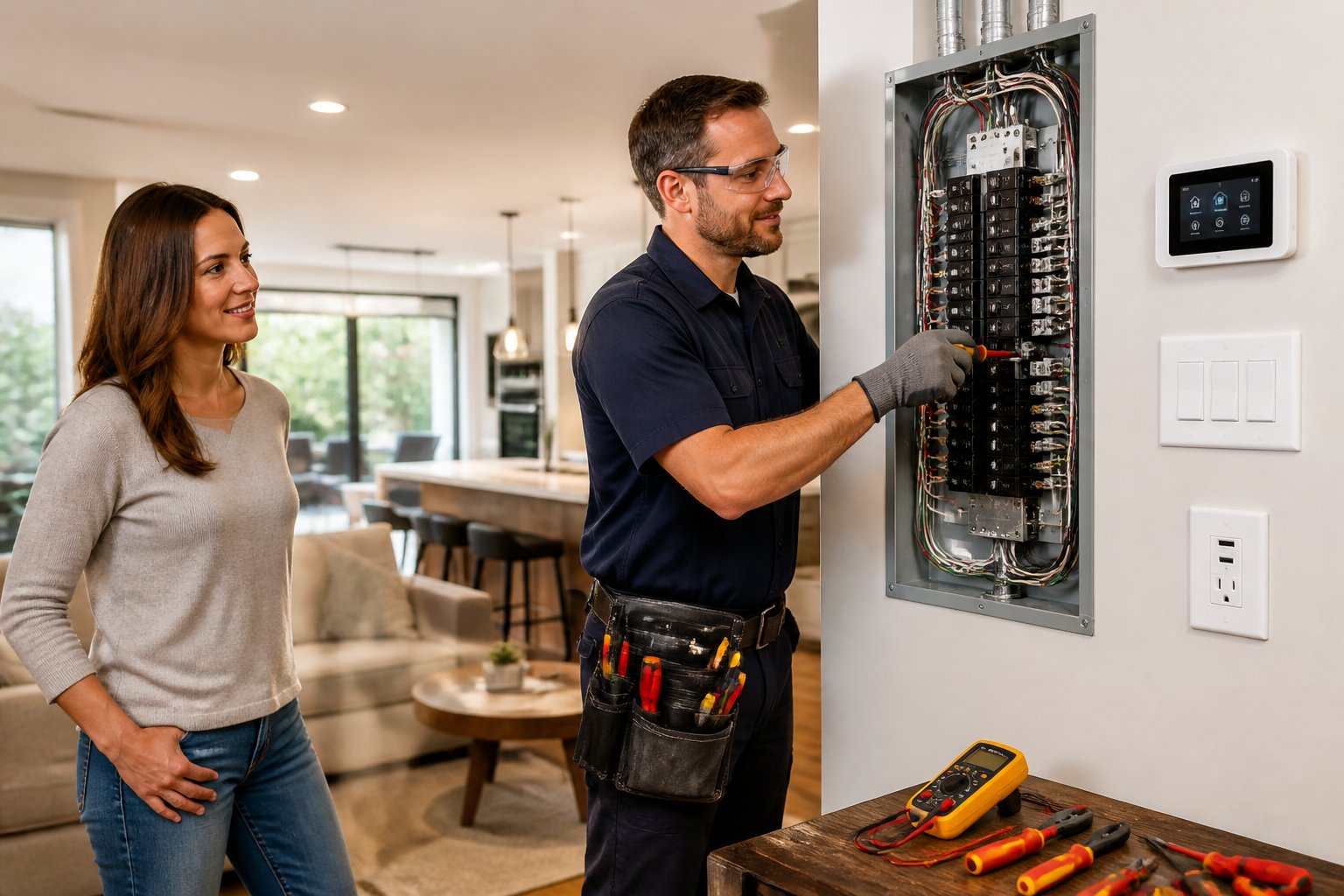
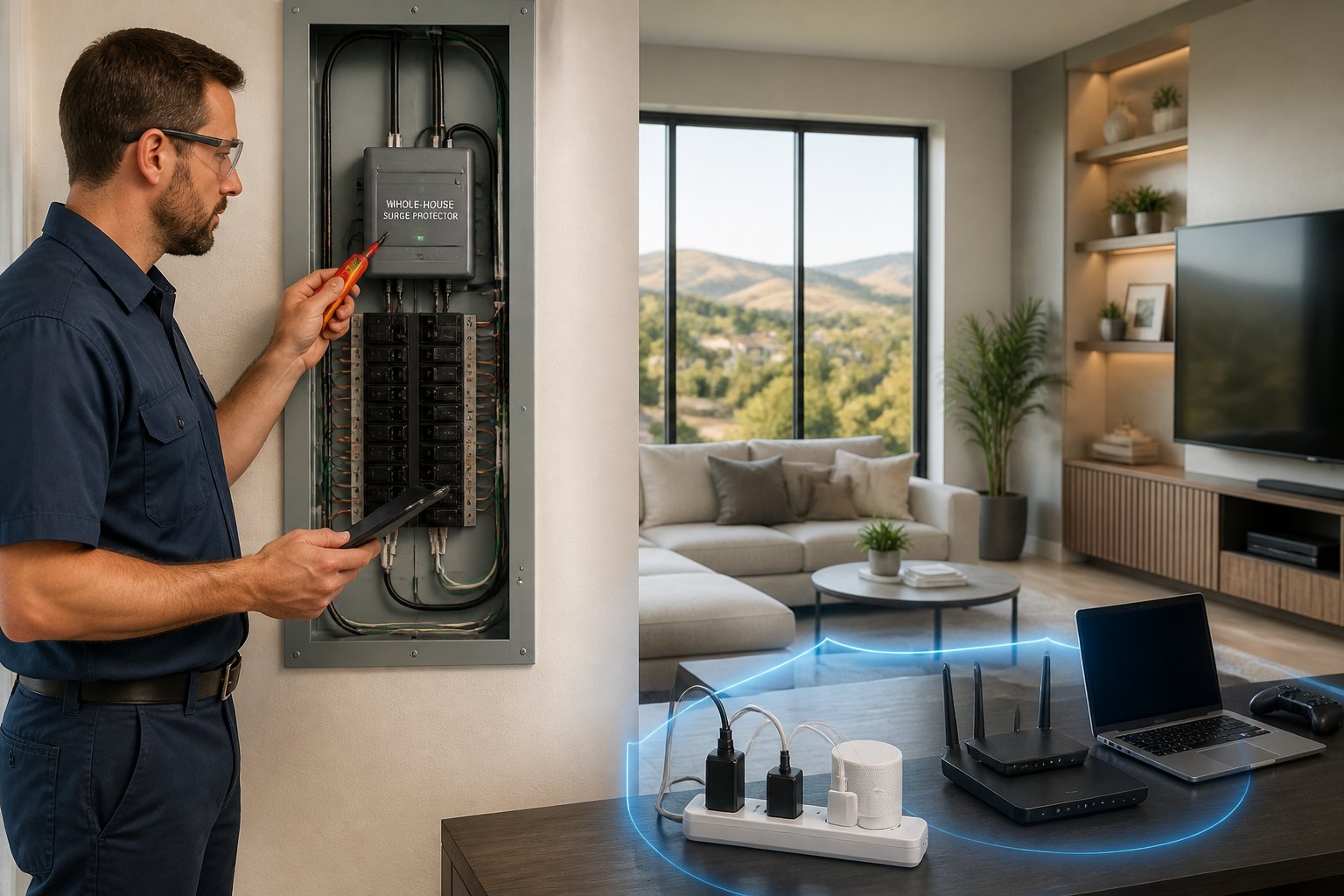
Seasonal electrical surges show up without warning, frying your home’s appliances and wiring if you’re not careful. These sudden power spikes usually sneak in with wild weather—think storms, heatwaves—or when the utility grid hiccups. If you want to protect your home, a whole-house surge protector is your best bet. It shields every outlet and appliance from those surprise voltage jumps.
Keeping your home safe from surges means teaming up with licensed pros who know how to install solid surge protection. AAA Electrical Services covers Sacramento and nearby neighborhoods, offering safety-first electrical work, flat-rate pricing, and fast, same-day service. Their vans are loaded up, so most fixes happen in a single visit.
Understanding Seasonal Electrical Surges
Electrical surges tend to pop up more during certain times of the year. If you know what causes these surges and how weather plays into it, you’ll have a better shot at keeping your home safe.
Causes of Electrical Surges
Electrical surges are quick jumps in voltage that can mess with your wiring and devices. Most of the time, they come from outside—like lightning strikes or power grid issues. Sometimes, flipping on a big appliance or having faulty wiring inside can trigger smaller surges.
Power companies might switch things around during storms or busy seasons, which can also send a surge your way. All that extra electricity races through your circuits, and without protection, that’s just asking for trouble.
Impact of Weather Changes
Weather really stirs the pot. Storms—especially the wild, lightning-heavy kind—can send huge surges through power lines and right into your home.
When it’s blazing hot, your air conditioner works overtime, causing demand spikes and little surges. Cold snaps? Same deal—heaters get cranked, circuits get stressed, and sometimes breakers just can’t keep up.
Wind and rain don’t help. They can knock down lines or poles, leading to uneven voltage or shorts that put your electrical system at risk.
Common Seasonal Patterns
Spring and summer storms bring the most surges, thanks to all that lightning. Fall’s no slouch either, with wind and rain taking their toll on power lines.
Winter’s a bit different—not as many storms, but the extra load from heaters and holiday lights can push your circuits to the limit and trigger surges.
Identifying Vulnerable Areas in Your Home
Some parts of your home are especially at risk when surges hit. If you know where to look—like your panel, outlets, wiring, and the appliances you use every day—you’ll be able to shore up your defenses.
Evaluating Electrical Panels
Your electrical panel is basically your home’s power HQ. If it’s old or in rough shape, it won’t handle surges well. Watch for rust, buzzing, or breakers that trip a lot—those are red flags.
Upgrading the panel can head off a lot of problems, especially if it’s been around since the ‘70s or earlier. A licensed electrician from AAA Electrical Services can check things out and make sure your panel can handle today’s demands. Keeping this in shape means fewer headaches down the road.
Assessing Outlets and Wiring
Outlets and wiring are the lifelines for your home’s power. If they’re faulty, surges can do more damage. Warm or cracked outlets, or ones with black marks, are trouble. Old wiring—especially pre-1980 stuff—often can’t keep up.
Use surge protectors near sensitive electronics, but don’t overload a single circuit. Professional inspections can catch issues you’d never spot. In Sacramento, AAA Electrical Services does thorough checks and offers same-day appointments, which is a lifesaver if you’re busy.
Spotting Risky Appliances
Big appliances, like fridges, AC units, or washers, can up your surge risk—especially if they’re older or not grounded right.
Plug computers and TVs into surge protectors. Unplug what you don’t need during storms or outages. If you’re unsure about an appliance, a certified tech can check it and give you peace of mind.
Essential Surge Protection Strategies
Keeping your home safe from surges isn’t just about gadgets—it’s about having the right setup and staying on top of maintenance. You want protection for your whole system, plus extra for sensitive devices. And don’t forget: regular upkeep keeps everything working when you need it.
Installing Whole-House Surge Protectors
A whole-house surge protector is your main shield. It gets installed at your panel and stops extra voltage from frying your home’s wiring and gear. This covers everything, from major appliances to every outlet.
Get it done right—this isn’t a DIY job. A licensed electrician from AAA Electrical Services can size things up and install the device safely. Usually, you’re looking at $300 to $600 for the whole thing, parts and labor. It’s a lot cheaper than replacing fried appliances.
Using Point-of-Use Surge Protectors
Whole-house units protect your wiring, but point-of-use surge protectors (like power strips) defend your individual gadgets.
Pick ones with fast response times and solid joule ratings. They won’t replace a whole-house protector, but they’re a smart backup for your most valuable stuff—think home office or entertainment center.
Using both types together gives you a stronger setup.
Regular Maintenance and Inspection
Surge protectors wear out. After enough hits, they lose their edge. Get your whole-house protector and panel checked every year.
Watch out for damaged wiring, tripped breakers, or burnt smells. If your protector looks rough or isn’t working, swap it out fast.
AAA Electrical Services does same-day inspections and repairs, so you won’t be waiting around. Regular checkups keep you ahead of any nasty surprises.
Seasonal Maintenance Tips
A little regular care goes a long way. Prepping for storms, checking outdoor systems, and keeping an eye on holiday decorations all help keep surges at bay.
Preparing for Storms
Storms can send crazy surges through your home. Unplug what you don’t need before a storm rolls in. Whole-house surge protection is a must for those big spikes.
If your breakers trip a lot, your system probably needs work. AAA Electrical Services can check your panel and fix issues—usually same day.
Don’t forget to trim trees and branches near power lines. Falling limbs can knock out power and cause surges. Test your generator and backup power before you actually need them.
Checking Outdoor Electrical Systems
Outdoor outlets and lights take a beating from the weather. Check for cracks or corrosion—damaged parts can cause shorts or surges.
Use weatherproof covers to keep water out. Electricity and water just don’t mix. Have a licensed tech check your outdoor system at least once a year, especially before the rainy season.
Make sure your wiring’s up to code. Old or bad wiring is a top cause of power problems. AAA Electrical Services can upgrade or repair outdoor systems to keep things safe.
Safeguarding Holiday Decorations
Holiday lights are fun but can overload your system. Use LED lights—they use less power and don’t get as hot. Spread decorations across outlets to avoid tripping a breaker.
Check cords and plugs before you plug them in. Frayed wires are a fire risk. Use surge protectors for indoor decorations to stop spikes from frying your electronics.
Turn off holiday lights when you’re not home or before bed. If you see flickering or breakers tripping, call a pro.
Upgrading and Replacing Electrical Components
A strong electrical system is your best defense against surges. Updating old equipment and picking the right appliances can lower the risk of damage.
Modernizing Outdated Systems
Old panels and wiring just can’t keep up with today’s power needs. If your house is older, parts of your system might be worn out or too small.
Upgrading your panel and wiring helps prevent overloads and cuts fire risks. It also gives you a better shot at stopping surges before they do damage.
AAA Electrical Services offers quick upgrades in Sacramento and nearby areas. Their vans are stocked, so most repairs happen in one visit.
Choosing Surge-Resistant Appliances
Not every appliance handles surges the same way. When you’re shopping for new ones, look for built-in surge protection or certifications for voltage spikes.
Surge-resistant appliances help protect your home’s wiring and other electronics. Pair these with a whole-home surge protector for extra peace of mind.
Frequently Asked Questions
Protecting your home from surges means having the right gear, knowing when to swap it out, and understanding what works best. It’s also about what you plug directly into the wall and how to prep your house if you’re heading out of town. And yeah, the cost of whole house surge protectors is worth thinking about.
What steps can I take to safeguard my electronic devices from power surges?
Plug sensitive electronics—like computers, TVs, gaming consoles—into surge protectors. Don’t cram too many devices into one outlet. Spread out big appliances and consider a whole house surge protector for extra coverage.
How often should I replace my surge protectors to ensure my home's safety?
Surge protectors don’t last forever. After a few years (or if they’ve taken some hits), swap them out—every 2 to 3 years is a good rule. If the indicator light’s off or they look damaged, it’s time for a new one.
Are power strips and surge protectors the same, and how do they protect my home?
Nope—power strips just add outlets, but don’t block surges. Surge protectors have special parts that stop extra voltage from reaching your stuff. Always pick ones certified for safety.
What common household items should be directly plugged into wall outlets to prevent electrical surge damage?
Big appliances—fridges, air conditioners, heaters—should go straight into the wall. They pull a lot of power and can get damaged if you use a power strip that’s not rated for heavy loads.
How can I protect my home while I'm away on vacation from possible electrical surges?
Unplug non-essential electronics before you leave. Whole house surge protectors keep your wiring and big appliances safe from sudden spikes. If you’re going to be gone a while, have a trusted electrician give your system a once-over before you head out.
What's the investment for installing a whole house surge protector, and is it worth it?
You'll typically pay a few hundred bucks for installation, though the exact price depends on your electrical panel and how your home's wired. That upfront cost buys you peace of mind, since the protector blocks surges before they can fry your stuff. Around Sacramento, a lot of folks call AAA Electrical Services—they're known for quick, flat-rate installs and send out licensed pros who actually care about doing things right.