Looking for a cooler, safer, more comfortable home in Fair Oaks? A good ceiling fan install means better airflow, lower energy bills, and a neat, code-compliant setup that protects your family.
Here’s a look at how licensed pros handle the job, what you should consider when choosing a fan, and why same-day service and flat-rate pricing can really matter. AAA Electrical Services has been doing this in Fair Oaks for over 40 years, and their stocked vans and safety-first mindset help get it done right the first time.
Let’s dig into the process, safety tips, and whether you should hire a pro or try installing a fan yourself.
Ceiling Fan Installation Services in Fair Oaks CA
You’ll get safe, code-compliant installs that boost comfort and lower energy use. Techs show up prepared, explain costs before starting, and leave your place clean.
Residential Ceiling Fan Installation
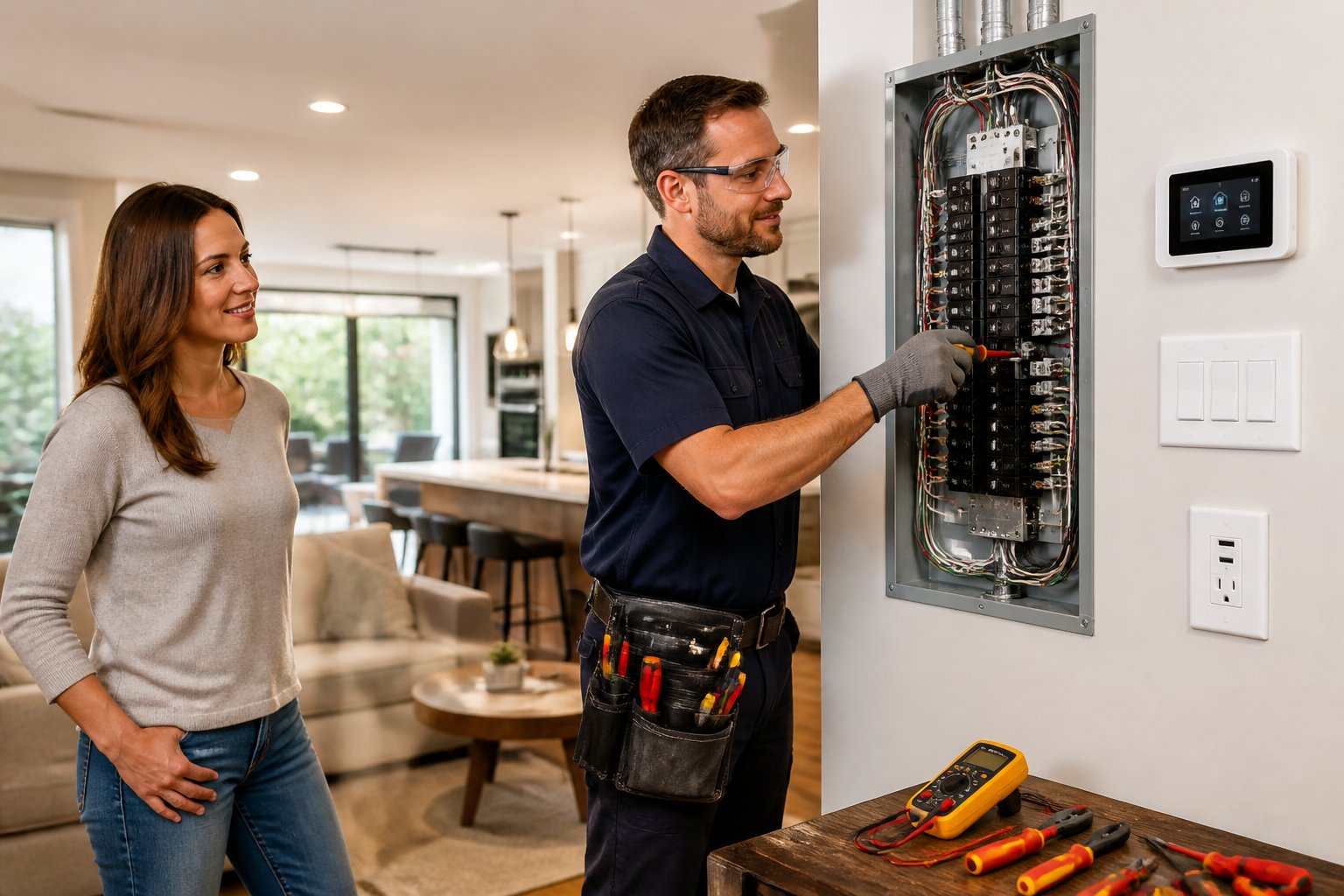
We install ceiling fans in bedrooms, living rooms, and outdoor patios all over Fair Oaks. Before starting, techs check your ceiling height, wiring, and fan weight to make sure the mount and box can handle the load.
If you need a new circuit or a ceiling-rated box, the crew handles wiring, switch placement, and grounding. You’ll know the price and timeline up front.
They test blade balance and motor operation, walk you through controls and remotes, and make sure everything works. Licensed pros do the electrical work so your family and home stay safe.
Commercial Ceiling Fan Projects
For offices, retail spots, and restaurants in Fair Oaks, installs focus on airflow, noise, and meeting code. Techs look at room layout, ceiling structure, and HVAC to pick the right fan size and placement.
Sometimes they’ll link several fans to one control, install heavy-duty mounts, or run new conduit for dedicated circuits. You get clear pricing and scheduling that keeps business interruptions minimal.
Stocked vans mean quick fixes—usually just one visit. Same-day service is available if you’re in a rush, and all work passes local inspections.
Custom Installation Solutions
Got something tricky—vaulted ceilings, low-clearance rooms, exposed beams, or smart-home setups? Techs measure, suggest mounting options, and pick blade sizes that match your space.
You can get downrods for high ceilings, low-profile fans for tight spots, outdoor-rated models for patios, and smart controls that play nice with your current switches. Quotes and timelines are clear before any parts get ordered.
AAA Electrical Services’ state-certified pros handle the tricky stuff and clean up after. Their honest pricing and safety-first attitude mean you don’t have to stress.
Choosing the Right Ceiling Fan for Your Home
Pick a fan that fits your room, saves energy, and matches your vibe. Blade span, motor efficiency, and light or control options all matter for comfort and value.
Fan Size and Room Suitability
Start by measuring your room. Up to 75 sq ft? Go for a 29–36 inch fan. Rooms that are 76–144 sq ft need 36–42 inches. For 145–225 sq ft, pick 44–50 inches. Bigger than that? Use two fans or a 52–60 inch model.
Ceiling height matters too. With 8-foot ceilings, use a low-profile (hugger) fan. If it’s 9 feet or higher, you’ll want a downrod so the blades sit 8–9 feet above the floor. Place the fan in the center and keep blades at least 18 inches from the walls.
Blade pitch and motor size make a difference. Steeper pitch and a strong motor move more air, which means better cooling and less run time.
Energy Efficiency and Features
Look for Energy Star fans or those with high CFM per watt. Efficient fans use less electricity and cut cooling costs. Even on low settings, a good fan should move plenty of air.
DC motors are quieter and use less power than AC motors. Many fans come with built-in LEDs, remotes, and reversible motors for winter.
Want smart features? Pick a fan that works with your home system or at least has a remote. Dimmable LEDs and multi-speed controls add flexibility and help keep energy use down.
Design and Style Options
Match the fan finish to your room. Brushed nickel and matte black look great in modern spaces; wood finishes suit traditional rooms. For patios or bathrooms, get damp- or wet-rated fans—they’ll last longer.
Blade count and shape matter, too. More blades often mean quieter, softer airflow, while fewer blades can move more air. Choose blade materials—wood, composite, or metal—based on where you’re using the fan.
If you care about looks, ask about integrated lights or separate fixtures. Decide if you want wall switches, remotes, or smart controls. AAA Electrical Services can handle the install, wiring, and balancing, and they’ll treat your home with respect.
Step-by-Step Ceiling Fan Installation Process
Here’s how to size up the room, get the wiring ready, and mount the fan so it runs quietly and safely. Every step keeps safety, proper sizing, and code-compliant wiring in mind.
Site Assessment and Planning
Measure your room and ceiling height. Blades should sit 8–9 feet above the floor and at least 18 inches from walls. If your ceiling is under 8 feet, pick a low-profile fan.
Find the ceiling joist and check the weight rating of the electrical box. Standard boxes can’t hold a heavy fan. If it’s not fan-rated, plan to install a proper box or brace.
Decide on controls: wall switch, remote, or smart switch? Figure out if you need a new circuit for lighting or a dimmer. Check Fair Oaks permit rules; a licensed electrician can handle permits and inspections if needed.
Wiring and Electrical Preparation
First things first—turn off power at the breaker and double-check with a tester before touching anything. If you can, lock the breaker so no one flips it back on.
Identify the wires: hot (usually black), neutral (white), and ground (bare or green). If you’re missing a neutral or ground, you’ll need to run new wiring or use a code-compliant fix. Label wires with tape so you don’t get mixed up.
Install a fan-rated box and secure it to a joist or use a brace. Pull the fan wires into the box, leaving enough slack for safe connections. Use approved wire nuts and tuck everything neatly into the box before mounting.
Mounting and Assembly
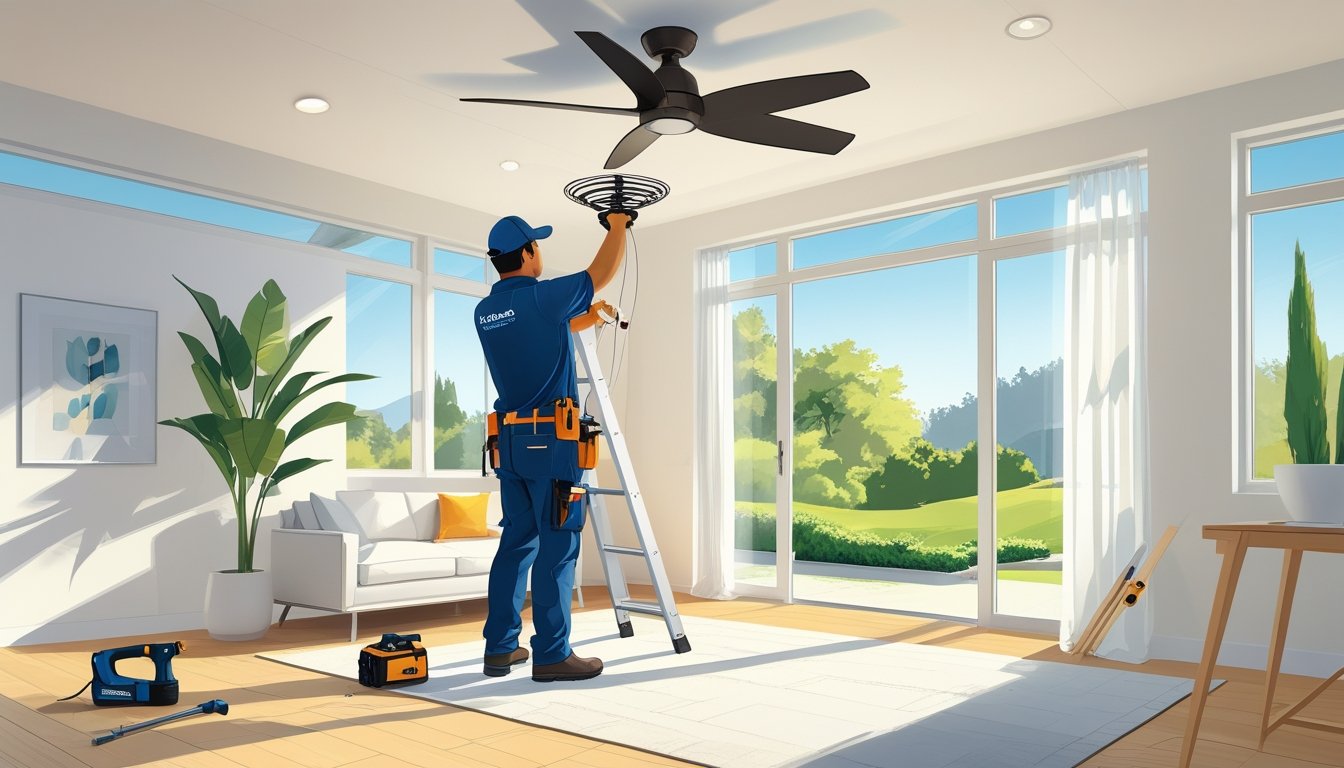
Put the motor housing and canopy together on the floor, following the manual. Attach the mounting bracket to the fan-rated box with the right screws.
Lift the motor to the bracket. For heavy fans, get a helper or use a support hook. Secure the motor and check for any wobble before adding blades.
Attach blades and light kit (if there is one), following the instructions for torque and balance. Connect the wires—match colors and use wire nuts. Restore power and test all functions: speeds, reverse, and lights. If you notice wobble or noise, use the balancing kit and recheck screws.
If you’d rather skip the hassle, AAA Electrical Services has licensed, same-day techs who’ll handle permits, wiring, and clean-up with flat-rate pricing.
Safety Considerations for Ceiling Fan Installations
Safe wiring, a solid mount, and code-compliant work keep your home and family protected. Always follow local permit rules, secure the fan to a rated box or brace, and avoid mistakes that cause wobble, noise, or fire risk.
Electrical Permits and Codes in Fair Oaks CA
Fair Oaks uses Sacramento County and California electrical codes. You’ll need a permit for any new fan, any replacement that changes wiring or switches, or when you change ceiling boxes. Permits mean inspections check your wiring, grounding, and circuit capacity.
Make sure your fan shares a properly sized circuit and doesn’t overload anything. The ground wire must connect to the house ground and metal box if there is one. Use switches and controls rated for motors and follow the wiring diagrams.
If you hire a pro, pick someone licensed who knows local code and inspection routines. Licensed techs file permits, meet inspectors, and save you rework. AAA Electrical Services offers same-day service and can handle permits and inspections.
Secure Mounting Techniques
Start with the right box. Use a fan-rated ceiling box or a brace attached to a joist. Standard plastic or light fixture boxes won’t hold a fan’s weight and motion. A fan-rated box should show a 50-pound or higher capacity.
Use long screws into the joist or a threaded rod brace. Check for wobble before mounting the fan motor. For angled ceilings, use the right downrod and an angled-mount adapter.
Blade clearance is key: keep blades at least 7 feet from the floor and 18 inches from walls. Tighten all screws, then run the fan at each speed. If it still wobbles, use the balancing kit or double-check the bracket and blades.
Common Installation Mistakes to Avoid
Don’t reuse a box that’s not fan-rated or assume the wiring is fine. Common slip-ups: loose mounting screws, bad grounding, overloaded circuits, and using the wrong switches or dimmers. These can lead to noise, short fan life, or even fire.
Don’t use a short downrod on a high ceiling—it stresses the motor. Don’t mix blade sizes or skip balancing. Make sure the canopy is tight so wires don’t rub on metal. If you don’t know the wiring, the box is damaged, or you need a new circuit, call a licensed electrician.
Quick checklist:
- Use a fan-rated box or brace
- Check circuit capacity and grounding
- Use switches/dimmers rated for motors
- Keep blades 7 ft above the floor
- Balance blades and tighten all screws
Professional vs. DIY Ceiling Fan Installation
Should you hire a pro or do it yourself? It really comes down to safety, time, and your comfort with electrical work.
Benefits of Hiring a Licensed Electrician
A licensed electrician knows Fair Oaks and Sacramento-area codes, so your wiring and mounting meet safety rules. That lowers fire risk and helps if you need permits or plan to sell.
You get insured, background-checked techs who know how to handle ceiling supports, load calculations, and grounding. They show up with stocked vans for fast fixes—often just one visit.
A pro keeps your equipment warranty safe and avoids accidental damage to drywall, wiring, or fixtures. With AAA Electrical Services, you get flat-rate pricing, a safety-first mindset, and a satisfaction guarantee.
Typical Costs and Timeframes
A licensed install in Fair Oaks costs more than DIY, since it covers labor, permits, and safety checks. Expect $120–$350 for a simple swap, $300–$800+ for complex installs or new wiring (depends on ceiling height, box upgrades, or fan weight).
Most jobs take 1–2 hours. If there’s rewiring, a new switch, or a ceiling brace, it might take 3–5 hours. Permits or inspections can add a few days to a week.
Always ask for an itemized quote—labor, parts, permit fees, troubleshooting. Look for flat-rate, upfront pricing so you’re not surprised at the end.
DIY Tips for Experienced Homeowners
Only try a DIY ceiling fan install if you feel confident turning off breakers, testing wires, and mounting the right ceiling box. Always start by switching off the power at the breaker, then double-check with a voltage tester before touching anything.
Use a ceiling fan–rated box and a brace, especially if your fan’s on the heavier side. Follow the manufacturer’s wiring diagram—match the wire colors, twist on proper wire nuts, and don’t forget the ground. Secure blades and downrods as instructed to avoid that annoying wobble.
Run into old wiring, odd color codes, or a loose box? Stop and call a pro. Messy wiring or a poor mount can cause shocks, fires, or even send the whole fan crashing down. It’s smart to keep AAA Electrical Services’ number nearby in case things get dicey or more complicated than you expected.
Maintenance and Troubleshooting for Ceiling Fans
Keep your fan clean, quiet, and balanced. Try these simple checks and basic fixes to dodge bigger headaches down the line.
Regular Cleaning and Care
Turn off the fan and kill the circuit before you clean. Use a sturdy ladder and a soft cloth or microfiber duster—wipe each blade from the center out. Never spray cleaner on the motor or wiring; just dampen your cloth a bit.
Every few months, tighten up blade screws and the canopy screws at the ceiling. Check pull chains and remote battery compartments for dust, and swap batteries once a year. Some fans have oil ports—if yours does, add a few drops of light machine oil as the manufacturer suggests.
Keep vents and nearby fixtures dust-free. A clean fan runs cooler and lasts longer. Less dust means fewer electrical issues, too.
Addressing Noise Issues
Figure out what’s making the noise: is it a hum, a scrape, or a rattle? For a steady motor hum, shut off power and try the fan at a different speed after a minute. Sometimes a worn capacitor or motor bearing is the culprit—at that point, you’ll want a certified electrician. If blades are scraping the housing or the light kit, turn off power and check for loose or warped blade irons.
Tighten up any loose screws on the blades, light kit, or mounting bracket. Bent blades or blade irons? Replace them. For an occasional click or rattle, check the canopy and switch housing, and snug up wire connector caps. If noise won’t quit or you smell something burning, stop using the fan and call a licensed tech. Better safe than sorry.
Repairing Wobbling or Malfunctions
A wobbly fan usually means unbalanced blades, a loose downrod, or uneven mounting. First, turn off the power and tighten all screws and mounting hardware. Try a blade-balancing kit or tape a folded coin to the top of the lightest blade to see if that helps.
Still wobbles? Check the downrod and ceiling box for any play. If the box is loose or not mounted right, that’s a code issue—time to call a pro. For electrical problems (fan won’t start, only runs on some speeds, or trips the breaker), cut power and check the wall switch, pull chain, and wires in the canopy. If you’re not sure or the problem’s inside the motor, get a licensed electrician. AAA Electrical Services usually stocks their vans so repairs happen fast, often in one visit.
Why Choose Ceiling Fan Installers in Fair Oaks CA
You get quick, safe installs from techs who actually know Fair Oaks wiring and the usual challenges in local homes. Expect clear flat-rate pricing and a focus on your family’s safety—not just getting the job done.
Local Expertise and Service Guarantees
These technicians know Fair Oaks code, permits, and the quirks of older and newer home layouts. That means fewer surprises and better airflow placement. You get licensed, insured, Nexstar-trained electricians who stick to safety-first practices and show up in clean uniforms.
Flat-rate pricing and a 100% satisfaction guarantee keep things straightforward. Most vans are stocked for same-day fixes, so your fan often goes up in one visit. There’s also a $35 new-customer credit or a 10% membership discount if you qualify.
Customer Testimonials
Customers often mention fast arrivals and friendly techs who actually explain what they’re doing. Homeowners say installs fixed wobble and noise, making rooms more comfortable and easing the load on their HVAC.
Reviews call out neat, respectful work—techs clean up and leave things tidy. Honest, upfront quotes and stocked vans that mean no extra trips? People seem to appreciate that. It all adds up to service you can actually trust.
Scheduling Your Ceiling Fan Installation
Try to plan your install around your daily routine and how techs will get in and out. Know your room size, the fan you want, and if you’ll need a new box or circuit before you book.
How to Request a Quote
Call or use the online form to get a quote. Give your Fair Oaks address, room size, ceiling height, and whether you have wiring or a light fixture to replace.
If you’ve already bought a fan, snap a photo of the ceiling and the fan itself—pics help techs estimate time, parts, and if you’ll need a new box or circuit.
Ask about flat-rate pricing and any new-customer deals like $35 off your first service. Make sure the company sends licensed, insured techs in stocked vans so you’re not stuck waiting for parts.
Appointment Scheduling Tips
Pick a few time slots when you can be home. If you want same-day service, mornings are usually your best shot.
Clear the area and keep pets out of the way. Move anything fragile from under the fan and make a path from the door to the install spot.
If you think you’ll need new circuits or structural work, check on permit needs. Ask how long the visit will take and if they’ll need to cut power, so you can plan your day.
Booking with AAA Electrical Services? Mention your membership or coupon to lock in discounts or perks.
Frequently Asked Questions
Here are some common questions about costs, timing, safety, and fan types for Fair Oaks homes. You’ll get the real scoop on hiring pros, DIY, and local service options.
How much does it typically cost to have a ceiling fan installed by a professional in Fair Oaks?
Most installs by a licensed electrician cost between $100 and $300.
The price swings based on ceiling height, your existing wiring, and if you need a new box or brace.
If you need a new circuit or box, expect to pay more. Flat-rate pricing and upfront quotes help avoid surprises.
What should I consider before hiring someone to install a ceiling fan?
Make sure the electrician is licensed, insured, and background-checked. Ask about warranties and satisfaction guarantees.
Find out if they take care of permits, testing, and cleanup. Also, check if their van is stocked so you’re not left waiting on parts.
Can I install a ceiling fan myself, or should I hire an expert?
You can do it yourself if you’re steady-handed and know basic wiring. Always cut power at the breaker first.
Hire a pro if the wiring’s old, the mount needs extra support, or the fan has complex controls or a light kit. It’s just safer—no risk of shocks, fires, or a falling fan.
Are there specific types of ceiling fans that are recommended for homes in Fair Oaks?
Match the fan size to your room: 42–48 inches for bedrooms, 52–56 inches for living rooms.
Pick damp-rated fans for covered patios or humid spots like bathrooms.
Go for energy-efficient models with reversible motors—they’ll save you on cooling. LED light kits are a good call for lower bills and less hassle.
How long does it take to install a ceiling fan?
Most jobs run about 1 to 2 hours.
If you need new wiring, a brace, or a switch, it’ll take longer.
Techs with stocked vans usually finish in one visit, so you’re not stuck waiting.
Do local Fair Oaks electricians provide ceiling fan installation services?
Yep, they do. Local electricians in Fair Oaks handle ceiling fan installations, update wiring, and run safety checks if you need them.
AAA Electrical Services, for example, offers same-day appointments, flat-rate pricing, and their licensed techs actually care about your home.
If you’re booking, it’s worth asking about their $35 new-customer discount or any membership deals.