When your breakers keep tripping or your panel’s buzzing, you just want clear steps you can trust to keep your home safe. You can spot common panel problems, safely reset breakers, and know when to call a licensed pro so you protect your family and avoid bigger damage. This post walks you through practical troubleshooting for Rancho Cordova homes and explains when a panel repair or upgrade makes sense.
You’ll get straightforward steps for testing and resetting breakers, spotting when a breaker or panel needs replacing, and some basic safety rules to keep in mind while you wait for help. If you want quick service, AAA Electrical Services does same-day, safety-first work with state-certified techs and stocked vans for fast fixes—and they’re upfront about pricing.
Understanding Breaker Panel Issues
Breaker panels usually give you warning signs when something’s off. Most problems come from overloads, old equipment, or loose connections. Always take safety steps before touching anything, and if you’re unsure, just call a licensed pro. Better safe than sorry, right?
Signs of Breaker Panel Problems
Watch for breakers that trip a lot or just won’t reset. Flickering lights, dead outlets, or a burning smell near the panel? Those are big warning signs.
Buzzing or crackling from the panel isn’t normal either. That can mean loose wires or failing parts. Also, check for visible damage like scorch marks, rust, or melted insulation.
If your panel’s older than 25–40 years, or circuits feel warm, get an inspection. Jot down when problems happen—what time, what appliances are running, and how often trips occur. That info helps a lot with diagnosis.
Common Causes of Electrical Faults
Overloaded circuits are pretty common, especially when you’ve got too many high-draw appliances on one line. Stuff like HVAC units, ovens, dryers, or EV chargers can overload older panels.
Short circuits and ground faults usually come from damaged wires, loose connections, or bad devices. These make breakers trip right away and can even spark. Corrosion and age wear down breakers too, leading to nuisance trips or, worse, not tripping at all.
DIY work or improper installations can create all sorts of headaches. If your home’s been remodeled or you’ve added new appliances, your panel might just not be up for it anymore. A licensed electrician can check the load capacity and hunt down wiring faults.
Safety Precautions Before Troubleshooting
Always turn off the main breaker before you open the panel cover. Smell burning? See sparks? Notice heat? Get out and call a pro right away. Don’t mess with wires or terminals.
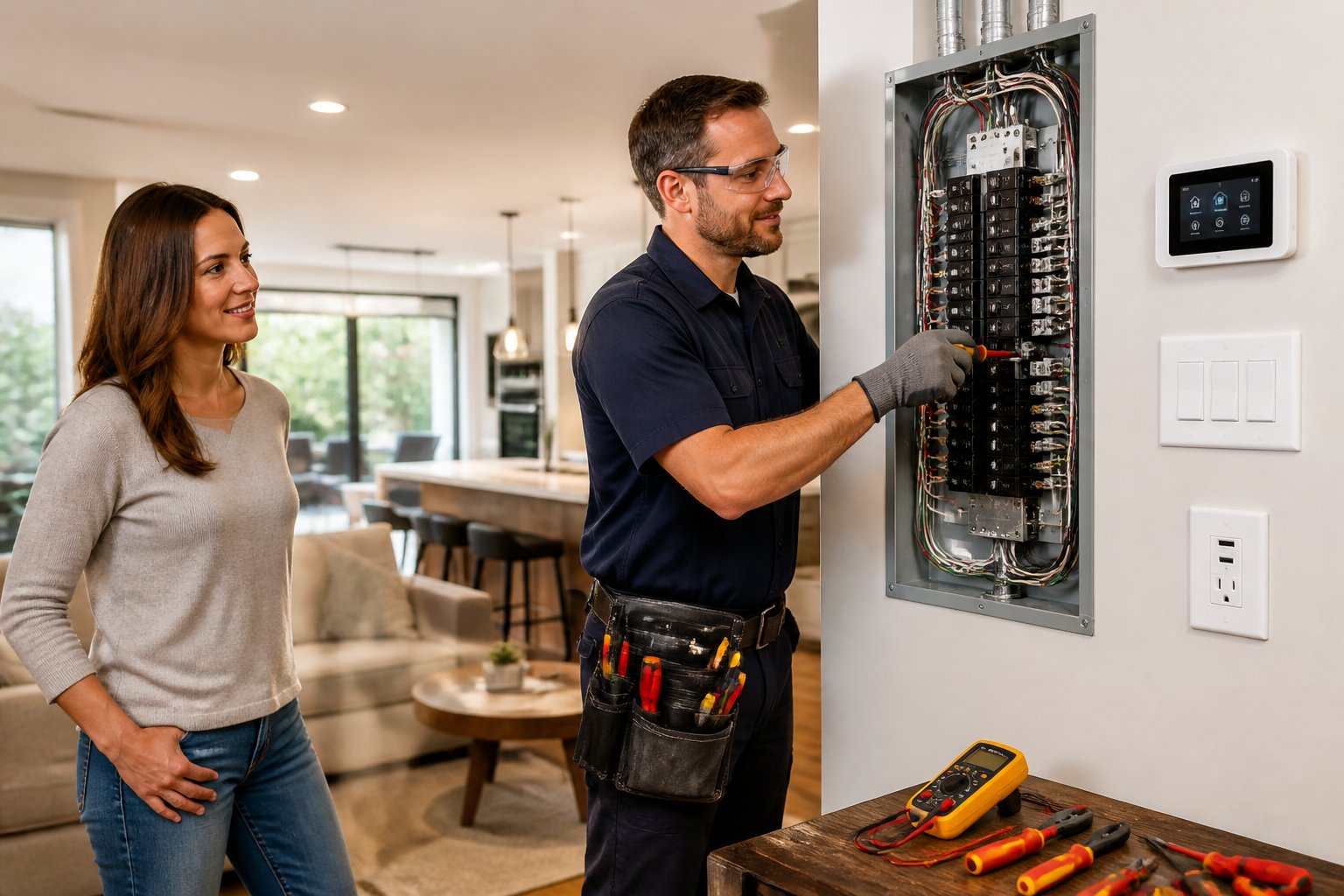
If you absolutely have to look, wear insulated gloves and safety glasses. Use a non-contact voltage tester to make sure circuits are dead before touching anything. And please, stay dry and don’t stand in water near the panel.
If you need help, pick a licensed, insured electrician who offers same-day service and flat, clear pricing. AAA Electrical Services sends licensed pros with stocked vans for quick repairs.
Step-by-Step Breaker Panel Troubleshooting Guide
Start with safety: shut off the main breaker if you’re touching wiring or the inside of the panel, put on safety glasses, and use insulated tools. Go slow and steady—no need to make a bad situation worse.
Identifying Tripped Breakers
Look for breakers with handles stuck between ON and OFF, or showing a red/orange indicator. Flip the suspect breaker all the way to OFF, then back ON to reset. If it trips again right away, stop—there’s a persistent fault.
Check the panel label or use a simple plug-in load (like a lamp or charger) to see what’s affected. Burned smells, scorch marks, or melting? Time to call a pro. If multiple breakers trip together, you could have a main breaker or shared neutral issue.
Testing for Overloaded Circuits
Figure out what’s plugged into the circuit: space heaters, window ACs, hair dryers, or a bunch of power strips? Unplug or turn off those devices before resetting the breaker. After you reset, add things back one by one to see what causes the trip.
A clamp meter (or a tech) can check amps against the breaker’s rating. If the current’s always close to or over the breaker’s limit, the circuit is overloaded. Try moving heavy devices to other circuits, upgrading the circuit, or scheduling a panel upgrade with a licensed electrician.
Assessing Faulty Breakers
If a breaker trips with barely anything plugged in, or trips repeatedly after resetting, it’s probably worn out or defective. A breaker that feels loose or won’t stay ON is a sign of internal failure.
Test the breaker with a multimeter or continuity tester—but only after shutting off the main and following lockout steps. If there’s no continuity when ON, replace it. For safety and to meet code, have a licensed tech handle breaker swaps, panel repairs, or anything involving the main breaker. AAA Electrical Services can often fix things same-day with the parts they carry.
How to Safely Reset Breakers
Here’s how to reset a tripped breaker and keep your home safe. Turn off sensitive stuff on that circuit and check for burning smells or damage before you touch the panel.
Proper Techniques for Resetting
Stand on a dry surface, keep your hands dry. Use one hand to open the panel, the other for the breaker—less risk of shock. If the breaker has a test button, press it first; then flip the breaker fully OFF, wait a second, and turn it ON.
Unplug or switch off heavy appliances (heaters, ovens, EV chargers) before resetting. If it trips again right away, leave it off and call a licensed electrician. If it stays on, plug things in one at a time to find what’s overloading.
When to Avoid Resetting a Breaker
Don’t reset if you smell burning, see smoke, hear buzzing, or spot scorch marks. Those are signs of real trouble and need a pro.
If multiple breakers tripped together, or the same one keeps tripping, don’t force it. Shut off the main if you suspect something major, and call a licensed tech. For quick help in Rancho Cordova, AAA Electrical Services has certified techs ready for same-day repairs.
Replacing Faulty Components in Your Rancho Cordova Home
Here’s how to pick the right parts, grab the right tools, and know when to call a pro. Focus on compatibility, safety, and clear signs you need a licensed electrician.
Selecting Compatible Replacement Parts
Match the replacement breaker or part to your panel’s brand, model, and amp rating. Check the label for bus type (like Type CH, BR, or main lug) and swap like-for-like. Using the wrong breaker can cause bad contact or overheating.
Buy breakers listed by a recognized lab (UL or similar). For fuses, use the same size and type. Remember: 14 AWG = 15 A, 12 AWG = 20 A, 10 AWG = 30 A. If your panel’s old or labels are missing, take a photo and bring it to a supplier or have a tech confirm what you need.
For fast on-site replacements, pick a licensed team that stocks parts in their vans. AAA Electrical Services usually has common breakers and can swap them quickly.
Tools Needed for Panel Repairs
Use insulated hand tools made for electrical work: screwdrivers, nut drivers, voltage-rated sockets. You’ll need a non-contact voltage tester and a multimeter to check power’s off before touching anything.
Wear PPE—safety glasses, insulated gloves, long sleeves. A flashlight or headlamp helps, and a magnetic tray keeps screws from disappearing. Wire strippers and a torque screwdriver are good for proper terminations. Labeling tape and a sharpie help you keep track of circuits.
Have a main-breaker lockout or tag-out device handy, and always turn off the main before swapping breakers. If you don’t have insulated tools or a good meter, stop and call a pro.
When to Call a Licensed Electrician
Call a licensed electrician if you see scorch marks, melted insulation, repeated tripping after a breaker swap, or if the panel feels warm. Those mean loose connections, overheating, or internal bus damage—a pro’s job.
Hire a pro for panel upgrades, adding circuits, main breaker work, or if you need permits. Also, call if your home has aluminum wiring or an older panel brand with a bad rep.
Choose a team with transparent pricing, licensed techs, and stocked vans. Safety-first, professional work gives you peace of mind and keeps your home protected.
Preventative Maintenance for Breaker Panels
Keeping your breaker panel in good shape can stop little problems from turning dangerous. Regular checks and timely service protect your family, cut down on big repairs, and keep things running smooth.
Routine Inspection Checklist
Every 3–6 months, look for: breakers that trip a lot, flickering lights, a warm panel cover, or any burning smell. Only open the panel if the power’s off and you know what you’re doing—otherwise, just call in a pro.
Check for loose wires, rust, or moisture. Tighten screw terminals only if you’re confident; loose ones can cause arcing and heat. Note the panel’s age—if it’s over 20 years, think about an upgrade.
Label every circuit and test GFCI/AFCI outlets monthly. Use a plug-in tester to make sure ground and neutral are right. Keep boxes and flammable stuff away from the panel and make sure vents aren’t blocked.
Importance of Professional Maintenance
Have a licensed electrician inspect the panel yearly or if you spot warning signs. A pro can test trip times, check voltage balance, and catch worn-out parts you might miss. AAA Electrical Services brings stocked vans, so a lot of fixes happen right then and there.
Permit-required work, upgrades, or main breaker swaps? Always use certified electricians. Pros handle load calculations, code compliance, and permits. That keeps your home safe and your insurance and resale value intact.
Upgrading Electrical Panels in Rancho Cordova
If your home’s got frequent breaker trips, warm outlets, or an old fuse box, an upgrade can boost safety and capacity. Modern breaker panels mean more circuits and better protection from overloads.
You’ll probably need a permit and inspection in Rancho Cordova. Permits make sure the work’s up to code and your home insurance stays valid. A licensed electrician will handle all the paperwork and schedule inspections for you.
Think about a 200-amp panel if you’re adding appliances, an EV charger, or planning solar. That future-proofs your home and cuts down on nuisance trips. Upgrades also make it easier to add circuits later.
AAA Electrical Services does same-day service, flat-rate pricing, and sends certified techs who treat your home with care. Their stocked vans mean many repairs are done in one visit, and they stick to a safety-first approach.
Before you upgrade, check off these:
- Confirm permit and inspection needs
- List major appliances and future plans (EV charger, solar)
- Ask about flat-rate pricing and the timeline
Safety-first work by licensed pros protects your family and your home. Honest pricing and clear communication make the whole process a lot less stressful.
Local Electrical Codes and Regulations
Local codes exist to protect your home and family. They lay out the rules for breaker panels, wiring, and safety devices. In Rancho Cordova, you’ve got to follow both California building codes and the National Electrical Code (NEC), so there’s a bit of overlap.
You’ll need permits for major panel changes or upgrades. Inspectors check that breakers, grounding, and labeling all follow code. This isn’t just red tape—it helps you avoid fines and keeps your homeowner insurance valid.
A licensed electrician has to handle most panel work. Hiring a licensed, insured pro just makes sense—they reduce risk and make sure your work passes inspection.
If your panel’s old or doesn’t have space for new circuits or safety features, you might need an upgrade. Same-day service from a team that actually cares about your home can help you meet deadlines for sales or repairs. It’s stressful enough without extra delays.
Here’s what to keep in mind:
- Check with the city about permits and inspection needs.
- Hire certified electricians who know NEC and local amendments.
- Double-check that your panel’s labeled, grounded, and has the right breaker sizes.
AAA Electrical Services keeps things simple with transparent, flat-rate pricing and certified techs who’ll help you through permits and inspections. Their vans come stocked, so you usually get a fix in just one visit. That’s a relief—nobody wants to wait around for days.
Choosing a Breaker Panel Troubleshooting Service in Rancho Cordova
You want licensed, insured, and background-checked electricians. It’s about protecting your home and family, not just checking boxes.
Look for a company with flat-rate, upfront pricing. No one likes surprise bills—honest pricing makes decisions easier.
Same-day service and stocked vans matter. You don’t want to wait while they “order parts.” Fast fixes mean less downtime.
Ask if they’ve handled panel upgrades, breaker replacements, and inspections before. You want techs who know both old and new systems.
A safety-first attitude and clear communication are big deals. Techs should explain what’s wrong in plain English and walk you through their recommendations.
Check on warranties and satisfaction guarantees. A company that promises 100% satisfaction is putting their reputation on the line—and that says a lot.
When you call, try these quick questions:
- Are you licensed and insured?
- Do you offer flat-rate pricing and a satisfaction guarantee?
- Can you do same-day service and carry replacement parts?
- Will you run safety checks after repairs?
AAA Electrical Services checks all these boxes. Their licensed techs, stocked vans, and safety-first mission mean you get friendly, transparent service with your family’s peace of mind front and center.
Frequently Asked Questions
Here’s a rundown of common causes of power loss, repeated trips, how to spot a bad breaker, what to do when a breaker won’t stay reset, signs a breaker is failing without tripping, and safety tips. Take a look for practical steps—and when to call in a pro.
Why is my breaker panel not supplying power even after a reset?
If the main breaker is off or damaged, the panel might stay dead after you reset a branch breaker. Check the main breaker first. Look for any visible damage, burning smells, or scorch marks.
A loose service connection from the utility or a tripped meter socket can also kill power. If you think it’s on the utility side, call your power company before poking around further.
What could cause a circuit breaker to trip repeatedly?
Overloaded circuits trip when too many devices pull power from the same breaker. Try spreading heavy loads across different circuits and avoid running a bunch of high-draw appliances together.
Short circuits or ground faults will trip breakers right away. If trips are sudden and you see sparks or smell burning, stop using that circuit and get an electrician out.
How do you diagnose a faulty circuit breaker?
First, turn off and unplug everything on the circuit. Then reset the breaker. If it trips with nothing plugged in, there’s probably a fault in the breaker or wiring.
Use a plug-in voltage tester or multimeter to check for voltage at outlets. If you’re not comfortable with this, call a licensed tech—they’ll safely test the breaker, connections, and wiring.
What steps should I take if my circuit breaker won't stay reset?
Unplug everything on that circuit before you try to reset. If the breaker still won’t stay on, don’t force it. That’s a sign of a persistent fault.
Call a licensed electrician to check the breaker, panel connections, and wiring. AAA Electrical Services can usually get someone out same day, and their vans are stocked for on-the-spot repairs if you’re in Rancho Cordova or nearby.
Can a breaker go bad without tripping and how would I know?
Yep. Sometimes a breaker loses its internal contacts or the trip mechanism weakens, but it still looks fine. Watch for flickering lights, outlets that work only sometimes, or a breaker or panel cover that feels warm.
If you notice unexplained power loss or heat at the panel, call a certified tech. They’ll test the breaker under load and swap it out if needed to keep your home safe.
What safety precautions are necessary when troubleshooting my breaker panel?
First off, flip the main breaker off before you even think about poking around inside. Seriously—don’t mess with live circuits unless you know exactly what you’re doing and have the right gear.
Throw on some insulated gloves, grab those safety glasses, and stick to tools with insulated handles. Catch a whiff of burning, spot any sparks, or just feel out of your depth? That’s your cue to stop and get a licensed electrician to check things out.