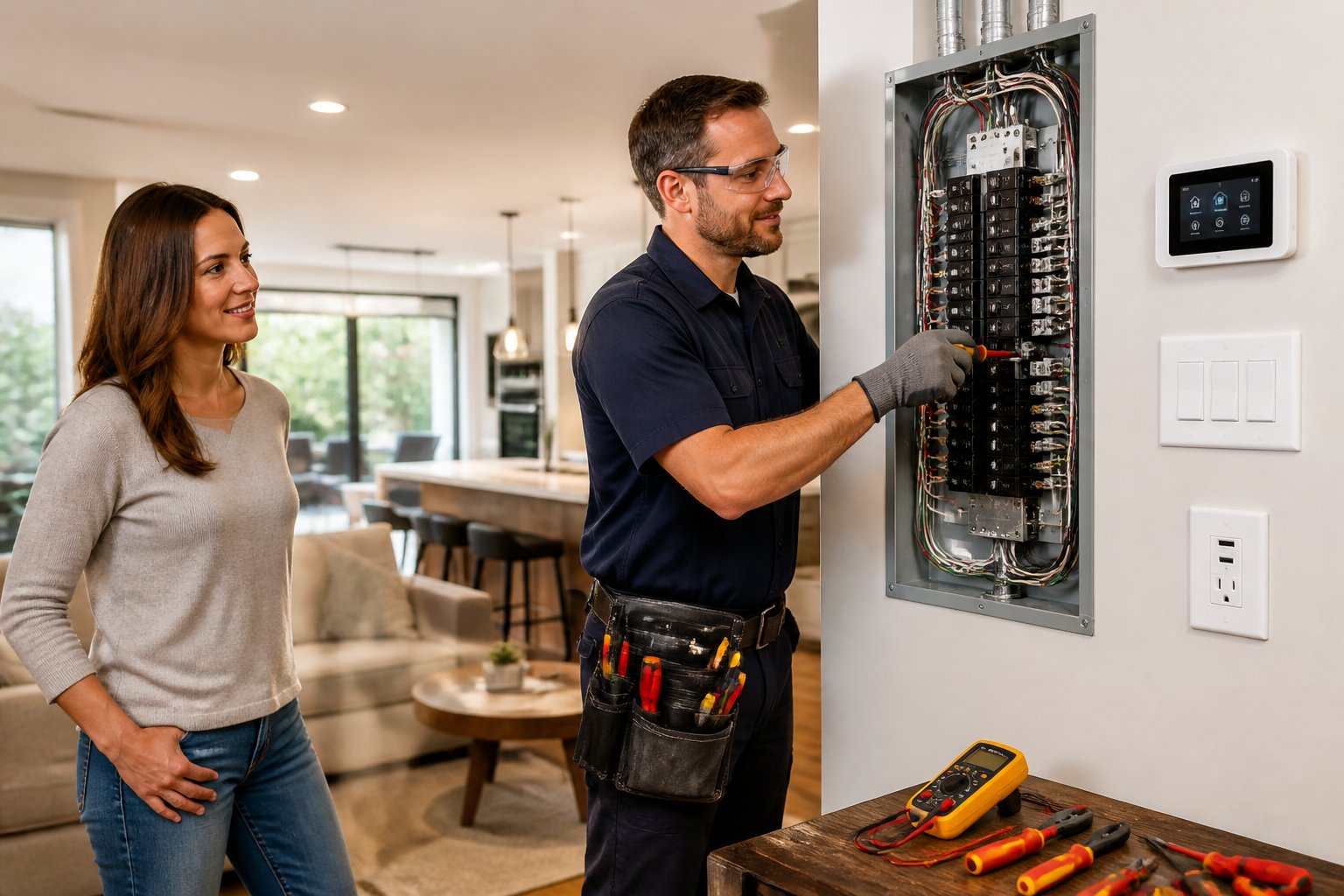
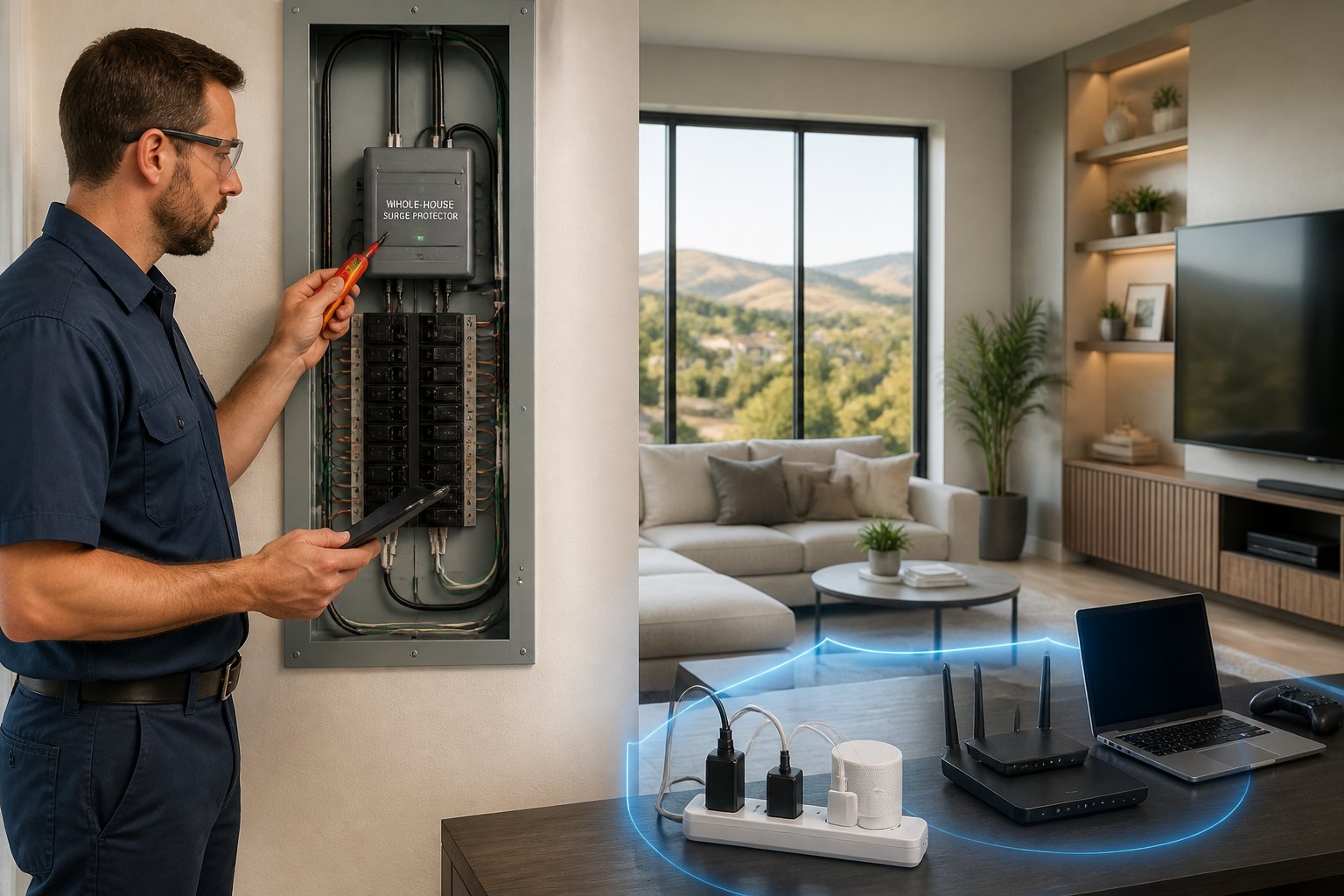
Thinking about adding an outdoor electrical outlet in The Hills, TX? You can make your patio, garden, or workshop safer and more useful by installing a weatherproof outlet that meets local codes and uses GFCI protection for moisture safety. A properly installed outdoor outlet gives you convenient, code‑compliant power for lights, tools, EV chargers, and holiday displays while reducing the fire and shock risks of extension cords.
Magnify Electric’s licensed electricians handle everything from simple outlet installs to full outdoor lighting, EV charging outlets and wall chargers, panel upgrades, surge protection, and smart home integrations like Lutron systems. They serve homes and businesses across The Hills, Austin, Bee Cave, Lakeway, Dripping Springs, Georgetown, Leander, Round Rock, Kyle, Cedar Park, Liberty Hill, Westlake, Briarcliff, Horseshoe Bay, Sunset Valley, Hutto, Spicewood, and nearby Central Texas communities.
Keep reading to see what tools and permits you’ll need, the step-by-step installation process, some safety tips, maintenance advice, and when it’s time to call a licensed pro for help with wiring or repairs.
Understanding Outdoor Electrical Outlet Installation in The Hills TX
Outdoor outlets let you power lights, tools, and holiday decor without long extension cords. You should know outlet types, local safety rules, and who can do the work to keep your yard safe and code-compliant.
Why Install Outdoor Electrical Outlets
Adding an outdoor outlet gives you safe, convenient access to power for landscape lighting, power tools, and seasonal decorations. No more running cords through doors or windows—less tripping, less water sneaking in.
Think about location before installation. Place outlets near patios, grills, sheds, and pool equipment. Outlets for heavy equipment or EV chargers need dedicated circuits and the right amperage.
Go for weatherproof covers and GFCI protection. These help prevent moisture-related shocks and meet modern safety standards. Licensed electricians can size circuits and install weather-rated boxes that keep out rain and bugs.
Common Types of Outdoor Outlets
Standard duplex outlets work for lights and small appliances. You can get these with weatherproof in-use covers so a plugged-in cord stays protected from rain.
GFCI outlets are required where outlets are exposed to weather. They cut power quickly if a ground fault occurs, lowering shock risk. You can install GFCI at the first outdoor receptacle or protect downstream outlets from the main panel.
If you need more power, install 240V outlets or dedicated 120V circuits with higher amperage—for things like air compressors, welders, or EV chargers. Smart outdoor outlets are also an option; they connect to Lutron or other home systems for timed lighting and remote control.
Safety Regulations in The Hills TX
Local code follows Texas and national electrical standards. You need GFCI protection for outdoor receptacles and weatherproof enclosures for anything exposed to the elements. Permits and inspections are usually required for new circuits or subpanel work.
Mount outdoor outlets at a safe height and keep them away from water features unless they’re rated for that. Underground wiring needs conduit and rated cable, buried to code depth. For pool or spa areas, the rules get even stricter about distances and circuit types.
Work with licensed electricians to ensure compliance. Magnify Electric’s licensed electricians handle permits, inspections, and installations—simple outlets, panel upgrades, EV charging outlets, and more. Professionals can inspect, size circuits, and install weatherproof, code-compliant outlets so your outdoor power stays safe and reliable.
Essential Tools and Materials
You’ll need the right outlet, a weatherproof box and cover, and proper wiring and connectors to install a safe outdoor receptacle. These parts have to match the circuit capacity and local code so the outlet lasts and stays up to code.
Choosing the Right Outlet
Pick a GFCI-rated outdoor receptacle to protect you from shock. For most patio and garden needs, a 15- or 20-amp, 125-volt duplex receptacle does the job. Use a 20-amp outlet only if the circuit and devices require it.
If kids might be around, grab tamper-resistant (TR) models. Look for outlets with a UV-resistant face and corrosion-resistant terminals—Texas sun and humidity can be brutal.
If you plan to power heavy tools, an EV charger, or air-handling equipment, check the circuit amperage and pick an outlet and plug type that match. Label the outdoor outlet’s breaker in your panel for easier troubleshooting later.
Weatherproof Boxes and Covers
Use an outdoor-rated, gasketed weatherproof box that matches the mounting surface—siding, brick, or under eaves. For wall-mounted outlets, go with a box listed for exterior use and sized for the cable and wire nuts you’ll need.
If you want to keep things plugged in during rain, buy an in-use (bubble) cover. These seal around the plug and outlet, keeping water out while you use the receptacle. For flush-mounted installs under a roof overhang, a simple gasketed cover might be enough.
Pick stainless-steel or UV-stable plastic boxes in coastal or high-sun areas to resist rust and cracking. Double-check the box’s screw holes and gasket sit flush to keep water out.
Required Wiring and Connectors
Use outdoor-rated cable (UF-B) or individual THHN conductors in conduit, depending on local code and how far you’re running wire. For short runs through walls, NM cable usually isn’t allowed outdoors—always check local code and use the right stuff.
Match wire gauge to circuit amperage: 14 AWG for 15-amp, 12 AWG for 20-amp, and heavier for dedicated appliance circuits. Copper conductors are best for conductivity and code compliance.
Install a weatherproof strain relief where cable enters the box. Use rated wire nuts or push-in connectors listed for the wire types and count you’re joining. A dab of silicone at exterior penetrations helps, and secure conduit with proper fittings so nothing moves or lets water in.
Magnify Electric’s licensed electricians can handle selection and installation for both homes and businesses. They serve The Hills and nearby communities across Central Texas, working on EV charging outlets, outdoor lighting, panel upgrades, smart-home systems like Lutron, whole-home surge protectors, generator hookups, and more. If you want reliable, licensed service for anything from a simple receptacle to a full upgrade, give them a call.
Step-By-Step Installation Process
Let’s walk through prepping the site, mounting a weatherproof outlet box, making safe electrical connections, and sealing and testing the finished outlet. Take your time, use safety gear, and don’t cut corners.
Preparing the Installation Site
Turn off power at the main breaker for the circuit you’ll use. Use a non-contact voltage tester at the outlet or junction box you’ll tap to make sure power is off.
Choose a mounting spot at least 12–18 inches above ground and away from splash zones. For outdoor work in The Hills, pick an exterior wall with solid backing, or plan for a rated post or pedestal if you’re mounting on wood or masonry.
Mark and measure for a GFCI-protected circuit if the outlet will serve tools or wet locations. If you’re running conduit, lay out a route from the house entry point to the outlet, keeping runs straight and avoiding sharp bends. Get any local permits required in The Hills, TX before digging or cutting into exterior walls.
Wear safety glasses, gloves, and use a ladder that won’t wobble. Have your exterior-rated box, gasket, cover, cable clamps, and weatherproof GFCI receptacle ready before you start.
Mounting the Outlet Box
Pick a weatherproof, outdoor-rated box that matches your surface—foam-insulated for siding, masonry box for brick, or in-ground post box for landscaping. Stainless steel fasteners are a good call to avoid rust.
If mounting to siding, remove a small section to fit the box flange under for a flush fit. For masonry, drill anchor holes and use masonry anchors. Make sure the box sits level and recessed just enough so the gasket compresses evenly when you attach the cover.
Install conduit or a cable clamp where wires enter the box. Tighten fittings to keep things weatherproof. If you’re using conduit, strap it every 3–4 feet, and seal joints with listed sealant if code calls for it.
Label the box or jot its location on your home plan—it’ll help later. Double-check the box is solid before moving to wiring.
Connecting the Wiring
Run the right gauge cable or conduit from the source circuit to the new box. For most 15A or 20A outdoor outlets, use 14/2 or 12/2 NM or THHN in conduit, and follow local code for burial depth and protection.
At the source, turn power off and check with a tester. Connect neutrals to neutrals and grounds to grounds. Use pigtails so you don’t overload terminals: attach a short lead from the feed and one to the new receptacle on the hot terminal, same for neutral if needed.
Install a GFCI receptacle for outdoor service unless the circuit is already GFCI-protected at the panel. Tighten terminal screws to manufacturer specs and fold wires into the box without crowding. Use wire nuts rated for the wire sizes and number of conductors you’ve got.
If you run into aluminum wiring or anything odd, stop and call a licensed electrician. Magnify Electric’s licensed electricians can handle tricky wiring safely and get it right the first time.
Sealing and Testing the Outlet
Install a foam or rubber gasket behind the cover to keep moisture out. Use a listed outdoor in-use cover that lets the receptacle stay in use while sealed. Tighten cover screws but don’t overdo it—cracked housings are a pain.
Restore power at the breaker and test the outlet with a receptacle tester. Check hot, neutral, and ground are correct and that the GFCI trips and resets. Plug in a lamp or power tool to make sure it holds up under load.
Seal around conduit entries and the box perimeter with outdoor-grade silicone or polyurethane sealant. Add a drip loop on any exposed cable and keep the outlet off the ground. If any test fails, switch power off and troubleshoot or call Magnify Electric for help.
Hiring a Licensed Electrician in The Hills TX
Find a licensed electrician who can handle anything from a single outdoor outlet to whole-home upgrades, smart home setups, EV chargers, and emergency work. Look for clear pricing, local service, and experience with outdoor wiring and weatherproofing.
When to Call a Professional
If your outdoor outlet shows scorch marks, sparks, or trips breakers, stop using it and call a licensed electrician right away. Wet or damp outlet boxes, loose receptacles, and outlets without GFCI protection also need immediate professional attention.
Hire a pro if you want upgrades like a dedicated EV charging outlet, hardwired outdoor lighting, or a new circuit for a pool pump. Professionals handle permits, code compliance, and weatherproofing so your installation lasts and passes inspection. Magnify Electric’s licensed electricians serve residential and commercial needs across The Hills and nearby areas, ready for simple fixes or full system upgrades.
Questions to Ask Potential Electricians
Ask for an estimate that lists parts, labor, permit fees, and a timeline. Request references or photos of recent outdoor outlet or lighting jobs in The Hills or nearby towns like Bee Cave or Lakeway.
Make sure they carry liability insurance and workers’ comp, and ask how they protect outdoor wiring from moisture and rodents. Ask if they install GFCI outlets, weatherproof covers, and proper grounding. If you want smart features, check their experience with Lutron systems, automated lighting, and EV chargers. Ask about warranty terms for parts and labor, and how they handle emergency calls.
Checking Licenses and Certifications
Check the electrician’s Texas license number—make sure it’s current. You can look up licenses through the Texas Department of Licensing and Regulation or just ask the electrician to show proof.
If your project involves EV charger installation, smart home systems, or commercial lighting, ask about specialty certifications. Make sure they follow local codes in The Hills and pull any needed permits for new circuits or panel work. Get written proof of insurance and a copy of any guarantees for workmanship and materials before the job starts.
Safety Tips for Outdoor Electrical Work
Outdoor outlets need extra care. Always turn the power off, use GFCI protection, and keep outlets dry and weatherproofed to cut shock and fire risks.
Shutting Off Power Safely
Switch off the circuit breaker for the outlet you’ll work on. Head to your main panel and flip the breaker to OFF. If the breakers aren’t labeled, turn off the main breaker and double-check with a non-contact voltage tester at the outlet before touching any wiring.
If someone else might turn the breaker back on, lock or tag it. Wear insulated gloves and safety glasses. If it’s wet or damp outside, just wait for dry weather or call a pro. For panel work, meter connections, or confusing wiring, let a licensed electrician handle it.
Magnify Electric’s licensed electricians can figure out breaker labeling, upgrade panels, and handle safe shutoff steps for homes and businesses.
Using GFCI Protection
Outdoor outlets have to use GFCI protection by code. A GFCI (Ground Fault Circuit Interrupter) watches the current and trips the circuit in milliseconds if it senses a ground fault. This stops serious shocks if tools or cords get wet.
You can put a GFCI outlet at the outdoor receptacle or use a GFCI breaker in the panel. Test the GFCI monthly—press “TEST” and make sure it cuts power, then hit “RESET.” If it won’t trip or reset, replace it. For circuits with several outdoor outlets, protect the line at the first device or in the main panel so all downstream outlets are covered.
We install and test GFCI devices and can upgrade circuits to meet code for homes and businesses.
Protecting Outlets from Weather
Use weatherproof, in-use rated covers for outdoor outlets. These let you keep things plugged in during rain while sealing out water. Pick boxes and covers rated for outdoor use and match the NEMA rating for your exposure.
Seal up conduit entries and use exterior-grade silicone caulk where needed. Mount outlets 12–18 inches above the ground to help drainage and keep away from sprinklers. Check the outlet housing and wiring each year for corrosion, loose wires, or water getting in. If you spot rust, cracks, or melted parts, stop using the outlet and call an electrician.
Magnify Electric installs outdoor outlets, weatherproofs them, and does regular inspections around Central Texas—The Hills, Austin, Bee Cave, Lakeway, Dripping Springs, Georgetown, Leander, Round Rock, and more.
Maintaining Your Outdoor Electrical Outlets
Keep outdoor outlets dry, secure, and on GFCI protection. Check seals, look for cracks or rust, and replace worn covers right away to avoid shocks or corrosion.
Routine Inspection Guidelines
Check your outlets every 3–6 months, and always after big storms. Look at the cover, box, and faceplate for tight seals and make sure everything lines up. If you have a weatherproof in-use cover, the gasket should sit flush and latch tight when something’s plugged in.
Test GFCI protection monthly—press test and reset. If the outlet won’t trip or reset, tag it and call for repair. Also check wiring access points where cables enter the box; if it’s damp or loose, fix it right away.
Jot down any issues and the inspection date. Keep a small toolkit handy with replacement screws so you can tighten loose parts with insulated tools. If the job feels over your head, call Magnify Electric for licensed help.
Recognizing Signs of Damage
Look for discoloration, burn marks, or a melted face—these mean overheating and need fast repair. If you smell burning plastic or metal, stop using the outlet and call an electrician.
Buzzing, crackling, or popping sounds when you use an outlet usually mean loose connections or failing parts. Also watch for outlets that lose power, trip breakers, or won’t charge devices fully.
Rust or heavy corrosion on the cover or terminal screws means water is getting in. Replace corroded parts and figure out where the water’s coming from. If you see water inside the box, shut off the circuit and get service scheduled.
Cleaning and Protecting Outlets
Shut off power at the breaker before cleaning any outlet. Wipe dust and debris from the cover and siding with a dry cloth. For metal covers, use a nylon brush to remove surface rust, then apply a rust inhibitor meant for outdoors.
Use silicone or foam gaskets for outdoor boxes to seal around the cover. Replace cracked or brittle covers and weatherproof boxes that don’t close tightly. For in-use protection with plugged cords, pick a listed weatherproof in-use cover that keeps connections dry.
Keep landscaping and sprinklers away from outlets. If you want extra protection, install GFCI or weatherproof enclosures designed for your device—EV chargers, landscape lights, and power tools all have their own enclosure options. For installs, upgrades, or emergencies, call Magnify Electric; our licensed electricians handle everything from smart home systems to EV chargers and surge protection.
Local Codes and Permit Requirements in The Hills TX
Local rules shape how you install outdoor outlets, what permits you need, and how inspections go. You’ll have to meet wiring, weatherproofing, and GFCI requirements, get the right permit from Hays/Travis County or The Hills, and pass inspection before using your new outlet.
Understanding Electrical Codes
You need to follow the National Electrical Code (NEC) as adopted locally, plus any The Hills amendments. Main points: GFCI protection for all outdoor receptacles, tamper-resistant outlets where needed, weatherproof covers rated for in-use, and exterior-rated cable or conduit. Outlet spacing and wiring methods for outdoor circuits can change where you put outlets and how much load you can run.
Locally, you might need certain breaker sizes, arc-fault protection on nearby circuits, or a dedicated circuit for EV chargers or big equipment. Hiring a licensed electrician helps you stay on code and avoid expensive rework.
Applying for Permits
You’ll need to get a permit from the building department before starting. The application usually wants your address, a description of the work, load calculations for new circuits, and who’s doing the job. Fees change depending on the city and whether it’s residential or commercial.
If you’re adding a new circuit, subpanel, or EV charger, include a one-line diagram showing wiring and protection. Magnify Electric can prep and submit permit paperwork—our licensed electricians know the local requirements and can speed up approvals across Central Texas.
Inspection Procedures
After you finish, schedule an electrical inspection with The Hills or county inspector. They’ll check grounding, GFCI operation, weatherproof enclosures, cable support, box fill, and breaker labeling. Be ready to show that in-use covers seal up when a cord’s plugged in and that wiring matches the plans.
If the inspector spots problems, you’ll get a list of corrections. Your electrician fixes them and requests a re-inspection. Magnify Electric handles corrections and re-inspections, from fixture swaps to panel upgrades and emergency repairs, so you can start using your new outdoor outlet safely and quickly.
Frequently Asked Questions
Here are some answers about hiring a pro, safety, local rules, costs, DIY limits, and upkeep. These should help you know what to expect for outdoor outlet work in The Hills, TX and nearby Central Texas communities.
How can I find a reliable electrician for outdoor outlet installation in The Hills, TX?
Look for licensed electricians with local reviews and verified credentials. Ask for proof of insurance, licensing, and examples of outdoor outlet or lighting projects.
Magnify Electric has licensed electricians for both homes and businesses. We serve The Hills, Austin, Bee Cave, Lakeway, Dripping Springs, Georgetown, Leander, Round Rock, Kyle, Cedar Park, Liberty Hill, Westlake, Briarcliff, Horseshoe Bay, Sunset Valley, Hutto, Spicewood, and nearby Central Texas areas.
What are the safety considerations when installing an outdoor electrical outlet?
Use a weatherproof, GFCI-protected outlet and a sealed outdoor box to keep water out. Proper grounding and the right wire gauge matter to avoid shocks and fires.
Keep outlets away from pools and water features, and mount them at heights that meet code. A licensed electrician will test the circuit and install tamper-resistant covers for extra safety.
Are there specific codes and regulations for outdoor electrical outlets in The Hills, TX?
Yes. You have to follow the National Electrical Code (NEC) and any local amendments. Typical requirements: GFCI protection, weatherproof enclosures, and proper conduit or cable for outdoor use.
Your electrician should pull permits and schedule inspections when needed. That’s how you make sure the work’s up to code and passes inspection.
What factors influence the cost of installing an outdoor electrical outlet?
Costs depend on travel, permit fees, materials (GFCI, weatherproof box, conduit), and labor. Running new wiring from the panel, adding a new circuit or panel, and trenching or conduit work all add to the bill.
Smart features, EV-ready outlets, or adding several outlets will raise costs. Get a written estimate that lists parts, labor, permits, and inspection fees.
Can I install an outdoor electrical outlet myself, or should I hire a professional?
If you don’t have electrical training, hire a licensed electrician. Mistakes with wiring, grounding, or GFCI protection can be dangerous and might fail inspection.
Licensed electricians handle everything from simple swaps to full upgrades, smart home setups, and emergency repairs. Hiring a pro saves time and helps ensure code compliance.
What kind of maintenance is required for outdoor electrical outlets?
Take a look at your outdoor outlets and covers every so often—keep an eye out for cracks, moisture sneaking in, or any rust building up. If you’ve got GFCI outlets (and you probably should), hit those test and reset buttons about once a month to make sure they’re still doing their job.
If you spot a busted cover, a worn-out seal, or a receptacle that’s seen better days, swap it out sooner rather than later. And if you notice burning smells, the outlet keeps tripping, or things feel loose, don’t mess around—just call a licensed electrician to check it out.