Your outdoor lighting should feel steady, safe, and predictable. When it doesn’t, the cause is usually somewhere in the chain that carries power from the source to the fixtures—not just in the bulb itself. If your lights work sometimes, dim at the far end, or cut out after rain, you’re probably dealing with a mix of power supply, voltage loss, wiring, moisture, or control problems.
If you live in Sacramento, Roseville, Elk Grove, Folsom, or nearby, you might notice these issues show up quickly in low-voltage landscape lighting, porch lights, or security lights. Troubleshooting outdoor lighting takes a little patience, but it’s worth it to skip the guesswork and keep things safe—plus you can avoid replacing good parts for no reason.
Key Takeaways
- Always start at the power source before swapping out fixtures.
- Long wire runs and weak connections often cause dim lights.
- Moisture, corrosion, and load problems love to cause those on-again, off-again failures.
Start At The Power Source
First step: check if your system is getting steady power at all. Plenty of outdoor lighting headaches trace back to a tripped breaker, a GFCI outlet, a transformer problem, or a control that’s cutting power on purpose.
Checking The Circuit Breaker And Tripped GFCI
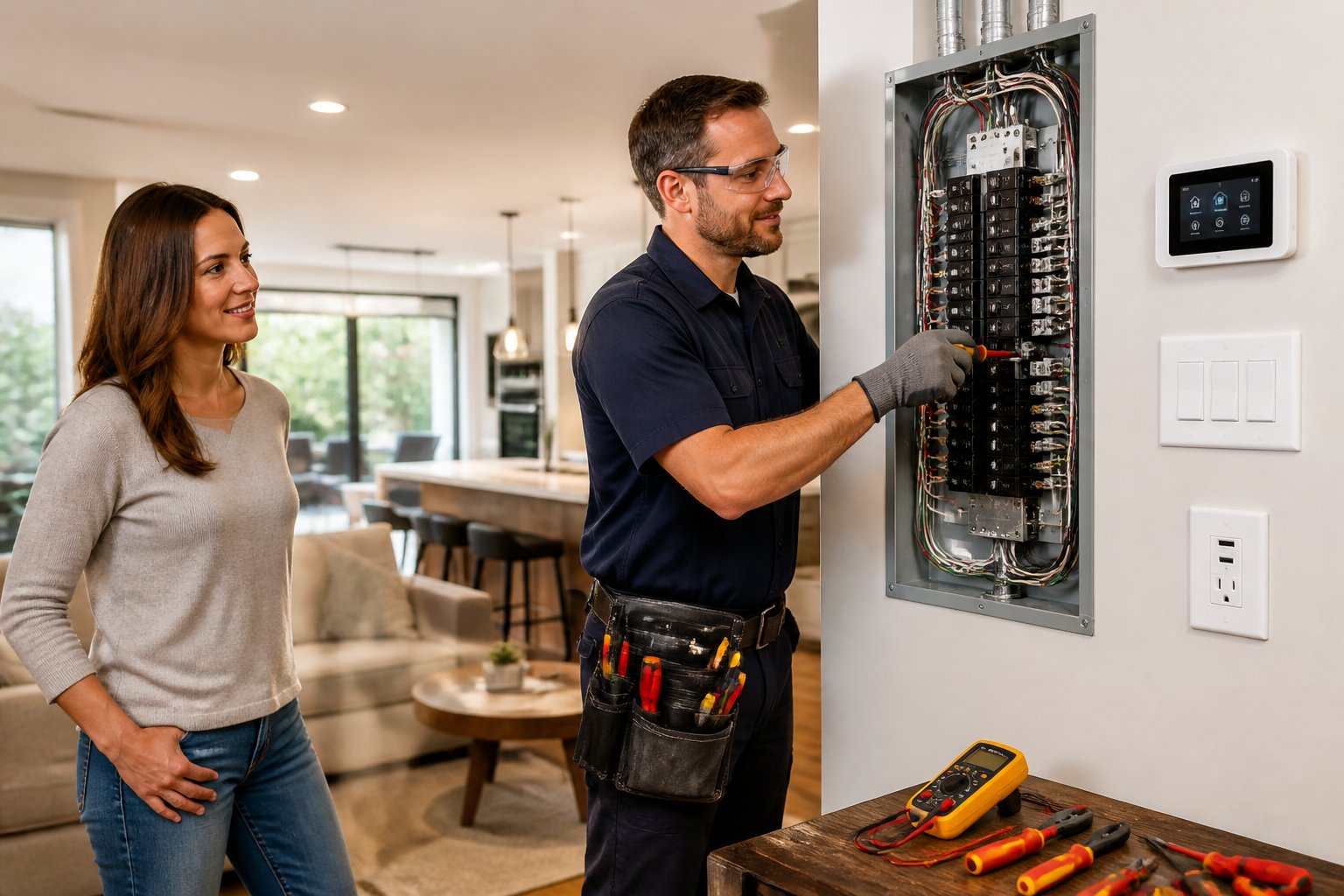
A tripped circuit breaker can kill a whole outdoor lighting circuit, and a GFCI outlet will do the same if it senses moisture or a fault. Check your panel and any nearby GFCI outlets that feed the lights, especially after rain or irrigation. If the breaker or GFCI keeps tripping, you’re probably looking at a real electrical issue, not just a bad bulb.
Verifying The Power Supply To The Transformer
With low-voltage systems, your transformer acts as the bridge between household power and landscape lighting. Make sure the outlet is live and the transformer is putting out the right voltage. If the transformer feels hot, makes weird noises, or just won’t respond, it’s time to call AAA Electrical Services or another licensed electrician to check if the unit is failing or if the problem starts further up the line.
When Controls Like Photocells Or An Astronomical Timer Interrupt Power
Photocells and astronomical timers can make a healthy system act unreliable if they misread daylight, have wrong settings, or just start to fail. If your lights turn on and off at strange times, double-check the controls and their wiring before assuming you’ve got a bigger problem. Sometimes, a control issue can look just like a system failure—especially when the seasons change and daylight hours shift.
Why Voltage Drops Across The System
Voltage drop is one of the most common reasons landscape lights look weak, uneven, or just plain inconsistent. Long wire runs, undersized wire gauge, and too many fixtures on one run can all sap voltage by the time it reaches the farthest lights.
How Long Wire Runs Cause Landscape Lights Dim
Long wire runs add resistance, which eats up usable voltage as power gets farther from the transformer. That’s why you’ll see some low-voltage landscape lighting look bright near the source and then fade out down the line. In Sacramento-area yards with big lots or detached features, long cables make the problem even more obvious.
Choosing The Right Wire Gauge For Low Voltage Lighting
Wire gauge matters—a lot. Thinner wire means more resistance over distance. For low-voltage lighting, the right wire size keeps voltage steady and supports energy efficiency without pushing the system too hard. If your lights are dim or patchy, you might have wire that’s too small for the job.
Load Balancing And Voltage Distribution Across Multiple Runs
Spreading the load over multiple runs works better than packing everything onto one line. Too many fixtures on a single run will leave some lights dim and others fine, which usually means your voltage distribution is off. Load balancing keeps everything more even and takes stress off the system.
Transformer Problems That Create Unstable Output
Transformer trouble can cause flickering, dimming, or total power loss across one or more lighting zones. If the transformer is failing, overloaded, or set to the wrong tap, you’ll get unstable output—even if everything else looks okay.
Signs Of An Overloaded Transformer
An overloaded transformer might hum, run hot, shut down now and then, or make your lights uneven. If your fixtures pull more power than the transformer’s rated for, you’ll see unstable output and repeat issues. It’s worth checking this before the transformer burns out completely.
Matching Transformer Capacity To Fixture Load
The transformer’s wattage should match the total fixture load, with a little room to spare. If you undersize the system, the transformer output will sag under demand and wear out faster. An electrician can help confirm if your setup can handle your current fixtures and any future upgrades you might want.
How Multi-Tap Transformer Settings Affect Performance
Multi-tap transformers let you pick different output settings to fine-tune things. The wrong tap can leave lights too dim or too bright, especially on longer runs where voltage drop is already a problem. Picking the right tap helps keep your lighting stable and everything looking sharp.
Wiring And Connection Failures Underground
Underground wiring issues often cause outages, dim sections, or lights that quit after rain. Loose connections, corrosion, and damaged wiring can mess up the circuit below ground—sometimes with no obvious signs up top.
Loose Connections And Corrosion At Splices
Loose wire nuts or underground connections build resistance and heat, leading to flickering lights. Corrosion at splices tends to sneak up, so things might work one day and fail the next. These hidden connections are always worth checking first.
Damaged Wiring And Faulty Wiring In Buried Runs
Damaged wiring from digging, shifting soil, pests, or roots can make power unreliable across a run. Faulty buried wiring might show up as one zone going dark or fixtures acting weird. Once insulation is compromised, moisture gets in and things just get worse.
Why Waterproof Connectors And Proper Waterproofing Matter
Waterproof connectors keep outdoor connections dry and protected from corrosion. Without proper waterproofing, moisture sneaks in and causes repeated failures long after installation. Clean, sealed connections are key for long-term reliability.
Moisture, Weather, And Post-Rain Power Issues
Rain, irrigation, and humidity can expose weak points in your lighting. Water intrusion and surge-related damage often show up as flickering, tripped breakers, or lights that work again once things dry out.
How Water Intrusion Triggers Flickering Lights
Water intrusion can mess with contacts inside fixtures or connectors, leading to flickering. Even a little moisture can change how current flows and make the light flash, dim, or cut out. If the problem pops up after a storm, weather exposure is a strong suspect.
Moisture Damage Inside Fixtures And Connectors
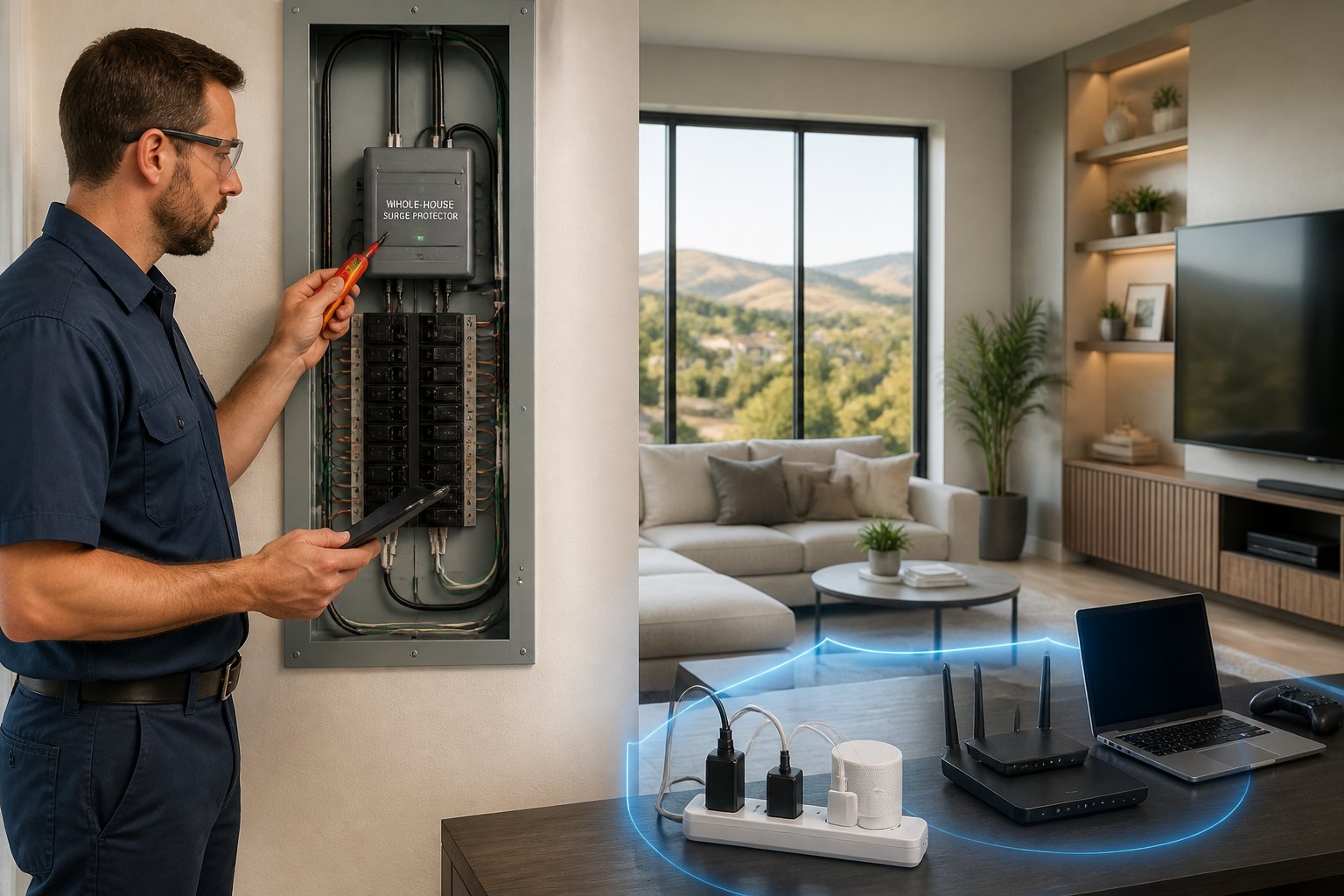
Moisture can corrode sockets, loosen terminals, and weaken insulation inside outdoor fixtures. Water doesn’t always kill a system all at once, which is why lights might seem unreliable instead of totally dead. Surge protectors help with spikes, but sealing and maintenance matter more for stopping water-related wear.
When Water Ingress Leads To Repeated GFCI Trips
If water reaches a live connection, the GFCI trips to protect you from shock. When this keeps happening, the fixture, connector, or buried cable probably needs repair—not just another reset. In places like Citrus Heights, Carmichael, and Rancho Cordova, this is pretty common after heavy rain or lots of irrigation.
Fixture Load, Lamp Problems, And Ongoing Maintenance
Even with good wiring and power, fixture-level issues can make your system act up. Burned-out bulbs, mismatched lamps, overloaded circuits, and skipped maintenance all add up.
Burned-Out Bulbs, CRI, And Color Temperature Mismatches
Burned-out bulbs are the easiest thing to check, but if they keep failing, you might have voltage or fixture problems. If replacement lamps don’t match in CRI or color temperature, your lights can look off even when they’re working. Keeping lamp types consistent just makes the whole setup look better.
Fixture Placement And Overloaded Circuits
Bad fixture placement can cause hot spots, tangled wires, or overloaded circuits. When a circuit carries too much load, you’ll see dimming, nuisance trips, or uneven lights. Placing fixtures thoughtfully helps with safety, appearance, and power distribution.
Using A Multimeter And Preventive Maintenance To Catch Problems Early
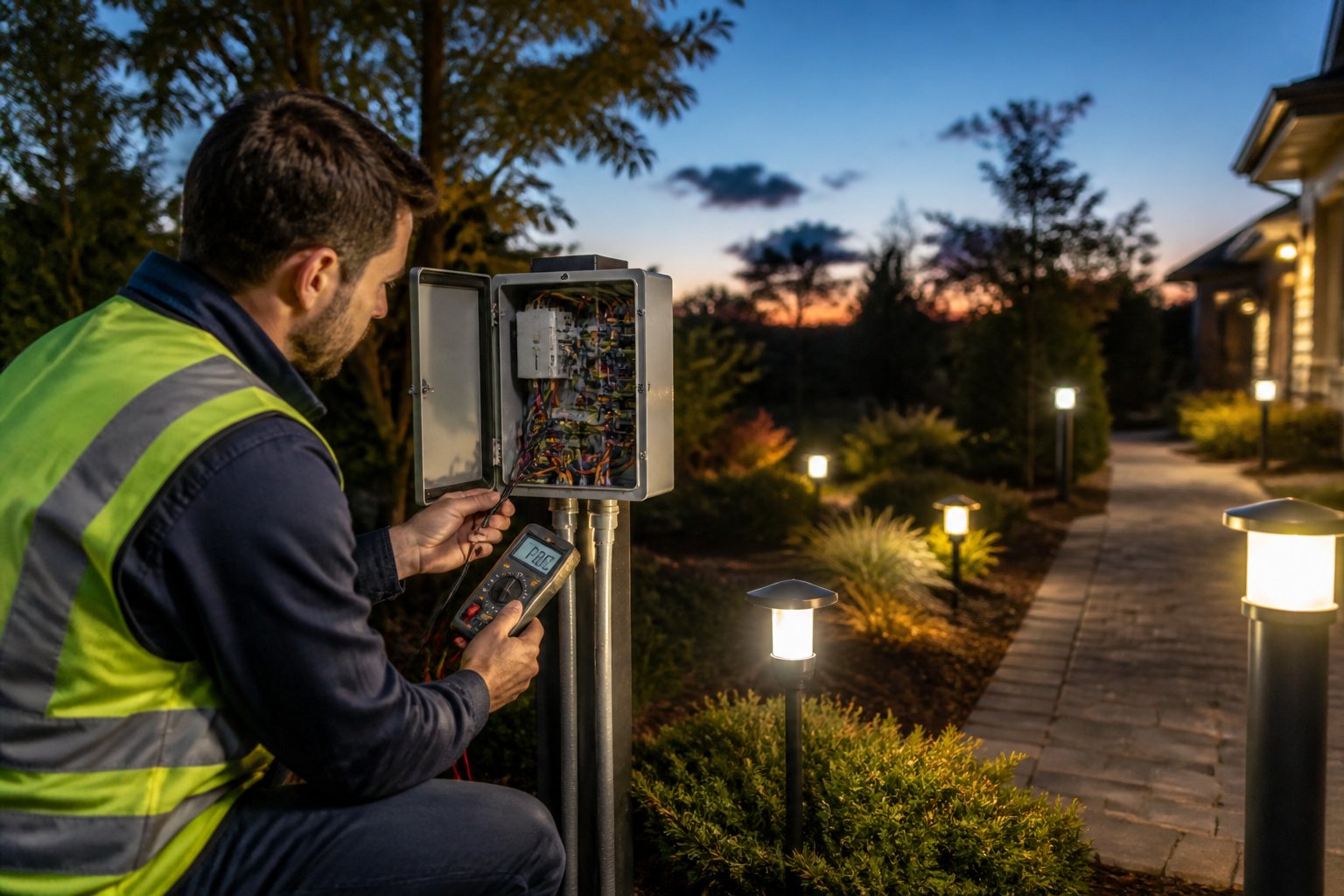
A multimeter lets you check voltage, continuity, and whether a section is getting power. Regular maintenance catches loose fittings, corrosion, or weak output before things get worse. For folks in Folsom, Fair Oaks, Natomas, and nearby, routine checks are a simple way to keep your lighting reliable.
Frequently Asked Questions
Why does my outside light only work sometimes?
Usually, it’s a loose connection, a failing switch or control, or moisture sneaking in. Sometimes, it’s a transformer or breaker that’s just about maxed out, so the system only works under certain conditions.
What could cause my outdoor lights to flicker or flash on and off?
Flickering usually means loose wiring, corrosion, water intrusion, or voltage drop. If it happens after rain or irrigation, moisture is probably messing with a connection.
Why would an outdoor light stop working right after I change the bulb?
A new bulb won’t fix a bad socket, damaged wiring, or a tripped GFCI. If there’s power but the light won’t turn on, the problem’s likely in the connection, control, or the fixture itself.
If my outdoor light has power but won’t turn on, what should I check first?
Check the bulb, the socket, the switch or control, and any GFCI outlets on the circuit. If those look okay, try testing voltage and wiring with a multimeter.
Can loose wiring or a bad connection make porch lights act unreliable?
Absolutely. Loose wiring and bad connections are classic causes of unreliable porch lights—expect flickering, partial outages, or lights that only work when the weather changes.
Could weather, moisture, or corrosion be causing my outdoor lights to cut out?
Yeah, that's a big possibility—especially if your lights tend to quit after it rains or when the air feels heavy and damp. Water sneaks into connectors, starts corroding stuff, and suddenly things just don't work right. Sometimes you'll find breakers tripping for no obvious reason, or your lights flicker on and off like they're haunted. Outdoor lighting systems really aren't fans of moisture or corrosion.