Electrical repairs for Rocklin homeowners usually start with a small annoyance—a dead outlet, a light that flickers when you least expect it. Those little problems often signal worn-out parts, loose wires, or a circuit that’s just overworked.
If you want to protect your home, handle the urgent electrical problems first. After that, get to worn outlets, old wiring, and panel trouble before they turn into something bigger. A licensed electrician can help you figure out what’s critical and what can wait.
It’s not just about flipping the lights back on. It’s about keeping your home safe, your power steady, and your family out of harm’s way.
Electrical Problems That Need Immediate Attention
Some electrical issues just can’t wait. If you smell burning, see smoke, notice sparks, or suddenly lose power in part of your house, treat it like an emergency and call for help.
A licensed electrician can pinpoint the problem and let you know if you need emergency electrical service.
Burning Smells, Scorch Marks, and Sparking Outlets
A burning smell from an outlet, switch, or panel is a big red flag. Scorch marks, crackling noises, or visible sparks mean heat is building up where it shouldn’t.
If you can safely do it, shut off power to the problem area. Then get an electrician out as soon as you can.
Frequent Breaker Trips and Sudden Power Loss
A breaker that trips once in a while probably isn’t a huge deal. But if it keeps happening, won’t reset, or you lose power in just one part of the house, you might be dealing with overloaded circuits, failing parts, or bad wiring.
If the breaker feels warm, makes noise, or smells odd, the risk is higher. At that point, electrical safety comes first.
When to Call for Emergency Help Instead of Waiting
Call for emergency help if you see smoke, sparks, burning smells, hot outlets, or anything that looks like active damage. Even a mild shock is a reason to pick up the phone.
Don’t keep resetting breakers or plugging things back in. Emergency services are there to stop a small issue from turning into a disaster.
Common Repair Issues in Rocklin Homes
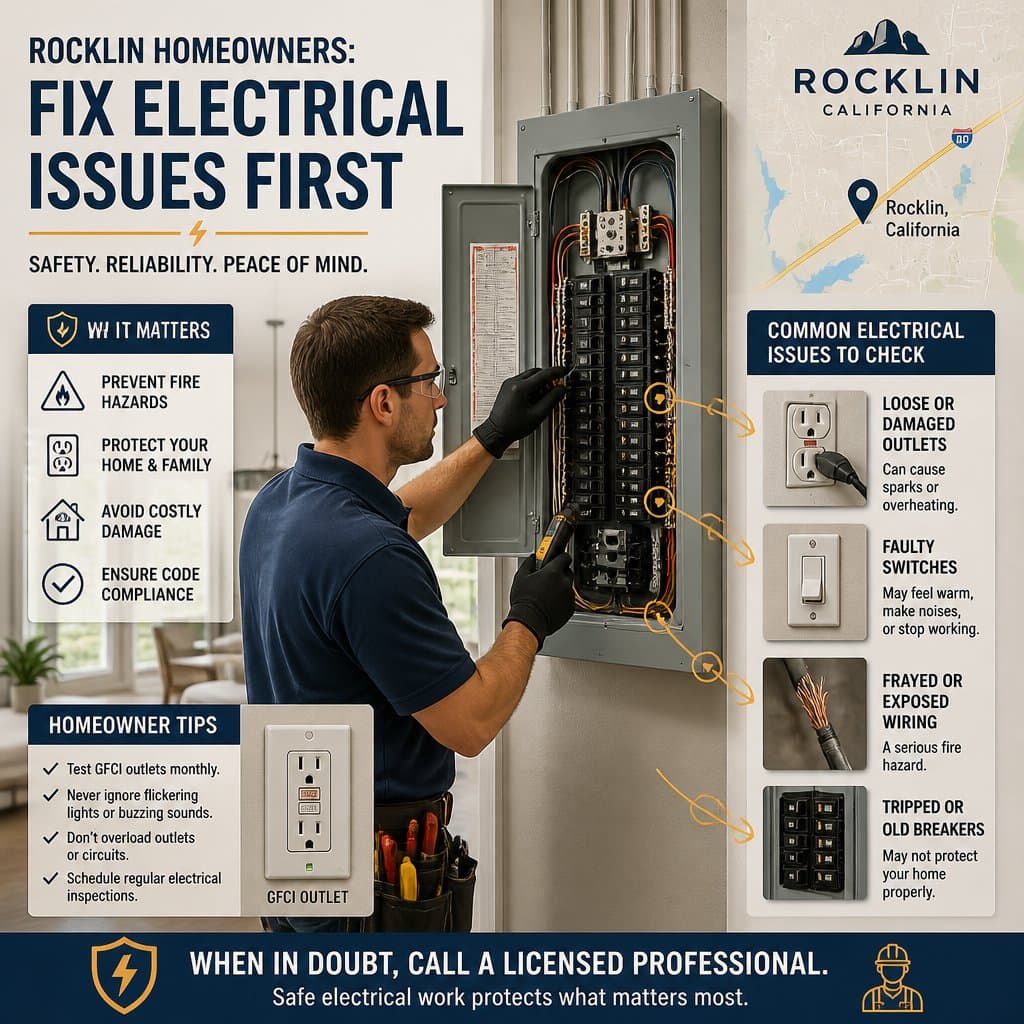
Most electrical repairs in Rocklin homes start out small and just get worse over time. Dead outlets, flickering lights, and wobbly switches usually mean something is worn out or loose.
Older homes, remodels, and new appliances bring their own set of headaches. That’s when rewiring, adding circuits, or just a solid electrical check can make a big difference.
Dead Outlets, Flickering Lights, and Faulty Switches
Dead outlets might come from a tripped breaker, a busted receptacle, or a wire that’s worked itself loose. Flickering lights? That’s often a weak connection, a dying fixture, or a circuit under too much strain.
Switches wear out too, especially in older rooms or after years of use. These fixes are usually simple, but they’re worth doing sooner rather than later.
Worn Wiring, Loose Connections, and Rewiring Needs
Worn wiring can show up as warm outlets, power that comes and goes, or breakers that trip for no clear reason. Loose connections hide out in outlets, switches, fixtures, or junction boxes.
If your house is older or you keep having issues in the same spot, rewiring might be safer. An electrician can tell you whether a repair will cut it or if it’s time to replace part of the system.
Circuit Breaker Problems and Overloaded Circuits
Breakers are supposed to protect your house, not drive you crazy. If they trip a lot, you might have too many things plugged in, or maybe the breaker itself is on its last legs.
Rooms with space heaters, microwaves, home offices, or big TVs see this a lot. Adding dedicated circuits can really help cut down on these problems and make things safer.
Panel and Circuit Upgrades That Prevent Repeat Repairs
Some homes just keep having the same electrical issues because the whole system’s maxed out. In those cases, a panel upgrade can actually fix the root of the problem.
Upgrading gives you space for dedicated circuits and a surge protector, making it easier (and safer) to handle today’s electrical loads.
Signs Your Home May Need a Panel Upgrade
If your lights dim when you turn on big appliances, breakers trip a lot, or your panel just can’t keep up even after repairs, you probably need a panel upgrade. Old panels can’t always handle what modern homes throw at them.
A panel upgrade is usually the right move if you’re adding new appliances, finishing a room, or thinking about future upgrades. It makes your house run smoother and distributes power more safely.
Adding Dedicated Circuits for Modern Appliances
Dedicated circuits give big appliances their own power line. Think refrigerators, microwaves, washers, dryers, EV chargers, or home office gear.
If one device keeps tripping a breaker or your lights flicker when something else kicks on, a dedicated circuit can help. It’s a practical way to reduce headaches and keep things running.
How Electrical Panel Upgrades Improve Safety and Capacity
Upgrading your electrical panel makes things safer by cutting down on overloads and letting breakers work like they should. You also get more capacity, which is huge if your home has way more gadgets than it did years ago.
Plus, a solid panel upgrade makes future projects easier. Planning on more lighting, an EV charger, or a new kitchen? Your panel should be ready.
Repairs, Installations, and Protective Add-Ons That Work Together
A lot of service calls just go better when you combine repairs and installations. Adding a ceiling fan, fixing lighting, or putting in a surge protector can solve the current issue and keep the next one from popping up.
That means fewer repeat visits and a smoother electrical plan for your home. It also lets your electrician make sure everything fits together safely.
Ceiling Fan Installation and Lighting Corrections
Ceiling fan installs often go hand-in-hand with lighting fixes, especially if a room feels stuffy or the lighting’s uneven. If your fan wobbles, hums, or shuts off a switch, the problem might be in the box, wiring, or how it’s mounted.
Lighting corrections can stop buzzing, dimming, or weird brightness. Small tweaks, but they make a room way more comfortable and safe.
Whole-Home Surge Protection for Sensitive Electronics
A surge protector at the panel shields your home from power spikes. That’s a big deal for TVs, computers, smart devices, and anything with touchy controls.
A whole-home surge protector is a smart add-on if you want better protection (and don’t want to rely on a bunch of power strips). It works as part of your electrical system, not just an afterthought.
Planning Repairs Alongside Future Home Improvements
If you’re already opening walls, updating rooms, or swapping out fixtures, it just makes sense to plan repairs with your next project. That could mean new fans, outlets, lighting, or even panel work.
AAA Electrical Services sees the best results when repairs and upgrades happen together. Same-day service from a crew that treats your place like their own can really save you time and hassle.
Choosing Safe, Code-Compliant Service in Rocklin
Getting things working again is only half the job. The repair needs to meet local codes, protect your house, and pass inspection if permits are involved.
Hiring a licensed electrician means you get safety-first work from pros who know Rocklin’s homes and what the local rules require.
Why Local Electrical Codes Matter for Repairs
Local codes are there to cut fire risk, prevent shocks, and stop future problems. They also make sure the work is sized right and installed properly.
This really matters in older homes, during remodels, or when you’re changing panels. Code-compliant work gives you peace of mind—and fewer headaches down the road.
What to Expect From a Licensed Electrician
A good electrician checks out the problem, explains what’s going on in plain English, and lays out your options. You should get upfront pricing, respectful service, and a tidy workspace.
If they’ve got the right parts on the truck, they can usually knock out most repairs in one visit. That’s a lifesaver when you need a fix fast and don’t want to wait days.
Questions to Ask About Pricing, Timing, and Permits
Ask if the price is flat-rate or hourly, which parts are included, and if you’ll need a permit. It’s also smart to ask how soon they can get to you and if they offer same-day service.
Major jobs—like panels, new circuits, or rewiring—often need permits. Getting clear answers up front helps you dodge surprises and keeps things moving.
Frequently Asked Questions
How do I know if an electrical issue in my home is urgent and needs immediate attention?
If you smell burning, see sparks, hear popping, or notice a hot outlet or panel, treat it as urgent. Sudden power loss in one area, repeated breaker trips, or any shock from an outlet or switch also needs fast attention.
What’s the typical hourly rate for a licensed residential electrician in my area?
Rates vary by job type, time of day, and whether the issue needs emergency electrical service. Many homeowners find that flat-rate pricing is easier to understand because it reduces guesswork and makes the total cost clearer before work starts.
How can I find a reliable, licensed electrician nearby and what should I look for in reviews?
Look for clear licensing, insured service, strong local reviews, and comments about communication, cleanliness, and on-time arrival. Reviews that mention honest pricing, safe work, and repairs that held up over time are especially useful.
Can I upgrade my electrical panel without rewiring my entire house?
Yes, in many homes you can upgrade the panel without rewiring everything. A licensed electrician can check whether the existing wiring is still in good shape and whether the panel upgrade alone will meet your needs.
What are the most common causes of frequently tripping breakers or flickering lights at home?
The most common causes are overloaded circuits, loose connections, worn wiring, or a failing breaker. Flickering lights can also happen when a large appliance starts up and the circuit is stretched too thin.
Who should I call when I’m not sure whether a problem is with my home wiring or the utility service?
Honestly, just start with a licensed electrician. They'll check things out and figure out if the trouble's coming from inside your house, at the panel, or maybe it's something on the utility's end. If it's not your wiring, they'll point you in the right direction for what to do next.