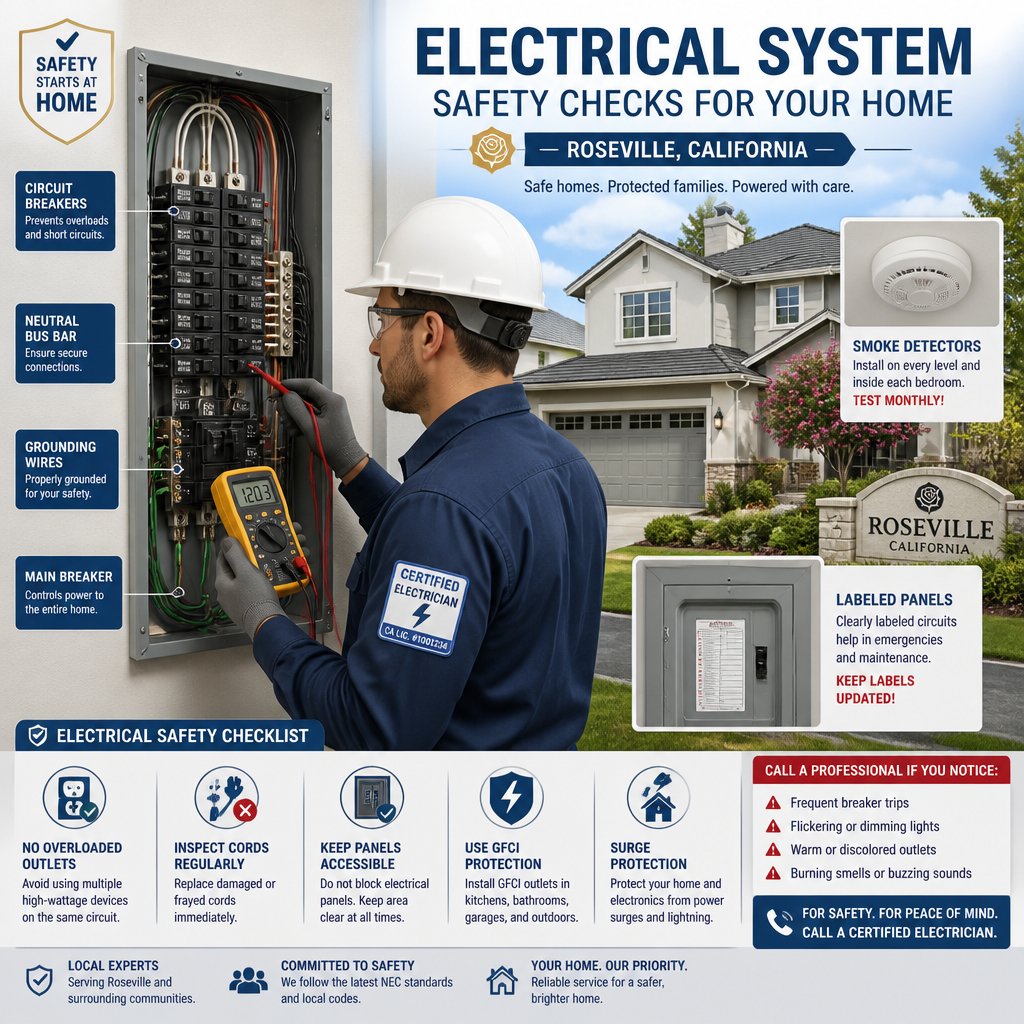
Electrical system safety checks in Roseville aren’t just for old houses or places with obvious problems. They help you catch hidden issues before they turn into outages, shocks, or fried appliances.
A careful electrical inspection in Roseville gives you a real sense of your home’s condition, so you can tackle repairs before small warning signs become bigger safety risks. A home electrical inspection also confirms your outlets, wiring, panels, and safety devices are actually doing what they should.
If you’ve been putting off a residential electrical inspection, now’s a good time to get to it. Electrical safety is easy to ignore—until you get flickering lights, warm outlets, or a breaker that won’t stop tripping for no clear reason.
Why Safety Checks Matter for Roseville Homes
Electrical safety checks protect your home from dangers you probably don’t see day to day. A residential electrical inspection looks at wear, load demand, and problem spots so you can fix them before they put your family at risk.
Roseville homes can get extra strain from older wiring, remodels, new appliances, and just years of use. That’s why electrical inspection services matter, even if everything seems fine.
How Inspections Help Prevent Fire and Shock Risks
Loose connections, damaged insulation, and overloaded circuits create heat or expose live parts. An electrical safety inspection helps spot those problems early, before they turn into fire or shock hazards.
You might not notice a hidden issue until a breaker trips or an outlet dies. A home electrical inspection gives you a safer starting point than just guessing.
Why Older Homes and Remodels Need Closer Attention
Older homes often have wiring, panels, or outlets installed for much lighter electrical use. Remodels can add new loads the original system was never built for.
If you’ve added a kitchen appliance, EV charger, hot tub, or room addition, a residential electrical inspection can show if your system still has enough capacity. That’s important for safety and long-term reliability.
When a Routine Visit Makes More Sense Than Waiting for a Problem
Waiting for a failure usually costs more and brings extra stress. Routine electrical inspection services let you stay ahead of issues, especially if you haven’t had a check in years.
A planned visit makes sense before heavy-use seasons, after storm-related power problems, or when your home’s been under extra electrical demand. Licensed pros can help you sleep easier before small concerns grow into headaches.
What an Electrical Safety Check Should Include
A good electrical safety inspection should cover the parts of your system that work hardest every day: the panel, branch circuits, outlets, switches, fixtures, and protection devices.
A solid electrical inspection checklist focuses on visible wear, proper operation, and signs of overload. It should also include testing that confirms you’re protected in the places where shocks and faults are most likely.
Electrical Panel and Breaker Review
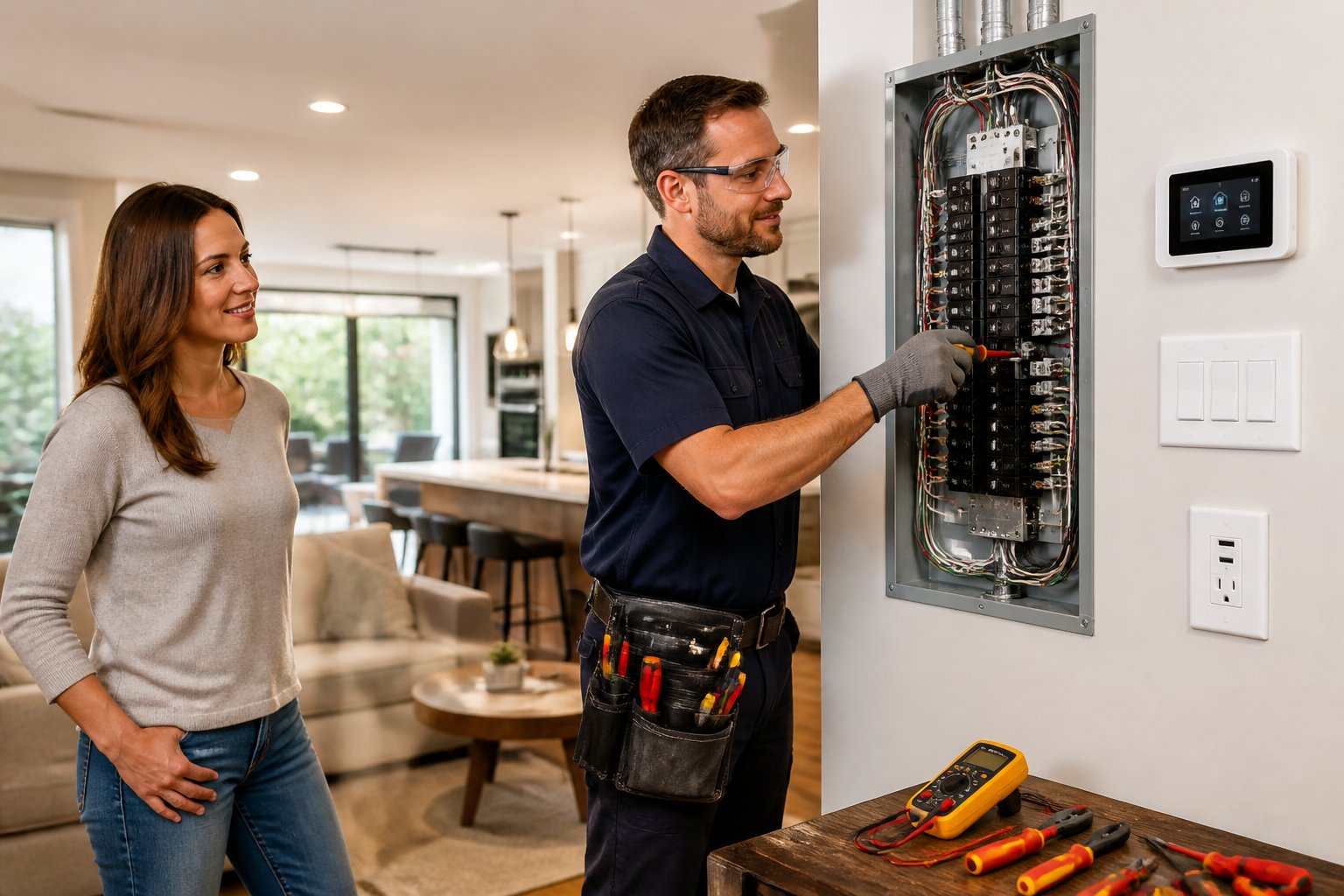
An electrical panel inspection checks for loose connections, corrosion, overheating, and bad labeling. It also confirms your breakers are the right size for the circuits they protect.
If your panel has rust, scorch marks, or repeated tripping, it’s time to act. A careful panel inspection helps you decide if you need repairs, replacement parts, or a full upgrade.
Wiring, Outlets, Switches, and Fixture Testing
The inspection should look at visible wiring, outlets, switches, ceiling fixtures, and lighting controls. These can show wear long before they actually fail.
A good electrician will test for loose outlets, damaged covers, reversed polarity, and weak switches. This part of the checklist often catches the small stuff you’d miss in daily life.
Grounding, GFCI, and AFCI Protection Checks
Grounding directs fault current safely away from people and equipment. GFCI protection matters near water, and AFCI protection helps cut arc-related fire risk in living areas.
During inspection, pros should test these protections for proper function and placement. If they’re missing or not working, you’ll need repairs to bring your system up to safer standards.
Warning Signs Homeowners Should Not Ignore
Some signs mean you shouldn’t wait. If you notice changes in how your system works, a residential electrical inspection can help you find the cause before things get worse.
These warning signs often start small. Jumping on them early keeps repairs simpler and avoids bigger headaches.
Frequent Breaker Trips and Flickering Lights
Breakers that trip a lot might be doing their job, or they might mean a circuit is overloaded or faulty. Flickering lights can signal loose connections, bad fixtures, or wiring trouble.
If you see both in the same home, an electrical inspection is a smart move. The problem could run deeper than just one bad bulb or outlet.
Warm Outlets, Burning Smells, and Buzzing Sounds
Outlets or switches that feel warm? Don’t ignore them. Burning smells, buzzing, crackling, or sizzling sounds can mean heat buildup or loose wiring.
Those signs need quick attention from a qualified electrician. They usually mean safety has already been compromised and repairs can’t wait.
Signs You May Need Electrical Repairs After an Inspection
An inspection might turn up worn outlets, outdated breakers, loose connections, or panel issues. In that case, schedule repairs based on risk, not just convenience.
If your report lists repeated code issues or damaged parts, treat those as a priority. A residential electrical inspection should lead to clear next steps—not more guesswork.
When to Schedule an Inspection
Don’t wait for something to break before booking an electrical safety inspection. A well-timed home electrical inspection can save you stress during a move, remodel, or big appliance upgrade.
The best time depends on what’s changing in your home. A little planning helps you protect your system before demand spikes.
Before Buying or Selling a Home
An electrical inspection in Roseville is especially useful before a purchase or sale. Buyers want to know what they’re getting, and sellers benefit from finding issues before they slow things down.
A home electrical inspection can help you avoid surprises during negotiations. It also gives both sides a clearer sense of the home’s condition.
After Renovations, Service Upgrades, or New Appliance Loads
If your electrical use changes, your system should be checked. That means kitchen remodels, added rooms, panel changes, and new appliances that draw more power.
If your home now carries more load than before, a residential electrical inspection can confirm if the wiring and protection still fit the job. It’s practical to ask for electrical inspection in Roseville from a local pro who knows the area’s housing quirks.
How Often Roseville Homeowners Should Book a Checkup
A yearly or every-few-years checkup is a good habit for many homes, especially older ones. Homes with past issues, repairs, or upgrades may need more frequent reviews.
Basic electrical safety checks are extra helpful if you don’t have recent work documented. A routine schedule keeps you from waiting until a panel or outlet gives you a bigger warning.
Residential and Commercial Needs Compared
Residential and commercial systems are built for different uses, so inspections focus on different things. Residential electrical inspection work centers on home safety, everyday load, and family patterns.
Commercial properties deal with bigger systems, more equipment, and more complex needs. Picking the right electrical inspection services gets you the right scope for the property.
What Residential Inspections Usually Focus On
Residential electrical inspections look at panels, outlets, switches, fixtures, grounding, and visible wiring. The goal? Confirm safe operation in places where kids, guests, and daily life happen.
Inspectors also pay attention to moisture areas, bedrooms, kitchen circuits, and laundry spaces—common spots where safety devices matter most.
How Commercial Electrical Inspection Scope Differs
A commercial electrical inspection covers more complex distribution equipment, heavier loads, and different code requirements. The safety and performance needs just aren’t the same as in a house.
Commercial properties might need closer attention to equipment rooms, shared systems, and tenant load changes. That wider scope makes the inspection process more specialized.
Choosing the Right Service for Mixed-Use or Rental Properties
If you own a duplex, rental, or mixed-use building, you may need both residential and commercial inspection thinking. The right service depends on how the property’s wired and used.
For places with shared spaces or tenant turnover, regular residential electrical inspections help you stay ahead of wear and complaints. AAA Electrical Services offers safety-first electrical work done by licensed professionals for homeowners and property owners who want honest pricing. No surprises.
How to Act on Inspection Results
A good inspection should show you a clear path forward. Once you know what’s safe, what’s worn, and what’s outdated, you can plan repairs with less stress.
Sort issues by risk. That keeps the most important work from getting lost in a pile of notes.
Prioritizing Safety Issues First
Start with anything that could cause fire, shock, or outages. That’s usually hot outlets, damaged wiring, missing protection devices, and panel concerns.
Use your inspection checklist to separate urgent stuff from routine maintenance. A steady plan is easier on your budget and safer for your home.
Planning Panel Upgrades, Repairs, or Surge Protection
If your panel is old or undersized, an inspection may point toward upgrades. Sometimes, a few repairs and better load management are enough.
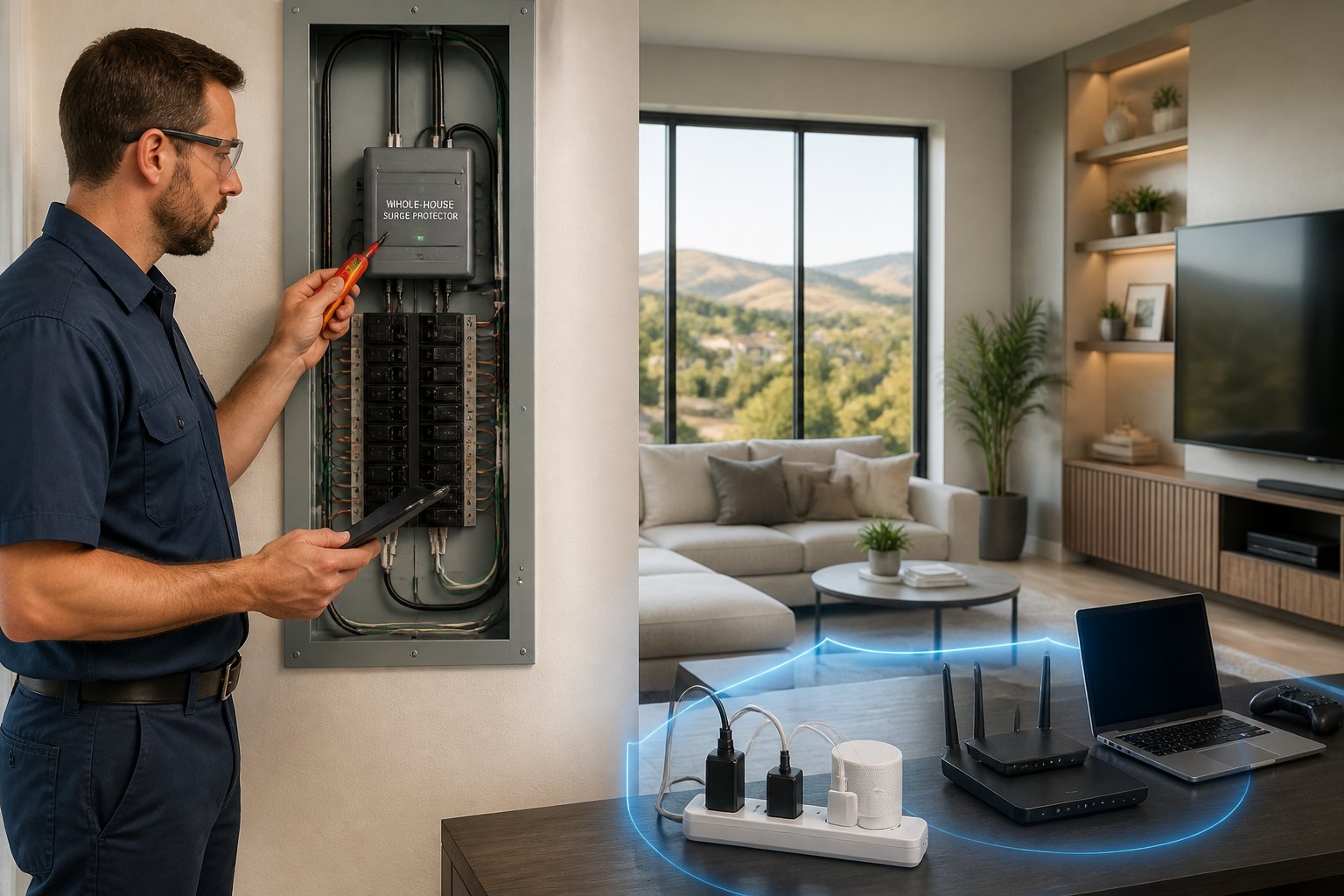
Surge protection is worth considering, especially if you rely on sensitive electronics or have new appliances. Upgrades like these help protect your home as your power needs change.
Working With a Qualified Local Electrician
Pick someone who explains findings in plain language and only recommends what you need. Stocked vans mean faster fixes, often in one visit, which helps when the problem’s simple and parts are on hand.
If you’re in Roseville or nearby, same-day service from a team that treats your home like their own can make a tough day easier. A good local electrician should give you flat-rate, upfront pricing so you know what to expect before work starts.
Frequently Asked Questions
How much does a full home electrical inspection typically cost?
It varies by home size, panel condition, access to wiring, and how detailed the inspection is. A basic safety check is usually less involved than a full inspection with testing and repair recommendations.
What do electricians usually check during an electrical safety check?
Electricians check the panel, breakers, outlets, switches, fixtures, visible wiring, grounding, GFCI protection, and AFCI protection. They also look for heat damage, loose connections, and overload signs.
How often should a home’s electrical wiring be inspected for safety?
A good rule: have your wiring checked every few years, or sooner if your home’s older, remodeled, or showing warning signs. If you notice flickering lights, breaker trips, or burning smells, schedule an inspection right away.
What’s included in a standard home electrical inspection?
A standard inspection usually covers the main panel, branch circuits, outlets, switches, fixtures, grounding, and safety devices. It may also include a look at visible wiring and notes on needed repairs.
What are the most common signs that my home might have an electrical safety issue?
Frequent breaker trips, flickering lights, warm outlets, buzzing sounds, burning smells, and discolored cover plates are common warning signs. If you notice any of these, a residential electrical inspection should be your next step.
Do I need an electrical safety check before buying or selling a home?
Absolutely, getting an electrical inspection in Roseville before a sale or purchase just makes sense. It lets you catch safety issues early—nobody wants a surprise right before closing. Plus, it gives everyone a better idea of what shape the home’s really in.