Proper ventilation is honestly one of the easiest ways to keep your electrical panels from wearing out before their time. When heat gets trapped inside an enclosure, components have to work harder, insulation starts to break down faster, and what starts as a tiny issue can spiral into an expensive repair.
If you’re a homeowner in Sacramento or nearby spots like Roseville, Elk Grove, Folsom, or Citrus Heights, this stuff matters. Panel reliability isn’t just about keeping the lights on—it’s about your family’s safety, comfort, and the overall health of your electrical system. Good airflow and a solid thermal management plan help your panels run cooler and last longer. They’re just safer, plain and simple.
Maybe your garage panel always feels warm, your subpanel is jam-packed, or you notice your system trips more on those blazing summer days. Ventilation plays a role in all of that. The right setup depends on your enclosure, your house, the local environment, and how much heat your equipment’s cranking out.
Key Takeaways
- Heat cuts component life and weakens connections.
- The best airflow method depends on enclosure and location.
- Regular checks help you spot cooling issues early.
How Heat Shortens Panel Life
Heat is honestly one of the main reasons electrical panels age faster than they should. When you don’t have decent thermal management, heat dissipation just doesn’t keep up, and the hottest parts of the panel take the worst of it. Temperature sensors can help spot issues, but usually, damage starts before you get any real warning.
Why Heat-Generating Components Wear Out Faster
Relays, breakers, drives, transformers, and power supplies all make heat as they work. If that heat gets stuck inside, those parts run hotter than they’re meant to—and that means they’ll wear out sooner. That’s a big reason why proper electrical ventilation matters, especially if your panel already handles extra stuff like EV chargers, hot tubs, or backup power.
How Heat Dissipation Affects Breakers And Connections
Good heat dissipation keeps breakers and wire connections in a safer temperature range. When things get too hot, metal expands, contacts can loosen, and resistance builds up at connection points. You might see nuisance trips, weird discoloration, or insulation starting to break down—all of which chip away at reliability.
Why Hot Spots Matter More Than Average Temperature
A panel might seem only a little warm overall but still hide a dangerous hot spot. Tight wiring, crowded parts, and poor cooling can create local heat that average temperature checks just don’t catch. That’s why thermal checks and sensors are so important—the hottest point is usually where things fail first.
When Airflow Helps And When It Doesn’t
Airflow can pull heat out of a panel, but not every enclosure needs or benefits from the same approach. Some spots do fine with natural ventilation—just passive vents. Others really need active fans or forced-air cooling to keep things safe.
Natural Ventilation Versus Natural Convection
Natural ventilation uses openings to let warm air rise out while cooler air sneaks in below. Natural convection helps move air without any mechanical parts. It’s handy when the heat load isn’t too much and the surrounding air is reasonably cool.
Passive Ventilation And Passive Vents
Passive ventilation relies on vents, louvers, or simple openings to get air moving—no fans required. This works best in cleaner, low-risk areas where dust and moisture aren’t a big problem. But honestly, passive systems only do their job if there’s enough temperature difference to keep air moving.
Active Ventilation With Active Fans And Blowers
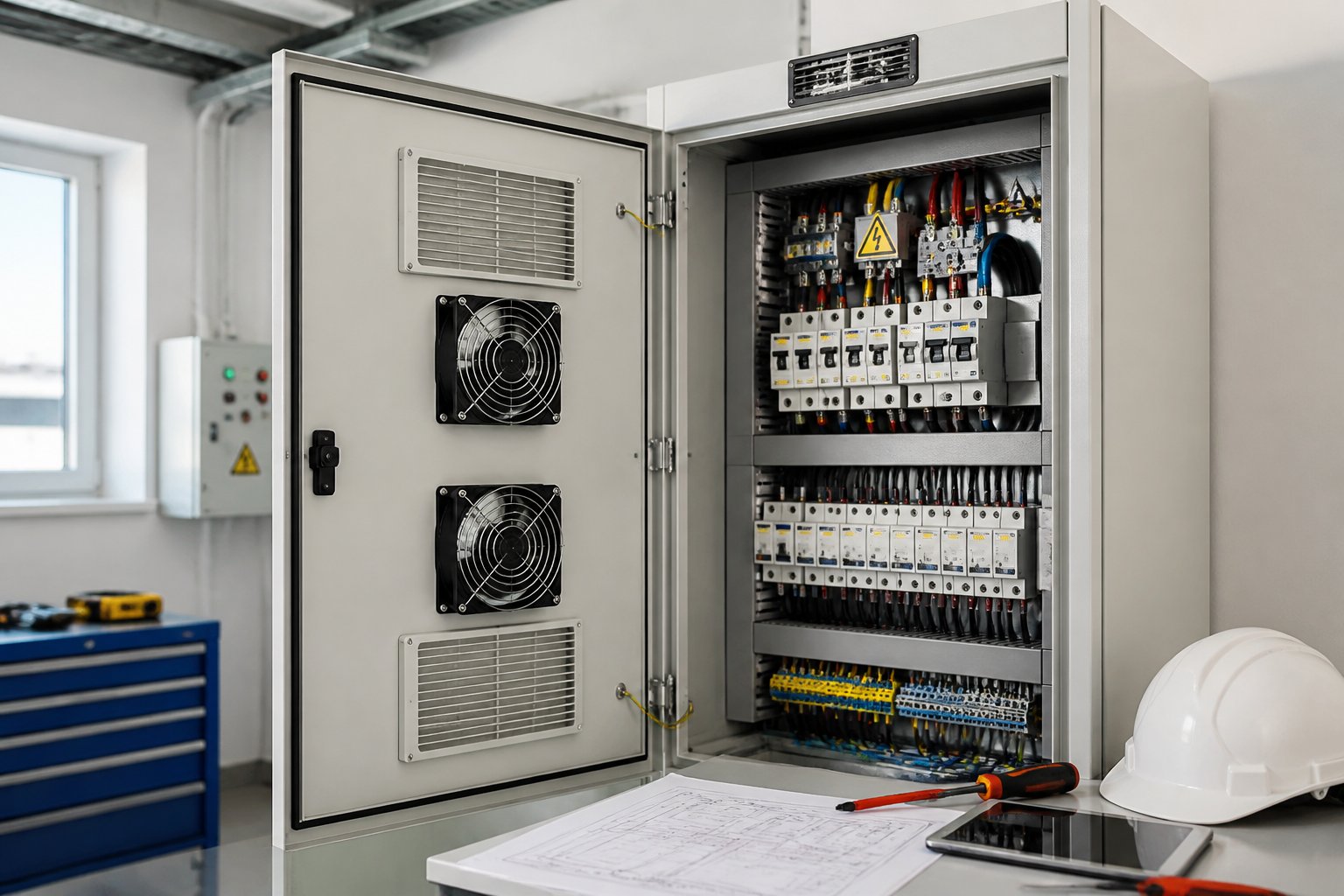
Active ventilation uses fans or blowers to pull in cooler air and push out the warm stuff. You get more consistent airflow, which really helps if your panel has a higher heat load or lives in a tight space. For a lot of homes, this setup just works better than relying on passive vents alone.
Forced-Air Cooling In Higher-Heat Applications
Forced-air cooling pushes air through the enclosure more aggressively. It’s the way to go if heat builds up fast or when your panel’s packed with equipment. Fans and blowers can make a real difference, especially in small, crowded, or warmer rooms. Sometimes, though, airflow isn’t enough and you need a sealed cooling solution.
Choosing The Right Cooling Method For The Environment
The best cooling method really comes down to the room, the enclosure, and what kind of dirt or moisture is around. Clean indoor spaces might only need simple cabinet cooling, but dusty garages, damp utility rooms, and outdoor spots usually call for filters, screens, louvers, or even closed-loop options like heat exchangers.
Clean Indoor Spaces Versus Dusty Or Damp Areas
A clean indoor mechanical room may just need basic ventilation or a filtered fan. But a dusty garage, laundry area, or crawlspace? That’s a different story—airborne debris can clog things up and hurt performance. Damp areas bring their own headache, since pulling in outside air can add moisture that’s bad for electrical equipment.
When Filters, Screens, And Louvers Make Sense
Filters, screens, and louvers help manage airflow and keep out debris. They’re a smart move when you want ventilation but don’t want to open the enclosure up to dust or bugs. In a lot of homes, these parts balance cooling with everyday protection.
When Sealed Designs Need Heat Exchange Instead Of Open Air
Sealed enclosures need heat exchange instead of open air because you want to keep contaminants out. Air-to-air heat exchangers move heat without mixing inside and outside air, which keeps things cleaner and safer. That’s pretty common when you need reliable cooling but can’t risk letting in outside mess.
When Cooling Units Or Enclosure Air Conditioners Are Needed
Cooling units, enclosure air conditioners, and cabinet ACs come into play when the heat load’s just too much for vents or fans. They’re ideal for tightly packed cabinets, hot mechanical rooms, or equipment that needs to stay in a narrow temperature range. If you’re adding modern loads like generator controls or EV charging, this kind of cooling can make a big difference for reliability.
Why Ratings And Sealing Change The Ventilation Plan
Every enclosure has a protection level, and that rating decides how much airflow you can safely use. IP, IP rating, NEMA, and NEMA rating all play a role in whether you can open the cabinet to outside air or need a more sealed cooling approach.
How IP And IP Rating Affect Air Openings
An IP rating tells you how well an enclosure keeps out solids and liquids. Higher ratings usually mean fewer open paths for air, making simple ventilation trickier. If your panel needs better dust or moisture protection, you’ll probably need filtered or sealed cooling instead of open vents.
How NEMA And NEMA Rating Influence Cooling Choices
A NEMA rating gives you another idea of how tough the enclosure is. As the rating goes up, the ventilation plan usually has to get more restrictive because you’re blocking out more contaminants. What works for one enclosure may not work for another.
What NEMA 4 And NEMA 4X Mean For Moisture Protection
NEMA 4 and NEMA 4X enclosures are built for moisture protection, with NEMA 4X adding corrosion resistance. Those ratings mean you’ll want a sealed approach, not open ventilation, especially in wet or corrosive environments. If your home has outdoor gear or a harsh utility space, that protection level really shapes your cooling plan.
Design Factors That Improve Cooling Performance
Good design isn’t just about slapping a fan on a panel. Heat load calculation, component layout, and clear ventilation paths all work together to keep heat from getting trapped.
Heat Load Calculation Basics
A heat load calculation tells you how much heat the panel makes and how much cooling it needs. You start with the number of components, their wattage, and the surrounding temperature. If you underestimate the load, you might think your ventilation is good enough, but the enclosure could still run hot.
Why Component Layout Changes Air Movement
Component layout really matters for air movement. If you cram heat sources together, you’ll get warm clusters that block airflow and raise temperatures. Spacing out heat-generating parts helps ventilation carry warm air away better.
How Cabinet Ventilation Paths Prevent Dead Zones
Ventilation paths need to move air across the whole enclosure—not just near the door or the top. Dead zones form when air takes the easy way out and leaves some spots stagnant. Smart ventilation keeps air circulating everywhere, which means more even cooling.
Warning Signs, Service Needs, And Preventive Care
Poor ventilation usually leaves hints before a panel fails. A solid maintenance schedule helps you catch these early, protect reliability, and keep panel cooling working right.
Common Signs Of Poor Ventilation
Look for warm or hot cabinet surfaces, frequent breaker trips, buzzing or stressed parts, discoloration around terminals, and a faint burnt smell. Dust buildup, moisture inside the enclosure, and weak fans are also classic warning signs. If you spot these in your Sacramento-area home, don’t wait—quick service can save you from bigger headaches.
What To Include In A Maintenance Schedule
Your maintenance schedule should cover visual checks, cleaning filters and vents, making sure fans work, tightening connections, and checking that doors and seals close right. It’s smart to test cooling when it’s hot out, especially if you rely on cabinet cooling in a garage, utility room, or outdoors. Regular service keeps things more dependable.
When To Call A Licensed Electrician For Same-Day Help
Call a licensed electrician right away if you see smoke, smell burning, get repeated trips, or the panel feels way hotter than normal. Fast action matters when safety or equipment is at risk. AAA Electrical Services can help with clear recommendations, tidy work, and stocked service vehicles so you’re not left waiting when time’s tight.
Frequently Asked Questions
Do electrical panels need ventilation, or is a sealed panel usually fine?
Some panels are fine with limited ventilation, especially in clean, cool indoor spaces with a light heat load. Sealed panels are safer when you’re worried about moisture, dust, or corrosion—as long as you’re handling heat another way.
How does poor airflow inside an electrical enclosure shorten the lifespan of components?
Poor airflow traps heat around breakers, relays, wiring, and power supplies. That speeds up insulation aging and wears out contacts and moving parts faster. Over time, you’ll see more nuisance trips, loose connections, and early failures.
What are the common signs that an electrical panel is overheating due to inadequate ventilation?
You might notice warm cabinet surfaces, a burnt smell, discolored terminals, repeated breaker trips, or fans that aren’t moving air well. Sometimes, the first clue is just that the panel feels hotter than usual in summer.
Which ventilation options work best for electrical enclosures, like vents, fans, or filtered vent kits?
It really depends on the heat load and environment. Vents and filtered vent kits can work in clean spaces, while fans, blowers, or sealed cooling systems are better when heat or contamination is a bigger deal.
Can adding a ventilation kit affect an enclosure’s safety rating or moisture and dust protection?
Yep, it can. Any new opening can change how well the enclosure keeps out dust, water, and other stuff, so your kit needs to match the enclosure’s IP or NEMA rating.
How should ventilation be planned for panels installed in hot, tight, or outdoor locations?
First, figure out how much heat you’re dealing with. Then, think about the space you’ve got, how exposed the area is, and what kind of enclosure rating you need. In places like stuffy garages, cramped utility nooks, or out in the open, you’ll often want sealed cooling or maybe a filtered system—sometimes even a heat exchanger. Open-air vents just don’t cut it in those conditions.