If you are researching AC capacitor cost, the useful answer is not a single number. The final price depends on the equipment, the capacitor specified for it, access to the unit, diagnostic findings, and whether another fault is part of the problem. A technician should test the system, explain the recommended work, and provide a clear price before starting a repair.
Why does AC capacitor cost vary?
A capacitor is an electrical component that helps an air conditioner’s motor start or continue running. Many outdoor condensers use a dual-run capacitor that supports both the compressor and the fan motor. Other equipment may use separate components. The correct replacement is selected from the equipment’s specifications, not by choosing a part that merely looks similar.
Several parts of a service visit can affect the total:
- The required part. Capacitors differ in their electrical ratings and design. The technician checks the equipment label and relevant specifications to identify a compatible replacement.
- The time needed to diagnose the symptom. A humming unit or a fan that does not turn can have more than one cause. Testing is needed before anyone can say the capacitor is the fault.
- Access to the equipment. A unit with clear working space may be simpler to service than one in a tight, obstructed, elevated, or otherwise difficult location.
- Related repairs. The diagnostic may reveal a motor, connection, control, or other problem in addition to—or instead of—a capacitor issue. Each finding can change the scope.
- Appointment details. Scheduling and dispatch arrangements depend on the visit. Confirm applicable details with the service team when booking.
These differences are why a general online range may not describe your repair. AAA Electrical Services uses a paid diagnostic to identify the repair path, then presents upfront job-based pricing before work begins. Exact pricing is determined on site rather than quoted by phone.
What should the diagnostic establish?
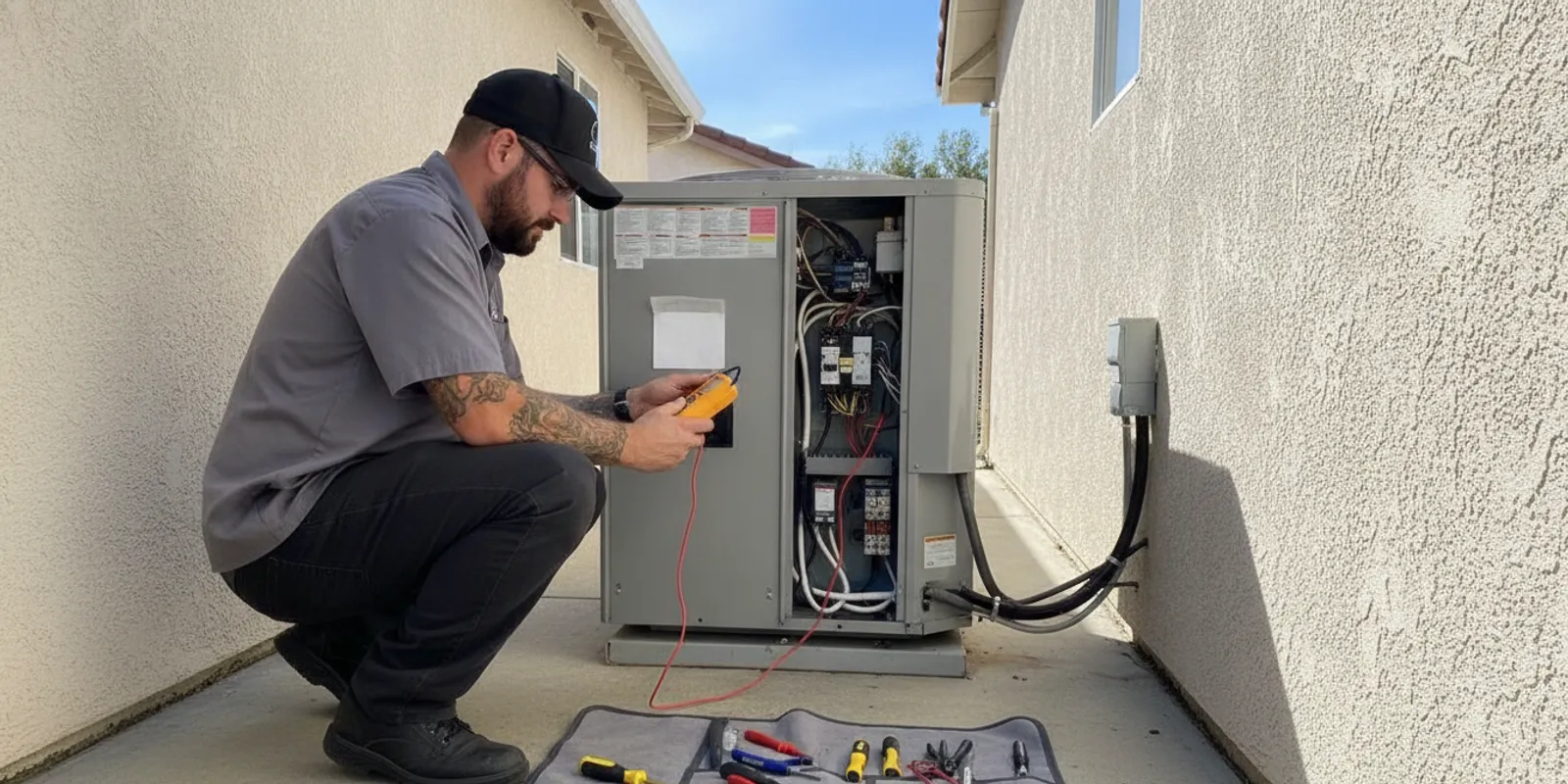
A useful diagnostic answers more than “does the outdoor unit start?” It should help determine whether the capacitor is operating within the equipment’s requirements, whether another part is preventing normal operation, and what work is actually needed. Depending on the symptoms and system, the technician may review how the equipment behaves, inspect relevant electrical connections, and test components with appropriate tools.
The technician may ask when the issue started, whether it happens every time, what sounds you hear, and whether the indoor blower runs while the outdoor unit does not. These observations help direct the inspection, but they do not prove a particular part has failed. For example, a fan that does not spin may point toward an electrical or mechanical problem, but the symptom alone cannot identify which one.
Before approving work, ask the technician to walk you through the findings in plain language. You should be able to understand:
- Which component failed and what test or observation supports that finding.
- Whether the proposed replacement matches the system’s specifications.
- What the quoted work includes, such as the diagnostic, part, labor, or additional repairs.
- Whether a second issue was found and whether it must be addressed for the system to operate.
- What the next step will be if the air conditioner still does not cool after the recommended repair.
A clear explanation gives you a basis for comparing options. It also helps distinguish a confirmed repair from a guess made from a sound or a short symptom description.
What symptoms can point to a capacitor problem?
A failed capacitor can interfere with starting or running, but similar symptoms can come from other parts of an air conditioner. Possible clues include an outdoor unit that hums without starting, a condenser fan that does not turn, repeated attempts to start, or cooling that stops unexpectedly. These signs are reasons to arrange an assessment, not a home diagnosis.
Notice which parts of the system appear to be operating, without opening equipment. For instance, write down whether the indoor blower moves air, whether the outdoor unit makes a sound, and whether the symptom is constant or intermittent. Also note whether the home cools at all, whether the thermostat display is normal, and when the problem occurs. A short, factual description can help the technician decide what to inspect first.
Do not remove the condenser panel, touch wiring, or attempt to test, discharge, or replace a capacitor. Capacitors can retain an electrical charge, and electrical equipment can present a shock hazard even when it appears to be off. Leave inspection and repair to a qualified professional. If you notice smoke, a burning smell, visible damage, or repeated electrical trips, stop operating the system if it is safe to do so and contact a professional.
What can you check safely before calling?
Keep homeowner checks external and simple. First, make sure the thermostat is set to cooling and to a temperature below the current room temperature. If it uses batteries and the display is blank or weak, follow the thermostat manufacturer’s instructions for replacing them. Check whether the air filter looks heavily clogged and whether supply or return vents are blocked by furniture, curtains, or stored items.
From a safe distance, look at the outside of the condenser. You can note leaves or other visible obstructions around the unit, but do not reach through a grille, remove a panel, or try to turn a fan blade. If the equipment is making an unusual noise, do not investigate by putting your hands near it.
If a breaker has tripped, do not keep resetting it to force the system to run. A repeated trip can signal an electrical or equipment fault that needs attention. Record when it happened and tell the technician. Do not remove the electrical panel cover or handle wiring as part of these checks.
These steps can rule out a few simple conditions and make the service conversation more useful. They cannot confirm that a capacitor has failed, and they should not delay help when the system is repeatedly shutting down, the home is becoming uncomfortable, or there are signs of an electrical hazard.
How do repair possibilities compare?
A capacitor may be the only repair needed, but symptoms can lead to several diagnostic outcomes. The table below is a way to organize questions for the technician. It is not a substitute for testing, and it does not predict which part has failed in your home.
| Diagnostic finding | What it may indicate | Useful question |
|---|---|---|
| Capacitor does not meet its specified operating range | A compatible replacement may be recommended if testing confirms the fault. | How was the capacitor tested, and what specification does the replacement need to meet? |
| Capacitor tests normally | The cause may be elsewhere in the starting, electrical, control, or cooling system. | What other components were checked, and what evidence points to the next step? |
| Capacitor issue and another fault are both found | More than one repair may be needed; replacing the capacitor alone may not resolve the symptom. | Which work is necessary for operation, and what is the price and scope of each item? |
| Unit starts, but cooling remains poor | Airflow, controls, refrigerant, or another system issue may need investigation. | What checks were completed before recommending a part replacement? |
| Symptom occurs only sometimes | An intermittent fault may require the technician to consider when and how the system fails. | What observations should I record if the symptom returns? |
Equipment age, condition, manufacturer requirements, and test results determine the right repair. Do not assume that every no-cooling call is a capacitor replacement or that every old capacitor needs replacement without a diagnosis. For planned upkeep and related service, see AAA’s HVAC tune-up and repair information.
How should you compare repair estimates?
Compare the scope, not just the final totals. One estimate may include diagnostic work and a specified replacement part, while another may describe a different repair or leave important items unclear. Ask each provider to state what has been diagnosed, what work is included, and whether any additional work is optional or required.
Use a short checklist when reviewing an estimate:
- Match the diagnosis. Check that the estimate names the component or condition found during testing, rather than only repeating the symptom you reported.
- Clarify the work included. Ask whether the stated price covers the diagnostic, the replacement part, labor, and any other work listed. If the estimate separates those items, make sure you understand the total for the recommended scope.
- Confirm the part is appropriate. Ask how the proposed capacitor matches the equipment’s rating and specifications. A part should not be selected by appearance alone.
- Separate required and optional items. If several repairs are presented, ask which one addresses the current operating problem and why other work is recommended now.
- Ask about what happens next. Clarify what the technician will check if the repair does not restore normal operation, and ask about applicable service terms.
- Get the price before authorizing work. Make sure the complete price for the agreed scope is clear before the repair begins.
For example, suppose one estimate recommends only replacing a confirmed failed capacitor, while another includes a capacitor and a motor repair. Those totals are not directly comparable until you know whether the motor was tested, what result indicated a fault, and whether that motor work is necessary. Ask for the evidence and the price for each scope. You can then decide with a clearer understanding of what you are authorizing.
AAA Electrical Services provides upfront job-based pricing after diagnosis. Exact pricing is determined on site, not quoted by phone. The technician should explain the recommended work and price before beginning. The team is fully licensed and insured; its electrical and HVAC licenses are C-10 and C-20 under CSLB #635556. Learn more about the company on the About AAA Electrical Services page.
When does maintenance fit into the decision?
A repair visit and a tune-up serve different purposes. A repair visit investigates a current symptom, such as an air conditioner that will not start or is not cooling. A tune-up is planned service intended to review system operation and maintenance needs. A tune-up can be useful as part of home upkeep, but it should not be treated as a substitute for diagnosing an active failure.
If you are booking because the system has stopped working, describe that symptom when you request service. If the air conditioner currently runs but you want a seasonal check, say that instead. The distinction helps the team understand why you are calling and discuss the appropriate appointment. Ask what is included in the visit and whether any repair would be priced separately before work begins.
AAA provides residential HVAC service in the Sacramento area. You can review its residential HVAC service information or see the page for air conditioning repair. If the issue is broader than a single component, share the full pattern of symptoms rather than asking for a part by name.
How can two similar symptoms lead to different repairs?
Consider two homes where the outdoor air conditioner hums but does not cool. The sound is similar, but that does not mean the repair is the same. In the first home, testing may show that the capacitor is outside its required range while the motor and wiring behave as expected. The technician can explain why replacing the capacitor is the recommended next step and provide the price for that work. In the second home, the capacitor may test normally, so replacing it would not address the cause. The diagnostic needs to continue through the relevant parts of the system.
A second example is an air conditioner that starts but then stops. A homeowner might assume that the capacitor is weak because the system struggles to run. The technician instead needs to determine when the interruption occurs and check for other conditions that could cause it. A control issue, motor concern, airflow restriction, or another fault may need to be considered based on the equipment and test results. The symptom points to an investigation; it does not determine the part in advance.
This distinction matters when reviewing the estimate. If the recommendation includes more than one component, ask which finding supports each item. Request separate descriptions of the work and the price for each proposed scope. Also ask whether the air conditioner can be operated safely while you decide about any work that is not essential to the immediate repair. The answer depends on the condition found, so avoid operating equipment that has a burning odor, visible damage, or repeated electrical trips.
Finally, make sure the agreed scope reflects the conversation. If the technician explains that a second repair is optional or can be evaluated later, the written estimate should not leave you guessing about that distinction. If a repair does not restore cooling, ask what was verified afterward and what diagnostic step is recommended next. A measured process helps avoid replacing parts based only on a familiar sound or a quick visual impression.
When should you schedule service?
Arrange an assessment if the air conditioner will not start, repeatedly stops, runs without cooling, or cannot keep the home comfortable. In Sacramento-area warm weather, an air conditioning problem can quickly affect comfort. Appointment availability and dispatch timing still need to be confirmed with the team; do not assume a particular arrival time or same-day appointment until it is confirmed.
When you call or submit a request, it helps to have a few details ready: the system’s general age if known, whether it is a central air conditioner or another setup, when the trouble began, what the indoor and outdoor units are doing, and whether a breaker tripped. You do not need to know the capacitor type or open the unit to request service.
If the problem is intermittent, keep a brief note of the time and conditions. For example: “The outdoor unit hummed after the thermostat called for cooling, the indoor blower ran, and the system stopped after several minutes.” This is more useful than concluding that a particular component failed. If you need additional electrical troubleshooting, the electrical troubleshooting page describes that service path.
Request a quote for HVAC service
Frequently asked questions
Can I replace an AC capacitor myself?
It is safer to leave diagnosis and replacement to a qualified HVAC professional. A capacitor can retain an electrical charge, and incorrect handling or an incompatible part can create a hazard or damage equipment. Do not open the condenser or touch its wiring.
Does a humming air conditioner always mean the capacitor failed?
No. Humming can have several causes, including a fault with another electrical or mechanical component. A technician needs to test the equipment to identify the cause.
Can I get an exact AC capacitor cost over the phone?
A call can help arrange a service visit, but it cannot confirm the equipment’s condition or the repair scope. AAA Electrical Services determines the repair and provides upfront pricing after an on-site diagnostic.
Will a new capacitor fix an air conditioner that is not cooling?
Only if the capacitor is the cause. Poor cooling can also involve airflow, controls, refrigerant, or another equipment issue. Testing helps determine whether a capacitor replacement is appropriate.
What information should I share when booking?
Describe when the symptom began, whether it happens every time, whether the indoor blower and outdoor unit appear to run, and any unusual sounds or breaker trips. Do not remove a panel or attempt electrical tests to gather these details.
A diagnostic gives you a clearer basis for deciding which repair is needed and what it will cost. Request service to discuss your symptoms, confirm scheduling, and receive a price for the recommended work before it begins.