
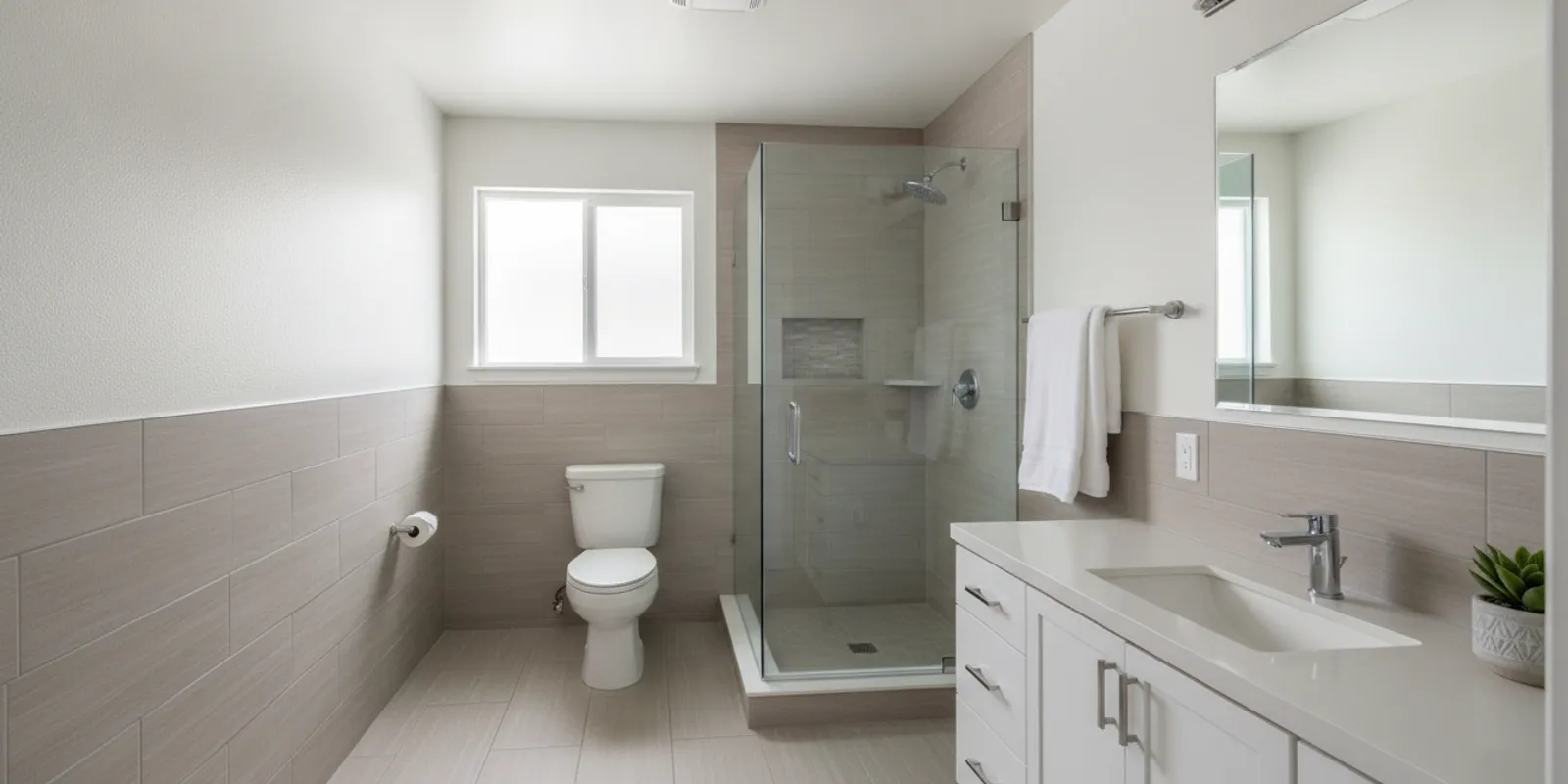
Bathroom exhaust fan installation cost depends on what is already in place, how easily a technician can reach it, and whether the fan has a usable path to exhaust air outdoors. A direct replacement in an accessible ceiling is a different project from adding a new fan, changing a control, or correcting a duct route. For Sacramento-area homeowners, the useful question is not simply what a fan costs, but what work the bathroom actually needs.
Call to discuss your bathroom fan project
What does bathroom exhaust fan installation cost cover?
A project estimate should describe the labor and materials needed for the specific home. Depending on the conditions, work may include removing an existing unit, fitting and supporting a replacement, making an appropriate electrical connection, connecting the fan to an exhaust route, setting up its control, and checking operation. Some projects need only part of that list. Others require additional work to make the fan, wiring, ceiling opening, and exhaust path work together.
That is why a generic online price range is a poor substitute for a job-specific assessment. A number that assumes a same-size fan can be misleading if the new housing does not fit the opening, if the wiring needs attention, or if the duct is disconnected above the ceiling. The estimate should be based on the actual scope, not on the word “replacement” alone.
AAA Electrical Services does not publish a flat installation price for every bathroom. A paid diagnostic identifies the repair or installation path, after which the team provides an upfront price before work begins. A phone description can help explain the concern, but it cannot always reveal hidden wiring, mounting, or vent conditions. The aim is to understand the work at the home and review the price before authorizing it.
Why can two bathroom fan estimates be different?
Estimates differ when they cover different work. One proposal may include a basic swap using the existing opening, connection, and duct. Another may include a new control, a larger ceiling opening, or duct correction. The totals are not directly comparable until you know whether both contractors are solving the same problem and including the same parts of the job.
Access can also change the time and method needed. A fan below an attic with safe, practical access may be easier to inspect than one below a finished room or in a tight roof space. Framing, insulation, plumbing, and other equipment can restrict reach. The condition of painted or finished surfaces matters too if the existing fan is a different size or if access requires opening the ceiling.
Equipment choices affect scope as well. A basic replacement and a fan with a light, timer, or humidity-related feature may not use the same control arrangement. A selected unit may have different mounting dimensions, connection instructions, or operating requirements. The important point is not that one option is always better; it is that the proposal should match the fan and features you plan to use.
Ask each contractor to spell out what is included and excluded. If one estimate seems much lower, check whether it leaves out duct work, a switch, finish repairs, disposal, or the replacement unit itself. If one seems higher, ask which specific tasks or materials account for the difference. Clear descriptions give you a fairer comparison than totals without context.
Is the job a replacement, a new installation, or a repair?
A like-for-like replacement usually starts with a fan already mounted in the bathroom. If the new unit fits the location and the existing electrical connection and vent route are suitable, the work may be relatively contained. Even then, a technician needs to confirm the housing, opening, support, wiring, control, and duct rather than assuming every existing part is ready to reuse.
A new installation has additional planning needs because there may be no fan, wiring, switch, opening, or exhaust route. The fan location has to be considered alongside the ceiling structure and the path to an outdoor termination. The work may involve a new electrical connection, control, ceiling cutout, mounting support, duct, and exterior termination. Which parts are needed depends on the home and the route that can be used.
A repair may be appropriate when the fan is noisy, stops intermittently, or does not seem to move air as expected. A failed motor is one possibility, but the cause could also involve a control, connection, obstruction, loose mounting, or disconnected duct. Replacing the whole unit without identifying the cause can leave the original problem unresolved. Ask what the inspection found and why the recommended repair or replacement fits those findings.
For a step-by-step overview of a related homeowner topic, see AAA Electrical Services’ guide to replacing a bathroom exhaust fan. A project guide can help you understand the sequence, but it does not replace an assessment of your specific wiring, ceiling, and vent conditions.
Which parts of the installation have the biggest effect on scope?
Fan location, ceiling opening, and mounting
Fan housings and cutouts are not all interchangeable. A replacement may be larger or smaller than the existing unit. A larger housing might require an adjusted opening, while a smaller one could leave an area that needs appropriate finishing. The installer also needs to confirm that the unit can be supported as intended and that nearby framing or other components do not prevent proper placement.
Ceiling height and access affect how the work can be completed. A reachable fan with space above it is different from one beneath a finished floor, a low-clearance roof area, or a crowded attic. If a ceiling needs to be opened to reach a connection or mounting point, ask whether patching, texture, and painting are included. Electrical or fan work and finish restoration are not automatically the same scope.
Existing wiring and controls
A replacement may be able to use an existing connection if it is suitable for the chosen unit and in sound condition. However, the technician could find damaged insulation, a loose connection, a control that does not match the fan, or other conditions that need correction. A new installation or an added feature may require a different electrical arrangement. The product instructions and the wiring present in the home determine what is compatible.
Consider how you want the fan to operate before choosing a model. You may want a simple switch, a timer that lets the fan continue after you leave, a fan-and-light combination, or another feature supported by the product. Do not assume that any switch can control any fan. Tell the technician what you want, and ask whether the proposed fan, control, and existing wiring work together.
Ductwork and outdoor termination
The fan is only one part of the ventilation path. The duct carries the air away from the bathroom, so its route and termination are important to the project. A disconnected, crushed, blocked, or unsuitable duct may require correction. If there is no existing route, the installer needs to determine how a suitable path could reach outdoors, subject to the home's layout and access.
Ask where the air will discharge and what the estimate includes for duct, exterior termination, and any roof or wall work. Do not assume that installing a fan includes creating a complete route outdoors. If portions of the duct are concealed or inaccessible, ask what the technician can verify and what assumptions remain. The proposal should identify any work that is not included rather than leaving you to infer it.
How can you tell whether the current fan or vent needs attention?
Notice what the bathroom does during and after normal use. Does the fan start reliably? Is it louder than before, or does it rattle, scrape, or vibrate? Does it run continuously, stop on its own, or respond inconsistently to its switch? Do fogged surfaces or damp air linger longer than they used to? These observations do not establish the cause, but they help the technician understand what has changed.
A fan that runs but seems ineffective may have a problem beyond the motor. The duct could be blocked, disconnected, damaged, or poorly arranged for the installation. The room may also have conditions that affect how air moves. A replacement fan alone may not solve the issue if the exhaust route is not working as intended. Include both the bathroom symptoms and any visible information about the vent when requesting an assessment.
Stop using a fan and contact a qualified electrician if you notice sparking, a burning odor, visible electrical damage, or a breaker that trips when the fan runs. Do not remove the cover or reach into the unit while it is connected to power. A wall switch being off does not prove that every conductor is de-energized. If you are unsure about a condition, leave the equipment alone and describe it to the service team.
For electrical concerns that may extend beyond the fan, AAA’s electrical troubleshooting service explains the relevant service option. A qualified professional can assess whether the problem involves the fan, switch, wiring, or another part of the home's electrical system.
How do you choose a fan that fits the bathroom?
Start with the room and the way it is used rather than selecting a unit only because it is inexpensive or has the most features. A small powder room and a larger bathroom with a shower have different ventilation needs. Room area, ceiling height, layout, the presence of a shower or bath, and how often the bathroom is used are all useful details to share when discussing options.
Look at the fan's published specifications and installation instructions. They help establish intended use, mounting needs, connection requirements, noise information, and any operating features. The chosen unit also needs to fit the physical location or include a plan for modifying it. If you already bought a fan, provide the exact model information before work is scheduled so compatibility can be considered.
Noise is a practical selection issue. A fan near a bedroom may be used less if its sound is disruptive, while a quieter model may better fit the household's preferences. A timer may help someone remember to let the fan run after bathing, but only if the control and wiring support it. Features add value when they solve a need and can be installed appropriately; they are not necessary for every bathroom.
Ask how the proposed fan is intended to work with the existing or planned duct. A more powerful unit does not automatically make an unsuitable exhaust route effective. The fan and the pathway should be considered together. Share whether moisture tends to linger, whether the room has a shower, and whether a current fan runs but seems ineffective. The technician can use those details along with the actual installation conditions.
What should a clear written estimate include?
A useful estimate identifies the work rather than listing only a product name and a total. Before approving it, check whether it describes the existing condition, the recommended solution, and the limits of the scope. The job may change if a concealed condition is discovered, but you should understand how a proposed change will be explained and priced before additional work is authorized.
- Whether the project is a repair, a replacement, or a new installation.
- The fan or equipment included, including model or features when selected.
- Whether removal of the existing unit and disposal are included.
- What mounting, electrical connection, control, and operational checks are included.
- Whether the existing duct will be inspected, repaired, replaced, or left as is.
- Whether a new duct route and outdoor termination are included.
- Any ceiling opening, patching, painting, roof, wall, or exterior finish work that is included or excluded.
- What assumptions the price depends on, such as access or concealed conditions.
- How the team will review new findings and any revised price before proceeding.
For example, suppose Estimate A includes removal and fitting of a fan that matches the existing opening, while Estimate B also includes replacing a damaged duct and adding a timer. Estimate B covers more work, so comparing only the two totals would not tell you which is better value. Ask whether the duct or timer is actually needed for your goals and whether the first estimate excludes them. Compare the line items against the observed condition.
If an estimate uses broad language such as “install fan,” ask what that phrase covers. Does it include the unit, wiring, control, duct connection, and test? Is the outdoor termination part of the project? What happens if the existing opening does not fit? Plain answers make it easier to understand the scope and avoid assumptions on either side.
How can you compare estimates fairly?
Begin by writing down the outcome you want. For example, you may want a quiet replacement in the existing location, a new fan in a bathroom that has none, or a correction for a fan that runs but leaves moisture in the room. If estimates address different goals, ask each contractor to clarify the recommended work before comparing the proposals.
Next, compare the equipment. Check whether each proposal names a fan or describes its capacity, control, and features. If you are supplying the unit, ask whether the installation price assumes a specific model and what happens if it is not compatible. Check whether any warranty information or product instructions are provided by the manufacturer, and ask who is responsible for addressing a product defect versus an installation issue.
Then compare the work around the fan. Look for removal, mounting, connection, control changes, duct inspection or correction, outdoor termination, and finish work. An estimate with fewer line items may still be suitable if those items are not needed; it may also be incomplete if a necessary part of the project is omitted. Ask the contractor to explain how the scope responds to what was found at your home.
Finally, ask how unexpected conditions are handled. A hidden connection or damaged duct may not be visible until access is available. A clear process is to pause, explain what was found, describe available options, and provide an updated price for your approval before added work begins. You remain able to decide whether to proceed with the revised scope.
What happens during a professional fan assessment?
The technician will typically confirm why you requested service and what outcome you want. Be ready to describe the fan's age if known, when the symptom started, and whether the problem is constant or intermittent. Mention if you recently changed the fan, switch, ceiling, roof, or bathroom layout. These details help direct the inspection, but the assessment still needs to account for what is physically installed.
The technician may inspect the fan and visible parts of the installation, consider the opening and mounting, and check the electrical connection and control as appropriate. The accessible portion of the exhaust route may also be reviewed. The amount that can be confirmed depends on access. If a hidden area cannot be seen without additional work, ask what is known, what is uncertain, and whether that uncertainty affects the scope or price.
After the assessment, the team should explain the options and the upfront price for the proposed work before it begins. If a repair is appropriate, you can ask why it is preferred to replacement. If replacement is recommended, ask which condition makes repair unsuitable or whether the new unit addresses a specific need. A clear explanation should connect the observed problem to the proposed solution.
Do not feel that you need to choose a fan or authorize work before you understand the proposal. Ask questions about the model, control, vent route, access, and finish work. If you want time to compare options, say so. The purpose of an assessment is to give you information about the work required at your home and a price to review.
Can you install or replace a bathroom fan yourself?
Whether a homeowner can safely handle a particular task depends on the wiring, mounting, equipment, access, and applicable requirements. A fan installation can involve electrical connections and work at a ceiling, sometimes in a tight attic or roof area. A person who is not certain how to isolate and verify a circuit, identify the wiring, or support the unit should not attempt the electrical or mounting work.
Never work on energized wiring. Turning off the wall switch alone is not enough to establish that conductors are safe to touch. Do not proceed if you find damaged insulation, exposed conductors, scorching, signs of overheating, or moisture near electrical components. Leave the area undisturbed and contact a qualified electrician. Do not enter a cramped or unsafe attic to inspect ductwork.
Even a seemingly simple swap can involve a mismatch between the old and new housing, an unsuitable connection, or a duct that is no longer attached. A fan that is not supported properly can vibrate or make noise. A duct that does not lead outdoors can fail to carry damp air away from the home. These are reasons to consider the whole installation rather than focusing only on attaching a new unit.
If you plan to do any preparation yourself, ask the service team what is useful and what should be left in place. Removing the old fan before an assessment can expose wiring or damage that is difficult to evaluate safely. Clearing the floor and providing model information are safer ways to prepare. The technician can advise what access is needed after learning about the specific installation.
How does the exhaust route affect moisture?
A bathroom fan moves air, but the air must have somewhere appropriate to go. If a duct is disconnected or ends in an enclosed area, the fan may not be exhausting the moisture outdoors as intended. If the route is obstructed or damaged, replacing the motor may not improve the result. That is why a project should consider the fan and exhaust path as a system.
Tell the technician if the room remains damp, the mirror stays fogged for a long time, or a musty smell persists. These signs can help describe the concern, but they do not identify a single cause. The answer may involve the fan, control, duct, airflow, or a separate source of moisture. If you see a leak, water staining, or persistent material damage, mention it because the issue may require evaluation beyond fan replacement.
Ask how the proposed route reaches outdoors and what portions can be inspected. A route may pass through a concealed attic or roof area, and not every section will necessarily be visible during an initial assessment. If a contractor cannot verify a section, ask whether the estimate assumes it is usable or includes access to inspect it. Understanding that distinction can prevent the fan installation from being mistaken for a complete correction of every hidden condition.
Do not climb onto a roof or enter an unsafe area to check the termination. If you can safely see a vent from the ground, you may describe its location or share a photo, but a photo cannot confirm hidden duct condition. Let the technician determine what inspection is appropriate and whether separate access or exterior work is part of the proposal.
What may affect the work in a Sacramento-area home?
Sacramento-area homes include different ceiling assemblies, roof layouts, ages, and remodeling histories. One home may have an accessible attic above the bathroom; another may have a finished space or limited clearance. A remodel may have changed the ceiling opening or switch without updating the duct. These differences are why a price for one home should not be treated as the price for another.
When arranging an assessment, share the city or neighborhood, whether the home has attic access, and any known details about the fan. If the bathroom is part of a larger renovation, explain the work schedule and which trades are involved. A fan installation may need to coordinate with ceiling repairs, painting, roofing, or other electrical work. The order matters if access will be easier before finishes are complete.
AAA Electrical Services provides residential electrical and heating and air service in the Sacramento metro. The team is fully licensed and insured, and appointment timing must be confirmed with the team. If you have a concern beyond a bathroom fan, the About AAA Electrical Services page provides information about the company. The appropriate service and availability depend on your request and location.
A same-day appointment should not be assumed. If timing matters, call to confirm scheduling and explain whether the fan has an electrical warning sign or is simply due for replacement. Live phone answering is available, but on-site timing is confirmed by the team. Do not keep using a fan that shows signs of overheating or electrical damage while waiting for advice.
How should you prepare for the service visit?
Preparation is simple and does not require opening the fan or going into the attic. Clear the area beneath the unit so the technician can reach it, and move fragile items from the counter or floor. If the bathroom is small, remove anything that could obstruct a ladder or safe work area. Let the team know if a pet, access instruction, or household schedule needs to be considered.
Make a short list of what you have noticed. Include whether the fan starts, how it sounds, whether it stops, how long moisture lingers, and when the problem began. Mention if a light or switch shares the control, and point out the control that operates the fan. These details can help the technician reproduce a symptom without you needing to remove a cover or touch any wiring.
If you already selected or purchased a unit, have the product name or model information ready. If you have a safe photograph of the existing grille, wall control, or a visible outdoor vent, you can share it. Do not climb, remove equipment, or put yourself at risk to collect information. A picture may help describe the situation, but it does not replace an on-site check.
Tell the technician about known attic access, previous ceiling or roof work, and any recent remodeling near the bathroom. If another contractor has already inspected the fan, share the findings or estimate. This can help identify what remains uncertain. You do not need to guess at technical causes; describe what you observed and let the professional assess it.
What should you expect after the fan is installed?
Before the technician leaves, confirm that the fan operates using its intended control. If the project included duct or termination work, ask what was completed and what portion of the route was accessible for inspection. If a timer or other feature was installed, ask how to set and use it. Keep the product instructions and any information the team provides about the work.
Listen for unexpected vibration or scraping, and tell the technician if operation does not match what was discussed. A fan can have a different sound from the old unit, but a new rattle or unstable movement deserves attention. Ask what maintenance is appropriate for the selected model and how to clean the grille safely. Follow the manufacturer's directions rather than improvising around electrical parts.
Do not treat a new fan as a guarantee that every moisture issue will disappear. Results depend on the selected unit, the duct route, room conditions, and how the fan is used. If dampness, odors, or poor operation continue, record when it happens and contact the team to discuss the next step. A persistent leak or water damage may need separate evaluation.
Ask whom to contact if a product or installation concern appears later and what information to provide. The model, installation date, and a concise description of the symptom can help the service team understand the request. Follow any instructions given for operating the control, and do not remove the fan or attempt an electrical adjustment to diagnose a later issue.
How do project scenarios change the likely scope?
A straightforward replacement is the simplest scenario only when the new unit fits the existing opening, the mounting is sound, the connection is suitable, and the exhaust path is usable. The assessment still matters because an old fan's appearance does not show every condition above the ceiling. If those parts are in good condition, the estimate can focus on removing the old unit, fitting the replacement, making the approved connection, and testing the control.
A replacement with a different housing or added light may require more coordination. The opening may need to be changed, nearby finish work may be necessary, or the control may need to be adapted to the selected equipment. These are not automatic consequences of choosing a new model, but they should be checked before the work begins. Share the fan's exact product information and ask which adjustments are part of the proposed scope.
A new fan in a bathroom without one is a broader planning task. The technician needs to consider a suitable location, a connection and control, a way to mount the unit, and a route that carries air to an outdoor termination. Access, the route's length and direction, and any ceiling or exterior work can make the job more involved. Ask for each element to be described rather than relying on a label such as “new fan installation.”
A fan that runs but does not seem to clear the room calls for diagnosis before a replacement decision. A worn unit is possible, but so are duct or control problems. The proposed solution should address the actual finding. If a contractor recommends replacing both fan and duct, ask which evidence points to the duct and whether all of its route can be examined. If only part can be seen, clarify what the estimate assumes about the hidden portion.
Which project details should you decide before selecting equipment?
Decide whether you want to keep the current fan location or are considering a different location as part of a remodel. A new location may change the ceiling opening, mounting approach, wiring path, and duct route. Moving a fan is not simply a matter of choosing another spot on the ceiling. The structure and pathway must allow the unit to be installed and the exhaust to reach outdoors.
List the features you care about, in order. For example, you may value a quiet operation first, a timer second, and an integrated light only if it fits the project. This makes it easier to compare equipment without assuming that more features are always worthwhile. Ask whether the feature changes the control, wiring, or installation needs and whether the selected model's instructions support the intended arrangement.
Also decide who will provide the fan. If you plan to purchase one, ask whether the contractor can review the model details before the visit and whether the estimate assumes customer-supplied equipment. Confirm how product fit and any defective or missing parts would be handled. If the contractor is selecting the unit, ask what characteristics guided the choice and whether alternatives are available. Make sure the written estimate says which equipment is included.
Finally, clarify what a finished bathroom means to you. Some homeowners expect only the fan and electrical work; others expect the ceiling opening to be restored and painted. If there is roof or exterior work, decide whether the estimate needs to include that too. Separate expectations in advance help you understand which contractor or trade is responsible for each part and avoid treating an excluded finish task as part of the fan installation.
What details can make a proposal incomplete?
One common gap is a proposal that names the fan but does not say whether the duct is being reused, inspected, or corrected. Ask whether the existing path will be examined and where it is expected to terminate. If the route cannot be reached, the estimate should make clear whether it assumes the duct is in usable condition. That distinction is important when the bathroom symptoms suggest the current exhaust is not effective.
Another possible gap is unclear responsibility for finish work. Replacing a different-sized unit can leave a visible opening or require patching. The electrical portion of the job may be complete even though surface restoration is not. Ask whether drywall, texture, paint, roofing, or siding work is included. If it is excluded, ask what the work area will look like when the installer finishes and whether you need to arrange another trade.
Control changes can also be left vague. If you expect a timer or a fan-and-light switch, make sure that feature appears in the written scope. Ask whether the fan and control are compatible, whether any wiring changes are included, and how the control will operate. A conversation about a feature is not the same as having it included in the estimate.
Finally, check whether the estimate describes removal and testing. Ask what happens to the old fan, whether the new fan will be operated before the visit ends, and how you will know which control operates it. These practical details do not necessarily change the core repair, but they help define what completion means. A concise written scope makes it easier for both you and the technician to confirm the agreed work.
How should a bathroom fan project fit into a remodel?
If you are remodeling, raise the fan question before the ceiling is closed or painted. Early planning may make it easier to inspect the framing, choose the fan location, arrange wiring, and create a route to the exterior. If the existing ceiling or roof is being replaced, coordinate the fan and termination decisions with the renovation schedule. Waiting until the room is finished can make access more difficult and may require reopening surfaces.
Identify who is responsible for each related task. An electrician may handle the fan and electrical connection, while a remodeler or another trade may be responsible for drywall, paint, roofing, or exterior finishes, depending on the agreed project. Do not assume that one contractor's estimate includes another trade's work. Ask each party to confirm timing and handoffs so the fan can be installed before final finishes when that is appropriate.
If other electrical work is planned in the bathroom, tell the technician before the estimate is prepared. The fan may share a control or be affected by changes to lighting and switches. The project team can consider the entire plan rather than completing a fan installation that must later be altered. Share design choices and product models as soon as they are available, especially when the new fan includes a light or a specialized control.
For work in an occupied home, ask what part of the bathroom needs to be cleared and whether dust protection or temporary interruption of the fan is expected. The details depend on the scope and access. Knowing what to expect helps you plan around the bathroom without relying on a promised visit duration. The team can confirm scheduling and explain any preparation specific to the approved work.
What routine care can help after installation?
Follow the manufacturer's instructions for cleaning the grille and maintaining the fan. Dust on an intake grille can restrict airflow, but cleaning methods vary by model. Turn the equipment off as directed and do not reach into the housing or touch wiring. If cleaning requires removing a cover and you are not sure how to do it safely, ask the technician or consult the product instructions first.
Use the fan and its control in the way the manufacturer describes. If a timer is installed, learn how to set it and explain its use to other household members. Do not block the grille with storage or decorations. Listen for new rattling, scraping, or changes in operation, and contact a qualified professional if the fan starts behaving unexpectedly or shows an electrical warning sign.
Maintenance cannot compensate for a damaged or unsuitable exhaust route. If the room remains damp even though the fan runs, report that change rather than assuming the unit simply needs a more powerful setting. A technician may need to revisit the fan, control, or accessible duct path. When discussing a return visit, explain what has changed since installation and whether the symptom happens every time or only under certain conditions.
Keep the model information, estimate, and service details together. These records make it easier to identify which unit was installed and what the approved scope covered. If you later remodel the bathroom or change the ceiling, share the fan information with the contractor doing that work. The existing unit's requirements and duct route can inform decisions about keeping or relocating it.
Frequently asked questions about bathroom exhaust fan installation
Can I get an exact installation price over the phone?
A phone conversation can help clarify the concern and arrange the next step, but it may not reveal the wiring, opening, mounting, access, or duct condition. AAA Electrical Services uses a paid diagnostic to identify the work path and provide an upfront price. The team reviews the price before work begins, based on the conditions found at the home.
Does replacing the fan include repairing the duct?
Not automatically. The estimate should say whether it includes inspection, repair, replacement, or a new duct route and outdoor termination. Ask what the technician can confirm about concealed sections and whether the proposed price assumes the existing route is usable. A fan replacement and duct correction can be different scopes of work.
Should I buy a fan before booking service?
You can share a model you are considering, but confirm that it fits the opening, mounting, wiring, control, and intended vent route before purchasing if possible. If you already own the fan, provide its model information. A unit that does not fit or work with the existing conditions could require additional changes or a different selection.
Can a new fan fix a noisy or weak fan?
It may, if the fan itself is the cause, but noise or weak airflow can also come from mounting, controls, wiring, or the duct. An assessment helps distinguish these possibilities. Replacing a unit without checking the exhaust path may leave the original concern unresolved.
Does a new exhaust fan guarantee that condensation will stop?
No. A suitable fan and working exhaust route can help move damp air out, but room conditions, airflow, use, and other moisture sources also matter. Tell the technician what you observe and ask whether the proposed work addresses the likely cause. Persistent leaks or damage may need a separate assessment.
Call AAA Electrical Services to confirm the next step
The most reliable way to understand bathroom exhaust fan installation cost is to assess the unit, wiring, access, controls, and exhaust route together, then review an upfront price for the work your home actually needs.