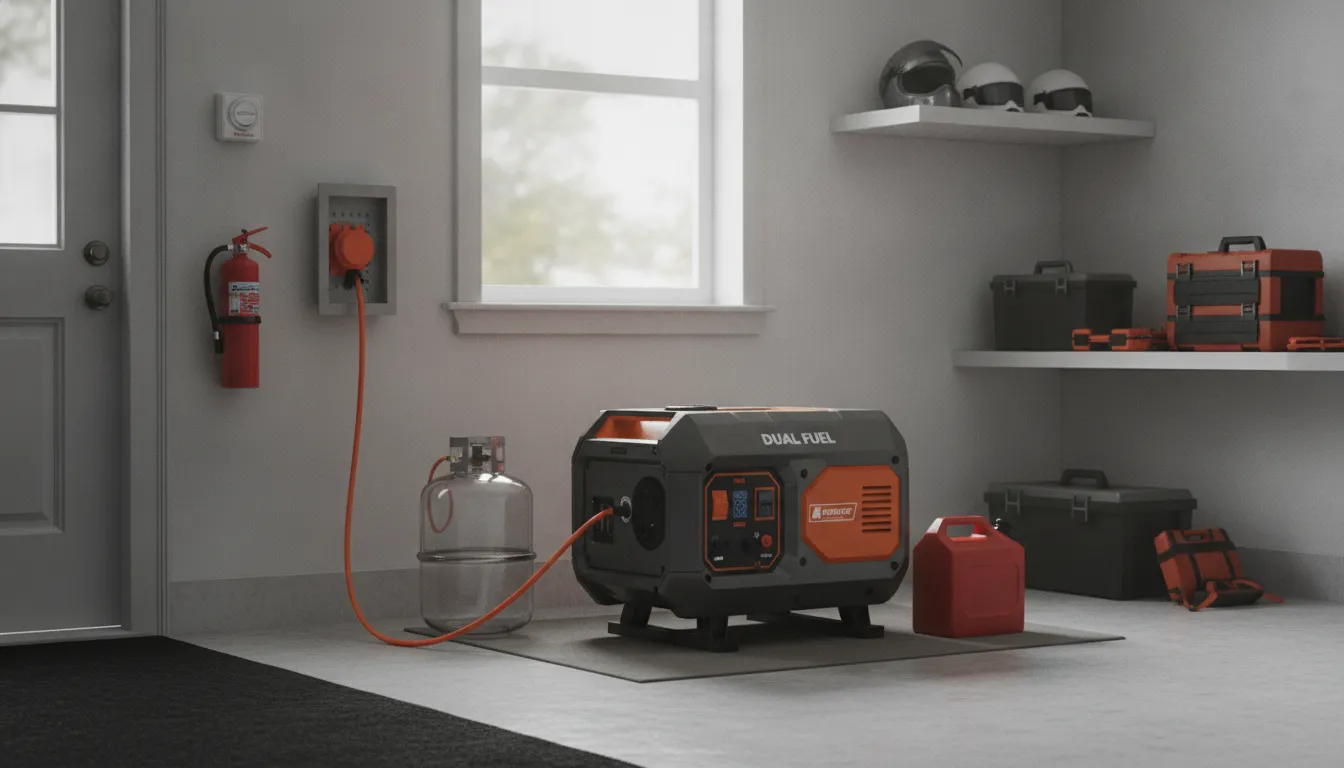
When an outage lasts longer than expected, access to fuel can become just as important as generator capacity. A dual fuel generator gives you the ability to use gasoline or propane, which can help when gas stations are closed, supplies are limited, or you prefer longer-term fuel storage. Each option has trade-offs. Gasoline often delivers strong output, but it requires careful storage and regular rotation. Propane can remain usable longer, though some generators produce less power when operating on it. Understanding these differences can help you prepare for outages without overloading the generator or storing more fuel than your home safely needs.
Key Takeaways
- Match the generator to your essential loads: Add the running wattage of priority appliances, account for startup surges, and leave enough capacity for safe operation.
- Compare both fuel options before buying: Review gasoline and propane output, runtime, storage requirements, availability, and ongoing costs for the way you expect to use the generator.
- Plan for safe, dependable backup power: Use outdoor placement, approved transfer equipment, proper fuel storage, routine testing, and professional installation or repairs when needed.
What Is a Dual-Fuel Generator?
A dual-fuel generator can operate on two fuel sources, most commonly gasoline and propane. This gives homeowners another option when one fuel is unavailable, difficult to store, or less practical for a longer outage.
The generator uses one fuel at a time. You select the fuel through a switch, dial, or control panel, depending on the model. Dual-fuel capability does not mean the generator burns gasoline and propane together.
For Sacramento-area homeowners, this flexibility can be helpful during outages caused by storms, extreme heat, equipment failures, or other disruptions. Gasoline may provide higher output on some models, while propane can be stored for longer periods when handled correctly. You still need to consider generator size, ventilation, electrical connections, fuel storage, and maintenance before choosing a system. AAA Electrical Services can help with generator installation and repair for residential backup power needs.
Gasoline and propane systems
A dual-fuel generator has one internal combustion engine with separate fuel pathways for gasoline and propane. Gasoline is stored in the generator’s built-in tank, while propane is supplied through a compatible hose connected to a cylinder or larger propane tank.
Gasoline can be convenient for short outages and may provide more power on certain models. However, it can degrade during storage, especially when the fuel is not stabilized or the tank is not maintained. Propane generally stores longer when kept in an approved container, making it useful for emergency preparedness.
Check the owner’s manual before operating the generator with either fuel. The manual should identify approved fuel types, cylinder sizes, hose requirements, connection procedures, and fuel-switching instructions. This overview of dual-fuel generator systems explains why gasoline and propane are the most common combination.
Engine, alternator, voltage, and output
The selected fuel powers the generator’s internal combustion engine. The engine turns an alternator, which converts that mechanical energy into electricity. The electricity then travels to the generator’s outlets or to selected home circuits through a properly installed transfer connection.
A generator’s output depends on its engine size, fuel type, and wattage rating. Some models produce different amounts of power on gasoline and propane, so check both ratings before buying. The highest number shown on the packaging may apply only to gasoline operation or to a short startup period.
Voltage is also important. Many portable generators provide 120-volt outlets, while larger models may provide both 120- and 240-volt power. A 240-volt outlet may be necessary for certain well pumps, heating and cooling equipment, or other larger electrical loads. The generator must match the voltage and connection requirements of the equipment you plan to run.
Starting versus running watts
Generators typically list running watts and starting watts. Running watts describe the electricity an appliance needs while operating normally. Starting watts describe the brief surge required to start a motor.
Refrigerators, freezers, sump pumps, well pumps, furnaces, air conditioners, and other motor-driven equipment may require substantially more power at startup. If the generator cannot handle that demand, the appliance may not start, or the generator’s overload protection may shut the unit down.
To size a generator, add the running watts of the appliances you expect to operate at the same time. Then account for the highest additional startup demand. You do not usually need to add every appliance’s starting watts together because motors generally start at different times. Appliance labels, owner’s manuals, or a professional electrical load assessment can provide more reliable figures.
Fuel selectors, regulators, and safe switching
A fuel selector controls which fuel reaches the engine. Depending on the generator, it may be a manual switch, dial, or electronic control. Some advanced systems can select fuel automatically, but many portable units require manual operation.
Never assume you can switch fuels while the generator is running. Some models require the engine to shut down before changing fuel sources, while others have a specific changeover procedure. Follow the manufacturer’s instructions every time.
Propane systems also use a regulator to reduce and control gas pressure before the fuel enters the engine. The regulator, hose, fittings, and cylinder must be compatible with the generator. Inspect these components for wear or damage, and use the manufacturer’s recommended method to check for leaks. Do not modify the fuel system or use an improvised connection.
Always operate the generator outdoors, well away from doors, windows, and ventilation openings. Carbon monoxide from the exhaust can collect in enclosed or partially enclosed areas, including garages and covered patios.
Portable versus standby generators
A portable dual-fuel generator is moved into a safe outdoor location when needed. It can power individual appliances with properly rated extension cords or supply selected household circuits through a professionally installed transfer switch or panel interlock. Portable units can work well for refrigerators, lights, chargers, and other essential equipment, but their capacity may not cover the entire home.
A standby generator remains installed outside and connects to the home’s electrical system. Depending on its size, it can provide backup power to essential circuits or a larger portion of the home. Many standby systems start automatically when they detect an outage, which can be useful for homeowners who need continuous power for medical equipment, heating and cooling, or other critical loads.
Standby installations require proper placement, fuel connections, electrical equipment, clearances, and compliance with applicable codes. AAA Electrical Services can assess your home’s requirements and provide professional generator service for installation, repairs, and maintenance.
What Are the Benefits and Limits of Dual-Fuel Generators?
A dual-fuel generator runs on two fuel sources, most commonly gasoline and propane. Having both options can make backup power more practical during Sacramento-area outages, especially when an interruption lasts for several hours or longer. You can use stored propane when gas stations are closed or crowded, then switch to gasoline when you need the generator’s highest rated output.
That flexibility comes with limits. A dual-fuel generator may produce different wattage on each fuel, and a portable model usually cannot power every appliance in your home at once. Fuel storage, ventilation, maintenance, noise, and safe electrical connections also require careful planning. Before you buy, compare the generator’s gasoline and propane specifications, then identify the appliances and circuits you need most.
AAA Electrical Services can help homeowners review generator installation and repair options and determine whether a portable or standby system fits their property.
Fuel flexibility during Sacramento-area outages
The primary benefit of a dual-fuel generator is the ability to switch between gasoline and propane. If local gas stations are closed, crowded, or out of fuel, a stored propane cylinder may keep essential equipment running. Depending on the generator’s capacity, that equipment may include a refrigerator, lights, internet equipment, medical devices, or a sump pump. If propane is unavailable, gasoline provides another option.
This flexibility becomes more useful during extended outages because you are not dependent on one fuel source. You can also choose fuel based on the generator’s expected load, available storage, and the length of the outage. Check the owner’s manual before switching fuels. Some models require you to turn off the engine first, while others have specific procedures for changing the fuel selector. Review this dual-fuel generator operation guide when comparing how different models work.
Propane storage and cleaner combustion
Propane is convenient to store for emergencies because it does not degrade as quickly as gasoline. Gasoline can become stale and may require a fuel stabilizer, regular rotation, and careful storage. A properly stored propane cylinder can remain ready for future use, which reduces the need to manage a tank of aging liquid fuel.
Propane may also create less carbon buildup and fuel odor during operation. That can reduce some maintenance concerns, but it does not make a generator maintenance-free or emission-free. A propane generator still produces carbon monoxide and hot exhaust. Always operate it outdoors, away from doors, windows, vents, and occupied areas. Store cylinders upright in a suitable outdoor location, and inspect hoses, regulators, fittings, and clamps for wear before starting the generator.
Gasoline availability and energy density
Gasoline is widely available and often delivers a generator’s highest starting and running wattage. That additional capacity can matter when equipment such as an air-conditioning system, refrigerator, well pump, or sump pump needs a strong burst of electricity to start. Gasoline is also familiar to many homeowners and works with a broad range of portable generators.
Availability can become less predictable during a widespread outage. Gas stations may close, develop long lines, or run out of fuel. Gasoline also degrades during storage and can cause carburetor or starting problems if left untreated. Store it only in approved containers, away from heat and ignition sources. Follow local requirements, use stabilizer when recommended, and rotate stored fuel so your supply remains usable when you need it.
Propane output and runtime trade-offs
Many dual-fuel generators produce fewer starting and running watts on propane than on gasoline. Always check the specifications for each fuel rather than relying on the model’s highest advertised wattage. The difference may affect whether you can run a large appliance, pump, or heating and cooling system safely.
Propane can still provide useful runtime, particularly when the generator supports a larger or replacement tank. Runtime depends on the tank size, generator condition, outdoor temperature, and electrical load. A generator running several high-demand appliances will use fuel more quickly than one powering a refrigerator and a few lights. Make a list of essential equipment before an outage, then operate only the circuits and appliances your generator can support. Avoid exceeding the propane wattage rating.
Fuel storage, noise, emissions, and maintenance
Dual-fuel generators require regular maintenance regardless of which fuel you use. Gasoline can become stale, while propane systems need inspections of hoses, regulators, valves, fittings, and connections. Both fuels power an internal-combustion engine, so every dual-fuel generator creates engine noise, exhaust, and carbon monoxide. Never operate one in a garage, basement, shed, or other enclosed space, even when a door is open.
Routine care may include checking engine oil, air filters, spark plugs, fuel lines, electrical connections, and battery terminals. Watch for fuel odors, leaks, unusual vibration, surging, overheating, or changes in starting performance. Keep carbon monoxide alarms inside the home and make sure the generator’s automatic CO shutoff works correctly. For professional generator repair and maintenance support, AAA Electrical Services can help keep your system ready for use.
Why portable units may not power the whole house
A portable dual-fuel generator may not have enough capacity to run every appliance in your home at the same time. Without proper sizing and connection, it generally powers selected essential circuits rather than the entire house. Extension cords may work for approved individual appliances, but they must have the correct rating and remain in good condition.
A transfer switch, panel interlock, or load-management system can direct generator power safely and help prevent backfeeding into utility lines. Never connect a portable generator to a household wall outlet. That practice can send electricity through the electrical grid and seriously injure utility workers or damage your home.
Homes with central air conditioning, electric water heaters, well pumps, or medical equipment may need a larger standby generator. A professional load assessment can identify your actual starting and running demands and determine whether residential electrical services are needed for a safe backup-power setup.
How Do Dual-Fuel Generators Compare for Performance and Efficiency?
A dual-fuel generator can run on gasoline or propane, giving you more flexibility during a Sacramento-area outage. The better fuel depends on the generator’s design, the electrical load in your home, how long you expect the outage to last, and which fuel you can store safely.
Performance is not determined by fuel alone. Engine size, generator wattage, fuel delivery, tank capacity, inverter technology, and connected appliances all affect the result. A generator may run smoothly on both fuels while producing different starting and running wattage depending on the selected fuel.
Before choosing a model, compare its specifications for gasoline and propane separately. If you need backup power for a refrigerator, sump pump, furnace blower, medical equipment, or air conditioner, consider a professional generator installation and electrical assessment. This can help confirm that the generator can support your essential circuits without operating beyond its limits.
Fuel efficiency also depends on how you use the generator. A properly sized unit running a reasonable load may use less fuel and experience less wear than an oversized generator operating lightly or an undersized model running near maximum capacity. Planning your loads in advance makes it easier to choose the right fuel, estimate runtime, and protect important equipment.
Gasoline versus propane output
Gasoline usually provides a dual-fuel generator’s highest rated output. Propane often produces slightly less power, so both running wattage and starting wattage may be lower when the generator operates on propane. The difference varies by model, so check the manufacturer’s specifications instead of assuming both fuels deliver the same capacity.
Gasoline’s higher output can help when several appliances need power at once or when equipment with a demanding startup surge is connected. Propane may still be the better option when long-term storage, cleaner fuel handling, and reduced odor matter more than maximum output.
When comparing models, look for separate gasoline and propane ratings. A generator advertised by its gasoline output may provide less capacity on propane. Leave room for motor startup and avoid operating continuously at the unit’s maximum rating.
Fuel use at different loads
A generator does not use the same amount of fuel at every load. An engine supplying power to a refrigerator and a few lights typically consumes less fuel than one running a pump, air conditioner, tools, and kitchen appliances at the same time. Power output depends on the engine size, fuel type, and generator wattage rating.
Efficiency also changes as the load changes. A very large generator running a small load may use more fuel than necessary, while a small generator operating near its limit can create more heat, noise, and wear. A licensed electrician can help identify the circuits you need during an outage, making it easier to select a properly sized unit.
Keep a record of fuel use during test runs. This gives you a more realistic estimate than the advertised runtime, which is often based on a specific load and operating condition.
Runtime, tank size, and load calculations
Runtime depends on fuel type, tank or cylinder size, connected load, engine efficiency, and generator settings. A larger gasoline tank may provide longer operation between refueling. A propane cylinder or stationary tank can support extended use without requiring gasoline storage at your home.
Gasoline can degrade within months without stabilizer, while propane can remain usable for years in a proper tank. Gasoline requires approved containers and regular rotation. Propane is stored in pressurized cylinders, which must remain upright, outdoors, and away from heat sources.
To estimate runtime, start with the generator’s fuel-consumption rating at a stated load. Then compare that figure with your expected demand instead of relying only on the maximum wattage. Keep extra fuel available, but store it according to local requirements and the manufacturer’s instructions.
Appliance startup versus running loads
Every appliance has a running load, and many motor-driven appliances also have a temporary startup surge. Refrigerators, freezers, sump pumps, furnace blowers, well pumps, air conditioners, and some power tools may need significantly more wattage when their motors start than they use while operating.
Add the running wattage of the appliances you expect to use at the same time. Then account for the highest startup demand that may occur while those appliances are already operating. A generator that handles the total running load may still trip its overload protection if a pump or compressor starts unexpectedly.
Essential loads often include refrigerators and freezers, lights, internet equipment, communication devices, sump pumps, furnace blowers, small kitchen appliances, chargers, and selected tools. A home electrical evaluation can help determine whether your generator should supply individual appliances, selected circuits, or a larger portion of the home.
Operating costs by fuel
Fuel price is only one part of operating cost. Gasoline may be convenient to purchase during a short outage, but it requires approved storage, regular rotation, and stabilizer. Old gasoline can cause starting and carburetor problems. Propane pricing varies based on local rates, tank size, delivery fees, and availability.
Propane may reduce carbon buildup, fuel odor, and some maintenance issues. It also remains usable for much longer than untreated gasoline when stored correctly. However, propane output may be lower, and the generator may consume more fuel to produce the same usable power under certain conditions.
Compare each fuel by usable runtime, not just price. Track how much fuel the generator uses at the load you expect to place on it. Include oil changes, filters, spark plugs, battery care, fuel stabilizer, and repairs when estimating ownership costs. AAA Electrical Services can also discuss generator repair and maintenance before you commit to a fuel system.
Inverter technology, voltage stability, and power quality
Some dual-fuel generators use inverter technology to produce cleaner, more stable power. This can matter for sensitive electronics such as computers, networking equipment, televisions, chargers, and certain medical devices. Inverter models may also adjust engine speed to match electrical demand, which can reduce fuel use and noise during lighter loads.
Traditional open-frame generators can supply substantial power and often cost less for high-output applications. However, they may be louder and may not provide the same level of voltage regulation or waveform quality as an inverter model. Review the manufacturer’s specifications, including total harmonic distortion, before connecting sensitive equipment.
Surge protection should be part of a broader electrical plan, not a substitute for proper generator sizing. AAA Electrical Services provides home surge protection and can help assess ways to protect household electronics during outages and voltage changes.
Manage loads during extended outages
A dual-fuel generator gives you options when roads are blocked, gasoline supplies are limited, or an outage lasts longer than expected. You can choose the available fuel, then reduce demand to extend runtime. This flexibility is useful when keeping refrigeration, communication equipment, lighting, and medical devices operating matters more than powering every appliance.
Create a priority list before an outage. Start with essential equipment, wait for motors to reach normal operation, and add other loads gradually. Avoid using high-demand appliances at the same time, such as an electric range, water heater, clothes dryer, portable heater, and air conditioner.
During an extended outage, switch off nonessential circuits and monitor the generator for overheating, surging, warning lights, or unusual noise. A transfer switch, panel interlock, or load-management system can make circuit control safer and more practical. Have these systems installed by a qualified professional, and review AAA Electrical Services’ generator options before an emergency occurs.
Which Dual-Fuel Generator Features Matter Most?
A dual-fuel generator can run on gasoline or propane, but the highest wattage is not always the best choice for your home. Pay attention to output, starting performance, fuel capacity, safety controls, connection options, and ease of use. The right generator should support the appliances and circuits you actually need during an outage without running constantly at its maximum capacity.
Start by deciding whether you need emergency power for a few essential appliances or backup power for selected circuits throughout your home. A portable unit may run a refrigerator, freezer, lights, and a few small devices. Larger equipment, such as well pumps, central air conditioning systems, or electric water heaters, may require 240-volt output and a professionally installed transfer switch. A standby generator may be more suitable for whole-home backup.
AAA Electrical Services can help you evaluate your options and plan a safe connection with generator installation and repair. The following features can help you compare models and avoid choosing a generator that looks powerful on paper but does not meet your household’s needs.
Rated and starting watts
Rated watts, also called running watts, describe the continuous power a generator can supply. Starting watts, or surge watts, describe the short burst of power available when a motor-driven appliance turns on. Refrigerators, freezers, sump pumps, well pumps, furnaces, and air conditioners may need much more power to start than they use while running.
List the running watts for the appliances you expect to operate at the same time. Then account for the largest starting-watt demand among those appliances. Compare both figures with the generator’s specifications, not just its advertised peak wattage. The generator wattage rating, engine size, and fuel type all affect available power. Leave extra capacity for normal fluctuations and unexpected needs.
Electric, recoil, and remote starts
An electric start allows you to turn on the generator with a button or key. This is convenient during a nighttime outage or when the unit is stored outside. Electric starting systems rely on a battery, so check the battery condition and charging system during routine maintenance.
A recoil starter provides a manual backup if the battery is weak or fails. Some models include remote start, which allows you to start the generator from a distance. Standby systems may start automatically when connected to the home through compatible equipment.
Fuel selection usually happens through a switch, dial, or selector. Many portable models require you to choose gasoline or propane manually. Follow the manufacturer’s instructions before switching fuels, and never change fuel sources while the generator is running unless the equipment specifically allows it.
Fuel tanks, propane inlets, gauges, and runtime
Gasoline is stored in the generator’s built-in tank. Propane comes from an external cylinder through a hose and regulator. Before starting the unit, inspect the hose, fittings, regulator, and propane connection for damage or signs of leakage. Use only equipment approved for your generator.
A fuel gauge makes it easier to estimate when the next refill is needed, but the reading is only an estimate. Runtime depends on the fuel type, tank size, connected load, and generator design. Manufacturers often publish runtime at a specific percentage of load, so compare models under similar conditions.
Propane can remain usable longer than untreated gasoline, which may make it helpful for emergency storage. You still need an appropriate place for propane cylinders and enough fuel for a prolonged outage. Follow local storage rules and the manufacturer’s recommendations.
Carbon monoxide shutoff and low-oil protection
Carbon monoxide protection is an important feature, particularly for portable generators. A built-in CO shutoff can stop the engine when dangerous levels are detected. It does not make indoor operation safe, however. Run the generator outdoors, at least 20 feet from the home, with exhaust directed away from doors, windows, and vents.
Low-oil protection shuts down the engine when the oil level becomes unsafe. This can help prevent severe engine damage, but you should still check the oil before every use. Keep the generator on a stable, level surface and follow the manufacturer’s maintenance schedule.
The Consumer Product Safety Commission’s generator guidance also advises keeping portable generators away from garages, porches, and other enclosed or partially enclosed areas. Carbon monoxide can build up quickly without warning.
Overload, grounding, and ground-fault protection
Overload protection helps protect the generator when connected appliances draw more electricity than the unit can supply. Look for circuit breakers, warning lights, or overload indicators that show when the generator is under excessive demand. If the breaker trips repeatedly, disconnect equipment and reassess the total load instead of continually resetting it.
Ground-fault circuit interrupter, or GFCI, protection helps reduce the risk of electric shock when current follows an unintended path. Many portable generators include GFCI-protected outlets, but features vary by model and connection method.
Grounding requirements depend on the generator design and how it connects to your home. Follow the installation instructions and local electrical requirements. If you are unsure whether the generator, cords, and connection equipment are properly configured, have a qualified electrician inspect the setup before an outage occurs.
120/240-volt outlets and transfer-switch compatibility
A 120-volt outlet can power many household appliances through properly rated extension cords. A 120/240-volt outlet may be necessary for equipment such as well pumps, larger HVAC systems, electric dryers, or other appliances that use 240 volts. It may also be required when connecting a portable generator to selected home circuits.
Never plug a generator into a household wall outlet. This practice, called backfeeding, can send electricity into utility lines and seriously injure or kill workers. A properly installed transfer switch or approved panel interlock provides a controlled way to power designated circuits.
Before buying a generator, confirm that its outlet configuration matches your intended use. An electrician can review the generator’s output, your electrical panel, and the planned connection equipment. AAA Electrical Services provides electrical services for homeowners who need help planning a safe backup-power system.
Noise ratings, wheels, handles, and weather protection
Generators produce engine noise and exhaust, so compare the listed decibel rating before choosing a model. A quieter generator may be more comfortable during a long outage, especially when it operates near bedrooms, living areas, or neighboring homes. Remember that noise often increases as the connected load rises.
Wheels and handles make a heavy portable unit easier to move into position. Check the frame, handles, wheel quality, and lifting points if you expect to store the generator and roll it outdoors when needed. Do not move a running generator unless the manufacturer specifically permits it.
Portable generators need protection from rain and moisture, but ventilation must remain open. Use a cover designed for generator operation rather than a tarp or makeshift enclosure. Never place the unit under a structure that could trap heat or exhaust, and keep all required clearances around the engine and exhaust.
Inverter technology, total harmonic distortion, and parallel operation
Inverter generators generally provide stable power with lower total harmonic distortion, or THD. This may be helpful for sensitive electronics such as computers, televisions, networking equipment, and some medical devices. Check the manufacturer’s THD specification when power quality is a concern.
Inverter models can also be quieter and more fuel-efficient at lighter loads because the engine adjusts its speed. They may provide less maximum power than larger conventional generators and often cost more. Compare the power rating with your actual appliance requirements.
Some inverter generators support parallel operation, allowing two compatible units to work together with an approved connection kit. Use only models the manufacturer identifies as compatible, and confirm that the combined output meets your needs. Before purchasing, ask an electrician whether the generator’s output and parallel setup suit your planned generator system.
How Do You Choose the Right Dual-Fuel Generator?
Choosing a dual-fuel generator starts with the power your household needs, not the largest model available. An undersized generator may overload when appliances start, while an oversized unit can cost more to purchase, operate, and maintain. Begin by listing the appliances and circuits you want to keep running, then compare their running and starting wattage.
Sacramento homeowners should also account for hot weather, possible outage length, fuel storage, and the way the generator will connect to the home. A portable unit may cover a refrigerator, lights, and internet equipment. A standby generator may be a better fit for central air conditioning, medical equipment, or broader home coverage. A professional electrical assessment can help you select a system that fits your household and operates safely.
List essential appliances and circuits
Make a list of the appliances and electrical circuits you would need during an outage. Common essentials include refrigerators, freezers, lights, internet equipment, phone chargers, sump pumps, furnace blowers, small kitchen appliances, and selected tools. In Sacramento, you may also want to include fans, an air conditioner, or other equipment that helps your household stay comfortable during extreme heat.
Think about circuits as well as individual appliances. You might want backup power for the refrigerator circuit, selected lighting, the internet circuit, and an outlet used for medical equipment. This list provides a practical starting point for comparing generator sizes.
Separate must-have loads from items that can wait. For example, keeping food cold and maintaining communication may be more important than powering a clothes dryer or electric oven. The generator services from AAA Electrical Services can help you evaluate backup options based on your home’s circuits and priorities.
Calculate running and starting watts
Running wattage is the power an appliance uses during normal operation. Starting wattage, also called surge wattage, is the additional power some equipment needs briefly when its motor or compressor starts. Refrigerators, pumps, air conditioners, and power tools may draw considerably more electricity at startup than they do while running.
Add the running watts of the appliances you expect to operate at the same time. Then add the highest additional starting-watt requirement among those appliances. You generally should not add every starting figure together unless several motor-driven appliances are likely to start at once.
Check product labels and owner’s manuals for accurate specifications. If the information is missing or unclear, an electrician can measure the electrical load and help you avoid choosing a generator that is too small. The Anker SOLIX generator guide also explains why both running and starting wattage matter when comparing models.
Account for refrigerators, pumps, HVAC, and medical equipment
Motor-driven appliances need careful consideration because their startup demand can cause a generator to trip, stall, or shut down. A refrigerator may use modest power once it is running, but its compressor can briefly require much more power when it starts. Sump pumps, well pumps, furnace blowers, pool equipment, and air conditioners can have similar demands.
Medical equipment should receive priority in your planning. Identify each device that must remain powered, its wattage, and whether it requires steady, clean electricity. Follow the equipment manufacturer’s instructions before connecting it to a generator, and ask a qualified professional if you are unsure about compatibility.
HVAC systems can change your generator requirements significantly. Powering a few fans or a window air conditioner takes far less capacity than running central air conditioning. Decide which level of cooling your household needs before comparing generator output.
Compare essential-circuit and whole-home backup
Many portable dual-fuel generators are designed to power selected circuits rather than an entire house. This arrangement can work well when your priorities include keeping food cold, maintaining communication, running essential lights, and powering a few critical devices. You will need to manage the load and avoid operating several high-demand appliances at once.
Whole-home backup usually requires a larger standby generator, an automatic transfer switch, and a properly designed electrical connection. Even a high-capacity system may use load management to prevent multiple energy-intensive appliances from running together.
Before shopping, decide whether you need basic outage coverage or automatic power for heating, cooling, appliances, and most household circuits. A professional can review your panel and explain which approach fits your home. AAA Electrical Services provides generator installation and repair for homeowners comparing these backup options.
Consider Sacramento heat, outage length, and fuel storage
Sacramento’s hot summers make cooling an important part of generator planning. Decide whether you need to power central air conditioning, a window unit, fans, or only refrigeration and communication equipment. Your answer will affect both the generator size and the amount of fuel you need.
Estimate how long an outage could last and how often you expect to operate the generator. Gasoline is widely available and can provide strong output, while propane may be convenient for longer-term storage when handled correctly. Dual-fuel capability gives you another option if one fuel is difficult to obtain.
Fuel storage still requires planning. Keep gasoline in approved containers away from ignition sources, and store propane cylinders outdoors in an appropriate location. Estimate fuel use at your expected load rather than relying only on the maximum runtime listed by the manufacturer.
Choose portable or standby power
A portable generator may be a practical choice when you need occasional backup for a limited number of appliances. These units generally cost less than standby systems and can be stored when they are not in use. However, you must place the generator outdoors, connect it correctly, refuel it, and manage the electrical load during an outage.
A standby generator is permanently installed outside and can start automatically when utility power fails. It may be a better fit for homeowners who need regular coverage or want to support larger loads. Standby systems typically involve a site evaluation, permits, fuel connections, and transfer-switch installation.
Compare the convenience and capacity you need with installation and ownership costs. A portable unit may be enough for a refrigerator, internet equipment, lights, and fans. A standby system may make more sense when your home depends on central HVAC, a well pump, or several essential circuits.
Plan for a transfer switch, panel interlock, or load-management system
Never connect a generator to a household outlet with a homemade setup. An incorrect connection can send electricity back onto utility lines, creating a serious hazard for utility workers and potentially damaging your home’s wiring and appliances. A transfer switch or listed panel interlock helps separate generator power from utility power.
A load-management system can control high-demand appliances so the generator is not overwhelmed. Your setup might include a portable generator feeding selected circuits through a transfer switch, or a standby generator connected to the main panel through an automatic transfer switch.
The right equipment depends on your generator, electrical panel, wiring, and local requirements. It should also account for grounding, circuit capacity, generator placement, and required permits. AAA Electrical Services’ electrical services can help with safe generator connections and related residential electrical work.
Consider noise, portability, and storage space
Generator noise matters when the unit operates near bedrooms, neighbors, or outdoor living areas. Compare the manufacturer’s noise rating, but remember that sound can vary with the load and the generator’s location. Never place a generator closer to your home to reduce noise. Safe clearance and exhaust direction must come first.
Portable models also need a dry, accessible storage area, along with room for propane cylinders, approved gasoline containers, extension cords, and maintenance supplies. Propane cylinders should remain upright and be stored according to safety requirements.
Consider the generator’s weight, wheels, handles, and operating surface. A heavy unit may be difficult to move during an outage, especially if it must travel over uneven ground. Check whether the model has weather protection, but never cover it in a way that blocks ventilation or traps exhaust.
Request a professional electrical load assessment
A professional load assessment removes much of the guesswork from generator selection. An electrician can review your main panel, identify essential circuits, assess appliance startup demands, and determine whether your preferred generator can support the planned loads. They can also identify panel limitations, grounding concerns, and connection requirements before installation begins.
Ask for an assessment if your home includes central HVAC, a well or sump pump, a large refrigerator or freezer, an electric water heater, an EV charger, solar equipment, or medical devices. These loads may require more capacity or a specific connection method.
The assessment should account for both fuel options, expected runtime, and the way you plan to use the generator. It is also a good time to discuss transfer switches, load management, permits, and maintenance. If installation or repairs are needed, review AAA Electrical Services’ financing options before scheduling the work.
Which Dual-Fuel Generator Brands and Models Should You Compare?
The right dual-fuel generator depends on how you plan to use it. A portable model may provide enough power for a refrigerator, lights, internet equipment, and a few essential circuits. A larger generator may also support a well pump, sump pump, or HVAC system, but it will require more fuel, storage space, and electrical planning.
Start by comparing models with enough rated and starting watts for your essential appliances. Then review fuel use, noise, controls, safety features, warranty coverage, and local service support. Manufacturer specifications provide a useful starting point, but they do not tell you how easy a generator is to repair or how quickly you can find replacement parts.
For Sacramento-area homeowners, installation and maintenance matter as much as the generator brand. AAA Electrical Services provides generator installation and repair, helping homeowners plan a setup that matches their electrical panel, fuel options, and backup-power goals.
Choose AAA Electrical Services for local installation, repair, and maintenance
A generator is only useful when it starts safely and supplies power to the circuits you need. Professional installation helps address placement, wiring, transfer equipment, grounding, ventilation, and local requirements. It also helps prevent dangerous backfeeding into utility lines.
AAA Electrical Services serves homeowners throughout the Sacramento metropolitan area with generator installation, repair, and maintenance. Its licensed, background-checked, and drug-tested technicians provide clear upfront pricing and same-day service when available. The company also reports that 93% of repairs are completed on the spot, which can be valuable when an outage affects your household.
Before choosing a model, ask a technician to review your electrical panel, essential circuits, fuel options, and expected load. You can also explore the company’s generator services to compare installation and repair options for your home.
Compare Champion portable generators
Champion offers several portable dual-fuel generators for homeowners who want the option to use gasoline or propane. Its lineup includes models with different output levels, starting methods, outlet configurations, and portability features. The brand name alone does not tell you whether a particular unit will meet your needs.
When comparing Champion models, focus on rated watts instead of looking only at the maximum starting-watt figure. Review runtime at a stated load, fuel-tank size, propane connection, noise rating, and voltage options. An electric start can make operation easier, while a 120/240-volt configuration may be necessary for certain household equipment.
Also check for carbon monoxide monitoring, low-oil shutdown, overload protection, and compatibility with a transfer switch or panel interlock. Confirm these details in the product manual before buying.
Compare DuroMax portable generators
DuroMax is another popular option for homeowners comparing portable dual-fuel generators. Many models emphasize higher output, 120/240-volt operation, and heavy-duty construction. Those features may help run larger appliances, but they can also make the generator heavier and harder to move or store.
Pay close attention to the difference between running watts and starting watts. A DuroMax model may have enough starting power for a pump or compressor, but that does not mean it can run several high-demand appliances at once. Compare the manufacturer’s load guidance with the circuits you plan to power.
Inspect the control panel, wheel kit, handles, fuel selector, propane inlet, and outlet protection. If you plan to connect the generator to your home wiring, ask an electrician to review your panel and generator options before purchasing a specific model.
Compare Westinghouse portable generators
Westinghouse offers portable dual-fuel generators in various sizes, including models with electric start, remote-start controls, multiple outlets, and different runtime ratings. These features can make operation more convenient during an outage, especially when the generator is stored away from the home.
Compare each model’s rated output, starting output, fuel capacity, and expected runtime at the same load. A larger tank may reduce refueling, but it can also increase the generator’s weight. Remote start is convenient, although it depends on a working battery and may require additional maintenance.
Look for clear information about propane operation, fuel switching, carbon monoxide protection, and maintenance intervals. Confirm the noise rating and check whether the outlet arrangement works with your extension cords or transfer equipment. Review these specifications alongside your home’s actual electrical requirements.
Consider Generac standby and propane-powered alternatives
Generac is widely associated with permanently installed standby generators, which differ from portable dual-fuel units. A standby generator connects to the home through a transfer switch and can start automatically when utility power fails. Depending on the system, it may run on natural gas or propane and provide backup power for selected circuits or the entire home.
This option may suit homeowners who want automatic operation and do not want to move, refuel, or manually connect a portable generator. It requires more planning, including site preparation, fuel-line work, electrical installation, permits, and regular maintenance. The total project cost may also be higher than a portable setup.
If propane is your preferred fuel, compare tank size, expected runtime, installation requirements, and fuel delivery options. AAA Electrical Services can help you review generator installation services and determine whether a standby system fits your property.
Compare exact model numbers, not just brands
A single brand may sell generators with very different output ratings, controls, fuel capacities, warranties, and safety systems. Compare the complete model number, not just the manufacturer. Two models with similar names may have different outlets, voltage capabilities, runtime, or transfer-switch compatibility.
Create a short list of specifications that matter most for your home. Include rated watts, starting watts, gasoline runtime, propane runtime, noise level, fuel-tank capacity, weight, dimensions, start type, and available outlets. Record whether each unit has carbon monoxide shutoff, low-oil protection, overload protection, and a propane regulator.
Read the owner’s manual before buying. It may include information that product listings leave out, such as maintenance intervals, extension-cord requirements, maximum loads, and approved fuel connections.
Review output, noise, runtime, and fuel-switching performance
Output is one of the most important comparisons, but it is not the only one. A generator must handle both the normal running load and the brief surge created when motors start. Refrigerators, pumps, air conditioners, and other motor-driven equipment may need significantly more power during startup.
Compare runtime using the same load percentage because a runtime claim at 25% load is not directly comparable with one at 50% load. Review gasoline and propane performance separately, since propane may produce different output and runtime than gasoline. Check whether the generator can switch fuels while operating, and follow the manufacturer’s instructions.
Noise also matters when a generator runs near living spaces or neighboring homes. Look for a published decibel rating and note the testing conditions. A quieter model may be worth considering during a prolonged outage, even if its purchase price is higher.
Assess customer reviews and expert testing
Customer reviews can reveal practical details that specifications do not always cover. Look for repeated comments about cold starts, electric-start batteries, fuel switching, wheel quality, control-panel design, noise, error codes, and customer support. Give more weight to patterns across many reviews than to one unusually positive or negative experience.
Expert testing can help compare voltage stability, fuel consumption, noise, overload behavior, and actual output under controlled conditions. When reading a test, check whether the reviewer used gasoline, propane, or both. Also look for the load level, ambient conditions, and measurement methods.
Do not treat a high review score as proof that a generator suits your home. A lightweight unit may work well for occasional recreational use but lack the output needed for a well pump or HVAC system. Match reviews and test results to your own load requirements.
Check warranties, parts, service networks, and availability
Warranty coverage can vary by model, intended use, registration status, and service history. Read the warranty terms before purchasing, including coverage for the engine, alternator, controls, battery, and labor. Confirm whether residential and commercial coverage differ.
Parts availability matters just as much as the warranty period. Ask whether air filters, spark plugs, carburetor components, batteries, propane regulators, wheels, and control parts are easy to obtain. A generator that cannot be repaired quickly may not provide dependable support during a future outage.
Check whether authorized service centers operate near Sacramento and whether local electricians can work with the model’s transfer equipment. Keep receipts, manuals, maintenance records, and model numbers together so technicians can find the information they need. For ongoing home service support, review AAA Electrical Services’ VIP Membership and compare the available benefits.
What Do Dual-Fuel Generators Cost to Own?
The purchase price is only one part of a dual-fuel generator’s total cost. You also need to account for installation, fuel, maintenance, storage, repairs, and the amount of usable power the unit provides. A lower-priced generator may seem like a smart choice, but it may not run your refrigerator, well pump, air conditioner, or other essential equipment at the same time.
Start by deciding what kind of backup power you need. A portable generator may be enough for a refrigerator, lights, internet equipment, and a few selected outlets. A permanently installed generator can support essential circuits or provide broader coverage, but it requires professional installation and a larger initial investment.
Your home’s electrical panel, available fuel supply, desired runtime, and expected outage length will all affect the final cost. Sacramento-area homeowners should also consider summer heat, when outages can make refrigeration and cooling especially important. AAA Electrical Services can review your needs and explain available generator installation and repair services before you purchase equipment.
Compare portable generator prices by wattage and features
Portable generators commonly cost between $400 and $5,000, depending on wattage, fuel capability, engine design, controls, and safety features. Smaller models may cover basic appliances, while higher-output units can support more equipment at once. They also tend to cost more, weigh more, and consume more fuel.
Dual-fuel capability may raise the purchase price compared with a gasoline-only model, but it gives you another fuel option during an outage. Compare rated watts, starting watts, tank size, runtime, noise level, outlet types, wheel design, and carbon monoxide protection. The Consumer Reports generator buying guide provides additional information about generator capacity and features.
Do not choose a model based only on its highest advertised wattage. Rated watts indicate the power the generator can provide continuously, while starting watts cover the brief surge required by motors and compressors. A unit with a higher price may be a better value if it safely runs the appliances you need without constant load management.
Compare inverter and high-output model prices
Inverter generators typically cost about $400 to $3,000, depending on power output and features. They generally adjust engine speed according to the electrical load, which can reduce noise and fuel use during lighter demand. Many also provide stable power that is well suited to electronics, although you should still follow the manufacturer’s guidance for sensitive equipment.
For reference, a 4,000-watt dual-fuel inverter model may cost around $599, while a 3,800-watt dual-fuel inverter model may cost close to $937. High-output conventional generators can provide more power for the money, but they may be louder, heavier, and less compact. Review portable generator testing and recommendations while comparing each model with your household’s actual wattage needs.
An inverter model may make sense when quiet operation, portability, and power quality are priorities. A conventional high-output model may be more practical when you need to run larger loads for longer periods. The right choice depends on the equipment you plan to operate, not simply the generator’s advertised price.
Factor in standby generators, transfer switches, and installation
Standby generators typically cost between $2,000 and $7,000 before installation. The final project price can increase substantially after adding a transfer switch, wiring, permits, fuel connections, a concrete pad, and labor. Installation may more than double the equipment cost, depending on the home and system complexity.
A transfer switch connects the generator to selected household circuits and prevents dangerous backfeeding into utility lines. Portable generators may also require a compatible transfer switch or panel interlock, depending on the installation. These components should be sized for the generator and installed according to local electrical requirements.
A licensed electrician can review your home generator options, check compatibility with your electrical panel, and identify potential code or permitting requirements. Professional planning also helps prevent an expensive mismatch between the generator, transfer equipment, and circuits you want to power.
Include fuel, oil, storage, and maintenance costs
Dual-fuel generators run on gasoline or propane, and each fuel has different storage and operating considerations. Gasoline is widely available and often provides strong output, but it can degrade during storage. Fuel stabilizer, approved containers, and proper rotation can help keep stored gasoline usable.
Propane can be stored for longer in approved cylinders, but the generator may produce less power or have a different runtime on the same load. Include the cost of propane cylinders, gasoline, oil, filters, spark plugs, battery checks, fuel hoses, and propane regulators in your ownership budget.
You may also need a weather cover that does not block ventilation, replacement cords, and a secure storage area. Regular testing matters because a generator that sits unused can develop starting, fuel, or battery problems. AAA Electrical Services can assist with generator maintenance and repairs before a small issue becomes an outage-day failure.
Look for authorized-dealer discounts and seasonal deals
Retail prices can vary by model, dealer, included accessories, and time of year. Authorized dealers may offer discounts, package pricing, delivery, setup assistance, or seasonal promotions. Some offers include a cover, wheel kit, maintenance supplies, or extended support instead of reducing the generator’s listed price.
When comparing offers, confirm that the seller is authorized to provide warranty service for the brand. Check whether the price includes shipping, assembly, propane fittings, startup service, or a transfer-switch connection. An attractive price may not include the accessories required for safe operation.
Seasonal promotions can reduce your initial expense, but a discounted model is only a good value if it provides enough rated power and has parts and service available. Use portable generator buying advice to compare features before purchasing, then ask the dealer to explain any installation or service costs not shown in the advertised price.
Review warranty coverage and long-term repair costs
A generator warranty may cover parts and labor for one to three years, although coverage often depends on registration, maintenance records, and how the unit is used. Read the terms carefully to see whether the engine, alternator, battery, control board, and fuel system have the same coverage period.
Check where warranty repairs are performed and whether replacement parts are easy to obtain. A lower-cost model can become more expensive over time if it needs specialized service or has limited parts availability. Ask about routine service intervals, battery replacement, oil requirements, and common repair costs before you buy.
Also review exclusions for commercial use, improper fuel, weather exposure, unauthorized modifications, and skipped maintenance. Keeping receipts and service records can support a warranty claim. Professional generator repair service can help extend the system’s useful life and keep important safety components working as intended.
Compare upfront costs with usable power and runtime
The best value is not always the generator with the lowest purchase price. Compare the equipment cost with rated wattage, starting-watt capacity, fuel consumption, tank size, runtime, noise level, and the number of circuits it can safely support. A 3,500-watt dual-fuel generator priced near $555 may work well for essential appliances, but it may not handle central air conditioning or several motor-driven loads at once.
Make a list of the appliances you want to run, then separate their running watts from their startup demands. Refrigerators, sump pumps, well pumps, furnaces, air conditioners, and medical equipment may need extra starting power. If the generator is undersized, you may need to turn appliances off and on manually, or risk an overload.
Consider how often you expect outages and whether you can safely store enough gasoline or propane. For broader backup coverage, compare the equipment cost with professional installation through AAA Electrical Services, including transfer equipment and any panel upgrades your home may need.
What Dual-Fuel Generator Safety Steps Should You Follow?
A dual-fuel generator can provide valuable backup power during a Sacramento-area outage, but it combines electrical equipment with gasoline or propane. Safe operation starts with proper placement, ventilation, fuel handling, and connection to your home’s electrical system. Always read the owner’s manual first, and follow the manufacturer’s instructions when they differ from general safety guidance.
Operate outdoors at least 20 feet from your home
Run a fuel-powered generator outdoors, at least 20 feet from your home and other occupied buildings. Place it on a stable, dry surface where exhaust can disperse freely. This distance reduces the chance that carbon monoxide will enter through windows, doors, vents, or other openings.
Keep the generator away from overhangs, covered patios, and areas where people or pets gather. Carbon monoxide is colorless and odorless, so you cannot rely on your senses to detect a dangerous concentration. The CDC’s generator safety guidance recommends keeping generators at least 20 feet from the home.
Direct exhaust away from doors, windows, vents, and occupied areas
Position the exhaust outlet so fumes move away from your home, neighboring buildings, and areas where people spend time. Wind can change direction, so check the placement whenever you set up the generator. Never point exhaust toward an open window, exterior door, crawl-space vent, attic vent, or air-conditioning intake.
Keep doors and windows closed while the generator operates, but do not treat closed openings as a substitute for safe placement. Exhaust can still enter through small gaps or ventilation systems. If anyone experiences a headache, dizziness, weakness, nausea, chest pain, or confusion, move outside immediately and call 911.
Never run a generator in a garage, basement, or enclosed space
Never operate a dual-fuel generator inside a garage, basement, shed, crawl space, or other enclosed or partially enclosed area. Opening a garage door or window does not provide enough protection from carbon monoxide buildup. Fumes can accumulate quickly, even when the space appears ventilated.
This rule applies whether the generator runs on gasoline or propane. Both fuels produce carbon monoxide during combustion. Keep the unit outside while it is operating, and allow it to cool in the same outdoor location before moving or storing it.
Install carbon monoxide alarms and use CO shutoff features
Install working carbon monoxide alarms on every level of your home and outside sleeping areas. Test them regularly, replace batteries as recommended, and follow the alarm manufacturer’s replacement schedule. A carbon monoxide alarm provides an important warning, but it does not make indoor generator operation safe.
Many newer generators include a carbon monoxide sensor that shuts the engine off when dangerous levels are detected. Use this feature, but never disable or cover the sensor. The Consumer Product Safety Commission’s carbon monoxide guidance also recommends choosing portable generators with automatic CO shutoff protection.
Prevent backfeeding with a professional transfer-switch installation
Never connect a portable generator to a wall outlet with a homemade cord or improvised adapter. This practice, called backfeeding, can send electricity into utility lines and seriously injure or kill workers restoring service. It can also damage your generator, wiring, and appliances.
A licensed electrician can install a transfer switch, panel interlock, or load-management system that separates generator power from the utility supply. The correct equipment depends on your panel, generator output, and the circuits you want to operate. AAA Electrical Services can help with generator installation and repair and explain which connection method suits your home.
Use properly rated extension cords and avoid overloaded circuits
Use heavy-duty, outdoor-rated extension cords that match the generator’s voltage, amperage, and wattage requirements. Inspect cords for cuts, exposed wires, damaged plugs, or signs of overheating before each use. Keep cords away from standing water, sharp edges, driveways, and areas where they could create a tripping hazard.
Do not connect more appliances than the generator can safely support. A power strip does not increase available capacity, and plugging several high-demand devices into one cord can overheat the cord or receptacle. If you are unsure whether your wiring can handle a particular load, schedule an electrical inspection before an outage.
Start without heavy loads and add appliances gradually
Before starting the generator, turn off or disconnect appliances and circuits that are not essential. Start the engine according to the manual, let it stabilize, and then connect equipment one item at a time. This gives the alternator time to respond to changing demand.
Refrigerators, sump pumps, air-conditioning systems, and other motor-driven equipment can require much more power during startup than during normal operation. Add these loads separately and watch for overload warnings, flickering lights, unusual sounds, or a drop in output. If the generator struggles, disconnect equipment instead of repeatedly restarting it under a heavy load.
Turn off and cool the generator before refueling
Shut the generator off and let it cool completely before adding gasoline. Hot engine components can ignite spilled fuel or vapors. Refuel outdoors, away from open flames, cigarettes, pilot lights, electrical sparks, and other ignition sources.
Use a clean funnel if needed, avoid overfilling the tank, and wipe up spills immediately. Never refuel while the engine is running, even if the fuel tank appears low. Follow the manufacturer’s instructions for fuel type, octane, and storage life.
Store gasoline in approved containers away from ignition sources
Store gasoline only in containers approved for fuel storage. Keep containers tightly closed, clearly labeled, and placed in a cool, dry, well-ventilated area away from furnaces, water heaters, electrical equipment, and direct sunlight. Never store gasoline in a living area, basement, or near an operating generator.
Store only the amount allowed by local fire-safety rules, and inspect containers for cracks, swelling, or damaged caps. Fuel vapors can travel to an ignition source, so safe separation matters even when the container is not next to a flame.
Keep propane cylinders upright, outdoors, and ventilated
Keep propane cylinders upright and outdoors in a shaded, well-ventilated location. Place them on a stable surface where they cannot tip over, and protect them from vehicle impact, standing water, and excessive heat. Never store propane cylinders in a basement, garage, enclosed porch, or another area connected to your home.
Use the cylinder size, connector, and pressure specified by the generator manufacturer. Keep valves closed when a cylinder is not connected, and do not alter fittings or use damaged components. A qualified technician should handle permanent propane connections or changes to your home’s fuel system.
Check fuel hoses, fittings, and cylinders for leaks
Inspect gasoline lines, propane hoses, regulators, connectors, and cylinder valves before every use. Look for cracking, abrasion, corrosion, loose fittings, or a strong fuel odor. Never operate the generator if a hose or connection appears damaged.
If you suspect a propane leak, shut off the cylinder if you can do so safely, move away from the area, and avoid switches, phones, flames, and vehicles nearby. Never try to locate a leak with a match. A qualified professional can test the system and replace faulty parts safely.
Protect the generator from rain without blocking ventilation
Keep the generator dry while it operates, but never enclose it in a tent, box, shed, or makeshift shelter that restricts airflow. Water can damage electrical components, create shock hazards, and affect engine operation. Blocked ventilation can also trap heat and exhaust.
Use a generator canopy designed for your model, or place the unit beneath a purpose-built weather shelter that maintains the manufacturer’s required clearances. Keep the generator off wet ground, avoid puddles, and never touch electrical outlets or cords with wet hands.
Follow grounding, clearance, permit, and local code requirements
Read the generator manual for grounding instructions, outlet limits, clearance requirements, and approved connection methods. Some portable generators require specific grounding arrangements, while others are designed for use with particular transfer equipment. Do not assume that driving a ground rod is always the correct solution.
Sacramento-area homes may also need to follow local permit, inspection, fuel, and clearance rules. Requirements can vary based on whether you are installing a portable connection, standby generator, transfer switch, or permanent propane line. Check with the relevant local authority, and use a licensed electrician for work connected to your home’s wiring.
Arrange professional installation or repair with AAA Electrical Services
Professional installation helps ensure the generator connects safely to your home and operates within the limits of your electrical panel. AAA Electrical Services can assess your intended loads, review transfer-switch options, inspect wiring, and identify installation concerns before they become emergencies.
Do not attempt to repair fuel systems, modify generator wiring, or troubleshoot repeated overloads on your own. AAA Electrical Services provides generator services for Sacramento-area homeowners, including installation and repair. A technician can also discuss ongoing maintenance and financing options when a permanent backup-power system is part of your plan.
How Do You Maintain a Ready Dual-Fuel Generator?
A dual-fuel generator is only useful during an outage if it starts reliably and produces stable power. Regular maintenance helps protect the engine, fuel system, battery, outlets, and connected appliances. It also gives you a chance to catch small issues before they become expensive repairs.
Use your owner’s manual as the primary maintenance guide because service intervals, oil types, fuel requirements, and fuel-switching procedures vary by model. Keep a simple log of oil changes, filter replacements, battery checks, test runs, and repairs. If your generator connects to your home’s electrical panel or transfer switch, arrange service through AAA Electrical Services for professional inspection and repair.
Check oil, fuel, hoses, cords, and controls before use
Inspect the generator before every use, especially after it has been stored for several months. Make sure the unit is on a stable, level surface and the engine is cool before checking the oil. Confirm that the oil reaches the required level, then look underneath the generator for fresh fluid. Low oil can damage the engine, while a leak may signal a loose connection or worn component.
Inspect the gasoline tank, fuel lines, propane hose, regulator, and connection points. Look for cracks, swelling, corrosion, or signs of leakage. Check extension cords for cuts, exposed wires, melted insulation, and damaged plugs. Before starting, examine the fuel selector, control panel, circuit breakers, and emergency shutoff. These checks follow the basic inspection guidance for dual-fuel generators.
Change the oil and maintain filters and spark plugs
Follow the manufacturer’s schedule for oil changes. Many generators need an initial oil change after the break-in period, followed by additional changes based on operating hours. Heavy use, dusty conditions, and long outages may require more frequent service. Shut down the generator, let it cool completely, and disconnect the spark plug wire before performing engine maintenance.
The air filter keeps dust and debris out of the engine. Clean or replace it when it becomes dirty, and replace it immediately if it is damaged. Inspect the spark plug according to the recommended schedule. A worn or fouled plug can cause hard starting, rough operation, and reduced power. Use the oil type, filter, and spark plug specified by the manufacturer. The manufacturer’s maintenance recommendations can help you organize these tasks.
Test electric-start batteries and charging systems
An electric-start generator depends on a charged battery, but batteries can lose power while sitting unused. Inspect the terminals for corrosion and make sure the cables are tight. If the battery is removable, charge and store it according to the manufacturer’s instructions. Use only a charger approved for that battery type.
Test the electric start during a scheduled maintenance run, with heavy appliances disconnected. Let the engine reach a steady speed before adding equipment one appliance at a time. A slow starter, battery that repeatedly loses its charge, or charging system that fails to maintain voltage may indicate a problem. Arrange service before an outage if the generator struggles to start.
Stabilize gasoline and prevent fuel degradation
Gasoline can become stale during storage, particularly in warm conditions. Degraded fuel may cause hard starting, rough operation, clogged carburetor passages, or a complete failure to start. Use the fuel grade listed in the owner’s manual, and avoid keeping gasoline in the generator tank longer than the manufacturer recommends.
Store gasoline in an approved container away from flames, heat, and electrical equipment. Fuel stabilizer may help extend storage life when used according to its label. Rotate stored fuel responsibly instead of allowing it to sit indefinitely. If the generator has been stored with old gasoline, do not keep trying to start it. Have the fuel system inspected if you suspect contamination or buildup. These fuel storage recommendations offer a useful starting point.
Inspect propane hoses, regulators, fittings, and cylinders
Propane equipment requires careful inspection because a damaged hose or loose fitting can create a fire hazard. Before connecting a cylinder, check the hose for cracks, abrasions, soft spots, and heat damage. Inspect the regulator, clamps, connector, and cylinder valve for corrosion or looseness.
Store propane cylinders upright and outdoors in a well-ventilated area, away from ignition sources and locations where escaping gas could collect. If you smell propane, hear hissing, or see frost around a connection, move away from the area and shut off the cylinder only if it is safe to do so. Do not repair a propane hose or regulator yourself. AAA Electrical Services generator technicians can inspect the system and address installation or repair concerns.
Run the generator periodically under an appropriate load
A generator should not remain unused until the next outage. Run it at regular intervals recommended by the owner’s manual, allowing the engine to warm up fully. A light, appropriate load helps confirm that the generator can produce power and gives you a chance to check the outlets, controls, fuel system, and engine sound.
Start with no heavy appliances connected. Once the engine runs steadily, add a small load, such as a light or refrigerator, and monitor its response. Stay within the generator’s rated wattage, and avoid connecting several high-demand appliances at once. If the engine hunts, stalls, or struggles when a load is added, stop the test and arrange an inspection.
Switch fuels according to the manufacturer’s instructions
Dual-fuel generators usually use a selector, dial, or switch to choose gasoline or propane. The correct procedure varies by model. Some units require a complete shutdown before changing fuels, while others have a specific process for switching while the engine runs. Always follow the owner’s manual instead of assuming every generator works the same way.
Use approved fuel connections and never force a selector, valve, or fitting. When changing to propane, confirm that the cylinder is connected securely and that the hose is undamaged. When changing back to gasoline, follow the required steps to prevent excess fuel from entering the engine. If the generator will not start after a fuel change, stop repeated attempts and have the fuel system checked.
Monitor output, runtime, noise, and starting performance
Pay attention to the generator during every test run and outage. Record the fuel being used, connected load, runtime, and any unusual changes. Power output depends on the unit’s wattage rating, engine condition, fuel type, and connected appliances. A sudden drop in power may indicate an overload, fuel problem, electrical fault, or engine issue.
Listen for new rattling, knocking, sputtering, or surging. Watch for longer starting times, unusual vibration, frequent shutdowns, and changes in exhaust appearance. Compare the generator’s behavior with its normal performance rather than waiting for a complete failure. If you need help evaluating backup power for your home, AAA Electrical Services provides generator installation and repair for Sacramento-area homeowners.
Watch for leaks, surging, overheating, and warning lights
Stop the generator if you see fuel or oil leaking, smell propane, notice heavy smoke, or hear persistent surging. Also stop operation if the unit overheats, displays a warning light, trips its breaker repeatedly, or produces unstable power. Let the generator cool before inspecting it, and never remove covers while the engine is hot or running.
Operate the generator outdoors, at least 20 feet from your home, with the exhaust directed away from doors, windows, and vents. Carbon monoxide is odorless and can build up quickly, so never operate a generator in a garage, basement, shed, or enclosed patio. If a carbon monoxide alarm sounds, leave the area immediately and call emergency services from a safe location. Do not restart the generator until a qualified professional identifies the cause.
Schedule generator maintenance and repairs with AAA Electrical Services
Professional maintenance is particularly important when a generator connects to your electrical panel, transfer switch, or essential circuits. A technician can inspect the engine, fuel system, outlets, wiring, grounding, voltage, and safety controls. They can also identify problems that may not be visible during a quick inspection, including unstable output or worn transfer equipment.
Schedule service before you need backup power rather than waiting until the generator refuses to start. AAA Electrical Services serves homeowners throughout the Sacramento metropolitan area with generator installation and repair. Its licensed, background-checked, and drug-tested technicians provide clear upfront pricing, same-day service when available, and a 100% satisfaction guarantee. Ask the team about the right maintenance plan for your generator and home electrical system.
Related Articles
- How to Choose a Generator for Home Use
- How Much Does It Cost to Install a Generator
- How Much Does It Cost to Install a Backup Generator
- Generator Installation for Homes in Folsom
- Reliable Emergency Generator Service Near Me
Frequently Asked Questions
Can a dual-fuel generator power my entire home?\ It depends on the generator’s wattage, your home’s electrical demand, and the appliances you want to use. Many portable models support selected circuits, while larger standby systems can provide broader coverage. A professional load assessment can confirm whether the generator can handle equipment such as central air conditioning, well pumps, or medical devices.
Is propane or gasoline better for a dual-fuel generator?\ Neither fuel is always the better choice. Gasoline often provides higher output, while propane is easier to store for longer periods when kept in an approved cylinder. Compare the generator’s wattage, runtime, fuel availability, and storage requirements before choosing which fuel to use.
Can I connect a portable dual-fuel generator to a wall outlet?\ No. Connecting a generator to a wall outlet can send electricity into utility lines and create a serious hazard. A transfer switch or listed panel interlock provides a safer connection to selected household circuits and should be installed by a qualified electrician.
How often should I test my dual-fuel generator?\ Follow the testing schedule in the owner’s manual, and run the generator periodically under an appropriate load. Regular testing helps identify weak batteries, stale gasoline, damaged hoses, starting problems, or unstable power before an outage occurs.
When should I choose a standby generator instead of a portable model?\ A standby generator may be a better fit if you want automatic startup, longer operating periods, or power for several essential circuits. It can also suit homes that depend on central HVAC, medical equipment, well pumps, or other high-demand systems. AAA Electrical Services can review your electrical panel and backup-power needs in the Sacramento area.