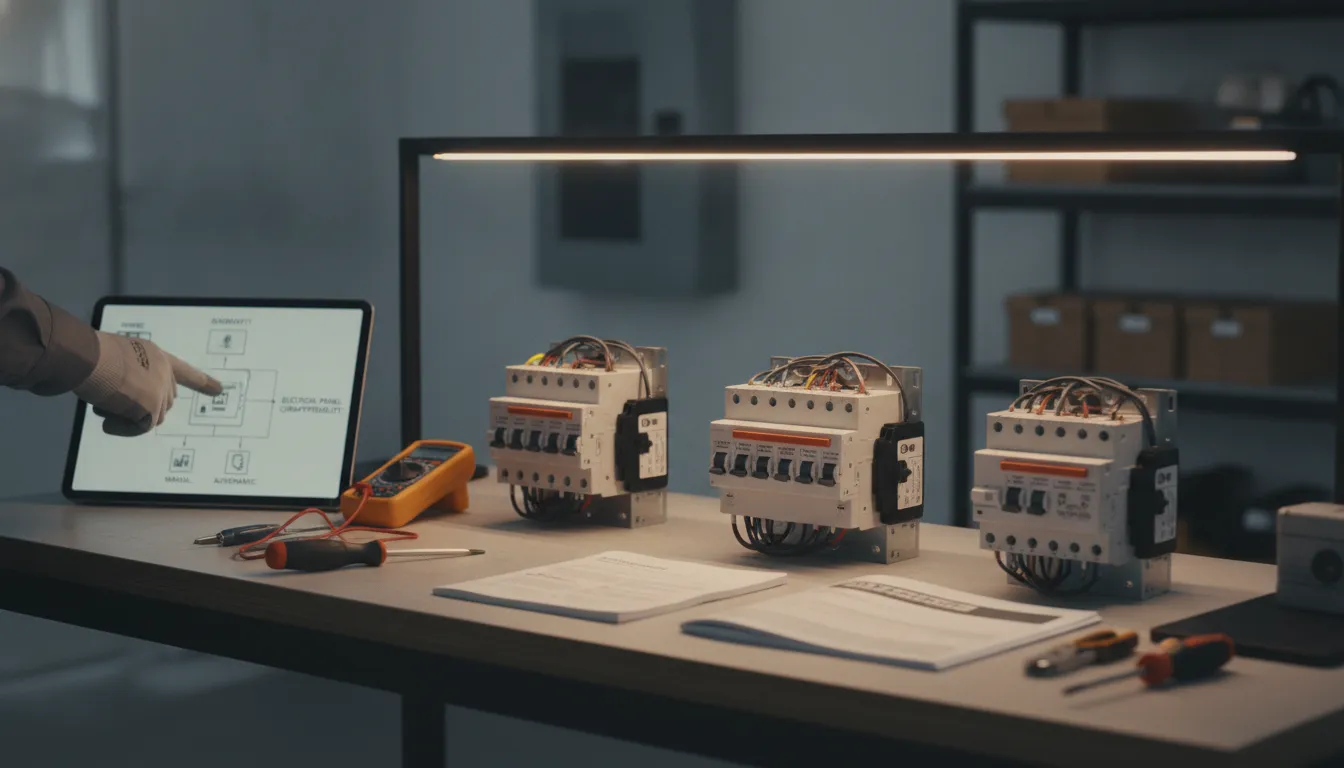
A generator can keep select household circuits running during an outage, but connecting it to your electrical panel takes more than the right cord. A generator interlock kit may be part of a setup for a compatible panel, helping prevent the utility main breaker and generator breaker from operating at the same time. It does not make every panel suitable, switch power automatically, or tell you which appliances your generator can handle. Understanding those details can help you make a safer, more informed choice. In this guide, you’ll learn what an interlock does, how to check compatibility, and why a licensed electrician should evaluate and install the system.
Key Takeaways
- Confirm the kit fits your panel: Ask a licensed electrician to verify your panel’s exact model and the compatibility of the kit, breaker, inlet, and wiring.
- Plan what your generator will power: Identify priority circuits and manage appliance use to stay within the generator’s capacity.
- Install and operate the system safely: Follow the equipment’s instructions, check local permit requirements, and run portable generators outdoors, away from doors, windows, and vents.
What Is a Generator Interlock Kit, and How Does It Work?
A generator interlock kit lets a compatible electrical panel receive power from a portable generator through a dedicated connection. Its main purpose is to prevent utility power and generator power from feeding the panel at the same time. The kit must match the panel and be installed and operated correctly to work as intended.
How an Interlock Connects a Portable Generator to Your Panel
An interlock kit is a mechanical device designed for a specific electrical panel, typically installed on the panel cover. A dedicated generator breaker connects to an outdoor power inlet, where you plug in the generator with the correct cord. During an outage, you follow the equipment’s instructions to turn off the main breaker, move the interlock, and turn on the generator breaker. Power can then reach circuits in your home through the panel. The basic interlock setup depends on compatible parts and correct installation. Before purchasing a kit, ask an electrician to confirm that it fits your panel and can be installed safely.
How Breakers Prevent Both Power Sources From Running at Once
A sliding plate or other blocking mechanism allows only one of two breakers to be on at a time: the utility main breaker or the generator breaker. To switch to generator power, you turn off the main breaker, move the interlock, then turn on the generator breaker. When utility power returns, you reverse the process by turning off the generator breaker before restoring the main breaker. This physical barrier is designed to prevent both sources from powering the panel at once, but it does not switch automatically. You must follow the correct sequence each time. An electrician can confirm that the installed device blocks both breakers from being on together on your specific panel.
What an Interlock Kit Does and Doesn’t Do
An interlock kit provides a way to connect a compatible portable generator to your home’s electrical panel. Depending on the panel and setup, it may let you select which circuits receive power using the existing breakers. That flexibility does not increase the generator’s capacity or determine which appliances can safely run at the same time. You’ll need to manage the electrical load and follow the generator and panel manufacturers’ instructions. An interlock also does not make every panel compatible, and it is not a substitute for a transfer switch where one is required. Review the role and limitations of interlock kits with a licensed electrician before choosing a setup.
How an Interlock Helps Prevent Utility-Line Backfeed
If a generator is connected improperly, electricity can flow from a home’s wiring back onto utility lines. This is called backfeed, and it can create a shock hazard for utility workers and others, even when a line appears inactive. A correctly selected, installed, and operated interlock helps prevent backfeed by keeping the utility main breaker and generator breaker from being on at the same time. The device only works as intended when you use the proper equipment and follow the switching instructions. Never connect a generator to a household outlet with a homemade or improper cord. Have an electrician assess your panel and generator connection before using backup power.
What Are the Benefits and Limits of a Generator Interlock Kit?
A generator interlock kit can connect a portable generator to selected circuits through your existing electrical panel. This setup may offer flexibility and cost less than some transfer-switch options, but it has important limits: you must operate it manually, manage the generator’s power, and use a kit designed for your exact panel. Weigh these factors before choosing a backup-power setup.
Compare Interlock Kits With Manual and Automatic Transfer Switches
An interlock kit and a manual transfer switch both require you to switch from utility power to generator power during an outage. With an interlock, you operate breakers at the main panel. A manual transfer switch typically sends generator power to a designated group of circuits through a separate switch. An automatic transfer switch detects an outage and changes power sources without requiring you to operate the panel.
Each option suits different needs. An interlock may let you select circuits from your existing panel, while a transfer switch provides a set group of circuits to power. Automatic transfer switches offer hands-free operation but require equipment designed for automatic switching. Some interlock kits are marketed as meeting National Electrical Code requirements, but compliance depends on the specific equipment, installation, and local rules. Ask an electrician to compare options for your home.
Weigh Safety, Convenience, Cost, and Installation Needs
An interlock kit may cost less than a transfer-switch setup, but the total price depends on more than the kit itself. Generator inlet installation, wiring, labor, and any panel work can affect the final cost. Compare estimates for the complete installation, not just the hardware.
Consider how you’ll use the system, too. An interlock requires you to follow a switching sequence and choose which circuits to run during an outage. Installation also calls for care: opening an electrical panel can expose a person to live parts, even when the main breaker is off. A kit that appears easy to install may not suit your panel or local requirements. Have a licensed electrician verify compatibility and install it. Sacramento-area homeowners can ask AAA Electrical Services about generator installation and repair.
Choose Which Circuits to Power and Manage Their Loads
An interlock can let a portable generator supply power through your existing panel, giving you a choice of which branch circuits to use. But a generator has a set power capacity, so you may not be able to run every appliance at once. Refrigerators, pumps, and air conditioners can also draw extra power when starting.
Make a list of the appliances and circuits you want to use during an outage. An electrician can help estimate their electrical demands and determine whether your generator can handle them. You may need to turn off some breakers before using a high-demand appliance, or run certain appliances one at a time. The interlock is designed to prevent the utility and generator breakers from being on together. It does not monitor your generator’s load, so planning what to run remains your responsibility.
Know Your Generator and Electrical System’s Limits
Choose an interlock made for your panel’s exact manufacturer and model. Check the panel’s amperage, breaker type, layout, and main-breaker orientation. A kit that looks similar or fits another panel from the same manufacturer may not be compatible. Ask an electrician to verify the manufacturer’s specifications before you buy.
Your generator and home wiring matter just as much. The generator must provide enough power for the circuits you plan to use, and the inlet, breaker, and wiring must be rated for the system. An interlock does not increase the capacity of your generator or panel. If you’re considering a home generator, have an electrician assess your panel and backup-power needs before you select equipment.
How Do You Choose the Right Generator Interlock Kit?
A generator interlock kit must match your electrical panel and work with the other parts of your backup-power setup. Before buying one, identify your panel and have a licensed electrician confirm the kit’s compatibility, the generator connection, and any installation requirements.
Match the Kit to Your Panel’s Make and Exact Model
Interlock kits are made for specific panel designs, not just for a particular brand. Find the manufacturer and model number on the panel label, usually on the inside of the door. You can photograph the label and the panel layout to share with an electrician or kit manufacturer. Don’t remove the panel cover to look for details, since components inside may remain energized.
Panel designs vary among manufacturers such as Siemens, Square D, Eaton, and GE. Models from the same manufacturer may also need different kits. Check the manufacturer’s compatibility information against your exact panel model. GenInterlock’s product information can help you review panel-specific options. If you can’t confirm an exact match, ask an electrician to identify your panel before ordering.
Check Panel Amperage, Breaker Type, Layout, and Orientation
Panel amperage is one factor to check, but it doesn’t determine compatibility on its own. The kit may also depend on the main breaker’s type and position, the arrangement of the breaker columns, and the space available for a generator breaker. Main breakers can be oriented horizontally or vertically, and the distance between breakers may affect whether a kit fits.
Gather the panel’s manufacturer, model, amperage, and a clear photo of its layout. Don’t assume that two panels with the same amperage use the same kit. An electrician can confirm the physical fit and make sure the interlock allows the breakers to operate in the intended sequence. They can also check whether the panel has room for the generator breaker your setup requires.
Choose a Kit Listed for Your Specific Panel
Look for a kit listed for your exact panel model. Product documentation should identify compatible models and include installation instructions. Some manufacturers describe their kits as MET Listed. Check the listing details for the specific kit you’re considering, and ask your electrician to verify that the listing applies to your panel and installation.
A product listing doesn’t replace proper installation or a check of local requirements. Your electrician can confirm the kit is installed according to its instructions and that the finished setup meets applicable electrical codes. You can review Interlockkit’s product and compatibility information before discussing options with a professional. If the documentation doesn’t clearly identify your panel, contact the manufacturer or electrician rather than relying on a broad claim that the kit is “code compliant.”
Compare Compatible Kits by Features, Price, and Support
After confirming compatibility, compare the kits made for your panel. Check what each package includes, such as the interlock plate, hardware, and instructions. Review the manufacturer’s installation guidance and find out how to get help with compatibility questions. Detailed documentation and reliable support are useful when your electrician is confirming the product.
Prices vary by panel type, seller, and kit features. A low price doesn’t confirm that a kit fits your panel or meets the requirements for your installation. Compare product details with the manufacturer’s compatibility information, and ask your electrician to verify the match before buying. Treat the kit price as only one part of your project budget, since the generator breaker, inlet, wiring, labor, and any required panel work may also affect the total cost.
Match the Generator, Breaker, Inlet, and Wiring to Your Power Needs
The interlock is only one part of a generator connection. The generator’s output, generator breaker, power inlet, and wiring must work together and be properly sized. Start by listing the circuits you want available during an outage, such as a refrigerator, lights, or heating equipment. Large appliances may draw more power than a portable generator can supply, especially when several start at once.
A licensed electrician can estimate the load and recommend a suitable breaker, inlet, and wiring for your generator and panel. They can also explain how to manage circuit use while the generator is running. If you’re considering a broader backup-power setup, learn about AAA Electrical Services’ generator installation and repair services and ask a professional to assess your home’s needs.
Avoid Universal or “Close Enough” Kits
Be cautious with kits described as universal or with products that appear to fit but don’t list your exact panel model. A plate that doesn’t align correctly may not move as intended or may fail to keep both power sources from operating at once. Never drill, bend, or modify an interlock to make it fit. Changes can compromise the equipment and create an electrical hazard.
If the compatibility chart doesn’t clearly include your panel, pause before purchasing. Share a clear photo of the panel label and breaker layout with the manufacturer, or ask an electrician to verify the match. Choose a kit designed for your specific panel and have it installed according to the product instructions. A professional can also check whether your panel needs other work before it can support a generator connection.
What Installation and Safety Requirements Should You Know?
A generator interlock kit must match your electrical panel and work with the generator, inlet, wiring, and breakers in your setup. Choosing a kit that looks similar to your panel’s model is not enough. An incompatible or incorrectly installed kit may fail to prevent utility and generator power from connecting at the same time, creating serious risks for your home and utility workers.
Have a licensed electrician assess your panel before you buy a kit or begin installation. They can confirm compatibility, determine whether the generator can support the circuits you want to use, and explain whether permits or inspections apply. Local requirements can vary across the Sacramento area, so check with your local building department as well.
You’ll also need to know how to operate the system and manage the generator’s limited output. Ask your electrician to walk you through the switching procedure and explain what to do if the interlock does not move or engage as expected. For help evaluating your home’s backup-power setup, explore AAA Electrical Services’ generator services and panel services. Keep these safety points in mind as you plan the installation.
Ask a Licensed Electrician to Verify Compatibility and Install the Kit
Interlock kits are designed for specific panels. An electrician can check your panel’s make and exact model, confirm that the kit is listed for it, and verify the breaker type and layout. They can also make sure the generator inlet, wiring, and breaker suit the generator and the circuits you plan to power.
Installation involves work inside the electrical panel, so it’s not a suitable do-it-yourself project. A video showing an interlock installation can help you understand the basic components, but it cannot verify compatibility or local code requirements for your home. Ask a licensed electrician to assess the equipment and complete the work. Before purchasing a kit, get a professional opinion on whether your panel can support the setup you have in mind.
Know the Live-Panel Hazards and Risks of Incorrect Installation
Electrical panels can contain energized parts even when the main breaker is off. Touching live components can cause severe injury or death. Incorrect drilling, loose parts, or a poorly positioned interlock can also damage the panel or prevent the mechanism from working as intended.
Don’t remove the panel cover or attempt to install the kit yourself. Ask your electrician to explain how the interlock operates and what to do if it feels stuck or does not engage properly. A general installation demonstration may show how one system is assembled, but it is not a substitute for panel-specific instructions or professional installation. If anything looks damaged or out of place after the work is complete, leave the system off and contact an electrician.
Check Permit, Inspection, and Local Code Requirements
Permit and inspection requirements depend on where you live and the details of the installation. Before work begins, ask your electrician whether a permit is needed and whether the finished system must be inspected. Your local building department can confirm the requirements that apply to your property.
A product description alone does not show that a kit is approved for every panel or installation. The kit must be listed for your specific panel and installed according to its instructions and applicable local codes. Some manufacturers describe interlocks as an alternative to transfer switches when installed correctly, but approval depends on the complete setup. Review the manufacturer’s interlock product information with your electrician before choosing a kit, and confirm that the proposed installation meets local requirements.
Confirm the Interlock Prevents Both Power Sources From Running at Once
The interlock is designed to prevent the utility main breaker and generator breaker from being on at the same time. This helps reduce the risk of generator power flowing back onto utility lines, where it could endanger utility workers and others. The manufacturer’s explanation of interlock operation describes how the mechanism blocks simultaneous breaker operation.
Ask your electrician to confirm that the installed plate moves correctly and physically prevents both breakers from being switched on together. Don’t use the system if the interlock is loose, damaged, obstructed, or fails to block either breaker. Follow the instructions provided for your specific kit. An interlock does not increase the generator’s capacity or automatically choose which circuits receive power, so you’ll still need to manage household loads.
Run the Generator Outdoors to Prevent Carbon Monoxide Exposure
Portable generators produce carbon monoxide, a poisonous gas you can’t see or smell. Never run one inside your home, garage, basement, crawl space, or another enclosed or partly enclosed area. Place it outdoors and away from doors, windows, and vents so exhaust cannot enter the house. Follow the generator manufacturer’s placement instructions, and make sure your home has working carbon monoxide alarms.
The CDC’s generator safety guidance explains the risks and placement precautions. During an outage, it may be tempting to move a running generator closer for convenience, especially in bad weather. Keep it outdoors, dry, and well ventilated as directed by the manufacturer. Never enclose it or block airflow to protect it from the elements.
Learn the Switching Sequence, Manage Loads, and Test the Setup
Ask your electrician to demonstrate the switching procedure for your specific system, including how to switch from utility power to generator power and back again. The correct steps can vary, so follow the instructions for your kit and generator rather than relying on a generic sequence. Keep the instructions accessible and make sure anyone in your household who may operate the system understands them. Never force the interlock if it doesn’t move as expected.
A generator can power only a limited number of appliances at once. Work with your electrician to identify priority circuits, account for appliances with high startup demands, and avoid overloading the generator. Before an outage, test the setup according to the manufacturer’s instructions, and have any concerns checked by a professional. AAA Electrical Services can help homeowners plan backup power through its generator installation and repair services.
Need Help With a Generator Interlock Kit in Sacramento?
Choosing an interlock kit starts with your electrical panel, generator, and backup-power needs. A licensed electrician can check whether the equipment is compatible, explain your options, and help plan a safe connection for your home.
Have an Electrician Assess Your Panel and Backup-Power Needs
An interlock kit must be listed for your specific panel, and the complete setup needs to match your generator and the circuits you want to power. An electrician can inspect your panel’s make and model, breaker layout, and capacity, then help you understand which household loads your generator can support.
Panel work can expose you to energized components, even when the main breaker is off. Professional assessment helps identify compatibility concerns and reduce the risk of an unsafe installation. Ask the electrician to explain how the interlock operates, which circuits you can use during an outage, and whether permits or inspections may be required for your project.
Ask AAA Electrical Services About Generator and Panel Services
If you live in the Sacramento area, AAA Electrical Services can assess your home’s generator and panel needs. The company provides generator installation and repair and panel repair and installation. Contact the team to ask whether an interlock kit may work with your panel and what your setup could require.
AAA’s licensed, background-checked, and drug-tested technicians provide residential electrical services with clear upfront pricing and a 100% satisfaction guarantee. Same-day service is available, and the company reports completing 93% of repairs on the spot. Check the Sacramento-area service locations to confirm whether your home is within its service area.
Get Clear Pricing and Guidance on a Safe, Code-Compliant Connection
Before approving the work, request an estimate that explains labor, parts, and any related electrical upgrades. The cost can depend on panel compatibility, generator inlet and breaker requirements, and whether the installation needs additional wiring or panel work. A lower-priced kit is not a good fit if it is not listed for your exact panel.
Ask the electrician to confirm that the proposed setup prevents utility power and generator power from energizing the panel at the same time. Also ask what local permit and inspection requirements apply, and request clear instructions for operating the interlock and managing generator loads. If you’re planning for eligible electrical work, review AAA Electrical Services’ financing options.
Related Articles
- How Much Does It Cost to Install a Generator Transfer Switch?
- How to Install a Generator Safely and Efficiently
- Whole House Generator Safety
- Generator Repair Experts in Elk Grove
- Generator Installation for Homes in Folsom
Frequently Asked Questions
Can I install a generator interlock kit myself?\ It’s safest to have a licensed electrician handle the installation. Working inside an electrical panel can expose you to energized parts, and the kit must fit your exact panel and meet applicable requirements.
Will an interlock kit let me power my whole house?\ Not necessarily. The circuits you can use depend on your generator’s capacity and the electrical demands of your appliances. An electrician can help you prioritize circuits and plan how to manage loads during an outage.
How do I know which interlock kit fits my panel?\ Check the panel’s label for its manufacturer and model, then have an electrician compare that information with the kit’s compatibility details. Don’t rely on appearance or choose a kit that only seems to fit.
Does an interlock kit switch to generator power automatically?\ No. An interlock requires you to operate the breakers manually in the sequence specified for your equipment. An automatic transfer switch is designed to change power sources without manual breaker operation.
Can AAA Electrical Services help with a generator interlock in Sacramento?\ AAA Electrical Services can assess your panel and backup-power needs, and discuss its generator and panel services. Contact the team to confirm service availability and ask about pricing, permits, and installation requirements for your home.