Backup power should make an outage easier, not create new electrical risks. Without a properly installed generator transfer switch, electricity may flow through the wrong wiring or travel back onto utility lines. That can damage equipment and place utility crews in danger. A transfer switch creates a controlled changeover between utility power and generator power, helping your home receive electricity from one source at a time. Whether you’re considering a portable generator for essential appliances or a standby system for broader coverage, this guide covers the equipment, installation process, safety requirements, maintenance steps, and common mistakes to avoid.
Key Takeaways
- Match the transfer switch to your home’s needs: Consider generator type, service size, panel compatibility, backup circuits, starting loads, and equipment such as HVAC systems, EV chargers, solar panels, and batteries.
- Prioritize safe, permitted installation: A licensed electrician can prevent backfeed, verify grounding and neutral connections, confirm equipment ratings, and handle applicable Sacramento-area permit and inspection requirements.
- Prepare and test before an outage: Exercise the generator, confirm transfer and retransfer operation, keep circuits clearly labeled, watch for warning signs, and schedule annual professional inspections.
What Is a Generator Transfer Switch?
A generator transfer switch is an electrical device that moves selected circuits, or an entire electrical service, from utility power to generator power. It creates a controlled connection between three parts of your home’s electrical system: the utility, the generator, and the loads that need electricity.
Those loads may include refrigerators, lights, heating and cooling equipment, sump pumps, internet equipment, or other hardwired appliances. When the utility fails, the transfer switch directs generator power to the circuits it controls. When utility service returns, it transfers those circuits back.
A transfer switch also prevents utility power and generator power from reaching the same wiring at the same time. This protects your home’s electrical equipment and helps prevent dangerous backfeed into utility lines.
Transfer switches come in several configurations. A manual switch requires you to start the generator and change the power source yourself. An automatic transfer switch detects an outage and changes sources when paired with a compatible standby generator. The right option depends on your generator, electrical panel, backup priorities, and budget.
Sacramento homes may also have solar panels, batteries, electric vehicles, or high-demand appliances that affect compatibility. AAA Electrical Services can inspect your system and help determine whether generator installation and repair or a transfer switch upgrade is right for your home.
Connect Utility, Generator, and Load
A transfer switch connects the utility supply, the generator, and the circuits that receive backup power. Under normal conditions, your home uses electricity from the utility. During an outage, the switch disconnects the selected circuits from the utility and connects them to the generator.
You can think of the device as a traffic controller for electricity. It directs power where it belongs and prevents two power sources from feeding the same circuits. Depending on the design, it may serve a few essential circuits, several appliance circuits, or the entire electrical panel.
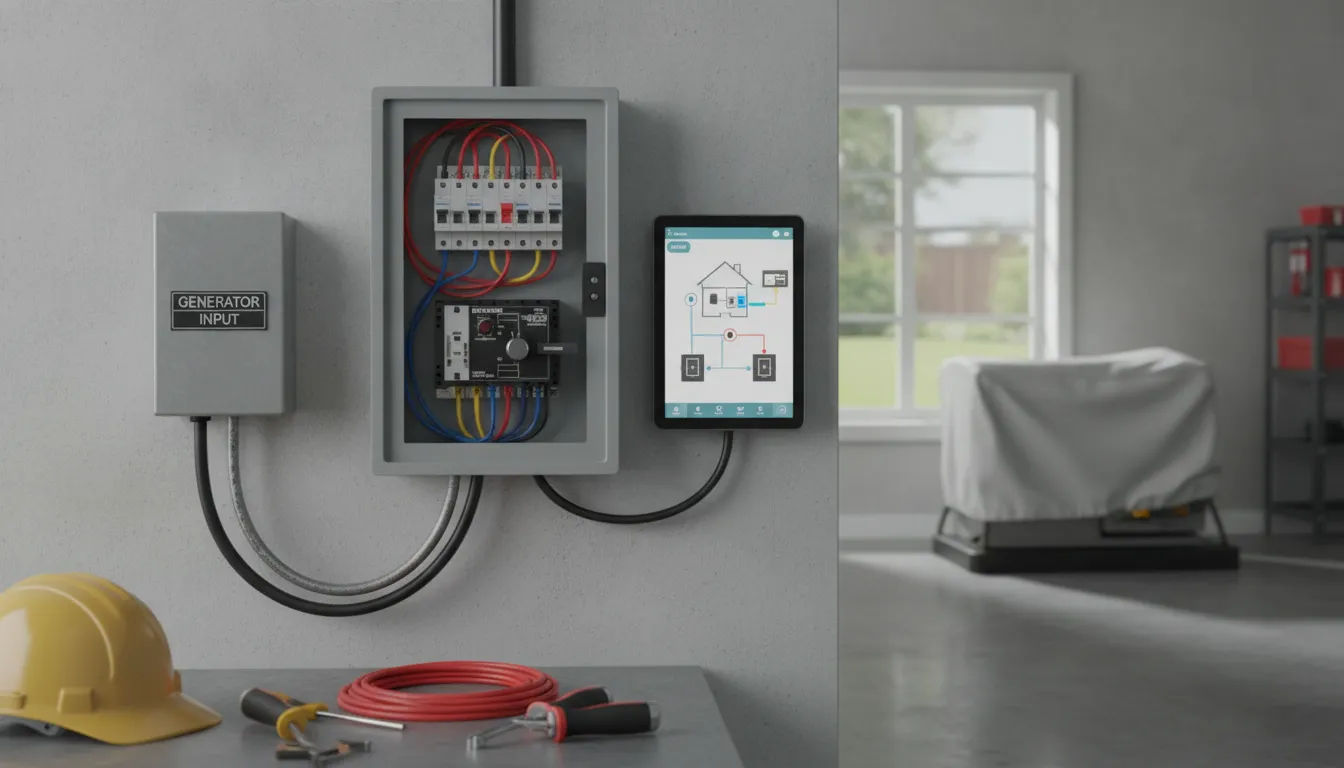
Some transfer switches are installed beside the main panel. Others are part of a separate transfer panel or a standby generator system. Installation may involve circuit breakers, wiring, grounding, neutral conductors, an outdoor generator inlet, and automatic-start controls.
The equipment must work together as one system. Consumer Reports explains why a transfer switch is needed for certain portable generator connections. It is not simply an optional accessory. It is a key part of safely delivering generator power to your home.
Separate Power Sources Safely
A transfer switch’s most important function is separating utility power from generator power. If both sources connect to the same wiring, electricity may flow in an unintended direction. This condition, called backfeed, can damage electrical equipment and expose utility workers to unexpected voltage.
A properly rated transfer switch uses mechanical or electrical safeguards to prevent this connection. When the generator supplies power, the backed-up circuits disconnect from the utility. When utility service returns, the switch transfers the circuits back before the generator shuts down or begins its cooldown cycle.
This separation also protects your home’s wiring. Improvised connections can send electricity through conductors that were not designed for the generator’s output. The result may include overheated wires, tripped breakers, damaged appliances, or an electrical fire.
A transfer switch does not eliminate every generator hazard. The generator still needs proper outdoor placement, ventilation, wiring, and maintenance. Follow the Consumer Product Safety Commission’s generator safety guidance, especially its recommendations for keeping portable generators away from doors, windows, and ventilation openings.
Follow the Manual Transfer Sequence
A manual transfer switch requires you to control the changeover. When the utility fails, move outdoors, confirm that the generator is in a safe location, and start it according to the manufacturer’s instructions. Allow it to stabilize before using the transfer switch to move selected circuits from utility power to generator power.
After the circuits transfer, turn on appliances gradually. Refrigerators, pumps, furnaces, and air conditioners may draw extra power when their motors start. Turning on several high-demand loads at once can exceed the generator’s capacity and cause it to shut down.
Use the labels on the transfer panel to identify each backed-up circuit. If the labels are unclear, ask an electrician to update them before an outage. Everyone in your household who may operate the generator should understand which circuits the system supports.
When utility service returns, move the circuits back to utility power. Follow the generator’s instructions for cooldown and shutdown, then store the equipment safely. If the switch feels difficult to operate or the generator trips repeatedly, schedule an inspection. AAA Electrical Services provides generator repair and installation for homeowners who need help with setup or operation.
Follow the Automatic Transfer Sequence
An automatic transfer switch works with a compatible standby generator. It monitors the utility supply and detects when power is interrupted or falls outside its acceptable range. After a short delay, it signals the generator to start.
Once the generator reaches stable voltage and frequency, the switch disconnects the backed-up circuits from the utility and connects them to generator power. When utility service becomes stable again, the switch transfers the circuits back. The generator may continue running for a short cooldown period before shutting off.
This process allows backup power to begin without someone moving equipment outdoors during an outage. Automatic systems can be helpful if you travel often, support someone with medical equipment, or want critical household systems protected overnight.
Automatic transfer systems still require careful setup. The switch must be compatible with the generator’s controls, voltage, wiring, and service configuration. A licensed electrician should test the transfer, retransfer, cooldown, and manual override functions after installation.
Connect Portable and Standby Generators
Transfer switches can connect both portable and standby generators, but the installation is different for each type. A portable generator usually connects through an outdoor power inlet and supplies a selected group of essential circuits. You start, monitor, refuel, and shut down the generator yourself.
A standby generator is permanently installed and usually connected to natural gas or propane. It typically works with an automatic transfer switch, allowing it to start and supply backup power without manual intervention.
Your generator’s output, connection method, and control features determine which transfer switch is compatible. A portable generator may run refrigerators, lights, and selected outlets, but it may not handle central air conditioning, an electric water heater, or several large appliances at once.
A standby generator can support more loads, but whole-home backup still requires load planning. The switch must match the generator’s voltage, amperage, phase, neutral configuration, and grounding requirements. Keep every portable generator outdoors, even when it is connected to your home through an approved transfer system.
Compare Transfer Switches and Surge Protectors
A transfer switch and a surge protector perform different jobs. A transfer switch changes the source of power for selected circuits or the entire home. It helps your appliances continue operating when utility service is unavailable.
A surge protector limits the effects of short-duration voltage spikes. These spikes may result from lightning, utility switching, or equipment turning on and off. A whole-home surge protective device connects at the electrical panel, while plug-in protectors protect individual devices.
A surge protector cannot power your home during an outage. It also does not replace a transfer switch or prevent backfeed. A transfer switch, meanwhile, does not automatically protect every appliance from voltage surges.
Many homes may benefit from both devices. Surge protection can be especially useful for homes with sensitive electronics, solar equipment, smart appliances, or backup generators. AAA Electrical Services offers home surge protection along with generator and panel services, making it easier to evaluate how these systems should work together.
Match Switches to Generator Capacity
Choose a transfer switch based on more than the generator’s advertised wattage. The switch must match the generator’s voltage, amperage, phase, connection type, and neutral configuration. It must also be rated for the electrical service or the individual circuits it will control.
Start by identifying the generator’s continuous running output and starting output. Motors in refrigerators, pumps, furnaces, and air conditioners often draw more electricity when they start. The transfer switch and circuit arrangement must support those temporary demands without exceeding the generator’s limits.
Next, decide whether you want essential-circuit or whole-home backup. An essential-circuit switch may suit a smaller portable generator. A service-rated automatic switch may be appropriate for a larger standby generator designed to supply the full home.
Your electrical panel also matters. An electrician should check its service rating, available breaker space, wiring, inlet location, grounding, and neutral connections. Solar panels, batteries, EV chargers, and other large loads may create additional compatibility concerns.
Incorrect sizing can lead to nuisance shutdowns, equipment damage, or unsafe conditions. AAA Electrical Services can review your home’s electrical loads and recommend a transfer switch that fits your generator system and backup priorities.
Why Does a Transfer Switch Support Safe, Code-Compliant Power?
A generator transfer switch creates a controlled connection between your home, the utility supply, and a backup generator. When utility power fails, the switch disconnects the home from the grid before connecting approved circuits to generator power. When utility service returns, it reverses the process in the correct order.
This separation matters because generator installation involves more than connecting a large appliance to an electrical panel. The transfer switch must match the generator, service equipment, panel configuration, grounding system, and circuits you plan to operate. AAA Electrical Services offers generator installation and repair for Sacramento-area homeowners who need safe, dependable backup power.
Code compliance also involves more than choosing a listed product. The installation may require permits, approved wiring methods, overcurrent protection, weather-resistant equipment, and inspection. California’s electrical requirements are based on the California Electrical Code, while local authorities may have additional permit procedures. A properly installed transfer switch helps protect your household, your equipment, and utility crews during an outage.
Prevent Backfeed and Protect Utility Workers
Backfeed occurs when generator electricity travels from a home into utility lines that technicians believe are de-energized. The voltage can remain dangerous even when the neighborhood appears to have no power. If a generator connects to the home without a properly installed transfer switch or approved interlock, utility workers repairing the grid could encounter unexpected electricity.
A transfer switch prevents both power sources from feeding the home at the same time. It disconnects the utility supply before connecting the generator, then disconnects the generator before restoring utility power. This sequence helps protect lineworkers and prevents dangerous conditions inside the electrical system. The Consumer Product Safety Commission’s generator guidance also warns homeowners not to connect a portable generator directly to a home outlet or electrical system without proper equipment.
Prevent Overloads, Fires, and Equipment Damage
A generator cannot always supply every circuit in a home at once. Starting a central air conditioner, sump pump, refrigerator, or well pump can require much more power than the appliance uses while running. If the connected load exceeds the generator’s capacity, the generator may shut down, overheat, or provide unstable power.
A transfer switch lets an electrician control which circuits receive backup power. Essential-circuit systems often include refrigerators, lighting, internet equipment, medical devices, and selected heating or cooling equipment. Whole-home systems may use load management to delay or disconnect large appliances when demand rises. Correct circuit selection reduces stress on the generator and helps protect wiring and appliances from overload-related damage.
Avoid Unsafe Wall-Outlet Connections
Plugging a generator into a household wall outlet is sometimes called backfeeding. It bypasses the safety features of the main electrical panel and can send power through circuits that were never designed to receive electricity from that direction. It also creates a serious shock and fire hazard, especially when someone uses an improvised cord with two male ends.
A safe portable-generator setup uses a properly rated outdoor inlet, a suitable cord, and a transfer switch or listed panel interlock. The inlet connects to the transfer equipment, not to a random receptacle inside the house. An electrician can confirm that the inlet, breaker, conductors, grounding, and neutral arrangement match the generator’s instructions and your home’s service configuration.
Use Interlocks, Dead Fronts, and Source Indicators
A panel interlock is a mechanical device that allows either the utility breaker or the generator breaker to be turned on, but not both at the same time. It can be a practical option for certain portable-generator installations when it is listed for the specific panel and installed according to the manufacturer’s instructions.
Dead fronts cover energized panel components and help prevent accidental contact during normal operation. Source indicators, labels, and clear operating instructions show whether the home is receiving utility or generator power. These features make the system easier to use when the lights are out and reduce mistakes during a stressful outage. An interlock is not automatically compatible with every panel, so have an electrician verify the exact equipment combination before purchasing one.
Meet UL 1008, cULus, and Equipment Ratings
Transfer switches should carry appropriate product listings for their intended use. UL 1008 covers transfer-switch equipment, including requirements related to construction, performance, and testing. A cULus mark indicates that equipment has been evaluated for applicable requirements in the United States and Canada, but the marking alone does not confirm that the product fits your installation.
Check the switch’s voltage, amperage, number of poles, enclosure rating, short-circuit rating, and generator compatibility. The switch also needs to work with the service equipment and installation method used at your home. Avoid relying on a generic online listing with limited technical information. An electrician should review the manufacturer’s documentation and select equipment approved for the actual generator and panel.
Ground, Bond, and Switch Neutrals Correctly
Grounding and bonding help create a safe path for fault current, but they are not interchangeable. The generator, transfer switch, service panel, subpanels, and grounding electrode system must work together as one coordinated system. A mistake can place unwanted current on grounding paths or prevent protective devices from operating as intended.
Whether the transfer switch should switch the neutral depends on the generator’s neutral-to-ground bond and the way the system is configured. Some separately derived generator systems require a switched neutral, while others use a solid neutral connection. The answer is not based only on generator size. A licensed electrician should follow the generator and transfer-switch manuals, inspect the existing panel, and complete the grounding and bonding work correctly.
Pair Transfer Switch Safety With Carbon Monoxide Safety
A transfer switch prevents electrical backfeed, but it does not make generator exhaust safe. Portable generators produce carbon monoxide, an odorless gas that can cause serious illness or death. Operate a portable generator outdoors, far from doors, windows, and vents. Never run one inside a home, garage, crawlspace, shed, or other partially enclosed area.
Keep exhaust directed away from the house, and install working carbon monoxide alarms on every level and outside sleeping areas. The Centers for Disease Control and Prevention’s carbon monoxide guidance recommends operating generators outdoors and away from doors, windows, and vent openings. If anyone develops a headache, dizziness, nausea, weakness, or confusion after generator use, move outside and seek emergency assistance.
Meet California Codes and Sacramento Permit Requirements
Generator and transfer-switch installations must follow applicable California electrical requirements, local rules, and the equipment manufacturer’s instructions. Permit needs can vary based on the property’s location, the scope of work, and whether the generator connects to service equipment or selected branch circuits.
Sacramento-area homeowners should check with the authority having jurisdiction before work begins. The City of Sacramento’s building permit information explains the local permitting process, while nearby cities and unincorporated areas may use different departments. A licensed electrical contractor can help identify the correct jurisdiction, prepare the installation, arrange inspections, and address corrections. Keeping permit and inspection records may also help with future repairs, home sales, and insurance questions.
Switch Power Reliably During Outages
A transfer switch supports reliable backup power by making the changeover predictable. Manual systems guide you through a defined sequence: start the generator, confirm stable operation, move the transfer equipment, and connect the approved circuits. Automatic systems detect a utility outage, start a compatible standby generator, transfer the load, and return to utility power when service is stable.
Reliability depends on the entire installation, not just the switch. The generator needs enough capacity, the wiring must be protected, and the system should be tested under load. Automatic systems also need functioning controls, batteries, and communication wiring. AAA Electrical Services can inspect generators, panels, transfer equipment, and related circuits through its residential electrical services, helping homeowners prepare before an outage occurs.
Which Transfer Switch Fits Your Home?
The right generator transfer switch depends on your generator type, the circuits you want to power, and your home’s electrical configuration. A portable generator commonly pairs with a manual transfer switch or a listed interlock kit. A permanently installed standby generator usually uses an automatic transfer switch that starts the generator and changes power sources without requiring someone to operate a panel manually.
Your backup goals matter just as much. A small generator may be suitable for a refrigerator, several lights, internet equipment, and a furnace blower. A larger system may support air conditioning, pumps, electric appliances, or most of the home. However, each appliance has running and startup demands, and several large loads may exceed the generator’s output when they operate together.
The main panel, service rating, breaker space, inlet location, neutral configuration, grounding arrangement, and available generator capacity all affect the selection. Solar panels, batteries, EV chargers, and electric heating can add further compatibility concerns. AAA Electrical Services can inspect your system and recommend an appropriate generator installation for your home.
Also consider how you want the system to operate during an outage. Do you prefer to select essential circuits yourself, or should the system respond automatically while your family is asleep or away? The answers can narrow your options before an electrician reviews equipment ratings, local requirements, and installation conditions.
Use Manual Switches for Essential Circuits
A manual transfer switch can be a practical option when you use a portable generator and want to power a limited group of circuits. During an outage, you start the generator outdoors, connect it to the proper inlet, and move the switch to generator power. You then operate only the circuits the generator can safely support, such as a refrigerator, furnace blower, internet equipment, or selected lights.
Manual operation means following the manufacturer’s sequence every time. Never connect a portable generator through a household wall outlet. This practice can send electricity backward through the home’s wiring and onto utility lines. A properly installed transfer switch separates utility power from generator power, helping protect occupants, utility workers, and electrical equipment. Consumer Reports explains the need for transfer equipment.
Use Automatic Switches for Standby Generators
Automatic transfer switches are designed for permanently installed standby generators. When the switch detects a utility outage, it signals the generator to start. Once the generator reaches stable operating conditions, the switch transfers selected circuits to generator power. When utility service returns, it transfers the home back, then allows the generator to cool down before shutting off.
This setup is helpful when you need backup power while away from home, during overnight outages, or for systems that should restart without manual input. The switch must match the generator’s voltage, amperage, phase, controls, and neutral configuration. Wiring, enclosure ratings, mounting space, and clearances also matter. AAA Electrical Services can assist with generator installation and repair, including transfer equipment and operational testing.
Consider Generator Interlock Kits
A generator interlock kit is a panel-mounted mechanism that prevents the utility main breaker and generator breaker from being turned on at the same time. When the existing electrical panel is compatible, an approved interlock can provide a practical alternative to a separate transfer panel.
Interlock kits are not universal. The kit must be listed for the exact panel model and installed according to its instructions. The generator inlet, breaker, conductor sizing, grounding, and neutral arrangement must also be correct. Some panels do not have the required space or configuration, and local requirements may affect whether an installation is accepted.
An interlock does not select or manage loads automatically. You must turn off high-demand circuits before using generator power and monitor what operates at the same time. Have a licensed electrician verify the panel and equipment rather than choosing a generic part because it appears to fit.
Install Essential-Circuit Transfer Panels
An essential-circuit transfer panel supplies selected loads from either utility power or generator power. Because the backup circuits are identified in advance, this setup makes it easier to operate the generator within its limits. Common choices include refrigeration, lighting, heating, security systems, networking equipment, and sump pumps.
A transfer panel can also serve hardwired equipment that cannot be powered safely with extension cords, such as some furnaces, well pumps, and water heaters. Each circuit still needs to fit the generator’s running and starting capacity. Motors and compressors can draw considerably more power during startup than they use after reaching normal operation.
The panel should have suitable ratings and overcurrent protection for the connected circuits. Clear labels can help everyone in the household understand which systems receive backup power. An electrician can also identify circuits that should remain off during an outage, reducing the chance of an avoidable overload.
Install Service-Rated Whole-Home Switches
A service-rated whole-home transfer switch is installed at the service equipment and transfers the home’s supply between the utility and generator. This arrangement can suit a larger standby generator intended to support most or all household circuits. It may also simplify backup planning by placing the transfer point where the home’s service enters the electrical system.
Whole-home backup does not mean every appliance can run at once. Central air conditioning, electric water heaters, ovens, pool pumps, dryers, and EV chargers can consume substantial power. The installation may require load management, selected circuit exclusions, or a generator with greater capacity.
The switch must match the home’s service amperage, wiring configuration, and generator specifications. Bonding, neutral switching, grounding, clearances, and inspection requirements also need careful attention. If the existing service equipment needs work, AAA Electrical Services offers panel installation and repair before or as part of a generator project.
Choose Open- or Closed-Transition Switching
Most residential transfer switches use open-transition switching. The switch disconnects the utility source before connecting the generator, creating a brief interruption between sources. This method avoids connecting the utility and generator together and is common for residential backup systems.
Closed-transition switching briefly overlaps the two sources during transfer, which can reduce interruption for sensitive equipment. Because the sources may be connected together for a short period, the generator, switchgear, controls, and utility service must be compatible. Utility approval or additional engineering may also apply, so this option is generally reserved for specialized installations.
Ask which transition method the manufacturer specifies and whether it matches your generator and service. Do not modify a transfer switch to change its operating method. The completed system should be tested for transfer, retransfer, generator cooldown, and manual operation where applicable.
Manage Limited Capacity With Load Shedding
Load shedding helps a generator manage several circuits when the home’s total demand could exceed the generator’s output. A load-management system monitors demand and temporarily disconnects lower-priority equipment when necessary. For example, it may pause an EV charger or electric water heater while an air conditioner or well pump operates.
This equipment does not create more generator capacity. Instead, it controls when certain loads receive power. The generator, transfer switch, load-management modules, and controlled appliances must be compatible, and the system should be programmed around your priorities.
Load shedding may be useful for homes with electric heating, a pool pump, a well pump, central air conditioning, or an EV charger. Ask an electrician to identify essential loads and establish a sensible priority order. Regular testing and maintenance are also important, because a control system that has not been inspected may not respond correctly during a heavy demand period. AAA Electrical Services can review generator options and help match the equipment to your household’s electrical needs.
How Do You Choose the Right Transfer Switch?
Choosing a generator transfer switch starts with your home’s electrical system, not the switch’s appearance or price. The model must match your generator’s output, your main electrical panel, the circuits you want to power, and the way the generator starts. A switch that is too small may trip or overheat, while an incompatible model may create installation and safety problems.
Begin by listing the appliances and systems you want available during an outage. Identify the circuits that serve them, then compare their running and starting power. This will help you decide whether you need backup for a few essential circuits or most of the home. According to Consumer Reports’ generator guidance, portable generators rated at 5,000 watts or more can often connect to selected household circuits through a properly installed transfer switch.
Your home may also include solar panels, battery storage, an electric vehicle charger, a well pump, or a large air conditioner. Each can affect power requirements and how electricity moves through the panel. Before buying equipment, have a licensed electrician inspect the generator, panel, wiring, and backup goals. AAA Electrical Services can assess these components through its generator installation and repair services.
Match Wattage, Voltage, Amperage, and Phase
The transfer switch must match the generator’s electrical output and the circuits it will serve. Compare the generator’s wattage, voltage, amperage, number of poles, and phase with the switch specifications. Most Sacramento homes use single-phase residential power, but an electrician should confirm the exact configuration at the panel and generator.
Amperage is especially important because the switch, wiring, breaker, inlet, and generator connection must all carry the expected current safely. A 30-amp portable generator connection is not interchangeable with a 50-amp connection. Similarly, 100-amp and 200-amp whole-home switches have different installation requirements. Do not choose a model based only on advertised wattage. Check the full electrical setup against the manufacturer’s instructions and local requirements.
Calculate Running and Starting Loads
List each appliance you want to operate and record its running wattage. Then identify its starting, or surge, demand. Refrigerators, freezers, sump pumps, well pumps, furnaces, air conditioners, and other motor-driven equipment may draw considerably more power for a few seconds when they start.
Add the running loads of equipment that may operate at the same time, then account for the highest starting demand. The generator must support both types of demand. If the total is too high, you may need to power fewer circuits, start appliances at different times, or use a transfer switch with load-management features. A licensed electrician can measure or estimate these demands before installation, helping you avoid a setup based on guesswork.
Choose Essential-Circuit or Whole-Home Backup
An essential-circuit transfer switch powers only the circuits you select, such as the refrigerator, lights, internet equipment, garage door opener, and a few receptacles. This option often works well with a portable generator because it limits electrical demand and makes it easier to stay within the generator’s capacity.
A whole-home transfer switch connects the generator to the main electrical service and can supply most or all household circuits. It is typically paired with a standby generator sized for the home. This setup offers greater convenience, but it may require service-rated equipment, a larger generator, and careful load planning.
Consider your power needs, budget, generator type, and preferred level of automation. Whole-home backup does not mean every appliance can run at once if the generator has limited capacity. Load management may still be necessary.
Prioritize HVAC, Refrigerators, Pumps, Medical Equipment, and Internet
Start with equipment that supports health, safety, comfort, or the home itself. Priority circuits may include heating and cooling equipment, refrigerators, freezers, medical devices, well pumps, sump pumps, security systems, and internet hardware. Sacramento heat can make air conditioning important, although central HVAC systems often have substantial starting demands.
Separate essential needs from conveniences such as ovens, electric dryers, pool equipment, and electric water heaters. If someone in your household relies on powered medical equipment, discuss its required backup capacity with their medical provider and electrician. Internet equipment uses relatively little power, but placing the modem and router on a backed-up circuit can help you stay connected during an outage.
Check Panel, Breaker, Inlet, Neutral, and Grounding Compatibility
The transfer switch must fit your electrical panel and work with its breaker arrangement. An electrician should check the available panel space, breaker type, service rating, wire size, generator inlet, and the route between the inlet and switch. The inlet also needs a suitable outdoor location and a cord connection rated for the generator.
Neutral and grounding arrangements require particular care. Depending on the generator and transfer switch, the neutral may need to switch with the circuit conductors or remain unswitched. The correct choice depends on the equipment, system design, and applicable electrical requirements. Incorrect bonding can create shock hazards, nuisance tripping, or equipment damage. Never alter neutral or grounding connections without professional guidance.
Account for Solar, Batteries, EV Chargers, and Other Large Loads
Solar panels, battery storage, electric vehicle chargers, heat pumps, and electric water heaters can affect transfer-switch selection. Some systems can continue producing or storing power during an outage, while others must disconnect from the utility before backup power becomes available. Transfer equipment must prevent incompatible power sources from energizing the same circuits at the same time.
An EV charger or electric heating system may consume more power than a portable generator can provide. You may need a dedicated circuit plan, load-management system, or whole-home energy controller. Tell your electrician about every major electrical system before work begins, including equipment you plan to add. AAA Electrical Services also offers solar checkups that can help identify equipment requiring coordination with backup power.
Plan for Automatic Start, Enclosures, Conduit, and Future Loads
If you want the generator to start automatically, choose a transfer switch that communicates with the generator’s starting controls. Installation may also require control wiring, disconnects, an enclosure, conduit, and a suitable mounting location. Outdoor equipment should have protection from weather while remaining accessible for inspection and maintenance.
Consider future electrical needs as well as current ones. You may later add an EV charger, workshop equipment, battery storage, or a larger HVAC system. Appropriately sized conduit and available panel space can make future changes simpler. After installation, commissioning and load testing help confirm that the equipment operates as intended. A detailed generator transfer switch installation guide explains why testing and ongoing maintenance matter.
Prepare for Sacramento Heat, Smoke, and Outages
Sacramento-area homeowners may need backup power during extreme heat, wildfire-related shutoffs, smoke events, or severe weather. Place outdoor generator and transfer equipment where it has adequate clearance, ventilation, and protection from water, debris, and excessive heat. Never operate a fuel-burning generator in a garage, enclosed patio, or near doors and windows.
Plan how you will access the switch during an outage. Labels should clearly identify backed-up circuits, and the generator inlet should be easy to reach without creating a trip hazard. Store fuel according to the generator manufacturer’s instructions, and test the system before fire season or periods of increased outage risk. A transfer switch supports electrical safety, but it does not replace carbon monoxide alarms or safe generator placement.
Use a Circuit-Priority Worksheet
A circuit-priority worksheet can make transfer-switch planning more straightforward. List each circuit, the appliance it serves, its estimated running wattage, its starting wattage, and whether it is essential during an outage. Include the breaker size and note equipment that must remain powered continuously, such as medical devices, refrigerators, or sump pumps.
Next, group the circuits by priority. Mark them as essential, useful, or nonessential, then compare their combined demand with the generator’s usable output. Share the worksheet with your electrician so they can verify the loads and recommend suitable equipment. Revisit it whenever you add major electrical equipment or change your backup needs. Routine testing and maintenance also help confirm that the transfer switch will operate when you need it.
Which Generator Transfer Switch Brands and Models Should You Consider?
The best generator transfer switch is not necessarily the most recognizable model. It is the one that matches your generator, electrical panel, service rating, wiring method, grounding arrangement, and backup goals. A switch designed for a standby generator may not work with a portable unit, and a model suitable for a standard panel may not be compatible with a home that has solar panels, battery storage, or an EV charger.
Start with compatibility, then compare automation, circuit capacity, enclosure design, controls, warranty coverage, and local service support. Product names and specifications can vary by generator series, so confirm the exact model number before purchasing. An experienced electrician can inspect your system, identify potential conflicts, and recommend equipment that supports safe operation. AAA Electrical Services offers generator installation and repair for homeowners throughout the Sacramento metropolitan area.
Your electrician may also identify whether you need an essential-circuit transfer panel, an interlock kit, or a service-rated whole-home transfer switch. These options differ in cost, installation requirements, and the number of circuits they can support. Planning the transfer switch and generator together helps prevent mismatched equipment and unexpected electrical work.
Get Compatibility-First Guidance From AAA Electrical Services
A transfer switch should be selected as part of a complete backup-power system, not as a stand-alone accessory. Your electrician may review the generator’s output, voltage, fuel type, breaker size, starting method, neutral configuration, and connection points. They should also inspect your service panel, available breaker space, grounding and bonding, and the circuits you want to operate during an outage.
AAA Electrical Services can help compare equipment based on your home’s existing setup and expected loads. This review is especially important if your property has a panel upgrade, solar array, battery system, EV charger, well pump, or large HVAC equipment. You can also review financing options and plans before installation, allowing you to plan for the required equipment and labor together.
Consider Generac RXSW Automatic Transfer Switches
Generac RXSW automatic transfer switches are designed for use with compatible Generac air-cooled standby generators. When the system detects a utility outage, the switch can signal the generator to start and transfer selected or whole-home loads, depending on the installation. When utility power returns, it transfers the home back to utility power and allows the generator to complete its cooldown cycle.
The appropriate RXSW model depends on the generator series, service rating, voltage, number of poles, and whether the installation requires service-entrance equipment. Confirm the match using the manufacturer’s documentation before ordering. Automatic operation is convenient, but the switch still requires correct wiring, commissioning, and regular testing. AAA Electrical Services can assess the generator and related electrical equipment through its generator services.
Compare Kohler RXT and Briggs & Stratton Automatic Switches
Kohler RXT transfer switches are commonly paired with compatible Kohler standby generators. Depending on the model, they may support essential-circuit or whole-home backup and include features related to service-entrance use, programmable controls, and generator-controller communication. Review the manufacturer’s RXT transfer switch documentation for current specifications before making a decision.
Briggs & Stratton also offers automatic transfer switches for compatible standby generator systems. Compare controller communication, service rating, neutral switching, enclosure requirements, and replacement-part availability. These details can affect installation and long-term service. Treat the generator and transfer switch as one system, rather than choosing a switch based only on its amp rating or brand familiarity.
Consider Reliance Controls Pro/Tran2 Manual Switches
Reliance Controls Pro/Tran2 transfer switches are intended for portable generator installations that supply selected household circuits. Instead of powering the entire home, a manual switch routes generator power to circuits you identify, such as a refrigerator, furnace, sump pump, lighting, or internet equipment. During an outage, you start the generator and move the controls according to the labeled operating sequence.
This approach can work well when you want essential-circuit backup without installing a permanently connected standby generator. Review Pro/Tran2 product information to compare configurations, circuit counts, and inlet requirements. A licensed electrician should confirm the switch fits your panel and generator, install the inlet and wiring, label each circuit, and explain safe operation to everyone who may use it.
Review Eaton, Square D, and Siemens Interlock Options
Eaton, Square D, and Siemens panels may support listed generator interlock kits for specific panel models. An interlock mechanically prevents the utility main breaker and generator breaker from being turned on at the same time. When installed with a properly rated generator inlet, this setup can allow a portable generator to supply selected circuits through the existing panel.
Interlocks are not universal, even when two panels look similar. The kit must be listed for the exact panel family, breaker arrangement, and enclosure. Review the manufacturer’s Eaton generator interlock information, and ask an electrician to verify the equipment before installation. Some homes may require a separate transfer panel or service-rated transfer switch instead.
Compare 100-Amp and 200-Amp Service-Rated Models
A 100-amp or 200-amp transfer switch must match the home’s electrical service and planned backup arrangement. A 200-amp service-rated switch may suit a whole-home system connected to a 200-amp service. A 100-amp model may be appropriate for a smaller service, generator subpanel, or selected essential loads. The switch rating does not indicate how much power the generator can produce.
Your generator’s output remains the practical limit. A 200-amp switch connected to a generator that cannot handle the home’s starting and running loads will not provide more available power. Ask your electrician to compare the service rating, generator output, main breaker, feeder conductors, transfer-switch rating, and load-management equipment. The switch must also have the correct voltage and pole configuration for your system.
Evaluate Reliability, Switching, and Usability
A dependable transfer switch should move between utility and generator power cleanly, provide clear source indicators, and remain accessible for inspection and service. Automatic systems should start, transfer, retransfer, and complete the cooldown cycle without repeated faults. Manual systems should have easy-to-read circuit labels and controls that each adult in the household can understand.
Look for durable enclosures, secure terminals, suitable environmental ratings, and controls that remain usable during an outage. For outdoor equipment, verify that the enclosure and mounting location suit Sacramento’s heat, rain, dust, and smoke. Ask about ongoing generator maintenance, including exercising the system and testing it under load. Regular service can identify worn components before an outage puts the equipment under pressure.
Verify Warranties, Parts, Support, and Listings
Before purchasing, confirm the warranty for the transfer switch, generator controls, and related components. Check whether replacement parts, contactors, fuses, controller modules, and covers are available through local suppliers. A strong warranty is helpful, but service can become difficult if parts are unavailable or only a specific dealer can diagnose the equipment.
Verify that the switch is listed for its intended use and that its ratings match the installation. Review documentation for service-entrance use, enclosure type, voltage, amperage, pole configuration, and generator compatibility. Keep the installation manual, model number, warranty details, inspection records, and service history together. Homeowners who want continuing electrical service support can also review AAA’s VIP Membership options.
How Much Does a Generator Transfer Switch Cost?
A generator transfer switch can cost anywhere from about $50 for a basic interlock kit to several thousand dollars for a complete, professionally installed automatic system. The switch itself is only one part of the project. Your final price may also include the generator, outdoor inlet, wiring, conduit, breakers, labor, permits, inspections, and panel modifications.
The type of backup you want also affects the cost. A portable generator connected to a few essential circuits usually costs less than a standby generator designed to power most of the home. Whole-home systems may require a larger automatic transfer switch, service-rated equipment, load management, and more extensive electrical work.
Before purchasing equipment, have an electrician inspect your service panel, generator, grounding, available breaker space, and installation location. AAA Electrical Services offers generator installation and repair for Sacramento-area homeowners, along with clear upfront pricing. A professional assessment helps you compare complete project costs instead of choosing a switch based only on its retail price.
Compare Equipment-Only Price Ranges
Equipment prices vary based on the switch type, amperage, number of circuits, and generator compatibility. Basic manual transfer switches for one or a few essential circuits may cost around $109.99. High-capacity or upgradeable kits can cost approximately $799.99 before installation, based on available transfer switch equipment from generator suppliers.
These figures usually cover the switch or kit only. They do not typically include an outdoor inlet box, generator cord, wiring, conduit, breakers, labor, permit fees, or inspection costs. When comparing products, check the amperage, voltage, phase, circuit capacity, enclosure rating, and listing information.
A lower-priced switch may not support the circuits you need. An oversized model may add unnecessary expense without improving your backup plan. The best equipment matches your generator and electrical system.
Compare Interlock, Manual, and Automatic Switch Prices
An interlock kit is often the least expensive equipment option. The kit may cost about $50 to $150, while professional installation may add approximately $400 to $800, according to Consumer Reports’ generator guidance. An interlock works with a compatible electrical panel and mechanically prevents the main breaker and generator breaker from being on at the same time.
A manual transfer switch generally costs more because it may include a separate transfer panel, essential-circuit breakers, and switching hardware. You operate it during an outage by following a specific sequence.
An automatic transfer switch is usually the most expensive option. It monitors utility power and can signal a compatible standby generator to start when an outage occurs. The right choice depends on your generator, panel, backup priorities, and whether you want to operate the system yourself.
Include Wiring, Inlet, Conduit, Labor, Permit, and Inspection Costs
A transfer switch is rarely the complete installation. A portable-generator setup may require an outdoor power inlet, a properly rated generator cord, conduit, breakers, weatherproof fittings, and wiring between the inlet and panel. The location of the generator and electrical panel also matters. Long wiring runs, finished walls, tight crawl spaces, or difficult exterior access can increase labor time.
Permit and inspection requirements may affect the final price as well. Sacramento-area requirements can vary by jurisdiction and project scope, so your electrician should confirm the applicable process before work begins. The City of Sacramento’s building permits information can help homeowners understand local permitting resources.
Professional installation should include correct sizing, grounding, labeling, testing, and protection from weather and physical damage. Paying for these details helps reduce the risk of failed transfers, damaged equipment, and costly corrections later.
Account for Generator Size and Whole-Home Backup
Generator wattage is an important cost factor, but it should not be the only one. A mid-sized or larger portable generator rated at 5,000 watts or more may connect to a home’s breaker panel through a transfer switch. The switch must still match the generator’s output, voltage, connection method, and the circuits you plan to operate.
Whole-home backup usually requires a larger generator, a service-rated automatic transfer switch, and careful load planning. High-demand equipment, including air conditioners, heat pumps, well pumps, electric water heaters, and compressors, may require substantial starting power. Several appliances starting at once can exceed the generator’s available capacity.
If the generator cannot run every connected load simultaneously, the system may need load shedding or priority controls. An electrician can help you compare essential-circuit backup with whole-home backup and estimate the equipment needed for each option.
Compare Retailers, Suppliers, Sales, and Discounts
Prices may differ among electrical supply houses, online retailers, generator dealers, and home improvement stores. Compare the exact model number rather than relying on the product name alone. Similar-looking switches can differ in amperage, listings, neutral-switching design, enclosure rating, control wiring, and compatibility.
Check whether the quoted price includes accessories such as an outdoor inlet, mounting hardware, control cable, generator plug, and breakers. Also review shipping charges, return policies, warranty support, and parts availability. A low equipment price may not save money if the product is difficult to return or lacks the parts required for your installation.
Avoid choosing a switch solely because it is on sale. Without the correct transfer equipment, manually connecting a generator to a home can create backfeed hazards, electrical damage, or unsafe operating conditions. A Maverick’s transfer switch guidance explains why proper connection equipment matters.
Consider AAA Financing, VIP Membership, and Installation Value
Buying a switch online may appear less expensive than hiring an electrician, but the equipment price does not cover system design, panel work, installation, testing, or code-related requirements. Professional service also gives you one point of contact if the system does not operate as expected.
AAA Electrical Services can inspect the generator, service panel, circuits, grounding, and installation location before recommending a transfer switch. The company’s licensed, background-checked, and drug-tested technicians provide clear upfront pricing, same-day service when available, and a 100% satisfaction guarantee.
If you are planning a larger electrical project, review AAA’s financing options and plans to see whether a payment plan may fit your budget. You can also explore the VIP Membership for service benefits that may be useful to homeowners who want ongoing electrical maintenance. Ask which options apply to your project before scheduling the work.
Look Beyond the Lowest-Priced Switch
The cheapest transfer switch is not always the most affordable choice over time. Equipment with the wrong rating or compatibility may cause nuisance trips, failed transfers, damaged appliances, or additional replacement work. A switch should match your generator, electrical panel, circuits, grounding arrangement, and intended backup method.
Ask for a written estimate that separates equipment, wiring, conduit, labor, permits, inspections, and testing. Confirm that the installer will test transfer, retransfer, generator cooldown, and manual operation when applicable. You should also receive clear instructions for operating the system safely.
Routine inspections can help identify loose connections, corrosion, heat damage, worn components, and control problems before an outage occurs. A maintained transfer switch is more likely to operate properly when you need backup power. AAA Electrical Services provides generator service for Sacramento-area homeowners who need help with installation, repair, and system readiness.
How Does Generator Transfer Switch Installation Work?
Generator transfer switch installation connects a portable or standby generator to selected circuits or your home’s main electrical service. It also keeps utility power and generator power separated, which helps prevent dangerous backfeed during an outage.
The process involves much more than mounting a switch and connecting wires. An electrician must inspect your electrical system, calculate backup loads, select compatible equipment, install the switch and controls, and test every operating mode. The right setup depends on your generator type, service size, panel layout, backup priorities, and whether you want manual or automatic operation.
A portable generator commonly uses a manual transfer switch and outdoor inlet. A standby generator typically uses an automatic transfer switch that detects a utility outage and starts the generator. Because this work involves grounding, bonding, panel connections, and backfeed prevention, it should be completed by a licensed professional. AAA Electrical Services can help you plan and install generator systems for your Sacramento-area home.
Inspect the Panel, Service, Generator, and Site
The electrician begins by inspecting the electrical service and the proposed generator location. This review includes the service rating, main panel, breaker arrangement, available panel space, grounding and bonding, and the condition of existing wiring. The technician also confirms the generator’s voltage, amperage, fuel type, connection points, and transfer switch requirements.
The site inspection covers the distance between the generator, transfer switch, panel, and outdoor inlet. The electrician looks for a suitable mounting surface, weather exposure, ventilation, fuel access, and a safe conduit route. Portable generators must operate outdoors and away from doors, windows, and vents because exhaust may contain carbon monoxide.
This inspection identifies compatibility concerns before wiring begins. It also supports proper grounding and backfeed prevention, helping protect household occupants and utility workers. If your panel needs attention first, review AAA Electrical Services’ panel repair and installation services.
Calculate Loads Before Wiring
A transfer switch must match the electrical demand it will carry. The electrician starts by identifying the circuits you want to use during an outage. Common priorities include refrigerators, furnaces, sump pumps, internet equipment, garage door openers, medical equipment, and selected lighting.
The calculation includes both running and starting loads. Motors and compressors can draw considerably more power when they start, so the electrician accounts for that temporary demand. They also compare the generator’s continuous output, maximum output, voltage, amperage, and phase with the circuits you want to back up.
If the selected loads exceed the generator’s capacity, breakers may trip or important equipment may fail to start. The solution could involve a smaller group of essential circuits, load shedding, or a larger generator. Load calculations create a practical backup plan and help prevent wiring more circuits than the generator can safely support.
Plan the Inlet, Cord, Conduit, and Mounting Location
Portable generator installations typically include an outdoor power inlet connected to the transfer switch. The inlet should be easy to access, protected from weather, and located away from doors, windows, and generator exhaust. The generator cord must match the generator output, inlet, transfer switch, and conductor rating.
The electrician also plans the conduit route between the inlet, transfer switch, and panel. Proper conduit protects wiring from physical damage and keeps the installation organized and serviceable. The transfer switch needs a secure mounting surface with adequate clearance for wiring, inspection, and future maintenance.
For a standby generator, the automatic transfer switch may be installed near the main panel, service equipment, or generator, depending on the system design. The layout should account for equipment ratings, moisture, heat, accessibility, and local requirements. A thoughtful installation can reduce unnecessary conduit bends and make future troubleshooting easier. Technicians should also examine the equipment for dust, rust, or melted areas during routine service, as recommended in this transfer switch installation guide.
Wire Power and Automatic-Start Controls
After confirming the equipment locations and load plan, the electrician connects the utility supply, generator supply, and protected load circuits to the transfer switch. Conductors are sized for the equipment rating and installed through approved conduit or cable pathways. Connections are tightened according to manufacturer specifications to help prevent loose terminals and heat buildup.
Automatic transfer switches also use low-voltage control wiring. These conductors communicate with a standby generator when utility power fails and tell it when to start. Once the generator reaches stable voltage and frequency, the switch transfers the selected loads to generator power.
When utility power returns, the switch moves the loads back to the utility supply and signals the generator to run through its cooldown cycle. The exact wiring sequence varies by manufacturer and system design, so the installation must follow the equipment manual, listing requirements, and applicable electrical rules. Incorrect control wiring can prevent startup, cause unwanted cycling, or leave circuits without backup power.
Resolve Panel Space and Retrofit Issues
Not every home has enough panel space for a transfer switch or the breakers needed for backup circuits. Older panels may have crowded wiring, damaged bus bars, obsolete breakers, or no suitable location for new equipment. The electrician must address these conditions before completing the installation.
A retrofit may involve rearranging circuits, installing a subpanel, replacing incompatible breakers, adding a transfer panel, or upgrading the main electrical panel. The correct solution depends on the service rating, available fault rating, generator size, and circuits selected for backup. The electrician also confirms that the existing panel and transfer switch are approved to work together.
Forcing new equipment into a crowded or incompatible panel can create unsafe connections and future service problems. If your panel is outdated or shows signs of overheating, AAA Electrical Services can evaluate panel repair and installation options before the generator work begins. Resolving panel issues early can make the final installation safer and easier to inspect.
Secure Permits and Complete Inspections
Generator transfer switch work may require an electrical permit and inspection from the local authority having jurisdiction. Requirements can vary by city, project scope, generator type, and whether the installation changes the service equipment. Your electrician can help determine which approvals apply to your Sacramento-area address.
An inspector may review conductor sizing, disconnects, grounding, bonding, clearances, labeling, equipment listings, and backfeed protection. Standby generator projects may also involve requirements for fuel systems, outdoor placement, exhaust clearance, and equipment access.
Do not assume a small transfer switch installation is automatically exempt from permits. Ask your electrician about local requirements before scheduling the work. Completing the approval process helps prevent delays, failed inspections, and complications when you sell or insure your home. Proper documentation also gives you a record that the system was installed and tested according to applicable requirements.
Test Transfer, Retransfer, Cooldown, and Manual Override
Testing confirms that the transfer switch responds correctly before an outage occurs. For an automatic system, the electrician simulates a utility failure and verifies that the generator starts, reaches stable output, and transfers the selected circuits. The technician then restores utility power and confirms that the switch retransfers smoothly.
The generator should continue running for its programmed cooldown period before shutting off. If the equipment includes a manual override, the electrician tests that function as well. This confirms that the switch can be operated safely if the automatic controls or generator start circuit are unavailable.
During testing, the technician checks for abnormal sounds, error codes, overheating, loose connections, incorrect circuit labels, and nuisance breaker trips. A transfer switch maintenance guide also recommends checking for dust, debris, corrosion, and heat damage during service. Any cleaning or hands-on inspection should occur only after the equipment is de-energized. Keep test results with your electrical records.
Know When to Hire a Licensed Electrician
A licensed electrician should install a transfer switch whenever the work involves the service panel, new circuits, automatic-start controls, grounding, bonding, or permanent generator connections. These systems can expose you to dangerous voltage and may energize utility lines if wired incorrectly. Connecting a generator through a wall outlet is hazardous and should never replace a properly installed transfer system.
Professional help is especially important when your home has solar panels, battery storage, an EV charger, a large HVAC system, or an older electrical panel. These components can affect load calculations, neutral switching, equipment compatibility, and power flow during an outage. An annual professional inspection can also identify issues that are easy to miss during a basic visual check, as explained in this generator transfer switch safety guide.
AAA Electrical Services provides licensed, background-checked, and drug-tested technicians, clear upfront pricing, and same-day service for many electrical needs. The company completes 93% of repairs on the spot when possible and offers a 100% satisfaction guarantee.
Which Generator Transfer Switch Mistakes Should You Avoid?
A generator transfer switch is central to a safe backup-power system, but the wrong equipment or an improper installation can create serious risks. The switch must match your generator, electrical panel, wiring, service size, and the circuits you want to operate. A mismatch may prevent the generator from starting, overload the system, damage appliances, or leave essential circuits without power during an outage.
Before buying a switch, consider how your household uses electricity and how backup power will connect to the panel. Sacramento-area homeowners may also need to account for intense heat, wildfire-related outages, solar panels, battery storage, and electric vehicles. A licensed electrician can inspect the existing system, calculate the expected loads, and recommend equipment that fits your home. This approach is safer than choosing a switch based only on a generator’s advertised wattage.
Don’t Buy Based on Generator Wattage Alone
Generator wattage matters, but it is only one part of the selection process. The generator’s output must work with the transfer switch, inlet, conductors, breakers, and circuits you plan to operate. A portable generator rated at 5,000 watts or more may connect to a home’s breaker panel through a transfer switch, but that does not mean it can safely power every household circuit at the same time. Consumer Reports explains how generator size and transfer switches work together.
Check the generator’s voltage, amperage, phase, connection type, running capacity, and starting capacity. A unit may support several appliances during normal operation but struggle when an air conditioner, refrigerator, pump, or furnace starts. Review the complete system before purchasing equipment.
Check Generator-Panel Compatibility
Your generator and electrical panel must be compatible before installation begins. An electrician should verify the panel brand, bus rating, main breaker, available spaces, service size, and wiring configuration. The generator inlet and transfer switch must also match the required cord, breaker size, voltage, and conductor type.
Older panels, split-bus panels, crowded enclosures, subpanels, and unusual neutral arrangements can make a standard installation unsuitable. Previous electrical work may create additional concerns. Manually connecting a generator without properly matched transfer equipment can create electrical hazards or damage, as described in this generator transfer switch safety guide.
Choose Properly Rated, Listed Equipment
Choose a transfer switch with ratings that match your electrical system and its installation location. Review the voltage, amperage, short-circuit rating, enclosure type, and indoor or outdoor suitability. The switch should also carry the appropriate listing from a recognized testing laboratory and be installed according to the manufacturer’s instructions.
A transfer switch can supply hardwired appliances such as a water heater or well pump, but only when the generator and switch are sized for those loads. A physically larger switch is not automatically safer. Equipment with the wrong rating or listing may complicate wiring and fail to meet local requirements. Ask an electrician to verify the ratings and product compatibility before purchase.
Don’t Connect a Generator Through a Wall Outlet
Never connect a generator to a household wall outlet with a homemade cord or improvised adapter. This practice, often called backfeeding, can send electricity through circuits that were not designed for that connection. It may energize utility lines, expose family members and utility workers to dangerous voltage, or damage the generator and home wiring.
A safe setup uses a properly installed inlet connected to a transfer switch or approved interlock. The equipment prevents utility power and generator power from feeding the home at the same time. W Power Products explains how transfer switches protect utility workers and homeowners.
Account for Starting Loads, Neutral Switching, and Grounding
List the running and starting loads for every circuit you want to back up. Motors in air conditioners, sump pumps, refrigerators, freezers, and well pumps can require substantially more current for a few seconds during startup. If the generator cannot handle that temporary demand, it may shut down or trip a breaker.
Neutral switching and grounding also require careful planning. Depending on the generator and service arrangement, the transfer switch may need to switch the neutral conductor or leave it unswitched. The generator frame, grounding electrode system, equipment grounding conductors, and bonding points must work together correctly. These details should be reviewed by a licensed electrician instead of guessed during installation.
Check Solar, EV, Battery, and Load-Shedding Conflicts
Homes with solar panels, battery storage, EV chargers, heat pumps, or smart electrical panels need additional planning. Some systems can operate during an outage only when paired with approved backup equipment. A conventional generator may conflict with an inverter, battery, or automatic control system if the components are not designed to work together.
An EV charger can consume a large share of a generator’s capacity. Load-shedding controls may be needed to disconnect the charger, water heater, air conditioner, or another high-demand circuit while generator power is active. Have an electrician review your solar system and other energy equipment before selecting a transfer switch.
Install the Switch in a Suitable Location
The transfer switch should be accessible for operation, inspection, and service. It also needs suitable clearance and protection from moisture, physical impact, excessive heat, and corrosive conditions. Outdoor equipment should have an enclosure rated for its location. Indoor equipment should not be installed where plumbing leaks or flooding could reach it.
The location should keep conduit runs between the generator inlet, transfer switch, and electrical panel as practical as possible. The generator itself must remain outdoors and away from doors, windows, and vents to reduce carbon monoxide exposure. A well-planned location makes routine testing easier and helps technicians identify issues during service calls.
Complete Permits, Testing, and Professional Installation
Generator transfer switch work changes how electricity enters and moves through your home, so permits and inspections may apply. Requirements can depend on the equipment, service configuration, installation location, and local authority. Sacramento-area homeowners should confirm the applicable requirements before work begins instead of assuming a small project is exempt.
A professional installation should include load calculations, connection checks, grounding and bonding verification, and operational testing. The system should be tested in utility and generator modes, including transfer, retransfer, cooldown, and manual operation when applicable. AAA Electrical Services provides generator installation and repair, with licensed, background-checked, and drug-tested technicians who can review your existing electrical system.
Plan Before an Outage
Waiting until the power goes out limits your options. Decide which circuits matter most, including refrigeration, heating or cooling, medical equipment, internet service, lighting, garage doors, and water pumps. Confirm that the generator can start and run those loads together, or determine whether load-shedding controls will manage them.
Keep the generator manual, transfer switch instructions, maintenance records, and operating sequence in an accessible location. Test the system regularly and address warning lights, unusual sounds, loose connections, or failed transfers promptly. A planned inspection can identify problems before an outage, especially when heat, severe weather, or wildfire conditions may affect electrical service.
How Do You Maintain and Test a Generator Transfer Switch?
A generator transfer switch is useful only when it responds correctly during an outage. Regular maintenance helps identify loose connections, corrosion, heat damage, mechanical wear, and control problems before the system is under pressure. Homeowners can complete basic visual checks and follow the generator manufacturer’s exercise schedule, but they should not open the transfer switch or work on energized equipment.
A practical maintenance plan includes monthly generator exercises, periodic transfer testing, written service records, and an annual inspection by a licensed electrician. Testing should cover more than whether the generator starts. The system should transfer the selected circuits safely, carry the expected load, return to utility power correctly, and complete its cooldown cycle.
Before testing, turn off sensitive electronics or follow the instructions provided with your equipment. Keep children and pets away from the generator, and never operate a portable generator in a garage, enclosed patio, or other partially enclosed area. Carbon monoxide can build up quickly, even when doors or windows are open. If your system shows warning signs, schedule professional electrical service instead of repeatedly resetting it.
Check Covers, Connections, Heat, Corrosion, and Damage
Start with a visual inspection of the transfer switch and the surrounding area. The enclosure should be closed, dry, clean, and securely fastened. Look for cracked covers, loose conduit, damaged cable insulation, rust, water intrusion, pest activity, and debris near ventilation openings.
During a scheduled test, listen for unusual sounds and check for discolored terminals, melted insulation, scorch marks, or a burning smell. Terminals and connectors should maintain their normal finish and color. Any sign of heat or corrosion deserves prompt attention.
Do not remove the transfer switch cover or touch internal components. Utility power, generator power, or both may energize the equipment, even when the generator appears to be off. A licensed electrician can de-energize the system, inspect the connections, and verify that the enclosure remains properly sealed. Regular visual checks based on transfer switch maintenance guidance can help catch problems early.
Exercise the Generator and Test the Switch Under Load
Run the generator according to the manufacturer’s instructions. If it has an automatic exercise feature, confirm that the schedule is active and that the unit completes each cycle. Many maintenance recommendations call for exercising the generator and transfer switch under load for at least 30 minutes, allowing the equipment to reach normal operating temperature.
A no-load startup confirms that the engine runs, but it does not show whether the generator can support the circuits connected to it. During a load test, monitor the generator’s sound, output, transfer behavior, and warning indicators. Never connect more equipment than the generator or transfer switch is rated to handle.
Avoid starting large loads at the same time unless the system was designed for them. Air conditioners, well pumps, refrigerators, and sump pumps may require more power when their motors start. If the generator struggles, shuts down, produces an unusual odor, or fails to power the expected circuits, stop the test and arrange service with a qualified generator professional.
Test Transfer, Retransfer, Cooldown, and Manual Override
For an automatic transfer switch, a complete test should confirm the entire sequence. When utility power is interrupted, the switch should signal the standby generator to start, wait for stable output, and transfer the selected circuits to generator power. When utility service returns, the switch should retransfer the circuits, allow the generator to run without the home’s load, and complete its cooldown cycle before shutting down.
Manual transfer switches require a specific operating sequence. Follow the manufacturer’s instructions and move the handle only as intended. Never force the mechanism or attempt to defeat a safety feature. The switch should prevent utility and generator power from being connected at the same time.
A trained technician can test the manual operator, source indicators, interlock, control wiring, and switching mechanism. These checks can reveal binding, incomplete movement, delayed transfer, or a control fault. If the system does not transfer smoothly, leave it in the manufacturer-approved position and request an inspection from a licensed electrician.
Clean Only When Equipment Is De-Energized
Dust and debris can restrict ventilation and contribute to heat buildup, but cleaning inside an electrical enclosure is not a routine do-it-yourself task. A transfer switch may receive power from the utility, generator, or both, depending on the installation. Turning off the generator alone does not necessarily make the enclosure safe to open.
Internal cleaning and annual maintenance should begin only after a licensed technician has disconnected and verified every power source. Transfer switch maintenance procedures emphasize the need to de-energize the equipment before cleaning.
A technician can use the correct testing equipment, remove contamination, inspect internal components, and restore the enclosure without damaging its safety rating. Homeowners can wipe dust from the outside of the enclosure if the manufacturer permits it, but they should never spray cleaner into vents, openings, or electrical components. Stop immediately if you see moisture, corrosion, or signs of overheating.
Identify Buzzing, Error Codes, Burn Marks, and Transfer Failures
Pay attention to warning signs during every exercise cycle. Persistent buzzing, chattering, clicking, burning odors, visible scorch marks, flickering lights, error codes, delayed transfer, or repeated generator shutdowns can indicate a serious electrical or mechanical problem.
A generator that starts but does not power the expected circuits may have a failed control signal, tripped breaker, wiring problem, undersized equipment, or transfer-switch fault. A switch that transfers but does not return to utility power also requires prompt attention.
Do not repeatedly reset the system or force the switch to operate. If it is safe, turn off unnecessary loads and contact a licensed electrician. Burn marks and melted insulation can indicate overheating, while unusual mechanical sounds may point to worn components or a failing actuator. Prompt generator repair can help limit damage to appliances, wiring, and the transfer equipment.
Keep Test, Repair, and Service Records
Keep a simple maintenance log for the generator and transfer switch. Record the date of each test, how long the generator ran, which circuits received backup power, and whether the system transferred and retransferred normally. You can also note fuel checks, battery service, oil changes, error codes, repairs, and the technician’s name.
These records make it easier to identify patterns, such as longer startup times, repeated fault codes, or a transfer that becomes slower over time. Give the log to your electrician during an annual inspection so they can focus on recurring concerns.
A written record can also support warranty claims and help future homeowners understand the backup system. Generator maintenance records do not need to be complicated. A dated notebook, spreadsheet, or manufacturer service app is usually enough, provided the information stays accurate and accessible.
Schedule Annual Professional Inspections
Monthly exercising does not replace a professional inspection. At least once a year, have a licensed electrician evaluate the generator, transfer switch, panel, inlet, grounding and bonding, control wiring, and connected circuits. The technician can test components that homeowners should not access and confirm that the equipment still matches the installation.
An annual visit may include checking terminals, measuring electrical performance, reviewing fault history, inspecting the enclosure, and testing automatic or manual operation. It is also a good time to review fuel systems, battery condition, outdoor clearances, ventilation, and carbon monoxide safety.
Tell the electrician about any changes to the home, including a new air conditioner, heat pump, electric vehicle charger, solar battery, pool pump, or remodeling project. New loads can change the system’s capacity requirements. A professional inspection may reveal issues that are not visible during a homeowner test, including problems described in this generator transfer switch inspection guidance.
Complete Sacramento Outage-Readiness Checks
Sacramento-area homeowners should review generator readiness before periods when extreme heat, storms, wildfire smoke, or utility interruptions may affect service. Confirm that the generator has the correct fuel, the battery is in good condition, outdoor clearances are unobstructed, and the transfer switch still powers the circuits your household needs most.
If you use a portable generator, confirm that the inlet, cord, transfer switch, and grounding arrangement match the equipment. Never connect a generator through a wall outlet. If you have a standby generator, verify that the automatic exercise schedule is active and that the system has completed a recent load test.
Ask a professional to review the installation if you have added solar panels, batteries, an EV charger, a pool pump, a second HVAC system, or another large electrical load. These additions can affect capacity and load priorities. AAA Electrical Services can inspect your generator system, transfer equipment, and electrical panels, then explain any needed repairs or testing before an outage occurs. Ensure everyone in the household knows which circuits receive backup power and how to report a fault without opening the equipment.
How Can AAA Electrical Services Help With Generator Transfer Switches?
A generator transfer switch connects your home’s electrical system to a portable or standby generator while keeping utility power separate from generator power. Choosing and installing the right switch involves more than matching it to the generator’s wattage. The electrical panel, circuits, inlet, grounding, neutral configuration, and backup loads must all work together.
AAA Electrical Services helps Sacramento-area homeowners plan, install, repair, and test generator systems. Their electricians can evaluate your current setup, explain your options, and recommend a practical way to power essential circuits or more of the home during an outage. Review their generator installation and repair services to learn more about the available support.
Install and Repair Generators and Transfer Switches
AAA Electrical Services can install and repair generators, transfer switches, generator inlets, and related wiring. During an installation, an electrician determines where to place the switch and inlet, how to connect the equipment to the service panel, and which circuits the generator can safely supply.
A properly installed transfer switch helps prevent unsafe connections between utility and generator power. It can also let you operate hardwired appliances, such as a refrigerator, furnace, water heater, sump pump, or well pump, without running extension cords through your home. If your switch fails to transfer, shows heat damage, or makes unusual sounds, a professional can inspect the system and locate the cause.
Inspect Panels, Circuits, Inlets, and Electrical Systems
A transfer switch should not be evaluated on its own. AAA Electrical Services can inspect your electrical panel, breakers, circuits, generator inlet, grounding, wiring, and service equipment to determine whether the system is ready for backup power.
An inspection may reveal limited panel space, damaged breakers, loose connections, undersized conductors, or an inlet that is not rated for the generator connection. The electrician can also identify essential circuits and determine whether the panel can support them safely. If the project involves a panel repair, replacement, or capacity concern, AAA’s panel services can help address those needs.
Plan Compatibility and Loads for Sacramento Homes
Every home has different electrical demands. You may want to keep a refrigerator, garage door opener, internet equipment, lighting, heating and cooling equipment, or medical device operating during an outage. The generator and transfer switch must support those loads, including the higher starting demand from motors and compressors.
AAA Electrical Services can compare your generator’s voltage, wattage, amperage, phase, connection type, and neutral configuration with your panel and circuits. They can also account for solar panels, batteries, EV chargers, pool equipment, and other major loads. This review helps prevent a system that looks adequate on paper but trips breakers when multiple appliances start.
Work With Licensed, Background-Checked, Drug-Tested Technicians
Work around a service panel and generator connection requires careful attention to electrical safety. AAA Electrical Services sends licensed, background-checked, and drug-tested technicians to residential appointments, giving homeowners more information about who is working inside their homes.
Technicians can explain the installation process in straightforward language, answer questions about manual and automatic transfer switches, and identify concerns before work begins. They can also check that connections, enclosures, labels, and protective devices are appropriate for the equipment. This level of care matters when your transfer switch may be needed during a stressful outage.
Get Same-Day Service and Clear Upfront Pricing
A transfer switch problem can leave your generator unable to power the circuits you need. AAA Electrical Services offers same-day service when scheduling permits, which may help homeowners address an urgent issue without waiting several days for an appointment.
Before work begins, the technician can explain the recommended repair or installation and provide clear upfront pricing. You can ask questions, review available options, and approve the service before work starts. AAA also provides related residential electrical services, including circuit work, surge protection, lighting, and electrical inspections.
Complete 93% of Repairs on the Spot When Possible
AAA Electrical Services reports that 93% of repairs are completed on the spot when possible. For generator transfer switch service, that may include resolving loose connections, faulty breakers, wiring problems, damaged components, or transfer control issues during the first visit.
Some repairs require special-order parts, manufacturer support, additional permits, or more extensive electrical work. If that happens, the technician can explain what remains, why it is needed, and how the repair should proceed. Same-visit repairs depend on the diagnosis, equipment, parts availability, and scope of work, but completing available repairs promptly can help you prepare for the next outage.
Receive a 100% Satisfaction Guarantee
AAA Electrical Services backs its work with a 100% satisfaction guarantee. This gives homeowners an opportunity to discuss their concerns and confirm that the recommended transfer switch solution fits their property and backup needs.
Before approving the work, discuss which circuits you want to operate, how the generator will connect, what testing is included, and whether permits or inspections apply. After installation or repair, the technician should review the system’s operation and explain any maintenance or testing steps. If the result does not meet your expectations, contact AAA Electrical Services so the concern can be addressed under the company’s service commitment.
Use Financing Options and VIP Membership Benefits
A generator transfer switch may be part of a larger project that includes a generator, panel upgrade, new circuits, surge protection, or other electrical repairs. AAA Electrical Services offers financing options and payment plans that may help eligible homeowners manage approved project costs. Review the terms carefully, including eligibility requirements, interest, fees, and repayment conditions.
Homeowners who want ongoing service may also consider AAA’s VIP Membership. Benefits can vary, so ask which inspections, discounts, scheduling options, or maintenance services apply to generator and electrical work. Routine professional checks can help identify transfer switch concerns before the next outage and keep your backup system ready when you need it.
Related Articles
- How to Install a Generator Safely and Efficiently
- How to Prepare Your Home for Generator Installation
- Residential Generator Installation in the Sacramento Area
- How Much Does It Cost to Install a Generator Transfer Switch?
- How to Choose the Right Generator for Your House
Frequently Asked Questions
Do I need a transfer switch for a portable generator?\ Yes, if you want to connect a portable generator to your home’s electrical system. A transfer switch or compatible panel interlock helps prevent generator power from feeding utility lines. Never connect a generator through a wall outlet or use an improvised cord.
What is the difference between a manual and automatic transfer switch?\ A manual transfer switch requires you to start the portable generator and change the power source yourself. An automatic transfer switch works with a compatible standby generator, which starts and changes power sources when it detects an outage. Your generator type, backup needs, and budget will help determine which option makes sense.
Can a transfer switch power my entire home?\ It can, but only when the generator and transfer equipment are properly sized for the home’s electrical service and expected demand. Essential-circuit systems power selected appliances and systems, while whole-home setups may require a larger generator, service-rated equipment, or load-management controls. Large loads such as air conditioners, EV chargers, and electric water heaters may not run together.
How much does transfer switch installation cost?\ The total cost depends on the switch type, generator, panel configuration, wiring distance, inlet, permits, and labor. An interlock or basic manual setup generally costs less than a standby generator with an automatic, whole-home transfer switch. Request a written estimate that separates equipment, installation, permits, inspections, and testing.
How often should a generator transfer switch be tested?\ Follow the generator manufacturer’s exercise schedule and test the system regularly to confirm that it starts, transfers, powers the intended circuits, returns to utility power, and completes its cooldown cycle. Schedule a professional inspection at least once a year, or sooner if you notice buzzing, burning smells, error codes, failed transfers, or repeated shutdowns. AAA Electrical Services can inspect and service generator systems for Sacramento-area homeowners.