
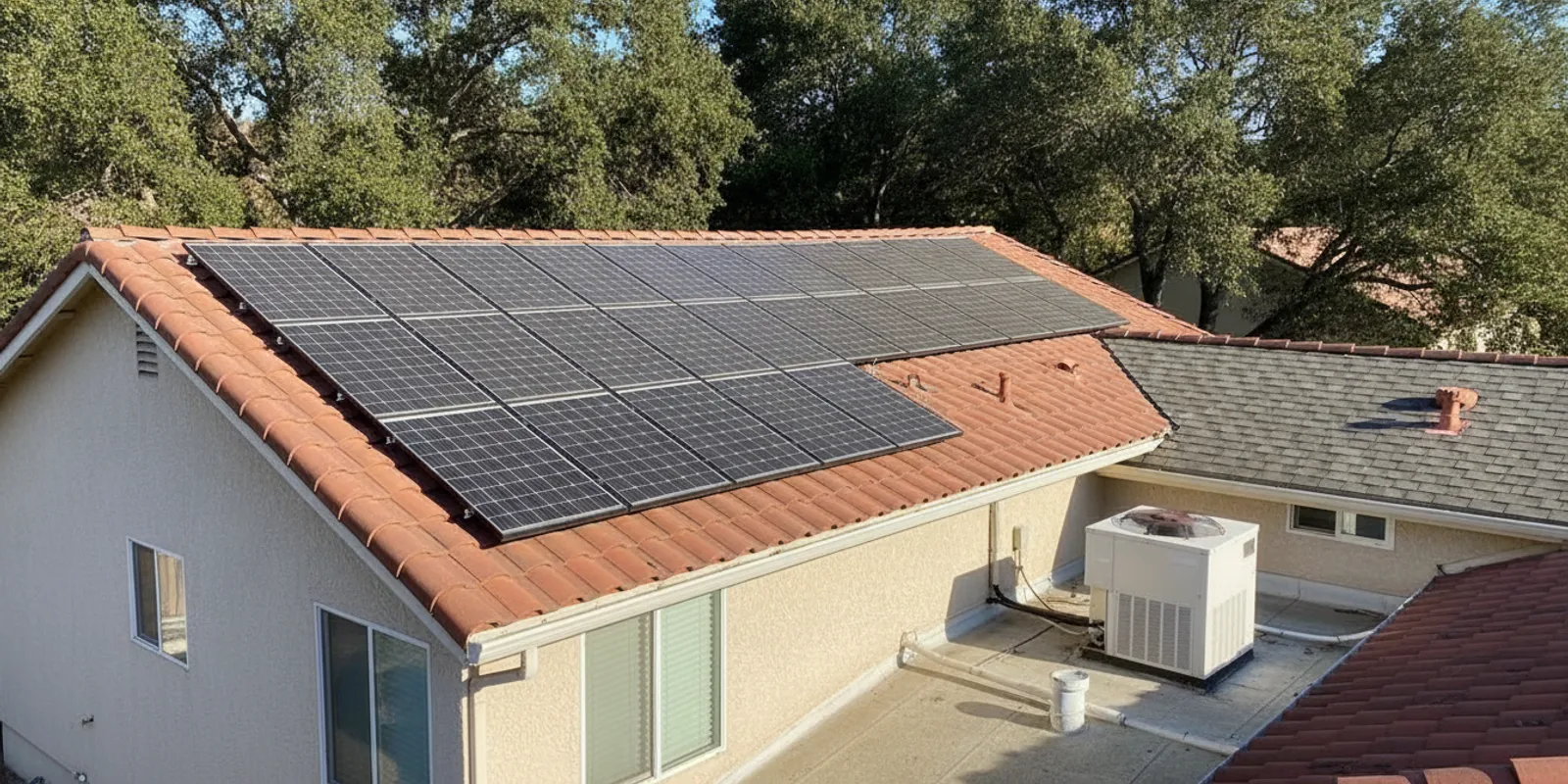
How much does it cost to install solar panels? There is no single price that fits every home. The estimate depends on how much electricity you want the system to produce, the usable roof area, the condition of the roof and electrical service, and the work needed to permit and connect the system. For Sacramento-area homeowners, the best first step is to define the goal and have the property assessed before comparing proposals.
Call to request a solar assessment
Why does solar installation cost vary from home to home?
A solar project is not simply a set number of panels multiplied by a standard price. The panels are one part of a larger system. The design also needs to account for the roof, mounting equipment, electrical connections, utility requirements, permits, inspections, and the homeowner’s intended use.
Two houses on the same street can need different work. One may have a large, unobstructed roof and electrical equipment that can support the planned system. Another may have limited usable roof space, multiple roof surfaces, shading, or electrical work that needs to be addressed first. A proposal should reflect the specific property rather than assume every home has the same conditions.
AAA Electrical Services provides residential solar installation and solar electrical service in the Sacramento area. A project-specific assessment is the useful way to identify the scope and provide an upfront price before work begins. A phone conversation can help clarify the next step, but it should not be treated as a final price for a home that has not been evaluated.
Which choices have the biggest effect on the estimate?
System size and your household’s energy goals
System size is a major cost driver because it affects the number of panels, mounting components, electrical equipment, and installation labor. But the largest system is not automatically the right choice. Start by considering what you want solar to do: offset some of your electricity use, cover a larger share of typical use, or support a planned change such as adding an electric vehicle or changing major home equipment.
Recent electricity bills can help establish a baseline. Gather bills that show different seasons, if available, and note any expected changes to household use. A design based only on one month may not represent the home’s normal pattern. Ask the assessor what consumption history and assumptions were used, and how future loads affect the proposed size.
System size and expected production are related but not identical. Roof direction, pitch, shade, and layout influence how much usable sunlight reaches the panels. Ask for the design assumptions in plain language, including how the estimate treats roof orientation and any shaded sections. A proposal should make clear what system is being installed, rather than relying only on a headline production figure.
Roof area, shape, shade, and condition
The available roof area can affect both system design and installation effort. A broad roof section with few obstructions may allow a simpler layout. Vents, skylights, chimneys, intersecting rooflines, and narrow sections can reduce the area available for panels or require a more detailed plan. Trees and nearby structures may shade sections at different times of day and across seasons.
Roof material and condition matter, too. The installation team needs to select suitable mounting methods for the roof and determine whether it is ready for the work. If repairs or roof replacement are needed, clarify who is responsible for that work and whether it is included in the solar proposal. Do not assume that a solar estimate includes roof repairs unless the written scope says so.
If a roof is approaching the end of its useful life, discuss timing before installation. Removing and reinstalling a solar array later can create additional work. The assessment should identify visible concerns and explain what additional inspection or roofing work may be needed. A solar contractor’s assessment is not a substitute for a separate roof evaluation when one is called for.
Electrical panel and wiring requirements
The solar equipment needs to connect safely with the home’s electrical system. The existing panel, available capacity, wiring route, and location of equipment can all influence the work. Some homes may need little beyond the planned connection. Others may require changes to electrical equipment or additional wiring to support the design.
Ask whether the proposal includes evaluation of the existing panel and what the installer will do if an upgrade or repair is needed. If panel work is a separate line item, request its scope and price in writing. AAAES has a dedicated electrical panel upgrade service for homeowners who need panel work assessed as part of planning.
Do not open a panel or attempt to modify wiring to prepare for solar. If you have a concern about the panel, note what you have observed and share it with a qualified professional. Electrical work should be assessed and carried out by licensed professionals.
Equipment selection and layout
Panels, inverters, racking, disconnects, and monitoring equipment all contribute to the system design. The right arrangement depends on the roof and electrical plan. Equipment options can differ in dimensions, output characteristics, and how they are configured, so compare complete system descriptions rather than comparing panel count alone.
Ask for the equipment make and model in the proposal and confirm what components are included. Check whether monitoring equipment is part of the scope and what information it provides. If a proposal describes a component only in general terms, request the specific model or a clear explanation before deciding.
Permits, inspections, and utility coordination
A residential installation involves more than mounting panels. The project typically includes preparing permit documents, completing required inspections, and coordinating the system’s connection with the utility. The exact steps and timing depend on the project and the applicable local and utility processes.
Ask which party handles permit applications, inspection scheduling, and utility paperwork. Confirm what the quoted scope includes and whether the proposal identifies any items that remain the homeowner’s responsibility. Do not assume that installation completion means the system is ready to operate; ask what approvals or utility steps must happen before activation.
Utility requirements and billing arrangements can change. Ask the provider and utility to explain current requirements for your property and rate plan. Treat projected savings or bill changes as estimates based on stated assumptions, not as a guaranteed result.
What does a solar installation estimate usually include?
A clear estimate should let you understand the project, not just its total. Review the equipment, system design, installation labor, electrical work, and project administration. It should identify what is included, what is excluded, and how the contractor will handle conditions that are discovered after work begins.
| Estimate area | What to check | Question to ask |
|---|---|---|
| System design | System size, panel layout, and design assumptions | How did you determine the size for my home? |
| Equipment | Panels, inverter or inverters, mounting, and monitoring components | Which models are included, and what is not included? |
| Roof work | Mounting method, roof access, and any stated roof exclusions | Does the scope include any roof repair, or is that separate? |
| Electrical work | Connection to the home’s system, wiring route, and panel work | What happens if the panel needs changes? |
| Permits and inspections | Document preparation, permit coordination, and inspection steps | Who schedules each step, and what fees are included? |
| Utility process | Application or coordination tasks and permission to operate | What must be completed before the system can be turned on? |
| Payment and exclusions | Payment schedule, financing details if applicable, and out-of-scope work | What could change the total, and how will changes be approved? |
Use the table as a comparison guide, not as a substitute for the contract. A lower total can reflect a different system size, excluded electrical work, or a different scope for permitting and coordination. A higher total may include work that another estimate lists separately. Compare proposals line by line and ask the providers to explain differences before choosing.
How can Sacramento homeowners prepare for a solar assessment?
A little preparation can help the assessment answer useful questions and reduce guesswork. You do not need to design the system yourself or climb onto the roof. Collect information you already have and let the professional evaluate the property and electrical equipment.
- Gather electricity bills. Several months of bills, or a year of usage history if available, can help establish household patterns.
- Write down your goals. Note whether you want to offset current use, anticipate an electric vehicle, or plan for another change in household electricity use.
- List known roof work. Share the age of the roof if known and mention leaks, recent repairs, or planned replacement.
- Identify shading and obstructions. Point out trees, additions, vents, or other features that may affect roof layout.
- Make electrical questions visible. If you have noticed panel issues or are considering a panel upgrade, mention that rather than attempting any inspection or repair yourself.
- Ask about the complete project. Include design, permits, inspections, utility coordination, activation, payment schedule, and exclusions in the conversation.
Photos from the ground can help you describe roof features, but they do not replace an on-site assessment. Do not climb onto the roof or remove electrical covers to gather information. Share what you know and ask the team what else is needed to prepare an accurate scope.
How should you compare solar proposals?
Start by checking that each proposal is based on comparable goals and usage information. Then compare system size, expected production assumptions, equipment, roof layout, electrical work, and project steps. If one estimate uses a different system size, ask why. If expected production differs, ask what design or shading assumptions explain the gap.
Look for a clear written description of the work. It should distinguish the solar installation from possible panel upgrades, roof work, or other repairs. Confirm the process for approving any additional work. A contractor should explain the price for the agreed scope before beginning the work, and should not leave you guessing about which items are included.
Ask who will keep you informed as the project moves through permits, inspections, and utility coordination. Confirm what completion means, what steps remain after installation, and who to contact with questions. Scheduling and approval timing can depend on multiple parties, so ask for the expected sequence rather than assuming a fixed completion date.
If you are considering financing, review the provider’s terms directly. AAA Electrical Services works with Service Finance and Enhancify. Financing is subject to credit approval and provider terms; promotional rates, amounts, and repayment terms vary. You can review the company’s financing options and ask which options apply to the proposed project. Do not compare a monthly payment without also understanding the total project scope, repayment schedule, and terms.
What should you know about rebates and savings?
Incentives, utility programs, and tax rules can affect the financial picture, but availability and eligibility are not the same for every household or project. Program terms can change, and an estimate should not treat an incentive as guaranteed savings. Verify current requirements directly with the relevant program administrator, utility, or tax professional before relying on an amount.
Ask the installer to show how any projected savings were calculated. Understand which electricity rates, usage assumptions, and system production estimates were used. Ask whether the projection accounts for fixed charges or other parts of your bill that solar may not offset. A projection is a planning tool, not a promise that a particular bill amount will result.
What happens during a solar assessment?
An assessment should turn general interest into a home-specific plan. The conversation starts with your electricity goals and available usage information. The professional then evaluates the roof layout, visible obstructions, and the likely route for electrical connections. The panel and related equipment need to be considered as part of the design, not treated as an unrelated detail.
The assessment is also a chance to flag constraints early. Tell the team if you expect roof work, plan to add substantial electrical loads, or have had recent electrical repairs. Mention preferences about where equipment could be placed, while recognizing that the final locations depend on a safe and workable design. If an area cannot be assessed during the first visit, ask what further information or inspection is required before the proposal is complete.
After gathering the relevant details, the contractor can prepare a proposed scope. Read it carefully before approving work. Check that the system description, included electrical tasks, permit responsibilities, and utility coordination are stated clearly. If something is conditional, ask what condition triggers the added work and how you will review its price. That conversation helps avoid comparing a complete proposal with one that leaves important tasks undefined.
Frequently asked questions
Can anyone tell me the exact installation cost over the phone?
A reliable project price depends on the home’s energy goals, roof, electrical equipment, proposed system, and required project steps. A call can help determine whether an assessment is appropriate and what information to gather, but it cannot replace an evaluation of the property. Request a written, upfront price for the defined scope before work begins.
Does a larger system always provide better value?
Not necessarily. A larger system may produce more electricity, but the right size depends on household use, the usable roof, design assumptions, and your goals. Ask how the proposed size was selected and whether a planned change in electricity use has been included. Compare the system and its stated assumptions rather than treating panel count by itself as proof of value.
Do I need to replace my roof before installing solar?
Not every roof needs replacement before solar work. Roof condition, material, layout, and the expected timing of future roof work all matter. Ask the assessor to explain any visible concern and whether a separate roofing evaluation is recommended. If repair or replacement is needed, make sure you understand whether it is included, handled by another contractor, or outside the solar scope.
When can the installed system begin operating?
Physical installation is only one project milestone. Permits, inspections, utility coordination, and any applicable approval to operate may remain. Ask the contractor to explain the expected sequence and who is responsible for each step. The schedule can depend on project details and decisions by other parties, so get the current expectations for your home rather than relying on a general completion promise.
How do I know whether two estimates cover the same work?
Compare the system size, equipment models, roof and electrical scope, permit tasks, utility coordination, exclusions, and payment terms. Ask both providers to clarify any missing line item or difference in assumptions. If one proposal includes a panel change or additional coordination and the other does not, the totals do not describe the same project. Get any clarification or scope revision in writing.
Where can you get solar installation help in Sacramento?
AAA Electrical Services serves residential customers in Sacramento and surrounding communities, including solar installation and solar electrical service. The solar installation process begins with understanding the home and the project goals, then defining the system and work required for that property. For an existing system that is not producing as expected or has an electrical issue, see the team’s solar repair service.
When you contact a contractor, have your usage history and project questions ready. Ask for the assessment and written scope needed to understand the upfront price. AAA Electrical Services is fully licensed and insured, and its team can discuss what the project includes, what may require separate work, and which next steps apply to your home.
Call AAA Electrical Services to discuss a solar assessment
The right solar estimate is specific to your roof, electrical system, energy goals, and project requirements, so compare complete written scopes and ask questions before approving work.
Need an electrician in Sacramento? See AAA Electrical Services in Sacramento