
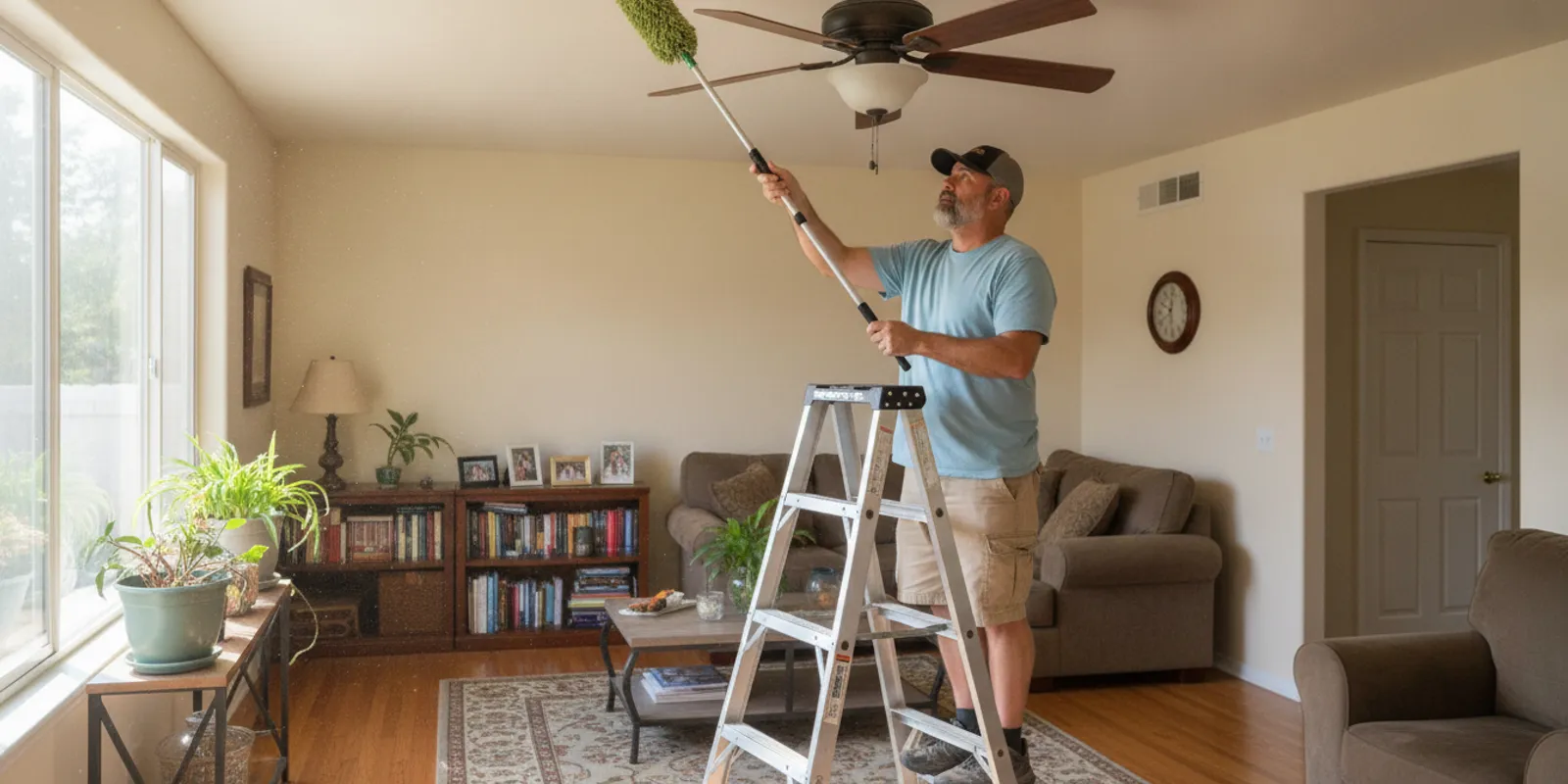
Dust on a ceiling fan can fall onto furniture or circulate through a room when the blades turn. Knowing how to clean ceiling fans safely means more than wiping away visible dust: you also need a stable way to reach the fan, a gentle cleaning method, and a clear line between routine care and electrical work.
Call to request service or confirm scheduling
What should you do before cleaning a ceiling fan?
Start with the fan switched off at its wall control or remote. Wait until every blade stops completely. If you can safely identify the correct breaker and switch it off without entering an unsafe area, do so before working near the fixture. Do not remove a canopy, open a motor housing, or touch wiring as part of cleaning.
Before bringing out a ladder, look up from the floor. Check for a visibly cracked or bent blade, an uneven gap at the ceiling, loose-looking hardware, damage around the canopy, or a fan that already wobbles. These are not cleaning tasks. Leave the fan off if you see damage or movement at the ceiling, and arrange a qualified assessment rather than trying to tighten electrical or mounting parts.
- Choose a sturdy ladder that reaches comfortably, and place it on a level, uncluttered floor.
- Never stand on a chair, desk, bed, or another unstable surface. Do not lean beyond the ladder rails.
- Keep children and pets out of the work area. If another adult can safely steady the ladder, ask for help.
- Gather a microfiber cloth or extendable duster, a pillowcase for dusty blades, and mild cleaner only if the fan maker permits it.
- Move objects that could be struck or stained, and protect nearby furniture or flooring from falling dust.
A fan over stairs, a high ceiling, or a hard-to-position landing is a different access problem from a fan over an open floor. Do not balance a ladder on a step or stretch sideways to reach a blade. A long-handled duster might remove light dust while you remain on the floor and can control the tool, but stop if the angle makes you push hard or lose sight of the fan. If you cannot reach it safely, leave the cleaning for someone with suitable access equipment.
How can you prepare the room and control dust?
Loose dust can scatter as soon as a cloth touches the blade. Put away food and delicate items, move small furniture if needed, and cover nearby surfaces with a washable cloth. If you have allergies or are sensitive to dust, avoid shaking dust into the room; consider wearing a suitable dust mask and ventilating the room if conditions allow.
A pillowcase is useful because it surrounds a blade as you slide it off, catching much of the dust inside. Use a separate clean section of cloth for each blade, or shake the duster outside between passes. Have a waste bin or outdoor spot ready before you start, so you do not carry a loaded pillowcase across clean surfaces. Clean the surrounding area after the fan, since some dust may still fall.
Plan the work so you do not have to climb down while holding a tool or reaching for supplies. Set your cloth, cleaning solution if needed, and a place to put removed shades within easy reach, but not where they can fall. Keep both hands available when climbing. Do not carry a glass shade up a ladder.
How do you clean fan blades without bending them?
Support each blade gently from underneath while wiping. Use light pressure and work from the motor end toward the outer tip. Do not press down, push upward, twist the blade, or use it as a handhold. A blade can be damaged or shifted by force, and changing its position may affect how smoothly the fan runs.
- Confirm again that the fan is off and the blades have stopped.
- Slide a pillowcase over one blade, if the blade shape and your safe reach allow it, then draw it back slowly to collect dust. Or wipe with a microfiber cloth or duster.
- Clean the upper surface, edge, and underside of the blade. Use separate clean portions of the cloth as dust builds up.
- Repeat on every blade, using the same gentle pressure. Do not pull the blades toward you to make them easier to reach.
- For a sticky mark, check the manufacturer’s care directions first. If permitted, use a barely damp cloth, not a wet one, and dry the blade fully.
- Wipe the exterior of the motor housing and light assembly with a dry cloth. Never spray cleaner directly onto the fan.
A dry microfiber cloth or pillowcase is usually enough for ordinary dust. Avoid abrasive pads, scouring powders, solvents, and heavy polish unless the fan maker specifically approves them. A coating can leave a film or affect a finish. Do not soak a blade or allow liquid to run toward the motor, switch, or wiring. If the blade has a delicate finish, unusual material, or manufacturer label with specific care instructions, follow those instructions instead of guessing.
When you finish, look over the blades from the floor. They should appear clean and dry, with no cloth, tool, or cover left in the fan. If you used a damp cloth, wait until all parts are fully dry before restoring power. Do not use a fan to speed-dry wet components.
How do you clean a ceiling fan with a light?
Keep the fan off and let bulbs cool before touching the fixture. Clean the outside of the light assembly with a dry cloth. Remove only shades or covers designed for homeowner removal, and follow the fan’s instructions. Support glass with both hands and handle it over a soft, clear area rather than over a hard floor or sink.
If a removable shade can be washed, clean it separately and dry it completely before putting it back. Do not pull on wires, loosen mounting hardware, or try to reach connections behind the fixture. If a shade is stuck, cracked, difficult to support, or not designed to come off, leave it in place and clean its exterior instead.
For a remote, wipe the exterior with a dry cloth. Keep moisture away from buttons and the battery compartment. If the fan or light behaves differently after cleaning, turn it off. A simple bulb check is reasonable only when the bulb is cool and safely accessible; do not keep operating a fan or light that produces a burning odor, sparks, unusual heat, or buzzing.
How often should you clean ceiling fans?
There is no schedule that fits every home. Dust, pets, room activity, open windows, and how often the fan runs all affect how quickly blades collect buildup. A quick visual check every few weeks helps you decide whether cleaning is needed. A bedroom used occasionally may need less frequent attention than a busy living room or a room where pets spend time.
Instead of waiting for a thick layer, look for a thin line of dust along the blade edge or a visible coating on the top surface. Cleaning modest buildup is often easier than removing compacted dust later. Keep a simple reminder tied to another household task, such as changing seasonal bedding or checking room filters, rather than assuming every fan needs cleaning on the same date.
After a cleaning, note any change in how the fan looks or sounds during normal use. Turn it on from a safe position only after the blades are dry and tools are removed. Watch for a new wobble, scrape, or rattle. Turn it off again if operation seems abnormal. Cleaning can reveal a concern, but it does not establish its cause or replace an electrical inspection.
What should you observe while cleaning?
Use the opportunity to notice changes, not to carry out repairs. From a safe position, compare the fan’s appearance and sound with what you normally observe. A small amount of dust is different from a blade that is cracked, visibly drooping, or out of line. A one-time soft sound may not tell you the cause, but repeated rattling, scraping, or movement at the ceiling deserves attention.
| What you notice | Reasonable next step | What to avoid |
|---|---|---|
| Dust on blades and no operating change | Clean gently and check periodically | Bending blades or using excess liquid |
| New or persistent wobble or rattling | Switch the fan off and request an assessment | Reaching up to adjust hardware from an unstable ladder |
| Cracked blade or visible movement at ceiling | Leave the fan off and arrange qualified help | Continuing to run it to see if it settles |
| Flickering light, warm switch, burning odor, or sparks | Stop using the fan and seek qualified electrical help | Opening the motor, wiring, or switch |
| Fan is above stairs or beyond safe reach | Use suitable help or access equipment | Leaning, stretching, or balancing a ladder on steps |
A ceiling fan depends on secure support and appropriate wiring. A persistent wobble may have more than one possible cause, so do not assume that cleaning or tightening a visible screw will solve it. If the fixture hangs unevenly, the ceiling support appears damaged, or the fan makes a new repeated sound, keep it off until it has been assessed. AAA Electrical Services offers ceiling fan installation service information for homeowners whose fan needs replacement or whose setup raises mounting or wiring questions.
How do common cleaning methods compare?
The right approach depends on the amount of dust, the fan’s shape, and how safely you can reach it. These options cover exterior cleaning only. None calls for opening electrical parts.
| Method | Best fit | Limit or precaution |
|---|---|---|
| Microfiber cloth | Light dust and controlled wiping on reachable blades | Use gentle pressure; clean blade by blade |
| Pillowcase | Capturing loose dust on an accessible blade | Support the blade and draw the fabric slowly |
| Extendable duster | Light dust when you can remain on the floor | Do not push hard or use it where you cannot control the reach |
| Suitable professional help | High, unstable, damaged, or concerning installations | Describe the access or operating issue when arranging help |
For light dust, the simplest method that lets you control the tool is generally the most practical. A pillowcase can reduce the mess, while a microfiber cloth gives you more control over a small mark. An extendable duster may save ladder use, but it is not a safe substitute for proper access in a stairwell or at an awkward angle. If the work requires force or a risky position, stop rather than choosing a tool that merely reaches the blade.
What can help keep dust from building up?
Regular light dusting can make each cleaning quicker. Dust nearby surfaces as part of the same room routine, and keep blades dry. If you use a fan often, glance at the blades from the floor when you clean the room. That quick check can help you notice buildup or a change in movement before you need a ladder.
Do not apply furniture polish, wax, or another coating unless the manufacturer recommends it for that fan. Some products can leave residue or affect a finish. Avoid improvised balancing weights and adjustments. If a new wobble or sound remains after cleaning, treat it as an operating concern rather than adding a product or trying a repair without knowing what the fan requires.
When should you stop cleaning and request service?
Stop if the fan shifts at the ceiling, a blade is cracked, the fixture looks loose, or the only way to reach it involves leaning or climbing on an unstable surface. Also stop using the fan if you notice a burning smell, sparks, repeated breaker trips, a switch that feels warm, or a light that flickers after a safe basic bulb check. Do not keep cycling the switch to test a fan that shows these signs.
AAA Electrical Services serves residential customers in Sacramento and surrounding communities. If cleaning uncovers a mounting or wiring concern, you can review the ceiling fan installation service page and request service or call to confirm scheduling. For a broader electrical symptom that is not limited to the fan, the electrical troubleshooting page explains a relevant service option. Do not try to diagnose a circuit by opening the fixture.
When you contact a service team, describe what you observed rather than guessing at the repair. Useful details include whether the fan moves at the ceiling, whether the sound is new or repeated, whether the light also flickers, and whether you switched the fan off. Mention if the fan is above stairs or otherwise difficult to reach. These details help the team understand the concern and discuss next steps; the actual cause needs appropriate evaluation.
How can you prepare for an electrical assessment?
Leave a concerning fan switched off. Clear a safe path to the room, and note when the symptom occurs: immediately at startup, only at a particular speed, or while the light is on. Do not recreate a symptom involving burning odor, sparks, heat, or repeated breaker trips just to collect more information. Simply report what you already noticed.
If the fan is part of a larger home project, keep the description focused on the problem and the location. A homeowner might say, “The bedroom fan began rattling after years of quiet operation; the fixture does not appear to move at the ceiling,” or “The light flickers and the switch feels warm.” These observations are more useful than saying a specific part has failed when you have not inspected it. A diagnostic visit can identify the repair path and the upfront price before work begins.
AAA Electrical Services provides residential electrical work, including ceiling fan installation, in the Sacramento area. The team can discuss the concern and confirm scheduling. For details about the company and its service approach, see about AAA Electrical Services; to see customer feedback, visit the Sacramento customer reviews page. Service information is not a substitute for checking the condition of a specific fan in your home.
Frequently asked questions
Can you clean a ceiling fan while it is running?
No. Switch it off and wait for the blades to stop completely. Keep hands, cloths, and dusters away from moving blades.
Can you use water on ceiling fan blades?
Use a barely damp cloth only if the manufacturer’s care instructions allow it. Keep moisture away from the motor, switches, and wiring, and let the surface dry completely before restoring power.
What should you do if a fan wobbles after cleaning?
Turn it off and do not reach up to adjust wiring or mounting. If the wobble is new or persistent, the fan moves at the ceiling, or it makes repeated noise, request a qualified assessment.
Is an extendable duster safe for a high ceiling?
It can help with light dust if you remain on the floor and can control the tool without pushing hard. Do not use it over stairs or where you cannot see and guide the duster safely. Arrange suitable help if access is difficult.
Should you remove the fan blades to clean them?
Routine dusting does not require removing blades. Leave them attached and clean them gently. Removing blades can involve hardware and may affect balance or installation, so consult the manufacturer and use qualified help if a fan needs disassembly.
Need help with a ceiling fan?
Routine cleaning can keep dust under control, but a loose-looking fixture, persistent noise, electrical symptom, or unsafe access calls for a different response. Leave a concerning fan off, share what you observed, and request service for an appropriate assessment.
Call 916-972-7515 to request service or confirm scheduling
With the power off, a gentle cleaning method, and a willingness to stop when access or operation seems unsafe, you can care for the fan without turning routine dusting into an electrical repair.