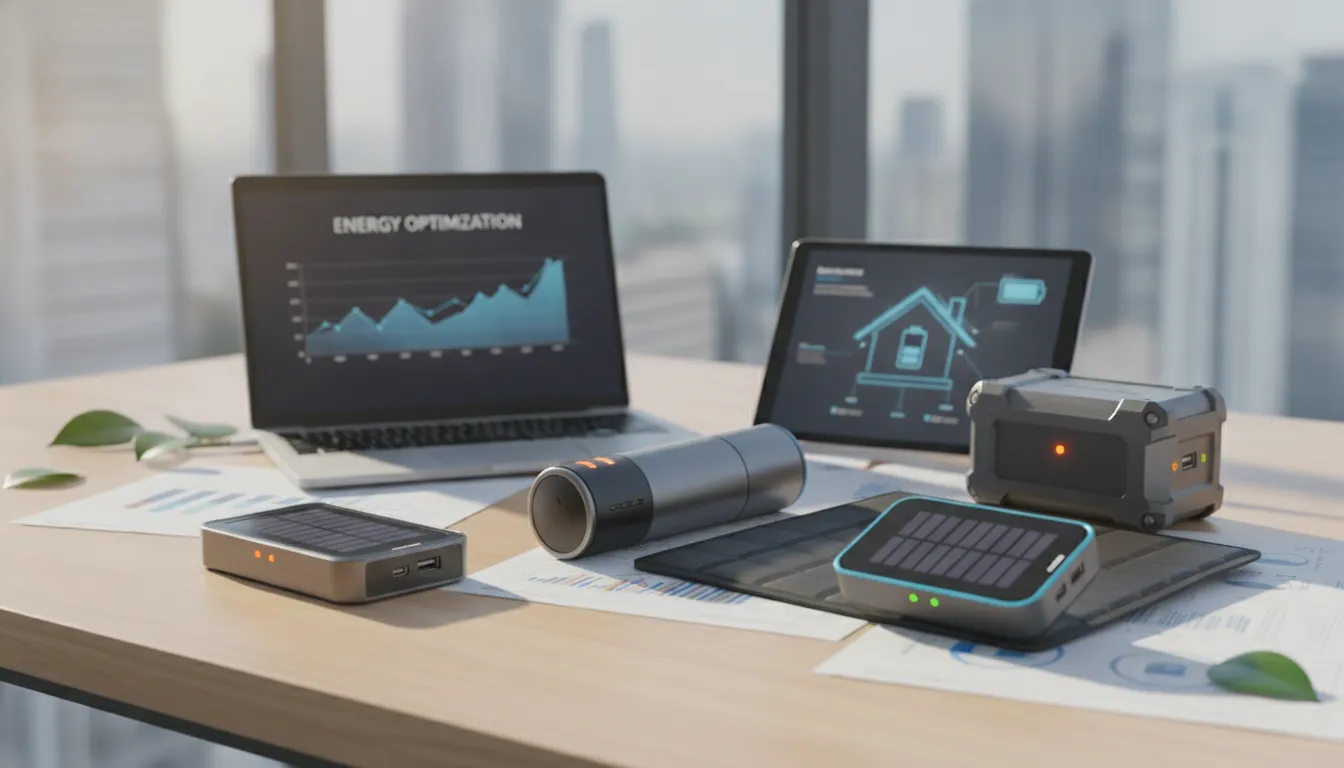
Choosing a solar battery charger starts with the battery, not the brand name. You’ll need to know whether you have a flooded lead-acid, AGM, gel, lithium-ion, or LiFePO4 battery. Then check the system voltage, amp-hour capacity, recommended charging current, and connector type. These details determine whether a charger will work safely and efficiently. You should also consider where the panel will sit, how much sunlight it receives, and whether you need a slow maintenance charge or a faster recharge. This guide breaks down the main charger types, compares PWM and MPPT controllers, and explains when a fixed home system requires a licensed electrician.
Key Takeaways
- Verify battery compatibility first: Match the charger to the battery’s chemistry, voltage, capacity, charging profile, connectors, and temperature limits.
- Size the system for actual conditions: Account for sunlight, shade, weather, panel wattage, charging speed, cable losses, and whether you need maintenance or full recharging.
- Use safe installation and maintenance practices: Keep panels, cables, terminals, and batteries in good condition, and hire a licensed electrician for fixed solar systems, home batteries, and electrical connections.
Solar Battery Charger Basics
A solar battery charger uses sunlight to replenish a battery, making it useful for vehicles, camping equipment, outdoor electronics, and backup power. The best option depends on what you need to charge, how often you use it, and whether you need a slow maintenance charge or enough power for regular charging.
Before comparing wattage and features, identify the battery’s voltage and chemistry. A charger designed for a 12-volt lead-acid battery may not be suitable for lithium or a larger home energy system. Matching the charger to the battery helps prevent poor performance and avoidable damage. For larger solar systems, a professional solar checkup can help identify panel, wiring, and connection issues.
What is a solar battery charger?
A solar battery charger combines one or more photovoltaic panels with charging electronics. The panel collects sunlight and converts it into direct-current electricity. A charge controller then manages that electricity before it reaches the battery, helping maintain the correct voltage and charging rate.
Solar chargers come in several sizes. Small 5- to 20-watt panels can provide a trickle charge for a parked car, boat, or lawn tractor. Portable models may charge phones and other small devices, while larger folding panels can support camping equipment, RVs, and remote power setups. Solar charger options range from compact maintainers to higher-output systems.
A charger’s rated wattage describes its potential output under favorable conditions. Shade, clouds, panel angle, heat, and cable losses can reduce the power a battery receives, so real-world performance is usually lower than the advertised maximum.
How solar chargers differ from power banks and home batteries
A solar battery charger primarily produces power and sends it to a battery or device. It may include a small internal battery, but its main purpose is charging. A power bank, by comparison, stores electricity for later use, often through USB ports. Some power banks include small solar panels, but those panels typically recharge the internal battery slowly.
A home battery is a larger energy storage system connected to solar panels, the electrical panel, or both. It can store substantial energy for evening use, outages, or selected household circuits. Because it connects to a home’s electrical system, it generally requires professional planning and installation.
This distinction matters when shopping. A portable solar charger may work well for a phone or vehicle battery, but it is not a replacement for a fixed home energy system. Solar battery charger guidance can help you compare these equipment types before choosing one.
What can solar battery chargers charge?
Solar chargers can serve several common purposes. Small USB models can replenish phones, tablets, GPS units, cameras, and other portable electronics. A 12-volt maintainer can help preserve a car, motorcycle, boat, RV, tractor, or generator battery while the equipment sits unused.
Larger systems can charge deep-cycle batteries used for cabins, electric fences, remote gates, security equipment, and off-grid applications. They may also support lights, communication equipment, and other low-voltage devices when paired with the correct battery and controller. Solar battery charger applications include both battery maintenance and regular charging.
Check the manufacturer’s compatibility information before connecting anything. Confirm the battery voltage, chemistry, connector type, polarity, and recommended charging current. A charger that works for a 12-volt AGM battery may require different settings, or may be unsuitable altogether, for a lithium iron phosphate battery.
For a fixed system or equipment connected to your home, have a licensed electrician inspect the wiring and connection points. AAA Electrical Services can also help with related electrical services, including circuits, panels, generators, and surge protection.
Common solar charger myths
Myth: A battery must be completely drained before charging. Most rechargeable batteries can be charged before they reach zero. Waiting for a full discharge is usually unnecessary and may leave some batteries vulnerable to damage or early wear. The correct charging pattern depends on the battery chemistry and the manufacturer’s instructions. Battery guidance from Captain Green explains why full discharge is not a universal requirement.
Myth: Solar chargers only work in direct sunlight. Direct sun usually provides the strongest output, but panels can still produce electricity in overcast conditions. Charging will be slower, and heavy shade may reduce output considerably. Panel placement remains important, especially when you need consistent charging.
Myth: Solar charging is always fast. A small panel may maintain a battery over time without quickly replenishing a deeply discharged one. Compare the panel’s wattage with the battery’s capacity and your expected sunlight before buying. A larger panel, suitable controller, and clear panel placement may be necessary for regular charging.
How Does a Solar Battery Charger Work?
A solar battery charger uses sunlight to replenish a battery through a controlled electrical process. Most systems include a solar panel, charge controller, wiring, and battery. The panel produces electricity, the controller adjusts that electricity for the battery, and the battery stores the energy for later use.
The charger must match the battery’s voltage, chemistry, and capacity. A portable charger for a phone or car battery is different from equipment designed for a 12V deep-cycle battery bank or a home solar battery. Understanding how each component works can help you choose a system that charges safely and performs reliably.
Solar panels turn sunlight into DC power
Solar panels use photovoltaic cells to convert sunlight into direct current, or DC, electricity. Their output depends on panel wattage, sunlight intensity, panel angle, temperature, and shading. A larger panel can generally produce more energy, but it still needs clear exposure to sunlight to perform well.
The electricity from a panel may not have the right voltage or current for a battery. For example, a panel can produce more voltage than a 12V battery should receive directly. A charge controller solves this problem by adjusting the incoming power before it reaches the battery. GoSun explains this process in its guide to how solar chargers work.
Charge controllers regulate voltage and current
A charge controller manages electricity moving from the solar panel to the battery. It prevents excessive voltage and current, which can cause overheating, shorten battery life, or damage battery cells. Many controllers also prevent electricity from flowing back toward the panel when sunlight fades.
The controller changes its behavior as the battery charges. It may send more current when the battery has a low charge, then reduce the flow as the battery approaches full capacity. Some models also monitor battery temperature and voltage, and may provide a screen or app for tracking system performance.
Choose a controller that supports your battery chemistry and system voltage. A controller set up for lead-acid batteries may not use the correct charging profile for lithium or LiFePO4 batteries. For larger systems, AAA Electrical Services can provide solar checkup services to help identify wiring, panel, and system concerns.
Compare PWM and MPPT charging
Solar chargers commonly use pulse-width modulation, or PWM, and maximum power point tracking, known as MPPT. PWM controllers are simpler and usually less expensive. They connect the panel and battery at a similar operating voltage, then regulate charging by switching the current on and off. They can be suitable for smaller systems with short cable runs and consistent sunlight.
MPPT controllers adjust the panel’s operating point to collect more usable energy. They can be especially helpful when the panel voltage is higher than the battery voltage, when cables run farther, or when sunlight changes throughout the day. MPPT controllers generally cost more, so the added performance should fit your system and charging needs.
Neither option can compensate for an undersized panel or poor placement. Compare the controller’s maximum input voltage, current rating, and battery compatibility before buying. GoSun provides a helpful explanation of PWM and MPPT charging.
Understand bulk, absorption, and float charging
Many lead-acid battery chargers use three charging stages: bulk, absorption, and float. During the bulk stage, the charger sends as much safe current as available while the battery has a lower state of charge. This stage handles most of the recharge and continues until the battery reaches a target voltage.
During absorption, the charger holds the battery at that target voltage while gradually reducing the current. This gives the battery time to finish charging without excessive heat or stress. When the battery is full, the charger enters float mode. It supplies a lower maintenance voltage to offset normal battery drain without continuing to push high current into the battery.
Charging stages vary by battery type and manufacturer. Always follow the battery maker’s recommended profile instead of relying on a generic setting. The wrong voltage can reduce capacity or damage a battery over time, especially in a fixed backup or off-grid system. Sunhub also outlines the basics of solar battery charging stages.
See how lithium charging profiles differ
Lithium-ion and LiFePO4 batteries use different charging requirements than flooded, AGM, and gel lead-acid batteries. They generally charge through a constant-current and constant-voltage process. The charger supplies controlled current until the battery reaches its target voltage, then holds that voltage while the current gradually decreases.
Lithium batteries usually do not need the same long float stage as lead-acid batteries. Some manufacturers recommend avoiding float charging, while others permit a lower maintenance voltage. Always follow the battery manufacturer’s instructions and select a charger with a lithium-specific setting.
Many lithium batteries include a battery management system, or BMS. This system monitors voltage, temperature, and current, and may disconnect the battery if it detects an unsafe condition. It does not replace a properly matched charger. Lithium batteries are popular because they are lightweight, energy-dense, and durable, as explained in GoSun’s solar battery charger guide.
Charge batteries in clouds, shade, and partial sunlight
Solar panels can still produce electricity in cloudy weather, but their output decreases when sunlight is weak. Shade from trees, buildings, roof equipment, or other obstructions can reduce production significantly. Partial shading may affect panels differently depending on their design and how their cells are connected.
A solar charger may continue working during overcast conditions, but charging will take longer. Winter weather, shorter daylight hours, dirt, and a poor panel angle can further reduce available energy. A small portable panel may maintain a battery in favorable conditions but struggle to refill it after heavy use.
Place the panel where it receives direct sunlight for the longest practical period. Keep the surface clean, and check that cables and connectors remain secure. If a home solar array has recurring shade or inconsistent output, AAA Electrical Services can provide solar panel maintenance for Sacramento-area homeowners.
Which Solar Battery Charger Fits Your Needs?
The best solar battery charger depends on three things: what you want to power, where you will use it, and how quickly you need the battery to recharge. A compact USB charger may be enough for a phone on a hiking trip, but it will not provide the current needed for an RV battery bank or a home backup system.
Before comparing products, identify the battery’s voltage, chemistry, and capacity. Then consider how much sunlight the panel will receive, whether you need to maintain or fully recharge the battery, and how often you will use the system. A charger that works well in full sun may perform poorly when placed under trees, beside a building, or inside a vehicle.
Solar chargers range from small portable panels to professionally installed equipment connected to a home battery. They support camping, emergency preparedness, vehicles, remote equipment, and off-grid power. Reviewing common solar charger applications can help you narrow down the right category before comparing wattage and features.
Portable chargers for camping and small electronics
Portable solar chargers are made for lightweight, temporary use. Many fold for transport and include USB ports for phones, tablets, GPS devices, flashlights, and other small electronics. Campers and hikers can position the panel in direct sunlight during the day, then use the stored energy after sunset.
These chargers work best when your power needs are modest. They are not designed to run appliances or recharge several high-capacity devices quickly. Look for a durable frame, weather-resistant materials, a kickstand, and USB output that matches your devices. A model with an integrated battery can store energy while the panel is exposed to sunlight, giving you more flexibility when the weather changes.
Solar power banks for phones and tablets
A solar power bank combines a rechargeable battery with a small solar panel. You can charge a phone or tablet from the stored battery, while the panel gradually replenishes the power bank outdoors. This setup is useful for travel, emergency kits, festivals, and day trips away from electrical outlets.
The built-in panel is usually too small to recharge the power bank quickly, so treat it as a backup feature rather than the main charging method. Compare battery capacity, USB-C support, port count, water resistance, and charging speed before buying. A quality solar battery charger guide can help you understand how these devices support outdoor and emergency power needs.
Solar car chargers for parked vehicles
Solar car battery chargers, also called maintainers, help preserve a vehicle battery’s charge while the vehicle is parked. Depending on the design, they connect through a 12V accessory socket or directly to the battery terminals. They can be useful for classic cars, motorcycles, recreational vehicles, and seasonal vehicles that sit unused for extended periods.
Match the charger to the vehicle battery’s voltage and chemistry. A low-wattage maintainer may offset normal standby drain, but it will not necessarily recharge a deeply discharged battery. Place the panel where it receives direct sunlight, following the manufacturer’s instructions. Look for regulated output, reverse-polarity protection, and secure connectors. If the vehicle has a damaged battery or charging system, address that issue before relying on a solar maintainer.
12V chargers for boats, RVs, tractors, and trucks
Many boats, RVs, tractors, trucks, and utility vehicles use 12V batteries, making 12V solar chargers a practical option for outdoor equipment. They can maintain starting batteries or help recharge auxiliary batteries used for lights, pumps, radios, and other accessories. Common connection options include alligator clips, ring terminals, and SAE plugs.
Check whether the charger is intended for maintenance or regular charging. A small panel may preserve a healthy battery, while an RV or boat used off-grid may need a larger panel, a charge controller, and a correctly sized battery bank. Cable length and connector type matter when the panel will sit away from the battery. These 12V solar charger applications include vehicles, boats, RVs, cabins, and remote gate openers.
Deep-cycle chargers for cabins and backup power
Deep-cycle batteries provide steady power over longer periods, so they are common in cabins, off-grid setups, RVs, boats, and backup systems. Charging one requires more capacity than a small trickle charger, especially when the battery runs lights, appliances, pumps, or communication equipment.
Choose a charger and charge controller that support the battery’s chemistry and voltage. You will also need to match panel wattage to the battery bank’s capacity and your daily energy use. An MPPT controller can use changing solar conditions more efficiently, while a PWM controller may suit a smaller, simpler setup. Include correctly sized cables, fuses, and ventilation where required. For a cabin or backup system, base your equipment choices on actual energy needs, not the panel’s advertised wattage alone.
Chargers for remote gates and security systems
Remote gates, driveway openers, cameras, alarms, and access-control systems often need power in locations without a nearby electrical outlet. A solar charger can maintain the battery that runs this equipment, reducing the need for trenching or long extension cords across the property.
Although these systems may have modest energy demands, the battery must continue working through cloudy periods. Choose a panel and battery combination that supports both standby use and occasional higher-power demands, such as a gate motor starting up. Install the panel securely and protect cables and connections from moisture, animals, and physical damage. A weather-resistant enclosure and low-voltage protection can help extend system life. Confirm the equipment’s voltage, polarity, and connector requirements before purchasing.
Home solar batteries and fixed systems
Home solar batteries and fixed backup systems require specialized equipment. A portable charger or vehicle maintainer is not suitable for a system connected to rooftop panels, an inverter, the electrical panel, and designated backup circuits. These installations must account for power levels, battery capacity, transfer controls, grounding, disconnects, and local electrical requirements.
Have a licensed professional evaluate the solar array, service panel, wiring, and backup loads before selecting equipment. Sacramento-area homeowners can schedule a solar checkup with AAA Electrical Services to identify panel, connection, and system concerns. Fixed systems also need manufacturer-approved components, proper permits, and safe installation practices. Professional service is the right choice when a solar battery will connect to your home’s electrical system or provide backup power during an outage.
Which Battery and Power Specs Should You Match?
Choosing a solar battery charger starts with compatibility, not panel size or price. A charger designed for a small 12-volt lead-acid battery may be unsuitable for a 48-volt lithium battery bank. Using the wrong equipment can cause slow charging, battery damage, or a system that shuts down when you need it most.
Start by checking the battery label, owner’s manual, or manufacturer specifications. Confirm the battery chemistry, nominal voltage, capacity, recommended charging current, and temperature limits. Then compare those details with the solar panel and charge controller. The controller sits between the panel and battery, so its voltage and current ratings must suit both sides of the system. Battery Tender’s solar charger listings show how compatibility varies by battery chemistry and charger type.
Consider how you will use the charger, too. A maintainer for a parked car has different requirements than a charger for an RV battery bank, cabin, generator, or home backup system. If your setup connects to household wiring, solar panels, or a permanent battery system, ask a licensed electrician to review the installation. AAA Electrical Services provides solar checkups and panel service for homeowners throughout the Sacramento area.
Compare flooded, AGM, and gel batteries
Flooded lead-acid, AGM, and gel batteries all use lead-acid chemistry, but they do not have identical charging requirements. Flooded batteries contain liquid electrolyte and may require ventilation, fluid checks, and a suitable charging profile. AGM and gel batteries are sealed designs, although gel batteries can be especially sensitive to excessive voltage.
Look for a charger that clearly lists your battery type. Do not assume that one “12-volt” setting works for every lead-acid battery. A compatible charger should regulate voltage and current according to the selected chemistry. If the battery label is unclear, check the manufacturer’s documentation before connecting it. Battery Tender lists solar chargers by battery compatibility, including AGM, gel, lead-acid, and selected lithium products.
Avoid mixing different battery chemistries in the same bank unless the manufacturer specifically permits it. Each type may require different charging voltages and may reach full charge at different rates.
Check lithium-ion and LiFePO4 compatibility
Lithium-ion and lithium iron phosphate, or LiFePO4, batteries need a charger with a compatible lithium charging profile. They generally do not use the same float-charging approach as traditional lead-acid batteries. Many lithium batteries also include a battery management system, commonly called a BMS, which monitors voltage, temperature, and current.
Do not choose a charger simply because its output voltage appears to match the battery label. Check whether it supports the exact lithium chemistry and whether the battery manufacturer specifies a particular charging range. Some chargers support lithium batteries only when a BMS and other protective equipment are already installed.
Lithium batteries may shut down internally when they detect unsafe conditions, leaving a connected solar charger unable to charge them. Review the battery manual and confirm the charger settings before making a connection. Battery Tender’s solar collection illustrates why chemistry support should be verified before purchase.
Match 12V, 24V, or 48V system voltage
Match the charger and panel arrangement to the battery system’s nominal voltage. A 12-volt battery bank needs equipment designed for 12 volts, while 24-volt and 48-volt banks require compatible panels, controllers, and charging settings. A panel marketed for a particular system voltage may still produce a higher operating voltage, so review the controller’s input and output specifications.
A battery’s measured voltage can vary with its charge level. For example, a fully charged 12-volt lead-acid battery may measure above 12 volts. The charger must provide enough voltage to charge the battery without exceeding its limits. The controller should also be rated for the battery bank’s nominal voltage and the panel’s maximum input voltage.
When batteries are connected in series, their voltages add. Two 12-volt batteries in series create a 24-volt bank, while the amp-hour capacity remains the same. Parallel connections increase amp-hour capacity while keeping the voltage unchanged. Battery Stuff explains how to match panel and battery voltage.
Match panel wattage, charging current, and amp-hours
Panel wattage indicates the maximum power a panel can produce under stated test conditions. Battery capacity is usually measured in amp-hours, while charging current is measured in amps. These specifications work together, but they are not interchangeable. A larger battery bank generally needs more panel capacity and charging current to recharge within a reasonable period.
A small panel may maintain a vehicle battery that is already charged, but it could take much longer to recharge a deeply discharged RV battery bank. According to Battery Stuff’s solar charger guide, a 15-watt panel may produce about one amp under favorable conditions. Actual output can be lower because of shade, heat, dirt, panel angle, cable resistance, and controller losses.
Check the battery manufacturer’s recommended charging current before pairing components. Too little current can make charging impractically slow, while excessive current may damage the battery or cause the controller to limit output. For a battery bank, calculate the total amp-hours and estimate daily energy use before choosing panel wattage.
Estimate solar charging time
A basic charging estimate starts with the battery’s capacity and the charger’s expected current. A 100 amp-hour battery will not necessarily need 100 hours with a one-amp charger because charging current changes as the battery fills. The final charging stage may take longer, and system losses reduce the energy that reaches the battery.
For a more useful estimate, consider the battery’s state of charge, usable capacity, panel wattage, average peak sunlight, and system efficiency. A panel may perform well in direct midday sun but produce much less energy in the morning, late afternoon, cloudy weather, or partial shade. Use expected daily energy production rather than maximum panel wattage alone.
Some charge controllers must connect to a battery before they allow power to pass from the panel. A panel connected by itself may not operate as expected. If the battery repeatedly remains low, inspect the panel position, wiring, battery age, and daily electrical load instead of assuming the charger is faulty.
Match controller ratings to battery-bank capacity
The charge controller must match the solar array’s maximum input voltage and current, as well as the battery bank’s voltage. Check its rated solar input in watts, maximum voltage, and maximum charging current. A controller that is too small may limit the array or shut down. A controller with unsuitable voltage limits may be damaged.
For panels connected in series, add their voltages to determine the maximum voltage the controller may receive. For panels connected in parallel, add their current. Account for the array’s open-circuit voltage, especially in cold weather, because panel voltage can rise as temperatures fall. Leave a safety margin instead of choosing a controller that operates at its limit.
The battery bank matters, too. A larger bank may accept more current, but that does not mean every battery can safely receive the same charge rate. Confirm the battery manufacturer’s limits and compare them with the controller’s output. Battery Stuff recommends checking controller voltage and amp ratings against both the solar panel and battery bank.
Compare battery maintainers and full solar chargers
A solar battery maintainer offsets a small standby drain and helps keep a charged battery from gradually losing power. It can work well for a parked car, rarely used tractor, gate opener, or seasonal equipment. Maintainers usually have modest output, so they may not be suitable for recovering a deeply discharged battery.
A full solar charger delivers more energy and manages multiple charging stages. It may include a charge controller, selectable battery profiles, monitoring, and protective features. This type of system is generally better suited to RVs, boats, cabins, backup batteries, and other applications with regular energy use.
Ask whether you need to preserve a full charge or restore energy after use. A maintainer may be adequate for a healthy battery that sits unused, but it will not replace a properly sized system for batteries powering lights, appliances, pumps, or electronics. For larger fixed systems, review AAA Electrical Services financing options and arrange a professional assessment before installation.
Match connectors, polarity, cables, and adapters
Even when the voltage and chemistry match, the system can fail if the connectors or wiring do not. Check whether the panel, controller, and battery use ring terminals, alligator clips, SAE connectors, MC4 connectors, or another plug type. Any adapter should be rated for the system’s voltage and current and create a secure connection.
Confirm positive and negative polarity before connecting the equipment. Reversed polarity can damage the charger, controller, or battery, particularly when protective circuits are missing. Use a multimeter to verify voltage and polarity if the markings are unclear. Do not handle exposed terminals casually or work on energized household circuits.
Cable size matters, especially when the panel is far from the battery. Long, thin cables create voltage drop and reduce charging performance. Choose the cable gauge based on current, distance, and installation conditions. Keep connections dry and protected from abrasion. Battery Stuff recommends planning for cables, connectors, and mounting hardware as part of the complete system.
Check battery management and low-temperature safeguards
A charger should include protections that suit the battery and installation. Look for safeguards against overcharging, short circuits, reverse polarity, excessive temperature, and low voltage. These features reduce risk, but they cannot correct undersized wiring, damaged batteries, poor ventilation, or an incorrect installation.
Lithium and LiFePO4 batteries need extra attention in cold conditions. Many should not be charged below a specified temperature because charging cold lithium cells can cause permanent damage. Some batteries include a low-temperature cutoff, while others need an external temperature sensor or a charger with temperature-based charging protection.
Lead-acid batteries also need suitable ventilation, particularly flooded types, because charging can produce gas. Keep batteries away from sparks, flames, and living areas unless the complete system is designed for indoor use. If the charger connects to a home circuit, solar array, generator, or permanent battery bank, ask a licensed electrician to inspect the setup. AAA Electrical Services also provides panel repair and installation for Sacramento homeowners who need help with a fixed solar or electrical system.
Which Solar Battery Charger Features Matter Most?
The right solar battery charger should do more than convert sunlight into electricity. It should deliver power safely, match your battery’s chemistry and voltage, and perform reliably in the environment where you plan to use it. A small charger for maintaining a parked car battery has very different requirements from a system that charges a 12V deep-cycle battery for an RV, boat, cabin, or backup application.
Start with features that protect the battery. Smart charging, charge regulation, temperature monitoring, and low-voltage safeguards help reduce the risk of damage caused by excessive voltage, heat, or deep discharge. Then consider practical details, such as output connections, weather resistance, portability, panel positioning, and replacement-part availability.
Your daily routine also matters. A portable charger may need foldable panels and regulated USB outputs, while a fixed outdoor charger may require secure mounting hardware, durable cabling, and a suitable IP rating. Sacramento homeowners should also consider hot summer temperatures, seasonal rain, dust, and any shade caused by nearby trees or structures.
For larger residential systems, a solar charger should be evaluated as part of the home’s complete electrical setup. An electrician can verify whether the wiring, circuits, battery, and solar equipment work together safely. AAA Electrical Services provides solar checkups for homeowners who need professional help assessing solar equipment and related electrical components.
Monitor battery status with smart charging
Smart charging adjusts the charging process as the battery fills. Instead of sending the same current continuously, the charger can move through charging stages and reduce output when the battery reaches the correct level. This helps limit overcharging and supports healthier battery use over time. Battery Tender’s solar chargers offer examples of products designed for automatic battery maintenance and charging.
Look for clear status indicators, such as LED lights, a display, or a phone app. These features can show whether the battery is charging, fully charged, disconnected, or receiving too little sunlight. Some chargers can also identify abnormal voltage or connection problems.
Choose a model with charging modes that match your battery type. Flooded lead-acid, AGM, gel, lithium-ion, and LiFePO4 batteries use different charging profiles. A charger with selectable settings is more flexible, but only use a setting that the manufacturer confirms is compatible with your battery.
Protect against overcharging, shorts, and reverse polarity
Safety features are essential because a solar panel can continue producing power whenever it receives light. Without proper regulation, the charger may send excessive voltage to the battery. A built-in charge controller manages that flow and helps protect against overcharging, short circuits, and reverse polarity, which occurs when the positive and negative connections are attached incorrectly.
As GoSun explains in its solar charger guide, a charge controller is a key part of a safe solar charging setup. Look for overcharge, overcurrent, short-circuit, and reverse-polarity protection in the product specifications.
Do not rely only on a product title or sales image. Confirm that the listed protections apply to the charging output you plan to use. Check whether a fuse is included, whether the controller is built in, and whether the charger automatically stops when the battery is disconnected. If the safety information is unclear, choose another model or ask a qualified electrician for guidance.
Add temperature sensors and low-voltage safeguards
Temperature can affect both charging performance and battery safety. A charger with a temperature sensor can adjust its output when the battery becomes unusually hot or cold. This is especially useful for batteries installed outdoors, inside vehicles, or in unconditioned garages where temperatures can change quickly.
Some chargers also include a low-voltage disconnect. This feature stops connected equipment from drawing power once the battery falls below a specified level. Preventing deep discharge can help protect certain battery types and preserve usable capacity. Sunhub’s solar battery charger guide identifies temperature sensors and low-voltage disconnects as useful safeguards.
Check whether the sensor is built in or requires a separate accessory. Confirm that its operating range matches your location and battery type. Lithium batteries often need more specific temperature controls than lead-acid batteries, particularly when charging in freezing conditions. Never assume that a charger designed for a lead-acid battery is suitable for lithium equipment.
Choose regulated USB, 12V, and DC outputs
Output connections determine what you can charge and whether you need extra adapters. Regulated USB ports work well for phones, tablets, lights, cameras, and other small electronics. A regulated port provides a steadier output than a basic panel connection. For vehicle, RV, and marine batteries, look for a compatible 12V connection or ring-terminal cable.
Some chargers use barrel plugs, Anderson-style connectors, cigarette-lighter adapters, or other DC connections. GoSun’s overview of solar charger connections covers common USB, 12V, and DC output options for different devices and battery systems.
Before buying, check the connector size, polarity, maximum current, and voltage range. An adapter may make two connectors fit physically while still creating an unsafe electrical mismatch. If you plan to charge multiple device types, choose a charger with separate regulated outputs and enough capacity for the total load.
Use built-in storage and pass-through charging
Built-in storage makes a solar charger more useful when sunlight is inconsistent. An internal battery pack can store energy during sunny periods so you can use it later, such as at night or during a cloudy afternoon. This feature suits phones, GPS devices, lanterns, and other small electronics that may need power when the panel is producing little electricity.
Pass-through charging allows the panel to charge the internal battery while stored energy powers a connected device. Not every product supports this feature, and some models may charge more slowly when both functions run at once. Sunhub’s charger guide recommends checking for built-in storage and pass-through charging when comparing portable equipment.
Read the specifications carefully. Confirm the storage capacity, supported devices, maximum output, and whether pass-through charging is officially supported. A USB power bank with a small solar panel is not a substitute for a dedicated charger designed for a larger vehicle or deep-cycle battery.
Check weather resistance and IP ratings
Outdoor chargers need protection from rain, dust, moisture, and accidental splashes. An IP rating provides a standardized way to assess enclosure protection. For example, IP65 generally indicates dust protection and resistance to water jets, while IP67 adds protection against temporary immersion under specified testing conditions.
Review the exact rating instead of relying on terms such as “weatherproof” or “outdoor-ready.” Sunhub recommends checking IP ratings when selecting equipment for outdoor use. Remember that the rating may apply only to the main enclosure, not to every cable, connector, or accessory.
Even a well-sealed charger should not sit in standing water. Install fixed equipment where rain can drain away, keep connectors covered, and follow the manufacturer’s placement instructions. In Sacramento, choose a location that limits exposure to intense summer heat while still receiving direct sunlight. Inspect seals and cable connections periodically for cracking or moisture.
Choose portability, mounts, and panel positioning
Panel placement has a direct effect on charging performance. A portable charger should be easy to carry, unfold, and angle toward the sun. Foldable panels work well for camping, emergency kits, and temporary charging because they pack away when not in use. Adjustable stands or mounting brackets make it easier to maintain a productive position as the sun moves.
As Sunhub’s buying guide explains, portability and mounting options help reduce avoidable shading. A panel behind a windshield, under a tree, or beside a tall wall may produce much less power than its rated output suggests.
For a fixed charger, check the mounting method, cable length, and hardware requirements before installation. Leave room for ventilation and maintenance, and keep cables away from walkways. If you are connecting equipment to a home circuit or permanent solar system, AAA Electrical Services can provide residential electrical services to help verify safe installation and wiring.
Check construction, maintenance, and replacement parts
A charger that is easy to maintain can remain useful for years. Examine the enclosure, cable strain relief, connector quality, hinges, and mounting points. These parts often experience more wear than the solar cells, especially when a portable panel is folded and transported regularly.
Check whether the manufacturer sells replacement cables, connectors, fuses, mounting brackets, and temperature sensors. A damaged accessory should not force you to replace the entire charger. The Captain Green guide to solar batteries also recommends reviewing construction quality and replacement-part availability when assessing long-term value.
Routine maintenance should be straightforward. You may need to wipe dust from the panel, inspect cables for cracking, and check terminals for corrosion. Store foldable panels without sharp bends, keep equipment dry when it is not rated for outdoor exposure, and follow the manufacturer’s cleaning instructions. Clear documentation, a responsive support team, and a reasonable warranty can also indicate that the charger is built for continued use.
Compare Solar Battery Charger Brands, Models, Efficiency, and Price
Comparing solar battery chargers starts with identifying the job you need the charger to do. A compact panel for maintaining a parked car battery has different requirements from a high-output system for an RV, cabin, or home battery bank. Before comparing brands, write down the battery chemistry, system voltage, capacity, location, and how quickly you need to recharge it.
Then compare the details that affect real-world performance: rated wattage, charging current, controller type, weather resistance, cable length, connectors, safety features, and warranty coverage. A product that costs less may not offer good value if it requires a separate controller, has undersized cables, or does not support your battery chemistry.
It also helps to distinguish between a battery maintainer and a full solar charging system. A maintainer supplies a small amount of power to offset gradual battery drain. A complete charging system needs enough panel capacity and the right controller to replace energy used each day. For home solar batteries, the equipment must also work with the inverter, electrical panel, disconnects, and battery management system.
Use the comparisons below to narrow your choices. If you are considering a fixed solar system or need to connect equipment to your home wiring, AAA Electrical Services can provide a professional solar checkup for Sacramento-area homes.
Find the best models for vehicle batteries
Solar chargers for vehicles are generally designed to maintain a battery rather than recharge one that is deeply discharged. They can be useful for cars, SUVs, motorcycles, boats, RVs, tractors, lawn equipment, and other vehicles that sit unused for long periods. Battery Tender’s solar charger collection includes models for several vehicle applications.
For a car or light truck, look for a charger that supports a 12V battery and includes overcharge, short-circuit, and reverse-polarity protection. A small panel may help maintain a healthy battery, but it may not restore one that is completely dead. Choose weather-resistant equipment with a built-in controller, secure mounting options, and enough cable to place the panel in direct sunlight. Before purchasing, confirm that the included connector fits your battery. If it does not, choose a compatible adapter rather than modifying the wiring.
Find the best models for portable electronics
Portable solar chargers are designed for phones, tablets, GPS devices, cameras, and other small electronics. They work well for camping, hiking, travel, and emergency kits when you may be away from a wall outlet. GoSun’s explanation of solar chargers covers how sunlight conditions affect charging speed.
Compare USB output, panel size, weight, foldability, water resistance, and storage options. A solar panel with USB ports needs sunlight while charging your device. A solar power bank stores energy first, so you can charge a phone later, even after the sun goes down. Check whether the unit has USB-A, USB-C, or both, and whether it can charge multiple devices at once. Also confirm that the advertised output is sufficient for the devices you plan to use.
Find the best models for 12V and deep-cycle banks
Deep-cycle batteries used in boats, RVs, cabins, backup systems, and equipment usually need more charging capacity than a small vehicle battery. Start by matching the charger to the bank’s voltage, such as 12V, 24V, 36V, or 48V. Then confirm compatibility with the battery chemistry, including flooded lead-acid, AGM, gel, lithium-ion, or LiFePO4. BatteryStuff’s solar charger selection shows how products vary by voltage and battery type.
Next, compare the bank’s amp-hour capacity with the panel’s output. A small panel may maintain a lightly used battery bank, but it will take much longer to recharge a larger one. For an RV or off-grid cabin, consider a controller with multiple charging stages, temperature monitoring, and overcharge protection. Check the manufacturer’s recommended panel size and maximum input current before connecting the components.
Choose equipment for home solar batteries
Home solar batteries are part of a larger electrical system, so they require more planning than portable chargers or vehicle maintainers. They may connect with solar panels, inverters, backup generators, the main electrical panel, and utility power. The charger must match the battery manufacturer’s approved voltage range, chemistry, maximum charging current, and communication requirements.
Do not treat a home battery like a simple 12V accessory. A fixed system may require dedicated disconnects, grounding, permits, and professional installation. Confirm that the charger works with the existing inverter and battery management system before ordering equipment. A licensed electrician can also inspect wiring, panel connections, and circuit capacity. AAA Electrical Services provides residential electrical services in the Sacramento metropolitan area, including support for panels, circuits, generators, and related equipment.
Compare wattage, voltage, chemistry support, and controller type
Wattage shows how much power a panel can produce under specified test conditions. Voltage must fit the battery system and stay within the controller’s input range. Chemistry support tells you whether the charger offers the correct profile for flooded lead-acid, AGM, gel, lithium-ion, or LiFePO4 batteries. The controller determines how solar power is regulated before it reaches the battery.
Read the full specifications instead of relying on the product title. Check the panel’s rated wattage, operating voltage, maximum current, controller input limit, and battery output. Verify whether the controller is included or sold separately. A charger that supports several battery types may require you to select the correct mode manually. Using the wrong setting can shorten battery life or create a safety concern, especially with lithium batteries.
Weigh PWM and MPPT efficiency against cost
PWM, or pulse-width modulation, controllers are often less expensive and can work well in simple, smaller systems where panel voltage closely matches battery voltage. They regulate charging by connecting and disconnecting the panel from the battery in controlled pulses. This may be sufficient for basic maintenance or low-power applications.
MPPT, or maximum power point tracking, controllers adjust the solar input to use available panel power more effectively. They can be especially useful when sunlight changes, the panel voltage differs from the battery voltage, or the system needs more energy each day. GoSun explains the difference between PWM and MPPT.
The added cost of MPPT may be worthwhile for larger battery banks, RVs, off-grid cabins, and backup systems. For a small maintenance panel, PWM may provide all the performance you need. Compare the expected energy gain with your daily use before paying for a more advanced controller.
Compare rated wattage with real-world output
A panel’s rated wattage comes from controlled testing. Actual output is often lower because of cloud cover, heat, shade, dust, panel angle, seasonal sunlight, and cable or controller losses. Wirecutter explains why solar panels rarely reach their full rated output during ordinary use.
Treat the printed wattage as a maximum reference, not a guaranteed daily result. Consider how many hours of useful sunlight the panel receives and whether nearby trees, buildings, or rooflines create shade. A well-positioned smaller panel may outperform a larger panel placed behind glass or in partial shade.
If the charger includes monitoring, review its output readings under different conditions. These readings can help you understand how much energy reaches the battery and whether a different panel position would improve performance. When estimating charging time, allow extra capacity for less-than-ideal weather and seasonal changes.
Account for cable, controller, and conversion losses
The energy produced by a panel does not all reach the battery or device. Losses can occur through long or undersized cables, loose connectors, conversion electronics, charge controllers, and USB adapters. Every connection adds another point where resistance or poor contact can reduce performance. BatteryStuff explains the importance of connecting a solar charge controller to a battery before allowing power to pass.
Check cable gauge, cable length, connector quality, and maximum current ratings. Keep cables as short as practical, protect connections from moisture, and avoid adapters that are not rated for your system. For portable electronics, remember that converting panel power into stored battery power and then converting it again through USB can reduce the energy available to your device.
Choose a charger with some extra capacity rather than sizing it to the absolute minimum. This gives the system more flexibility when sunlight is weak or cables add resistance.
Compare budget, mid-range, and high-output chargers
Budget chargers may suit a healthy 12V battery, small electronics, or occasional use. They often include lower-wattage panels, basic controllers, shorter cables, and fewer mounting options. They are less suitable for large battery banks or equipment that needs dependable daily charging.
Mid-range chargers typically offer stronger construction, better connectors, multiple charging modes, and useful monitoring. High-output systems may include larger panels, MPPT controllers, heavier wiring, and support for 12V, 24V, or 48V banks. They cost more, but the added capacity may be necessary for an RV, cabin, backup system, or home battery.
As a general reference, BatteryStuff reports that a 15-watt panel may produce about one amp-hour per hour of sunlight. Actual results vary by sunlight and equipment. Compare the charger’s expected output with your battery capacity and daily energy use instead of choosing based only on the panel’s price.
Add the cost of mounts, cables, controllers, and accessories
The advertised price may cover only the panel. A complete setup might also require a charge controller, battery cables, ring terminals, alligator clips, inline fuses, adapters, mounting brackets, extension cables, and a weatherproof enclosure. Portable equipment may need a protective case, replacement USB cable, or separate power bank.
Create a complete parts list before comparing prices. Confirm which items are included and whether the manufacturer recommends specific accessories. BatteryStuff recommends accounting for mounts, cables, and connectors when assembling a solar charging system.
A slightly more expensive kit may be the better value if it includes a suitable controller and secure connections. However, bundled accessories are not useful if they are too short, poorly rated, or incompatible with your battery. Check every component’s voltage and current rating before installation.
Check reputation, certifications, warranties, and support
A reputable brand should clearly list product specifications, safety protections, warranty terms, and customer support channels. Look for a model number, user manual, installation instructions, and a clear warranty claim process. Certifications can also provide useful information, but confirm which organization issued the certification and what the certification covers.
Pay attention to whether the company offers technical guidance before purchase. This support can help when matching a controller to a battery bank or investigating low output. BatteryStuff provides product advice and technical support for customers comparing solar charging equipment.
Review warranty length, exclusions, replacement policies, and the availability of cables or controllers. A product with a lower upfront price may cost more if replacement parts are difficult to find. Customer reviews can also reveal recurring issues with overheating, connectors, weather exposure, or inaccurate performance claims.
Spot inflated output claims and unreliable listings
Be cautious when a listing promises unusually high output from a very small panel or claims that a charger can quickly recharge any battery. Compare the advertised wattage with the panel’s physical size, voltage, current, and operating conditions. If the seller does not provide these details, you do not have enough information to judge the product.
Avoid vague terms such as “universal” unless the listing names the compatible battery chemistries and voltage ranges. Confirm whether the product includes a charge controller. A bare panel should not be connected directly to a battery unless the system is specifically designed for that purpose.
Reliable listings provide a manual, clear specifications, safety information, warranty details, and a traceable manufacturer or authorized retailer. Independent reviews can also help you spot reports of overheating, weak connectors, inaccurate output readings, or early failure. Compare several listings before choosing the lowest price.
Compare Solar Battery Charger Benefits, Limits, and Alternatives
A solar battery charger can provide useful power when you are away from an outlet, preparing for an outage, or maintaining equipment in a remote location. It converts sunlight into electricity for a compatible battery, giving you another way to power essential devices without relying entirely on the electrical grid.
The best option depends on how much energy you need, how quickly you need it, and whether the charger will receive consistent sunlight. A compact panel may suit a phone or parked vehicle, while an RV, cabin, or home battery system needs more capacity, appropriate charging controls, and professional installation.
Use solar chargers for off-grid, outdoor, and emergency power
Solar chargers work well in places where outlets are unavailable. Campers can use portable panels to charge phones, lights, GPS devices, and small power stations. They can also help maintain batteries for remote gates, security systems, boats, tractors, and other equipment located away from a building.
They are useful in emergency kits, too. During an outage, a solar charger may provide supplemental power for communication devices and small electronics, provided the panel receives enough sunlight. Larger backup needs call for a properly sized battery bank, generator, or both. AAA Electrical Services can help with generator installation for a more dependable home backup plan.
Expect slower, weather-dependent charging
Solar charging typically takes longer than charging from a wall outlet. A panel produces power only when it receives light, and its output changes with cloud cover, shade, dust, low sun angles, and seasonal conditions. A charger’s rated wattage does not represent its constant real-world output.
Position the panel in direct sunlight and clean its surface regularly. Allow extra time when conditions are less favorable, and choose enough panel capacity for the battery you need to charge. SunHub’s solar charger guide also explains why weather and available sunlight have such a significant effect on charging performance.
Know why solar chargers may not replace wall chargers
Solar chargers are usually best as supplemental power sources rather than complete replacements for wall chargers. A compact panel may maintain a battery or add energy gradually, but it may not recharge a depleted battery quickly. Larger batteries require more energy, longer exposure to sunlight, and charging equipment designed for their voltage and chemistry.
Consider how soon you need the battery ready. A wall charger or fully charged power bank is more practical when you need a phone within an hour. Solar charging makes more sense when you are camping, traveling, or maintaining equipment over several days. Combining both methods can provide flexibility without placing unrealistic demands on a small panel.
Choose plug-in chargers or maintainers when appropriate
A plug-in charger is often the right choice when you have dependable access to an outlet and need to recharge a battery from empty. It provides consistent power and may include settings for flooded lead-acid, AGM, gel, or lithium batteries. Use a charger that matches the battery manufacturer’s specifications.
A battery maintainer has a narrower purpose. It supplies a small, controlled current to help keep a charged battery ready during storage. A solar maintainer can suit a parked car, boat, or seasonal equipment, but it may not restore a deeply discharged battery. HowStuffWorks explains solar car charger limitations, including why these devices may not fully recharge an empty battery.
Combine solar and traditional charging
Using solar and traditional charging together can make your setup more dependable. For example, use a plug-in charger to bring a battery to full capacity, then connect a solar maintainer while the vehicle, RV, or equipment sits unused in sunlight. During an extended outage, a solar panel can help preserve power after your stored batteries are charged.
Home systems require extra care because solar equipment may connect with panels, batteries, generators, and surge protection. A professional solar checkup can identify wiring concerns, loose connections, or performance issues. Follow the manufacturer’s instructions, and never bypass required safety devices or connect equipment to fixed wiring without qualified help.
Select the right charging method for everyday use
Begin with the battery’s purpose. Choose a portable solar charger for small electronics and outdoor trips. Select a solar maintainer for a vehicle or piece of equipment that remains parked in sunlight. For an RV, boat, cabin, or remote property, choose a regulated charger designed for the battery bank’s voltage, capacity, and chemistry.
If you need fast, predictable charging, a plug-in charger or professionally designed home system may be more suitable. If you need supplemental power during travel or an outage, solar can be a practical addition. Sacramento homeowners connecting a charger to fixed wiring, an electrical panel, or a home battery system can contact AAA Electrical Services for help assessing the installation.
Find Solar Battery Charger Deals and Use a Pre-Purchase Checklist
A solar battery charger can provide useful power for camping, vehicles, emergency equipment, and remote systems. It can also become an expensive mistake if it does not match your battery or lacks the cables, weather protection, and safety controls you need. Before comparing prices, identify what you plan to charge, where you will use the charger, and how much direct sunlight the panel will receive.
Solar chargers work best as a supplemental power source, not as a complete replacement for grid power or a dedicated battery charger. Output changes with sunlight, panel position, temperature, and system losses. This solar battery charger guide from Sunhub explains why these chargers suit travel and emergency kits while often charging more slowly than wall-powered equipment.
For a larger residential project, start with the electrical system rather than a product listing. A solar battery installation may involve panels, wiring, grounding, battery storage, circuits, permits, and load requirements. A pre-purchase checklist helps you compare the full setup, not just the advertised wattage.
Check manufacturer promotions and authorized retailers
Begin with the manufacturer’s website and its authorized retailer list. Direct promotions may include seasonal discounts, replacement-part offers, or bundles that are not available through marketplace sellers. Purchasing from an approved retailer also gives you a better chance of receiving authentic equipment and valid warranty coverage.
Read the product page closely. Confirm the exact model number, rated output, supported battery chemistries, connector type, and included charge controller. Similar product names can refer to chargers with different voltage and current ratings. Check whether the advertised wattage represents peak output or a more practical operating range.
If you are unsure whether a charger belongs in your existing solar setup, contact the manufacturer before ordering. For fixed equipment connected to your home, a professional review can identify wiring or capacity concerns. AAA Electrical Services provides solar checkups for Sacramento-area homeowners who want their solar equipment inspected and maintained.
Compare seasonal sales, bundles, and refurbished chargers
Seasonal sales can lower the purchase price, but compare the entire package before choosing a deal. Add the cost of cables, adapters, mounting hardware, fuses, temperature sensors, and a charge controller if those items are not included. A slightly higher-priced kit may offer better value when it contains everything required for a safe installation.
Refurbished chargers may work well for simple portable uses when the seller explains how the unit was tested and provides a reasonable return period. Use more caution with refurbished equipment for vehicles, deep-cycle battery banks, or fixed home systems. Ask about panel condition, battery performance, previous repairs, replacement parts, and warranty coverage.
Remember that solar output changes with shade and cloud cover. A charger with enough capacity for bright midday conditions may perform slowly during Sacramento’s smoky, hazy, or overcast periods. Compare expected real-world output instead of relying only on the maximum rating.
Compare returns, shipping, warranties, and support
Review the return policy before placing an order. Find out how long you have to return the charger, whether the product must be unopened, and who pays return shipping. Check whether the warranty covers the panel, controller, cables, and connectors under the same terms. Some manufacturers provide different coverage periods for each component.
Technical support can save time when a charger does not perform as expected. Look for clear installation instructions, battery compatibility information, troubleshooting steps, replacement parts, and support from people who understand charging profiles. Save your receipt, model number, and product documentation in case you need warranty service.
Shipping details also matter. Large panels may carry higher delivery fees, and damaged connectors or cracked panels can delay your project. Inspect the package as soon as it arrives, photograph visible damage, and test the equipment while the return period remains open. These steps make it easier to resolve a problem with the seller.
Confirm compatibility before choosing the lowest price
Match the charger to your battery and application before comparing prices. Confirm whether it supports flooded lead-acid, AGM, gel, lithium-ion, or LiFePO4 batteries. Then check the system voltage, such as 12V, 24V, or 48V, along with the charger’s maximum current and panel wattage. A small 12V charger may not suit a larger battery bank.
Check polarity and connector size, too. An adapter can address a plug mismatch, but it cannot correct an incompatible voltage or charging profile. Lithium batteries may also require a compatible battery management system and protection against charging at low temperatures.
If the charger will connect to a vehicle, home circuit, or fixed solar installation, have the setup reviewed by a licensed professional. Incorrect wiring or an unsuitable charging profile can damage equipment and create a safety concern. The least expensive product is not a good deal if it cannot safely serve your system.
Explore financing and service options for larger solar projects
A portable charger for a phone or small battery is usually a simple purchase. A home battery, solar array, generator connection, or new circuit requires a broader assessment. The project may involve panel condition, wiring, grounding, load calculations, permits, and equipment compatibility. In these situations, buying a charger without reviewing the rest of the system may leave important work unfinished.
Ask about installation, inspection, maintenance, and payment options before selecting equipment for a larger project. AAA Electrical Services offers financing options and plans for qualified homeowners and can assess related electrical needs, including solar equipment, generators, panels, circuits, and surge protection.
Request a written scope of work and clear upfront pricing. It should explain which equipment will be installed, what preparation is required, and whether inspections or follow-up service are included. Professional service can help prevent problems caused by an undersized controller, incorrect wiring, or a battery profile that does not match the system.
Use a solar battery charger checklist
Use the following checklist while comparing products and reviewing your setup:
- Purpose: Will you charge a phone, vehicle battery, RV battery, boat battery, remote system, or home battery?
- Battery chemistry: Does the charger support your battery type and required charging profile?
- Voltage: Does it match a 12V, 24V, or 48V system?
- Output: Are the panel wattage and charging current suitable for the battery capacity?
- Controller: Does the system include a regulated PWM or MPPT controller?
- Connections: Do the cables, plugs, polarity, and adapters match your equipment?
- Protection: Does it guard against overcharging, short circuits, reverse polarity, and excess temperature?
- Environment: Can it handle Sacramento heat, dust, moisture, and outdoor exposure?
- Included parts: Are mounts, cables, fuses, and temperature sensors included?
- Total cost: Have you added shipping, accessories, installation, and maintenance?
- Support: Does the seller provide a warranty, returns, replacement parts, and technical help?
If the charger will become part of a fixed residential system, arrange a professional inspection before connecting it. AAA Electrical Services offers residential electrical services throughout the Sacramento metropolitan area, including support for panels, circuits, generators, and related safety equipment.
Practice Solar Battery Charger Safety and Maintenance in Sacramento
Sacramento’s sunny climate makes solar charging practical for RVs, boats, vehicles, remote equipment, and home backup systems. However, intense summer heat, dust, rain, tree shade, and seasonal debris can affect both performance and safety. Even a charger that matches the battery still needs proper placement, routine cleaning, and regular inspections.
Before connecting a solar battery charger, confirm the battery chemistry, voltage, capacity, and maximum charging current. Read the charger and battery manufacturer’s instructions, too. If the setup connects to household wiring, a fixed solar array, a generator, or a home energy storage system, ask a licensed electrician to review the installation. These precautions help protect your equipment and your family.
Position panels away from shade, heat, rain, and obstructions
Place solar panels where they receive direct sunlight for as much of the day as possible. Trees, roof overhangs, fences, and nearby buildings can cast shade that reduces charging output. Even partial shade may have a noticeable effect on a small panel, especially when the charger is maintaining a 12-volt battery.
Keep portable panels away from hot surfaces, standing water, sprinklers, and walkways where someone could trip over the cables. Sacramento summers can create intense surface temperatures, so allow air to circulate around the panel and charger. Avoid placing panels on surfaces that trap heat, such as dark metal, unless the equipment is rated for that environment.
For fixed installations, inspect the panel angle and mounting hardware periodically. A secure mount helps prevent movement during wind or storms. The Sunhub solar battery charger guide also explains why careful positioning supports more consistent charging.
Clean panels for consistent performance
Dust, pollen, bird droppings, and leaves can block sunlight from reaching a panel’s cells. Sacramento’s dry periods may leave a layer of dust on outdoor equipment, particularly near busy roads, agricultural areas, or construction sites. Inspect portable and fixed panels regularly, especially when charging takes longer than expected.
Disconnect the charger according to the manufacturer’s instructions before cleaning. Use a soft, damp cloth and avoid abrasive cleaners, rough brushes, and high-pressure water. Cleaning during the cooler part of the day is safer and reduces the chance of hot glass coming into contact with cold water.
Do not stand on roof panels or attempt to clean a difficult-to-reach array without the right equipment. For basic cleaning advice, Wirecutter recommends a damp cloth and unobstructed panel placement.
Inspect cables, connectors, terminals, and mounts
Inspect the complete charging setup before use. Look for cracked insulation, loose connectors, exposed copper, corrosion, melted plastic, and cables pinched beneath doors or equipment. Damaged wiring can interrupt charging, create resistance, and increase the risk of shock or fire.
Check that positive and negative connections are attached to the correct terminals and that connectors are fully seated. Battery terminals should be clean and secure, but never force a connector that does not fit. Use cables and adapters approved for the charger’s voltage and current rating.
Examine mounting brackets, clips, suction cups, and cable ties as well. Replace parts that are brittle, loose, or damaged by weather. Solar chargers may use quick-disconnect plugs, ring terminals, or alligator clips, so Battery Tender’s solar charger information can help you understand common connection options.
Handle lead-acid batteries responsibly
Flooded lead-acid batteries can release hydrogen gas while charging. Hydrogen is highly flammable, so charge these batteries in a well-ventilated area away from cigarettes, flames, sparks, and appliances that may ignite gas. Never cover the battery or place it inside a sealed container during charging.
Wear eye protection and gloves when checking a flooded battery. Its electrolyte contains sulfuric acid, which can burn skin and damage clothing. If the battery has removable caps, follow the manufacturer’s instructions for checking fluid levels and add only the recommended water. Do not add water while the battery is hot or actively charging unless the instructions specifically allow it.
AGM and gel batteries are also lead-acid batteries, but they are sealed and require different care. Do not open them or treat them like flooded batteries. Stop charging if a battery swells, leaks, smells unusual, or becomes excessively hot. Review this lead-acid battery maintenance guidance for additional precautions.
Charge lithium and LiFePO4 batteries safely
Lithium-ion and lithium iron phosphate, or LiFePO4, batteries need a charger with a compatible charging profile. Never assume a charger designed for lead-acid batteries is suitable for lithium batteries. Confirm the battery chemistry, voltage, maximum charging current, and required settings before connecting it.
Many lithium batteries include a battery management system, or BMS, that helps protect against overcharging, excessive discharge, and unsafe temperatures. A BMS is useful, but it does not correct an incorrectly matched charger or damaged wiring. Follow the battery manufacturer’s instructions for charging temperatures, storage, installation, and maintenance.
Do not charge a lithium battery that is swollen, cracked, wet, unusually hot, or damaged after an impact. Keep the battery away from combustible materials and discontinue use if it produces smoke or a strong odor. Battery Tender’s compatibility information explains why charging settings must match battery types such as AGM, gel, LiFePO4, and lead-acid.
Avoid indoor charging, damaged wiring, and exposed terminals
Use a solar battery charger in a location appropriate for both the battery and the charger. Portable electronics may have different requirements from vehicle or deep-cycle batteries, so follow the product instructions carefully. Do not bring a vehicle battery indoors for charging unless the battery and equipment are specifically designed for indoor use.
Keep exposed terminals covered when the battery is disconnected. Metal tools, jewelry, and loose hardware can bridge terminals and cause sparks, burns, or a short circuit. Route cables away from sharp edges, hot engine parts, walkways, and areas where animals may chew them.
Do not repair damaged wiring with household tape or substitute an unapproved adapter. Disconnect the system and replace the damaged part with a properly rated component. If you notice heat discoloration, repeated breaker trips, burning smells, or sparking, stop using the charger and request professional service.
Follow safety practices for fixed chargers and home battery systems
Fixed solar chargers and home battery systems require more planning than portable panels. A system may include solar panels, a charge controller, an inverter, disconnects, batteries, and connections to the home’s electrical panel. Each component must be rated for the system and installed according to the manufacturer’s instructions and applicable electrical requirements.
A charge controller must be connected in the correct sequence. In many systems, the battery needs to be connected before the solar input so the controller can identify the battery voltage. BatteryStuff explains this connection requirement and provides additional information about solar charger operation.
Keep electrical equipment dry and maintain the required clearance around batteries and inverters. Do not bypass disconnects, remove protective covers, or work inside an energized system. Home battery systems can retain dangerous energy even when the sun is not shining, so use a qualified professional for troubleshooting, repairs, and modifications.
Ask a licensed electrician to inspect solar panels or circuits
A licensed electrician can identify problems that may not be visible during a basic inspection. These may include undersized wiring, loose terminations, incorrect grounding, overloaded circuits, failed disconnects, or a charger that does not match the battery bank. An inspection is especially important when a solar charger connects to a home circuit or permanent energy storage system.
Request professional help if you notice flickering lights, repeated breaker trips, shocks, buzzing, hot outlets, corrosion, or unexplained drops in charging performance. These symptoms may point to a broader electrical issue rather than a problem with the panel itself.
Avoid working on rooftop panels, service panels, or battery banks if you are not trained and equipped to do so. A professional can test the system safely and explain which repairs are needed. AAA Electrical Services provides residential electrical services throughout the Sacramento metropolitan area.
Schedule solar checkups and panel service with AAA Electrical Services
Routine service can help identify dirt buildup, loose connections, damaged mounts, worn wiring, and panel performance concerns before they become more serious. Consider scheduling a checkup if your energy production has changed, your system is aging, or severe weather has affected the installation.
AAA Electrical Services offers solar panel maintenance for homeowners in the Sacramento metropolitan area. A technician can review accessible system components and discuss concerns related to panel condition, connections, and performance. If an inspection reveals an electrical fault, professional repair can help restore safe operation.
AAA Electrical Services provides same-day service, upfront pricing, background-checked and drug-tested technicians, and a 100% satisfaction guarantee. The company reports that 93% of repairs are completed on the spot, although repair time depends on the system and the parts required.
Get AAA support for generators, panels, circuits, and surge protection
Solar charging equipment often works alongside other home electrical systems. A generator may provide backup power, a panel upgrade may support higher electrical demand, and surge protection can help protect sensitive equipment from voltage spikes. Coordinating these components matters because an issue in one part of the system may affect another.
AAA Electrical Services works on generators, electrical panels, circuits, and whole-home surge protection. These services may help when you are adding an EV charger, installing backup power, maintaining solar equipment, or preparing your home for an outage.
If your system needs more than routine cleaning or a cable replacement, contact a qualified local electrician instead of guessing at the cause. Review AAA’s Sacramento-area service locations to find support for your home’s solar and electrical equipment.
Related Articles
Frequently Asked Questions
Can I connect any solar charger to any battery?\ No. Check the battery’s voltage, chemistry, capacity, polarity, and charging limits before making a connection. A charger for a 12V AGM battery may not be safe for a lithium or LiFePO4 battery. Always use a charging profile approved by the battery manufacturer.
How long does a solar battery charger take to recharge a battery?\ Charging time depends on the battery’s capacity, current charge level, panel wattage, sunlight, shading, temperature, and cable losses. Small panels may maintain a healthy vehicle battery, but they may take much longer to recharge a deeply discharged battery. For a more accurate estimate, compare the charger’s expected daily output with the battery’s usable capacity.
Can solar chargers work on cloudy days or in shade?\ Yes, panels can still produce some electricity in cloudy conditions, but charging will be slower. Heavy shade, dirt, poor panel positioning, and hot temperatures can reduce output further. Place the panel in a clear area with strong sunlight for the longest practical period.
Is a solar battery charger suitable for a home backup battery?\ Portable chargers and vehicle maintainers are not suitable for most home battery systems. A residential setup may connect to solar panels, an inverter, the electrical panel, backup circuits, and utility power. Have a licensed electrician assess the system before installing or modifying home battery equipment. AAA Electrical Services offers solar checkups for Sacramento-area homeowners.
What should I do if my solar charger is not charging properly?\ Check the panel for shade, dirt, or damage, then inspect cables, connectors, polarity, and battery condition. Confirm that the controller is set for the correct battery type and voltage. Stop using the charger if you notice heat, swelling, burning odors, sparks, or damaged wiring. For fixed solar equipment or recurring performance problems, contact AAA Electrical Services for residential electrical service.