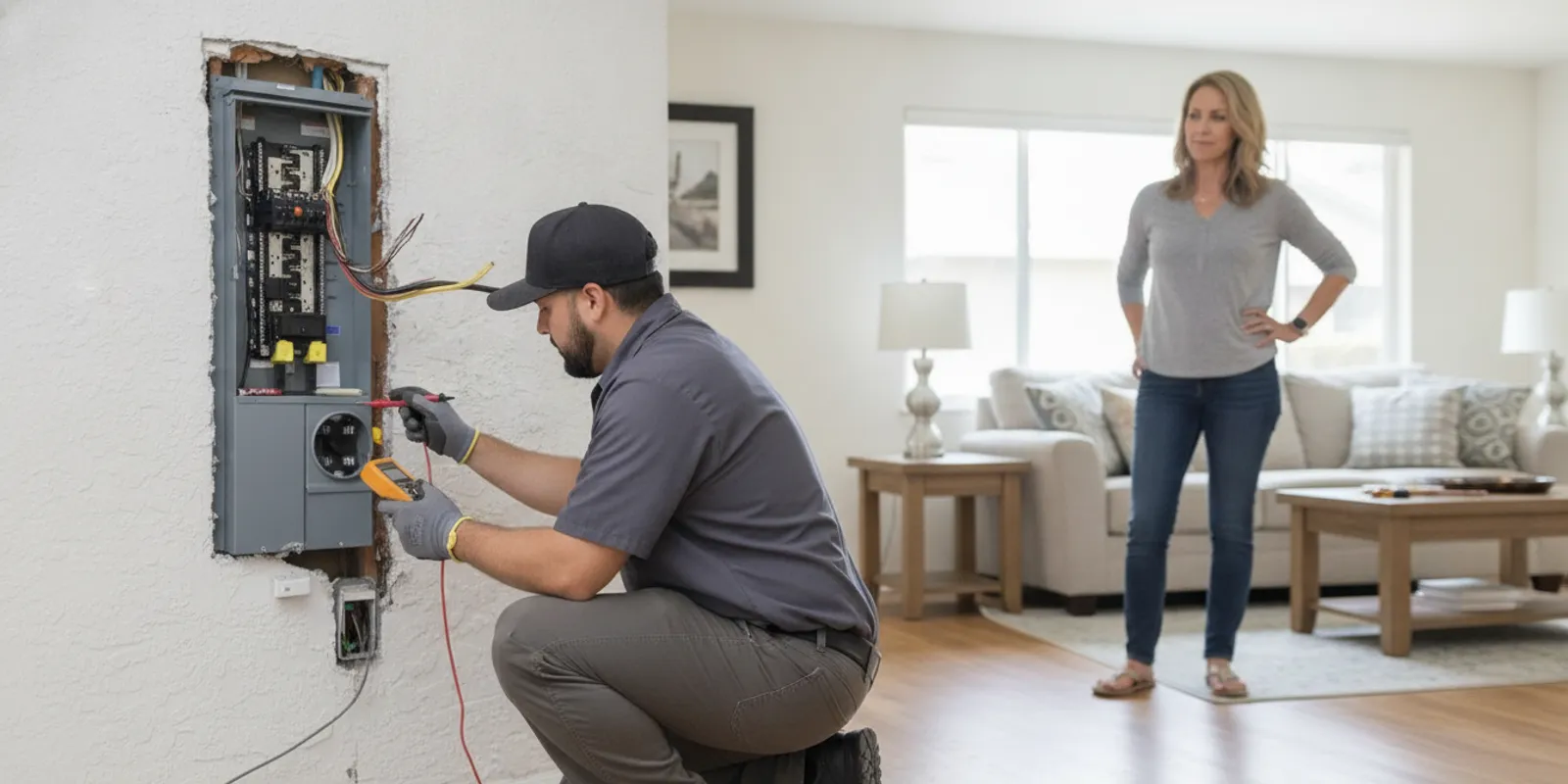
If you are asking what does an electrician do, the practical answer is that an electrician assesses, installs, repairs, and maintains electrical systems in a home. That might mean tracing a dead outlet, replacing a damaged breaker, planning a circuit for new equipment, or checking whether a panel can support a remodel. For Sacramento-area homeowners, the appropriate next step depends on the symptom, the system involved, and whether there are signs of an immediate hazard.
What does a residential electrician work on?
A residential electrician works on the wiring and equipment that carry and control electricity throughout your home. Some calls concern one device. Others involve several rooms, a circuit, a panel, or a new electrical load. Before doing work, a professional needs to understand what is happening, evaluate the relevant conditions, explain the proposed scope, and provide the price before work begins.
Common home electrical work includes:
- Diagnosing circuits that trip, lights that flicker, outlets that stop working, or equipment that behaves inconsistently.
- Repairing or replacing breakers, switches, outlets, and other electrical components.
- Installing new circuits and wiring for renovations, appliances, or other equipment.
- Assessing panels for condition, capacity concerns, and possible repair or upgrade needs.
- Installing or repairing lighting, ceiling fans, exhaust fans, and home surge protection.
- Installing EV chargers and standby generators, and addressing solar electrical concerns.
The visible symptom does not always reveal the cause. A breaker that trips repeatedly, for example, could relate to the connected load, a fault in equipment, or a wiring problem. Resetting it does not establish which explanation applies. An electrician can troubleshoot the affected system and explain the repair options. See the company's residential electrical help for an overview of services.
When should you call an electrician?
Arrange professional help when a problem repeats, affects more than one fixture, involves damaged equipment, or requires opening a panel or changing wiring. It is also sensible to plan an assessment before adding a major electrical load, such as an EV charger, or before a renovation that changes circuits. A panel with visible damage or a component that no longer works as expected should not be treated as a do-it-yourself project.
Stop using an outlet or device if you notice a burning odor, scorching, unusual heat, buzzing, sparks, or a shock. Do not remove covers or touch exposed wiring. If there is smoke or fire, move away and contact emergency services. For a home electrical concern, call AAA Electrical Services at 916-972-7515. Live phone answering is available around the clock, but appointment and dispatch timing must be confirmed with the team. Same-day service is available only when confirmed.
Some faults are intermittent, so keep a clear account of what happened rather than repeatedly operating the affected equipment. If an outlet feels hot or a breaker makes an unusual sound, leave it alone and describe the observation when you call. The emergency electrical service page explains the service path for urgent electrical concerns; it does not replace emergency services when there is an active fire or immediate danger.
What can you safely check before the visit?
You can gather useful information without opening equipment or attempting a repair. Note when the issue started, whether it affects one room or several, what devices were being used, whether a breaker tripped, and whether the problem is constant or intermittent. If you already know the breaker label and can see it without removing a cover or approaching a hazard, share that information. Do not force a breaker that will not reset.
- Keep people away from electrical equipment that is hot, wet, damaged, sparking, or exposed.
- Unplug a suspect appliance only if the plug and outlet are cool and undamaged and you can do so safely.
- Do not use water near electrical equipment or attempt a repair based on a diagram or video.
- If useful, take a photo of visible damage from a safe distance; do not approach an active hazard.
- Mention recent renovations, new appliances, or other changes that may help explain the timing.
These details help the electrician choose where to begin, but they are not a diagnosis. If you are unsure whether an area is safe, stay clear and call for guidance. You do not need to identify the failed part before asking for service.
How does an electrician troubleshoot a problem?
Troubleshooting starts with the reported symptom and a review of the affected devices and circuit. Depending on the issue, the electrician may inspect accessible components, perform tests, and determine whether the fault appears limited to one device or involves wiring, a breaker, or the panel. The sequence varies: flickering lights in one fixture call for a different investigation than several rooms losing power at once.
Once the cause and scope are clearer, the technician can discuss the repair options and provide an upfront price before work begins. A paid diagnostic identifies the repair path and the price. Avoid treating a phone estimate as an exact repair quote for a fault that has not been inspected. Similar symptoms can have different causes, and the required work depends on what the assessment finds.
For a recurring trip, record which appliances were running and whether the breaker tripped immediately or after a period of use. For a dead outlet, note whether nearby outlets or lights are also affected. For a flicker, note whether it happens with one fixture, when a particular appliance starts, or across multiple rooms. A qualified technician can use these observations as a starting point and verify the conditions on site.
What electrical systems and projects can an electrician handle?
Circuits, wiring, and panels
Electricians install circuits, repair wiring, and assess electrical panels. If a renovation or new piece of equipment calls for added capacity, an electrician can review the existing system and explain whether the project calls for a new circuit, panel work, rewiring, or another approach. The right answer depends on the existing equipment and the scope of the planned work. Learn about panel upgrade assessments and whole-home rewiring.
Do not remove a panel cover to investigate a concern. Components inside can remain hazardous even when a breaker is switched off. If you see corrosion, damage, unusual sounds, or signs of heat, keep clear and arrange a professional assessment. If you are preparing for a remodel, share the planned equipment, room changes, and any known panel concerns before work is scheduled.
Outlets, switches, and lighting
An electrician can replace damaged outlets and switches, install lighting, and diagnose fixtures that do not work as expected. A change in location, wiring, or circuit can involve more than swapping a device. The room matters too: kitchens, bathrooms, garages, and outdoor locations can have different use and exposure considerations. When you report an issue, say where it is and what is plugged in or switched on.
For a light that flickers, describe whether the bulb, fixture, or multiple lights are affected and whether the problem began after a recent change. For an outlet that feels loose, warm, or discolored, stop using it and report the visible condition. Avoid removing the device to inspect the wiring behind it.
Fans and surge protection
Ceiling and exhaust fans need suitable mounting and electrical connections. If a fan wobbles, makes a new sound, or stops working, turn it off and request an assessment rather than reaching into its housing. An electrician can also discuss whole-home surge protection and whether it fits the home's electrical system and the equipment you want to protect.
EV chargers and other new loads
A Level 2 EV charger may require a dedicated circuit and review of available panel capacity. Share the charger model, proposed location, and any installation information you already have. An unused breaker position does not by itself establish that the panel has capacity for a new load. AAAES provides EV charger installation information for Folsom homeowners.
Before the assessment, consider where the vehicle is usually parked and where the charger would be convenient. Mention other planned electrical additions too. Looking at the full set of intended loads helps the electrician understand the project rather than assessing the charger in isolation.
Generators and solar electrical service
Standby generators need appropriate electrical connections and transfer equipment, along with a suitable location and fuel plan. Solar systems also include electrical components that may need service. An electrician can assess the relevant electrical work; a concern with production or equipment may also require identifying the system type and the symptom. Explore generator installation and repair and solar repair service.
How do common electrical visits differ?
The examples below describe typical goals, not a diagnosis or guaranteed scope. The electrician confirms the work after reviewing the home, the equipment, and the reported conditions.
| Visit type | Homeowner concern | What may be assessed | Possible next step |
|---|---|---|---|
| Troubleshooting | Repeated trips, flickering lights, dead outlet | Affected devices, circuit behavior, accessible wiring, related components | Repair, component replacement, or further evaluation |
| Panel assessment | Panel condition, new load, or inspection concern | Panel, service details, circuit needs, project scope | Repair, safety inspection, or upgrade proposal |
| Installation | Lighting, fan, outlet, circuit, or EV charging equipment | Location, wiring route, mounting, load, and capacity as relevant | Installation plan and any needed coordination |
| Generator or solar service | Backup power connection or solar electrical issue | Equipment, connections, symptoms, and system compatibility | Repair, installation, or system-specific assessment |
How should you describe the problem when booking?
A short, specific description helps the team understand the concern and route the request. You do not need technical terms. Say what stopped working, when it started, and whether you noticed warning signs. If the issue involves more than one area, name each room or device rather than summarizing it as “the power is acting strange.”
For example, you might say: “The kitchen outlets stopped working after we started using a countertop appliance, but the ceiling lights still work.” Or: “The breaker trips after the dryer has run for a while; it has happened twice, and I have left it off.” These observations explain the pattern without guessing at a cause.
For a planned installation, give the team the equipment model, intended location, and any relevant project dates. For a panel concern, report visible labels or damage only if you can observe them safely from outside the closed panel. Do not send yourself into a risky situation to gather details.
AAA Electrical Services serves Sacramento and surrounding communities with residential electrical and HVAC work. The team is fully licensed and insured, and team members are background-checked and drug-tested. Appointment and dispatch timing should be confirmed with the team; same-day electrical service is available only when confirmed.
What should you expect from a service visit?
During diagnosis, the technician evaluates the concern and discusses the proposed work. AAAES provides upfront pricing, meaning you receive a clear price before work begins. Ask what the proposed repair includes, whether new conditions could change the scope, and what terms apply to the satisfaction guarantee for your service. AAAES states a 100% satisfaction guarantee; ask the team about the terms for the work being considered.
For a larger project, financing may be available through Service Finance or Enhancify. You apply with the financing provider, not AAAES. Financing is subject to credit approval and provider terms; promotional rates, amounts, and repayment terms vary. Ask which options currently apply rather than assuming an advertised offer fits every project.
Some visits identify a repair that can be completed after you approve the scope and price. Other findings may require additional parts, coordination, or a separate project plan. Ask what is known now, what remains to be verified, and whether the proposed work addresses the original symptom. Clear answers help you compare the options without making a decision based on an unconfirmed diagnosis.
Frequently asked questions
Does every electrical problem need an electrician?
No. A simple device issue may have a straightforward explanation, but recurring symptoms, heat, sparks, burning odor, damage, or work involving wiring and panels call for professional assessment. Do not open electrical equipment or attempt repairs if you are not qualified.
Can I get an exact repair price over the phone?
Not for a problem that has not been diagnosed. The cause and scope determine the repair. A paid diagnostic identifies the repair path, and the technician provides the upfront price before work begins.
Can an electrician tell me whether my panel can support an EV charger?
An electrician can assess the existing system and the planned charger requirements. Share the charger information and proposed location. The answer depends on the panel and the home's electrical conditions, so it should be confirmed through an assessment.
Can I reset a breaker that has tripped?
If there are no warning signs and you know how to operate the breaker safely, a single reset may restore power. If it trips again, will not reset, or is hot, buzzing, or visibly damaged, stop and arrange professional help. Repeated resets do not fix an underlying fault.
Request service and confirm scheduling
How should you take the next step?
Write down what happened, leave unsafe equipment alone, and contact AAA Electrical Services at 916-972-7515 or through the contact page to discuss service and confirm timing with the team.
How can you make the assessment more useful?
A little preparation can make it easier to use the visit well, especially when the issue is intermittent or the project involves several parts of the home. Keep a short timeline rather than relying on memory. Include the day and approximate time, what was operating, which rooms were affected, and whether anything changed after the symptom began. If the same event occurs again, add that observation without trying to reproduce it deliberately.
For example, if lights dim briefly when a large appliance starts, note which lights and appliance were involved and whether the change occurs each time. Do not keep switching the appliance on and off to test the pattern. If a breaker trips, note what was running before it happened and leave it alone if it trips again or shows heat, noise, or damage. A careful description is more useful than a homeowner's guess that a particular component has failed.
For a planned job, gather documents or product details that are already available: appliance specifications, an EV charger model, a renovation sketch, or prior electrical notes. You do not need to obtain technical measurements or remove covers. Share the intended use and priorities as well. A homeowner who wants a charger near the driveway may need a different discussion from one whose main concern is keeping a longer cable route unobtrusive.
What changes the scope of an electrical project?
The same request can involve different work in different homes. A new appliance might connect to a suitable existing circuit in one situation, while another installation may require a new circuit or panel assessment. The technician needs to consider the existing wiring, equipment condition, route to the proposed location, and the demands of other devices. That is why the final scope should follow an on-site review rather than an assumption based on a product description.
For a remodel, discuss the rooms being changed, appliances being added, lighting plans, and any known electrical concerns together. Separating each decision can hide interactions: a new kitchen appliance, a workshop tool, and an EV charger may each seem manageable alone but still need to be considered as part of the home's overall electrical plan. The electrician can explain which items need evaluation and which can be handled as distinct tasks.
For repairs, distinguish the immediate symptom from the desired outcome. “The dining-room lights flicker” describes what you see; “I want the cause checked before we replace the fixture” describes the help you are seeking. If there are multiple possible causes, ask what testing supports the recommendation and whether the quoted work addresses the finding or only one visible symptom.
How can you compare repair options?
When a technician presents more than one option, ask for a plain explanation of what each includes. A repair may address a specific failed component, while a broader project may address related condition or capacity concerns. The right comparison is not simply the shortest description or the lowest initial figure; it is whether the proposed scope matches the observed problem and your intended use.
- Ask what condition was found and how it relates to the symptom you reported.
- Confirm which parts of the system the proposed work covers and what it leaves unchanged.
- Ask whether additional work could be needed if concealed or inaccessible conditions are discovered.
- Request the price and scope before authorizing work, and clarify how any change would be discussed.
- For an installation, confirm the planned location, equipment, and expected completion steps.
These questions do not require technical expertise. They help you understand the difference between restoring one function, correcting a broader electrical issue, and preparing the home for a new load. If you are not sure which option fits, ask the technician to connect each recommendation to the findings and explain the trade-offs in everyday language.
Which information belongs in a service request?
Keep the request concise but specific. Include your city, the affected room or equipment, what happened, when it started, and whether you observed heat, odor, sparks, shock, or visible damage. Mention if power is completely out or only one device has stopped working. If this is a project rather than a fault, say what you want to install and where you hope it will go.
For a panel or wiring project, a simple list of planned work is often more helpful than an attempt to diagnose capacity. Write down the new appliances or equipment, any planned room changes, and relevant timing. For generator service, note whether the concern is with startup, operation, or an electrical connection, if known. For solar service, describe what the system display or monitoring reports without opening equipment.
AAA Electrical Services serves Sacramento and surrounding communities. The team handles residential electrical work as well as heating and air service, and provides a clear price before work begins. Call 916-972-7515 to describe the concern and confirm appointment or dispatch timing. If you encounter an active fire or immediate threat, move away and contact emergency services first.
What should a homeowner avoid doing?
Do not open a panel, remove an outlet or switch, splice wires, bypass a breaker, or keep resetting equipment that trips repeatedly. Avoid using damaged cords and outlets, and do not bring water or metal tools near a suspected electrical fault. A general video or diagram cannot account for the exact wiring, protection, and condition in your home.
Do not try to reproduce a dangerous symptom for the technician. A recording or notes may help if collected from a safe distance, but your safety matters more than documentation. If the equipment is hot, sparking, smoking, wet, or exposed, leave it alone and keep others clear. These limits are especially important around panels, where switching a breaker does not make every internal part safe to touch.
You can still help by identifying what changed, which locations are affected, and what outcome you need. A homeowner's role is to describe observations and make informed choices after the findings and proposed scope are explained—not to perform tests on energized equipment.
How should you take the next step?
For a recurring fault, unusual heat, damaged equipment, or a planned electrical addition, share the symptoms or project details with the team and ask what assessment is appropriate. AAA Electrical Services offers residential electrical service in the Sacramento area, with upfront pricing before approved work begins. Call 916-972-7515 or use the contact page to request service and confirm scheduling.
Need an electrician in Sacramento? See AAA Electrical Services in Sacramento