A whole house surge protector installation is not a device you pick off a shelf and clip onto any panel. In a Sacramento home, the useful first question is whether the panel, the grounding path, and the available space can support the device. If those pieces are not ready, the visit may need panel work before protection goes in. If they are ready, the team can explain the scope and the price before any work begins.
Request a surge protection visit
What a whole house surge protector installation depends on
Whole-home surge protection is a device at or beside the main electrical panel. Its job is to limit certain short voltage spikes before they travel through the home's circuits. It is not backup power, and it is not a repair for bad wiring or an overloaded circuit.
AAA Electrical Services installs that protection at the panel for Sacramento-area homes. A typical install often takes under an hour when the panel is already a fit. That timing is a planning note, not a promise. Access, panel condition, and any extra work change the visit.
Think of the visit as two decisions, not one product choice. First, can this panel accept a device safely? Second, if it can, what scope and price are you approving? Skipping the first decision is how a simple add-on turns into an open-ended panel project.
Three things decide whether the install can happen as planned:
- Space. The device needs a place at or immediately beside the panel, with a short connection.
- A grounding path. The device sends extra voltage toward ground. A weak or unclear ground changes the plan.
- Panel condition. Heat damage, a crowded interior, or a panel that is not a safe match can mean other work comes first.
Plug-in strips still have a place for a computer or a television. They do not cover hardwired equipment, and they do not take the place of a panel device. The live benefits of whole-house surge protection page covers that comparison. This guide stays on readiness.
Why the panel has to be ready first
A surge device only does its job at the point where it is installed, and only for the events it is rated to limit. If the connection is long, the space is wrong, or the panel itself needs repair, adding a device does not fix those problems.
Sacramento homes see spikes from utility switching, from power coming back after an outage, and from large equipment cycling on. Air conditioners, refrigerators, and EV chargers are common sources inside the house. A panel device is meant to limit those spikes. It cannot keep the lights on. It cannot promise that no appliance will ever be damaged.
Heat makes the check more useful, not more dramatic. Cooling equipment runs for long stretches in the valley. Each start is a small internal event. A protector does not stop the equipment from starting. It gives those spikes a path that is easier on the electronics downstream, when the device is installed correctly.
Older homes are the ones most likely to need a pause. A full panel, a panel with repeated problems, or a panel the technician cannot safely work in is a reason to stop and explain options. That conversation belongs on the electrical panel services page if the finding is about the panel itself, not about the surge device.
Takeaway: ask for a panel check before you assume a protector can be added the same visit.
What the electrician checks before approving work
A paid diagnostic identifies the path and the upfront price. It is not a blank approval to change the panel or add equipment you did not discuss. On a surge visit, the useful checks are specific.
- Find the main panel and how power enters. The device belongs at the service equipment or immediately beside it. A subpanel in a garage is not automatically the right spot.
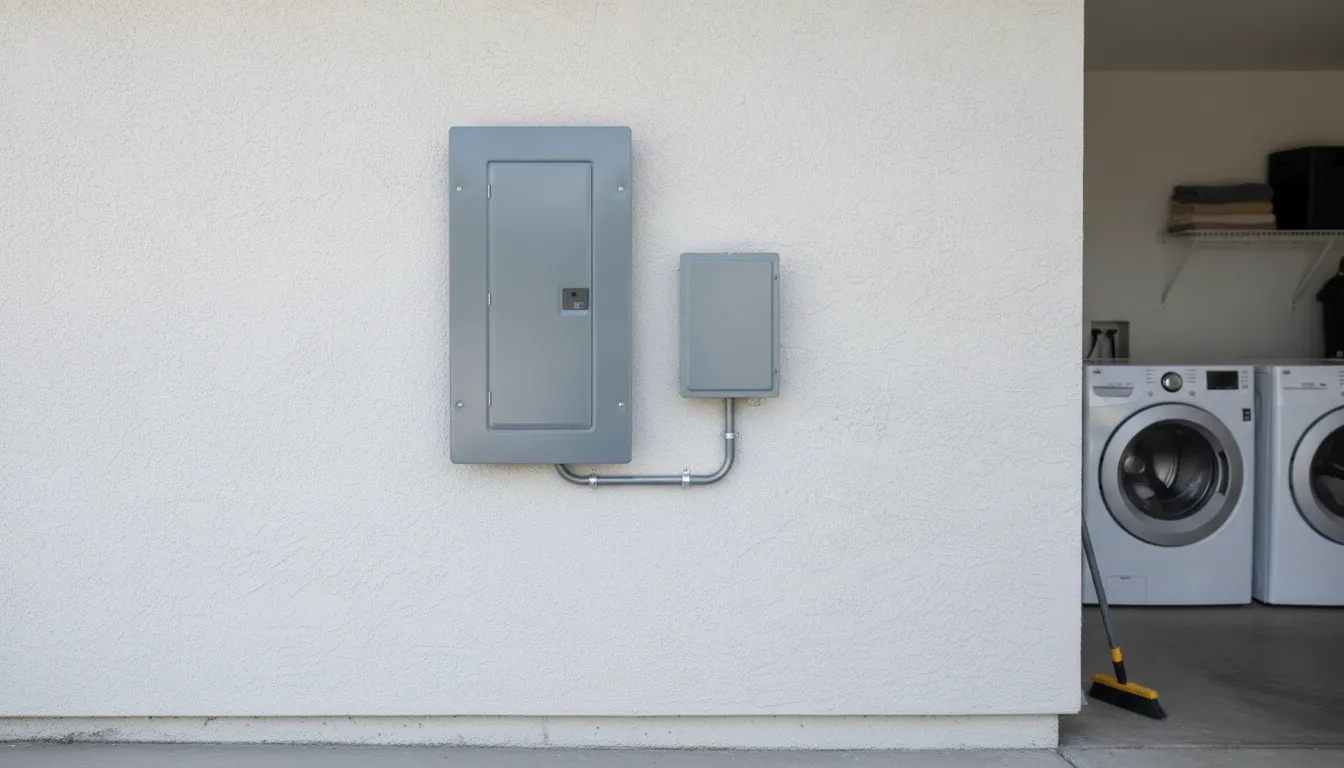
- Look at open space and how the cover comes off. Some panels have room for a breaker-style device. Others need a separate enclosure beside the panel. Both can be valid. The short connection matters more than the brand name on the box.
- Review grounding and bonding. The technician looks for a clear path to ground. If that path is missing, damaged, or not documented, protection waits until the path is understood.
- Check the panel's condition. Scorching, a buzzing panel, a breaker that will not stay reset, or a Federal Pacific or Zinsco panel is a safety finding. Those panels need their own assessment. Do not treat a surge add-on as the fix.
- Ask what you want to protect. Refrigerators, HVAC controls, computers, and EV chargers all benefit from a smaller spike. Point-of-use strips may still belong at the most sensitive electronics. The visit should say which layer does which job.
- Name the price before work starts. If the panel is ready, you should hear the install scope and the price. If it is not, you should hear what has to happen first and what that separate work would cost.
You do not need to open the panel yourself to prepare. A photo of the closed door helps. So does the brand, if it is printed on the outside. A note about recent flicker or breaker trips is enough to start the conversation.
What you can look at without removing the cover
Stay on the outside of the panel. The cover is not a viewing window. A missing knockout or a warm door is a stop sign, not a project.
- Location. A garage, an exterior wall, a bedroom closet, or a hall cabinet all change access. Say which one it is.
- The printed name. Federal Pacific and Zinsco need their own assessment. Other names still matter, because the technician can bring the right references.
- The door and the wall around it. Rust, scorch marks, a buzzing sound, or a cover that does not sit flat should be reported. Do not tighten screws or pull the cover to see more.
- Nearby equipment. A generator inlet, an EV charger, or a solar inverter on the same service changes the conversation. Mention them when you book.
- An existing protector. A small box already beside the panel, or a breaker labeled as surge, may mean a check or a replacement. It is not automatically a new install.
If you smell something hot, or a breaker will not stay on, skip the photo project. Call for troubleshooting. Surge protection is the wrong first job when the panel itself is in distress.
How to read the result of the visit
A clear visit should end in one of three outcomes. None of them requires you to judge wire colors or breaker sizes.
| What the technician finds | What it means for you | What to ask next |
|---|---|---|
| Space, ground, and panel condition are suitable. | A whole-home device can be installed at or beside the panel. | Ask what is included, what the price is, and how to read the status light. |
| The panel is sound, but space or access is tight. | The device may go in a separate enclosure next to the panel. | Ask whether the connection stays short and whether wall repair is included. |
| Grounding is unclear, or the panel is not a safe match. | Surge protection waits until that issue is handled. | Ask whether you need a panel safety inspection or a separate repair. |
| The panel is crowded, damaged, or an older unsafe type. | An upgrade or replacement may come before any add-on. | Ask what the panel upgrade includes and what that scope costs. |
If the indicator on an existing device is already dark or showing a fault, say so at booking. Many protectors include a status light. The manufacturer's guidance tells you whether protection is still active. A guess from the cover does not. A dark light is a reason to schedule service. It is not a reason to open the panel.
Replacement of the service equipment is a different project. Leviton summarizes section 230.67 of the 2020 National Electrical Code this way. Services that supply dwelling units need a Type 1 or Type 2 surge-protective device. That includes a replacement of the service equipment. The device sits in the equipment or immediately beside it.
Local adoption decides how that rule applies to your house. A licensed electrician confirms the current requirement. Do not treat a blog summary as a permit decision. The source for that summary is Leviton's public NEC surge-protection page: NEC requirements related to surge protection.
Questions worth asking before you approve
The price conversation should be specific. A lump "electrical work" line is harder to compare than a short list.
- Is the device going inside the panel or in a box beside it?
- Does the price include the device, the connection, and any permit the city requires?
- What will the status indicator look like when protection is active?
- What work is not included if the panel needs repair or more space?
- Will point-of-use strips still be recommended for a home office or media gear?
Write the answers down, or ask the technician to leave them on the visit summary. That record helps later, when a light changes or a new appliance is added.
What the device will not do
Homeowners often book surge protection because the lights flickered or a storm knocked out power. Those events are worth describing. They are not all the same problem.
- It does not keep power on. An outage needs a generator or other backup plan. Surge protection only limits certain spikes. It does not supply electricity.
- It does not fix wiring faults. A burning smell, a hot cover, or a breaker that trips every time a tool starts needs troubleshooting. Adding a protector does not clear a loose connection.
- It does not stop every spike. Ratings, the size of the event, and how the device is installed all matter. No product can promise that every appliance survives every surge.
- It does not last forever. The device wears as it absorbs events. Ask how to read the indicator and when to call for a check. AAA's service page states the same limit: follow the product's status guidance and arrange service when protection is no longer active.
A storm, a flicker, and a dead outlet can feel like the same afternoon. They are not the same repair. Describe what you saw, how long it lasted, and whether it hit one appliance or the whole house. That detail helps separate a surge question from a wiring fault.
If you want the broader tour, read the Sacramento page on home surge protection installation. Use this article when your question is whether your panel is ready.
How to book the visit without guessing the price
AAA does not publish a flat price for this work. The diagnostic identifies the repair or install path, and you get the price before work begins. Financing through Service Finance or Enhancify is available to apply for with the provider, subject to credit approval and provider terms. A promotional rate is not a promise of approval.
When you call or request service, these details help the team plan:
- The city and whether the panel is in a garage, a closet, or outside.
- Any label you can read on the closed door, including Federal Pacific or Zinsco.
- Recent flicker, breaker trips, or a surge device whose light is off.
- Large equipment on the house, such as an EV charger, a heat pump, or a generator.
Same-day electrical service is sometimes available. It is not guaranteed. Live phone answering is available 24/7, and the team confirms the appointment. The license on the work is CSLB #635556.
VIP+ members have scheduling priority and other published benefits. The annual club is $239.40, and an $86 member diagnostic fee applies to basic residential diagnostic service. Credits and discounts have eligibility rules. Confirm the current terms before you enroll, and do not assume a membership changes the price of a surge device until the team says so.
Call 916-972-7515 to confirm scheduling
Frequently asked questions
Can any panel take a whole-house surge protector?
No. The panel needs a suitable location at or beside the service equipment, a grounding path, and a condition the technician can work in safely. A crowded, damaged, or mismatched panel may need other work first.
Do I still need plug-in surge strips?
Often yes, for sensitive electronics. A panel device and a point-of-use strip do different jobs. The visit should say whether your computers, televisions, or network gear still need a strip.
Will this keep my lights on in an outage?
No. Surge protection limits certain short voltage spikes. It does not provide backup power. A generator is a separate project.
How do I know the protector is still working?
Use the status indicator and the manufacturer's guidance. If the light shows that protection is no longer active, schedule service. Do not open the panel to investigate it yourself.
Does a panel replacement include surge protection?
It can. Leviton summarizes section 230.67 of the 2020 National Electrical Code as requiring a Type 1 or Type 2 device when service equipment for a dwelling is installed or replaced. The device goes in that equipment or immediately beside it. Ask how the adopted code applies to your permit. Confirm the scope and the price before the work starts.