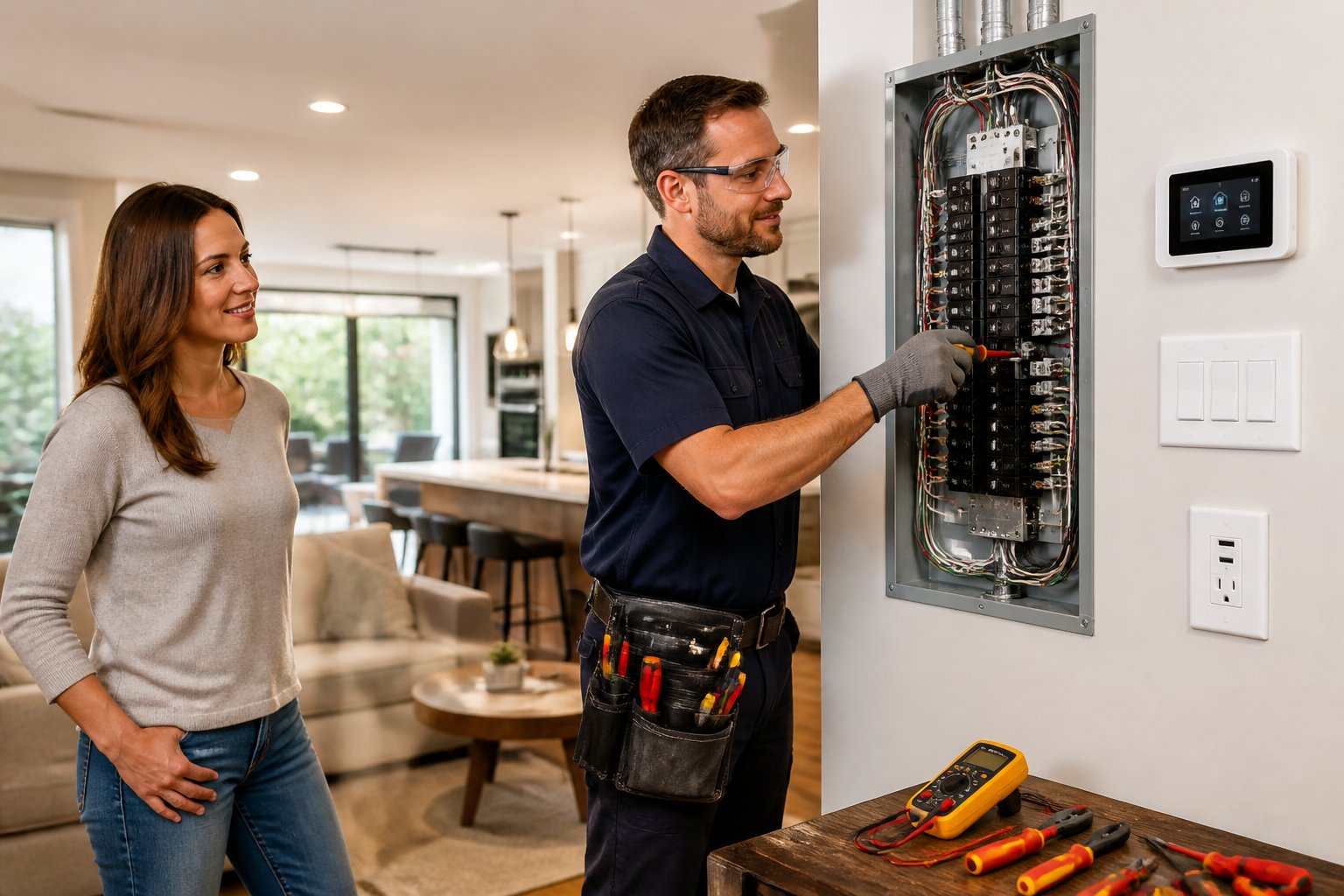
Older bedrooms often hide electrical systems built for a lighter load than we put on them today. Lamps, chargers, TVs, portable heaters, and window AC units can all strain wiring that simply wasn’t designed for this level of use. To maintain safe wiring in older bedrooms, watch for warning signs, avoid overloading, and call a licensed electrician to update unsafe parts before they become a hazard.
Good electrical safety starts with realizing that old wiring isn’t always unsafe on its own, but it can become risky as insulation ages, grounding is missing, or circuits get pushed too hard. If you live in Sacramento, Roseville, Elk Grove, or a nearby area, a timely inspection can give you peace of mind and help you plan smart upgrades before small problems turn into big ones.
Key Takeaways
- Catch warning signs before they turn into emergencies.
- Don’t push bedroom circuits past their limits.
- Upgrade unsafe wiring before it fails.
Bedroom Warning Signs You Should Not Ignore
Little changes in how your bedroom’s electricity behaves can hint at bigger wiring problems behind the walls. Flickering lights, loose outlets, and frequent breaker trips all deserve attention—especially in older homes.
What Flickering Or Dimming Lights Can Mean
Flickering or dimming lights might mean a loose connection, an overloaded circuit, or just old wiring struggling to keep up. If lights flicker when you turn on a fan, heater, or other appliance, that circuit’s probably working harder than it should.
When lights dim as another device starts up, that’s a red flag that the bedroom circuit is stretched thin. In older homes, this can also mean aging connections, and it’s probably time to call a licensed electrician for a look.
Why Tripped Breakers And Blown Fuses Matter
Tripped breakers and blown fuses are your electrical system’s way of warning you. A one-time trip might just be a fluke, but repeated trips usually mean there’s a deeper issue—maybe with capacity, damaged wiring, or an overloaded circuit.
Some older homes still use fuses, or a mix of old and new protection. If you’re always resetting breakers or swapping fuses, don’t ignore it—get to the root cause.
Two-Prong And Ungrounded Outlets In Sleeping Areas
Two-prong or ungrounded outlets are common in older bedrooms and can create extra shock risk since they lack a grounding path. That matters even more when you plug in electronics or chargers near your bed.
If your bedroom’s full of adapters, it’s a sign the wiring isn’t keeping up. Upgrading to grounded outlets makes things safer and honestly, just easier to use every day.
Older Wiring Types That Raise Bedroom Fire Risk
Some old wiring systems still show up in Sacramento-area homes and really need special attention. Knob-and-tube wiring, aluminum wiring, and undersized branch circuits can all limit electrical capacity and increase fire risk when you pile on modern devices.
How To Spot Knob-And-Tube Wiring
Knob-and-tube wiring, sometimes called knob and tube, is one of the oldest methods still found in some homes. You might spot ceramic knobs and tubes holding wires in attics or basements, and these systems often don’t have grounding.
That lack of grounding is a real concern in bedrooms—it leaves you less protected if something goes wrong. If you know you’ve got this kind of wiring, it’s smart to have a licensed electrician check how much is still active and whether it’s time for an upgrade.
What To Know About Aluminum Wiring
Some older homes used aluminum wiring. It can be safe in certain setups, but it needs careful inspection because connections can loosen or oxidize. Loose terminations might create heat at outlets or switches, which is risky in bedrooms where things stay plugged in for hours.
If you suspect aluminum wiring, don’t just assume everything’s fine because the lights work. Get a pro to check connections and suggest repairs if needed.
When Old Branch Circuits Are No Longer Enough
Old branch circuits were built for a different era, when bedrooms used less power. Add in chargers, TVs, fans, heaters, and office gear, and the circuit can run out of electrical capacity.
If you notice dimming lights, warm outlets, or breakers that keep tripping, the circuit’s probably at its limit. That’s a good sign it’s time for an upgrade.
Safe Upgrades That Make Bedrooms More Reliable
You don’t have to gut a bedroom to make it safer. Swapping out unsafe outlets, improving grounding, and upgrading wiring where needed can make a big difference for safety and convenience.
Replacing Unsafe Receptacles And Adding Grounding
If your bedroom still has two-prong receptacles, upgrading to grounded outlets is usually a smart move. A licensed electrician can check if grounding can be added or if the circuit needs more work first.
This is also a good chance to replace worn switches and loose outlets that don’t hold plugs well. Secure, well-fitted outlets cut down on annoying issues and make everyday use safer.
Where GFCI Outlets May Be Relevant Near Bedroom Sinks Or Adjacent Areas
GFCI outlets aren’t usually needed inside a standard bedroom, but they might matter near a bedroom sink, shared bath, wet bar, or anywhere moisture is nearby. In those spots, GFCI protection can reduce shock risk.
If you’re renovating and adding a bath or vanity area, ask about the right protection. The best setup depends on your room and wiring.
When Upgrading Electrical Wiring Improves Daily Use
Upgrading wiring can make an older bedroom not just safer, but also easier to live with. Stronger circuits support modern devices, reduce random trips, and leave room for future upgrades like better lighting or a home office.
For Sacramento-area homeowners thinking long-term, this kind of work is especially useful during a remodel. It’s a practical way to support your needs now and avoid patchwork fixes later.
How To Use Bedroom Circuits Without Overloading Them
Even safe wiring can get overwhelmed if you plug in too many high-demand devices. Pay attention to electrical limits, avoid stacked power strips, and spread out heavy loads to keep things running smoothly.
Managing Heaters, Window AC Units, And Power Strips
Portable heaters and window AC units pull a lot of power, and they can overload old bedroom circuits fast. If you’re using those in the same room, don’t plug in extra appliances to the same outlet or power strip.
Power strips are handy but don’t add capacity. If you plug in multiple heavy devices, you’ll probably see breakers trip or lights dim as the circuit maxes out.
Reducing Strain From Chargers, TVs, And Home Office Equipment
Chargers, TVs, gaming systems, and office gear add up faster than you’d think. A few low-watt devices might be fine, but the total still matters—especially with old wiring.
Unplug what you’re not using, keep cords in decent shape, and spread devices across different circuits when you can. That’s a simple way to cut down on heat and help your wiring last.
Why Dedicated Circuits May Be Needed During Remodels
If you’re remodeling, you might need dedicated circuits for heavy loads or a better layout. A separate circuit can help avoid nuisance trips and make your bedroom more reliable if you add new fixtures or gear.
This is especially helpful if you’re planning built-ins, a workstation, or upgraded lighting. A licensed electrician can help match the circuit plan to your real electrical needs.
Inspections, Repairs, And When To Call A Pro
Older bedrooms benefit from routine inspection because hidden wear can pop up long before anything fails. A licensed electrician can spot aging connections, unsafe splices, and other issues you’d never see from the outside.
What A Licensed Electrician Checks In Older Bedrooms
A licensed electrician will check outlets, switches, lights, breaker performance, wire condition, grounding, and signs of overheating. They’ll also look for outdated materials, overloaded circuits, or repairs that don’t meet current safety standards.
In homes around Elk Grove, Folsom, Fair Oaks, and beyond, these inspections are often the quickest way to tell a minor issue from a big one. AAA Electrical Services has seen a quick check prevent bigger headaches more than once.
When Rewiring An Old House Becomes The Safer Option
Sometimes, rewiring an old house is just the safer move—especially when the wiring is too worn, too limited, or too outdated for your needs. If you’re seeing frequent breaker trips, ungrounded outlets, visible deterioration, or overheating, patching probably won’t cut it.
If your bedroom issues are part of a bigger pattern throughout the house, a more complete solution might make sense. That protects your family and gives you a system ready for modern life.
How Whole-House Rewiring Differs From Targeted Bedroom Repairs
Whole-house rewiring replaces the entire electrical system, while targeted bedroom repairs just fix the trouble spot. Bedroom-only work fits when the rest of your home’s wiring is still in decent shape and the problem is isolated.
Whole-house rewiring is a bigger project, but sometimes it’s the better long-term choice if multiple rooms show their age. An honest assessment from a trusted electrician can help you decide on the right approach.
Code, Permits, And Planning For Long-Term Safety
Electrical work in bedrooms isn’t just about safety—it has to meet current rules and inspection requirements, too. Building code, permits, and good planning all matter if you want the work to last.
How Building Code Affects Bedroom Outlet And Circuit Work
Building code affects outlet spacing, circuit protection, grounding, and where you can install certain devices. If you’re adding outlets or updating circuits in an older bedroom, code requirements help make sure the room’s safe and usable.
For homeowners, that means doing the work right from the start. Following code also cuts down on expensive corrections later.
Why Local Building Codes And The National Electrical Code Matter
Local building codes and the National Electrical Code work together to guide safe residential electrical work. Local rules may add details specific to your area, while the national code sets the baseline.
That matters when you’re updating wiring in an older home, because what passed decades ago might not meet today’s standards. A licensed electrician can help you stay on track with both sets of rules.
Planning Future-Proof Upgrades During Renovations
If you’re renovating a bedroom, try to think beyond just the immediate fix. Planning for future loads, better lighting, or possible smart home or office use can save you from opening up the walls again later.
It’s also a great time to check your panel capacity, surge protection, and nearby circuits that could use attention. A well-planned upgrade gives you flexibility and better reliability for years to come.
Frequently Asked Questions
How can I tell what type of wiring is behind my bedroom walls without opening everything up?
Look for clues like two-prong outlets, old fuse boxes, fabric-covered cables, or ceramic knobs in unfinished areas. Those hints suggest outdated wiring, but honestly, a licensed electrician is the best person to confirm what’s in your walls.
What are the warning signs that the wiring in an older bedroom is unsafe or needs attention?
Watch for flickering lights, dimming, tripped breakers, blown fuses, warm outlets, burning smells, or outlets that won’t hold plugs. Any of these can point to worn connections or overloaded circuits—don’t wait to get them checked.
Is it generally safe to keep using 70-year-old wiring if there are no obvious problems?
Not really. Old wiring can look fine but still lack grounding, good insulation, or the capacity you need for modern use. An inspection is the safer way to know what you’re dealing with.
What should I know about knob-and-tube wiring in bedrooms and when it should be replaced?
Knob-and-tube wiring dates back a long way. It's usually ungrounded and really doesn't match up with the electrical demands of modern bedrooms. If you find it still running, or spot damage, or see that someone’s tried to extend it in questionable ways, it's probably time to think about replacing it for safety’s sake.
How do I identify older wiring by its wire colors, like black and white, and what do those colors mean?
In most homes, black wires act as the hot wire, while white ones are neutral. But don’t get too comfortable—wire color by itself doesn’t guarantee anything about safety. Insulation quality, proper grounding, and solid connections are just as important, maybe more so.
What factors most affect the cost of rewiring an older bedroom, and what should I budget for?
A few things really drive up the price: how easy it is to reach the wiring, the shape your current electrical system’s in, how many outlets and switches you want, and whether you’ll need permits or have to tackle a bigger upgrade. If you’re rolling this into other repairs or considering whole-house rewiring, you’ll probably need to budget more than you would for just a quick fix.