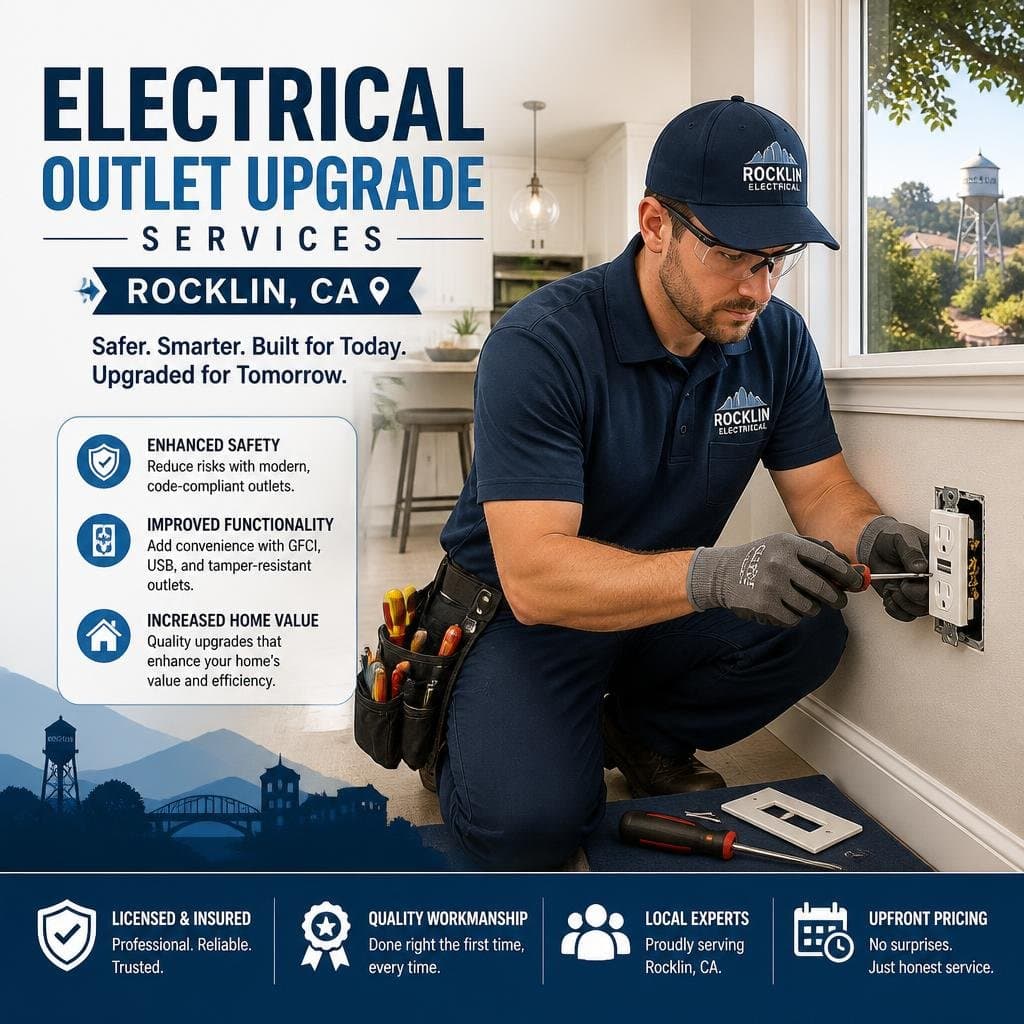
Electrical outlet upgrade services in Rocklin, CA, can really change how safe and convenient your home feels day to day. If your plugs seem loose, you’re short on outlets, or things just look a bit outdated, the right upgrade makes your home more reliable and helps avoid those annoying electrical hassles.
It’s best to think of outlets as part of your whole electrical system, not just as random boxes on the wall. A thoughtful upgrade can support your appliances, keep your family safer, and spare you from calling for repairs again and again.
If you’re in Rocklin or a nearby area, a licensed electrical contractor can check out your outlets, suggest the right fixes, and handle electrical services that fit your home’s age and power needs. It’s not just about swapping a faceplate—it’s about making sure the wiring, connections, and protection actually match how you use your home.
When an Outlet Upgrade Makes Sense
Outlet issues usually start small. Maybe plugs wiggle loose, covers feel warm, breakers trip, or outlets just won’t grip your devices anymore.
A solid electrician looks at the outlet, the wiring behind it, and the whole circuit to decide if a repair is enough or if replacement is smarter.
Signs Your Outlets Are Outdated or Unsafe
Watch for two-prong outlets, scorch marks, buzzing sounds, cracked covers, or outlets that feel warm. Relying on power strips because you’re short on outlets? That’s another sign you might need an upgrade.
If plugs fall out or a breaker trips when you use a normal appliance, chances are the outlet is worn out or there’s a bigger wiring problem lurking.
When Repair Is Enough vs. When Replacement Is Better
Sometimes a simple repair—tightening a loose receptacle, swapping a cracked cover, or fixing a worn connection—does the trick. But if the outlet housing is damaged, the wiring is old, or the circuit isn’t safe, replacement is usually smarter.
A licensed tech can test the outlet and let you know if a repair will last or if new outlet installation is the better long-term move.
Why Older Rocklin Homes Often Need Electrical Updates
Plenty of Rocklin homes were built before today’s power needs. Fewer outlets, older wiring, and not much grounding or protection in key rooms are common.
Add TVs, computers, kitchen gadgets, and chargers, and those old systems start to feel the strain. Upgrading outlets helps your home keep up, so you’re not always running extension cords or tripping breakers.
Best Upgrade Options for Modern Homes
The best outlet choice depends on the room and how you use it. Modern upgrades can boost safety, convenience, and even the look of your walls—better outlets, updated switches, and matching fixtures go a long way.
A good plan can also clear up adapter clutter and make things easier in kitchens, offices, and living rooms.
GFCI, AFCI, USB, and Tamper-Resistant Outlet Choices
GFCI outlets protect areas with moisture (kitchens, bathrooms, garages, outdoors). AFCI outlets help cut down on arc faults in bedrooms and living spaces.
USB outlets save you from hunting for block chargers, and tamper-resistant outlets add safety for homes with kids. These options work best when you match them to each room’s needs.
Switch and Receptacle Updates for Better Daily Use
When you’re upgrading outlets, it’s often worth updating switches too. That way, colors, style, and performance all match up.
Adding dimmers, three-way controls, or better-placed switches can make a room instantly more useful. Sometimes it’s the little changes that make a space work better.
Matching New Outlets to Appliances, Offices, and Entertainment Areas
Home offices need more data-friendly layouts and enough outlets for computers, monitors, and printers. Entertainment spaces often need outlets behind TVs and consoles to hide cords.
Kitchens and laundry rooms usually need outlets that can handle heavier appliances without tripping. Matching outlet installation to each room helps everything work the way you want.
How Outlet Work Connects to Your Electrical System
Outlets aren’t standalone—they rely on your panel, circuits, and wiring. Sometimes, upgrading outlets uncovers the need for bigger electrical services.
If you’re adding more devices, bigger appliances, or new rooms, your electrician might talk with you about panel upgrades or dedicated circuits.
When Panel Capacity Affects New Outlet Additions
If your home’s already running close to its electrical limit, adding outlets isn’t enough. In those cases, an electrical panel upgrade may be needed to handle the extra load safely.
Watch for frequent breaker trips, dimming lights, or a full panel with no room for new circuits. A careful inspection helps you avoid overloading an already stretched system.
Dedicated Circuits for High-Demand Equipment
Some appliances shouldn’t share power with general-use outlets. Space heaters, microwaves, workshop tools, sump pumps, and EV chargers often need their own dedicated circuits.
Dedicated circuits reduce overload risk and can make things run smoother. They also make future repairs easier since problems are easier to track down.
Whole-Home Rewiring in Older or Frequently Modified Homes
If your home’s been remodeled or patched together over the years, wiring behind the walls might be a jumble. Whole-home rewiring is a bigger job, but sometimes it’s the only way to get things up to modern safety standards and give you a clean slate for future upgrades.
Safety, Code Compliance, and Professional Installation
Outlet work looks simple from the outside, but the real risks are hidden in the walls. A licensed electrical contractor knows how to test circuits, protect wiring, and make sure everything meets local code.
For your family’s safety, professional electrical repair really does matter—even if the job seems small.
Why Licensed Electrical Work Matters
Hiring a licensed pro helps cut down on shock risk, fire hazards, and code headaches later. A trained electrician checks grounding, box fill, wire size, and protection before signing off.
That’s a big deal if you ever sell your home or want to add more electrical work later. Clean, compliant work saves headaches down the road.
Common Hazards Found Behind Damaged Receptacles
Behind a damaged outlet, you might find loose splices, overheated wires, bad grounding, or brittle insulation. Sometimes, the outlet’s fine but the wiring feeding it isn’t.
Ignore those signs, and the damage can spread to other outlets and switches. A good inspection catches these issues before they become bigger repairs.
What a Safe Installation Process Should Include
A safe job starts with shutting off the right circuit and testing it before any work. The electrician should check the box, wiring, device type, and how much load the outlet will carry.
You should expect clear communication, tidy work, and testing after everything’s installed. If the company offers same-day service and keeps vans stocked, that’s usually a sign they can fix things faster, with fewer return trips.
Related Improvements That Add Convenience and Value
Outlet projects are a great time to consider other upgrades that make life easier. Small improvements often go hand in hand with lighting design, outdoor lighting, and future-ready power planning.
That way, you can knock out a few related projects at once instead of reopening walls later.
Lighting and Fixture Updates During Outlet Projects
If you’re already opening up walls or scheduling electrical work, it might make sense to update nearby fixtures or add better controls. New lighting can boost both comfort and function in the same room.
This is especially handy in older homes where switches and outlets aren’t always in the best spots.
Outdoor Power and Outdoor Lighting Considerations
Outdoor outlets need weather-safe covers, especially around patios, pools, and side yards. Outdoor lighting can boost security and make pathways safer at night.
Upgrading both at once gives your home more convenience without missing out on safety.
Preparing for EV Chargers, Generators, and Future Electrical Needs
Planning to add EV chargers, generators, or other big equipment soon? Planning ahead makes everything easier. Panel upgrades and dedicated circuits can make those future projects smoother and safer.
AAA Electrical Services often helps folks think a step ahead so you’re not stuck with patchwork fixes or last-minute headaches. That kind of planning just makes sense.
What to Expect When Scheduling Service in Rocklin
Good electrical service should feel easy from the first call. You deserve a clear inspection, a written scope of work, and honest pricing before anyone starts installing outlets.
A reliable contractor will respect your time, your home, and your budget.
Inspection, Troubleshooting, and Written Scope of Work
The appointment usually starts with a look at the outlet, nearby wiring, and the circuit panel. If the issue isn’t obvious, troubleshooting might include voltage, grounding, and load testing.
You should get a written scope explaining what’s included—keeps everyone on the same page before work starts.
Timeline, Access, and What Affects Final Cost
Simple outlet repairs go quicker than bigger upgrades that need new wiring or panel work. Cost depends on wall access, home age, permits, and whether panel upgrades are needed.
Flat-rate, upfront pricing helps dodge surprises. If there’s a new customer offer or membership discount, ask about it before work begins.
How to Choose the Right Long-Term Electrical Partner
Look for clear communication, techs who are background-checked, and a crew that treats your home with respect. Same-day service is a plus, and you want honest advice about what really needs fixing.
AAA Electrical Services focuses on safety-first work by licensed pros, with clean service and practical recommendations. Having a long-term partner like that just makes future repairs and upgrades less stressful.
Frequently Asked Questions
How do I know if my home’s outlets need to be upgraded or replaced?
If your outlets are loose, damaged, outdated, or won’t hold plugs, it’s time to upgrade. Also, act if you see scorch marks, feel heat, or rely on power strips due to too few outlets.
What does it usually cost to upgrade electrical outlets in a typical house?
Cost depends on how many outlets you’re replacing, the wiring’s condition, and if any circuit or panel work is needed. Swapping out a few is cheaper than adding new spots or fixing old wiring.
Do I need a permit to upgrade outlets, and will the electrician handle it?
Some projects need permits—especially if you’re adding circuits, changing panels, or updating to current code. A licensed electrician should tell you if you need one and handle the paperwork.
Can you replace old two-prong outlets with grounded three-prong outlets safely?
Usually, yes, but the wiring needs to be checked first. If the circuit isn’t grounded, the electrician might suggest another code-approved fix instead of just swapping the faceplate.
Should I install GFCI or AFCI protection, and where is it required in my home?
GFCI protection is standard in wet or damp spots like kitchens, bathrooms, garages, and outdoors. AFCI protection is often used in bedrooms and living spaces to help cut down on electrical hazards.
How long does an outlet upgrade appointment usually take from start to finish?
Swapping out a single outlet? Most electricians can knock that out in an hour or two—unless the wiring’s a mess or the spot’s tough to reach. If you’re talking about a bigger project, like upgrading outlets in several rooms or adding circuits, you’re looking at a longer process. Sometimes they’ll need to come back for a second round.