Charging your EV at home should feel simple, predictable, and safe. If you pick the right equipment, check that your electrical system can actually handle the load, and avoid the usual setup mistakes, you’ll make daily charging easier—and keep your home and car protected.
For folks in Sacramento, Roseville, Elk Grove, Folsom, and nearby areas, the safest setup is the one that fits your car, your panel, and your routine. The best ways to support safe EV charging at home: pick the right charger, install it on a dedicated circuit, and have a licensed electrician inspect the system.
Key Takeaways
- The right charger depends on how much you drive and what your home’s electrical system can handle.
- Dedicated circuits and proper protection cut down on unnecessary risks.
- Regular inspections help keep charging reliable and safe for your family.
Choose The Right Home Charging Setup First
Your safest bet starts with equipment that fits both your home and your driving habits. For a lot of people, that means choosing between basic level 1 charging and faster level 2 charging, then putting the charger somewhere it can work safely every day.
When Level 1 Charging Is Enough
A level 1 charger plugs into a standard outlet and works fine if you don’t drive far each day or have long stretches when your car is parked. It’s the easiest way to start charging at home, especially if you want a low-commitment setup while you figure out your routine.
Why Level 2 Charging Fits Most Households
Level 2 chargers need a 240v outlet or a hardwired connection, and they deliver much faster home charging than level 1. For most families, level 2 is the sweet spot—fast, convenient, and flexible, especially if you share the car or want reliable overnight charging.
How Overnight Charging Changes Daily Convenience
Overnight charging turns plugging in into a habit you barely think about. You get home, plug in, and by morning your car’s ready to go—no need to plan around public fast charging for everyday use. A properly installed home charger really does make mornings smoother and cuts down on weekday stress.
Make Sure Your Electrical System Can Support The Load
Your charger is only as safe as your home’s electrical system. Before installing anything, check circuit capacity, panel space, and how much power your charger will draw alongside other appliances.
Why A Dedicated Circuit Matters
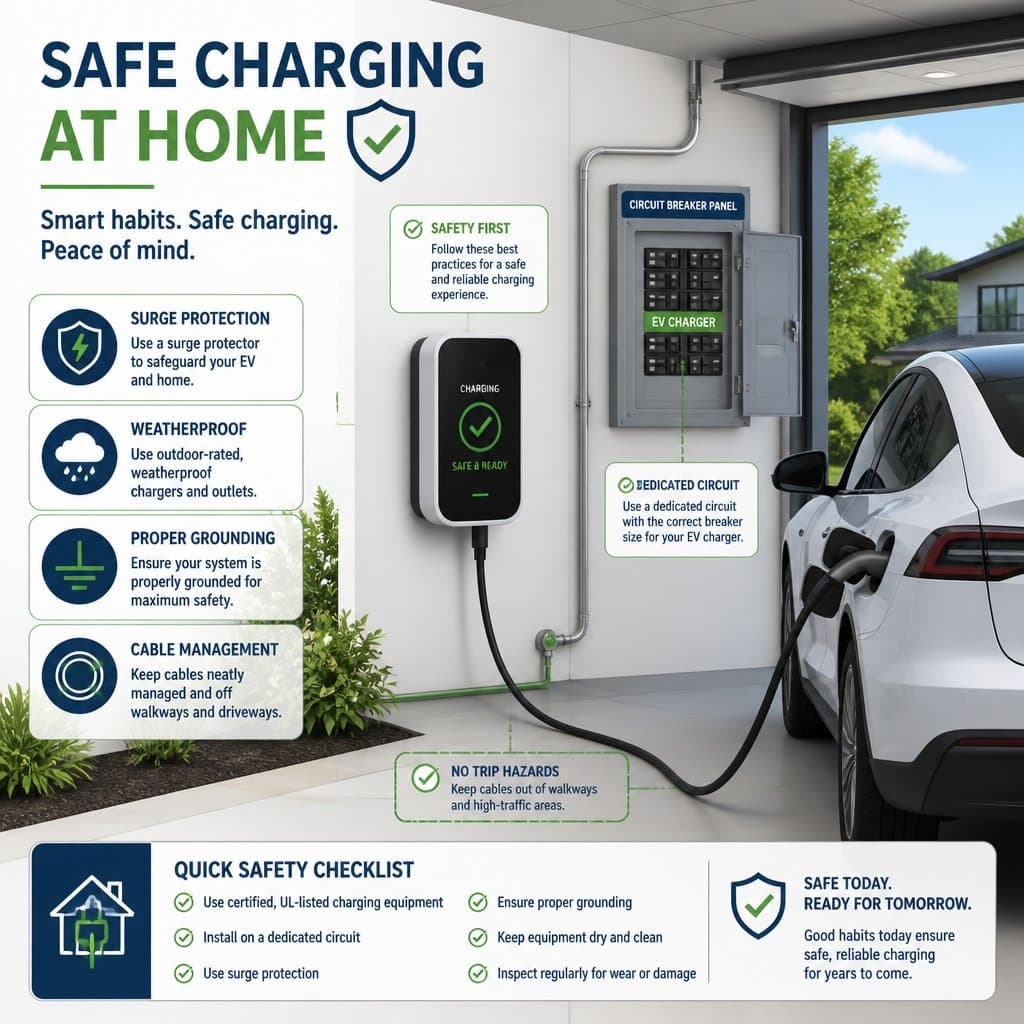
A dedicated circuit keeps your charger from sharing power with outlets, lights, or appliances already in use. That lowers the odds of nuisance trips, overheating, and unnecessary wear—especially if you’re using a NEMA 14-50 outlet for charging.
When Panel Capacity Becomes A Safety Issue
If your panel’s already close to maxed out, adding an EV charger can push it over the edge. Older homes around Sacramento, Carmichael, or Auburn might need a panel review before you add a charger, since these things add a real, steady load.
How Load Management Helps Future-Proof The Home
Load management lets your home balance EV charging with other electrical needs instead of running everything at once. It’s a smart way to support safe home charging without a full panel upgrade, and it’ll make future upgrades easier as your needs change.
Install Equipment That Protects People, Vehicles, And Property
Good EV charging safety starts with certified gear and proper protection during installation. The right charger, connector, grounding, and surge protection all help cut risks and keep your daily charging dependable.
Use Listed Chargers And Proper Connector Types
Pick a charger that’s listed for home use and matches your car and plug type. Use quality charging cables rated for the load—undersized or damaged cords can overheat or fail over time.
RCD Protection And Ground Fault Safety Basics
RCD protection (basically, quick shutoff for electrical faults) is a must, especially around moisture, garages, or outdoor setups. Small problems can snowball if ignored, so don’t skip this step.
How Surge Protection Helps With Power Surges
A surge protector shields your charger and car electronics from spikes caused by storms or grid issues. In areas with lots of storms or utility hiccups, surge protection is just smart.
Avoid The Most Common Home Charging Mistakes
A lot of home charging issues come from habits that seem harmless. The biggest risks? The charging cable, the outlet you use, and whether things heat up more than they should.
Why Extension Cords And Shared Outlets Are Risky
Extension cords and shared outlets can cause voltage drops, heat buildup, and breaker trips. They also make it tough to know if your setup is running safely, so a dedicated outlet is always the way to go.
What To Watch For In Cords, Plugs, And Heat Buildup
Check charging cables for fraying, bent prongs, discoloration, or loose connections. If a plug, outlet, or cord feels hot during charging, stop using it and get it checked out—heat is a big red flag.
Smart Habits For Safe Daily Charging
Keep the charging space clean, dry, and uncluttered. Coil cables neatly, don’t pinch them in doors or over sharp edges, and check things regularly so little wear doesn’t turn into a big repair.
Know When Home Charging Is Not The Best Option
Home charging is super convenient, but it’s not always the best fit for every trip or every house. Sometimes public charging stations just make more sense—like when you need speed, you’re far from Sacramento, or your home system is already stretched.
When Public Charging Stations Make More Sense
Public charging is great for road trips, when your home charger is down, or if you need a quick top-off between errands. It’s also a solid backup if you just don’t have time for overnight charging.
How Home Charging Compares With An EV Charging Station Away From Home
Charging away from home can be more convenient for travel and faster turnarounds, while home charging is usually the go-to for daily needs. Honestly, both have their place—let your routine decide which one handles most of the work.
When Faster Away-From-Home Charging Is Worth It
DC fast charging is worth it when you’re racing the clock and don’t care as much about cost or battery wear. Heading to Tahoe, commuting long distances, or driving past Woodland or El Dorado Hills? Fast charging on the road can be a real lifesaver.
Plan For Reliable Service, Inspections, And Upgrades
Even the best charger needs some attention now and then. A licensed electrician can keep your home EV charger safe, spot wear before it’s a problem, and make sure your setup still works for your needs.
When To Call A Licensed Electrician
Call a licensed electrician if your breaker trips, the charger loses power, the outlet feels hot, or you’re planning a new install. Same-day service can be a lifesaver when charging issues mess up your day, and a well-stocked service van usually means quicker fixes.
Signs Your Setup Needs Repair Or Adjustment
Watch out for buzzing, error lights, slow charging, or a cable that doesn’t fit snug anymore. Those are signs your EV charging safety might be slipping—don’t wait to get them checked.
How Professional Installation Supports Long-Term Peace Of Mind
Professional installation means better communication, honest recommendations, and cleaner work you can trust. For homeowners in Natomas, Folsom, Rocklin, and nearby areas, careful service helps your charging setup last for years—not just a few weeks.
Frequently Asked Questions
Is it safe to charge an electric car at home overnight?
Yes, overnight charging is common and safe when the equipment’s installed right and the circuit is sized for it. Use a listed charger, a proper outlet or hardwired connection, and get things checked if anything changes.
Can I charge my electric car using a regular household outlet?
Yep, you can use a standard outlet for level 1 charging—lots of people start there. It’s best for shorter daily drives, though, since it’s slower than level 2. Always make sure the outlet’s in good shape.
What’s the difference between Level 1 and Level 2 home charging?
Level 1 uses a regular outlet and charges slowest. Level 2 uses a 240v outlet or hardwired setup for much faster charging. If you want a full battery by morning, level 2 is usually the way to go.
How much does it typically cost to install a home EV charging station?
Costs depend on your panel, wiring distance, and any needed upgrades. Most residential installs fall into a broad range that covers both equipment and labor. A licensed electrician can give you a flat-rate price after checking your home’s setup.
Do I need an electrician or a dedicated circuit for a home EV charger?
Yes, a dedicated circuit is strongly recommended, and an electrician should handle the install. That way, you know the load is safe, the wiring’s correct, and your charger’s set up for the long haul.
What’s the fastest home charging setup I can get for my EV?
Honestly, if you’re looking to juice up your EV at home as quickly as possible, you’ll want a level 2 charger hooked up to a circuit that can handle it. That’s the go-to for most people. If your house can’t quite keep up, you might have to look into load management or even upgrading your panel—yeah, not the most exciting project, but sometimes it’s necessary if you want top speeds without blowing a fuse.