Charging your electric vehicle at home in Sacramento doesn't have to be a hassle. A Level 2 home charger, installed by a licensed electrician, gives you reliable daily charging and usually means you can skip public stations more often. Let's break down what installation really involves, what to know about local permits and rebates, and how to pick a charger that actually matches your driving habits and your home’s electrical setup.
You'll see why safety-first electrical work is a must, and how flat-rate pricing, quick scheduling, and well-stocked vans can make the process smoother (and less messy). If you want the job done right, AAA Electrical Services brings decades of local experience and licensed techs who treat your place with respect—and help get your home ready for the future of electric vehicles.
Understanding EV Charger Installation
Let’s get clear on what an EV charger does, the types you’ll run into at home, and how charging actually works so you can plan your setup and install without surprises.
What Is an EV Charger?
An EV charger sends power from your home straight to your electric car.
It controls how fast your car charges and keeps tabs on safety features like ground-fault protection and temperature.
Plug your charger into your car’s inlet, and it converts household power to battery juice.
Level 1 chargers use a standard 120V outlet and add about 2–5 miles of range per hour.
Level 2 chargers use 240V—think electric dryer—and add around 12–60 miles per hour, depending on your setup.
You’ll usually get a mounting bracket, a cable or connector, and some kind of electronic controls or an app to schedule and monitor charging.
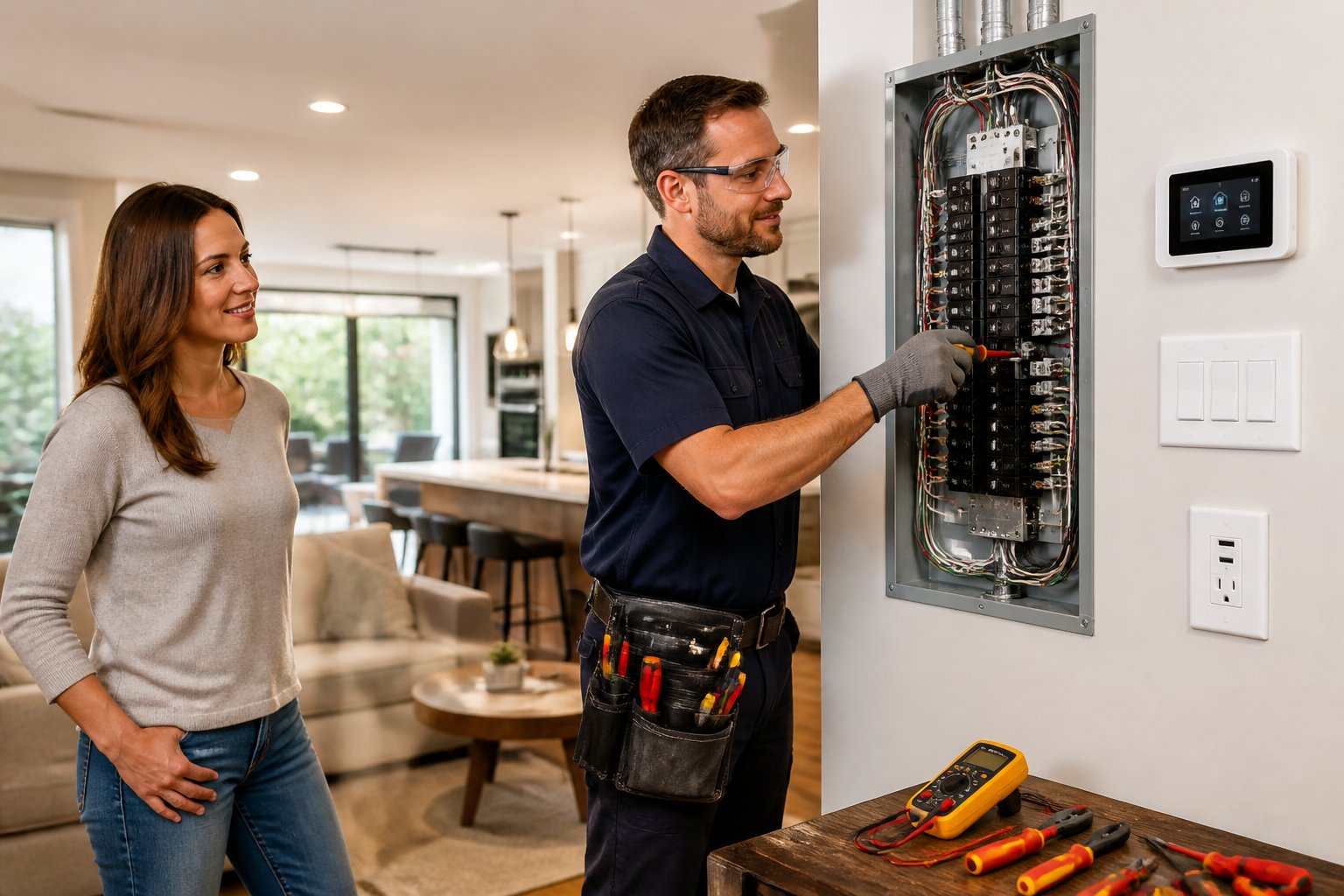
Having licensed professionals handle the electrical work means your charger will play nice with your panel and breakers.
AAA Electrical Services can check your panel, suggest upgrades, and install your charger with clear pricing and quick turnaround.
Types of EV Chargers for Homes
Level 1 chargers run off a regular 120V outlet—cheap to install, but slow. This works for drivers who don’t rack up miles or just have a plug-in hybrid.
Level 2 chargers need a 240V circuit and charge way faster. Most EV owners go this route. You might pay more up front, especially if your panel needs an upgrade or you need a new circuit.
There are smart Level 2 chargers, too—think Wi-Fi, apps, scheduling, and energy tracking.
You can set off-peak charging, monitor usage, and sometimes throttle the power to match your panel.
Go for a charger with UL (or similar) certification, and consider a hardwired install if you want it to look tidy and work reliably.
How EV Charging Works
Charging starts when your car and charger “talk” to decide on a safe current.
The charger then pushes power at that rate until the battery’s full or you stop the session.
Charging speed depends on voltage and amperage: more volts and amps, faster charge.
Level 1: 120V, low amps—slow.
Level 2: 240V, higher amps (usually 30–60A)—much faster.
Your electrical panel has to handle the extra load.
An electrician checks for space and breaker capacity, and might suggest a panel upgrade or sub-panel.
Permits, proper wiring, and solid grounding keep your home and family safe.
When licensed, insured techs show up with stocked vans, they can usually get you up and running in just one visit.
Benefits of Home EV Charger Installation
Putting in a home EV charger saves you time, can boost your home’s appeal, and usually cuts your driving costs. You’ll charge faster, have safer wiring, and control when and how you top off your battery.
Convenience and Time Savings
With a Level 2 charger at home, you just plug in overnight and wake up to a full battery. No more detours to public charging stations—more time for, well, anything else.
A dedicated charger is much faster than a regular outlet. Most Level 2 units fill up your battery in 4–8 hours, so overnight is usually enough.
Professional installation keeps your wiring up to code and avoids the headaches of tripped breakers or sketchy extension cords. If you want to get started quickly, same-day service can get you charging at home right away.
Increased Home Value
Adding an EV charger tells buyers your home’s ready for modern needs. In places like Sacramento, Folsom, or Roseville, a professionally installed charger can attract EV drivers and help your place stand out.
A hardwired Level 2 station often shows up in listings, like an upgraded panel or finished garage. Keep your permit paperwork and installation docs handy—buyers care about safe, inspected work.
If you can mention that licensed, background-checked techs did the install, all the better. Highlighting safety-first service and flat-rate pricing on your docs shows you took the work seriously.
Energy Cost Savings
Charging at home usually costs less per mile than gas. Your savings depend on your utility rates and when you charge, but overnight off-peak charging is often cheapest.
Smart chargers let you schedule charging for cheaper hours or use solar if you’ve got panels. That can stretch your savings and ease the load on your panel during busy times.
If your home needs a panel upgrade for faster charging, you might recoup that cost over time with lower fuel and maintenance bills. Ask about clear pricing and a safety-first approach to keep things predictable.
Sacramento-Specific Considerations
There’s a bit to know about utility rebates, local permits, and how Sacramento’s weather affects charging. These all play into your costs, timing, and what kind of charger fits your setup.
Local Utility Incentives
Many Sacramento-area utilities offer rebates or lower rates for home EV charger installs. Check your utility’s website or account—some programs cut the upfront cost of a Level 2 charger or reimburse part of the install. You’ll often need a licensed electrician and to submit permit paperwork, so don’t skip that.
Time-of-use (TOU) rate plans can save you money if you charge overnight. Ask your utility about TOU and whether they have smart-charger rebates tied to demand-response programs. Keep your receipts and any paperwork for rebates or tax credits.
City Permitting Requirements
Most cities in the area require permits for Level 2 charger installs. Permits make sure the work meets electrical and safety codes, and usually a licensed electrician has to file them. You’ll need an inspection after installation before you can use the charger.
Permit costs and wait times vary—Sacramento, Roseville, Elk Grove, and others all have their own rules. If you want less hassle, pick a contractor who handles the permits and schedules inspections. That keeps things moving and avoids code headaches.
Climate Impacts on EV Charging
Sacramento gets hot summers and mild winters. High temps can slow charging and make batteries less efficient during heat waves. Installing your charger in a shaded spot or garage helps keep things cooler.
Cold snaps aren’t common, but they can slow charging and cut range for a bit. A Level 2 charger helps speed things up when temps drop. If your charger is outside, go for weather-rated gear and outdoor conduit—sun, dust, and the occasional rain won’t do your setup any favors.
Choosing the Right EV Charger for Your Home
Picking a charger comes down to charging speed, features, and your car’s plug. Think about your nightly driving, whether you want smart controls, and if your panel is up to the task.
Level 1 vs Level 2 Chargers
Level 1 uses a standard 120V outlet and adds about 3–5 miles per hour. It’s fine if you drive very little or just need a backup. You probably won’t need an electrician, but charging can take all night (or longer) for most EVs.
Level 2 runs on 240V and gives about 20–40 miles per hour. Most people pick Level 2 for daily use—it fully charges most EVs in 4–8 hours. You’ll need an electrician, maybe a panel check, and a higher upfront cost, but it’s way more practical for regular driving.
Consider how much you drive, where you park, and if you’ll add more EVs down the line. If your panel’s full, a panel upgrade may be necessary before you can install Level 2.
Smart Charger Features
Smart chargers connect to Wi-Fi or an app so you can schedule charging, track energy use, and set limits. Scheduling lets you charge during cheaper hours—handy with Sacramento’s TOU rates. Energy monitoring shows how much you’re using and can flag problems early.
Look for features like load sharing if you’ll add more EVs, and open standards like OCPP for future flexibility. Some chargers let you lock the connector for security or adjust charging speed to protect older wiring. Honestly, make sure the app isn’t a pain to use, and that updates are straightforward.
If you need help picking a smart charger or setting up utility programs and rebates in Sacramento, AAA Electrical Services can walk you through it.
Compatibility with Your EV
Check your EV’s charging port and max onboard rate. Most U.S. cars use SAE J1772 for Level 1/2, but some older models need an adapter. Your car’s onboard charger rating (kW) tells you how fast it can accept power from a Level 2.
Match the charger’s amperage to your panel capacity—most home chargers run 30–40 amps. If your car can handle 11 kW but your panel only supports a 40-amp circuit, you’ll be limited to that. Make sure your charger supports your EV’s voltage and has safety features like ground-fault protection.
A licensed electrician can check your panel, size the circuit right, and install the proper charger so your EV charges safely and efficiently. Getting pros to handle the work keeps your home and family protected.
Professional vs DIY EV Charger Installation
Choosing between hiring a pro and doing it yourself affects safety, cost, and how quickly you’re up and running. Pros handle permits, panel checks, and code compliance. DIY might save a few bucks, but it brings risks—bad wiring, failed inspections, or worse.
Licensed Installer Benefits
A licensed electrician checks your panel and recommends the right charger and breaker size for your car and home. They’ll pull permits, handle inspections, and make sure everything meets California codes.
You get work done by certified techs who test grounding, GFCI, and circuit loading. That lowers fire and shock risks and keeps your home insurance valid.
Local pros offer transparent pricing and often same-day installs. In Sacramento, a company with stocked vans can usually finish in one visit, so you can skip public charging almost right away.
DIY Risks and Challenges
Installing a hardwired charger isn’t just plugging something in. You need to know 240V circuits, breaker torque specs, and local code rules. Mistakes can cause overheating, tripped breakers, or unsafe grounding that might not show up for a while.
Permits and inspections can stall your DIY project or force you to redo work if it’s not right. Insurance might not cover unpermitted work. Some manufacturers even void the warranty if you don’t use a pro.
If you need a panel upgrade, new conduit, or trenching to the garage, costs and headaches add up fast. Be honest about your skills, tools, and patience with local codes before going DIY.
How to Select a Qualified Electrician
Look for a licensed, insured electrician with clear pricing and good local references. Ask for their license number, proof of insurance, and make sure they handle permits and inspections.
Ask real questions: Have you installed EV chargers before? Will you size the circuit for future EVs? Can you explain my options and give a written estimate with flat-rate pricing? What’s your timeline? Do you stock parts for same-day work?
Check reviews for punctuality, tidy work, and respect in customers’ homes. If you want extra peace of mind, pick a team with a satisfaction guarantee and a safety-first approach. AAA Electrical Services ticks those boxes and serves Sacramento and nearby areas.
EV Charger Installation Process in Sacramento
Here’s what you’ll run into: a tech comes out to check where the charger should go and what circuit makes sense, you’ll deal with some local permit steps, and then the installer wires, tests, and hands over your new setup.
Site Assessment and Preparation
A technician will swing by to check your electrical panel, measure the distance to your parking spot, and figure out where conduit will run. They’ll look for spare breakers, meter clearance, and any headaches like stucco or landscaping that could make trenching or drilling a pain.
You’ll chat about charger power (usually 240V Level 2), cable length, and whether your panel needs an upgrade. The tech will note how you park and suggest where to mount the charger and what outlet type fits best. AAA Electrical Services’ crew offers same-day assessments and will explain if anything could interrupt your service.
Before the work, clear out the garage or driveway and make sure the panel area is easy to get to. Move bikes, boxes, and cars so the crew can work safely and wrap things up faster.
Permit Application Steps
In Sacramento, you’ll need a permit from the local building department for a permanent Level 2 charger. Either you or your installer submits a permit app, a basic wiring plan, and sometimes an equipment spec sheet. Fees and review times aren’t set in stone—could be a few days or a few weeks.
The permit checks code compliance and might require an inspection after installation. If your home needs a panel upgrade or meter work, your utility might need to sign off. Hang on to all your permit paperwork—inspectors will want to see it at the final check.
AAA Electrical Services can handle the permit packet and coordinate with inspectors to help avoid delays.
Installation and Testing
On install day, techs will shut off power to the work area, mount the charger, run conduit, and pull wiring to a new breaker. They’ll label the new circuit in your panel and secure all connections to code. If your panel needs an upgrade, they’ll swap it or add a subpanel as planned.
After wiring, the techs run safety checks: continuity, polarity, ground, and insulation resistance. They’ll verify voltage at the charger and run a charging session to make sure your EV and charger are talking and charging at the right rate. You’ll get a quick demo on operation, how to reset the unit, and user instructions.
They’ll clean up the work area and update your panel labeling. You’ll get permit-ready paperwork and test results for inspection or your records.
Costs and Financing Options
Installing a home EV charger means one-time installation costs, possible rebates, and ongoing savings from lower fuel and maintenance. Prices depend on charger type, panel upgrades, permits, and local incentives.
Typical Installation Costs
You’re looking at anywhere from $546 to $2,750 for a Level 2 home charger, depending on what your place needs. Short runs from the panel with no panel work? That’s the low end. Need a panel upgrade, new circuit, or a long conduit run? That’s the high end.
Permits and inspections add more fees. Labor rates in Sacramento, permit costs, and job complexity all affect the total. Always get a written quote with a flat-rate price and a clear list of what’s included so you know what you’re paying for.
Available Rebates and Credits
Sacramento utilities and state programs sometimes offer rebates or tax credits to cut your out-of-pocket cost. You’ll usually need proof of installation and a filled rebate form. Check both statewide and local utility offers for current amounts and eligibility.
Save all receipts, permit docs, and the installer’s certificate. Some rebates require a licensed electrician and code-compliant work. Not sure where to start? AAA Electrical Services can help with paperwork and make sure your install qualifies.
Long-Term Savings
Charging at home usually costs less per mile than gas. How much you save depends on your electricity rates, how often you charge, and your car’s efficiency. Off-peak charging and time-of-use plans can shave more off your bill.
You’ll likely spend less on routine maintenance than you would with a gas car. Over time, lower fueling and maintenance costs can offset the upfront install. Keep track of energy use and savings to see how your charger pays off.
Maintaining and Troubleshooting Your Home EV Charger
Keep the charging area tidy, inspect cables and connectors now and then, and know a few quick fixes to try before calling in the pros. If something looks off, stop using the charger and call a licensed electrician.
Routine Maintenance Tips
Once a month, check the charger housing, cable, and plug for cracks, fraying, or exposed metal. Wipe the unit and connectors with a dry cloth—skip water or solvents, they can mess up electrical parts.
Every few months, look at the mounting and conduit. Tighten any loose screws and make sure the unit’s still level and secure on the wall or pedestal.
Test the charger by plugging in and checking if the car starts charging and the indicator lights look normal. Jot down any error codes you see.
Keep the area around the charger clear—no debris, chemicals, or sprinkler spray. Trim plants and move stuff that could block airflow.
Hang onto your paperwork: install details, breaker labeling, warranty info. If you’ve got a service plan or membership, that paperwork speeds up same-day service.
Common Issues and Solutions
If the charger won’t start but your car charges elsewhere, try a different EVSE cable if you’ve got one. Reset the charger circuit breaker and try again.
If you see an error code or flashing light, write it down and check the charger manual. Many errors clear up after power cycling—shut off the breaker for 30 seconds, then switch it back on.
If the plug feels hot, stop charging right away. Hot connectors or melted insulation mean you need a licensed electrician to check the connection and panel. Don’t keep using it.
If charging is slow, check your car’s charging setting and make sure the charger is set for the right amperage. Sometimes panel limits or shared circuits slow things down—a panel upgrade might be needed for faster Level 2 charging.
For ongoing faults, tripped breakers, or any visible damage, call a licensed electrician. AAA Electrical Services offers same-day service, flat-rate pricing, and stocked vans so many repairs happen in one visit. Getting the job done safely by licensed pros keeps your family and home protected.
Future-Proofing Your Home for EV Charging
If you want to stay ahead, plan for more cars, bigger electrical service, and solar-ready wiring. Think about your parking layout, panel capacity, and where solar and the charger will connect.
Preparing for Multiple EVs
Expecting two or more EVs? Map out where each car will park and how far the cords need to reach. Install dedicated 240V circuits for each Level 2 charger so you’re not sharing a circuit. Putting in conduit or raceway now makes adding a second charger way cheaper later.
Consider load management hardware or a smart charger that splits power between ports. That can help you avoid a pricey panel upgrade by capping peak draw. Label circuits clearly and leave room in the panel for more breakers. If you plan to charge two cars overnight, add up the amps (each Level 2 usually uses 30–40A) and compare to your panel’s spare capacity.
Upgrading Electrical Panels
A panel upgrade often pops up when you add Level 2 charging, new appliances, or solar. Check your panel’s rating (100A, 200A, etc.) and how old the breakers are. Older panels might not have space or modern safety features like AFCI/GFCI protection required for new installs.
Talk to a licensed electrician to test service capacity and voltage drop for the garage or driveway run. If you need a main breaker upgrade or extra meter, you’ll need permits and an inspection from local building departments. Ask about flat-rate pricing, same-day options, and a clean work area to keep the project as painless as possible.
Integrating Solar Power
Pairing solar with EV charging cuts your grid draw and lowers bills. Size the solar array to match your daily driving needs—many homeowners shoot for about 20–40 miles of range per kW of solar, depending on sun and habits. Add a solar-compatible EV charger or an inverter that supports vehicle charging.
Install wiring and conduit now to link the inverter, main panel, and charger location—no one wants to dig up the yard twice. Think about battery storage if you want to charge overnight or during peak rates. Check with your Sacramento-area utility on incentives and interconnection rules to snag rebates and make the permit process smoother.
Frequently Asked Questions
Here are answers to common questions about costs, permits, rebates, electrician qualifications, local installers, and picking the right charger for your Sacramento home.
How much does it cost to install an electric vehicle charger in my home in Sacramento?
Level 2 charger installs around here usually run from a few hundred to a few thousand dollars.
Simple installs using your existing panel and short wiring cost less; panel upgrades, long conduit runs, or permits bump up the price.
Ask for flat-rate, upfront pricing so you know the total before work starts.
AAA Electrical Services offers transparent pricing and can check your home to give a solid quote.
What electrician qualifications should I look for when installing an EV charger in Sacramento?
Go with a licensed, insured, and state-certified electrician.
Look for techs with EV charger installation experience and background checks for your peace of mind.
Companies that offer same-day service, stocked vans, and a satisfaction guarantee are a plus.
You’ll get faster fixes and less downtime.
Are there any local rebates or incentives available for installing an EV charger in my Sacramento residence?
Check local utilities like SMUD and state programs for rebates or credits that lower your costs.
Programs change all the time, so double-check current offers before you schedule anything.
Your electrician can help find and apply for rebates or point you to the right utility contact.
Keep receipts and permit paperwork, since most rebates need proof of a compliant install.
Do I need to get a permit for residential EV charger installation in Sacramento, California?
Yes—most residential Level 2 installs need a permit to meet local electrical and safety codes.
Permits make sure the work meets standards and protect your home and warranty.
A licensed electrician will pull permits and do code-compliant work for you.
Ask for copies of permit approval and inspection records when the job’s done.
What are some highly-rated EV charger installation companies in Sacramento?
Look for local companies with a solid track record, licensed techs, strong reviews, and clear guarantees.
Search for installers that focus on safety, same-day service, and upfront flat-rate pricing.
AAA Electrical Services covers Sacramento and nearby areas with licensed, insured techs and a 100% satisfaction guarantee.
Ask for references and recent job photos when you’re comparing companies.
How do I choose the best EV charger for my home in Sacramento?
First off, think about whether Level 1 (slow) or Level 2 (faster) charging actually fits your daily routine and what your garage can handle.
Make sure the charger's amperage lines up with your EV’s onboard charger and whatever your home’s electrical system can support.
If you’re into things like scheduling, tracking your energy use, or maybe just want to save a few bucks during off-peak hours, look for smart features like Wi‑Fi and power monitoring.
Honestly, before you buy anything, it’s worth having a licensed electrician check out your panel—you don’t want any surprises if you end up needing an upgrade.