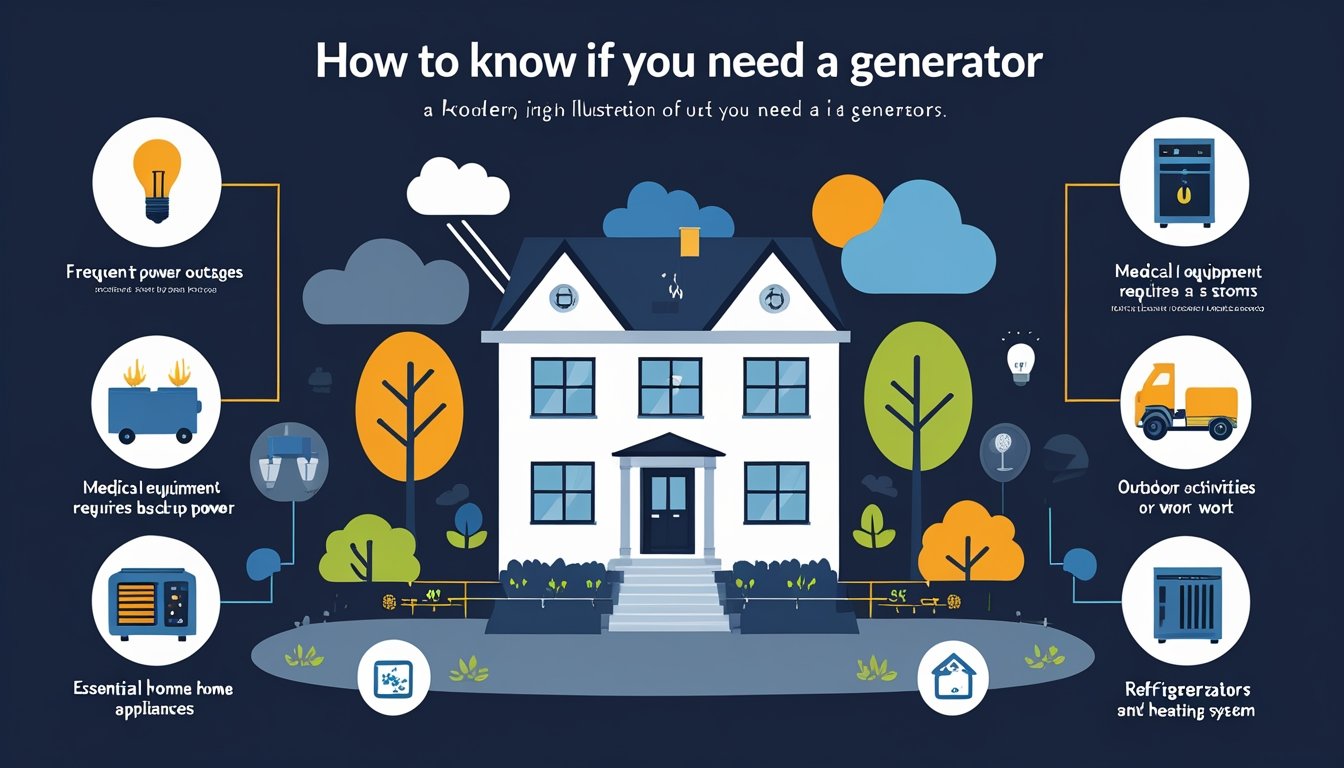
Knowing if you need a generator starts with thinking about how often your power goes out. Consider what you really need to keep running during those times.
If losing electricity makes your home unsafe or uncomfortable, or essential appliances can’t work, then a generator is worth considering. This can help protect your family and keep important systems like heating, cooling, and refrigerators powered.
You might also think about your location. Living in areas like Sacramento, Roseville, or surrounding cities where outages happen during storms or maintenance means you could benefit from having backup power.
A reliable generator keeps your home safe without the stress of being in the dark. AAA Electrical Services helps local families stay safe with tailored generator installation and repairs.
Their same-day service and transparent pricing make staying prepared easier. You can focus on your family’s safety and peace of mind.
Understanding the Purpose of a Generator
Knowing why a generator is important helps you decide if you need one. Generators provide backup power when the grid goes down.
They come in different types for different needs. Generators are especially useful during storms or power outages that last for days.
What Is a Generator Used For?
A generator gives your home electricity when the main power is out. It powers lights, refrigerators, heating or cooling systems, and medical devices.
This keeps your daily life running smoothly during outages. Generators are also used during outdoor events or work sites where no power supply exists.
For homes, the main goal is safety and comfort during power cuts. Understanding your home’s key power needs can help you pick the right generator size.
Too small means not enough power. Too large means wasting money.
Situations Where Generators Are Essential
Generators help most when you live in areas with frequent outages or extreme weather. In places like Sacramento or Roseville, storms or heatwaves can knock out power for hours or days.
If you rely on medical equipment, a generator is essential for your health and safety. It also protects food by keeping refrigerators and freezers running.
Sometimes, you only need to power critical systems, like sump pumps or lighting. Deciding which situation fits your home stops you from buying more power than needed.
Types of Generators Available
There are three main types of generators: portable, standby, and inverter generators.
Portable generators are small and can power a few appliances. They are affordable but need manual setup and fuel.
Standby generators connect directly to your home’s wiring. They start automatically during an outage and run on natural gas or propane.
Inverter generators produce cleaner power, ideal for sensitive electronics. They are quiet and fuel-efficient but usually for smaller loads.
Choosing the right type depends on your budget, power needs, and how you want to use it. For safe installation in Sacramento and nearby areas, AAA Electrical Services offers expert help with same-day service and flat-rate pricing.
Signs You Might Need a Generator
Deciding if a generator is right for your home depends on how often your power fails, your health needs, and where you live. These factors affect both your safety and comfort during outages.
Frequent Power Outages
If your area experiences regular power outages, a generator can keep your home running smoothly. Power disruptions can happen during storms, heatwaves, or local utility issues.
When your lights, fridge, or heating stop often, it’s more than an annoyance—it can risk food spoilage, damage to electronics, or unsafe temperatures. Keep track of how long outages last and how often they happen.
If outages happen more than a few times a year or last over several hours, it might be time to consider a generator. This small investment provides peace of mind and keeps your home functional during power loss.
Installing a generator properly requires an expert. AAA Electrical Services offers safe setups in Sacramento and nearby areas, helping you avoid risks like backfeeding and overload.
Home Medical Needs Requiring Electricity
If you or someone in your home relies on medical devices powered by electricity, having a generator isn’t just convenient—it’s critical. Devices like oxygen concentrators, CPAP machines, or refrigerated medicines need constant power.
A generator can supply backup power to these devices during an outage. Choose a generator that can handle the extra load these machines require.
Some devices need a lot of starting power, so your generator must have the right capacity. Professional electrical services can connect your generator safely and ensure it supports your medical equipment reliably.
This careful planning protects your family’s health and safety.
Remote Living or Off-Grid Locations
Living far from city power lines or in off-grid areas often means power interruptions or no connection at all. In these places, a generator can be your main or backup power source.
It allows you to run essential appliances, heat, and lights, even when the grid isn’t available. Relying on a generator in these locations requires planning.
You’ll need enough fuel supply and a generator sized correctly for your home’s needs. Maintenance is also key so your system works when you need it.
If you live or plan to live in Sacramento, Roseville, or nearby communities, a licensed electrician can recommend the right system. AAA Electrical Services ensures your generator is installed safely, so you have reliable power in any situation.
Evaluating Your Power Needs
Understanding what you need to power during an outage helps you pick the right generator size. Start by listing the essential devices you want to keep running.
Add up their power use to see how much electricity your generator must supply.
Essential Appliances and Devices
Think about the appliances and devices you rely on daily. These usually include your refrigerator, freezer, lights, sump pump, and heating or cooling system.
Other important items might be your medical equipment, Wi-Fi router, and phone chargers. If you work from home, your computer and printer could be essential too.
Write down each item’s wattage—often found on a label or in the manual. This helps you decide which devices the generator should support to keep your home safe and comfortable.
Calculating Total Power Consumption
Add up the wattage for all the essential devices you listed. Some appliances need extra power to start, called surge watts.
For example, a refrigerator might use 700 running watts but need 2100 starting watts. Make sure your total includes these surge needs to avoid overloading.
You can list your devices and their wattages like this:
DeviceRunning WattsStarting Watts Refrigerator7002100Sump Pump10003000Lights (LED)300300Wi-Fi Router50100
Sum the running watts, then add the highest starting watts from any single device. If you want help getting this right, AAA Electrical Services offers safe and clear guidance to make sure your generator fits your needs.
Safety and Convenience Considerations
When deciding if a generator is right for your home, think about how it can help you stay safe and comfortable during power outages. This includes being ready for emergencies and keeping your family’s daily life smooth when the lights go out.
Emergency Preparedness
A generator is a key part of emergency planning. It keeps essential devices running, like your refrigerator, medical equipment, and communication tools.
Without power, food can spoil quickly and some health devices won’t work. You should also consider safety features.
Proper installation with a transfer switch prevents dangerous electrical backfeed. This protects utility workers and your home’s wiring.
Make sure your generator placement meets local noise and ventilation rules to avoid risks like carbon monoxide buildup. AAA Electrical Services offers safe, licensed installation so you can be ready when emergencies hit.
Their same-day service and flat-rate pricing mean you get prompt, honest help.
Ensuring Family Comfort During Outages
Power outages can disrupt your daily routine. A generator helps maintain comfort by powering heating, cooling, and lighting systems.
This is especially important if you live in areas with extreme weather, such as Sacramento or Roseville, where staying warm or cool is critical. You can keep small appliances running too, like phones and TVs, so your family stays informed and entertained.
If you rely on medical devices or have young children or seniors at home, a generator offers peace of mind. AAA Electrical Services installs generators designed to fit your home’s needs with a focus on your family’s safety.
Their certified technicians work quickly and cleanly, respecting your home while ensuring your comfort.
Cost and Investment Factors
When thinking about getting a generator, you want to know what you’ll pay upfront and what it might cost over time. These costs include buying and installing the unit, as well as keeping it in good shape.
Initial Purchase and Installation Costs
The price of a generator depends on the size and type you need. Portable models cost less, but whole-house generators, which power your entire home, usually range from $5,000 to $12,500 installed.
Installation requires a licensed electrician because the setup involves connecting the generator safely to your home’s electrical system. Labor costs vary, but you can expect skilled work that meets local codes.
If you live near Sacramento or Roseville, AAA Electrical Services can provide same-day, transparent pricing. Their experienced team helps you pick the right generator and installs it safely.
Long-Term Maintenance Considerations
Generators need regular care to work when you need them. Maintenance often includes oil changes, filter replacements, and system checks at least once a year.
If you don’t maintain your generator, it can fail during an outage or need costly repairs. Automatic standby generators may run self-tests, but they still need professional inspections.
AAA Electrical Services offers maintenance plans in your area to keep your generator ready and your family safe. Regular upkeep helps avoid surprises and extends the life of your investment.
Alternatives to Buying a Generator
If you’re not sure about investing in a generator, there are other options to keep your home running during an outage. These choices can provide backup power for essential devices without the cost and upkeep of a full generator system.
Portable Power Stations
Portable power stations are compact, rechargeable batteries that store electricity for use during power outages. They are quiet, easy to carry, and don’t need fuel like gasoline or propane.
These devices can power small appliances, charge phones, and run medical devices for a few hours. You can find models with different capacities, so pick one based on what you need to power.
For example, a 500-watt station might run a laptop and some lights. Larger models over 1,000 watts can power mini-fridges or TVs.
Portable stations are low maintenance and safe inside your home. Just charge them beforehand and keep them ready.
While they don’t offer as much power as a generator, they are a good choice for short-term outages or smaller power needs.
Community Emergency Resources
Another option is to rely on community resources during outages. Many areas, including Sacramento and nearby cities, have emergency shelters or community centers equipped with backup power.
These places provide heat, light, and charging stations in times of need. You can also connect with neighbors for shared generator use or local power-sharing programs.
This way, you reduce the cost and responsibility of owning a generator while still having access to power. It’s smart to know where these resources are before an emergency.
AAA Electrical Services often works with local officials to help homeowners stay safe during blackouts. They offer advice on preparing for outages and connect you with reliable services nearby.
Making the Decision With Confidence
Deciding if you need a generator starts with your home’s power needs. Think about how often your area loses electricity and how long outages last.
If you deal with frequent or long power cuts, a generator can keep your home safe and comfortable. Check which appliances and systems you want to keep running, such as your refrigerator, heating, or medical devices.
A standby generator works well if you want automatic protection during long outages. It turns on by itself and connects directly to your home’s electrical system.
You won’t have to worry about starting it yourself.
Ask yourself:
- How important is continuous power to your family’s safety?
- What appliances or systems must stay on?
- Do you want a generator that starts automatically?
If you decide to move forward, work with trusted professionals. AAA Electrical Services provides same-day service and flat-rate pricing.
Their licensed technicians treat your home with care. The team sets up your generator safely and makes sure it meets local codes in Sacramento and nearby areas.
Frequently Asked Questions
Choosing the right generator depends on your home’s size, power needs, emergency goals, and budget. Knowing what fits your house and lifestyle helps you stay safe during outages.
What factors should I consider when determining the need for a home backup generator?
Think about how often and how long your area loses power. Consider what appliances you need running during an outage, such as refrigerators, heating, or medical devices.
Safety, your budget, and local rules also matter.
How can I calculate the right size generator for my house?
Count the watts of all appliances you want to power at once. Add extra for startup surge needs.
A licensed electrician can help you find the exact size that fits your home's total electrical load.
What are the benefits of having a portable generator for emergencies?
Portable generators are flexible and easy to move. They can power essentials during short outages or outdoor activities.
Can a 25,000-watt generator meet my home power requirements?
A 25,000-watt generator is large and can power most homes, including big appliances and multiple circuits. Make sure your home's system and wiring support that size for safety and efficiency.
What's the best generator to ensure uninterrupted power for a 1,500 sq ft house?
For a home of about 1,500 square feet, a standby generator between 7,000 to 10,000 watts usually covers key appliances safely. Getting advice from professionals like AAA Electrical Services helps you pick what fits your needs.
Are standby generators a worthwhile investment for residential properties?
Standby generators provide automatic power during outages. This adds convenience and safety.
They are a good investment if outages happen often. They are also helpful if you rely on electricity for health or security.
AAA Electrical Services installs generators with your family's safety in mind.