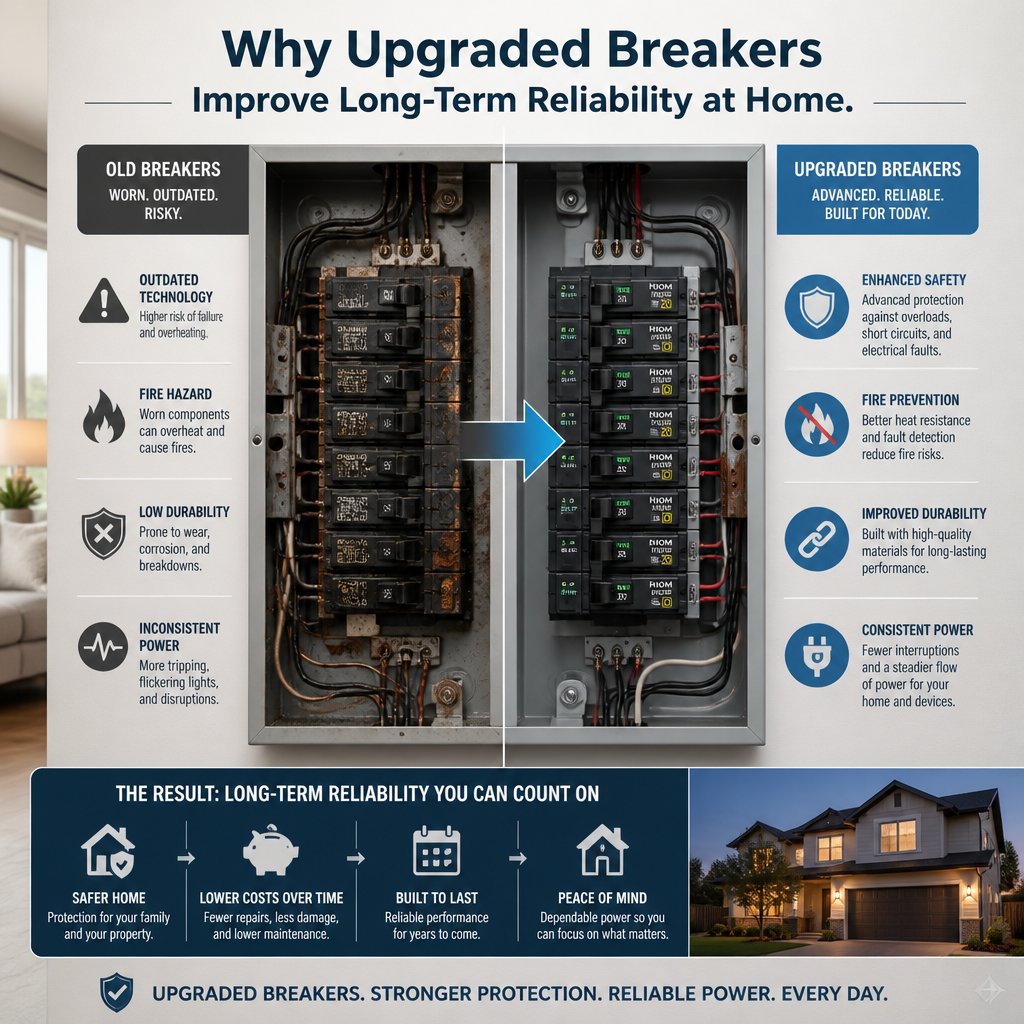
Your home’s electrical system works hardest when you barely notice it. When breakers actually match your home’s real demand and get replaced before they give out, you get steadier service, better protection, and fewer interruptions at the worst possible time. That’s why upgraded breakers improve long-term reliability: they help your home handle modern electrical loads more safely and put less strain on everything else.
And let’s be honest, that matters for your family’s safety—especially if you’re in an older Sacramento-area home where the panel’s been stretched thin by new appliances, EV charging, beefier HVAC systems, or added space. A dependable setup isn’t just about avoiding those annoying trips; it’s also about cutting down electrical hazards, limiting wear on your stuff, and keeping everything running for years.
Key Takeaways
- Newer protection reacts faster to electrical problems.
- Old panels struggle with today’s home demands.
- Professional upgrades boost safety, comfort, and peace of mind.
How New Breakers Create More Dependable Power
Modern circuit breakers do more than just flip off when there’s trouble—they react faster and more precisely to protect your wiring, appliances, and power supply. That means your home can move electricity more safely across daily routines, from morning coffee to laundry, cooking, and charging up.
Faster Response To Overloads And Faults
When electrical load gets too high, newer breakers cut power more quickly than many older ones. That faster action helps limit damage from a short circuit or arc fault, which, honestly, can really stress wires and connected devices.
For homeowners, that usually means fewer unexplained shutdowns and repairs tied to repeated strain. Protective devices should react before little problems turn into big headaches.
Why Accurate Tripping Reduces System Wear
A breaker that trips at the right time protects your home without overreacting to normal use. That accuracy matters, since repeated false trips can wear out connectors, appliances, and the breaker itself.
Modern breakers are built to respond more consistently to the actual electrical load. With protection like that, your whole system stays under less stress and usually lasts longer.
How Modern Protection Stabilizes Daily Power Use
Stable protection helps your home handle everyday demand with fewer surprises. If you’re in Sacramento, Roseville, Elk Grove, or Folsom, you probably rely on more devices than your house was built for. Newer protection helps keep that usage balanced.
When breakers are upgraded right, you get steadier power and fewer interruptions from old, tired parts. That support can mean the difference between constant troubleshooting and actually trusting your electrical system.
Warning Signs Your Existing Protection Is Falling Behind
You don’t have to wait for a disaster to spot a problem. Frequent trips, light changes, and weird smells often point to overloads, worn-out protection, or an overloaded electrical panel that’s just not keeping up.
Frequent Breaker Trips And What They Mean
Frequent circuit breaker trips are more than random annoyances. They usually mean overloaded circuits, aging parts, or a panel that can’t manage your current habits.
If you’re seeing power outages inside the house a lot, the breaker box itself might be to blame—not just the appliance you plugged in. That’s a red flag, since repeated trips can raise fire risk and cause other hazards.
Flickering Or Dimming Lights During Appliance Use
Flickering or dimming lights when a microwave, vacuum, or HVAC system kicks on? That’s often a sign your system’s struggling under demand. In a lot of homes, that shows up when the panel is overloaded or the breaker just can’t regulate power cleanly anymore.
You’ll probably notice the problem more in older homes where several big appliances share the same circuits. When lights change every time something cycles on, your home’s electrical system is asking for help.
Burning Smells, Heat, And Other Urgent Red Flags
Burning smells, warm breaker covers, scorch marks, or buzzing near the panel are urgent warning signs. These usually mean overheating, loose connections, or a failing old panel.
If you notice these, treat them as a safety issue—don’t shrug them off. Getting things checked out quickly can lower fire risk and stop a small problem from turning into a disaster.
Why Older Panels Struggle With Today’s Home Demands
Older panels just weren’t built for the number of devices, appliances, and charging needs you probably have now. As demand grows, panel capacity becomes the bottleneck, especially if you’re stuck with a dated breaker panel or box.
Panel Capacity And The Limits Of Older Systems
Your panel’s capacity sets the ceiling for how much power your home can safely use. When that’s too low, even normal use can cause trips, limit expansion, or overload the panel.
Plenty of older homes still have a fuse box or an old breaker box that was made for much lighter loads. A panel upgrade gives you more room to support modern appliances and new circuits safely.
Supporting Modern Appliances Without Constant Interruptions
These days, homes have induction ranges, bigger fridges, hot tubs, EV chargers, and more efficient HVAC gear. Great for comfort—but they can push old systems way past their limits.
An upgraded breaker panel helps handle all that with fewer interruptions. If you’re planning an EV charger or want space for future upgrades, a panel upgrade makes life a lot easier.
When A Fuse Box Or Breaker Box Becomes A Bottleneck
A fuse box or old breaker box can really hold you back when there’s no room left to add capacity or isolate problem circuits. At that point, just swapping breakers won’t cut it.
A licensed electrician can tell you if upgrading breakers is enough or if you actually need a new panel. Often, replacing the whole panel is the only way to get true long-term reliability.
Built-In Safety Improvements That Protect Over Time
Modern safety devices do more than stop obvious overloads. Stuff like AFCI, GFCI, and surge protection help reduce hidden damage, improve electrical safety, and keep your home safer long after the work’s done.
The Role Of AFCI And Arc Fault Circuit Interrupter Protection
An AFCI (arc fault circuit interrupter) is built to catch dangerous arcing that can start electrical fires. That extra layer of protection really matters in bedrooms, living rooms, and anywhere damaged wiring might go unnoticed.
By catching those risks early, AFCI protection can help stop fires before they start. That’s a big deal for both safety and peace of mind.
Where GFCI And Ground Fault Circuit Interrupter Protection Matter
GFCI (ground fault circuit interrupter) protection is a must near water. Bathrooms, kitchens, laundry rooms, garages, outdoor outlets, and utility spaces all need this defense against shock hazards.
When GFCIs are installed and working right, they support safety in daily routines. They’re especially good at keeping wet or damp areas from turning into real electrical dangers.
How Surge Protection Helps Prevent Hidden Damage
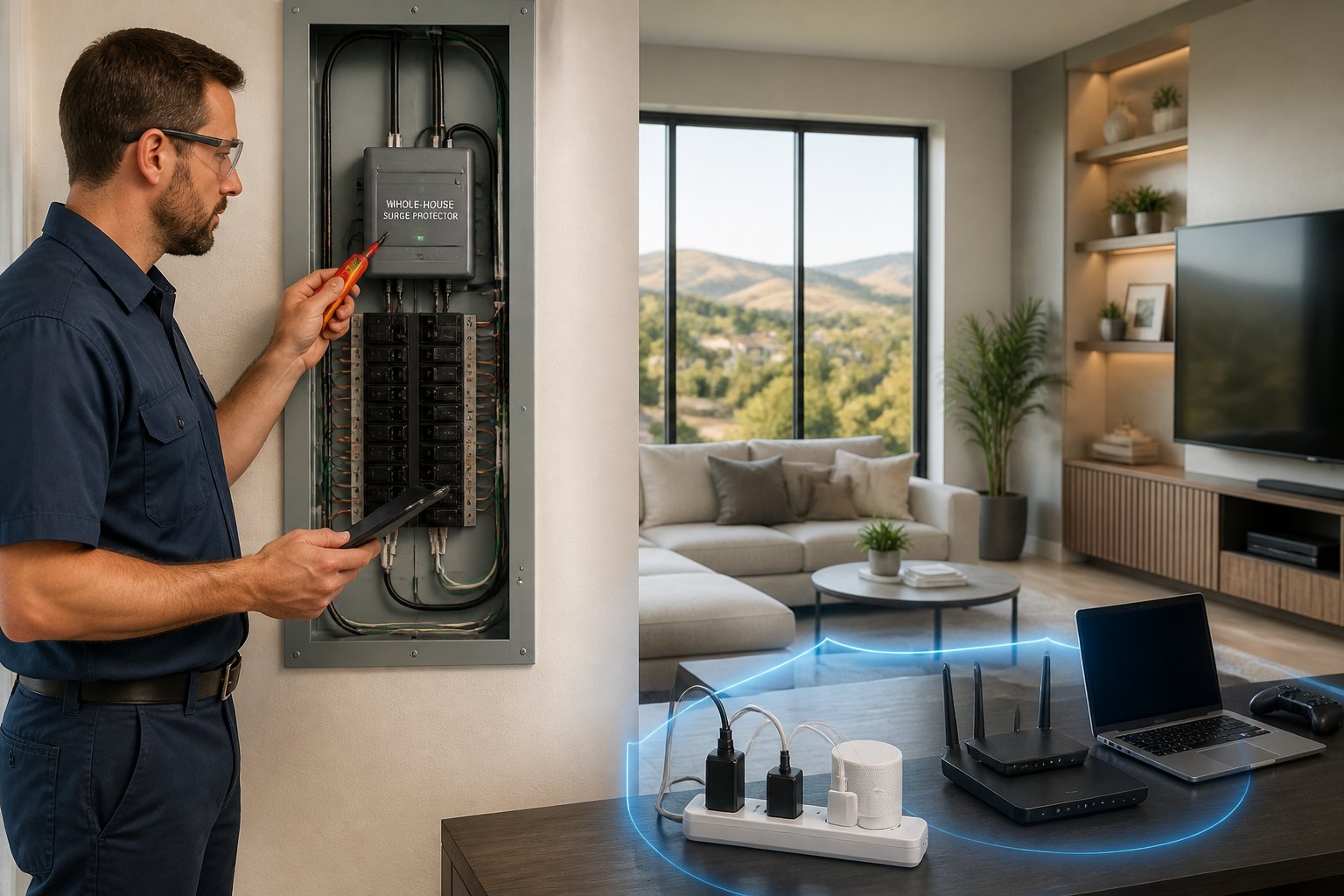
A surge can fry sensitive electronics even if you don’t see an immediate failure. Whole-home surge protection absorbs that extra energy before it reaches devices, breakers, or appliances.
That protection can stop hidden damage that builds up over time and shortens the life of your stuff. If you want to protect both comfort and investment, surge protection just makes sense.
Code Compliance, Inspections, And Professional Installation
A breaker upgrade has to do more than just work today—it needs to meet current standards and fit your home right. Licensed electricians follow electrical codes, including the National Electrical Code, to help your system stay safe and reliable.
Why Current Safety Standards Matter For Reliability
Safety standards aren’t just paperwork; they shape how reliably your system runs. When a breaker upgrade follows current codes, it’s more likely to protect wiring right and cut down long-term risks.
That’s important for anyone who wants dependable service and fewer callbacks. Properly installed protection also helps your home pass electrical inspection in the Sacramento area.
What A Licensed Electrician Checks Before Recommending Upgrades
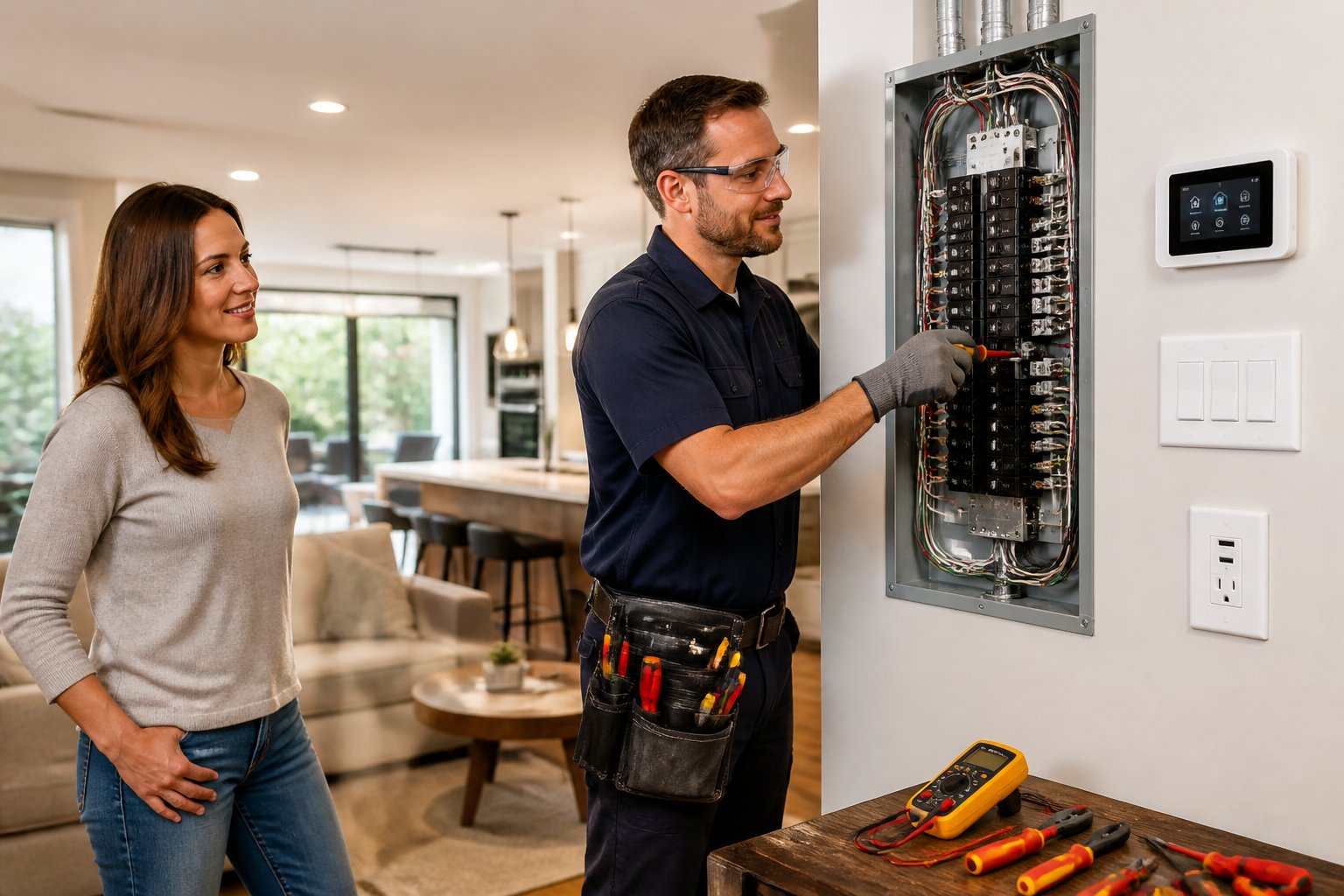
A licensed electrician checks panel condition, circuit loading, conductor size, and signs of wear before recommending repairs or upgrades. They’ll also figure out if you need just a breaker upgrade, a new panel, or something bigger.
At AAA Electrical Services, they handle this with straightforward communication and flat-rate pricing, so you know what’s being suggested and why. With stocked service vehicles and respectful techs, same-day service often moves things along when you need help fast.
How Electrical Inspection Supports Better Repair Decisions
An electrical inspection helps you figure out if you’ve got a simple breaker problem or a bigger system issue. That can save you from swapping the wrong part and still having trips, heat, or overloads.
Inspection also helps you choose between a targeted repair or a full panel replacement. When you get clear findings from licensed pros, making a safer, confident decision gets a lot easier.
Long-Term Value Beyond Fewer Tripped Breakers
Upgraded breakers aren’t just about stopping nuisance trips. They can support energy efficiency, help you plan for future needs, and give buyers more confidence in your home’s electrical system.
Energy Efficiency And Energy Monitoring Benefits
A better-protected system cuts down wasted energy from strain, overheating, or constant interruptions. Some modern panels even support energy monitoring tools, so you can spot weird usage and improve efficiency.
That gives you a clearer picture of your home’s daily power use. When you actually understand your usage, it’s easier to make smart choices and lower system stress.
Planning For Future Loads Like EVs, Solar, And Backup Power
Future-proofing matters if you’re thinking about adding an EV charger, solar panels, or a generator. These upgrades all need good planning, and the right breaker setup helps your home handle them smoothly.
If you’re in Natomas, Carmichael, Rancho Cordova, or nearby, planning ahead can save you from another big upgrade later. A well-timed panel upgrade supports your needs now and leaves room for tomorrow.
How Upgrades Can Improve Resale Value
Buyers and inspectors notice when a home’s electrical system is solid. A newer panel signals that the house is ready for modern demands and that key safety work’s already done.
That can boost resale value by lowering worries about capacity, repairs, and future costs. For a lot of people, the peace of mind is worth as much as the added market value.
Frequently Asked Questions
What are the signs that my circuit breakers are wearing out or failing?
You might notice frequent breaker trips, inconsistent resets, warmth around the panel, or breakers that trip for no clear reason. If the same circuit keeps acting up even after you lighten the load, the breaker or wiring could be worn out.
How can newer breaker technology help prevent nuisance trips and hidden electrical faults?
Newer breakers respond more accurately to real faults and overloads, which helps cut down on nuisance trips. They can also catch arc fault risks faster, so hidden problems don’t linger.
Will upgrading breakers reduce the risk of overheating, arcing, or electrical fires over time?
Yes, if the upgrade matches your home’s wiring and load needs, it can really cut down the conditions that cause overheating and arcing. That extra protection supports long-term reliability and lowers fire risk.
How do upgraded breakers affect protection for sensitive electronics and appliances?
Upgraded breakers keep power interruptions more controlled, which reduces stress on sensitive electronics and appliances. With surge protection added, you get a much stronger defense against electrical disturbances.
When should I upgrade the breakers versus replacing the entire electrical panel?
If your panel’s in good shape and has enough capacity, upgrading breakers may be enough. But if your panel’s outdated, overloaded, or missing space for new circuits, a full panel upgrade is usually the smarter long-term move.
What is the 120% rule for electrical panels, and how does it impact breaker upgrades?
The 120% rule guides how much extra load you can add to an electrical panel, especially when you're dealing with solar installations or thinking about breaker upgrades. It basically limits the total breaker load to 120% of the panel's rated capacity. If you're considering changes, it's honestly best to have a licensed electrician take a look first—there are a lot of details that aren't obvious at first glance.