
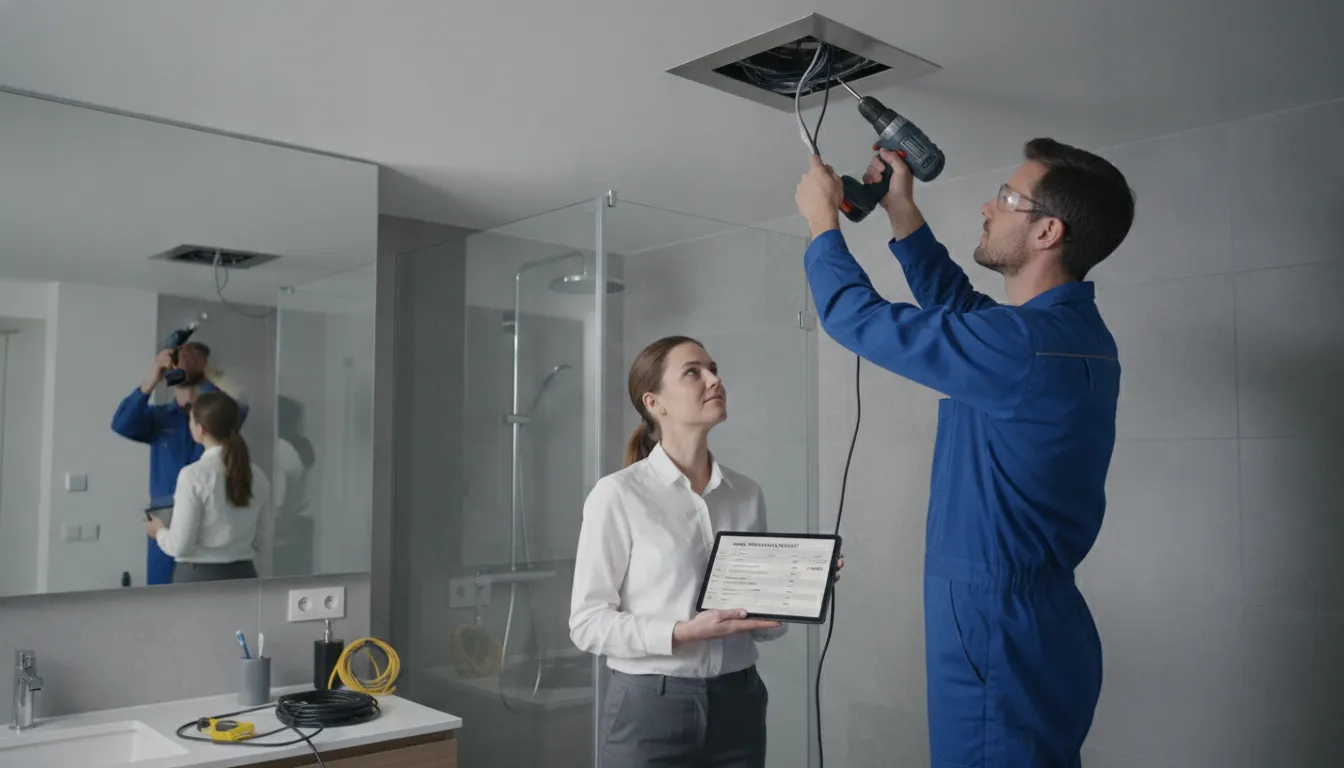
Is your bathroom fan rattling, struggling to clear steam, or not turning on at all? You may be ready to replace it, but the total price depends on more than the new fan. Bathroom exhaust fan installation cost can include equipment, labor, electrical work, ducting, and repairs to the ceiling. The job may be simpler if the current setup is in good shape and the replacement fits. If the wiring or vent route needs attention, the scope can grow. Learn how to compare estimates, choose a fan that suits your bathroom, and make sure the installation sends moist air outdoors.
Key Takeaways
- Treat national cost figures as a guide: Bathroom exhaust fan installation typically costs $241 to $563, but your Sacramento-area price depends on the home and project scope.
- Ask what the estimate covers: Confirm whether it includes the fan, labor, wiring, ductwork vented outdoors, permits, disposal, and ceiling repairs.
- Compare written quotes from qualified electricians: Have the wiring and vent route assessed, then compare estimates with the same fan and scope before scheduling.
What Does Bathroom Exhaust Fan Installation Cost?
Typical installed cost: $241–$563, averaging about $396
Installing a bathroom exhaust fan typically costs $241 to $563, with an average total of about $396, according to HomeAdvisor’s cost guide. These are national estimates, so use them as a starting point rather than a guaranteed price for your home.
A replacement may cost less when the existing wiring and venting are in good condition and fit the new fan. A new installation can cost more if the job requires electrical changes, new ductwork, or a route to an exterior wall or roof. Ask an electrician to assess the setup and provide a quote based on the work your bathroom needs.
Estimate components: fan, materials, labor, electrical work, and disposal
The fan itself can cost $20 to $500, depending on its size, noise level, and features. HomeAdvisor lists labor at $200 to $800. Materials, wiring, ductwork, and removal of the old unit may also affect the total. These figures cover different cost ranges, so adding them together won’t necessarily give you an accurate estimate for your project.
Ask for an itemized quote that explains what is included. Check whether it covers the fan, installation labor, electrical work, ducting, disposal, and any ceiling repairs. Comparing quotes with the same fan and scope of work makes it easier to understand the price differences and ask about potential extra costs.
Why Sacramento-area prices may differ from national estimates
A national average may not match the cost of work in your Sacramento-area home. The fan’s location, ceiling access, existing wiring, and distance to an exterior wall or roof can all affect the job. The condition and route of the ductwork matter too, especially if the current vent needs repair or replacement.
Dunbar’s Electric’s cost guide also identifies fan features, wiring, and access to venting as factors that influence installation costs. For a quote that reflects your home, ask a licensed electrician to inspect the existing setup and explain any work beyond replacing the fan. Sacramento homeowners can learn more about AAA Electrical Services’ residential electrical services.
Does Replacement or New Installation Cost More?
Replacing a bathroom exhaust fan often costs less when the existing wiring, ductwork, and ceiling opening are in good condition. The electrician can remove the old unit and install a compatible replacement without creating a new route for wiring or venting. If the current setup needs repairs or does not meet the requirements of the new fan, the work may take longer and cost more.
As a general estimate, replacement labor may run about $100 to $400 when existing components can be reused. Labor for a new installation may range from $250 to $950 if the project requires wiring, ductwork, or a new opening. These figures do not necessarily include the fan itself, and costs vary with the home and project. Dunbar’s Electric outlines bathroom fan installation cost ranges.
Before choosing between repair, replacement, or a new installation, ask an electrician to assess the fan, wiring, duct route, and access to the work area. Request a written estimate that explains what is included, such as materials, electrical work, venting, and any ceiling repairs. AAA Electrical Services provides residential electrical services in the Sacramento area, including installation and repair work.
Replacement labor: about $100–$400 if existing components can be reused
When the ceiling opening, wiring, and ductwork are in good shape, replacing a fan may involve removing the old unit and fitting a compatible model. The labor estimate for this type of replacement is about $100 to $400, with the fan and any additional materials priced separately. The exact cost depends on the fan’s size and features, along with how easily the installer can reach it.
Check that the replacement fan matches the existing opening and can connect properly to the current wiring and duct. If it does not fit, modifications may add labor. Ask the electrician to confirm compatibility before purchasing a fan, and to point out any worn or unsafe components that could affect the estimate.
New-installation labor: about $250–$950 if wiring or venting is needed
Installing a fan where none exists can require cutting a ceiling opening, adding wiring, and routing ductwork to an outdoor vent. Labor may range from about $250 to $950 when these tasks are part of the job. The layout of the home, distance to an exterior wall or roof, and access through an attic can all affect the total.
Ask the installer to explain where the duct will run and how it will terminate outdoors. Bathroom air should not be released into an attic or another enclosed area. If the project needs new or modified wiring, have the estimate specify that work and any related materials. This helps you compare bids that cover the same tasks.
When repairs or fan-only upgrades may cost less than full replacement
A noisy or weak fan may need a repair rather than a full replacement, depending on what is causing the problem. If the housing, wiring, and ductwork remain in good condition, an electrician may be able to repair a component or install a compatible fan motor. An inspection can help determine whether that option is practical and whether the fan still removes moisture effectively.
Compare the repair price with the cost of replacing the fan, including labor and parts. A repair may be less expensive upfront, but replacement may make more sense if the unit has recurring problems or the existing setup is not suitable for a new model. Ask the electrician to explain what each option covers and whether the work includes any changes to the wiring or duct.
How access and ceiling repairs affect either estimate
Access affects the labor needed for both replacement and new installation. A fan that can be reached through an attic may be simpler to work on than one above a finished ceiling with limited clearance. HomeAdvisor’s bathroom fan installation guide notes that labor rates and total labor costs vary with access and project complexity.
Ceiling repairs can add to the estimate if the new fan needs a larger opening, does not cover the old opening, or requires cuts to route ductwork. Ask whether drywall patching, finish work, cleanup, and disposal of the old fan are included or priced separately. An itemized estimate makes it easier to understand how access and repairs affect the final cost.
Which Fan Type Fits Your Bathroom and Budget?
Choose a bathroom fan based on the room’s size, how often it gets steamy, and the features you’ll use. A simple replacement may be all you need, while a larger bathroom or a ceiling with limited access could call for a different style. Before choosing a model, consider its airflow, noise level, controls, and fit with your existing wiring and ductwork.
Standard fans remove moisture and odors
A standard exhaust fan draws humid, stale air out of the bathroom and vents it outdoors. Running it during and after a shower helps reduce lingering moisture and odors. This type is often a practical choice when you’re replacing an existing fan and its ductwork, wiring, and ceiling opening are in good condition.
The fan itself can cost from $20 to $500, depending on its size, noise level, and features, according to HomeAdvisor’s bathroom fan cost guide. The lowest-priced option may not be the best fit if it cannot move enough air for your bathroom. Check the fan’s capacity and compare it with the room’s size before making a decision.
Fan-and-light combinations and other feature-rich models
A fan-and-light combination provides ventilation and overhead lighting in one fixture. Some models also include a heater, which can make the bathroom more comfortable on cold mornings. These added features may increase the equipment cost and affect the installation, so consider which ones your household will actually use.
Fan design also matters. A ceiling-mounted fan is common and often suits straightforward replacements. An inline fan places its motor away from the bathroom, which can make it quieter, while a wall-mounted model may work when attic access is limited. The Cooling Company’s overview of bathroom fan types explains these options. Heater models may need a dedicated circuit, so have an electrician check the manufacturer’s requirements and your home’s wiring.
Energy-efficient fans and humidity-sensing controls
An energy-efficient fan may cost more upfront but use less electricity over time. The Cooling Company reports that Energy Star fans use 60% to 70% less energy than standard models and may save $15 to $25 per year. Your actual savings will depend on how often the fan runs and your electricity rates, so compare the expected use with the purchase price.
Humidity-sensing controls switch the fan on when moisture levels rise and off when the air clears. They can be helpful if someone in your household often forgets to turn on the fan. Check whether the sensor is built into the unit or requires a separate control, and confirm that the wiring is compatible. If you’re unsure, an electrician can review your setup and explain the installation options through services such as AAA Electrical Services’ residential electrical work.
Compare airflow, noise, size, and controls—not just price
Airflow is measured in cubic feet per minute, or CFM. A common guideline is at least 1 CFM per square foot of bathroom space, but the right capacity can vary with the room’s layout and fixtures. Larger bathrooms generally need more airflow, which may affect the cost of both the fan and installation. Check the manufacturer’s sizing guidance rather than relying on price alone.
Noise is measured in sones, with lower ratings indicating quieter operation. HomeAdvisor suggests considering a fan rated at 2 sones or less if quiet performance is a priority. Also check that the unit fits the ceiling opening and works with the existing duct route, switch, and wiring. Comparing these details can help you choose a fan that suits your bathroom without paying for features you don’t need.
What Affects the Total Installation Cost?
A bathroom exhaust fan estimate covers more than the fan itself. The existing ceiling, ductwork, and wiring can all affect the work involved. Ask for an itemized quote that explains what’s included, what may cost extra, and how the installer will handle any unexpected issues.
Fan price, features, and fit with the existing ceiling opening
A bathroom fan can cost about $20 to $500, depending on its size, noise level, and features, according to HomeAdvisor’s cost guide. Basic models may suit smaller bathrooms, while quieter fans or models with lights and humidity sensors can cost more.
Check the fan’s dimensions against the existing ceiling opening and duct connection. A model that fits may need less adjustment, while a different housing size could require changes to the ceiling or duct. Compare airflow, sound ratings, and controls as well as price. The lowest-cost option may not meet your bathroom’s ventilation needs. Ask your electrician to confirm the fan is an appropriate fit before you buy it.
Labor, ceiling access, and drywall or finish repairs
Labor depends on how accessible the fan location is and how much work the installation requires. Replacing a fan may be relatively straightforward if the existing wiring and ductwork are in good condition. Installing a fan where none existed can take longer if the electrician needs to open the ceiling, run wiring, or create a new duct route. One electrician’s estimate puts replacement work at about two to three hours and new installations at four to eight hours or more.
Ask whether the estimate includes ceiling repairs, painting, and cleanup. Access from an attic may simplify the job, while a finished ceiling or limited clearance can add careful cutting and repair work.
Ductwork condition, routing, and outdoor vent termination
A bathroom fan needs a duct that carries moist air outdoors. If the existing duct is damaged, disconnected, or poorly routed, the installer may need to repair or replace it. Adding new ductwork through a roof or exterior wall can add about $250 to $950 or more, according to HomeAdvisor’s installation estimates.
Ask where the duct will end and whether the quote includes the exterior vent cap. The route’s length, bends, and access all affect labor and materials. Venting into an attic, wall cavity, or crawl space can leave moisture inside the home and contribute to mold or building damage. Re-Bath explains the importance of proper outdoor venting. A clear estimate should describe the duct route and termination point.
Wiring, switches, and circuit requirements
Electrical work may add to the total if the wiring is damaged, missing, or unsuitable for the new fan. The estimate may also change if you want a separate switch, a timer, or a fan-and-light model that needs additional connections. The electrician should confirm that the fan’s electrical requirements work with the existing circuit.
Bathroom installations must follow applicable electrical safety rules, which may include GFCI protection and specific wiring requirements. Ask the installer to inspect existing wiring rather than assume it can be reused. Mr. Electric notes that exhaust fan installation involves electrical components. Have the quote list any proposed wiring, switch, or circuit changes separately, so you can understand what the work covers before approving it.
Permits, code requirements, and unexpected complications
Permit requirements depend on the work and local regulations. Replacing a fan may have different requirements from adding wiring, changing a circuit, or making a new roof or wall opening. Ask your installer whether a permit is needed, who will obtain it, and whether the fee is included in the estimate. Angi recommends checking local regulations and permit requirements.
An inspection may reveal issues such as damaged wiring, a blocked duct, or limited access above the ceiling. These discoveries can change the scope and cost. Before work begins, ask how the company handles added repairs and whether you’ll approve a revised price first. AAA Electrical Services provides residential electrical work in the Sacramento area; you can review its electrical services when comparing local providers.
Which Bathroom Fan Brands and Models Should You Compare?
Compare Panasonic, Broan-NuTone, and Delta Breez
Panasonic, Broan-NuTone, and Delta Breez are three brands to consider when shopping for a bathroom exhaust fan. Panasonic models are often chosen for quiet operation and energy efficiency, which can be useful when the bathroom is near a bedroom. Broan-NuTone offers a broad range of options, including fans with built-in lights or heaters. Some Delta Breez models include humidity sensors or adjustable speeds.
Compare individual models rather than choosing by brand alone. Features, airflow capacity, sound levels, and installation needs vary across each lineup. Home Depot’s overview of exhaust fan installation can help you understand what to consider when selecting a unit.
Check airflow, sound ratings, energy use, and warranty terms
Check a fan’s airflow rating, measured in cubic feet per minute (CFM), and choose a capacity that suits your bathroom’s size and layout. Then compare sound ratings, measured in sones. A lower sone rating generally means quieter operation. Also consider energy use, especially if you expect to run the fan often or choose a model with extra features.
Read the warranty for the specific fan you’re considering, since coverage varies by model and manufacturer. Check what parts are covered and for how long. HomeAdvisor’s bathroom fan cost guide provides additional context on fan features and installation. Make sure the unit fits your existing ceiling opening, or include any needed adjustments in your installation estimate.
Look for recurring noise or reliability concerns in customer reviews
Reviews can offer useful details that product descriptions leave out. Look for repeated reports of rattling, humming, weak airflow, troublesome controls, or fans that stop working sooner than expected. One complaint may be an exception, but a pattern across multiple reviews deserves attention. Check reviews for the exact model, and prioritize feedback from people with bathrooms similar in size and setup to yours.
Reviews may also mention installation challenges, but they can’t confirm whether a fan will work with your home’s wiring or ductwork. If you’re unsure about compatibility, ask a residential electrician to assess the installation before you buy. AAA Electrical Services provides residential electrical services in the Sacramento area, including fan installation and repair.
What Should You Ask Before Hiring an Installer?
A bathroom exhaust fan installation can involve electrical work, ductwork, and ceiling repairs, not just mounting a fan. Before you hire someone, ask what the job includes, who will do the work, and how the installer will handle ventilation and cleanup. Clear answers make it easier to compare estimates and know what to expect.
Are you licensed, insured, and experienced with bathroom fan installations?
Ask whether the contractor is licensed and insured, and whether they have installed bathroom exhaust fans like yours. Replacing a fan may be simple if the wiring and ductwork are in good condition. A new installation may require electrical changes or a new vent route, so ask about the installer’s experience with that scope of work. You can check a contractor’s license through the California Contractors State License Board. Improper installation can cause electrical problems or inadequate ventilation, which may contribute to moisture damage. Also ask who will perform the work and whether that person has the required qualifications. AAA Electrical Services serves Sacramento-area homeowners with residential electrical services and uses licensed, background-checked technicians.
Does the written estimate itemize equipment, labor, wiring, and ductwork?
Request a written estimate that identifies the fan, materials, labor, wiring, ductwork, disposal, and any ceiling or drywall repairs. Ask the installer to note which existing components they expect to reuse and what is not included. For example, the price may change if the wiring or ductwork needs replacement after the work begins. Ask how the contractor handles unexpected issues and whether they will get your approval before adding work or costs. An itemized estimate helps you compare bids for the same fan and scope, rather than relying on the total price alone. It also gives you a useful record of the agreed work, which can help avoid misunderstandings once installation is underway.
Will the fan vent outdoors, and does the estimate include permits and finish repairs?
Ask where the fan will direct its exhaust. Bathroom moisture should vent outdoors through suitable ductwork, not into an attic or crawlspace. Venting into an enclosed space can lead to moisture damage, as explained in this exhaust fan installation guide. Have the installer describe the duct route, outdoor exit point, and condition of any ductwork they plan to reuse. Then confirm whether the estimate includes permits, if required, and repairs to the ceiling or other finishes. Local regulations and permit requirements may affect the work, so ask the contractor to identify them before the project begins. Getting these details in writing helps you understand the full scope and budget.
What are the timeline, cleanup plan, and warranty terms?
Ask how long the installation should take and whether the schedule depends on parts, permits, or access to the attic. Find out how the installer will protect nearby surfaces, manage dust, and clean up after the work. Before approving the job, review the warranty for both the fan and the installation. Ask what it covers, how long coverage lasts, and whom to contact if a problem occurs. Request the terms in writing, especially if electrical changes or ceiling repairs are part of the project, since those may have separate coverage. Knowing the timeline and cleanup plan in advance helps you prepare your home and understand what the installer will take care of when the work is complete.
Can you share references or reviews for similar work?
Ask for references or reviews from homeowners who hired the contractor for bathroom fan installations or similar electrical work. Look for feedback about communication, punctuality, cleanliness, and how the team handled unexpected issues. If you contact a reference, ask whether the final price matched the estimate and whether the installer explained the electrical and ventilation work clearly. You can also review the company’s residential electrical services to see whether the work you need is included. AAA Electrical Services offers upfront pricing and a satisfaction guarantee for its services. Compare the answers you receive with the written estimate, so you can choose an installer whose experience, work plan, and terms fit your project.
Avoid These Costly Installation and Hiring Mistakes
Assuming replacement always costs less than new installation
Replacing a bathroom fan may cost less when the existing wiring, ductwork, and ceiling opening are in good condition. But if those components need repairs or changes, a replacement can turn into a larger project. The age of your old fan alone won’t reveal the full cost. HomeAdvisor’s bathroom fan cost guide estimates replacement labor at about $100 to $400 when existing components can be reused.
Before deciding, ask the electrician to inspect the wiring, duct route, and fan opening. If only one part has failed, a repair or fan-only upgrade may be enough. A clear assessment helps you compare the cost of a focused repair with a full replacement, and reduces the chance of unexpected work during installation.
Comparing quotes for different fans or scopes of work
Two estimates can vary because they cover different fans or tasks. One may include a basic fan and a direct replacement, while another includes a quieter model, new ductwork, wiring changes, and ceiling repairs. Compare the details, not just the total price.
Ask each contractor to list the fan model, labor, materials, electrical work, venting, disposal, and finish repairs. Confirm that the estimates include comparable airflow capacity and features. As Mr. Electric explains in its guide to fan installation, the right professional and project scope depend on the work involved. If an estimate leaves out something you expect, ask for clarification before choosing a contractor.
Choosing the lowest bid without checking credentials and warranty details
A low bid can be tempting, but make sure you know who will do the work and what the price covers. Ask whether the installer is licensed and insured, how much experience they have with bathroom fans, and whether the estimate includes a workmanship warranty. Check the fan manufacturer’s warranty, too, and ask who to contact if the unit needs service.
Electrical work and ventilation need proper installation. Mistakes can cause electrical issues, weak airflow, or moisture damage, as Mr. Electric’s hiring guide notes. Read customer reviews and request references for similar projects. A written estimate, clear warranty terms, and qualified technicians give you a more reliable basis for comparing bids than price alone.
Overlooking outdoor venting, safe wiring, or code requirements
A bathroom exhaust fan should send damp air outdoors through an appropriate duct and termination point. Venting it into an attic or crawlspace can allow moisture to build up and contribute to damage. Allied PNH cautions against venting exhaust fans into these spaces, so ask the installer where the duct will end before work begins.
Have the installer assess the wiring, switch setup, and any applicable permits or code requirements. These details can affect the project scope, especially when adding a fan where none existed before. Don’t assume the shortest or least expensive duct route is suitable. A licensed electrician can explain what the installation needs for safe operation and effective moisture removal. Sacramento-area homeowners can review AAA Electrical Services’ residential electrical services when looking for help with electrical work.
Assuming DIY installation always costs less
Installing a fan yourself may seem like a way to save on labor, but the work can involve more than attaching a unit to the ceiling. You may need to handle wiring, cut or repair drywall, fit ductwork, and route the exhaust outdoors. Mistakes can reduce airflow or lead to electrical and moisture problems.
Before starting, consider your experience, tools, and the condition of the existing setup. Rebath’s installation guidance describes common DIY errors that can affect fan performance and the home. If the wiring or vent route is unclear, ask a residential electrician to assess it. A professional estimate helps you compare the full cost of the job, including materials and repairs, with the time and work a DIY installation would require.
How Can You Manage Installation Costs and Payment?
A little preparation can make bathroom exhaust fan installation easier to budget for. Compare estimates carefully, choose a fan that suits your bathroom, and confirm what the quoted price includes before scheduling the work.
Compare itemized estimates for the same fan and scope of work
Request written, itemized estimates from at least two qualified contractors. For a fair comparison, check that each estimate covers the same fan model or similar specifications, labor, wiring, ductwork, permits, cleanup, and any ceiling repairs. A lower price may reflect a narrower scope, not a better deal.
If you’re replacing a fan, ask whether a new model can fit the existing ceiling opening. Matching the opening may limit cutting and finish repairs, but the contractor should also confirm the fan works with your bathroom’s venting and electrical setup. Dunbar’s Electric outlines how fan dimensions and installation details can affect cost. Ask about any unclear line items before approving the estimate.
Match fan capacity and features to your bathroom and budget
Start by measuring the bathroom and comparing fans by airflow, listed in cubic feet per minute (CFM). A common guideline is about 1 CFM per square foot, though ceiling height, room layout, and manufacturer recommendations may affect what’s suitable. A fan that’s too small may not manage moisture well, while a higher-capacity model may cost more than your space requires.
Then decide which features are worth paying for. A basic fan may meet your needs, while a light, humidity sensor, or quieter operation may be useful for your household. Compare airflow, noise ratings, dimensions, and controls along with the price. HomeAdvisor’s cost guide provides general information on fan models and installation expenses.
Ask about discounts, promotions, and financing
Before you schedule the work, ask whether discounts, promotions, or financing are available. Confirm which offers apply to your project and review any interest, fees, payment schedule, and eligibility requirements. Request these details in writing so you can understand the total cost before work begins.
Don’t choose a contractor based only on the lowest estimate. Check licensing, experience, warranty terms, and the written scope of work. Ask whether the price includes wiring, ductwork, permits, and ceiling repairs, and how added work will be priced if an inspection reveals an issue. A clear agreement helps you plan for the full project cost.
Review AAA Electrical Services’ upfront pricing and financing options
If you’re in the Sacramento area, ask AAA Electrical Services for clear pricing before approving the installation. Confirm what the estimate includes and whether your project may need electrical updates, new venting, or ceiling repairs. Knowing the scope upfront helps you compare proposals and choose an option that fits your budget.
If you’d prefer to spread out payments, review AAA Electrical Services’ financing options and ask which terms apply to your project. You can also learn more about the company’s residential electrical services or contact the team to discuss your bathroom fan installation.
When Should You Call a Residential Electrician?
Signs your fan needs repair or replacement
Call a residential electrician if your bathroom fan rattles, squeals, runs intermittently, or no longer clears steam and odors. Lingering condensation on mirrors and walls may mean the fan isn’t moving enough air. If it stops working, the problem could involve the fan, switch, wiring, or circuit.
Treat burning smells, sparks, unusual heat, or a breaker that trips when you turn on the fan as warning signs. Stop using the fan and don’t attempt to inspect or repair its wiring yourself. An electrician can identify whether the issue calls for a repair, replacement, or wiring work. For more on installation pitfalls, read what to know before installing a bathroom exhaust fan.
Why safe wiring and proper venting matter for moisture control
An exhaust fan needs safe electrical connections and a clear route to carry damp air outdoors. If it vents into an attic or crawlspace, moisture can collect in areas that aren’t designed to handle it, raising the risk of mold and water damage. Installation guidance for exhaust fans cautions against venting into these spaces.
An electrician can inspect the wiring, switch, and circuit, and check that the ductwork terminates outdoors. If the job needs a new duct route or an exterior vent, ask how the installer plans to complete the work and protect nearby finishes. Mr. Electric explains that improper installation can lead to electrical issues and inadequate ventilation. Before work begins, make sure you understand how the fan will be wired and where it will exhaust air.
What to expect from a Sacramento-area service provider
A professional should ask about the fan’s symptoms, inspect the existing unit and wiring, and assess the ductwork. For a new installation, ask whether the estimate includes the fan, wiring, ductwork, an outdoor vent, permits if required, and any ceiling repairs. An itemized quote helps you understand the work and compare estimates.
Choose a licensed, insured electrician with residential installation experience. Confirm the schedule, cleanup plan, and warranty terms before work starts. Because Sacramento-area homes vary in age, layout, and access to attic or roof spaces, an in-person assessment can clarify what the job involves. Review AAA Electrical Services’ residential electrical services to see the types of electrical work its team provides.
Consider AAA Electrical Services’ licensed, background-checked technicians and satisfaction guarantee
Credentials and clear communication matter when you invite a technician into your home. AAA Electrical Services’ technicians are licensed, background-checked, and drug-tested, and the company offers a 100% satisfaction guarantee. It also provides upfront pricing, so you can review the proposed work and cost before approving the job.
Ask whether your fan needs repair or replacement, how it will vent outdoors, and whether wiring or finish work is included. AAA Electrical Services offers same-day service in its service area, subject to availability. Check whether your address is covered through its locations page, and confirm what the estimate includes before scheduling.
Related Articles
- Bathroom Exhaust Fan Installation: Elk Grove Guide
- Exhaust Fan Install
- Exhaust Fan Installation: Carmichael
- Exhaust Fan Installation: Fair Oaks, CA
- Bathroom Exhaust Fan Electrician: Folsom
Frequently Asked Questions
How much does it cost to install a bathroom exhaust fan?\ National estimates range from about $241 to $563, with an average near $396. Your total may differ depending on the fan, wiring, ductwork, ceiling access, and any repairs. A written estimate based on your home is the best way to understand the cost.
Is replacing a bathroom fan cheaper than installing a new one?\ It often is when the existing wiring, ceiling opening, and ductwork are in good condition and compatible with the new fan. A new installation may cost more if it needs new wiring, a ceiling opening, or ductwork routed outdoors.
Does a bathroom exhaust fan need to vent outside?\ Yes. The duct should carry moist air outdoors, not into an attic, crawlspace, or wall cavity. Ask your installer to explain the duct route and where it will terminate.
How do I choose the right fan for my bathroom?\ Compare airflow capacity, noise rating, dimensions, and features such as a light or humidity sensor. The fan should suit the room and fit the existing wiring and ductwork, or the estimate should account for any needed changes.
When should I call an electrician about my bathroom fan?\ Contact an electrician if the fan stops working, makes unusual noises, struggles to clear steam, or causes a breaker to trip. Stop using it and seek help promptly if you notice sparks, a burning smell, or unusual heat.