The cost to install an EV charger at home is set by the panel long before anyone names a dollar figure. A Sacramento house with a 200-amp panel and two open breaker spaces is a different job from a 100-amp panel that is already full. The charger on the shelf does not change that. The wire path and the spare capacity do.
Book an EV charger visit or call 916-972-7515. AAA Electrical Services will look at the panel and give a clear price before any work starts.
This guide is the panel read, not the price list. Dollar ranges, rebate math, and charger brand rankings live in the related posts linked below. Here you will learn what to look at on the panel door, what the City of Sacramento asks for on a Level 2 permit, and which findings should wait for a licensed electrician.
Why the Cost to Install EV Charger at Home Starts at the Panel
A home EV charger is a long, steady load. Level 1 uses a normal 120-volt outlet and adds range slowly, often a few miles of driving per hour. Level 2 uses 240 volts, the same kind of power a dryer or range uses, and adds range much faster. That speed is why most daily drivers want Level 2, and why the panel has to be checked first.
Electricians size the circuit for continuous use. A charger that runs for hours is not treated like a toaster that runs for a few minutes. The breaker, the wire, and the panel bus all have to carry that load without running hot. If the panel is already near its limit, the honest next step may be a smaller charger setting, a load-management device, or a panel upgrade. Guessing from the charger box is how quotes surprise people later.
AAA Electrical Services is a family-owned Sacramento contractor, licensed as CSLB #635556, and has served local homes since 1984. The team installs chargers, dedicated circuits, and panels, and also handles heating and air. A paid diagnostic identifies the repair or install path and the upfront price. There is no flat public rate for this work, because two houses on the same street can need different wire routes.
What to Read on the Panel Before You Ask for a Quote
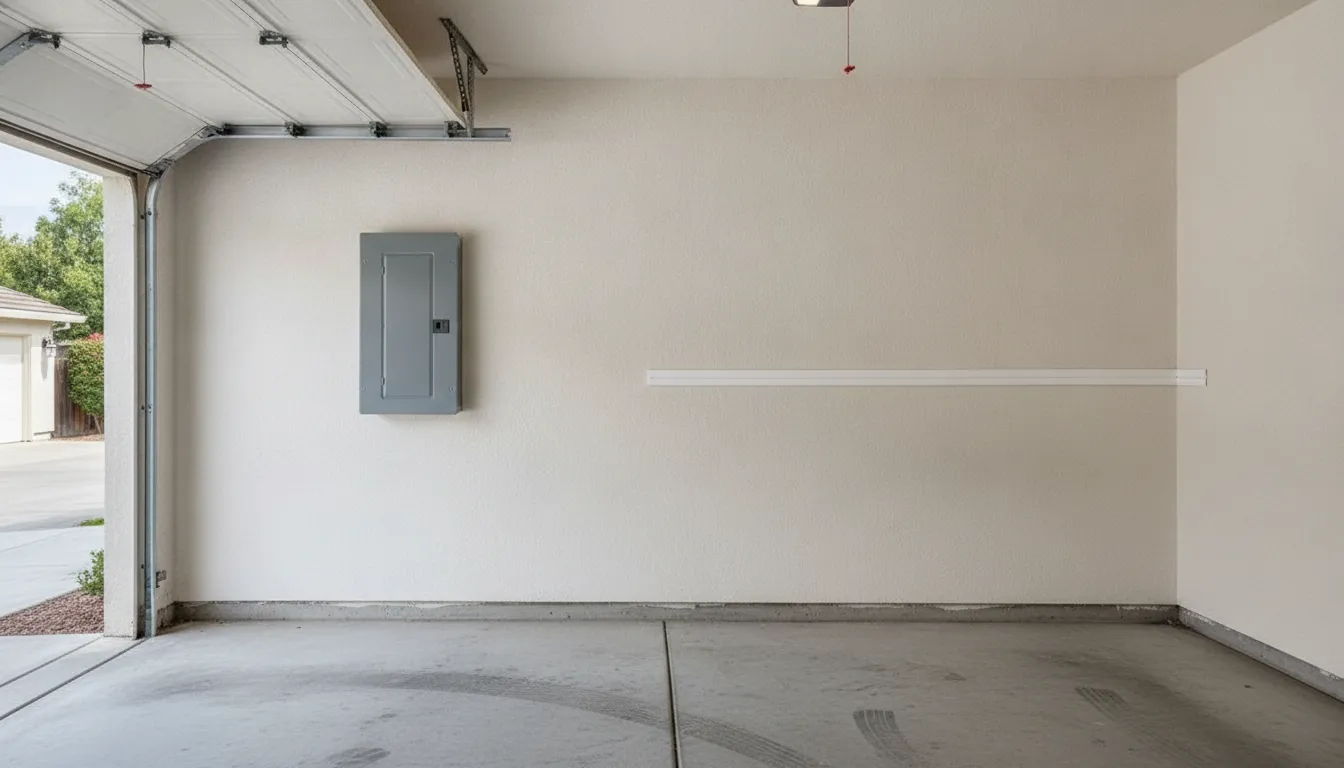
You can gather facts without opening a live panel. The inside of a panel is not a DIY project. Breakers can stay energized even when a single breaker is off. Look at the outside of the door, the main label, and any directory the last electrician left. Then stop.
Main breaker amps
The main breaker is the large breaker at the top or side, often marked 100, 125, 150, or 200. That number is the service size, not the amount of spare room. A 200-amp panel can still be full if every space is used and the calculated load is already high. A 100-amp panel can sometimes take a modest charger if the rest of the house is light and a licensed load calculation says so. Write the number down. Do not decide the job from it alone.
Spare spaces and tandem breakers
Count blank spaces where a new breaker could land. A Level 2 charger usually needs a two-pole breaker, which takes two adjacent spaces. A row of thin tandem breakers can look open when the bus is already crowded. Also note rust, scorch marks, a warm cover, or a buzzing sound. Those are reasons to call, not reasons to keep looking.
What else shares the panel
List the big 240-volt loads already on the panel: dryer, range, air conditioner, heat pump, well, spa, or a second oven. Solar, a battery, and a generator matter too, because they change how the service is used even when they are not running. If you plan a second EV later, say so at the visit. Planning one circuit that cannot grow is a common regret.
| What you see. | What it usually means. | What to do next. |
|---|---|---|
| The main label reads 200 amps and two full spaces are open. | A dedicated Level 2 circuit is often possible, pending a load calculation. | Note the label and the charger location, then book a visit. |
| The main label reads 100 or 125 amps, or every space is used. | The panel may need a new breaker layout, load management, or a larger service. | Do not buy the charger yet. Let the team calculate the load. |
| A Federal Pacific or Zinsco name is on the panel. | Those panels are a safety topic of their own, separate from EV charging. | Ask for a panel assessment before any charger work. |
| The charger will sit in a detached garage or across the yard. | The wire route, not the charger, drives the job. | Measure the walk from the panel to the parking spot. |
The price guide explains how those findings change a quote. This table only tells you which fact to bring to the visit.
Level 1, Level 2, and the Circuit Each One Needs
Level 1 can work from an existing 120-volt outlet if that outlet is on a sound circuit and you only need a small daily top-up. Many garage outlets share a circuit with lights or a freezer. A shared outlet that trips, feels warm, or has no ground is not a charging plan. A dedicated 20-amp circuit is the cleaner Level 1 path when the outlet is tired.
Level 2 needs a new 240-volt circuit in almost every older Sacramento home. Two common setups show up on permit forms. One is a plug, often a NEMA 14-50 or NEMA 6-50, so the charger can unplug. The other is a hardwired charger with a fixed setting or an adjustable setting. Hardwired units skip the receptacle and are a better fit outdoors or where the cord would be a tripping hazard.
The breaker size follows the charger, not a neighbor's install. A 20-, 30-, 40-, 50-, or 60-amp breaker may be right, and only the charger's installation sheet plus the load calculation can say which. Bigger is not automatically better. A car with a small onboard charger will not use a huge circuit, and a huge circuit may be the thing that forces a panel change.
DC fast charging is a public-station technology. It is rarely the right home project. If a salesperson describes a home unit in those terms, ask whether they mean a 240-volt Level 2 charger instead. For a plain explanation of 240-volt circuits in the rest of the house, see the 240-volt circuit guide.
How Sacramento Permits Use the Panel Facts
The City of Sacramento treats a simple Level 1 charger on a dedicated 120-volt, 20-amp circuit as a residential minor electrical permit. The city's checklist says no electrical plans are required for that path. A Level 2 charger on a 240-volt dedicated circuit is a fuller submittal.
For Level 2, the Community Development Department asks for two PDFs. The first is the permit application. The second is the plans set. It includes a site plan showing the house, the service, and the charger. It also includes a one-line diagram with the service size, the EV breaker size, the conductor size, and the number of conductors. Add a load-calculation worksheet. For a hardwired charger, add the manufacturer's cut sheet with the electrical specs and any adjustable settings. The form also asks you to mark the main breaker size, from 100 amps through 200 amps or other, and the equipment type.
That packet is why the panel read matters before you shop. The site plan and the one-line diagram are drawings of facts you can start collecting: where the panel is, where the car parks, and how the wire would travel. The load calculation is not a guess from a phone app. A licensed electrician completes it from the real panel and the real house loads.
Rules differ outside city limits. Sacramento County, and cities such as Elk Grove, Citrus Heights, and Roseville, run their own permit counters. SMUD may also have requirements on top of the building permit. Confirm the jurisdiction for your address before you assume the city checklist applies. AAA pulls permits for the jobs it installs and does not ask you to guess the form.
The city checklist cites California Electrical Code section 625.54 for GFCI protection on the NEMA plug configurations it lists. A plug-in Level 2 outlet in a garage is not the same as a hardwired charger. If you want the receptacle so you can take the charger with you, say that early. It changes the breaker hardware. Do not swap in a GFCI device yourself to "get ahead" of the permit.
Plug, Hardwire, or a Load-Management Device
Choose the hardware style after the panel read, not before. A plug is convenient when you may move the charger or when the parking spot might change. It needs the right receptacle, a GFCI where the code calls for it, and a cord that does not cross the walking path. A hardwired charger is cleaner on an exterior wall and has fewer plug parts to wear out.
A load-management device, sometimes called an energy management system, watches the panel and tells the charger to slow down when the dryer or the air conditioner is on. It can keep a smaller service usable without a full panel replacement. It is not a gadget to order from a guess. The electrician has to show it on the one-line diagram, and the city asks for the cut sheet when the charger settings are adjustable.
Outdoor chargers need a rating for rain and a mount that holds the cord off the ground. Indoor garage chargers still need a solid backing, clearance from the car door, and a cord that reaches the charge port without a tangle. Measure the port side of the car now. A charger on the wrong wall turns a short wire run into a long one.
If the panel itself is the problem, read the panel upgrade guide for the general decision. This article does not repeat that guide. It only flags the EV case: a new charger load on a panel that is full, hot, or a known problem brand.
What to Measure Before the Electrician Arrives
A short list makes the first visit faster and keeps the price tied to the real route. You do not need tools inside the panel.
- Write down the main breaker number and take a photo of the panel directory, not of the live bus.
- Pace the path from the panel to the parking spot, including any attic, crawl space, or outside wall.
- Note whether the car parks in an attached garage, a detached garage, or a driveway.
- Check which side the charge port is on, and whether a guest car would use the same spot.
- List other large electric loads and any solar, battery, or generator already on the house.
- Save the charger cut sheet if you already own the unit, including amp settings.
- Find out whether the address is in the City of Sacramento or another permit office.
Skip buying a long extension cord or a "dryer splitter" as a bridge. A dryer circuit is not a charging circuit, and a splitter can overload a wire that was never meant to run for hours. If you need miles tomorrow, use a sound 120-volt outlet for a short time and book the dedicated circuit. Same-day electrical service is sometimes available when the team confirms it. It is not a promise that a charger will be installed the day you call.
When the Panel Says Wait
Some findings should stop the shopping. A panel that is warm, smells sharp, or shows brown marks around a breaker needs a safety look before any new load. Federal Pacific and Zinsco panels are a known assessment item at AAA, and an EV circuit is the wrong first project on one of them. Aluminum branch wiring in the garage is a separate conversation. Do not land a new charger on wiring you have not had checked.
A detached garage with no existing subpanel often needs trench, conduit, and a new feeder. That is still a normal job, but it is not a same-afternoon outlet swap. Say so when you call so the visit brings the right look at the route. If the main service is 100 amps and the house already runs central air plus an electric range, expect the load calculation to be the decision, not a formality.
Financing for larger electrical work can be available through Service Finance or Enhancify. You apply with the provider, not with AAA. Approval, rates, and amounts depend on the provider and your credit. A promotional 0% APR offer is not a promise of approval. VIP+ members should ask how diagnostic fees and credits apply before they enroll or book. Confirm the current terms for your service.
Live phone answering is available 24 hours a day. The team confirms when a technician can be at the house. Do not read a late-night answer as a guarantee of overnight on-site work.
How the Visit Turns the Panel Read into a Price
On a typical visit the electrician confirms the service size, counts real spare spaces, and runs the load calculation the permit will need. Then they walk the wire route and note whether the charger should be plugged or hardwired. You get an upfront price before work begins, including what is in the scope and what is not, such as drywall repair or trench restoration.
Technicians are uniformed, background-checked, and drug-tested, and the company is licensed and insured. Ask how the 100% satisfaction guarantee applies to your job. The team can also coordinate the charger with solar electrical repair, a generator, or whole-home surge protection when those systems share the same panel. Related reading on the actual price ranges is the EV charger installation price guide. Use this page to show up with the panel facts. Use that page when you want to understand the bill.
Ready for a panel look and a clear price? Request EV charger service or call 916-972-7515.
Frequently Asked Questions
Does a 200-amp panel mean I can add an EV charger?
Not by itself. Two hundred amps is the size of the main breaker, not a count of spare capacity. The electrician still runs a load calculation and checks for two open spaces for a two-pole breaker. Many Sacramento homes with a 200-amp panel can add Level 2 charging. Some cannot, because the panel is already full of other 240-volt loads.
Can I plug a Level 2 charger into my dryer outlet?
No. A dryer outlet is sized for a dryer, and it is often in the wrong room. EV charging runs for hours and needs a dedicated circuit, the right wire, and, for a plug-in unit, the GFCI protection the code requires. A splitter between the dryer and the car is a common way to overheat a receptacle.
Do I need a permit in the City of Sacramento?
Yes for the usual home installs. The city checklist allows a minor electrical permit for a Level 1 charger on a dedicated 120-volt, 20-amp circuit, with no plans. A Level 2 charger needs an application plus plans: site plan, one-line diagram, load calculation, and cut sheets for a hardwired unit. Other cities and the county use their own counters. Confirm the office for your address.
Should I buy the charger before the panel is checked?
Wait if you have not had the panel read. The useful amp setting depends on spare capacity. A charger that is too large can force a panel project you did not plan. If you already own one, bring the cut sheet so the breaker and the permit match the unit.
Who should pull the permit and do the wiring?
A licensed electrician should. AAA Electrical Services pulls permits on the charger jobs it installs, in the City of Sacramento and in surrounding communities where it works. You get the price before the work starts. Call 916-972-7515 and ask for Edward Juarez's team if you want to talk with the office first.