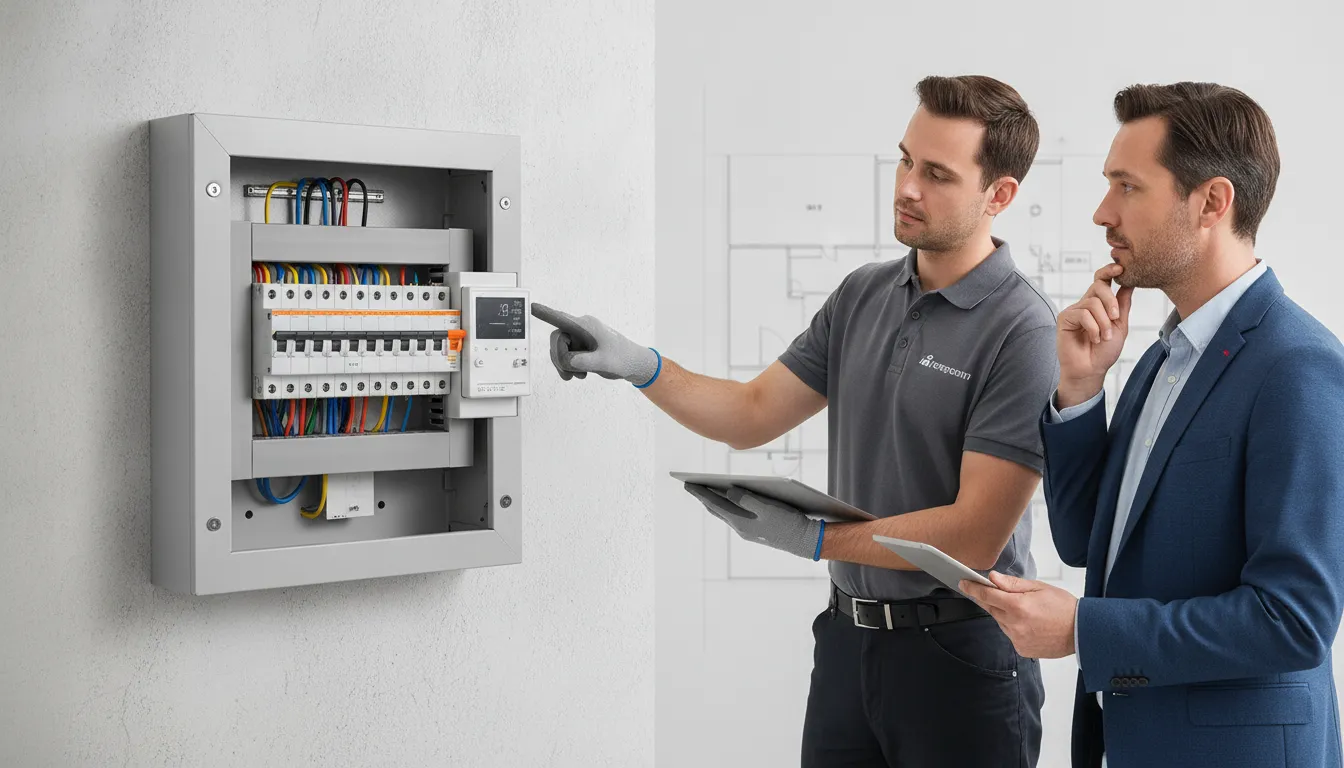
Electrical problems often start with small warning signs: flickering lights, breakers that trip repeatedly, warm outlets, or a faint burning smell near the panel. These issues can point to an overloaded, damaged, or outdated electrical system. An Electrical panel Upgrade may help your home safely handle modern appliances, air conditioning, EV chargers, solar equipment, and other high-demand devices. But replacing the panel is not always the right answer. A licensed electrician should inspect your wiring, calculate your electrical load, and determine whether you need a repair, panel replacement, service upgrade, or another solution. This guide explains what to expect, how much it may cost, and how to plan the work in the Sacramento area.
Key Takeaways
- Assess capacity before upgrading: A licensed electrician can use a load calculation to determine whether your home needs a repair, replacement panel, service upgrade, subpanel, or load management system.
- Treat warning signs seriously: Repeated breaker trips, flickering lights, burning odors, buzzing, scorch marks, heat, and water damage warrant prompt professional inspection. Never open the panel yourself.
- Plan for safety, cost, and future needs: Request written pricing, confirm permits and utility requirements, and discuss planned additions such as EV chargers, solar equipment, generators, or major remodeling.
What Is an Electrical Panel Upgrade, and Do You Need One?
An electrical panel upgrade replaces or improves your home’s main electrical panel so it can safely handle your household’s electrical needs. The panel serves as your home’s central energy hub. It receives electricity from the utility, distributes it to individual circuits, and uses circuit breakers to interrupt power when a circuit draws too much current or develops a fault.
Many Sacramento-area homes were built when households used fewer electrical appliances. Today, central air conditioning, heat pumps, electric water heaters, induction ranges, home offices, solar equipment, and EV chargers can place greater demands on the electrical system. That does not automatically mean you need a larger panel. A professional assessment should determine whether your current service has enough capacity, whether the equipment is safe, and whether another solution could meet your needs.
A 200-amp panel is common in updated homes and often provides enough capacity for many households, including some homes with mostly electric appliances. However, the amp rating does not tell the whole story. An older, damaged, crowded, or incompatible panel may be unsafe even if it has a relatively high rating. The New York State energy guide explains how panel upgrades can support modern appliances and equipment, while Rewiring America’s panel guidance notes that age, damage, and safety concerns can all justify replacement.
What Does an Electrical Panel Do?
Your electrical panel distributes power throughout your home. Electricity enters through the main service connection, passes through the main breaker, and then flows to individual branch circuits. These circuits may serve outlets, lighting, appliances, or dedicated equipment such as an air conditioner, EV charger, or electric range.
When a circuit draws more current than its wiring can safely carry, the breaker should trip and interrupt the flow of electricity. This helps protect the wiring from overheating. The panel also provides a central location for shutting off power during maintenance or an emergency.
A panel does not create electricity or make an overloaded system safe on its own. Its capacity must match the electrical service entering the home, the wiring connected to it, and the equipment using power. If the panel is crowded, damaged, incorrectly labeled, or paired with incompatible breakers, it needs professional attention. AAA Electrical Services can assess your home’s electrical panel and explain whether repair, replacement, or a broader service change may be appropriate.
How Do Amps, Service Size, and Circuit Capacity Work?
Amps measure the amount of electrical current a system can carry. A panel’s service size, such as 100 amps, 150 amps, or 200 amps, describes the capacity of the electrical service under specific conditions. A 200-amp panel is common in updated homes and often provides enough capacity for many household loads, including electric heating, cooking, and water heating.
That number does not mean every circuit can carry 200 amps. Individual branch circuits have their own ratings, wiring sizes, and breakers. A 15-amp circuit may serve general lighting, while a 20-amp circuit may serve kitchen outlets or other equipment. Large appliances typically require dedicated circuits.
Homes with less than 100 amps will likely need an upgrade before adding substantial electrical equipment. Homes with 100 to 150 amps may support additional electrification with careful planning and power-smart equipment, according to Rewiring America. An electrician should complete a load calculation instead of relying on the panel label alone.
What Signs Show Your Panel Needs Attention?
Visible or noticeable warning signs may indicate that your panel needs repair, replacement, or a closer inspection. Watch for:
- Breakers that trip repeatedly
- Flickering or dimming lights when appliances operate
- Scorch marks, rust, melted plastic, or discoloration
- A burning smell near the panel
- Buzzing, crackling, or unusual heat
- Breakers that feel loose or will not reset
- Missing panel covers or open spaces
- Improperly doubled wires or connections
- Outlets or appliances that lose power without an obvious cause
Age also matters. Some older panels have outdated designs, corrosion, known safety concerns, or parts that are difficult to replace. A panel may need attention even when the breakers seem to work normally. The Electrical Safety Foundation recommends taking overheating, unusual odors, and damaged electrical equipment seriously.
Do not remove the panel cover to investigate these issues. If you see smoke or flames, or notice a strong burning odor, turn off power only if you can do so safely and call for emergency assistance. Otherwise, arrange an inspection with a licensed electrician.
Should You Repair the Panel, Replace a Breaker, or Upgrade It?
The right solution depends on the specific problem, not simply the panel’s age or appearance. A single worn breaker may be replaceable if the panel is safe, compatible, and has enough capacity. A loose connection, damaged bus bar, corrosion, or water intrusion may require more extensive repair or a complete panel replacement.
An upgrade may be appropriate when the panel lacks capacity, has no room for needed circuits, contains obsolete equipment, or cannot safely support planned appliances. In some cases, the issue is not limited to the panel. The service entrance, grounding system, wiring, or meter connection may also require work.
Never replace a breaker with one that has a higher amp rating to stop nuisance trips. The breaker must match the circuit wiring and the panel manufacturer’s requirements. MyEnergy.NY.gov recommends hiring a licensed electrician for panel upgrades, wiring changes, and major appliance installations. AAA Electrical Services provides licensed technicians and upfront pricing before work begins.
How Does Panel Replacement Differ From a Service Upgrade?
A panel replacement changes the electrical panel inside or near your home. The new panel may have the same amp rating as the old one, or it may provide greater capacity if the incoming service supports it. This work can address damaged equipment, outdated components, limited breaker space, or compatibility problems.
A service upgrade is broader. It may involve increasing the amount of electricity delivered by the utility, replacing service entrance conductors, modifying meter equipment, upgrading the main disconnect, and installing a larger panel. Utility coordination and permits may also be required.
For example, replacing an outdated 100-amp panel with another 100-amp panel is not the same as changing the home’s service from 100 amps to 200 amps. The utility may need to disconnect and reconnect service, and the local authority may require an inspection before power is restored. MyEnergy.NY.gov explains that a utility service upgrade may be needed when the current service cannot support added demand.
How Do EV Chargers, Solar, Generators, and Remodels Affect Demand?
New equipment can change your home’s electrical load considerably. Level 2 EV chargers, electric heat pumps, induction cooktops, electric dryers, hot tubs, and workshop tools may require dedicated circuits. An EV charger that runs for several hours can create a sustained load, especially when other large appliances operate at the same time.
Solar equipment does not simply increase the amount of electricity your home can use. The inverter, disconnects, service equipment, and utility interconnection requirements must work with the existing panel. A generator may require a transfer switch or interlock, along with proper sizing and separation from utility power. Incorrect installation can create dangerous backfeeding.
A remodel may add lighting, outlets, appliances, and conditioned living space, all of which can affect the load calculation. Before installing an EV charger, solar system, or generator, ask an electrician to review the complete system. AAA Electrical Services provides EV charger installation, solar checkups, and generator services for Sacramento-area homeowners.
Can a Subpanel or Load Management Prevent an Upgrade?
A subpanel can add breaker space in another area of the home. It may be practical when the main panel has enough overall capacity but lacks room for new circuits. For example, a detached garage, workshop, addition, or finished basement might benefit from a subpanel installed closer to the equipment it serves.
A subpanel does not create additional electrical capacity. It receives power from the main panel through a feeder, and that feeder must be correctly sized and protected. If the main service is already overloaded, adding a subpanel will not solve the underlying issue.
Load management may help some homes coordinate high-demand equipment. A properly designed system can limit or sequence certain loads so they do not operate at full demand simultaneously. This may reduce the need for a larger service in certain situations, but it is not suitable for every home or appliance. An electrician should compare the cost, performance, and long-term flexibility of a subpanel, load management system, and full panel upgrade.
Why Do Tandem Breakers, Shared Circuits, and Efficient Appliances Have Limits?
Tandem breakers fit two circuits into one breaker space, but they are only approved for panels designed to accept them. The panel label and manufacturer’s instructions determine whether a tandem breaker is permitted and where it may be installed. Adding one to an incompatible panel can create an unsafe connection and may violate local requirements.
Shared circuits can also be useful when designed correctly, but they have limits. The conductors, neutral arrangement, breaker configuration, and connected loads must all be compatible. Sharing power does not increase the home’s total service capacity. It can also make troubleshooting more difficult when circuits are poorly labeled or modified over time.
Efficient appliances generally use less electricity, but several efficient appliances can still create a significant combined load. An efficient heat pump, EV charger, electric water heater, and induction range may each perform well while demanding substantial power during operation. A load calculation should account for equipment ratings, expected usage, and future plans. AAA Electrical Services can review your panel repair or installation options before you add equipment or modify existing circuits.
How Does an Electrical Panel Upgrade Improve Safety?
An electrical panel upgrade can make your home safer by giving your electrical system the capacity and protection needed for modern household demands. Older panels may struggle with high-use appliances, EV chargers, heat pumps, solar equipment, or backup generators. When a panel cannot handle the electrical load, breakers may trip often, connections may overheat, and wiring may become a fire risk.
A proper upgrade involves more than replacing the panel enclosure. A licensed electrician should calculate your home’s electrical load, inspect the service equipment, confirm breaker compatibility, evaluate the grounding and bonding systems, and check wiring for damage. This process can identify hazards that are not obvious during a quick visual inspection. AAA Electrical Services provides panel repair and installation for Sacramento-area homeowners who need a safer, more dependable electrical system.
An upgrade may also provide additional breaker spaces for new circuits and equipment. In some homes, however, a full replacement is not necessary. A dedicated circuit, subpanel, or load management system may address the problem when the existing equipment remains in good condition. The right solution depends on the panel’s age, condition, service capacity, and your household’s current and planned electrical needs.
How Do Overload, Short-Circuit, and Fire Protection Work?
Every circuit has a limit. When appliances draw more electricity than a circuit can safely carry, the wiring can heat up. This is an overload. A short circuit occurs when electricity follows an unintended path, often because of damaged insulation, a loose connection, or contact between conductors. Both conditions can damage equipment and increase fire risk.
Circuit breakers help by interrupting power when they detect excessive current. However, a breaker provides proper protection only when it matches the circuit wiring, panel design, and electrical load. An updated panel may provide more suitable breaker spaces and modern protective features for the home’s current needs. MyEnergy.NY.gov’s electrical panel guidance explains how an updated panel can help support modern appliances while reducing risks related to overloads and short circuits.
How Do Grounding, Bonding, and Breaker Compatibility Affect Safety?
Grounding provides a path for fault current, while bonding connects metal electrical components so they remain at a similar electrical potential. These systems help reduce shock hazards when a fault occurs. An upgrade gives an electrician the opportunity to check whether the grounding and bonding systems are correctly installed, intact, and appropriate for the home’s electrical service.
Breaker compatibility is just as important. A breaker must be approved for the specific panel and correctly sized for the circuit conductors. Installing a breaker because it physically fits can create a serious hazard. The electrician should inspect the panel brand, breaker ratings, wiring, grounding system, and service configuration before recommending changes. The National Fire Protection Association’s electrical safety guidance also recommends using qualified professionals for electrical work and circuit protection.
Can an Electrical Panel Upgrade Improve Energy Efficiency?
A panel upgrade does not automatically lower your electric bill. Its main purpose is to improve capacity and safety. However, a newer system can make it easier to use energy management equipment and efficient appliances that match your home’s electrical needs.
Some homeowners may consider a smart panel or load management system. These technologies can monitor electricity use, prioritize selected circuits, and help prevent the home from exceeding its available capacity. That may allow you to coordinate equipment such as an EV charger, heat pump, solar system, or battery storage without immediately increasing service capacity.
Smart equipment is not appropriate for every property. An electrician should first evaluate the panel, service size, wiring, and planned loads. If your home has solar equipment, AAA Electrical Services offers solar maintenance services to help identify electrical concerns that may affect system performance and safety.
What Do Scorch Marks, Heat, Odors, Buzzing, and Water Damage Mean?
Warning signs around an electrical panel should never be ignored. Scorch marks, discoloration, melted plastic, unusual heat, burning odors, buzzing, or crackling can indicate loose connections, damaged components, arcing, or excessive current. A panel that feels warm to the touch may also need prompt inspection.
Water damage creates another serious concern. Moisture can corrode terminals, damage breakers, and increase the risk of shock or arcing. Do not spray cleaner on the panel or attempt to open it if water has entered the enclosure. Keep people away from the area and contact a licensed electrician.
If you notice smoke, active sparking, or a strong burning smell, leave the home if necessary and call emergency services. For less urgent concerns, schedule an inspection before the condition worsens. A panel replacement may reveal overheated wiring, deteriorated insulation, or damaged connections that need attention.
How Do Wiring, Insulation, Connections, and Load Calculations Affect Safety?
A panel upgrade should begin with an electrical load calculation, not a guess about the amp rating your home needs. The electrician considers existing circuits, major appliances, heating and cooling equipment, EV charging, solar, generators, and planned additions. This helps determine whether the current service can support the household safely.
The inspection should also cover wiring, insulation, terminals, grounding conductors, and connections. A larger panel cannot correct undersized conductors, damaged insulation, loose lugs, or poor workmanship elsewhere in the system. In some homes, the panel is only one part of a larger service problem.
Ask the electrician to explain the recommended capacity and the reason for it. A 200-amp service may be suitable for one home but unnecessary for another. The right choice depends on calculated demand, equipment condition, local requirements, and future plans.
Why Is DIY Panel Work Unsafe?
Electrical panel work involves energized equipment, high fault currents, complex wiring, and components that must be installed in a specific configuration. Turning off the main breaker may not de-energize every part of the service equipment. A mistake can cause severe shock, arc flash, fire, equipment damage, or a hidden defect that remains after the project appears complete.
Replacing a breaker, moving circuits, changing service conductors, or installing a new panel also requires knowledge of electrical codes and manufacturer requirements. An incorrectly sized breaker may allow a circuit to overheat before the breaker trips. An improperly tightened connection can loosen over time and produce dangerous heat.
Use a licensed electrician for panel upgrades and related wiring changes. MyEnergy.NY.gov recommends a licensed professional for major electrical work, including panel upgrades and appliance installations. AAA Electrical Services uses licensed, background-checked, and drug-tested technicians for residential electrical services in the Sacramento area.
How Do Permits, Inspections, Local Code, and Utility Coordination Work?
A panel upgrade often requires a permit and inspection through the local building department. These steps help verify that the installation meets applicable electrical codes and that the equipment is installed correctly. Requirements can vary by city and by project scope, especially when the work involves a service upgrade or changes near the meter.
Utility coordination may also be necessary. The utility company may need to disconnect and reconnect service, inspect the meter setup, or approve changes to the service entrance. These steps can affect scheduling and the length of the power interruption.
Before work begins, ask who will obtain the permit, coordinate with the utility, schedule the inspection, and handle any corrections. You should also receive documentation showing what work was completed. Permits and inspections are more than administrative requirements. They create a record of the installation and provide another review of the system’s safety and compliance.
What Are Common Electrical Panel Upgrade Misconceptions?
One common misconception is that every home needs a 200-amp panel. The correct service size depends on a load calculation and the home’s equipment. Increasing the panel size without evaluating the service conductors, meter, grounding, and utility connection may not solve the underlying problem.
Another misconception is that a panel upgrade is always required before installing an EV charger, solar system, or electric appliance. In some cases, a dedicated circuit, load management device, subpanel, or other design may provide a safe alternative. Rewiring America explains that some homes can add electric appliances without a full panel upgrade, depending on the home’s capacity and equipment.
It is also easy to assume that a clean-looking panel is safe. Electrical problems may exist behind the cover, at the service entrance, or in older wiring. Frequent breaker trips, warm components, damaged insulation, and unusual sounds deserve a professional evaluation rather than a quick visual judgment.
How Much Does an Electrical Panel Upgrade Cost?
An electrical panel upgrade typically costs between $1,000 and $4,000, although many homeowners spend closer to $2,000 to $4,000 for a standard project. This range may include the new panel, breakers, labor, and basic installation. Your final estimate depends on your home’s electrical demand, the condition of the existing equipment, and whether the project requires new wiring or utility coordination.
A panel upgrade is not a one-size-fits-all service. Replacing an outdated panel in the same location may cost less than increasing your home’s service capacity, relocating the panel, or correcting damaged wiring. A professional electrician should inspect the entire system and complete an electrical load calculation before recommending equipment. This helps confirm that the new panel can safely support your appliances, EV charger, solar system, generator, or future remodeling plans.
The estimate may also include permits, inspections, circuit changes, grounding work, surge protection, and repairs that are discovered after the panel is opened. Ask for a written estimate that separates the standard upgrade from optional improvements and potential code-related repairs. This makes it easier to compare proposals and plan for the full cost.
AAA Electrical Services provides panel repair and installation for homeowners throughout the Sacramento metropolitan area. The company offers upfront pricing and can explain whether your home needs a panel repair, panel replacement, or a larger service upgrade.
What Is the Typical Electrical Panel Upgrade Cost? $1,000 to $4,000
A standard electrical panel upgrade commonly falls between $1,000 and $4,000, with the final price depending on the project’s scope. A straightforward replacement may sit toward the lower end of the range, while a larger service upgrade with wiring changes, permits, and utility work may cost more. The Rewiring America Electrification Planner explains panel upgrade costs and why prices vary from one home to another.
Your estimate should identify the panel rating, breaker count, labor, permit fees, inspection requirements, and planned additions. It should also state whether cleanup, labeling, utility coordination, and required repairs are included. Be cautious of an unusually low quote that leaves out essential work, such as grounding corrections or code-required repairs. A qualified electrician should explain the work in plain language before installation begins.
How Do Panel Size, Amperage, Breakers, and Equipment Affect Cost?
Panel size and amperage directly affect equipment and installation costs. Many modern homes use a 200-amp service, but the right capacity depends on your home’s calculated electrical load. A larger panel may also provide more breaker spaces for future circuits serving an EV charger, heat pump, workshop, or home addition.
The number and type of breakers matter, too. Standard breakers generally cost less than arc-fault, ground-fault, or specialty breakers required for certain circuits. Smart panels and load management equipment may add to the price, but they can help monitor and control electrical demand. MyEnergy.NY.gov outlines electrical panel upgrade considerations, including panel capacity and equipment choices.
The panel’s brand, warranty, compatibility with your existing wiring, and available space can also affect the estimate. More breaker spaces do not automatically mean your home can use more electricity, so the electrician should evaluate both capacity and demand before selecting the equipment.
How Do Labor, Permits, Inspections, and Utility Fees Affect Cost?
Labor often accounts for a significant portion of the project because panel work requires careful circuit identification, disconnection, installation, testing, and labeling. The electrician may need to correct existing wiring, replace damaged components, or install additional protection before the new panel can pass inspection.
Permits and inspections may be required by your local authority. Utility fees can also apply if the service size changes or the utility company must disconnect and reconnect power. These requirements vary by property and project. Ask whether the estimate includes permit handling, inspection coordination, and communication with the utility provider.
Review your local Sacramento County building permit information to understand why permitting may be part of an electrical project. Permit requirements can differ depending on your city, so a local electrician should confirm which agency has jurisdiction over your property.
A project that requires an inspection may take longer than a simple repair. Your electrician should explain the expected schedule, when power will be interrupted, and what happens if an inspector requests additional work.
When Do Service Entrance, Meter, Grounding, and Main Wiring Changes Add Cost?
A panel upgrade may involve more than the enclosure mounted inside or outside your home. If the service entrance, meter equipment, grounding system, or main conductors cannot support the new capacity, those components may need to be repaired or replaced. This work requires additional materials, planning, and coordination with the utility company.
Costs can rise substantially when a project becomes a full electrical service upgrade. In some cases, extensive service changes may cost $5,000 to $25,000, particularly when the home needs new main wiring, a service mast, meter equipment, or transformer-related work. The Rewiring America guide describes larger electrical service projects and why they differ from a basic panel replacement.
Grounding and bonding work may also be necessary if the existing system is incomplete, damaged, or incompatible with the new equipment. These components play an important role in directing fault current safely, so they should not be treated as optional add-ons.
Ask your electrician to identify which components are included in the quote and which conditions could require additional work. This gives you a clearer picture of the total project cost before installation begins.
How Do Additional Circuits, Rewiring, Panel Relocation, and Surge Protection Affect Cost?
Adding circuits increases the project’s scope because the electrician must route new cable, install breakers, and connect each circuit correctly. Rewiring can add even more time if existing conductors are deteriorated, improperly sized, or difficult to access. These changes may be necessary when you add high-demand equipment, finish a room, or correct an unsafe installation.
Relocating the panel also requires additional wiring and may involve cutting into walls, repairing finished surfaces, or extending the service conductors. The distance between the existing panel and its new location can affect both material and labor costs.
Whole-home surge protection adds specialized equipment and installation labor. It can help protect electronics from certain voltage spikes, but it should be installed as part of a properly grounded electrical system. AAA Electrical Services offers home surge protection and electrical services for Sacramento-area homeowners.
When comparing estimates, ask whether additional circuits, rewiring, panel relocation, and surge protection are included in the base price or listed separately. Separate line items make it easier to choose the improvements that fit your home and budget.
How Do Access, Damage, and Project Complexity Change the Estimate?
The electrician needs safe access to the panel, service equipment, wiring, and grounding connections. A panel located in a cramped space, behind finished surfaces, or in an area affected by moisture may take longer to replace. Difficult access can increase labor time and may require limited wall opening or repairs.
Existing damage can also change the estimate. Corrosion, melted insulation, loose connections, pest damage, water intrusion, or unmarked circuits should be addressed before the new panel is energized. Older homes may have wiring that does not match current equipment or require additional testing.
Project complexity often depends on how many circuits must be identified, how far wiring must run, and whether the electrician can work without removing cabinets, drywall, or other obstructions. A home with multiple additions may also have circuits that are difficult to trace or incorrectly labeled.
A thorough inspection helps separate the standard upgrade cost from repairs specific to your home. Ask the electrician to document unexpected conditions with photos and explain why each recommended repair is necessary. This gives you useful information without committing to work you do not understand.
How Should You Compare Upfront Pricing, Financing, Warranties, and Service Plans?
Compare estimates by reviewing the complete scope of work, not just the total price. Each proposal should list the panel brand and rating, breaker types, grounding work, circuit changes, permits, inspections, utility coordination, cleanup, and warranty coverage. Ask whether the price is fixed or whether certain conditions could create additional charges.
Payment options may also matter when the project is unexpected. AAA Electrical Services provides financing options and payment plans, subject to approval and applicable terms. You can also ask about service agreements, such as the company’s VIP Membership, if ongoing electrical maintenance fits your household’s needs.
A warranty should clearly state which equipment and labor it covers, how long coverage lasts, and whether repairs are handled by the installing company. Service plans may include additional benefits, but review the terms to understand what is included and whether panel work is covered.
Choose a licensed, insured electrician who offers clear communication and written pricing. The right professional should explain whether you need a repair, panel replacement, or full service upgrade, then identify the safest practical option for your home.
How Should You Plan an Electrical Panel Upgrade?
Planning an electrical panel upgrade starts with understanding what your home needs now and what it may need later. A panel that supports your current appliances may not have enough capacity for an electric vehicle charger, heat pump, solar system, backup generator, workshop equipment, or major kitchen remodel. The right upgrade should match your home’s electrical demand, not simply provide the largest panel available.
Begin by gathering information about your existing system, then have a qualified electrician evaluate the panel, wiring, service capacity, and future plans. A professional assessment can show whether you need a complete panel replacement, a service upgrade, a new circuit, a subpanel, or a more limited repair. AAA Electrical Services provides panel repair and installation services for Sacramento-area homeowners and can explain which option fits your property.
You should also plan for permits, inspections, utility coordination, temporary power interruptions, and access to the panel. Clear communication before work begins helps prevent surprises and gives you a better understanding of the project timeline and cost. Use the following steps to prepare for a safe, well-planned upgrade.
Ask for a Professional Electrical Load Calculation
An electrical load calculation estimates how much power your home uses and how much capacity it may need in the future. Your electrician considers the service size, existing circuits, fixed appliances, heating and cooling equipment, and planned additions. This information helps determine whether your home needs a larger service, a replacement panel with more spaces, or another solution.
Do not assume that a 200-amp panel is automatically the right choice. Some homes may need that capacity, while others may benefit from load management, a subpanel, circuit changes, or a targeted repair. A load calculation can also identify equipment operating too close to the system’s limits.
Ask the electrician to explain the recommendation in plain language. The proposal should identify the expected electrical demand, recommended service size, and reason for the work. This gives you a practical basis for comparing options instead of choosing equipment based only on price or panel size.
List Your Current Appliances and Future Electrical Plans
Make a list of the appliances and equipment connected to your electrical system. Include air conditioners, electric water heaters, ranges, ovens, dryers, pool equipment, workshops, well pumps, and other high-demand devices. Note which appliances may run at the same time, since simultaneous use affects your home’s total demand.
Then think about planned changes. Are you considering an EV charger, solar panels, electric heating, a new addition, or a kitchen remodel? Sharing these plans before installation can help your electrician design a system that accommodates them. AAA Electrical Services offers EV charger installation, so you can discuss charger requirements during the planning process.
Keep product information available when possible, including model numbers and electrical ratings. If you plan to replace an appliance soon, mention the expected replacement. A panel plan based only on current equipment may not serve your home well after your next renovation.
Gather the Panel’s Age, Amperage, Labels, and Repair History
Before your appointment, collect basic information about the existing panel. Look for the manufacturer’s name, main breaker rating, panel model, installation date, and circuit labels. Take clear photos of the panel door and labels, but do not remove the cover or touch internal components.
Write down any known repairs, recurring breaker trips, flickering lights, warm switches, or circuits added over the years. These details can help the electrician identify patterns that are not obvious during a brief visit. Missing or inaccurate labels are also useful information because they may indicate that the panel needs circuit tracing and relabeling.
If the panel has visible corrosion, water staining, scorching, damage, or unusual sounds, mention these concerns when scheduling the appointment. Avoid opening the panel to investigate. Internal parts can remain energized even when the main breaker is off, so inspection should be left to a qualified professional.
Choose a Licensed, Insured, Background-Checked Sacramento Electrician
Panel work affects your home’s wiring, service equipment, and fire safety, so choose an electrician who is properly licensed and insured. Ask whether the company handles permits, coordinates with the utility, and provides written details about the work. You can also verify licensing through the California Contractors State License Board.
Experience with Sacramento-area homes can be helpful because properties may have different construction types, utility requirements, existing wiring, and permitting considerations. Look for a company that explains the work clearly rather than pressuring you to approve the largest available upgrade.
AAA Electrical Services uses licensed, background-checked, and drug-tested technicians. The company also offers upfront pricing, same-day service when available, and a 100% satisfaction guarantee. Ask who will perform the installation, how long the work should take, and what happens if the electrician finds damaged wiring or other issues after the panel is opened.
Confirm the Upgrade Scope, Capacity, Alternatives, and Safety Features
Request a written description of the proposed work before approving the project. It should state whether the job includes a panel replacement, service upgrade, meter work, new breakers, grounding improvements, circuit additions, surge protection, or repairs to existing wiring. The proposal should also identify the planned panel capacity and number of available spaces.
Ask whether a full upgrade is necessary or whether another option could meet your needs. Depending on the load calculation, a subpanel, load management device, circuit reconfiguration, or targeted repair may be appropriate. These alternatives are worth discussing, especially if your electrical demand is changing gradually.
Review the safety features included in the plan. Depending on the home and project, these may include compatible circuit breakers, improved grounding and bonding, whole-home surge protection, or arc-fault and ground-fault protection where required. AAA Electrical Services provides home surge protection, which can be discussed as part of the panel assessment.
Ask About Permits, Utility Shutoffs, Timelines, Access, and Power Interruptions
Ask who will obtain the required permits and arrange inspections. A panel or service upgrade may also require coordination with the local utility, particularly when the service entrance, meter, or utility connection is involved. Your electrician should explain which steps depend on the utility and which can happen during the scheduled visit.
Confirm how long the installation may take and when the power will be turned off. Ask how to prepare refrigerators, medical equipment, security systems, internet devices, and other essential equipment. If someone in your home relies on powered medical equipment, communicate that before scheduling the work.
You should also ask whether the electrician needs access to interior walls, the attic, crawl space, meter area, or exterior equipment. Clear access can make the appointment more efficient. If an inspection is required, find out whether the electrician will attend or return to address any inspection notes.
Prepare Your Home for Installation Day
Clear the area around the electrical panel, meter, and any equipment the electrician may need to reach. Remove stored items, shelving, or decorations that block access. If the panel is inside a closet or utility room, make sure the door can open fully and the workspace has adequate lighting.
Plan for the power to be off during part of the installation. Charge phones and battery-powered devices, save work on computers, and arrange another location for temperature-sensitive items if the outage may be extended. Follow your electrician’s instructions for appliances, alarms, generators, solar equipment, and EV chargers.
Keep children and pets away from the work area. If you have tenants, caregivers, or other household members, let them know when access and power may be limited. You may also want to photograph the area before work begins, particularly if the electrician needs to access finished walls or exterior surfaces.
Review Circuit Labels, Testing, Inspections, Warranties, and Documentation
Before the electrician leaves, ask for a walkthrough of the completed work. Confirm that each circuit is labeled accurately and that important equipment, including smoke alarms, outlets, lighting, HVAC systems, and appliances, operates as expected. If a circuit remains disconnected, ask why and when it will be restored.
Ask whether the system has been tested and whether the required inspection has been completed or scheduled. Request copies of the permit, inspection information, equipment specifications, warranty terms, and final invoice. Keep these records with your home documents because they may help with future repairs, renovations, insurance questions, or property sales.
Review the panel manufacturer’s warranty and the contractor’s workmanship warranty. Make sure you understand whom to contact if a breaker trips repeatedly, a circuit stops working, or another concern appears after installation. A clear handoff gives you useful information about the new system and the support available after the project.
Schedule an Electrical Panel Assessment With AAA Electrical Services
If you are unsure whether your panel can support your home’s current or planned electrical needs, schedule an assessment before making changes. An AAA Electrical Services technician can evaluate the panel, review your appliances and future plans, and explain whether you may need a repair, replacement, service upgrade, additional circuit, or another approach.
Bring your appliance list, panel photos, repair history, and questions about EV charging, solar, generators, remodeling, or home surge protection. AAA Electrical Services also offers solar system checkups and generator installation and repair, so you can discuss related electrical projects during the same planning process.
Review the company’s service locations to confirm coverage in the Sacramento metropolitan area. During the appointment, ask for clear upfront pricing, the expected timeline, permit details, and the work included in the recommendation. This information can help you plan the upgrade with greater confidence and fewer surprises.
Related Articles
- How to Prepare for Electrical Panel Replacement
- What Happens If You Don’t Upgrade Your Electrical Panel
- Cost to Upgrade Subpanel in Older Homes
- Signs You Need an Electrical Panel Upgrade
- 5 Reasons to Upgrade Your Electrical Panel
Frequently Asked Questions
How do I know whether my home needs an electrical panel upgrade?\ Repeated breaker trips, flickering lights, burning odors, buzzing, scorch marks, corrosion, and a lack of available breaker spaces can all signal a problem. You may also need an assessment before adding an EV charger, heat pump, solar equipment, generator, or major appliance. A licensed electrician can determine whether you need a repair, replacement, service upgrade, or another solution.
Does every home need a 200-amp electrical panel?\ No. The correct panel size depends on your home’s calculated electrical demand, existing wiring, service equipment, and future plans. Some homes can safely support new equipment with a dedicated circuit, subpanel, or load management system instead of a larger service.
How much does an electrical panel upgrade cost?\ Many panel projects cost between $1,000 and $4,000, but the total depends on the panel size, labor, permits, wiring condition, grounding, utility coordination, and project complexity. A full service upgrade involving meter equipment or main service conductors may cost significantly more. Request a written estimate that explains what is included.
Can I install a new breaker or panel myself?\ Panel work should be handled by a licensed electrician. Parts of the equipment may remain energized even when the main breaker is off, and an incorrect breaker, loose connection, or wiring mistake can cause shock, fire, or equipment damage. Professional installation also helps ensure the work meets local requirements and passes inspection.
Can a subpanel eliminate the need for a panel upgrade?\ A subpanel can provide more breaker spaces when the main panel has sufficient overall capacity but limited room. It cannot increase the amount of electricity delivered to the home. An electrician should complete a load calculation before recommending a subpanel, panel replacement, or service upgrade.