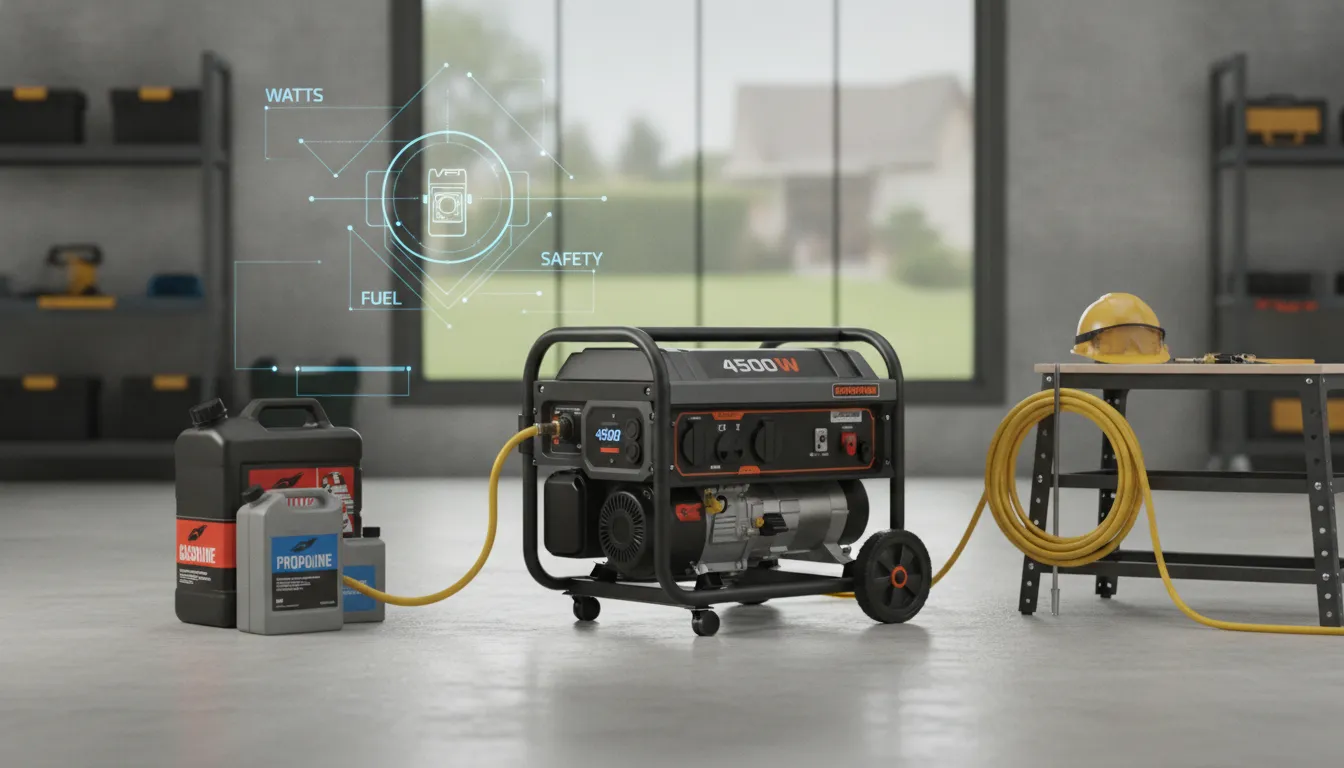
A power outage can happen at an inconvenient time, but the right backup plan can help your household keep essential systems running. A portable generator may support selected appliances, lights, medical devices, internet equipment, or outdoor tools. However, using one safely involves more than starting the engine and plugging in a cord. You need suitable fuel storage, outdoor placement, carbon monoxide protection, proper extension cords, and a safe connection method. AAA Electrical Services helps Sacramento-area homeowners evaluate generator options, panels, and backup circuits. Use this guide to understand your choices, avoid common hazards, and decide whether a portable or standby system fits your needs.
Key Takeaways
- Match the generator to your needs: Compare running and starting watts for essential appliances, tools, or devices, and choose enough capacity to handle startup surges.
- Make safety the priority: Operate the generator outdoors, keep it at least 20 feet from openings, use proper cords, and hire a licensed electrician for home connections.
- Budget for the full system: Include fuel, maintenance, storage, repairs, transfer equipment, permits, and professional service when comparing portable and standby generators.
What Is a Portable Generator, and Does Your Sacramento Home Need One?
A portable generator is a movable device that supplies electricity when utility power is unavailable. Most models use gasoline, propane, or another fuel to run an engine, while battery power stations store electricity for later use. Depending on its capacity, a portable generator may keep a refrigerator, freezer, medical device, lights, internet equipment, or selected outlets running during an outage.
For Sacramento homeowners, a portable generator can provide practical short-term backup during a power interruption. It may suit you if you only need to operate a few essential appliances, want a power source for your garage, or need electricity for outdoor work. However, portable models require setup each time you use them. They also must be operated outdoors and cannot safely power a home by plugging into a standard wall outlet.
Start by identifying the systems you need most during an outage. A small unit may handle lights, phone chargers, and internet equipment, while a larger model may support a refrigerator, freezer, and select heating or cooling equipment. If you want automatic backup or electricity for several home systems, compare portable options with professional generator installation before you buy.
Compare Portable, Standby, and Battery Power Stations
Portable generators run on fuel and need to be placed outdoors while operating. They are generally less expensive than standby systems and can power selected appliances through heavy-duty extension cords or a properly installed transfer switch. Their mobility also makes them useful for camping, RVs, outdoor events, and job sites.
Standby generators are permanently installed outside the home and connected to the electrical system. When utility power fails, they can start automatically and supply electricity to selected circuits or much of the home, depending on the system design. As Seidel Electric explains, standby generators provide a more automatic backup experience than portable models.
Battery power stations store electricity instead of producing it with an engine. They operate quietly and create no exhaust while in use, making them useful for phones, laptops, lights, and other smaller devices. Their capacity is limited, though, and recharging can take time. For longer outages or high-demand appliances, a fuel-powered generator may provide more usable power.
Power Essential Circuits, Backup Loads, and Whole-Home Systems
A portable generator is typically designed to run selected loads, not every electrical device in your home at once. Before shopping, list the appliances and systems you consider essential. These may include a refrigerator, freezer, lighting, internet equipment, garage door opener, medical device, or a limited number of outlets.
Check both the running watts and starting watts for each appliance. Motors in refrigerators, pumps, furnaces, and air conditioners may need extra power when they start. You may also need to decide which appliances can operate simultaneously. As Riverside Electric notes, powering selected appliances does not make a portable generator inadequate. It simply gives the unit a different role than a whole-home system.
A transfer switch or approved interlock can connect a portable generator to designated circuits while helping prevent dangerous backfeeding. Have a licensed electrician evaluate your panel, generator inlet, grounding, and circuit loads before installation. AAA Electrical Services can help Sacramento homeowners review panel installation and repair options as part of a safe backup power plan.
Use Generators at Home, in RVs, at Campsites, and on Job Sites
At home, a portable generator can provide temporary power for essential appliances during an outage. It may also help during electrical work when a circuit or part of the home must be shut down. Operate the generator outdoors, at least 20 feet from doors, windows, and vents, and direct the exhaust away from the home. Carbon monoxide can build up quickly in enclosed or partially enclosed areas, including garages and covered patios.
For RVs and campsites, generator size and outlet type matter. An RV air conditioner, refrigerator, microwave, and battery charger may require more power than basic lights and device chargers. Check whether your RV uses a 30-amp or 50-amp connection, then confirm that the generator provides the appropriate voltage and capacity.
Portable generators are also useful at outdoor events, construction sites, and home improvement projects. They can run tools, lights, chargers, and small equipment where utility power is unavailable. Keep cords away from water, use outdoor-rated equipment, and avoid overloading the unit. For larger electrical projects, review AAA Electrical Services’ residential electrical services before relying on a portable generator for extended use.
Which Portable Generator Type and Fuel Fit Your Needs?
Choosing a portable generator involves more than comparing the largest wattage number on the box. Think about what you need to power, how often you expect to use the generator, where you will operate it, and how much noise or maintenance your household can manage.
A generator for occasional outage backup may need to run a refrigerator, a few lights, a modem, and a sump pump. An RV owner may need dependable 30-amp or 50-amp service, while someone using power tools may care more about high output and durability. Your fuel options also matter. Gasoline is widely available, propane stores well, and natural gas can provide a convenient supply when the generator and home connection support it.
You should also consider power quality. Sensitive electronics, including computers, televisions, and some medical devices, may need the stable output provided by an inverter generator. Larger appliances and motor-driven equipment may require the higher capacity of a conventional model.
If you plan to connect a portable generator to household circuits, speak with a licensed electrician before purchasing equipment. AAA Electrical Services provides generator installation and repair for Sacramento-area homeowners, including help with safe connections and backup power needs. Never connect a generator directly to a wall outlet, since this can send electricity back through the utility lines and create a serious hazard.
Choose Conventional Generators for High Output and Lower Costs
Conventional, or frame, generators are a practical choice when you need substantial power for refrigerators, freezers, sump pumps, selected heating equipment, or power tools. Their straightforward design often lets them provide more wattage at a lower purchase price than an inverter generator with a similar capacity.
Heavy-duty models can deliver enough power for several essential loads at once. For example, some models provide thousands of running watts, while high-output options such as the Westinghouse WGen9500DF are rated for up to 9,500 running watts. You can compare portable generator models by wattage, fuel type, and price.
The tradeoff is that conventional generators are usually heavier and louder. Their output may also have more voltage variation than inverter power, so check the manufacturer’s specifications before plugging in sensitive electronics. A model with low total harmonic distortion, or THD, may offer better protection for computers and other delicate devices.
Choose Inverter Generators for Quiet, Efficient, Clean Power
Inverter generators are a strong fit for camping, RVs, quiet neighborhoods, and smaller emergency loads. They adjust engine speed according to demand, which can reduce noise and fuel use when you are powering only a few devices. Their compact construction also makes many models easier to carry and store.
These generators produce stable electricity with low THD, making them suitable for laptops, phones, televisions, routers, and other sensitive electronics. Some models also offer dual-fuel operation, giving you the choice of gasoline or propane. The Westinghouse iGen5000DF is one example of an inverter generator with this feature.
An inverter generator still needs to match your electrical demands. Smaller units may not run a central air conditioner, electric water heater, or multiple large appliances at the same time. Check the rated running watts, starting watts, fuel runtime, and outlet types before buying. Always operate the unit outdoors and follow the manufacturer’s instructions for carbon monoxide protection and extension cords.
Compare Dual-Fuel and Tri-Fuel Generators
Dual-fuel generators typically run on gasoline and propane. Tri-fuel models add natural gas to those options. Using more than one fuel can be helpful during a lengthy outage, when one source may be difficult to find or store. You might keep propane cylinders available while using gasoline when you need the generator’s highest output.
Gasoline is widely available and often provides more power, but it can degrade during storage. Propane stores for longer when handled correctly, though cylinder size and cold temperatures can affect performance. Natural gas can offer a convenient household supply, but it depends on an appropriate connection and continued utility service.
Fuel choice may change the generator’s output. Many models produce slightly less power on propane or natural gas than on gasoline, so compare the ratings for every fuel type. Check whether the unit must be turned off before switching fuels, and use only manufacturer-approved connections. A licensed professional can determine whether your generator installation will support the circuits you want to use.
Compare Diesel Generators and Battery Power Stations
Diesel generators are built for demanding, frequent use. They are common on job sites and in commercial settings because diesel engines can provide strong torque and long service life. For many homeowners, however, a diesel model may be heavier, louder, and more expensive than a gasoline or propane generator. Diesel fuel also requires appropriate storage and regular maintenance.
Battery power stations provide a different type of backup. They store electricity instead of creating it with an engine, so they run quietly and produce no exhaust at the point of use. A 1,000-watt or 2,000-watt unit may handle lights, phones, a router, small appliances, and some medical equipment. Depending on the model, you can recharge it from a wall outlet, vehicle, or solar panels.
The main limitation is stored capacity. Once the battery runs out, you need time and a dependable charging source before using it again. Battery power stations may not run large heating, cooling, or cooking appliances for long. Compare Generac’s portable generator options with battery models by output, runtime, recharge time, and intended use.
Compare Gasoline, Propane, Natural Gas, and CARB Compliance
Gasoline is usually easy to find and often gives a generator its highest rated output. It also requires careful storage. Keep it in approved containers, away from ignition sources, and follow local fire-safety requirements. Fuel stabilizer may help preserve gasoline, but stored fuel still needs regular inspection and replacement.
Propane can be a convenient option for occasional backup because it does not degrade as quickly as gasoline when stored correctly. Natural gas can provide a continuous supply when the generator is designed for it and a suitable connection is installed. Never improvise a fuel connection or use an adapter that the manufacturer has not approved.
California homeowners should also check the model’s emissions certification. The California Air Resources Board’s portable engine requirements explain the standards that may apply to portable generators and other small engines. CARB-compliant equipment meets California emissions requirements, which can affect what you can purchase or use.
Portable generators are intended for temporary, partial power, not automatic whole-home operation. If you need longer runtime or want to power more household circuits, ask a licensed electrician to compare a portable setup with a permanently installed generator.
How Much Power Does Your Portable Generator Need?
Choosing a portable generator starts with one practical question: which appliances, systems, or tools do you need during an outage? A unit that is too small may overload or shut down, while one that is much larger than necessary can cost more, use more fuel, and require additional storage space.
Begin with a list of essential loads, then compare their running and starting watt requirements. If you plan to power selected home circuits through an inlet and transfer switch, have a licensed electrician review your electrical panel and generator connection. AAA Electrical Services provides generator installation and repair for homeowners throughout the Sacramento area.
Remember that a portable generator typically powers selected loads rather than every electrical device in your home at once. Choosing which circuits matter most will help you select a practical generator and use it safely.
Compare Running and Starting Watts
Running watts describe the power an appliance needs during normal operation. Starting watts, also called surge watts, describe the brief burst of power required when a motor or compressor turns on. Refrigerators, freezers, sump pumps, furnaces, air conditioners, and well pumps may all need more power at startup than they use continuously.
Add the running watts for every device you expect to operate at the same time. Then account for the appliance with the highest starting-watt demand. For example, a refrigerator may use modest power while running but require a larger surge when its compressor starts. Portable generator guidance from Popular Mechanics explains why both figures matter when comparing models.
Check each appliance label, owner’s manual, or manufacturer’s specifications for exact figures. If a device lists volts and amps instead of watts, multiply volts by amps to estimate its power requirement. When startup information is not available, ask an electrician to help assess the load before you buy.
List Your Essential Loads
Make two lists: equipment you must have during an outage and equipment you can leave off. Essential loads may include a refrigerator, freezer, medical equipment, internet equipment, selected lights, a garage door opener, or a gas furnace blower. Sacramento homeowners may also want to consider fans, portable air conditioners, or other cooling equipment, depending on the season.
Write down each item’s running watts and starting watts. Avoid assuming that everything will run at the same time. A portable generator often works best when it powers selected appliances on a rotating schedule, such as running a refrigerator for several hours and then using tools or other equipment later.
You can estimate power needs with this basic calculation: volts multiplied by amps equals watts. However, appliance labels may not show startup requirements, and some loads change while operating. Keep the list near the generator so everyone in the household knows which devices can run together. An electrical inspection from AAA Electrical Services can provide a more complete assessment of your home’s circuits.
Account for Motor Startup, Simultaneous Loads, and Capacity Headroom
Motors and compressors create the greatest challenge when several appliances start at the same time. A refrigerator may turn on just as a freezer, furnace blower, or pump begins its cycle. If the generator cannot handle that combined surge, its breaker may trip, voltage may drop, or equipment may shut down.
Add the running watts of the loads you expect to use together, then include the largest startup demand among those devices. It is also wise to leave extra capacity instead of choosing a generator that operates at its maximum rating during normal use. This leaves room for small changes in demand and reduces the chance of overloading.
Never connect a portable generator to a household outlet with a homemade cord. Backfeeding can send electricity into utility lines and seriously injure utility workers. A properly installed transfer switch, inlet, or approved interlock is required when connecting a generator to home circuits. This generator safety guidance explains why proper wiring matters.
Match Wattage to Homes, RVs, Outdoor Activities, and Tools
The right wattage depends on how you plan to use the generator. For basic home backup, a smaller unit may handle a refrigerator, lights, internet equipment, and a few selected outlets. A larger model may be necessary for multiple circuits, well pumps, heating equipment, or cooling appliances. Even then, it may not be practical or safe to run every home system at once.
RV owners should begin with the vehicle’s service rating and the appliances they plan to operate. Air conditioners, refrigerators, microwaves, and electric water heaters can create substantial demand, especially when multiple appliances run together. Confirm whether the generator supports the RV’s 30-amp or 50-amp connection before purchasing.
For camping, a quiet inverter generator may provide sufficient power for lights, chargers, and small appliances. Job-site users may need more output for saws, compressors, drills, and other tools with high startup demands. Portable generators are generally intended for selected loads rather than every device simultaneously, as this generator comparison from Riverside Electric explains.
Compare 120/240-Volt, 30-Amp, 50-Amp, and Parallel Operation
A 120-volt generator can run many common household appliances and power tools. Models with 120/240-volt output can supply equipment that requires both voltage levels, including some well pumps, larger tools, and selected home circuits. Check the appliance or panel requirements before assuming a generator supports a particular load.
A 30-amp connection may provide more power than a standard household outlet, while a 50-amp connection is common for larger RVs and higher-output applications. The connector alone does not determine usable power. Compare the generator’s continuous watt rating, breaker size, voltage configuration, and wiring.
Some compatible inverter generators can operate in parallel with a second unit using an approved parallel kit. This can increase available output while retaining the portability of smaller machines. Both generators must be designed for parallel operation, and the kit must match the specific models. Have an electrician review any setup that will connect to home circuits, especially when you need panel installation or repair.
Which Portable Generator Features Matter Most?
A portable generator is more than an engine with a few outlets. Its features affect how safely it operates, which appliances it can power, how easily you can move it, and how much maintenance it requires. Start by identifying your backup needs, then compare generators based on power quality, safety controls, portability, operating features, fuel use, and serviceability.
For example, a compact generator may handle a refrigerator, several lights, a modem, and phone chargers. A larger model may be necessary for a well pump, sump pump, furnace, air conditioner, or multiple essential circuits. AAA Electrical Services offers generator installation and repair for Sacramento-area homeowners who need help selecting, connecting, or maintaining a backup system.
Think about where you will store the generator, who will operate it, and how often you expect to use it. If you want to connect it to home circuits, confirm that the generator has the correct outlet and voltage options. A model with convenient features may still be a poor fit if it is too heavy to move or cannot support your home’s electrical setup.
Compare Inverter Output, THD, and Sensitive Electronics Support
Inverter generators typically produce cleaner, more stable electricity than many conventional generators. That can make them a better choice for televisions, computers, routers, medical equipment, and other sensitive electronics. They are also often quieter and more fuel-efficient when powering smaller loads. Popular Mechanics’ portable generator testing explains how inverter output can help protect sensitive equipment.
Check the generator’s total harmonic distortion, or THD, rating before connecting electronics. A lower THD rating generally indicates a smoother electrical waveform, but always follow the equipment and generator manufacturer’s instructions. If you plan to run electronics alongside refrigerators, pumps, or power tools, choose a model that can handle changing loads without frequent overloads.
Choose CO Detection, Low-Oil Shutdown, GFCI, and Overload Protection
Safety features should be part of your basic comparison. A carbon monoxide sensor can shut the engine down when dangerous CO levels are detected. Low-oil shutdown helps protect the engine from severe damage, while overload protection cuts power when connected equipment exceeds the generator’s capacity. Ground-fault circuit interrupter, or GFCI, protection helps reduce the risk of electrical shock.
These controls support safer operation, but they do not replace proper placement or supervision. Never use a portable generator inside a home, garage, basement, crawlspace, or enclosed patio. The Consumer Product Safety Commission’s generator guidance recommends operating generators outdoors and away from doors, windows, and vents.
Compare Weight, Wheels, Handles, Noise, and Storage Needs
A generator needs to be practical to move before, during, and after an outage. Check its listed weight, wheel size, handle design, and lifting points. Models weighing more than 100 pounds can be difficult to move, even with wheels, according to Popular Mechanics’ portable generator reviews.
Noise also matters when a generator will operate near bedrooms, neighbors, or outdoor living spaces. Review the manufacturer’s decibel rating and note the distance used for testing. Store the unit in a dry, ventilated location where you can reach the controls and perform maintenance. Keep gasoline and propane stored according to local fire safety requirements, and do not place fuel next to a hot generator.
Compare Electric Start, Remote Start, Fuel Gauges, Eco Mode, and Runtime
Electric start can be easier to use than a pull cord, especially for people with limited strength or mobility. Some models include remote start, but check the remote’s operating range and whether its starter battery needs regular charging. Generac’s portable generator information highlights features such as electric start and runtime-focused controls.
A fuel gauge shows how much fuel remains without requiring you to open the tank. Eco mode adjusts engine speed as the electrical load changes, which may reduce fuel use and noise during lighter operation. Compare runtime at a specific load instead of relying only on the maximum figure on the product box. A refrigerator, pump, heater, or air conditioner can draw substantially more power when its motor starts.
Check Outlets, Weather Protection, Fuel Shutoff, and Serviceability
Match the outlet configuration to your equipment and electrical plan. Common options include standard 120-volt household outlets, 30-amp RV outlets, 50-amp outlets, and 120/240-volt connections. The generator’s wattage may be sufficient, but the unit still will not meet your needs if it lacks the correct receptacle or voltage.
Also look for covered outlets, a durable control panel, a fuel shutoff, accessible oil and air filters, and replacement parts that are readily available. Portable generators are not designed to operate in rain or wet conditions, so follow the manufacturer’s instructions for dry placement and approved covers. Never connect a generator directly to a wall outlet. A properly installed transfer switch, inlet, or approved interlock helps prevent dangerous backfeeding. AAA Electrical Services’ residential electrical services can help ensure the connection is designed and installed correctly.
Which Portable Generator Works Best for Your Needs?
The best portable generator depends on what you need to power, where you will use it, and how long you expect to rely on it. A compact inverter generator may be enough for a refrigerator, lights, phone chargers, and internet equipment. It may not have enough capacity for a well pump, sump pump, air conditioner, electric range, or several power tools running at once. A larger model can handle heavier loads, but it will weigh more, use more fuel, and cost more to operate.
Start by listing the appliances, tools, and devices you want to run at the same time. Compare their running watts and starting watts with the generator’s rated output, and leave extra capacity for motor startup. Also consider fuel availability, noise, runtime, outlet types, portability, and maintenance needs. The right generator should meet your actual requirements without operating at its limit.
For Sacramento homeowners, a portable generator can provide useful backup power during an outage, but connecting it to a home requires careful planning. A transfer switch, generator inlet, or approved interlock can help prevent dangerous backfeeding. AAA Electrical Services provides generator installation and repair throughout the Sacramento metropolitan area, including help with safe, dependable backup power systems.
Choose a Generator for Emergency Home Backup
A portable generator works well for emergency backup when you need to power selected essentials instead of every circuit in your home. Common priorities include a refrigerator, freezer, medical equipment, internet equipment, lights, and a few outlets for charging devices. If your home has a gas furnace, well pump, sump pump, or another motor-driven appliance, account for its higher starting demand.
Choose a model that can run your essential loads at the same time, with additional capacity for startup surges. A 120/240-volt generator may be useful for larger appliances or a connection through a properly installed transfer switch. Portable models generally provide power to selected loads, while a standby system is designed for automatic, broader home coverage. Review portable generator options from Generac to compare common features and configurations.
Choose a Quiet Inverter Generator for Camping and Outdoor Activities
For camping, tailgating, and outdoor gatherings, a quiet inverter generator is often the most comfortable choice. These models can adjust engine speed based on demand, which may reduce noise and fuel use when you are running lighter loads. They also produce stable power for phones, laptops, televisions, small appliances, and other sensitive electronics.
Look for a compact design, a sturdy handle, wheels if needed, and an economy mode that lowers engine speed during periods of low demand. Check the noise rating and runtime rather than relying on the word “quiet” in a product description. You should also confirm that the generator has enough output for the equipment you plan to use. Portable generator testing from Popular Mechanics can help you compare noise, output, portability, and performance.
Choose a Generator for RV Appliances and 30-Amp or 50-Amp Service
RV owners should choose a generator that matches the vehicle’s electrical service. Many smaller RVs use a 30-amp connection, while larger motorhomes may require 50-amp service. The plug, voltage, running watts, and starting watts all matter. A generator’s advertised peak output does not tell you whether it can support every appliance in the RV.
List the appliances you expect to use together. An air conditioner, microwave, refrigerator, water heater, and battery charger can create a much larger load than lights and small electronics alone. You may need a suitable adapter or cord, but an adapter cannot make an undersized generator produce more power. Check the RV manufacturer’s requirements, then confirm compatibility with the generator. For frequent travel, prioritize adequate runtime, stable output, simple controls, and convenient fuel access.
Choose a High-Output Generator for Tools and Job Sites
Power tools can have high starting demands, especially saws, compressors, welders, pumps, and grinders. For a job site or major outdoor project, identify the tool with the highest startup requirement. Add the running watts of the other equipment you plan to use at the same time, then leave room for additional demand.
A high-output conventional generator may provide more capacity at a lower purchase price than a compact inverter model. Look for durable wheels, a strong frame, weather-resistant outlets, GFCI protection, and clearly labeled circuit breakers. If you will move the unit often, confirm that you can handle its weight safely. Larger portable generators remain useful for construction, infrastructure, and utility work, as described in this North American portable generator market report.
Choose a Dual-Fuel or Tri-Fuel Generator for Fuel Flexibility
Dual-fuel generators commonly run on gasoline and propane, while tri-fuel models may also accept natural gas. This flexibility can help during a prolonged outage when one fuel is easier to obtain than another. Gasoline is convenient for short-term use, while propane can be stored for longer periods when handled correctly.
Fuel choice also affects output, runtime, cold-weather performance, storage, and connection requirements. A generator may produce a different amount of power on propane or natural gas than it does on gasoline, so check the specifications for each fuel. Natural gas models require a suitable connection, and that work should be completed or inspected by a qualified professional. Follow the manufacturer’s instructions when changing fuels, and keep fuel away from living areas. This generator guide from Riverside Electrical Services addresses several common fuel and backup-power misconceptions.
Choose a Battery Power Station for Quiet, Short-Term Backup
A battery power station can work well when you need quiet, portable power for smaller loads. It can charge phones, laptops, lights, routers, and some small appliances without producing exhaust while operating. That makes it useful for camping and short-term backup, but always follow the manufacturer’s instructions for placement, charging, and use.
Battery stations have clear limits. Their stored energy is finite, recharging can take time, and many cannot run high-demand equipment such as central air conditioners, electric ranges, or large pumps. Solar charging may extend runtime, but its performance depends on panel size, sunlight, and weather. Compare battery capacity, continuous output, surge capability, recharge time, outlet types, and battery replacement options. Generac’s portable power information provides a helpful reference when comparing portable backup choices.
Compare Budget and Premium Portable Generators
A lower-priced generator may meet your needs if you only plan to run a few basic appliances occasionally. The purchase price, however, is only one part of ownership. Consider fuel consumption, oil changes, replacement parts, warranty coverage, noise, outlet quality, and access to service before making a decision.
Premium models may include quieter operation, cleaner power, electric or remote start, better fuel efficiency, stronger frames, and longer warranties. These features can be worthwhile if you expect frequent outages or regular outdoor use. Still, a higher price does not automatically mean a better fit. Match the generator to your actual load instead of paying for capacity you will not use. A dependable backup power source can also help protect food, electronics, and work equipment during outages, as explained in this guide to common home generator myths.
Compare Wattage, Fuel, Power Quality, Safety, Portability, and Total Cost
When comparing generators, review the complete ownership picture. Start with running and starting watts, then check fuel type, estimated runtime, noise, voltage, outlets, and power quality. If you plan to run computers, televisions, medical equipment, or other sensitive electronics, look for an inverter model or a manufacturer specification for low total harmonic distortion.
Safety features deserve equal attention. Look for carbon monoxide detection, low-oil shutdown, overload protection, GFCI outlets, and clear operating instructions. Then consider weight, wheels, handles, storage space, fuel costs, maintenance, and accessories. A home connection may also require a transfer switch, inlet box, approved cord, or permit, depending on the equipment and local requirements.
A generator that appears inexpensive can cost more over time if it is difficult to maintain or cannot handle your essential loads. Before making a final decision, compare the specifications with your home’s electrical needs. If you plan to connect a portable generator to household circuits, ask a qualified electrician to review the setup and complete the work safely.
Which Portable Generator Brands and Local Support Should You Consider?
Choosing a portable generator involves more than comparing brand names and advertised wattage. You also need to consider fuel options, operating noise, power quality, runtime, portability, warranty coverage, replacement parts, and access to repairs in the Sacramento area. A lower purchase price may not save money if the generator cannot support your essential circuits or is difficult to service.
Start by deciding how you plan to use the generator. A compact inverter model may be enough for a refrigerator, lights, phone chargers, and internet equipment. A larger portable generator may better suit several household circuits, an RV, or power tools. If you want to connect a generator to your home, ask a licensed electrician about the required inlet, transfer switch, or approved interlock. Never connect a generator directly to a household outlet, since this can send electricity backward through the wiring and put other people at risk.
Brand reputation matters, but local support matters just as much. Before purchasing, compare the exact model’s running watts, starting watts, fuel consumption, outlet configuration, noise rating, safety features, and repair options. A generator that is easy to maintain and properly connected may serve your household better than a more powerful model that sits unused or cannot be serviced when you need it.
Choose AAA Electrical Services for Sacramento Generator Installation and Repair
AAA Electrical Services helps homeowners throughout the Sacramento metropolitan area with generator installation and repair. A licensed technician can review your electrical panel, identify the circuits you want to keep operating, and recommend a connection method that helps prevent dangerous backfeeding.
Professional support can also help when a generator needs more than an oil change or replacement spark plug. AAA Electrical Services offers generator installation and repair, with clear upfront pricing, same-day service availability, and technicians who are background-checked and drug-tested. The company also reports that 93% of repairs are completed on the spot.
If you have not purchased a generator yet, schedule an electrical assessment first. The right choice depends on your panel, fuel supply, planned loads, storage area, and the type of backup connection your home can support. A professional can help you compare portable and standby options before you spend money on equipment that does not fit your needs.
Compare Honda Generators for Quiet Operation, Clean Power, and Premium Pricing
Honda generators are often considered when quiet operation and consistent power quality are priorities. Many Honda inverter models are designed to provide stable electricity for electronics such as laptops, televisions, routers, and chargers. Economy modes can also adjust engine speed as demand changes, which may reduce noise and fuel use during lighter loads.
The main tradeoff is price. Honda models often cost more than competing generators with similar wattage. That additional cost may make sense if you plan to use the generator frequently, take it camping, or operate it near living areas where noise matters. It may be less important if you need occasional emergency power for a few basic appliances.
Compare the exact model’s output, runtime, outlets, weight, starting method, and warranty before buying. Independent testing, including Popular Mechanics’ portable generator evaluations, can provide useful comparisons between models.
Compare Generac Generators for Output, Convenience, and Service
Generac offers portable generators and portable power products for home backup, recreation, and other situations that require temporary electricity. Its lineup includes models with different output levels, fuel capacities, starting methods, and control features, so compare specifications instead of choosing by brand name alone.
Review running watts, starting watts, fuel type, outlet arrangement, runtime, noise rating, and maintenance requirements. An electric-start model may be easier to operate than a recoil-start unit, particularly when several people in your household may need to use it. Generac’s portable generator lineup provides a starting point for comparing available models.
A portable generator still needs proper placement and a safe connection to your home. If you want to operate selected household circuits during an outage, AAA Electrical Services can inspect your electrical system and discuss whether an approved inlet, transfer switch, or interlock is appropriate for your generator.
Compare DuroMax Generators for High Output, Dual-Fuel Options, and Durability
DuroMax may appeal to homeowners who need higher output or want the flexibility of using more than one fuel. Its home backup collection includes generators ranging from about 7,000 to 28,000 watts, with dual-fuel options available. These models may support several larger appliances during an outage, provided the generator and home connection equipment are properly matched.
Dual-fuel operation can be helpful when gasoline is unavailable or when you prefer storing propane for emergency use. However, check the generator’s output on each fuel type because performance may differ between gasoline and propane. Also compare runtime, noise, weight, starting method, and maintenance needs. Review the manufacturer’s home backup generator options before narrowing your choices.
Higher-output generators are usually heavier and require more storage space. Plan where the unit will operate, how you will move it, and how it will connect to your home. An electrician can help confirm that your planned loads and connection equipment match the generator’s capacity.
Compare Westinghouse Generators for Runtime, Features, and Value
Westinghouse portable generators are worth considering if you are comparing runtime, convenience features, and purchase price. The company offers conventional and inverter models, including dual-fuel options for home backup, camping, and RV use. Some models advertise long runtimes, but actual performance depends on the fuel, operating mode, connected load, and weather conditions.
Look for practical features such as remote electric start, a fuel gauge, low-oil shutdown, carbon monoxide detection, overload protection, and multiple outlet types. An inverter model may operate more quietly and provide cleaner power than a conventional generator. If you plan to run sensitive electronics, review the model’s power-quality specifications instead of assuming every inverter generator performs identically.
Compare Westinghouse with Honda, Generac, and DuroMax using similar wattage and fuel configurations. A lower price may reflect differences in runtime, warranty coverage, noise, materials, or service availability. Confirm the exact model’s specifications through the manufacturer’s Westinghouse product information before purchasing.
Compare Reviews, Ratings, Warranties, Recalls, Parts, and Local Service
Customer reviews can reveal concerns that product pages may not explain, such as difficult starting, weak wheels, excessive noise, or limited parts availability. Look for repeated patterns across several sources instead of relying on one unusually positive or negative review. Pay close attention to reviews for the exact model, since performance can vary within the same brand.
Read the warranty terms before buying. Check what the warranty covers, how long it lasts, which maintenance tasks are required, and whether repairs must go through an approved service center. Confirm that filters, spark plugs, batteries, carburetor components, and control parts are available for your specific model. You can also check current safety notices through the US Consumer Product Safety Commission recall database.
Local support should be part of your decision, especially if you want home backup instead of occasional camping power. Ask about generator installation, electrical panel compatibility, permits, maintenance, and repair availability. AAA Electrical Services provides electrical services for Sacramento-area homeowners, helping you plan a generator setup that fits your home and intended loads.
How Can You Safely Install and Maintain a Portable Generator in Sacramento?
A portable generator can keep essential appliances running during a Sacramento power outage, but safe operation starts before you turn it on. Identify the circuits you need most, such as a refrigerator, medical equipment, garage door opener, internet equipment, a few lights, or a heating and cooling system. Knowing your priority loads will help you choose a generator with enough capacity and avoid connecting more equipment than it can handle.
A portable generator is not a plug-in appliance. Its location, fuel, extension cords, inlet, transfer equipment, and connected circuits all need to work together. If you want to power selected home circuits instead of individual appliances, ask a licensed electrician about generator installation. A professional can assess your panel, recommend compatible equipment, and explain how to operate the system during an outage.
Read the owner’s manual and follow the manufacturer’s instructions for placement, grounding, fuel, maintenance, and weather protection. You should also follow applicable local safety requirements. The Consumer Product Safety Commission’s generator guidance recommends operating generators outdoors and away from doors, windows, and vents. The following steps can help Sacramento homeowners reduce carbon monoxide, fire, shock, and equipment damage risks.
Operate Generators Outdoors at Least 20 Feet From Doors, Windows, and Vents
Run a portable generator outdoors, at least 20 feet from your home, doors, windows, and ventilation openings. Keep it away from garages, crawl spaces, sheds, covered patios, and other enclosed or partly enclosed areas. An open garage is not a safe location because exhaust can still enter the home. Position the exhaust away from the house, and keep shrubs, fences, and walls from blocking airflow.
Place the unit on a dry, level surface where it will not sit in standing water. Never operate it in rain unless the manufacturer provides a cover or enclosure approved for that specific model. Carbon monoxide has no color or smell, so you cannot depend on your senses to detect it. If anyone develops a headache, dizziness, nausea, weakness, or confusion, move outside immediately and call emergency services.
Use CO Alarms, GFCI Protection, and Outdoor-Rated Extension Cords
Install working carbon monoxide alarms on every level of your home and outside sleeping areas. Test them regularly, replace batteries when needed, and follow the manufacturer’s replacement schedule. A generator with automatic CO shutoff can provide an additional safeguard, but it does not make indoor operation safe or replace household CO alarms.
Use heavy-duty, outdoor-rated extension cords that match the generator’s amperage and the appliance load. Inspect each cord for cuts, loose plugs, melted insulation, or overheating before use. Do not connect cords end to end, run them through doors or windows, or cover them with rugs.
Ground-fault circuit interrupter, or GFCI, protection helps reduce shock risks in outdoor and damp areas. Use the generator’s built-in GFCI outlets when available, and never bypass a breaker that trips repeatedly. If you are unsure whether your home has suitable protection, schedule an inspection through AAA Electrical Services.
Prevent Backfeeding With a Transfer Switch, Inlet, or Approved Interlock
Never connect a portable generator to a household wall outlet. This practice, called backfeeding, can send electricity through circuits that were not designed for the connection. It may energize utility lines and injure or kill workers restoring power. Backfeeding can also damage appliances, cause a fire, and violate electrical safety requirements.
If you want to power selected home circuits, have a licensed electrician install the right equipment. Depending on your generator and panel, this may include a manual transfer switch, generator inlet box, or approved panel interlock. These components help separate generator power from utility power before electricity reaches the home’s circuits.
The equipment must match the generator’s output, voltage, plug type, and intended loads. Never improvise with modified cords or homemade connections. An electrician can evaluate whether your home needs panel repair or installation, then test the setup so you know how to use it safely during an outage.
Connect Generators Safely to Solar, Batteries, or EV Chargers
Solar panels, home batteries, and electric vehicle chargers add complexity to a backup power system. Do not connect a portable generator directly to solar equipment, a battery, an EV charger, or a home circuit unless the system is specifically designed and approved for that connection.
Safe integration may require compatible inverters, transfer equipment, disconnects, and properly sized wiring. Some battery systems accept generator input, while others do not. An EV may support backup power only when the vehicle, charger, inverter, and home electrical equipment are designed for bidirectional operation.
Before combining power sources, review the requirements for every device and consult a qualified electrician. AAA Electrical Services can assess your existing solar system and help determine whether a generator or battery connection is appropriate for your home.
Refuel and Store Gasoline and Propane Safely
Turn the generator off and let it cool completely before adding gasoline. Hot engine parts can ignite fuel vapors. Refuel outdoors, away from flames, cigarettes, pilot lights, and other ignition sources. Use an approved fuel container, avoid overfilling, and clean up spills before restarting the unit.
Store gasoline in a labeled, approved container in a cool, well-ventilated location away from your home, heaters, electrical equipment, and direct sunlight. Never store fuel inside a living area. Store propane cylinders upright and protect them from heat, impact, and other damage. Follow the container manufacturer’s instructions and local fire safety requirements.
Fuel can degrade during storage, making the generator difficult to start or damaging the engine. Use fresh fuel, follow the manual’s guidance on stabilizer, and rotate stored fuel appropriately. After using the generator during an outage, arrange service if needed to address old fuel, oil, and other maintenance concerns.
Maintain Oil, Filters, Spark Plugs, Batteries, Fuel, and Test Runs
Follow the manufacturer’s maintenance schedule instead of waiting for a problem. Check the oil level before use, and change the oil at the recommended intervals. Clean or replace the air filter, inspect the spark plug, and look for cracked fuel lines or leaks. Electric-start models also require attention to the starter battery and charging system.
Run the generator periodically outdoors to confirm that it starts and operates smoothly. During each test, inspect the cords, outlets, indicator lights, and breakers. Listen for unusual sounds, and stop the unit if you notice smoke, fuel odors, unstable operation, or overheating.
Keep a record of oil changes, filter replacements, repairs, and test runs. Store the owner’s manual with the generator, along with approved oil, filters, and other replacement parts. If the unit will not start or does not provide stable power, contact a professional for generator repair services before the next outage.
Correct Myths About Indoor Use, Fuel, Maintenance, and Whole-Home Power
A common myth is that a generator is safe in a garage if the door is open. It is not. Exhaust can still enter the home, and carbon monoxide can reach dangerous levels without warning. Another myth is that you can connect a generator to any household outlet. Doing so can cause backfeeding, fire, and electrocution hazards.
Portable generators also have limits. Most provide temporary power for selected appliances or circuits, not automatic power for every system in the home. A standby generator is permanently installed, connected through approved equipment, and designed to start automatically when utility power fails. A portable model may work well for occasional, limited backup, but it requires manual setup and supervision.
Maintenance remains important even when you rarely use the generator. Old fuel, low oil, dirty filters, and a weak battery can leave the unit unusable when you need it. If your home needs automatic backup or greater capacity, compare a portable unit with standby generator services based on your essential loads, budget, and electrical system.
What Does a Portable Generator Cost to Buy and Own?
A portable generator’s purchase price is only one part of the budget. You also need to account for fuel, oil, maintenance, storage, accessories, electrical connections, repairs, and professional support. A less expensive model may cost more over time if it cannot power your essential circuits, uses fuel inefficiently, or is difficult to service.
Start by listing the appliances and systems you want to run during an outage. A refrigerator, a few lights, internet equipment, and a garage door opener require less capacity than an air conditioner, well pump, electric range, or several large appliances. Choosing the right size helps you avoid overloads and keeps you from paying for a generator that is larger than your needs.
Your total cost will also depend on how you plan to connect the generator. Extension cords may work for a few individual appliances, while an inlet and transfer switch can supply selected home circuits. If you want a more complete backup solution, a licensed electrician can evaluate your electrical panel, recommend compatible equipment, and explain the installation costs before work begins.
Compare Prices by Wattage, Fuel Type, and Power Quality
Portable generator prices vary based on output, fuel type, construction, starting method, and power quality. For example, DuroMax lists home backup generators from 7,000 to 28,000 watts, with sale prices ranging from $1,299 to $7,999 in its home backup generator collection. Smaller conventional models generally cost less, while high-output generators with electric start, 240-volt output, dual-fuel capability, or remote controls tend to cost more.
Gasoline models are common and often have a lower upfront price. Dual-fuel and tri-fuel generators may cost more, but they give you additional fuel choices when gasoline is unavailable or propane is easier to store. Inverter generators also tend to cost more because they operate quietly and produce steadier power for sensitive electronics.
When comparing models, look beyond the advertised wattage. Check running watts, starting watts, outlet types, runtime, noise level, warranty coverage, and replacement-part availability. A lower-priced generator is not a good value if it cannot safely handle your intended loads or is difficult to repair.
Calculate Fuel, Oil, Maintenance, Storage, and Accessory Costs
Fuel is one of the largest ongoing expenses, particularly during an extended outage. Your cost depends on the generator’s size, the connected load, the fuel type, and the number of hours you run it. Fuel consumption also changes with the load, so a generator may use less fuel when it powers only a few essential appliances.
Include engine oil, oil filters, air filters, spark plugs, fuel stabilizer, and replacement batteries for electric-start models in your budget. Follow the maintenance schedule in the owner’s manual, and test the generator periodically under load. Regular testing uses some fuel and adds operating hours, but it can reveal starting or power problems before an emergency.
Storage creates additional expenses. You may need a weather-resistant cover, approved fuel containers, a secure storage area, outdoor-rated extension cords, and a way to move the generator safely. Store fuel according to local requirements and never keep gasoline inside your home or near an ignition source. Riverside Electric explains that modern generators can be more fuel-efficient than many homeowners expect when used appropriately in its guide to common standby generator myths.
Price Transfer Switches, Inlets, Panels, Permits, and Professional Installation
A portable generator requires more than a power cord if you want to supply circuits through your electrical panel. An outdoor inlet and transfer switch, or an approved interlock system where permitted, helps prevent backfeeding into utility lines. Backfeeding can seriously injure utility workers and damage your home’s electrical system. Transfer switches and safe wiring are essential parts of a proper connection.
Installation costs depend on the generator’s output, the distance between the generator and electrical panel, the condition of the wiring, and the equipment required. Your project may need an inlet box, heavier wiring, a breaker, a subpanel, or an electrical panel upgrade. Permit and inspection requirements can also vary by location, so confirm local requirements before work begins.
Professional installation is part of the generator’s ownership cost, not an optional extra. An electrician can identify appropriate backup circuits, verify compatibility, and check that the installation meets applicable safety requirements. AAA Electrical Services offers generator installation and repair for Sacramento-area homeowners who need help planning or connecting a backup system.
Compare Repairs, Replacements, Warranties, Parts, and Local Service
A generator is useful only if it starts and runs when you need it. When comparing brands, look beyond the warranty length. Check whether replacement parts are available, whether local technicians can service the model, and whether the manufacturer provides clear maintenance instructions.
Common problems include dead starting batteries, stale fuel, clogged filters, fouled spark plugs, damaged outlets, fuel system issues, and engine starting failures. Portable generators often sit unused for long periods, which can increase the risk of fuel-related problems. Proper storage, fuel stabilizer, and scheduled test runs can help reduce these issues.
A long warranty does not replace local service access. Popular Mechanics’ generator reviews recommend considering parts availability and repair support when comparing models. Ask whether the warranty covers labor, where repairs are completed, and how quickly common parts can be supplied. Keep maintenance records, since missed service may affect warranty coverage.
Compare Online and Local Deals by Delivery, Returns, Support, and Warranty
Online retailers make it convenient to compare prices, specifications, and customer reviews. They may also offer more models than local stores. However, portable generators can be heavy and expensive to ship. Before ordering, review delivery terms, return windows, restocking fees, assembly requirements, and the process for reporting damage.
Local suppliers and electrical contractors can offer advice that is difficult to get from a product listing. They may help match the generator to your home’s circuits, explain connection options, and provide service after the sale. That support can be valuable when you have an older electrical panel or need a generator before the next outage.
Confirm that the warranty applies in California and find out who handles warranty repairs. You should also check that the model meets applicable California Air Resources Board requirements. A slightly higher local price may be worthwhile if it includes delivery, setup guidance, troubleshooting, or access to technicians who know the equipment.
Explore AAA Financing, VIP Membership, and Ongoing Electrical Support
The generator and its electrical connection can represent a significant household expense. AAA Electrical Services offers financing options and plans for qualifying customers, which may help spread eligible project costs over time. Review the agreement carefully, including interest, fees, promotional terms, and the required payment amount.
Ongoing service also belongs in your budget. A portable generator needs periodic testing, maintenance, and repairs, even if you rarely use it. Staying on schedule can help identify battery, fuel, or electrical problems before the generator is needed.
AAA’s VIP Membership gives homeowners an option for ongoing electrical support. Review the current membership terms to understand which services, discounts, or priority benefits apply. Ask whether generator maintenance, repairs, installation, panel work, surge protection, or new circuits are included or billed separately. Working with a local electrical team can make it easier to manage generator-related needs alongside other home projects.
Calculate Your Total Portable Generator Ownership Cost
To estimate the real cost, add the purchase price to every expense required to operate and support the generator. Begin with the generator, sales tax, delivery, and any assembly. Then include fuel containers, initial fuel, oil, filters, a cover, extension cords, and other manufacturer-recommended accessories.
Next, price the electrical connection. This may include an inlet, transfer switch or approved interlock, breakers, wiring, labor, and permit or inspection fees. If your electrical panel cannot support the planned connection, panel repair or replacement may add to the project.
Finally, estimate fuel, scheduled maintenance, replacement parts, battery replacement, storage, and possible repairs. Consider the cost of downtime as well. Overloading a generator can damage equipment and create fire hazards, so match its capacity to your starting and running loads. Overload protection and proper generator sizing help protect the generator and the appliances connected to it.
Your ownership estimate should include:
- Generator, tax, delivery, and setup
- Fuel, oil, filters, and stabilizer
- Cover, cords, containers, and storage equipment
- Transfer switch, inlet, wiring, breakers, permits, and labor
- Scheduled maintenance and unexpected repairs
- Replacement parts, batteries, and eventual replacement
This calculation gives you a more realistic basis for comparing portable generators, standby systems, and other backup power options.
Related Articles
- What Size Generator Do I Need for My House
- How to Choose a Generator for Home Use
- How to Install a Home Generator
- Whole House Generator Safety
- How to Know If You Need a Generator
Frequently Asked Questions
How do I choose the right portable generator size for my Sacramento home?\ List the appliances and devices you need during an outage, then compare their running and starting watt requirements. Include motor-driven equipment such as refrigerators, pumps, furnaces, and air conditioners, since these need extra power when starting. Leave some capacity available rather than choosing a generator that operates at its maximum output.
Can I plug a portable generator into a wall outlet?\ No. Connecting a generator to a household outlet can cause dangerous backfeeding, which may send electricity onto utility lines and create fire or electrocution risks. To power selected home circuits, have a licensed electrician install compatible equipment, such as a generator inlet, transfer switch, or approved panel interlock.
Where should I operate a portable generator?\ Operate it outdoors on a dry, level surface at least 20 feet from doors, windows, vents, garages, and other enclosed or partially enclosed areas. Point the exhaust away from the home, and keep carbon monoxide alarms working on every level. Never operate a generator inside a garage, basement, shed, or covered patio.
Should I choose a portable generator, standby generator, or battery power station?\ A portable generator can suit short-term backup for selected appliances and circuits. A standby generator may be a better fit if you want automatic operation or broader home coverage. A battery power station offers quiet, exhaust-free power for smaller loads, but its stored energy limits how long it can run larger appliances.
Can AAA Electrical Services help with portable generator installation and repair?\ Yes. AAA Electrical Services serves homeowners throughout the Sacramento metropolitan area with generator installation and repair. A licensed technician can review your panel, planned backup loads, and connection options, then help create a safer setup with clear upfront pricing and same-day service availability.