Electrical safety really begins with noticing the little things—those quirks that pop up before you’re dealing with a real hazard. When a circuit’s asked to handle more than it should, your home usually gives you warning signs well before a breaker fails or wires get dangerously hot. If you know what to look for, you can protect your place, cut fire risk, and sidestep expensive repairs down the line.
The upside? Overloaded circuits almost always leave clues. Think flickering lights, warm outlets, breakers that seem to trip over nothing, or even a faint burning smell. If you pay attention to patterns and check what’s sharing a circuit, you can act before the breaker’s your only warning.
Key Takeaways
- Repeated warning signs matter more than a single event.
- Heat, sound, and smell are early clues.
- A safe load check can help you act before damage spreads.
The Fastest Signs Something Is Drawing Too Much Power
The first signs of an overloaded circuit usually show up at the outlet. If you spot a few at once, don’t brush them off as a fluke.
Flickering Or Dimming Lights When Appliances Start
Do your lights flicker or dim when you turn on the microwave, vacuum, heater, or hair dryer? That’s a sign the circuit’s being pushed close to its limit. It often means too many devices are running on the same wiring—a classic overloaded circuit scenario.
A quick dim isn’t rare, especially with older stuff, but if it keeps happening, pay attention. If lights in one room always react when something kicks on, that’s a pattern worth noting.
Frequent Tripped Breakers
A tripped breaker is doing its job—cutting power to prevent overheating. But if you keep seeing tripped breakers on the same circuit, the load’s probably too high or something deeper is going on.
If you reset the breaker and it trips again during normal use, that’s about as clear a sign as you’ll get that something’s wrong.
Warm, Hot, Or Discolored Outlets And Switch Plates
Warm or discolored outlets can point to bad connections or too much current. If you spot darkened switch plates or soft, warped plastic, that outlet’s been stressed.
If an outlet feels warmer than the wall, stop using it. Heat at the faceplate means the wiring’s straining, and that’s not something to ignore.
Buzzing Sounds, Burning Odors, And Scorched Plugs
Buzzing outlets, burning smells, or scorched plugs—these should grab your attention. They’re not just heavy use; they’re warning signs of overload or a loose connection starting to overheat.
Hear buzzing, smell burning, or see scorch marks? Turn off the device and don’t use that outlet until you’ve had it checked. These can be signs of a serious hazard.
How To Confirm The Problem Without Guessing
You can confirm an overloaded circuit by figuring out which devices share power, comparing what you’re running to the circuit’s limit, and noticing when problems show up. It’s a lot better than just guessing.
Identify Which Devices Share The Same Circuit
Flip off a breaker and see what loses power—that’s how you find out what’s on the same circuit. In kitchens, home offices, garages, and laundry rooms, it’s common for several high-use items to share one path. If a bunch of appliances run off the same breaker, you’ve probably found your culprit.
Check Circuit Capacity Against Appliance Demand
Check the breaker’s rating—usually 15 or 20 amps in most houses—and add up the appliances you run at once. Your total should stay well below that number.
A space heater, microwave, coffee maker, and toaster can max out a circuit fast. If you’re near or over the breaker’s limit, there’s your overload.
Use A Multimeter Carefully
A multimeter helps spot voltage issues, but it’s not a magic fix for overloaded circuits. It can help you troubleshoot, but don’t expect it to catch every problem, especially hidden overloads or loose wires.
If you’re not comfortable using one around live wiring, don’t risk it. Call a pro—it’s not worth the danger.
Spot Overloaded Circuit Patterns In Daily Use
Pay attention to when the problem happens. If the breaker only trips during dinner, laundry, or your work-from-home rush, that’s a strong clue the overload’s tied to specific routines.
Jot down what was running when the lights flickered or the breaker tripped. That simple log can help you spot overloaded circuit patterns way faster than random guessing.
Why Breakers Trip And Sometimes Don’t
A tripping circuit breaker is supposed to cut unsafe current before wires overheat. If it doesn’t trip, maybe it’s the type of fault, the panel’s condition, or old wiring that’s just not up to the job anymore.
How A Tripping Circuit Breaker Protects Wiring
Your breaker’s there to keep wiring from carrying more current than it should. When it trips, it lowers the risk of overheating, damage, and shocks.
If the breaker trips a lot, the circuit’s basically telling you something’s gotta change.
Overload, Short Circuit, Or Loose Connection?
An overload is too many devices pulling power for too long. A short circuit is sudden—current jumps where it shouldn’t. Loose connections? They create heat and weird behavior, but don’t always trip the breaker right away.
These can look similar, but they need different fixes. A breaker might trip from any of them, or from faulty equipment that keeps stressing things.
Why Older Panels And Wiring Are Riskier
Older panels and wiring just can’t handle today’s loads like modern systems. Houses with aging gear see more nuisance trips, overheating, and shock risks if things are worn or loose.
In Sacramento, Roseville, Elk Grove, and nearby places, a lot of homes have been updated room by room, but not always with the electrical system in mind. So regular checks matter.
What Homeowners Can Do Right Away
There are a few quick steps you can take to prevent circuit overloads and cut down the risk while you figure out a longer-term fix. Acting fast protects your family and keeps your system from getting worse.
Reduce The Load And Spread Out High-Wattage Devices
Unplug some high-wattage stuff and, if you can, spread them across different circuits. Space heaters, hair dryers, air fryers, toasters, portable ACs, and power tools are big draws.
If one circuit keeps getting maxed out, use fewer devices at once. It’s simple but it works while you plan a real fix.
Stop Using Heat-Damaged Outlets Or Cords
Notice warmth, melting, discoloration, or a scorched plug? Stop using that outlet or cord right away. Heat damage means the connection’s not safe.
Don’t just tape a cord and hope for the best. Replace it if you need to, and get the outlet checked before you use it again.
When To Shut Off Power And Call For Help
If you smell burning, hear buzzing, see smoke, or feel heat at an outlet, shut off power to that circuit if it’s safe to do so. Then call for same-day help from a licensed pro who can check things out fast.
AAA Electrical Services offers quick, safety-focused help for homeowners who need answers and repairs right away. Sometimes a same-day electrical inspection is the only thing standing between you and a bigger problem.
When A Licensed Electrician Should Step In
Bring in a licensed electrician if the problem keeps coming back, there’s heat or odor, or you just can’t figure out what’s going on. A pro can test safely, explain the problem, and recommend a fix that’ll actually last.
What Happens During An Electrical Inspection
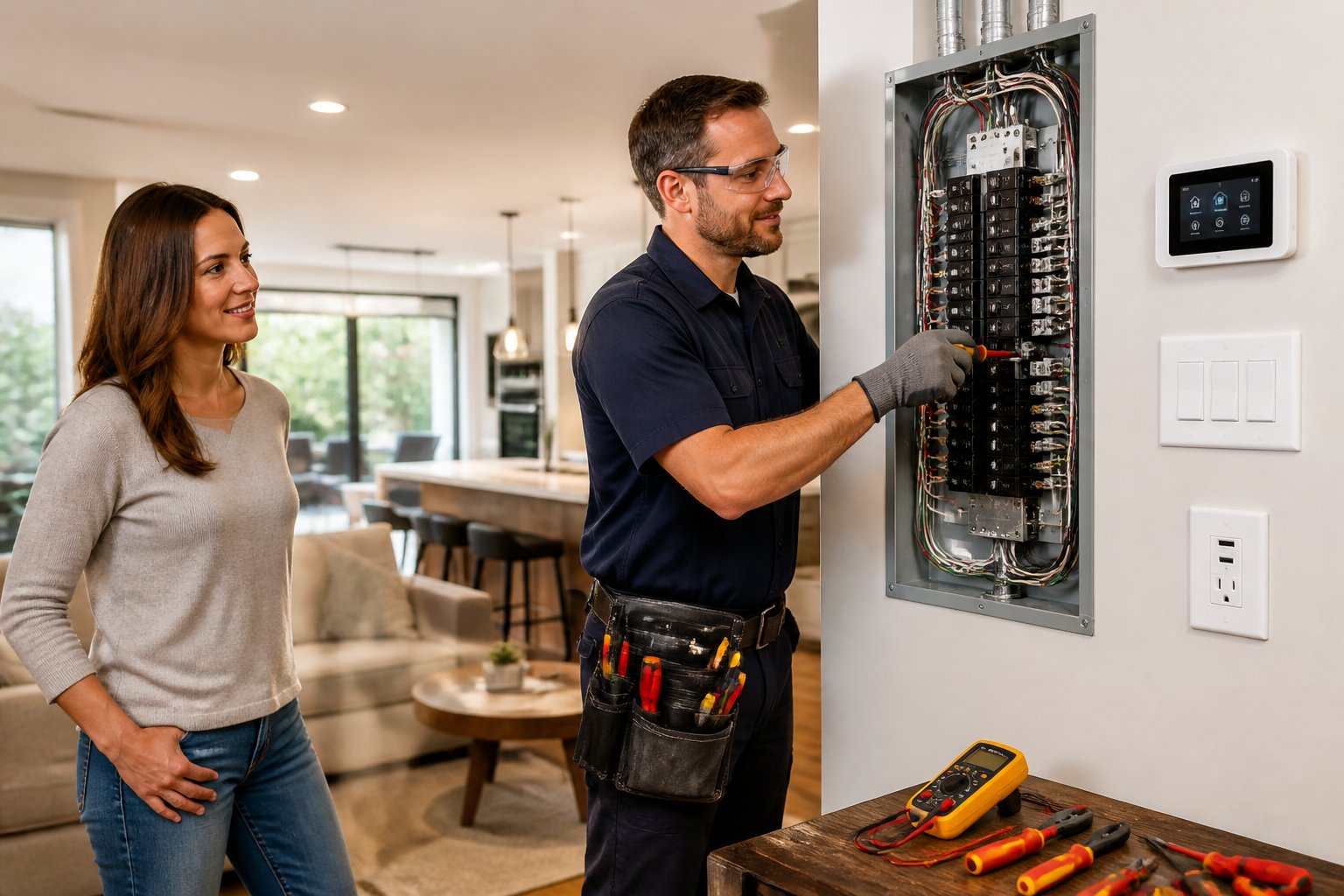
An electrician will check the panel, outlets, switches, connections, and circuits for signs of overload or wear. They look for loose wires, heat damage, and other stuff you might not see day-to-day.
That’s especially useful when the problem’s on and off—an inspection can spot what you’re missing.
Load Testing, Safety Checks, And Honest Advice
Load testing shows how a circuit behaves under real use, not just on paper. A pro will confirm the breaker’s rating, see how much current’s flowing, and tell you if your wiring can handle your daily routine.
Expect honest advice, clear pricing, and real options. A good tech will tell you if you need a repair, a circuit change, or an upgrade.
When To Call Right Away
If breakers keep tripping, outlets are hot, or you notice burning smells or scorch marks, call a pro now. Those are signs of hidden damage that shouldn’t wait.
If you’re in Sacramento, Folsom, Carmichael, Rancho Cordova, Natomas, or nearby, same-day service really can make a difference when safety’s on the line.
Long-Term Fixes For A Safer, More Reliable Home
Long-term fixes focus on giving your home enough electrical muscle for how you actually live. Sometimes that means adding dedicated circuits, running new lines for heavy appliances, or planning a panel upgrade for what’s coming next.
Dedicated Circuits For High-Demand Appliances
Dedicated circuits let big appliances run without fighting for power. Kitchen gear, laundry machines, EV chargers, and some home office setups all work better when they’re not sharing.
It’s a solid upgrade for efficiency, reliability, and fewer nuisance trips. Plus, it helps your home keep up as your needs grow.
When To Add New Circuits
You might need new circuits if a room or appliance always pushes the same breaker too hard. Adding a workshop, upgrading a kitchen, or installing an EV charger? A new circuit gives that load its own safe route.
It’s usually cleaner than overloading an old circuit, and it’ll cut down on wear and tear.
When A Panel Upgrade Makes Sense
A panel upgrade’s a smart move when your current setup can’t keep up. Adding solar, a generator, an EV charger, or more modern appliances? Your panel might need more capacity.
A bigger or better-organized panel makes your system more reliable and future upgrades easier. It’s honestly one of the best investments for a busy home.
Frequently Asked Questions
What are the early warning signs that a household circuit is overloaded?
You’ll usually notice flickering or dimming lights, repeated breaker trips, warm outlets, buzzing sounds, or scorched plugs. A burning smell or hot switch plate is a stronger warning—don’t wait on those.
Why might a circuit feel overloaded even if the breaker hasn’t tripped yet?
Sometimes a breaker won’t trip right away if the load’s only high for a short burst, if the wiring’s old, or if the breaker’s just not reacting fast enough. You can have an overload before the breaker trips—especially if you’re running a bunch of high-wattage stuff at once.
How can I check the load on a circuit safely using a multimeter or clamp meter?
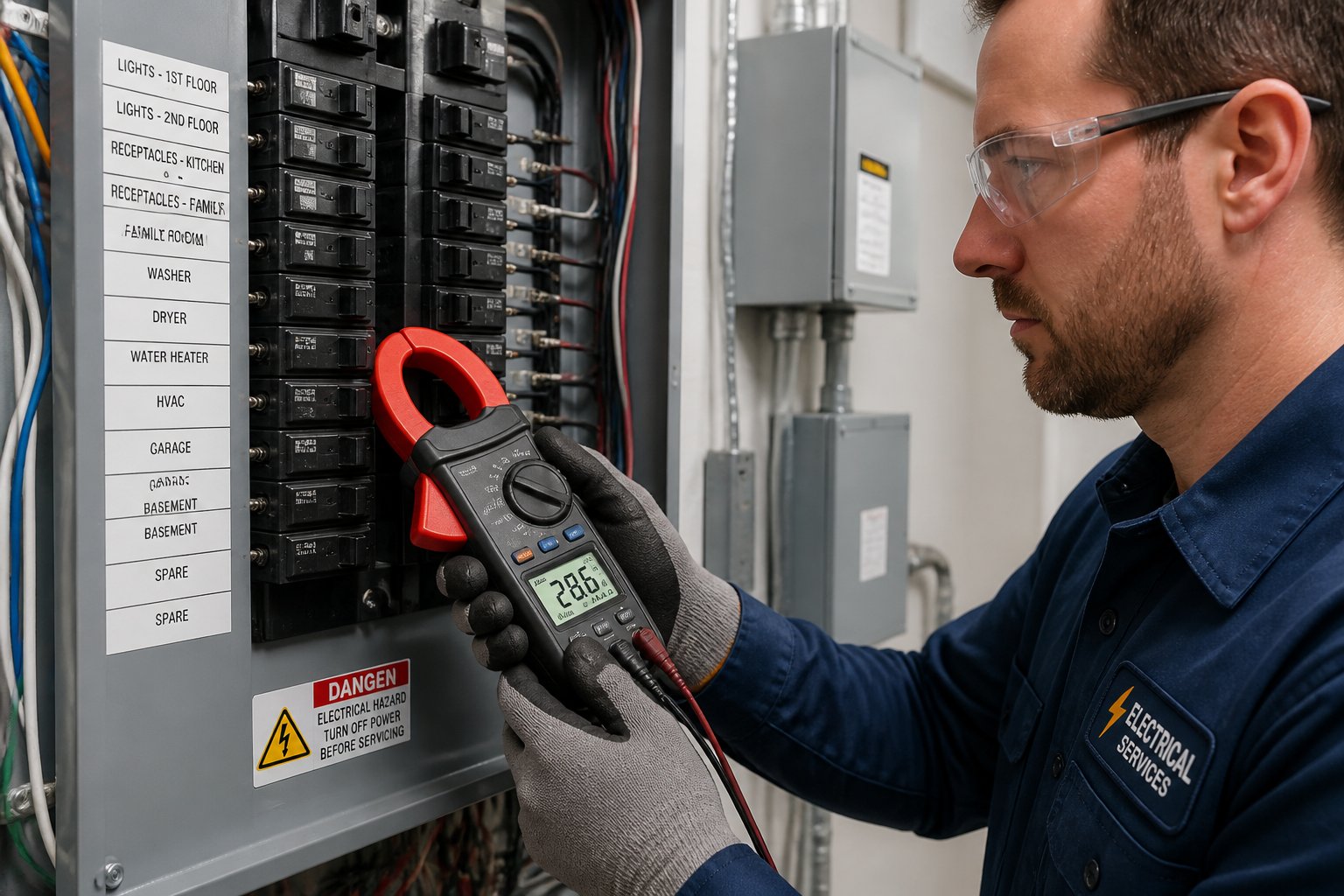
Grab your multimeter to check voltage, or use a clamp meter to measure current—no need to open the circuit with the clamp style, which is nice. If things look crowded, damaged, or you’re just not sure what the numbers mean, it’s honestly safer to stop and call a licensed electrician.
Which appliances and devices are most likely to cause circuit overloads in a home?
Space heaters, microwaves, coffee makers, hair dryers, toasters, air fryers, portable AC units, and power tools—these are the usual suspects. If you plug a few of them into the same circuit, that load adds up way faster than most folks realize.
How can I figure out which outlets and lights are on the same breaker?
Flip off one breaker at a time and walk around to see which outlets, lights, or fixtures go dark. It’s a simple (if slightly tedious) way to map out which spots share a circuit—and honestly, you might be surprised by what’s connected together.
What should I do if lights flicker or outlets feel warm when several devices are running?
First things first: unplug some devices and stop using any outlet that feels warm. If this keeps happening—or you catch a whiff of something burning, see weird discoloration, or hear a buzzing noise—shut off the circuit. At that point, it’s time to call in a pro and have an electrician check things out.