A Generac whole house generator can be part of a standby power plan, but the brand name alone cannot tell you whether a particular setup fits your home. Start by deciding which systems you want to use during an outage, then assess the generator capacity, transfer equipment, site, and installation scope together.
Call AAA to discuss generator installation
What does whole-house backup mean in everyday use?
Whole-house backup is a useful way to describe a goal, not a promise that every circuit and appliance will operate at once. Actual coverage depends on the selected generator, the home's electrical service, transfer equipment, and the loads planned to run together. A proposal should say what the system is designed to support rather than relying on a broad label.
For one household, backup may mean keeping refrigeration, lights, internet equipment, and a few essential systems available. Another household may want air conditioning, a well pump, or more kitchen equipment. Those choices affect both the system design and what you should expect to manage during an outage. Keep the brand choice separate from the home-specific design: a generator model is only one component in the complete setup.
Separate three questions when you review a Generac system:
- What do you want powered? Identify essential circuits and optional loads.
- What can operate at the same time? Consider typical use and equipment that draws power when starting.
- How will the system connect safely? Review transfer equipment, location, fuel arrangements, permits, and installation responsibilities.
Keeping these questions distinct makes a proposal easier to evaluate. The home-specific configuration is what determines the practical result, not a broad product label.
How should you describe your backup needs?
Before requesting an assessment, write down the situations you want to handle. Consider whether an outage might occur during hot weather, a colder period, or while household members are working or studying at home. Think about how many people are likely to be there and which equipment has to remain usable. This is more helpful than starting with a model number or the largest possible list of appliances.
Make a room-by-room or system-by-system inventory. Include lighting, refrigerator and freezer, internet equipment, heating or cooling, cooking, water equipment, medical devices, and work equipment when relevant. Mark each item as essential, desirable, or not needed during an outage. Note whether it is a dedicated piece of equipment or part of a circuit serving several rooms.
- List circuits and equipment. Use appliance labels or existing documentation if available, but do not open electrical equipment or attempt to measure wiring yourself.
- Describe normal use. For example, air conditioning may be important during a Sacramento summer, while other large appliances could be left off at the same time.
- Flag motors and compressors. Heating and cooling equipment, pumps, and similar loads can have different startup and running demands. Ask the installer to account for the actual equipment.
- Identify non-negotiable loads. Explain if an appliance or system has to stay available for a health, accessibility, water, or household-work reason.
- Describe simultaneous use. Make a realistic scenario: which devices would run together, and which could wait or be switched off?
For example, a household might consider refrigeration, selected lighting, communications, and a furnace blower essential, while treating laundry and a second cooking appliance as optional. A different home may give cooling or a pump higher priority. These are planning examples, not a load calculation; an installer must verify the equipment and electrical details before recommending a system.
Avoid using square footage alone to select capacity. Similar-sized homes can have different appliances, service equipment, and expectations. AAA's guide to choosing a generator for your house offers another starting point for comparing household needs.
Which loads should you compare?
The table is a conversation aid, not a sizing chart. It helps you explain what matters and ask the installer to verify the demands, circuits, and operating plan for your specific home. It does not mean each load can be supported simultaneously.
| Load group | Examples | What to confirm |
|---|---|---|
| Everyday essentials | Refrigerator, selected lights, communications equipment | Which circuits serve these items, and can they run together with other priorities? |
| Heating or cooling | Air conditioner, heat pump, furnace blower | What are the equipment's operating and startup needs, and is its use part of the plan? |
| Water and pumps | Well pump or other household pump | What does the equipment require at startup, and how often might it operate? |
| Kitchen and laundry | Cooking appliances, dishwasher, washer, dryer | Which items are essential, and could their use be staggered? |
| Convenience or work loads | Additional rooms, office equipment, entertainment devices | Which circuits matter during an outage, and what can remain off? |
Bring this list to the assessment and ask the installer to mark which items the proposed design is intended to support. If you have a must-run appliance, name it directly rather than assuming it will be covered because the system is described as whole-house. Ask what happens if a high-demand appliance starts while another large load is operating.
How do generator capacity and load management affect the decision?
Capacity is one part of the design. The system also needs an operating plan that matches how the household will use it. Depending on the equipment and configuration, an installer may discuss prioritizing circuits, limiting certain loads, or coordinating the use of larger appliances. Ask for a plain-language explanation of any load management equipment proposed and which loads it controls.
Use a written scenario to test the recommendation. Ask whether the expected plan includes cooling, refrigeration, and a pump at the same time. Then ask what would need to change if the family also wanted to run a range or laundry appliance. The answers should connect back to your list and to the equipment at your home, not just a general rating or model label.
If two proposals recommend different capacities, compare their assumptions before comparing the models. One proposal may assume only essential circuits, while another may include a large HVAC load. Ask each installer to show which loads were counted, whether motor-starting needs were considered, and what the system is expected to do when those loads overlap. AAA's Generac 22kW generator guide discusses a particular capacity category; treat model-specific discussion as a prompt for questions, not as a substitute for a home assessment.
Where could a standby generator go?
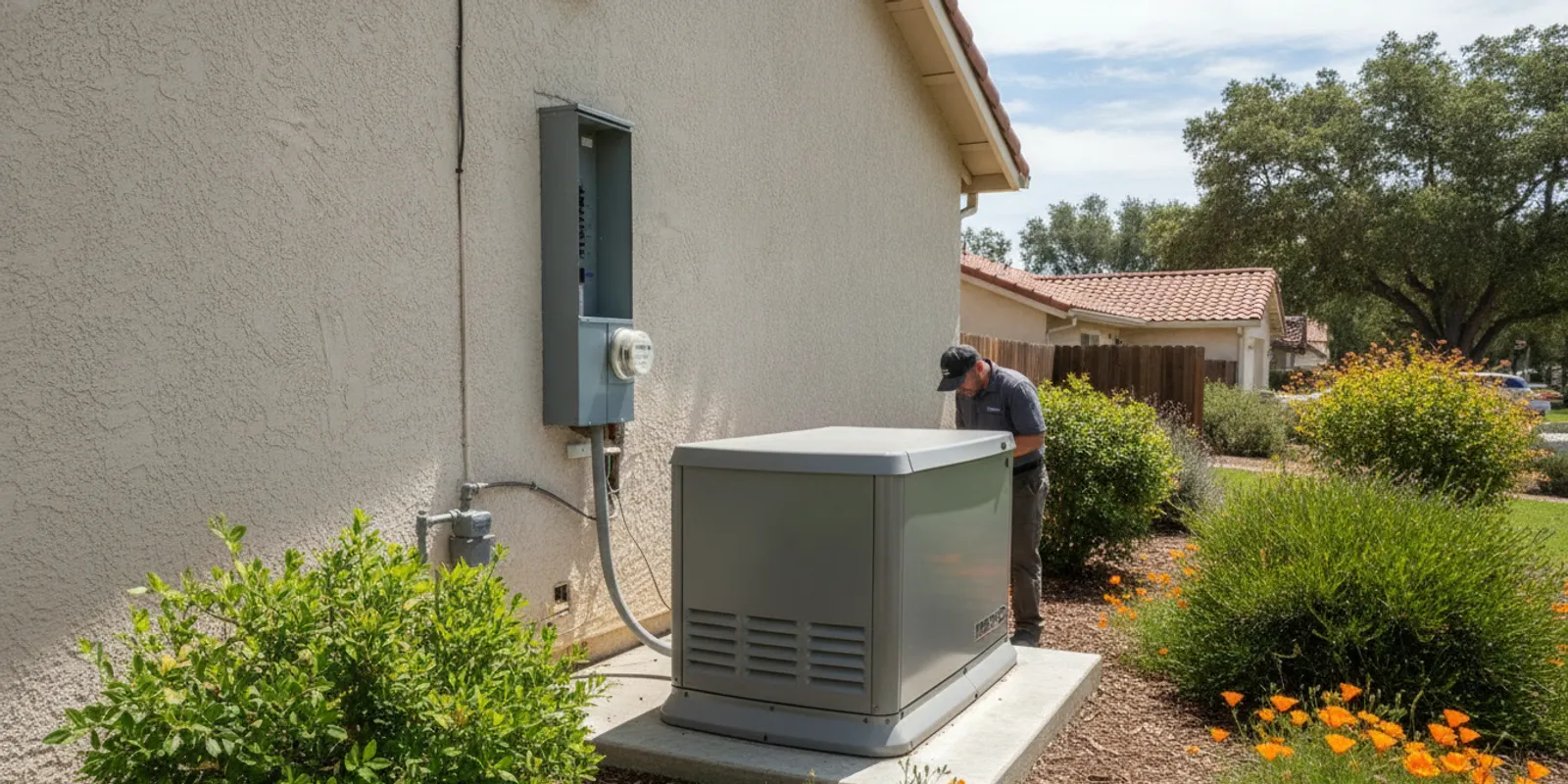
Location affects safety, service access, connections, and how the finished installation fits the property. A spot that looks convenient may not work for the equipment or satisfy applicable requirements. The installer should review the specific manufacturer's instructions and requirements that apply to the address before settling on a location.
Walk the property together and discuss the options. Ask how the proposed location accounts for exhaust direction, required clearances, openings in the home, access for maintenance, and the route for electrical and fuel connections. Raise practical concerns such as landscaping, gates, noise-sensitive areas, or the ability to reach the equipment for service. These considerations do not replace safety instructions or local review.
Never place or operate a generator in an enclosed space, garage, or other place where exhaust could enter the home. Do not move a standby generator, build a barrier around it, or change clearances based on guesswork. The installation plan should follow the manufacturer's requirements and applicable local rules.
Ask the installer to explain any site preparation that may be necessary and whether it is included in the written scope. If the preferred location presents a constraint, ask what alternatives are possible and what trade-offs they introduce. Discussing this before installation helps avoid surprises about access, connections, or the final position of the equipment.
What does transfer equipment do?
A standby generator needs compatible transfer equipment to manage the connection between utility power and generator power. The design determines how the home changes between power sources and which circuits receive backup power. A transfer switch or other approved transfer equipment is part of the system, not an optional detail to leave vague in a proposal.
Ask the installer to identify the proposed transfer equipment and explain how it works in your home. Clarify which circuits it serves, how the system responds when utility power is interrupted, and what happens when utility service returns. Ask whether the plan uses a panel arrangement or other equipment that changes how you use circuits during an outage.
Also confirm whether the generator and transfer equipment are compatible with the home's electrical service and intended loads. If the existing panel or service configuration creates a limitation, ask what work may be needed and whether it is part of the proposal. Do not attempt to connect a generator to home wiring yourself. Incorrect connections can create serious hazards for occupants and utility workers.
What should you check in an installation proposal?
Two proposals are only comparable when they describe similar work and make similar assumptions. Look beyond the brand and the equipment's headline capacity. The written scope should explain intended coverage, major components, location, connection plan, and work included or excluded.
- Equipment: Which generator model and transfer equipment are proposed? Are they identified clearly?
- Coverage: Which circuits or loads are intended to receive backup power? What limits or operating changes should you expect?
- Load assumptions: Which appliances were considered, and what simultaneous use does the design assume?
- Location: Where is the equipment planned, and how will the site meet applicable instructions and requirements?
- Connections and preparation: Which electrical, fuel-related, or site-preparation tasks are included? Which require separate work or coordination?
- Permits and inspection: Who determines what is required, handles applications, and coordinates any inspections?
- Handoff: What testing, operating explanation, and maintenance guidance will you receive?
Ask each installer to identify assumptions and exclusions in writing. If a proposal says some loads are not included, request a clear list. If site work or a panel change is not included, ask who will assess and complete it. A clear scope makes it easier to understand the proposed price and compare options without treating a lower total as equivalent when it covers less work.
For a brand comparison, AAA's guide to choosing a Cummins generator and dual-fuel generator guide explore other generator questions. Neither replaces a home-specific comparison of capacity, fuel arrangement, transfer equipment, and installation scope.
What happens during an assessment?
A useful assessment connects your priorities with the home's electrical setup and possible installation conditions. Be prepared to describe the circuits and equipment you want to support, how you expect to use them together, and any must-run needs. Tell the installer if existing electrical work or a location constraint may affect the plan.
The assessment should leave you with a recommended configuration that you can explain back in your own words. Before authorizing work, confirm what the system is designed to power, how it will transfer between sources, where it will sit, and what remains outside the proposed scope. Request the price and scope in writing before work begins. AAA Electrical Services provides upfront pricing before work begins; scheduling is confirmed with the team.
AAA Electrical Services is a licensed and insured residential contractor serving Sacramento and surrounding communities. Its generator team handles installation and repair needs. Use the whole-home generator installation planning guide as a list of questions to bring to a consultation, or call the team to confirm scheduling.
How should you plan for use after installation?
Before the handoff is complete, ask the installer to walk you through normal system operation. You should know what the system is expected to do when utility service is interrupted, how to recognize a change in operating status, and which household loads may need to be managed. Ask where the operating instructions and equipment documentation will be kept, and whom to contact if the system does not behave as explained.
Make a household reference list based on the installed configuration. It can note which circuits are backed up, which heavy appliances to limit or sequence, and any steps the installer specifically instructs you to follow. Keep this simple enough for other household members to understand. Do not include improvised repair steps or directions to open electrical equipment.
Maintenance is another part of dependable ownership. Ask what routine checks and service intervals apply to the exact model and installation, and what tasks are appropriate for the owner versus a qualified technician. Follow the manufacturer's instructions rather than a generic schedule copied from another generator. AAA's generator maintenance guide can help you prepare questions, while its generator repair overview is relevant if existing equipment develops a problem.
If you are deciding whether a permanently installed standby system is right for your needs, compare it with other backup approaches based on what you want powered and how you expect to use the equipment. AAA's guides to inverter generators and portable power stations for home backup cover other categories. The purpose is to make trade-offs clear before you choose, not to assume one type suits every household.
Frequently asked questions
Will a Generac whole house generator power every appliance?
Not automatically. Generator capacity, transfer configuration, home loads, and the operating plan determine what can run. Ask the installer for a clear list of supported circuits and any limits on simultaneous use.
Can I select the generator size from the model name?
No. A model name or capacity label does not account for your home's equipment, starting demands, service, or expectations. Use your load priorities as a starting point and have a qualified installer evaluate the actual setup.
Can I choose the installation location?
You can share preferences, but the final location needs to work with the equipment instructions, safety considerations, service access, and applicable local requirements. Review potential locations with the installer before the plan is finalized.
Do I need transfer equipment?
A standby system needs compatible equipment to manage the connection between the generator, utility source, and the home's backed-up circuits. Ask which equipment the proposal includes and how it will serve your home.
What should I have ready before requesting an assessment?
Prepare a list of essential and optional loads, note equipment that may run together, and identify any must-run systems. Bring questions about placement, permits, included work, system limits, and handoff.
Call AAA to discuss your generator installation
A sound Generac whole house generator decision starts with your household's actual priorities and a written, home-specific plan for loads, location, transfer equipment, and installation responsibilities.