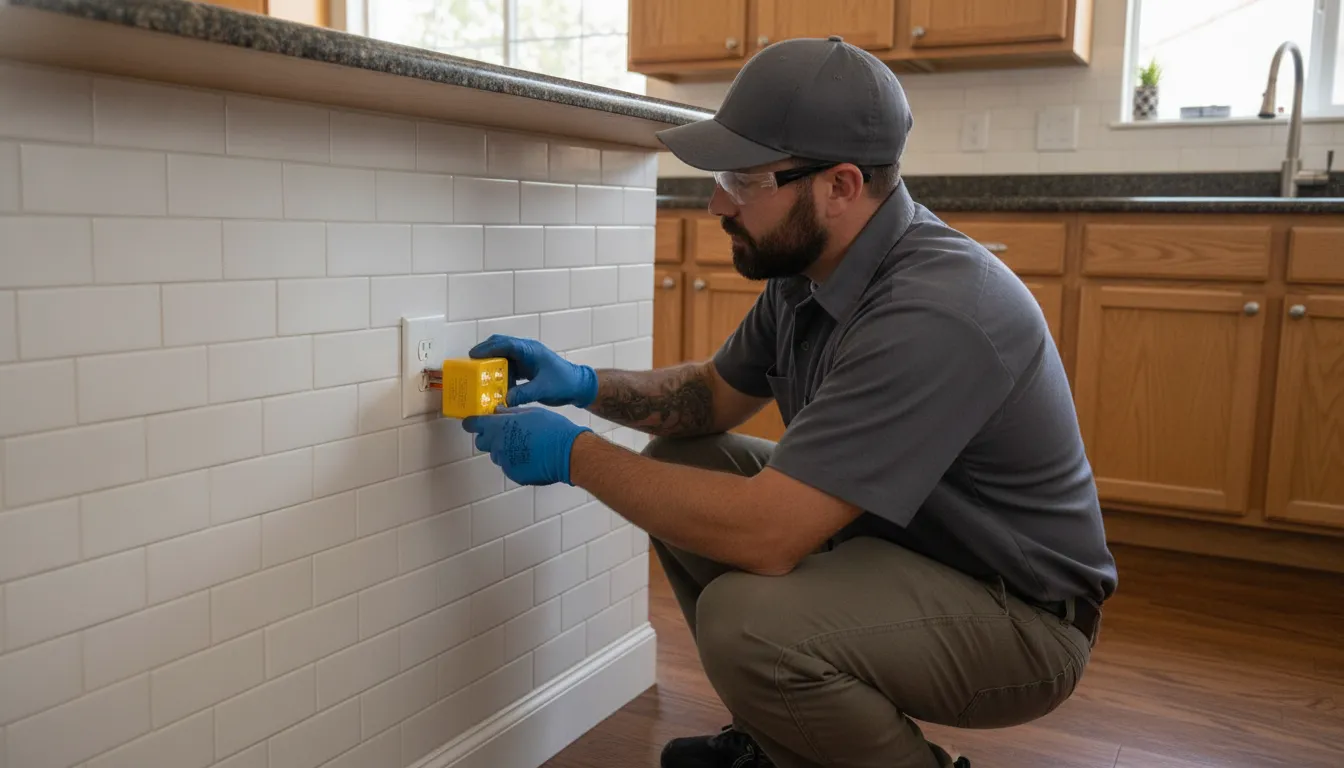
A GFCI outlet keeps tripping because it senses current leaving the circuit and not coming back. That click means the outlet is doing its job, not failing at random. In a Sacramento kitchen, bath, garage, or outdoor wall, the usual causes are simple. Moisture, a worn appliance, a fault farther down the line, or a GFCI that has worn out. You can make a few safe checks before you call, but you should not open the box or keep forcing a reset that will not hold.
Request outlet service or call 916-972-7515 if the outlet will not stay reset.
This guide is about the trip itself. If you want the plain definition of the device and where one belongs, read what a GFCI is first, then come back here. AAA Electrical Services is a family-owned Sacramento contractor, licensed as CSLB #635556, and the team can test the outlet, the downstream devices, and the breaker without guessing.
Why a GFCI outlet keeps tripping
A ground-fault interrupter watches the hot and neutral wires. The current going out should match the current coming back. If even a few milliamps leak to a ground path, the device opens the circuit in a fraction of a second. The U.S. Consumer Product Safety Commission describes that trip point as about 0.006 amperes, fast enough to act before the current can affect a heartbeat. That is why a GFCI can trip when a standard breaker stays quiet. A breaker is watching for overload and short circuits. A GFCI is watching for leakage.
A single trip after a splash or a storm is often the device working exactly as designed. A GFCI outlet keeps tripping again the same day, or trips with nothing plugged in, is a different problem. Something on that protected run is leaking, or the GFCI itself can no longer tell a real fault from ordinary use. Pressing reset over and over does not repair either problem.
Older Sacramento houses make this harder to see. One GFCI in a garage or at the panel can protect bathrooms, the kitchen, and an outdoor receptacle that shares the same run. The dead outlet in the hall bathroom may be perfectly fine on its own. The device that opened is somewhere else. Start with the face you can see, then look for the other GFCI or GFCI breaker that feeds it.
Safe checks before you call
Stay at the wall plate, and do not remove the cover or use a metal tool inside the box. If you smell burning, see scorch marks, or hear buzzing from the outlet or the panel, stop and call for help. Those signs point to damage, not a simple reset problem.
- Unplug everything on that GFCI and on any outlet that went dead with it. Include the refrigerator, the garage freezer, and any outdoor timer if those also lost power.
- Look for water, then dry a wet counter, a steamy bath wall, or a rain-soaked outdoor cover. Do not reset a receptacle that is still wet.
- Press reset firmly, and if it holds while the test button still cuts power, the device can still open the circuit.
- Plug devices back in one at a time, and if one appliance trips it immediately, leave that appliance unplugged.
- If it trips with nothing plugged in, or will not reset at all, stop there. The fault is in the wiring, a downstream box, or the GFCI itself.
The CPSC says to test a GFCI after installation, about once a month, and again after any power failure. Plug in a lamp, press test, and confirm the lamp goes out, then press reset and confirm it comes back. A device that fails that test should be replaced rather than ignored. Power outages can damage the electronics inside the receptacle even when the rest of the house looks perfectly fine.
Moisture, appliances, and the load side
Moisture is the first thing to suspect in a bathroom, a kitchen near the sink, a laundry room, or an exterior wall. Steam, a slow leak behind the backsplash, sprinkler overspray, and a cover that no longer seals can each create a path to ground. Dry what you can see, but if the trip returns the next time someone showers, the box may be damp inside. That is a job for a licensed electrician, not a hair dryer aimed into the receptacle.
Appliances are the second suspect. A hair dryer with a cracked cord can leak a few milliamps. So can a toaster with a damaged plug, a garage freezer on a bad cord, or a pressure washer left in the rain. Unplug them and reset, and if the outlet holds until that one item is plugged back in, the outlet was right to trip. Retire the appliance or have it checked, and do not move it to an unprotected outlet just to stop the nuisance.
The third suspect is whatever is wired on the load side. The load terminals continue on to feed other receptacles downstream. A loose neutral, a nicked cable in a crawl space, or a second device that got wet can open the GFCI you are looking at. That is why a kitchen GFCI can open even when nobody touched the kitchen. Outdoor lights, a bathroom fan, or a garage door opener may share that same protection. If you cannot find a plugged-in culprit, assume the fault is somewhere in that hidden run.
A worn GFCI is the fourth suspect, and it is common. These devices self-test, and when that test fails, many of them trip and then refuse to reset. Age, heat, repeated trips, and poor backwired connections all shorten the life of the receptacle. Replacing it is reasonable once moisture and a bad appliance are both ruled out. It is not reasonable to replace it twice while a downstream fault is still present. The replacement will trip again for the same underlying reason.
What the trip pattern tells you
| What you notice | Likely cause | Safe next step |
|---|---|---|
| Trips only when one appliance is plugged in. | That cord or appliance is leaking current. | Leave it unplugged and stop using it. |
| Trips during showers, rain, or sprinklers. | Moisture in the box, cover, or outdoor device. | Dry the area and call if it returns. |
| Trips with nothing plugged in. | Downstream wiring, a hidden device, or a bad GFCI. | Do not keep resetting. Have the run tested. |
| Will not reset, or the test button does nothing. | Worn GFCI, failed electronics, or a live fault. | Stop forcing it and request service. |
| Trips with a burning smell, heat, or buzzing. | Damaged wiring or a failing connection. | Leave it off and call for help. |
| Several rooms die when one GFCI opens. | One device protects a long downstream run. | Find the feeding GFCI before replacing parts. |
Use the row that matches what you actually see, not the row you hope will be cheapest. A trip that lines up with one toaster is a very different repair from a trip that happens in an empty outlet box. Write down which outlets died, what was running at the time, and whether the weather was wet. That note saves time when the technician starts the diagnosis.
When the breaker is the GFCI
Some homes protect the bathroom or outdoor circuit with a GFCI breaker in the panel rather than a receptacle on the wall. That breaker has its own test button on the panel. If that breaker trips as soon as you reset it, the fault is somewhere on the whole circuit rather than in one faceplate. Unplug the loads the same way, and if it still trips instantly, stop. A breaker that will not hold can mean a ground fault in the cable, a shared neutral wired incorrectly, or a breaker that has failed its own test.
Do not swap in a standard breaker just to keep the lights on. You would be removing the shock protection the circuit was built to have. A standard breaker will not see the small current leak a GFCI is there to catch. If you are unsure whether a dead bathroom is on a wall GFCI or a panel GFCI, call rather than open the panel cover yourself.
A hot breaker, a buzzing panel, or a trip paired with a burning smell belongs with any dead outlet that smells hot. Read the warning signs in how to tell an outlet is bad, and then leave the circuit off. For a wider look at what a homeowner can safely identify on a breaker versus what needs the panel opened, the breaker guide stays on the panel side of the problem. This article stays focused on the GFCI trip itself.
What not to do
Do not tape the reset button so it stays in. Do not replace a GFCI with a plain receptacle just because the plain one does not trip. Do not feed a bathroom fan, a freezer, or outdoor lighting from a cheap adapter that skips the protection. Those shortcuts hide the symptom and put people back in the path the device just opened.
Do not pour water out of an outdoor box and reset it immediately. Give the wiring time to dry, and still have it checked if the trip started right after rain. Do not assume a brand-new GFCI is defective when it trips on the very first reset. A new device is often the first one sensitive enough to reveal an old fault. Returning it and buying another new one will not clear a wet junction or a bootleg ground.
Also skip the advice that treats a GFCI trip as only an overload, the way a regular breaker trip often is. You can overload a kitchen circuit with too many heat-producing appliances, and the breaker should open for that. A GFCI opens because it detects leakage. If the only change was a new toaster and the breaker is fine, look at the toaster and the receptacle rather than adding more outlets on the same run.
When AAA should take the call
Call when the reset will not hold, when the outlet feels warm, or when more than one room goes dead at once. Call promptly if there is a burning smell, a buzz, or water still sitting inside a box. Live phone answering is available throughout the day and night. The team will confirm when a technician can actually be on site. That confirmation is not a guarantee of a same-day visit.
On a typical outlet visit, a licensed electrician identifies the repair path and gives you the price before any work begins. There is no flat trip price to publish here, because the repair might be a worn receptacle, a wet outdoor box, a downstream neutral, or a GFCI breaker. Electrical troubleshooting covers that diagnosis. If the receptacle itself is the failed part, switch and outlet service is the matching repair. A GFCI breaker that will not reset is closer to breaker replacement, and only after the circuit is tested.
You should expect a clear price before any repair work starts. The team is licensed and insured, and the people who come to the house are background-checked. If you want the terms of the satisfaction guarantee for this particular repair, ask when you book. For a dead circuit that also smells hot or affects several rooms, keep what to do in an electrical emergency open while you wait.
If the GFCI trips again after you unplug every load, request service or call 916-972-7515. Tell the team which rooms went dead and whether the outlet was wet.
Frequently asked questions
Why does my GFCI outlet keep tripping with nothing plugged in?
The outlet can still detect a leak from wiring on the load side, a downstream receptacle, moisture inside the box, or its own failed self-test. Unplug what you can, dry any visible water, and then try a single reset. If it opens again with nothing plugged in, stop resetting it and have the circuit tested.
Is a GFCI that keeps tripping a fire hazard?
The trip itself is a layer of protection, not evidence of a fire. Heat, buzzing, a burning smell, or scorch marks around the outlet or the panel are the actual fire warning. Leave that circuit turned off and call. Do not treat a hot receptacle as a nuisance that another reset will solve.
Can I replace a tripping GFCI myself?
A careful homeowner can replace a single receptacle if they follow the device instructions and switch off the correct breaker. Many repeated trips are not caused by the receptacle face itself. Stop if the new device trips immediately, or if you are not sure which wires are the line and which are the load. Swapped line and load wires will trip the new outlet, and a missed downstream fault will do exactly the same.
Why does the bathroom GFCI trip when it rains?
Rain, sprinklers, or a damaged in-use cover often wet an outdoor receptacle that shares the same protection. The bathroom outlet may only be the place where you happen to notice the trip. Dry the outdoor covers, check for a tripped garage or exterior GFCI, and call if the trip returns with the next storm.
How often should I test the outlet?
Test the outlet after installation, about once a month, and again after any power outage. Use a lamp, press test, and confirm the power drops, then press reset and confirm the power returns. If either step fails, replace the device or have a licensed electrician check the circuit. Monthly testing is the habit the CPSC recommends for these devices.