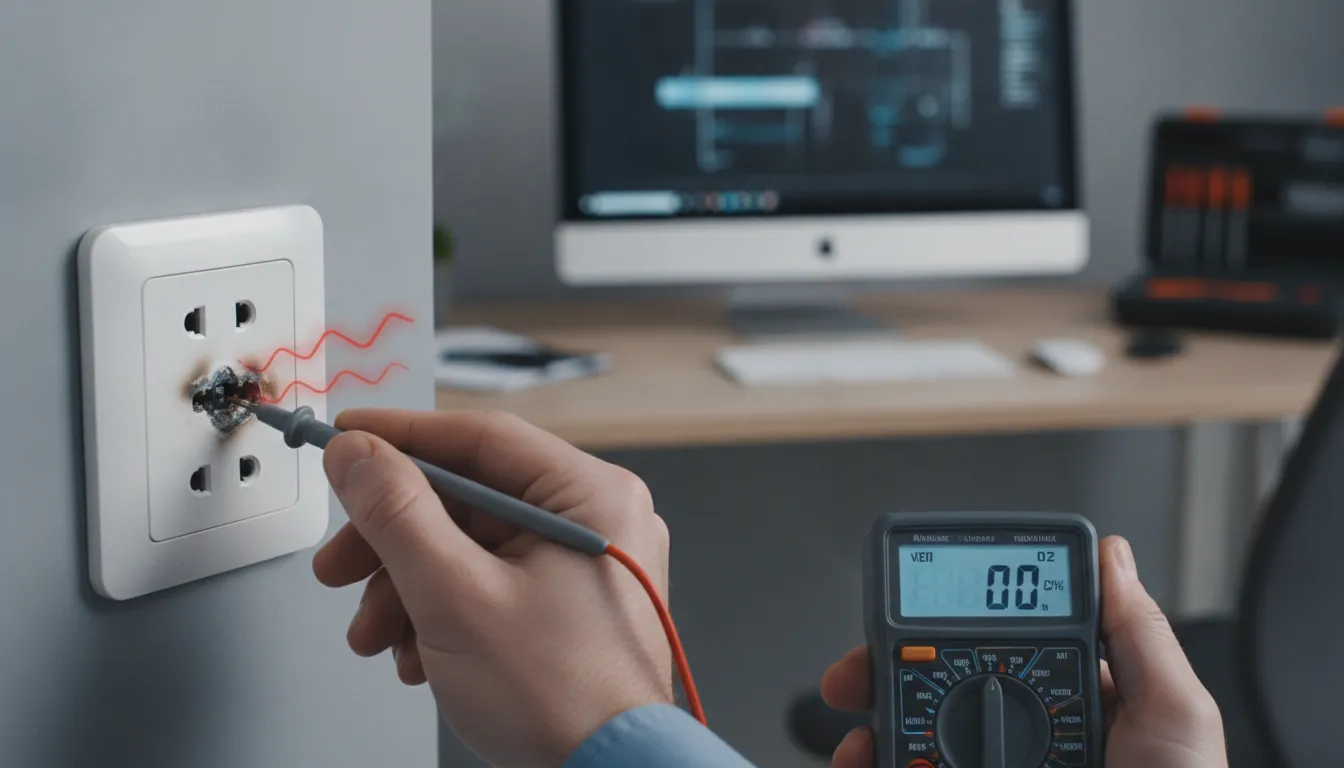
A working outlet isn’t necessarily a safe outlet. Hidden wiring problems or worn internal contacts may not prevent a lamp or charger from turning on. That’s why it helps to understand how to know if an outlet is bad before a small issue becomes more serious. Start by looking for visible damage, loose plugs, unusual warmth, flickering, or odd sounds. If you notice smoke, sparks, or a burning odor, keep your distance and seek help. Don’t remove the outlet cover or attempt a repair. Read on to learn which signs matter, what basic checks can and can’t tell you, and when a qualified electrician should inspect the outlet.
Key Takeaways
- Stop using outlets with warning signs: Heat, scorch marks, sparks, burning smells, loose plugs, or recurring power loss need attention.
- Keep checks external and cautious: Don’t remove the cover, touch exposed wires, or rely on a tester or working device to prove an outlet is safe.
- Get professional help for recurring issues: Contact a qualified electrician if an outlet stays dead, a breaker trips again, or test results raise concerns. If you see smoke or fire, leave the area and call emergency services.
How to Tell If an Outlet Is Bad: Warning Signs
A faulty outlet may show signs before it stops working. Look for visible damage, unusual heat or sounds, plugs that won’t stay in place, and devices that lose power. These clues don’t confirm the cause, but they do mean you should take the outlet seriously.
If you notice any of the warning signs below, stop using the outlet. Don’t remove its cover plate or try to repair it yourself. A qualified electrician can inspect the receptacle and wiring, then recommend the right fix.
Cracks, discoloration, scorch marks, or melted plastic
Check the outlet and its cover for cracks, dark marks, yellowing, or plastic that looks warped or melted. These changes can signal heat or damage, including a problem behind the plate. Even if the outlet still powers a device, visible damage is a reason to stop using it.
Don’t touch or remove a damaged cover, and don’t replace the plate just to hide the marks. South Kentucky RECC explains that discoloration may indicate damage behind the plate, so changing the cover alone may not address the issue. Keep people away from the outlet and arrange for an electrician to inspect it.
Heat, buzzing, crackling, sparks, or burning smells
An outlet should not feel hot or make buzzing, crackling, or popping sounds. A burning smell nearby, or sparks beyond a brief flicker when plugging in a device, can also indicate a problem. These signs may be related to overheating, a loose connection, or damaged wiring, but an electrician needs to inspect the outlet to identify the cause.
Stop using the outlet. Don’t touch it or unplug a device if the outlet is hot, smoking, or sparking. Keep people away and call an electrician. If you see smoke or flames, leave the area and contact emergency services. Electrical hazards can exist even when an outlet isn’t in use, as Great Guys Colorado notes.
Loose plugs that slip out
A plug should fit securely in an outlet. If it slips out, droops, or falls out when the cord moves, the outlet’s internal contacts may be worn or loose. A poor connection can interrupt power and may cause heat at the plug or outlet.
Don’t bend the plug’s prongs or wedge anything around the plug to hold it in place. Stop using the outlet, especially if you also notice warmth, unusual sounds, or discoloration. Entergy’s guide to outlet warning signs lists loose plugs as a reason to have an outlet checked. An electrician can determine whether the receptacle needs replacement and inspect its connections.
Devices losing power, charging inconsistently, or making lights flicker
If a device repeatedly loses power in one outlet, or a charger works only when the cord is held at a certain angle, the outlet may have a worn or loose connection. Lights that flicker when you plug in or use an appliance can also point to an issue, particularly when the same outlet is involved each time.
If the outlet is warm, damaged, sparking, or making unusual sounds, stop using it and don’t test it with another device. If it looks and feels normal, you can check whether the device works in a different outlet. Don’t wiggle the plug to restore power. South Kentucky RECC describes flickering linked to a specific outlet as a possible sign of loose connections or faulty wiring. Have recurring problems inspected.
Why a working outlet can still be unsafe
An outlet that powers a lamp or charger isn’t necessarily safe. Loose connections, outdated wiring, or improper grounding may not stop it from working, and some issues aren’t visible from the outside. A device turning on only shows that power is reaching it. It doesn’t confirm that the outlet or circuit is in good condition.
Don’t ignore warning signs just because the outlet still works. Heat, discoloration, loose plugs, or repeated flickering all deserve attention. Electrical problems can pose shock or fire risks before an outlet fails completely. Exact Electric explains why a functioning electrical system can still present hazards. If you’re concerned about an outlet, AAA Electrical Services can inspect it and recommend a safe repair for your home.
Which Outlet Warning Signs Need Immediate Action?
Heat, smoke, sparks, scorch marks, or a burning smell around an outlet call for immediate caution. Stop using the outlet, keep people and pets away, and don’t touch it to check whether it feels hot. If there’s smoke or fire, leave the home and call emergency services from a safe location. For other urgent warning signs, contact a qualified electrician and don’t use the outlet again until it has been inspected.
Stop using hot, smoking, sparking, or burned outlets
Stop using an outlet if it feels hot, produces sparks or smoke, has scorch marks, or smells like something is burning. Don’t plug in another device to test it, and don’t touch the outlet, its cover, or a plug that appears damaged. Keep children and pets away from the area.
These warning signs can point to a faulty connection or damaged wiring. Even if the outlet still works, it may pose a risk of shock or fire. The electrical safety guidance from Great Guys Colorado notes that loose outlets and faulty connections can be dangerous even when an outlet isn’t in use. Arrange for an electrician to inspect it.
Unplug devices only if it’s safe
Unplug a connected device only if you can do so without touching a hot, wet, damaged, or sparking outlet or cord. Keep your hands dry, stand on a dry surface, and don’t reach through water or near exposed wires. If anything seems unsafe, step away and wait for professional help.
Never pull a plug out by its cord. If the plug or outlet is hot, burned, noisy, or smoking, leave it alone. Avoid the area until an electrician has checked it. As Great Guys Colorado explains, handling electrical appliances with wet hands or while standing in water can increase the risk of electric shock.
Turn off the breaker only if you can identify and reach it safely
If you can safely reach your electrical panel and clearly identify the breaker for the affected outlet, you may switch it off. Don’t open the panel or touch anything inside it. Stay away if the panel is wet, hot, damaged, sparking, or near smoke. If you can’t identify the right breaker or reach the panel safely, leave it alone.
Turning off a wall switch doesn’t guarantee that an outlet is safe to touch. A wiring problem can still create a hazard. A breaker shutoff is a precaution, not a repair or confirmation that the wiring is safe. Keep the outlet out of use and arrange for an electrician to inspect it.
Call an electrician urgently; contact emergency services for smoke or fire
Contact a qualified electrician promptly if an outlet is hot, sparking, burned, or smells like something is burning. Don’t use it again until it has been inspected and repaired. If you see smoke or fire, leave the home and call emergency services from a safe location. Don’t use water on an electrical fire, and don’t go back inside until responders say it’s safe.
For outlet concerns in the Sacramento area, AAA Electrical Services offers residential electrical repairs and installations. When you call, share what you noticed, when it happened, and whether a breaker tripped. These details can help the electrician assess the problem. If you’re unsure about your home’s wiring, an electrical inspection can help identify potential concerns.
Know the risks of shocks, fire, and property damage
A faulty outlet can create a risk of electric shock, fire, or damage to connected devices. The danger isn’t always visible: an outlet may continue to provide power even when loose connections, damaged wiring, or improper grounding create a hazard. Don’t assume an outlet is safe just because a light stays on or a device charges normally.
If you notice warning signs, stop using the outlet and have an electrician inspect it and the related circuit. Call promptly if the problem returns, several outlets are affected, lights flicker, or breakers trip repeatedly. Electrical systems can still function while posing a hazard, as Exact Electric’s overview of common electrical myths explains. A professional can identify the cause and recommend the right repair.
What Safety Precautions Should You Take Before Checking an Outlet?
Before checking an outlet, first decide whether it’s safe to approach. If it’s damaged, hot, wet, sparking, or making unusual sounds, don’t touch it or plug in a tester. Keep children and pets away, and don’t remove the cover plate or try to inspect the wiring. A basic test can offer clues, but it can’t confirm that the outlet is safe. If you’re unsure, step away and contact a qualified electrician.
Don’t inspect or test damaged, hot, wet, sparking, or noisy outlets
If an outlet is cracked, discolored, melted, hot, wet, sparking, or making a buzzing or crackling sound, don’t touch it or plug in a tester. Avoid moving objects or unplugging a device if doing so brings you close to the outlet. Keep people away and contact an electrician for guidance. A damaged connection can be hazardous even when nothing is plugged in, so take warning signs seriously. The Electrical Safety Foundation International’s home safety guidance offers more information about common electrical hazards.
Keep your hands and the floor dry
Never handle an outlet, plug, or testing tool with wet hands or while standing on a wet floor. If there’s water near the outlet, stay clear. Don’t try to wipe it up or unplug a connected device if you would need to approach the outlet. Keep other people out of the area, too. Even after the surface dries, moisture may have affected electrical components inside the outlet or wall. Don’t assume it’s safe to use based on appearance alone. If water reached the outlet, or you’re uncertain about the extent of the exposure, leave it alone and arrange for an electrician to inspect it.
Keep children away while you check the outlet
Move children and pets to another room before checking an outlet, and keep them away until the area is safe. A child might touch a damaged outlet, pull on a cord, or put an object into an opening while your attention is elsewhere. Don’t ask children to help with testing or hold a flashlight near the outlet. For unused outlets, safety covers can help prevent children from inserting objects. Covers don’t repair faulty outlets, though. If you notice damage or another warning sign, keep everyone clear and contact an electrician.
Never remove the cover plate, insert objects, or touch exposed wires
Keep your check to looking at the outlet from a safe distance. Don’t remove the cover plate, put a tool or other object into an opening, or touch exposed wires. Turning off a wall switch doesn’t guarantee the outlet is safe, and wiring may still pose a shock risk. If the cover is broken, the outlet is loose, or wires are visible, don’t try to repair it yourself. Keep others away and arrange for a licensed electrician to inspect the outlet. If you’re unsure what you’re seeing, don’t investigate further.
Don’t assume a voltage tester or tripped breaker proves the wiring is safe
A plug-in or voltage tester can flag some problems, but it can’t detect every wiring issue or confirm an outlet is safe to use. A tripped breaker may also signal a problem, and resetting it doesn’t fix the underlying cause. Don’t test an outlet that is damaged, hot, wet, sparking, or making unusual sounds. If a tester signals an issue, or the same breaker trips again, stop using the outlet and contact a qualified electrician. For help with an outlet concern in the Sacramento area, AAA Electrical Services offers residential electrical services.
How Can You Safely Check an Outlet?
You can check an outlet for visible warning signs and basic function without taking it apart. Start by looking from a safe distance. If you see cracks, scorch marks, melted plastic, or moisture, or notice heat, smoke, sparks, buzzing, crackling, or a burning smell, don’t plug in a device or use a tester. Keep people away from the outlet and contact a qualified electrician. If there’s smoke or fire, leave the area and call emergency services.
If the outlet looks normal and there are no warning signs, you can try a simple check, such as plugging in a device you know works or using a plug-in outlet tester. These steps can provide useful clues, but they cannot confirm that the outlet or wiring behind it is safe. Even an outlet that powers a device may have a fault.
Keep your checks external: don’t remove the cover plate, insert objects, or touch exposed wires. If you’re uncertain or the outlet behaves unusually, stop and ask an electrician to inspect it. AAA Electrical Services provides residential electrical services in the Sacramento area, including help with outlet concerns.
Look for visible damage without touching the outlet
From a safe distance, look for cracks, discoloration, scorch marks, melted plastic, or gaps between the outlet and the wall. Notice whether the outlet appears loose or is pulling away from the wall, but don’t press it or try to move it. Exposed wiring, loose outlets, and faulty connections can create shock or fire hazards, as this electrical safety guidance explains.
If you spot damage, don’t plug in a device or use a tester. Keep others away and arrange for an electrician to inspect it. If you notice heat, smoke, sparks, or a burning smell, leave the outlet alone and treat the situation as urgent.
Try a working device only if the outlet looks and feels normal
If the outlet looks undamaged and there are no signs of heat, moisture, unusual sounds, or a burning smell, you can try a small device you know works, such as a lamp. Plug it in gently without forcing it. Watch for flickering, interruptions, sparks, or unusual sounds. If anything seems wrong, unplug the device only if it’s safe to do so, and stop using the outlet.
A device turning on doesn’t prove the outlet is safe. An outlet can still power a device while having a fault, a point noted in this electrical safety advice. Treat this check as a basic indication of power, not a safety test, and don’t repeat it if the outlet behaves inconsistently.
Use a plug-in tester for a basic screening
A plug-in outlet tester can flag some common wiring problems. Use one only if the outlet appears undamaged and shows no signs of heat, moisture, sparks, or unusual sounds. Follow the tester’s instructions, insert it gently, and compare the indicator lights with the guide provided by the manufacturer. This plug-in tester demonstration shows how the lights can provide a basic screening.
A tester cannot identify every wiring fault or confirm that the outlet is safe. If it signals a problem, stop using the outlet and contact an electrician. Don’t remove the cover or attempt to investigate the wiring yourself.
Press a GFCI test or reset button only if there are no warning signs
Some outlets have “TEST” and “RESET” buttons, often in areas where outlets may be near water. Use the TEST button only when the outlet appears dry and undamaged, with no signs of heat, sparks, smoke, or unusual sounds. Follow the instructions on the outlet or provided by its manufacturer.
If the outlet trips, use RESET only as directed. If it won’t reset, trips again, or behaves unexpectedly, stop there. Don’t keep pressing the buttons or plug in a device to check whether it works. When you’re unsure what to do, home electrical safety guidance recommends asking a professional to assess the outlet.
Treat test results as clues, not a diagnosis
A working device, a reset button, or a plug-in tester can offer useful information, but none can rule out every electrical hazard. Testers may not detect hidden damage, loose connections, or all grounding and wiring problems. An outlet may also continue to power a device despite a fault that needs attention. Information about common electrical myths explains why a system can appear to work while still presenting a shock or fire risk.
Take unusual results seriously, but don’t try to diagnose or repair the outlet yourself. Stop using it and call a qualified electrician if a tester flags a problem, the outlet stays dead after a safe reset, or you’re unsure what a result means.
Which Outlet Testing Tools Can Homeowners Use?
Outlet testers can provide useful clues, but no basic tester can confirm that an outlet and its wiring are safe. Each tool checks for specific conditions, and a normal result does not rule out every fault. Before using any tester, look at the outlet without touching it. If you notice heat, discoloration, cracks, sparks, unusual sounds, moisture, or a burning smell, don’t plug anything in. Stop using the outlet and contact an electrician.
For an outlet that looks and feels normal, a plug-in tester is often the simplest option for a basic screening. A non-contact voltage tester can indicate whether voltage is present nearby, while a multimeter can measure voltage but requires more skill to use safely. Read and follow the tool’s instructions, and don’t test an outlet if you’re unsure how to use the device or understand its results.
Treat a test as a starting point, not a diagnosis. A tester may miss loose connections, hidden damage, or other wiring problems. If a tool signals a fault, the outlet stays dead, or you can’t interpret the result, don’t remove the cover plate or attempt a repair. A qualified electrician can inspect the outlet and determine what needs attention.
Use plug-in testers to flag some common wiring problems
A plug-in outlet tester fits into a standard receptacle and uses indicator lights to flag certain wiring conditions. Depending on the model, it may identify issues such as an open ground, reversed polarity, or an open neutral. Check the tester’s instructions to learn what each light pattern means. In a demonstration of a plug-in tester, two illuminated orange lights indicated that the outlet was wired correctly.
A normal reading is not proof that the outlet is safe. These testers don’t identify every wiring fault or confirm that connections are secure. Don’t use one on an outlet that is hot, damaged, wet, sparking, or making unusual sounds. If the lights suggest a problem, stop using the outlet and have an electrician check it.
Use non-contact voltage testers to detect voltage, not confirm safety
A non-contact voltage tester senses electrical voltage near an outlet without touching its metal contacts. Many models signal with a light, a sound, or both. This can help indicate that voltage is present, but it doesn’t confirm that the receptacle is wired correctly or that its grounding and connections are safe.
In a video demonstration, a non-contact tester flashes and beeps near a powered outlet. That signal is not an all-clear: the tool can’t rule out loose connections, damaged wiring, or other faults. Follow the manufacturer’s instructions, and don’t use a positive signal as a reason to handle, open, or repair the outlet. If you’re uncertain what the signal means, leave the outlet alone and ask an electrician to inspect it.
Use multimeters only if you can operate and interpret them safely
A multimeter measures voltage, but using one at an outlet takes more care than using a plug-in tester. You need to select the right setting and place the probes correctly. Handling the probes incorrectly can cause electric shock or a short circuit. If you haven’t learned how to use a multimeter safely, don’t try to test an outlet with one.
A multimeter demonstration measures voltage between an outlet’s hot and neutral slots. A zero or very low reading may mean the outlet isn’t supplying power, but it won’t explain why or confirm that the wiring is safe. Never insert probes into an outlet that is damaged, hot, wet, sparking, or making unusual sounds. If you’re unsure about the process or get an unexpected reading, stop and contact an electrician.
Don’t rely on a tester to rule out hidden damage or faulty wiring
An outlet can appear to work while still having a problem behind its cover plate. Loose connections, damaged wiring, or faulty grounding may not show up in a basic test, but can still create shock or fire hazards. As Exact Electric explains, electrical systems can continue functioning even when an underlying issue poses a risk.
A normal tester result, a working lamp, or a breaker that hasn’t tripped shouldn’t outweigh warning signs. If an outlet feels warm, has scorch marks, makes a buzzing or crackling sound, or causes a breaker to trip repeatedly, stop using it. Don’t remove the cover plate or attempt a repair. A licensed electrician can inspect the outlet and its connections. Homeowners in the Sacramento area can learn more about AAA Electrical Services.
Could a Tripped Breaker or GFCI Explain the Problem?
Yes. A tripped circuit breaker or ground-fault circuit interrupter (GFCI) can cut power to an outlet. You can check these devices if the outlet has no signs of damage or overheating, but repeated trips need attention from a qualified electrician.
Check for a tripped breaker without opening the panel
If the outlet looks normal and there’s no heat, burning smell, buzzing, or visible damage, check whether a breaker has tripped. Look at the breaker handles from outside the panel, and don’t remove the panel cover or touch anything inside. A tripped breaker may sit between the “on” and “off” positions or appear to be off. You can also look for a GFCI outlet nearby, often found in kitchens, bathrooms, garages, and outdoor areas. A GFCI may protect other outlets on the same circuit, so check nearby locations if it’s safe. If you can’t identify the right breaker or GFCI, don’t guess. A qualified electrician can help trace the circuit.
Reset a breaker or GFCI only if there are no signs of damage or overheating
Only try a reset if the outlet and surrounding area look and feel normal, and your hands and the floor are dry. Follow the panel instructions to switch a tripped breaker fully off, then back on. For a GFCI, press its reset button firmly. Don’t force a switch or button, and don’t touch an outlet with scorch marks, melted plastic, sparks, or moisture. If you see any warning signs, leave the outlet alone and contact an electrician. General home electrical safety guidance also recommends asking a professional to check an outlet or appliance if you’re unsure whether it’s safe.
Note if the same breaker or GFCI trips repeatedly
Pay attention to what happens after a reset. If the same breaker or GFCI trips again, stop using the affected outlet and any appliance that may be connected to the problem. Repeated tripping can point to an overloaded circuit, a faulty appliance, or an electrical issue that needs professional attention. Don’t keep resetting the device to restore power. Instead, note which outlets are affected and what was running when the trip occurred. That information can help an electrician assess the problem. If several outlets lose power or the same device trips again, arrange an inspection rather than continuing to reset it.
Stop resetting a breaker or GFCI that trips again
A breaker or GFCI that trips again is warning you that something may be wrong. Don’t reset it repeatedly or use the affected outlet while you wait for help. If you can identify the breaker safely, leave it off. Don’t remove the panel cover, open the outlet, or try to repair the wiring yourself. If you notice smoke, flames, active sparking, or a burning smell, move away and call emergency services. For a recurring trip or an outlet that stays dead after one safe reset, contact a qualified electrician. Sacramento-area homeowners can reach AAA Electrical Services for help with outlet and circuit concerns.
What Outlet Testing Mistakes Should You Avoid?
An outlet tester can offer clues, but it cannot confirm that every part of the outlet and wiring is safe. Stop if you notice heat, damage, moisture, sparks, or unusual sounds. Don’t risk getting shocked to check whether an outlet works.
Don’t test outlets with heat, damage, sparks, or unusual sounds
If an outlet is warm or hot, cracked, discolored, sparking, buzzing, or crackling, don’t plug in a tester or appliance. Don’t touch the outlet or its cover plate. Keep children and others away, and arrange for a qualified electrician to assess it.
If you see smoke or flames, leave the area and contact emergency services. For other warning signs, avoid using the outlet until it has been checked. Exposed wiring and faulty connections can create serious safety risks, even when an outlet appears to work.
Don’t test near water or with wet hands
Don’t check an outlet if your hands are wet, the floor is damp, or water has spilled nearby. Avoid standing in water or reaching across a wet surface to handle a plug or tester. Water can increase the risk of electric shock.
If water has reached the outlet, leave it alone. Don’t try to dry it with a towel or use a hair dryer. Keep others clear and contact an electrician to assess the outlet and surrounding area. Electrical safety guidance warns against handling electrical equipment with wet hands or while standing in water.
Don’t use a plug-in tester to diagnose every wiring problem
A plug-in tester can flag some common outlet issues, but it provides only a basic screening. It may not detect every loose connection, damaged wire, or hidden fault. A result that looks normal doesn’t confirm that the outlet or circuit is safe.
Don’t remove the outlet cover or attempt repairs based on a tester’s lights. If the tester indicates a problem, or you aren’t sure how to interpret the result, stop using the outlet and call an electrician. Electrical systems can still work while posing a risk, as this overview of common electrical myths explains.
Don’t assume a working device or outlet means the circuit is safe
A lamp turning on or a phone charging shows only that the outlet is supplying power at that moment. It doesn’t confirm that the outlet is securely wired or free from hidden damage. Some electrical problems may not affect a device’s performance right away.
Watch for flickering lights, intermittent power, a loose plug, or warmth around the outlet. Don’t keep using it to see whether the problem happens again. An outlet can power a device and still be unsafe, so have unusual or recurring behavior checked by an electrician. An outlet’s ability to power a device isn’t proof that it’s safe.
Don’t rely on a breaker to catch every loose connection or overheating issue
A breaker is designed to interrupt power during certain electrical faults, but it may not trip when an outlet has a loose connection or is overheating. A breaker that stays on doesn’t prove the outlet is safe. Take scorch marks, a burning smell, warmth, or crackling seriously even if the breaker appears normal.
Don’t repeatedly reset a breaker to keep using a problem outlet. If it trips again, stop resetting it and contact an electrician. For outlet, wiring, or recurring power concerns in the Sacramento area, AAA Electrical Services can help assess the issue.
When Should You Call a Qualified Electrician?
An outlet that stops working may be a simple issue, but signs such as heat, sparks, or repeated power loss can point to a more serious problem. Don’t remove the cover plate, touch exposed wiring, or continue testing an outlet that looks damaged or feels warm. If you see smoke or flames, leave the area and contact emergency services.
Call a qualified electrician when an outlet keeps acting up, a breaker trips more than once, or you can’t explain a test result. A professional can inspect the outlet and the circuit, identify the cause, and recommend a safe repair.
Call if an outlet is loose, damaged, discolored, warm, noisy, or sparking
An outlet that moves when you plug in or remove a device may have worn or loose internal connections. Cracks, scorch marks, discoloration, or melted plastic can also signal damage. Heat, buzzing, crackling, sparks, or a burning smell are warning signs. Stop using the outlet, and keep flammable items away.
Don’t remove the cover or try to tighten the connections yourself. The South Kentucky RECC guide to outlet warning signs explains why a loose outlet should be checked. If you notice smoke or flames, leave the area and contact emergency services.
Call if a tester signals a wiring issue or the outlet stays dead after a safe reset
A plug-in outlet tester can flag some common wiring problems, but it cannot identify every fault or confirm that an outlet is safe. If the tester signals a problem, stop using the outlet and contact an electrician. Don’t take the outlet apart to investigate.
If the outlet looks undamaged and feels normal, you can check for a tripped breaker or GFCI. Reset it only if you can do so safely and there are no signs of heat, sparks, or damage. If the outlet stays dead after a safe reset, avoid further troubleshooting. An electrician can check the outlet and circuit to find the cause.
Call if breakers trip repeatedly or several outlets lose power
A breaker that trips once may be responding to a temporary overload. If it trips again after a safe reset, stop resetting it and contact an electrician. Repeated trips can indicate a circuit problem, excessive demand, or another fault that needs professional attention.
If several outlets lose power at the same time, make a note of which rooms and devices are affected. This information can help the electrician assess the issue. Don’t open the electrical panel or remove outlet covers to look for the cause. A qualified electrician can inspect the circuit and determine whether it needs repair or whether your home would benefit from additional capacity.
Call if you suspect old wiring, an overloaded circuit, or hidden damage
If your home has older wiring, recurring electrical problems, or outlets that can’t keep up with the devices you use, ask a qualified electrician to assess the system. Older wiring may not include safety features found in newer homes. An inspection can help identify concerns and clarify what work may be needed.
Avoid plugging several high-demand devices into one outlet or connecting power strips to each other. These practices can overload a circuit and create a fire risk, as PDQ Electric explains in its electrical safety guidance. If you depend on extension cords because you don’t have enough outlets, ask an electrician whether installing additional outlets or a new circuit is a safer long-term option.
Contact AAA Electrical Services about outlet concerns in the Sacramento area
If you live in the Sacramento metropolitan area and have an outlet that is damaged, unreliable, or showing signs of overheating, contact AAA Electrical Services to discuss an inspection or repair. A licensed electrician can assess the outlet and its circuit, explain what they find, and recommend next steps.
AAA Electrical Services provides residential electrical services across the area. Check the company’s service locations to see whether your home is within its coverage area. If an outlet is sparking, smoking, or giving off a burning smell, stop using it and treat the situation as urgent.
How Can You Reduce Outlet Problems?
Simple habits can help reduce strain on outlets and catch potential concerns early. Pay attention to how you use power strips and extension cords, replace damaged cords, and note recurring electrical issues. If an outlet feels hot, shows visible damage, or makes unusual sounds, stop using it and contact a qualified electrician.
Avoid overloading outlets, power strips, and extension cords
Plugging too many devices into one outlet or circuit can cause overheating and repeated breaker trips. Be especially careful with appliances that draw a lot of power, and follow each device’s instructions. A power strip provides extra sockets, but it does not increase the circuit’s capacity.
Check outlets and plugs for warmth, discoloration, or damage. If an outlet feels hot during normal use, stop using it and ask an electrician to inspect it. Avoid moving the device to another outlet if that outlet is already serving several appliances. Constellation’s electrical safety guidance recommends checking that outlets are cool, have protective faceplates, and are in proper working order.
Don’t use extension cords permanently or daisy-chain power strips
Extension cords are intended for temporary use, not as a substitute for permanent wiring. If you regularly need a cord to reach a lamp, computer, or appliance, ask an electrician whether installing an outlet in a more convenient location is appropriate. Use a cord rated for the device, and keep it uncovered and away from areas where it could be pinched or damaged.
Never plug one power strip into another. This practice, known as daisy-chaining, can overload a circuit and increase the risk of overheating. If you need more outlets in one area, have an electrician assess the circuit and recommend a safe option. Exact Electric explains the risks of relying on extension cords long term.
Replace damaged plugs and cords instead of using them
Stop using a plug or cord if you notice fraying, exposed wires, bent prongs, burn marks, or cracked insulation. Don’t cover damaged wiring with tape and continue using it, and don’t force a loose plug into an outlet. These workarounds can leave unsafe connections in place.
If a damaged plug is safe to handle, unplug it by gripping the plug rather than pulling on the cord. If it is hot, sparking, or stuck, don’t touch it. Keep away and contact an electrician. Avoid using outlets with loose faceplates or visible damage, too. Exposed wiring and faulty connections can pose safety risks, even when no device is plugged in.
Schedule an electrical inspection for recurring problems or older wiring
If an outlet repeatedly loses power, feels warm, or is associated with a tripping breaker, have it checked by a qualified electrician. The same applies if several outlets stop working or lights flicker when appliances are running. Note when the symptoms occur and which devices are in use, then share those details with the electrician.
An inspection can also be a sensible step if you live in an older home or aren’t sure about the condition of its wiring. Don’t keep resetting a breaker or GFCI that trips again. A licensed electrician can assess the outlet and circuit, identify the cause, and recommend a repair. Homeowners in the Sacramento area can contact AAA Electrical Services for help with outlet concerns and other electrical work.
Related Articles
- How to Identify Outlets Nearing End of Lifespan
- Steps to Take When Your Outlets Stop Working
- Best Ways to Maintain Safe Outlet Usage Throughout the Home
- How to Test Outlets for Safety and Reliability
- How to Identify Overloaded Circuits Easily and Stay Safe
Frequently Asked Questions
Can I keep using an outlet if it still powers my devices?\ Not if you’ve noticed heat, discoloration, a loose plug, unusual sounds, or flickering linked to that outlet. Power alone doesn’t confirm that the wiring is safe. Stop using it and arrange an inspection.
Is it safe to reset a breaker when an outlet stops working?\ Only consider one reset if the outlet looks normal, the area is dry, and there are no signs of heat, sparks, or damage. If the breaker trips again, leave it off and contact an electrician.
Can a plug-in tester confirm that an outlet is safe?\ No. A tester can identify some common wiring problems, but it may miss hidden damage or loose connections. Treat its reading as a clue, not a safety clearance.
When should I call emergency services instead of an electrician?\ If you see smoke or flames, leave the area and call emergency services from a safe location. For other warning signs, such as a hot outlet or burning smell without smoke or fire, stay clear and contact an electrician promptly.
Can AAA Electrical Services inspect an outlet in the Sacramento area?\ Yes. AAA Electrical Services provides residential electrical services in the Sacramento metropolitan area. Check its service locations or contact the company about an outlet inspection.