
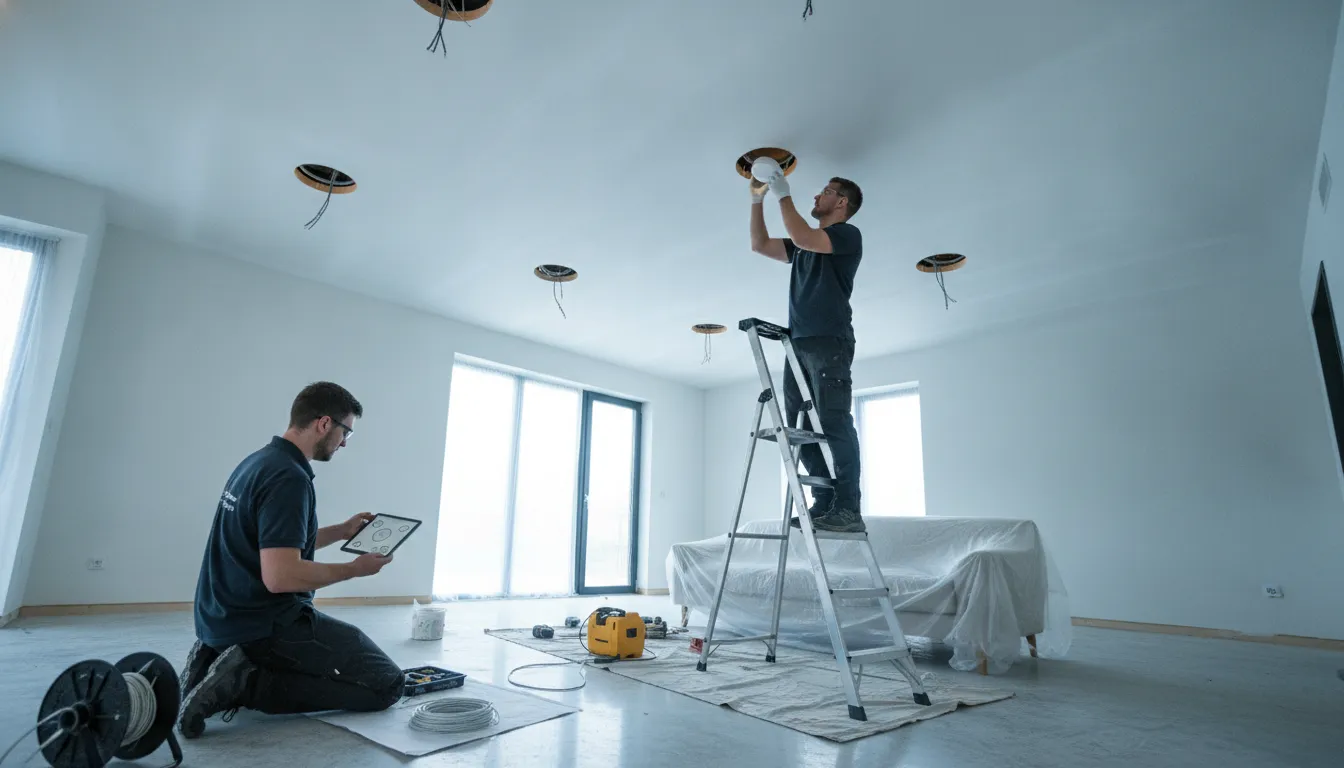
Trying to estimate a lighting project from a per-fixture price alone can leave out important details. The recessed lighting installation cost may also reflect ceiling access, fixture type, dimmers, wiring changes, permits, and any repairs needed after installation. That’s why online estimates can differ, and why a number that looks low may not cover the full scope of your project. A written, itemized quote gives you a clearer way to compare options and plan your budget. In this article, we’ll explain what can affect the total, which questions to ask an electrician, and how to prepare useful project details. Sacramento homeowners can request a local assessment from AAA Electrical Services.
Key Takeaways
- Treat price ranges as starting points: Fixture count, ceiling access, wiring, and local requirements all affect the final cost, so request an estimate for your home.
- Compare the full scope, not just the total: Confirm whether each quote includes fixtures, labor, controls, permits, wiring, and ceiling repairs.
- Plan before installation: Share room measurements, ceiling details, and lighting goals with a qualified electrician to review fixture placement and electrical capacity.
What Does Recessed Lighting Cost?
The cost of recessed lighting depends on the number of fixtures, the ceiling, and the electrical work involved. Published estimates can vary because they may cover different labor, materials, and project conditions. Treat them as budgeting references, then get a quote based on your home and lighting plan.
Average Cost per Light
Professional installation may cost around $380 to $530 per light, according to Homewyse’s recessed lighting cost estimate. The final price can change based on fixture type, ceiling access, and wiring needs. Installing lights in an accessible ceiling may involve less work than running new wiring or opening finished surfaces.
A per-light estimate is a starting point, not a guaranteed project price. The total may also include setup, circuit work, or other costs that apply to the job as a whole. When requesting an estimate, share the room dimensions, ceiling type, number of fixtures, and any preferred lighting controls. Those details help an electrician provide a more useful price for your project.
Typical Cost for Four to Six Lights
One estimate places the cost of installing four recessed lights between $400 and $1,200, with an average of about $800, according to Luxe Living Insights. This range differs from Homewyse’s per-light estimate, so check what each source includes before using either figure to plan your budget. The four-light estimate also doesn’t establish a price for six fixtures. Additional lights may affect labor, wiring, and the project’s total scope.
For four to six lights, ask your electrician to itemize the fixtures, installation, wiring, and controls. Sacramento-area homeowners can share their project details with AAA Electrical Services through its residential electrical services page to request a local estimate.
Check What the Estimate Includes
Before comparing quotes, confirm exactly what each one covers. Estimates may exclude framing or finish changes, repairs to existing electrical systems, hazardous-material testing, sales tax, permits, and inspections. If the project requires a new circuit, permit and inspection costs may add $50 to $200, according to Homewyse’s cost breakdown.
Ask whether the quote includes fixtures, labor, dimmers, drywall repair, and cleanup. A lower total may not include every task your project needs, so compare the written scope as well as the price. If an electrician identifies a wiring or panel concern, ask what work is needed and request an updated estimate before approving additional work.
What Affects Recessed Lighting Costs?
Recessed lighting costs depend on more than the number of fixtures. The ceiling’s condition, the type of lights you choose, access to the work area, and the capacity of your electrical system can all affect the project. Understanding these factors can help you compare estimates and plan for the work your home actually needs.
Compare New-Construction and Retrofit Costs
Installing recessed lights while a home is being built is often simpler because the ceiling is open and electricians can access framing and wiring. In a finished home, the installer may need to work through small openings, route wires around obstacles, and take care to limit damage. Drywall repairs and repainting can add to the cost if the work requires larger openings.
The ceiling layout also matters. Insulation, joists, plumbing, and ductwork can affect where lights can go and how easily wires can be run. A recessed lighting cost guide notes that retrofit installations may involve extra labor and ceiling repairs compared with work in an open ceiling. Ask whether your estimate includes patching and painting, or whether you’ll need to arrange that work separately.
Consider Fixture, Housing, Trim, and LED Options
Fixture prices vary by style and features. Canless LED lights combine several components in one unit, while traditional recessed lights may use a separate housing, trim, and bulb. Adjustable or smart fixtures can cost more than basic options. One fixture price guide lists canless LED fixtures at about $15 to $50 each, with premium options reaching $120.
Check what the quoted price includes. Some estimates cover the fixture, trim, and bulb; others price those items separately. LED lights also differ in brightness, color temperature, dimming compatibility, and expected lifespan. When comparing estimates, confirm that each one specifies similar fixtures and features. An electrician can help you choose options that suit the room and your electrical installation needs.
Factor in Labor, Ceiling Height, and Access
Labor depends on how long the installation takes. Standard-height ceilings with accessible wiring are usually more straightforward than vaulted ceilings or spaces that require ladders or special equipment. Limited attic access, insulation, and obstructions above the ceiling can also make it harder to route wiring and position fixtures.
When you request an estimate, share the ceiling height and explain whether the area above it is accessible. Photos can help, though an on-site assessment gives the electrician a chance to check the conditions directly. Ask whether the price is per fixture or for the full project, and whether it includes setup, cleanup, and repairs. A recessed lighting cost guide provides labor ranges as a general reference, but local rates and project details vary.
Check Wiring, Circuit Capacity, and Panel Needs
Before adding several lights, an electrician should check the existing wiring and determine whether the circuit can handle the added load. Older wiring or a circuit that already serves many devices may need attention. Depending on the home, the project could require new wiring, a dedicated circuit, or work on the electrical panel.
These updates can add to the total, so check whether the estimate covers them. A recessed lighting cost calculator lists a new dedicated circuit at roughly $500 to $1,000, though actual costs depend on the home and job scope. Ask the electrician to explain any recommended upgrades and price them separately from the lighting installation. AAA Electrical Services offers panel repair and installation for homeowners whose electrical systems need attention.
Choose Insulation- and Moisture-Rated Fixtures
Fixture ratings should match where each light will be installed. For example, a light over a shower needs a rating suitable for exposure to moisture. In an insulated ceiling, check whether the fixture is rated for contact with insulation, often marked IC-rated. These ratings address different conditions: moisture ratings relate to water exposure, while IC ratings relate to insulation contact.
Tell your electrician which lights will go in bathrooms, insulated ceilings, or other areas with specific conditions. They can help select fixtures that are appropriate for the location and installation. The recessed lighting installation guide recommends wet-rated trims for showers and suitable housings for insulated ceilings. Choosing the right fixture from the start can help prevent installation problems and support safe, reliable operation.
Budget for Extra Costs
The fixture price is only one part of a recessed lighting project. Your total may also include dimmers, permits, added wiring, ceiling repairs, or extra labor if the electrician encounters limited access or unexpected conditions. Which costs apply depends on your home’s wiring, ceiling construction, chosen fixtures, and local requirements.
Before work begins, ask the electrician to separate the planned work from possible additional costs. Find out what the estimate includes, what it excludes, and whether any extra work requires your approval first. Published price ranges can help you spot potential expenses, but they are general references, not a quote for your home. A local assessment is the best way to understand the work involved.
If the project requires new wiring or changes to your existing electrical system, discuss the full scope with a qualified professional. You can review AAA Electrical Services’ residential electrical services and request an estimate that explains the expected work, materials, and possible contingencies.
Add Dimmers and Compatible Controls
Dimmers let you adjust recessed lights to suit different activities, from meal prep to relaxing in the evening. Smart controls may also let you manage lights through an app or connect them to a home automation system. These options add to the project cost. One published guide estimates dimmer switches at about $50 to $120 each, before any additional installation labor. Use the dimmer cost estimate as a general reference, since local pricing and installation needs vary.
Check compatibility before choosing a dimmer. Some LED fixtures may flicker or fail to dim smoothly when paired with an incompatible control. Ask your electrician to confirm the fixtures and dimmers will work together, and make sure the written estimate includes the controls, any required wiring, and labor.
Check Permit and Inspection Costs
A permit or inspection may be required for electrical work, especially if the project adds a circuit or changes existing wiring. Requirements and fees depend on the work and the local building department, so don’t assume a permit is unnecessary just because you’re installing only a few lights. One published estimate puts permit costs at $50 to $200, but this is a broad reference rather than a Sacramento-area quote.
Ask your electrician whether a permit applies, who will arrange it, and whether permit or inspection fees are included in the estimate. You can also confirm requirements with the building department that serves your address. Clarifying the process before scheduling helps you plan for the full cost and compare contractor estimates on the same basis.
Allow for Wiring or Panel Upgrades
Your existing circuit may be able to support the new lights, but that depends on its capacity and the other electrical loads connected to it. If it cannot safely handle the added fixtures, the electrician may recommend a new dedicated circuit. One published estimate places a new circuit at $500 to $1,000, though the actual price depends on factors such as wiring access and the distance from the panel.
Older wiring or limited panel capacity may also require attention. Don’t assume you’ll need a panel upgrade; ask an electrician to assess your system and explain any recommendation. The estimate should specify why the work is needed and what it includes. For information about panel repair and installation, consult a qualified professional who can evaluate your home.
Budget for Drywall, Paint, and Finish Work
Some installations require openings in the ceiling to route or access wiring. After the electrical work, those areas may need patching, sanding, and paint. One published estimate suggests allowing $150 to $300 for drywall and paint repairs. Your cost may vary based on the number and size of openings, ceiling texture, and whether you hire a separate finishing professional.
Ask whether ceiling repairs are included in the electrical estimate and who will complete them. If they’re excluded, request a separate quote before the project starts. Matching existing paint or a textured ceiling can take extra care, so discuss the expected finish as well as the lighting installation. That way, you can budget for a complete result rather than just the electrical work.
Plan for Difficult Access and Unforeseen Issues
Limited access can add labor to an installation. A cramped attic, tight ceiling clearance, unusual framing, or a finished room above the ceiling may make wiring harder to reach. Older homes can also reveal wiring or structural conditions that aren’t visible before work begins. Some cost guides suggest setting aside roughly 7% for access challenges and unexpected issues, but this is a general planning figure, not a guaranteed local cost.
Ask what conditions could change the estimate and how the electrician will handle additional work. A clear process should include explaining the issue and getting your approval before proceeding with new charges. AAA Electrical Services describes its approach to upfront pricing, so request a written estimate that outlines the expected work, exclusions, and how changes will be handled.
Plan a Layout That Works for Your Home
A thoughtful layout considers how you use each room, where you need clear light, and the features that could block or reflect it. Plan fixture locations before installation so the lights feel balanced and serve a purpose.
Match Fixture Count and Placement to Each Room
Start with the activities that happen in each room. In a kitchen, you may need direct light over counters and an island. In a living room or bedroom, recessed fixtures can provide general light while lamps create a softer feel. Too few fixtures can leave shadows, while too many may cause glare or make the ceiling feel crowded. Consider room size, ceiling height, wall color, furniture, and features such as cabinets or ceiling fans. A room-by-room lighting plan can help you identify areas that need more coverage and keep fixtures clear of potential obstructions.
Space Lights for Even Coverage
Even spacing can help distribute light across a room, but the right distance depends on the fixture’s beam, ceiling height, and layout. A common starting point is to place fixtures about half the ceiling height apart. For an 8-foot ceiling, that means roughly 4 feet between lights, measured from the center of one fixture to the next. Treat this as a guideline, not a strict formula. Adjust placement around cabinets, artwork, seating, and other features, and consider how the light beams overlap. An electrician can review your ceiling and wiring to help avoid dark gaps, harsh bright spots, or fixtures that shine directly into someone’s eyes.
Layer Recessed, Task, and Accent Lighting
Recessed fixtures are most useful when they work alongside other types of lighting. General lighting brightens the room, task lighting supports activities such as cooking or reading, and accent lighting draws attention to artwork, shelves, or architectural details. Using these layers can make a space more flexible than relying on a grid of ceiling lights alone. Consider putting different lighting types on separate switches or dimmers, so you can adjust the room for different activities. A layered lighting approach can also help you decide where recessed lights are a good fit and where a pendant, lamp, or wall fixture may work better.
Choose Suitable Trims and Dimmers
Trim influences a recessed light’s appearance and the way it directs light. Choose an option suited to the room, such as a focused beam for a work area or broader coverage for general lighting. In showers and other wet locations, use fixtures and trims rated for those conditions. If a fixture will be in contact with insulation, choose an insulation-contact-rated housing. Before buying a dimmer, check that it is compatible with your LED fixtures. Mismatched products can cause flickering, buzzing, or uneven dimming. If you’re unsure what your ceiling or wiring requires, ask a qualified electrician to review the fixture specifications. AAA Electrical Services offers lighting installation and repair for Sacramento-area homes.
Get an Accurate Local Estimate
A useful estimate should reflect your home, your lighting plan, and the work needed to install the fixtures safely. Before comparing prices, give each electrician the same project details and request a written quote. That makes it easier to compare the work included, spot possible extra costs, and decide which proposal fits your needs.
Share Your Layout, Ceiling, and Fixture Details
Tell the electrician which rooms you want to light, how you use them, and where you picture each fixture. A quick sketch or a few photos can help. Include ceiling height, ceiling type, insulation, and anything that could limit access, such as a finished floor above the ceiling. If you’ve selected fixtures, share their specifications; otherwise, ask what options suit the space.
These details affect fixture placement, materials, and installation time. A good plan considers room use, furniture placement, and wall color, as well as ceiling height. A professional lighting plan can help match fixture locations to how you want the room to look and function. AAA Electrical Services provides residential electrical services throughout the Sacramento area.
Request an Itemized Written Quote
Ask for a quote that separates labor, materials, and additional work. It should list the number of lights, fixture type, housing, trim, and any dimmers or controls. Confirm whether the price includes new wiring, testing, and cleanup. If you plan to supply the fixtures, ask whether the electrician will install them and whether that affects the labor cost.
For recessed lights, don’t settle for a price that lists only the fixture count. Ask which housing and trim are included, since those choices can affect the finished look and suitability for your ceiling. This recessed-lighting bid checklist explains why those details belong in a proposal. Have the electrician note any assumptions, such as clear ceiling access or existing wiring being suitable.
Compare Scope, Exclusions, and Repair Costs
A lower quote may include fewer fixtures, simpler materials, or less finish work. Compare proposals line by line: fixture count and placement, wiring, controls, testing, cleanup, and any drywall or paint repairs. Look closely at exclusions, too. Moving existing wiring, repairing damaged drywall, or addressing a circuit issue may add to the final cost if those tasks aren’t included.
Ask how the electrician will handle unexpected work. Will they pause, explain the issue, and get your approval before proceeding? Request details about the process and any additional charges in writing. Also compare the proposed lighting coverage, not just the number of fixtures. A guide to recessed-lighting layouts can help you consider where light needs to fall before you review bids.
Ask About Sacramento-Area Permits
Permit and inspection requirements depend on the project and the jurisdiction where your home is located. Ask whether your installation requires a permit, who will apply for it, and whether fees are included in the quote. If the job involves new wiring, a new circuit, or changes to your electrical panel, ask how that work affects the permit and inspection process.
Before installation starts, confirm who will schedule any required inspection and provide you with the results. Don’t assume permit costs are covered unless the quote says so. Since Sacramento-area homes may fall under different local jurisdictions, check with your city or county building department if you want to confirm the requirements for your address. An electrician familiar with AAA Electrical Services’ service locations can help identify the appropriate local office.
Budget for Enough Fixtures and a Contingency
Ask the electrician to recommend a fixture count and layout for each room before you set your final budget. Too few lights can leave parts of a room dim; poor placement can create uneven coverage or glare. Consider how you use the room, where furniture sits, and whether you need focused light for tasks. This recessed-lighting installation guide explains why guessing at fixture count can leave a space underlit.
Even with a clear plan, set aside a contingency for issues that aren’t visible before work begins, such as unexpected wiring or ceiling repairs. Keep that amount separate from the quoted project cost. If additional work comes up, ask the electrician to explain the issue, provide a price, and get your approval before moving ahead. Clear upfront pricing helps you make an informed decision and keep control of your budget.
Should You Hire an Electrician or Install the Lights Yourself?
Consider Wiring, Permits, and Electrical Safety
Recessed lighting may look simple, but installation can involve cutting into a ceiling, routing cable, connecting fixtures, and checking whether the circuit can handle the added load. Before work begins, you need to know what’s above the ceiling, including joists, insulation, plumbing, and existing wires. A mistake can damage your home or create an electrical hazard. Reading a recessed lighting installation guide can help you understand the project, but it can’t replace an assessment of your home.
Permit requirements depend on your location and the work involved. Check with your local building department before starting, especially if the project requires new wiring or changes to an existing circuit. If you’re uncertain about the wiring, circuit capacity, or permit requirements, have a qualified electrician assess the work.
Check Licensing, Upfront Pricing, and Workmanship Coverage
If you hire an electrician, confirm that they’re licensed and insured, and request a written estimate before work begins. California homeowners can use the Contractors State License Board’s license lookup to check a contractor’s license status. Ask the electrician to list the number and type of fixtures, housing and trim, wiring, controls, and any ceiling repairs included in the quote. A clear scope makes it easier to compare estimates and identify costs that may not be included.
Before booking, ask what workmanship coverage applies and how to request follow-up service if a fixture doesn’t work as expected. AAA Electrical Services provides residential electrical services, with upfront pricing and a 100% satisfaction guarantee. Confirm the coverage details directly with your chosen contractor so you know what to expect after installation.
Ask About Energy Use and Long-Term Maintenance
Fixture choice affects how a room looks, how much energy its lighting uses, and how easy it is to maintain. Ask whether the fixtures use replaceable LED bulbs or integrated LEDs, what brightness and color temperature they provide, and whether they’re compatible with your preferred dimmer. LEDs generally use less energy than incandescent bulbs. The ENERGY STAR guide to recessed downlights can help you compare efficient options.
Before approving the layout, check whether bulbs or LED modules can be replaced and how you’ll access them. Make sure the fixtures are rated for the conditions where they’ll be installed, such as contact with insulation or damp locations when applicable. A thoughtful plan can provide comfortable, even light without relying on more fixtures than the room needs.
Related Articles
- Lighting Install
- Why Flickering Lights Should Never Be Ignored
- Why Flickering Lights Should Never Be Ignored
- Why Flickering Lights Should Never Be Ignored
- Why Flickering Lights Should Never Be Ignored
Frequently Asked Questions
How much should I budget for recessed lighting?\ Costs vary based on fixture choice, ceiling access, wiring, and finish work. Use published estimates as rough planning references, then request a written quote based on your home and the number of lights you want.
Does installing more recessed lights always cost proportionally more?\ Not necessarily. Adding fixtures can increase materials and labor, but some project costs apply to the installation as a whole. Ask for an itemized estimate that shows the price for each fixture and any shared work, such as wiring or circuit changes.
Can recessed lights be installed in an existing ceiling?\ Yes, but finished ceilings can make it harder to access wiring and work around framing, insulation, or pipes. Ask whether the quote includes any ceiling repairs, and share photos or details about attic access when requesting an estimate.
Will my recessed lighting project need a permit?\ That depends on the work and the local requirements for your address. Ask your electrician whether a permit or inspection applies, who will arrange it, and whether the fees are included in the quote. You can also check with your city or county building department.
Should I install recessed lights myself or hire an electrician?\ The work may involve wiring, circuit capacity, fixture ratings, and permit requirements. If you’re unsure about any of these, have a qualified electrician assess the project. Sacramento-area homeowners can request an estimate from AAA Electrical Services.