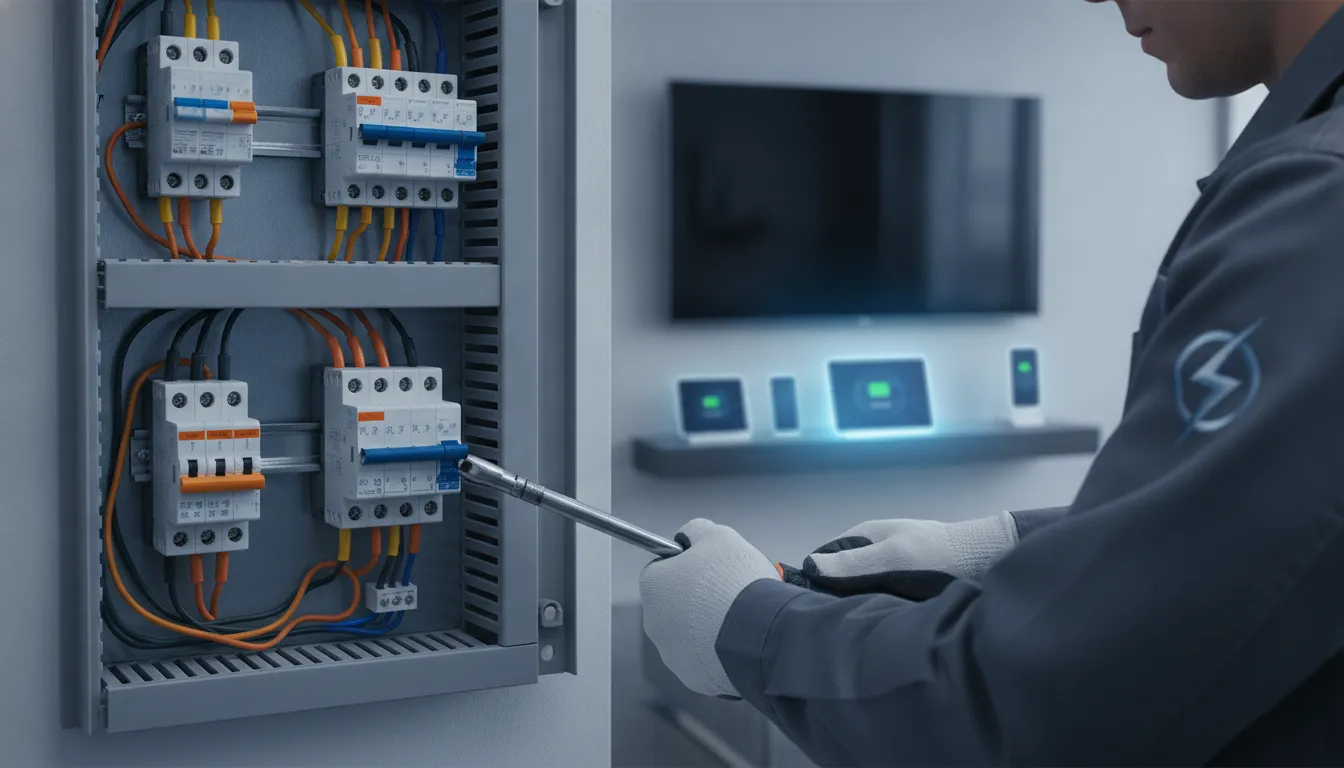
Your home’s electrical system may be working every day while still hiding serious risks behind walls, ceilings, and outlets. Old insulation can become brittle. Connections can loosen. Circuits designed for fewer appliances may struggle with modern demands, including air conditioning, home offices, EV chargers, and kitchen equipment. Rewire to improve safety and protection for you electrical devices in home, but do not assume every older property needs a complete overhaul. A licensed electrician can inspect the system and identify the safest, most practical solution. With clear findings, you can address urgent hazards first and plan larger improvements around your budget and household needs.
Key Takeaways
- Treat electrical warning signs seriously: Warm outlets, burning odors, flickering lights, repeated breaker trips, sparks, or shocks may signal wiring hazards that require prompt professional attention.
- Choose the right level of electrical work: An inspection can determine whether your Sacramento home needs a focused repair, partial rewiring, panel upgrade, or complete rewiring.
- Plan upgrades around safety and demand: Proper grounding, dedicated circuits, AFCI and GFCI protection, surge protection, and correctly sized panels can support appliances, EV chargers, solar systems, and generators safely.
Does Your Home Need Rewiring?
Rewiring is not automatically necessary because a home is older. Some electrical issues can be resolved with a circuit repair, panel upgrade, new receptacles, or a dedicated circuit. However, certain warning signs suggest that the wiring may be damaged, overloaded, poorly grounded, or unable to support your household’s electrical needs.
Pay attention to changes in how your electrical system behaves. Repeated breaker trips, unusual sounds, warm outlets, flickering lights, and burning odors should not be dismissed as minor inconveniences. These symptoms can indicate problems behind walls, inside outlets, or at the electrical panel.
A licensed electrician can inspect your wiring, circuits, panel, grounding, and service entrance. The inspection may show that your home needs a targeted repair, partial rewiring, or a complete electrical upgrade. AAA Electrical Services provides residential electrical inspections and repairs for homeowners throughout the Sacramento metropolitan area.
You may also want an inspection before remodeling, purchasing an older home, installing an EV charger, or adding major appliances. Reviewing the system before making changes can help prevent overloaded circuits and unexpected electrical problems later.
Breakers trip and fuses blow
A circuit breaker may trip when a circuit becomes overloaded or detects a fault. An occasional trip can happen when too many devices share one circuit, but repeated trips suggest a deeper problem. Possible causes include damaged wiring, a failing appliance, loose connections, or inadequate circuit capacity. Older fuse boxes may show similar issues through frequently blown fuses.
Do not keep resetting the same breaker or replace a fuse with one rated for more current. The protective device may be interrupting unsafe electrical flow. Repeated trips, particularly alongside warm outlets, buzzing, or burning smells, warrant an inspection. Donovan & Associates identifies repeated breaker trips as a possible sign of rewiring problems.
An electrician can test the circuit, inspect connected devices, and determine whether you need a new circuit, wiring repair, panel work, or more extensive rewiring.
Lights flicker, dim, buzz, or crackle
Lights that briefly dim when a large appliance starts may point to a circuit capacity issue. Persistent flickering or dimming is more concerning, especially when it affects several fixtures. Loose connections, overloaded circuits, damaged wiring, failing switches, and panel problems can all produce these symptoms.
Buzzing or crackling should receive prompt attention. These sounds may indicate a loose connection or electrical arcing, which happens when electricity jumps across a gap. Arcing can create heat and damage insulation or nearby materials.
Changing the light bulb may not solve the problem if the cause is within the circuit. State Farm explains that dimming and flickering lights can indicate faulty wiring or an overloaded circuit. Schedule an inspection so an electrician can locate the source and recommend the appropriate repair or upgrade.
Outlets feel warm, look discolored, crack, or loosen
Outlets should generally feel cool during normal use. A warm, discolored, cracked, or loose receptacle can indicate a poor connection, excessive load, damaged wiring, or heat buildup behind the outlet. Brown or black marks, melted plastic, and a burnt odor require prompt attention.
A loose outlet may allow a plug to move, weakening the connection and creating heat. Cracks can expose internal components, while an outlet that cannot hold a plug securely may need replacement. Stop using the outlet until it has been inspected, particularly if it sparks or feels hot.
Do not hide the issue with a new faceplate or continue using an adapter. An electrician can examine the receptacle, wiring, electrical box, and circuit. If the damage extends beyond one outlet, you may need partial rewiring or a circuit upgrade. AAA Electrical Services also provides switch and outlet services for Sacramento-area homes.
Burning smells, sparks, shocks, or tingling
A burning odor near an outlet, switch, fixture, or panel may signal overheating insulation or an arcing connection. A small spark can occur when some appliances are plugged in, but repeated, large, or unusually bright sparks are not normal. Shocks and tingling may indicate damaged insulation, poor grounding, or electricity escaping its intended path.
Treat these signs as urgent, especially when they occur together. Turn off the affected appliance or circuit if you can do so safely, and keep people away from the area. Do not touch a damaged outlet or electrical panel with wet hands. If you see smoke, fire, or immediate danger, leave the home and call emergency services.
Donovan & Associates recommends shutting off power and requesting an urgent inspection after burning smells, sparks, or electrical shocks. An electrician can trace the fault and determine whether the affected wiring needs immediate replacement.
Frayed, brittle, cloth-insulated, knob-and-tube, or aluminum wiring
Do not handle visible wiring with cracked, brittle, or frayed insulation. Insulation helps prevent contact between energized conductors, people, metal boxes, and nearby building materials. When it breaks down, the risk of shorts, shocks, and overheating increases.
Some older homes contain cloth-insulated wiring, knob-and-tube wiring, or aluminum branch-circuit wiring. These systems are not automatically unsafe in every property, but age, modifications, poor connections, and compatibility with modern equipment can create concerns. Knob-and-tube wiring may lack a grounding conductor, while aluminum connections can loosen or overheat if they are not properly installed and maintained.
Have an electrician inspect older wiring before remodeling or adding major appliances. Comfort Bros explains that knob-and-tube wiring and aluminum wiring may require extensive upgrades. The right solution depends on the wiring’s condition, grounding, location, and electrical capacity.
Too few outlets and frequent power-strip or extension-cord use
Too few outlets can become a safety concern when you rely on power strips and extension cords throughout the home. Connecting several devices to one receptacle may overload the circuit. Cords placed under rugs, across walkways, or against furniture can also become damaged or overheated.
Power strips do not create additional circuit capacity. They only provide more connection points for the same electrical supply. Never daisy-chain power strips or extension cords. High-demand appliances such as space heaters, refrigerators, and air conditioners generally need a properly rated outlet and may require a dedicated circuit.
If your kitchen, home office, workshop, or entertainment area needs several adapters, ask an electrician about additional receptacles or new circuits. Donovan & Associates notes that frequent power-strip use may indicate that an older home cannot meet modern electrical demands safely.
An older home, renovation, or increased appliance demand
Age alone does not prove that your home needs rewiring, but it makes an electrical evaluation worthwhile. Systems installed decades ago may have limited circuit capacity, outdated grounding, or wiring that was not designed for modern appliances and electronics. Previous owners may also have made changes without updating the rest of the system.
A renovation is a practical time to review the wiring before walls are closed. Kitchen remodels, bathroom additions, finished garages, and converted attics can all require new circuits. The same applies when installing an EV charger, electric range, heat pump, solar equipment, or standby generator.
AAA Electrical Services installs new circuits and provides electrical upgrades for Sacramento-area homeowners. An electrician can assess your current system and planned equipment, then recommend improvements that support your needs without placing unnecessary strain on existing circuits.
Why you need an inspection without obvious warning signs
Electrical problems are not always visible. Wiring may run behind walls, ceilings, and floors, while loose connections can worsen gradually before producing a smell or sound. A home can appear to function normally and still have outdated wiring, inadequate grounding, or circuits operating close to their limits.
An inspection is especially useful before buying a home, starting a renovation, adding a high-demand appliance, or making an insurance or resale decision. A licensed electrician can review the service entrance, panel, breakers, branch circuits, receptacles, switches, grounding, and visible wiring.
The findings can separate urgent hazards from improvements that can be planned over time. Comfort Bros recommends a wiring inspection even when obvious warning signs are absent. Ask for a written explanation of the findings, including which repairs are urgent, which upgrades are recommended, and whether partial or full rewiring is appropriate.
When to shut off power and request an urgent inspection
Shut off power to an affected circuit, if you can do so safely, when you notice smoke, a strong burning odor, active sparking, a hot or melting outlet, or signs of electrical shock. Keep away from water near electrical equipment, and never touch exposed wires, damaged outlets, or a panel if the area is wet.
If you cannot identify the correct breaker, or the issue involves the service panel, meter, or incoming electrical service, do not investigate it yourself. Leave the home if there is smoke, fire, or immediate danger, then call emergency services. After the situation is stable, request an urgent inspection from a qualified electrician.
Do not repeatedly reset a breaker or replace a fuse with one of a higher rating. These actions can remove the protection intended to stop overheating. A professional can determine whether you need an emergency repair, new circuit, panel service, or partial or full rewiring.
Why Is Outdated Wiring Dangerous?
Electrical wiring can remain hidden behind walls for decades, which means serious problems may develop before you notice them. Insulation can become brittle, connections can loosen, and older systems may lack the capacity required by modern appliances and electronics. A home that once handled its electrical demand safely may struggle after renovations, the addition of high-powered appliances, or the installation of an electric vehicle charger.
Outdated wiring does not automatically mean your entire home needs to be rewired. Some homes need a targeted repair, while others require partial or full rewiring. A licensed electrician can inspect the wiring, panel, circuits, grounding, outlets, and service entrance to identify the safest solution. This professional assessment is especially important for Sacramento homeowners living in older properties or planning major electrical upgrades.
Overheating, arcing, and failed insulation can cause fires
Older wiring materials, including knob-and-tube and some aluminum wiring systems, can have a higher risk of overheating. Insulation may crack or deteriorate with age, leaving conductors less protected. Loose connections can also create electrical arcs, which produce intense heat and may ignite nearby wood, insulation, or other building materials.
Watch for warning signs such as burning odors, scorch marks, buzzing sounds, warm outlets, or discoloration around switches. These symptoms may point to an overloaded circuit, damaged insulation, or a loose connection. The National Fire Protection Association’s electrical safety guidance recommends addressing electrical hazards promptly instead of continuing to use questionable wiring or equipment.
Do not cover scorch marks with paint or replace a damaged outlet without finding the cause. Turn off the affected circuit if you can do so safely, keep flammable materials away from the area, and arrange an inspection from a qualified electrician.
Faulty wiring can cause shocks and electrocution
Damaged insulation, exposed conductors, missing grounding, and loose connections can allow electrical current to travel through unintended paths. You could receive a shock by touching a faulty outlet, switch, appliance, or metal electrical box. A mild tingling sensation is still a warning sign and should never be treated as normal.
Water makes electrical faults more dangerous because it can help current pass through the body. This is why outlets near sinks, tubs, showers, laundry areas, garages, and outdoor spaces need appropriate protection. If someone is experiencing an electrical shock, do not touch them until the power source has been disconnected safely. Call emergency services when necessary.
Avoid removing outlet covers or investigating exposed wires if you are not trained to do so. Keep children and pets away from the area, shut off power when it is safe, and request an inspection from a licensed electrician.
Overloaded circuits may lack sufficient capacity
Older homes often have fewer circuits than modern households need. A single circuit may serve space heaters, kitchen appliances, computers, televisions, and other high-demand devices at the same time. When wiring carries more current than it can safely handle, it may overheat inside walls or electrical boxes.
Frequent breaker trips, blown fuses, flickering lights, dimming when an appliance starts, and warm outlets can indicate an overloaded circuit. State Farm’s guidance on home rewiring identifies these symptoms as reasons to have the electrical system evaluated.
Do not solve the problem by installing a larger fuse or repeatedly resetting a breaker. Those actions can remove the protection designed to prevent overheating. An electrician may recommend a new dedicated circuit, panel repairs, a service upgrade, or rewiring in the affected area.
Poor grounding, loose connections, and unprotected outlets increase risk
Grounding gives unwanted electrical current a safer path away from people and equipment. Without proper grounding, a fault may leave the metal surface of an appliance energized. Loose connections create additional heat and can cause intermittent power, sparks, or arcing inside an outlet, switch, or electrical box.
Ground-fault circuit interrupters, known as GFCIs, help reduce shock risk by shutting off power when they detect an imbalance. They are especially important in areas where water and electricity may meet, including kitchens, bathrooms, laundry rooms, garages, and outdoor locations. The Electrical Safety Foundation International explains GFCI protection and its role in residential electrical safety.
Older two-slot outlets may also indicate that a home lacks an equipment grounding conductor. Replacing them with three-slot receptacles without correcting the grounding problem can create a false sense of safety. An electrician should evaluate the wiring before recommending replacement outlets or other protective devices.
Voltage fluctuations can damage electronics
Electrical hazards do not only threaten people and property. Loose connections, overloaded circuits, utility disturbances, and faulty equipment can cause voltage fluctuations. Repeated fluctuations may shorten the life of televisions, computers, refrigerators, smart home devices, and other sensitive electronics.
Whole-home surge protection can help limit damage from certain surges entering through the electrical service. It works alongside point-of-use protection, such as a properly rated surge protective device for computers or entertainment equipment. The Electrical Safety Foundation International explains surge protective devices and how they help protect electrical systems, appliances, and electronics.
Surge protection cannot correct damaged wiring or an overloaded circuit. If lights flicker or devices shut off unexpectedly, have the underlying electrical problem inspected. A professional can determine whether the cause is inside your home, related to a specific circuit, or connected to the incoming electrical service.
Outdated wiring may not support EV chargers, solar, or major appliances
Modern electrical equipment can place demands on a home that its original wiring was never designed to handle. An EV charger, heat pump, induction range, workshop tool, solar system, or standby generator may require a dedicated circuit and careful load planning. Adding equipment without checking the panel and service capacity can create unsafe conditions.
An electrician can calculate the home’s current and planned electrical load, inspect the panel, and determine whether new circuits or a service upgrade are needed. This evaluation can also identify outdated breakers, damaged bus bars, insufficient grounding, or other issues that should be addressed first.
AAA Electrical Services provides EV charger installation and residential electrical services for Sacramento-area homeowners. Planning an installation with the entire electrical system in mind helps prevent unnecessary strain and makes future upgrades easier to manage.
DIY repairs, adapters, and temporary patches increase risk
Extension cords and plug adapters may appear to solve a shortage of outlets, but they are not a substitute for properly installed circuits. Using them with space heaters, refrigerators, kitchen appliances, or other high-wattage equipment can cause overheating. Daisy-chained power strips and cords placed under rugs create additional hazards.
Do not install a larger fuse, bypass a breaker, splice damaged wiring, or cover a loose outlet with a temporary patch. Electrical work involving permanent wiring, service panels, high voltage, or permits should be completed by a licensed professional. This Old House recommends hiring a licensed electrician for projects that modify a home’s electrical system.
If an outlet sparks, smells hot, feels loose, or shows discoloration, stop using it. Turn off the circuit if you can do so safely, and have the problem diagnosed instead of relying on an adapter or replacement part alone.
How electricians determine partial or full rewiring needs
An electrician typically begins by reviewing the home’s age, electrical history, renovation work, current appliances, and reported symptoms. They may inspect accessible wiring, outlets, switches, the service entrance, panel, breakers, grounding, and bonding. They also look for damaged insulation, improper connections, overheating, outdated materials, and circuits that do not match the home’s electrical demand.
The recommended work may be a focused repair, such as replacing a damaged receptacle or correcting a loose connection. Partial rewiring may make sense when hazardous wiring is limited to specific rooms or circuits. Full rewiring becomes more likely when problems are widespread, the system lacks proper grounding, or the wiring cannot safely support planned upgrades.
A professional wiring inspection is the safest way to determine which option fits your home. The electrician should explain the findings, identify urgent hazards, outline recommended improvements, and provide a clear scope of work before repairs begin.
Which Wiring Upgrades Improve Safety?
Rewiring is not limited to replacing old cable. A safer electrical system also needs properly sized circuits, reliable grounding, protective devices, and enough capacity for the way your household uses electricity. The right upgrades depend on your home’s age, wiring condition, service size, panel, and plans for appliances or other equipment.
A licensed electrician should inspect the system before recommending work. Some homes need targeted repairs, while others require partial or full rewiring. An inspection can also reveal hazards that are easy to miss, including loose connections inside walls, missing grounding, overloaded circuits, and outdated protection. The Electrical Safety Foundation International offers guidance on safety devices used during electrical renovations.
Sacramento homeowners may also need to plan for high-demand equipment, such as air conditioners, EV chargers, solar systems, generators, and home office technology. AAA Electrical Services can evaluate your system and recommend residential electrical services based on your home’s current and future needs.
Install properly sized conductors and durable insulation
Electrical conductors must match the amount of current a circuit is designed to carry. If a wire is too small for its load, it may overheat before the breaker trips. Excess heat can damage insulation, loosen connections, and increase the risk of an electrical fire.
During rewiring, an electrician can replace deteriorated conductors with modern wiring and insulation suited to the circuit’s purpose. The installation should account for the wire’s location, temperature exposure, wiring method, and expected load. Installing a larger breaker without replacing undersized wire is unsafe.
A professional can inspect visible wiring and test circuits to determine whether conductors are properly rated. If insulation is brittle, cracked, scorched, or damaged by pests or previous work, replacing the affected wiring may be safer than applying a temporary patch.
Ground and bond the system with grounded receptacles
Grounding gives fault current a safe path back to the electrical panel, helping protective devices shut off power when something goes wrong. Bonding connects metal electrical components so they remain at the same electrical potential, which helps reduce shock risk.
Older homes may have two-slot receptacles, ungrounded circuits, or incomplete grounding connections. Replacing a two-slot outlet with a three-slot receptacle does not create a ground by itself. An electrician must verify the circuit and install the appropriate grounding method.
Grounded receptacles are important for appliances with metal cases, computers, entertainment equipment, and other devices with grounding pins. A professional inspection can identify grounding problems and determine whether the solution involves new wiring, receptacle replacement, or panel work.
Upgrade panels, breakers, and service capacity
Your electrical panel distributes power throughout the home and uses breakers to protect individual circuits. A damaged, outdated, or undersized panel may not provide enough capacity for modern appliances. Scorch marks, rust, buzzing, repeated trips, or a hot panel all deserve prompt attention.
A panel upgrade may include a new service panel, properly rated breakers, improved labeling, and repairs to the service entrance. In some cases, the utility connection or overall service capacity also needs review. The goal is not simply to install a larger panel, but to make sure the entire system can safely support the home’s calculated electrical load.
AAA Electrical Services provides panel repair and installation for homeowners who need safer, more reliable power distribution. An electrician can explain whether a repair, replacement, or broader service upgrade is appropriate.
Add dedicated circuits for high-demand devices
Some appliances should have their own circuits instead of sharing power with other equipment. Common examples include refrigerators, microwaves, dishwashers, washing machines, dryers, air conditioners, electric ranges, and sump pumps. Dedicated circuits help prevent overloads and reduce nuisance breaker trips.
A dedicated circuit may also be necessary for equipment with a motor, heating element, or high starting current. The conductors, breaker, receptacle, and disconnect must match the equipment specifications and applicable requirements.
Adding circuits can be especially useful during a kitchen remodel, room addition, garage conversion, or home office installation. It is safer than relying on extension cords or power strips for long-term appliance use. An electrician can check available panel capacity before adding new circuits.
Install AFCI protection against electrical arcs
Arc-Fault Circuit Interrupters, or AFCIs, help protect against fires caused by unintended electrical arcs. Arcing may occur when wiring is damaged, a connection is loose, insulation has deteriorated, or a cord is pinched. These conditions can create dangerous heat without producing the same fault as a direct short circuit.
An AFCI monitors electrical activity and disconnects power when it identifies patterns associated with hazardous arcing. Depending on the circuit and the work being performed, protection may come from an AFCI breaker or another approved device.
AFCI installation requires compatibility checks. The breaker must match the panel, circuit wiring, and manufacturer requirements. If an AFCI trips repeatedly, do not keep resetting it without finding the cause. Damaged wiring, a faulty appliance, or a loose connection may require professional attention.
Install GFCI protection in wet and outdoor areas
Ground-Fault Circuit Interrupters, or GFCIs, reduce shock risk in places where electricity may contact water. These areas commonly include bathrooms, kitchens, laundry rooms, garages, crawl spaces, unfinished basements, patios, and outdoor receptacles.
A GFCI compares the current leaving and returning through a circuit. If it detects an imbalance, it shuts off power quickly. Depending on the circuit layout and electrical requirements, protection may be installed at an outlet or through a circuit breaker.
Test GFCI devices regularly with their test and reset buttons. A device that will not reset, trips without an obvious cause, or shows heat or damage should be inspected. The Consumer Product Safety Commission’s electrical safety guidance also recommends GFCI protection where water and electricity may come into contact.
Add whole-home surge protection
Power surges can enter through utility lines, lightning-related events, or changes in the electrical grid. Even brief surges may damage circuit boards in televisions, computers, HVAC controls, appliances, solar equipment, and other electronics.
A whole-home Surge Protective Device, or SPD, is installed at the electrical panel to help divert excess voltage away from connected circuits. It provides broader coverage than a single plug-in protector, although sensitive equipment may still benefit from a listed point-of-use device.
Surge protection should be selected and installed for the home’s electrical system. An electrician can check panel compatibility, grounding, available space, and the equipment that needs protection. AAA Electrical Services offers home surge protection to help Sacramento homeowners protect important devices from electrical disturbances.
Install tamper-resistant receptacles in safer locations
Tamper-resistant receptacles have internal shutters that block access unless matching plug prongs enter both openings at the same time. This helps prevent children from inserting keys, toys, or other objects into an outlet.
These receptacles are useful in bedrooms, play areas, living rooms, hallways, and other spaces where children spend time. They can also reduce reliance on loose plastic outlet covers, which may be removed, misplaced, or become choking hazards.
Tamper-resistant receptacles still need to be installed correctly and connected to the appropriate circuit. They do not replace GFCI or AFCI protection, and they do not correct missing grounding or damaged wiring. An electrician can recommend the right combination of receptacles and circuit protection for each area.
Add circuits for EV chargers, generators, solar, and home offices
EV chargers, backup generators, solar systems, and home offices can place substantial demands on a residential electrical system. Each installation needs a load assessment, suitable circuit protection, and equipment that matches the panel and service capacity.
An EV charger may require a dedicated circuit and careful placement of the receptacle or hardwired connection. A generator needs the correct transfer equipment so it cannot send power back into utility lines. Solar equipment requires compatible disconnects, conductors, and protective devices. A home office may need additional circuits for computers, monitors, printers, and networking equipment.
AAA Electrical Services provides EV charger installation, solar system maintenance, and generator services for Sacramento-area homeowners. Planning these upgrades with an electrician helps avoid unsafe adapters and makes future maintenance easier.
Follow permits, electrical codes, and inspection requirements
Electrical work must follow applicable codes, permit rules, and inspection requirements. These safeguards help confirm that wiring, grounding, equipment clearances, and protective devices have been installed correctly. Requirements can vary based on the project, property, and local authority having jurisdiction.
A qualified electrician can explain which permits are needed before work begins and coordinate required inspections. This is especially important for panel replacements, service upgrades, new circuits, EV chargers, generators, solar equipment, and extensive rewiring.
California homeowners can use the Contractors State License Board to learn more about checking a contractor’s license and hiring practices. Keep permit records, inspection approvals, equipment documentation, and updated panel labels after the project. These records can support future repairs, insurance questions, or a home sale.
How Can You Protect Devices From Electrical Hazards?
Protecting your devices starts with maintaining the electrical system that powers them. Computers, televisions, appliances, smart home equipment, EV chargers, and solar components can all suffer damage from power surges, overloaded circuits, faulty wiring, and poor grounding. Some electrical problems develop slowly, while others can damage equipment in a few seconds.
Daily safety habits can reduce risks, but they cannot correct outdated wiring or an overloaded panel. The Electrical Safety Foundation International recommends using the appropriate protective devices, including surge protection, AFCI protection, and GFCI protection where required. If you notice sparks, heat, burning odors, or repeated breaker trips, stop using the affected equipment and arrange a professional inspection.
A licensed electrician can also evaluate whether your home needs additional circuits, updated receptacles, panel work, or rewiring to support your current electrical demand safely.
Pair whole-home and point-of-use surge protection
Whole-home surge protection helps limit voltage spikes before they travel through your home’s wiring. Installed at the electrical panel, it can help protect appliances, lighting, HVAC equipment, and other connected systems. Point-of-use protection, such as a listed surge protector, adds another layer for sensitive electronics, including computers, televisions, gaming consoles, and networking equipment.
These options serve different purposes, so one does not automatically replace the other. Ask an electrician to confirm that your panel and grounding system are suitable for whole-home surge protection. For electronics, choose a properly rated product from a recognized testing organization, and replace it if it shows damage. AAA Electrical Services can assess your needs through its home surge protection services.
Unplug sensitive electronics during severe storms and outages
Unplugging sensitive equipment during severe storms can reduce the chance that a voltage spike will reach it. Prioritize computers, televisions, game systems, chargers, and networking equipment. Devices connected to telephone, cable, internet, or antenna lines may also be vulnerable because surges can enter through more than the standard power connection.
Do not rush to unplug equipment while lightning is nearby or if the area is wet. Your safety comes first. During an outage, turn off major appliances and wait until power returns steadily before reconnecting them. Surge protection can help equipment that must remain connected, but no plug-in device can make an unsafe circuit safe.
Avoid overloaded outlets, extension cords, and daisy-chained power strips
A power strip adds outlets, not electrical capacity. Connecting several high-demand devices to one receptacle can overheat the outlet, cord, or circuit. Space heaters, hair dryers, microwaves, air conditioners, and other heat-producing appliances should generally connect directly to a properly rated wall outlet. The US Consumer Product Safety Commission advises consumers to avoid overloaded outlets and damaged extension cords.
Never connect one power strip to another, and do not use extension cords as permanent wiring. If you regularly rely on power strips in one room, your home may need additional outlets or a dedicated circuit. AAA Electrical Services installs new electrical circuits for changing household needs.
Use grounded, properly rated cords and receptacles
Grounded cords and receptacles provide a path for fault current, helping protective devices respond when an electrical problem occurs. A grounded plug typically has three prongs, with the third prong connecting to the equipment grounding system. Never remove that prong, use an adapter to fit a two-slot outlet, or force a plug into an incompatible receptacle.
Check that cords and receptacles are rated for the equipment in use. Outdoor tools require products marked for outdoor use, while kitchens, bathrooms, garages, laundry rooms, and other damp areas may require GFCI protection. If your home has older two-prong outlets or an uncertain grounding system, arrange an inspection before connecting sensitive or high-demand equipment.
Replace damaged cords and stop using hot, loose, or sparking outlets
Frayed insulation, crushed cords, exposed wires, scorch marks, and melted plugs are signs that equipment should no longer be used. Do not cover damaged sections with tape and continue using the cord. Replace the cord or appliance, depending on the source of the damage. Keep cords away from rugs, furniture pinch points, heat, water, and walkways.
Pay attention to the receptacle, too. An outlet that feels hot, smells burnt, crackles, sparks, or holds a plug loosely may have internal damage, a loose connection, or an overloaded circuit. Turn off the circuit if you can do so safely, then contact an electrician. AAA Electrical Services provides switch and outlet services for damaged or outdated receptacles.
Protect EV chargers, solar equipment, generators, and major appliances
High-demand equipment needs more than a convenient outlet. EV chargers, electric ranges, heat pumps, generators, air conditioners, and other major appliances may require dedicated circuits, properly sized conductors, compatible breakers, and sufficient service capacity. Incorrect installation can cause overheating, repeated trips, equipment damage, or fire.
Solar panels and generators also require specific disconnects, grounding, transfer equipment, and protective devices. Never connect a generator to a wall outlet or modify solar or battery wiring yourself. A qualified electrician can determine whether your panel can support the equipment and whether the installation meets local requirements. AAA Electrical Services offers EV charger installation, solar maintenance, and generator services for Sacramento-area homeowners.
Respond quickly to flickering lights or inconsistent device performance
Flickering, dimming, buzzing, or unusually bright lights can indicate a loose connection, failing fixture, overloaded circuit, or service problem. Electronics that restart, lose power, run hot, or behave unpredictably may also be reacting to unstable voltage. Do not dismiss these signs, particularly when they affect multiple rooms or occur whenever a large appliance starts.
Note when the problem occurs and which fixtures or devices are affected. Stop using equipment that smells hot, makes unusual sounds, or shows visible damage. If lights flicker throughout the home, the panel buzzes, or you notice a burning odor, shut off power only if you can do so safely and request urgent help. An electrician can test the circuits, connections, breakers, and service equipment.
Schedule professional inspections instead of attempting DIY rewiring
Electrical rewiring involves shock, arc flash, fire, and code-compliance risks. Opening a panel, replacing wiring, combining circuits, or adding a high-demand appliance without proper training can worsen an existing problem. Poor connections may remain hidden until a cord overheats or a protective device fails to respond correctly.
A licensed electrician can inspect the panel, service entrance, grounding, wiring, outlets, and protective devices. They can then explain whether your home needs a repair, partial rewiring, or a broader upgrade. Homeowners can review contractor licensing information through the California Department of Industrial Relations. AAA Electrical Services uses licensed, background-checked, and drug-tested technicians and provides upfront pricing for residential electrical work in the Sacramento metropolitan area.
What Happens During a Home Rewiring Project?
Home rewiring involves much more than replacing cables behind the walls. The process includes inspecting the entire electrical system, identifying hazards, planning circuits, installing updated components, and testing the finished work. Because rewiring can involve the service panel, grounding, high-voltage equipment, and permits, a qualified electrician should manage the project from start to finish.
The exact process depends on your home’s age, wiring condition, electrical demand, and renovation plans. Some homes need repairs on a few circuits, while others require partial or full rewiring. A professional evaluation helps you understand what needs to change, how much work is involved, and how the project may affect your household.
Inspect wiring, panels, circuits, grounding, and the service entrance
The project usually begins with a detailed inspection of the electrical system. An electrician examines visible wiring, the main panel, breakers, outlets, switches, junction boxes, grounding, and the service entrance where power enters the home. They also look for overheating, loose connections, corrosion, physical damage, and previous work that may not meet current safety standards.
This inspection helps identify immediate hazards and capacity concerns. It can also show whether the system supports an EV charger, electric range, heat pump, solar equipment, or backup generator. The Electrical Safety Foundation International recommends electrical inspections during renovations, particularly in older homes that may not have been designed for modern electrical demand.
Choose between circuit repairs, partial rewiring, and full rewiring
Not every home needs a complete rewire. If the problem is limited to one damaged circuit, an electrician may repair or replace that section. Partial rewiring may be appropriate when certain rooms, additions, or circuit groups contain outdated or unsafe wiring, while the rest of the system remains in good condition.
A full rewire may be necessary when wiring has deteriorated throughout the home, grounding is inadequate, or the panel and service capacity cannot support household needs. Frequent breaker trips, warm or discolored outlets, burning odors, buzzing, and shocks require prompt attention. Shut off power to the affected area when possible, then request an inspection. AAA Electrical Services can assess your system and recommend the right residential electrical service.
Plan circuits around current and future needs
A reliable rewiring plan reflects how your household uses electricity today and what may change later. Your electrician may recommend dedicated circuits for air conditioners, kitchen appliances, laundry equipment, water heaters, workshops, or EV chargers. Bedrooms, bathrooms, garages, and outdoor areas may also need specific outlet locations and protective devices.
Discuss planned renovations, a home office, additional lighting, solar equipment, or a standby generator before installation begins. Addressing these needs during the planning stage can help prevent disruptive electrical work later. If you are considering an EV charger, ask about EV charger installation so your electrician can evaluate panel capacity, circuit size, equipment placement, and charging requirements.
Review access, disruption, timing, and cost factors
Rewiring may require access to wall cavities, attics, crawl spaces, ceilings, and finished areas. Your electrician should explain where limited openings may be needed and how those areas will be handled after the electrical work is complete. Homes with accessible attics or crawl spaces may experience less disruption than homes with finished walls and limited access.
Request a written scope that identifies the work included, materials, expected schedule, safety devices, cleanup, and any repairs outside the electrical work. Costs vary based on the home’s size, wiring condition, number of circuits, panel requirements, accessibility, and permit needs. Clear, upfront pricing helps you compare options and make practical plans for the project.
Secure permits before starting electrical work
Many rewiring projects require permits and inspections from the local building department. Requirements vary by location and project type, so your electrician should explain which permits apply and who will obtain them. California homeowners can review contractor licensing information through the Contractors State License Board.
Permits help ensure that significant electrical work receives the appropriate review. They may also create a record of improvements that can be useful when you sell or refinance your home. Do not assume that work is exempt simply because new wiring will be placed behind existing walls. Confirm the requirements before installation begins, rather than after the project is underway.
Remove or safely isolate hazardous wiring
Once the plan is approved, the electrician addresses unsafe wiring. Depending on its condition and location, this may involve removing old conductors, replacing damaged sections, or safely isolating wiring that cannot be removed without causing additional damage. Knob-and-tube, deteriorated cloth-insulated, and some aluminum wiring systems require careful evaluation because their materials and connections may not work well with modern electrical demands.
The crew should de-energize the relevant circuits and verify that power is off before handling wiring. They may label circuits, protect exposed conductors, and separate abandoned wiring from active components. Do not attempt to remove old wiring yourself, especially if you are unsure which circuits it serves. An electrician can determine whether it is live, connected to other equipment, or part of a larger system concern.
Install wiring, circuits, outlets, switches, and panels
With hazardous materials addressed, the electrician installs new conductors and connects them to the planned circuits. The work may include new outlet boxes, switches, lighting connections, junction boxes, dedicated appliance circuits, and a replacement or upgraded service panel. Every component must be properly sized for the circuit and installed according to the home’s layout and electrical requirements.
The electrician may also improve outlet placement, add lighting controls, or install circuits for a remodeled kitchen, home office, garage, or outdoor area. If the panel is damaged, crowded, or unable to support the planned load, panel repair or installation may be part of the project. Connections should be enclosed, accessible where required, and labeled for easier future troubleshooting.
Add AFCI, GFCI, surge protection, and other safety devices
Modern rewiring projects often include protective devices that address specific electrical risks. Arc-fault circuit interrupters, or AFCIs, detect dangerous arcing that can occur when wiring is damaged or connections become compromised. Ground-fault circuit interrupters, or GFCIs, help reduce shock hazards in areas where electricity may contact water, including bathrooms, kitchens, garages, laundry areas, and outdoor locations.
A whole-home surge protector can help reduce the effects of voltage surges on connected equipment. It works alongside point-of-use protection for sensitive electronics and does not replace safe wiring or proper grounding. The ESFI explains AFCI and GFCI protection in greater detail. Your electrician may also recommend dedicated protection for an EV charger, solar system, generator, or major appliance.
Test the system and complete required inspections
After installation, the electrician tests the rewired circuits and protective devices. Testing may include checking voltage, polarity, grounding, continuity, breaker operation, GFCI and AFCI response, panel connections, and newly installed equipment. The electrician should also confirm that outlets, switches, lights, and dedicated circuits operate as intended.
If the project required a permit, the local authority may inspect the work before it is considered complete. Your electrician should coordinate access, address any corrections, and explain the final results. Professional inspections can identify problems that are not visible from the outside, which is why the Electrical Safety Foundation International recommends qualified inspections during renovation work.
Document upgrades for maintenance, insurance, or resale
Keep records of the completed work after the project ends. Useful documents may include the written scope, final invoice, permit information, inspection results, panel schedule, circuit map, product details, and warranty information. Ask the electrician to label the panel clearly and identify circuits serving major appliances, outdoor equipment, and protective devices.
These records can help another electrician troubleshoot the system in the future. They may also support insurance questions or provide helpful information to a future buyer. If the project includes solar equipment, keep those documents with your other solar maintenance records. Clear documentation gives you a dependable reference when you add equipment, remodel a room, or schedule future electrical service.
How Do You Choose a Qualified Rewiring Electrician?
Home rewiring affects nearly every part of your electrical system, including the service panel, grounding, outlets, lighting, and appliance circuits. The work may involve opening walls, replacing conductors, upgrading safety devices, and meeting local permit requirements. That makes the electrician you hire just as important as the materials they use.
Before choosing a contractor, compare several professionals and look beyond the lowest quote. A qualified rewiring electrician should inspect your home carefully, explain any hazards, and provide a clear plan for addressing them. They should also help you understand whether your home needs a few circuit repairs, partial rewiring, or a complete electrical upgrade.
Use the following questions to evaluate each candidate:
- Is the contractor licensed and insured in California?
- Does the team have residential rewiring experience?
- Who will inspect and complete the work?
- What exactly does the written estimate include?
- Who will handle permits and inspections?
- What warranties or satisfaction guarantees are available?
- Does the company offer clear communication and upfront pricing?
Verify California licensing, insurance, and residential experience
Start by confirming that the electrician or electrical contractor holds an active California license. The Contractors State License Board license search lets you review a contractor’s license status, classification, and available complaint information. Also ask whether the company carries liability insurance and workers’ compensation coverage.
Residential experience matters, particularly in older Sacramento-area homes with additions, renovations, or multiple generations of wiring. Ask how often the electrician handles rewiring, panel upgrades, grounding, and work in occupied homes. An experienced residential team should know how to protect your belongings, reduce disruption, and explain technical findings in plain language.
Choose electricians experienced with rewiring, panels, grounding, and safety devices
Rewiring involves more than pulling new cable through walls. The electrician may need to evaluate your service entrance, panel capacity, grounding and bonding, circuit layout, outlets, switches, and protective devices. Look for a company that regularly manages these connected parts of a residential electrical system.
Ask whether the team installs electrical panels, dedicated circuits, AFCI and GFCI protection, and whole-home surge protection. You can also ask about circuits for EV chargers, generators, solar equipment, HVAC systems, and kitchen appliances. An experienced electrician should connect the rewiring plan to your home’s current demands and possible future upgrades.
Confirm who will inspect and perform the work
Ask who will evaluate your home, prepare the estimate, and complete the rewiring. Work that modifies your electrical system, involves high voltage, or requires a permit should be overseen by a qualified, licensed professional. Confirm whether employees or subcontractors will perform the installation, and ask how the company verifies their training and credentials.
It is also helpful to ask whether the same team will handle follow-up questions, troubleshooting, or warranty requests. Clear responsibility can prevent confusion if the project changes after walls or panels are opened. AAA Electrical Services uses licensed, background-checked, and drug-tested technicians, giving Sacramento homeowners added confidence when inviting a crew into their homes.
Request a detailed estimate and written scope
A reliable estimate should explain what the electrician found and what the proposed work includes. Ask for details about the circuits being replaced, wire and device types, panel or service upgrades, wall access, cleanup, permits, inspections, and excluded work. The estimate should separate labor, materials, and conditions that could change the final cost.
Avoid relying on a verbal promise or a single unexplained total. A written scope gives you something to review before approving the project and makes it easier to compare proposals. If the electrician recommends full rewiring, ask which hazards support that recommendation and whether partial rewiring could address the problem safely.
Ask about permits, inspections, warranties, and satisfaction guarantees
Before work begins, ask whether the project requires permits and who will obtain them. Major rewiring, panel upgrades, and new circuits may involve local requirements and inspections. Your electrician should explain the process, identify which inspections apply, and tell you whether permit fees are included in the estimate.
Ask what warranties cover labor and materials, how service requests are handled, and whether the company offers a satisfaction guarantee. Keep copies of the estimate, permits, inspection results, invoices, and updated circuit information. AAA Electrical Services provides a 100% satisfaction guarantee, which can offer added reassurance when you are planning a significant electrical project.
Compare communication, availability, and upfront pricing
Price matters, but communication can shape the entire service experience. Compare how quickly each company responds, whether representatives answer your questions clearly, and whether the estimate is easy to understand. A professional should explain urgent hazards without pressuring you to approve work you do not need.
Ask when the inspection can take place, how long the project may require, and which areas of the home could be affected. If you have an active electrical concern, ask about same-day service. You can also review financing options and plans if the recommended work is larger than your current maintenance budget. Choose a contractor who provides upfront pricing before work begins.
Choose technicians who follow safe, code-compliant practices
Your electrician should prioritize safety throughout the project, not only after installation. Ask how the crew will shut off and verify circuits, protect occupied areas, label the panel, secure wiring, and remove hazardous materials. They should use properly rated conductors and devices, maintain required clearances, and install protection suited to each location.
A careful team will test circuits after installation and correct problems before restoring service. The completed work should meet applicable California electrical requirements and pass required inspections. Be cautious if someone suggests bypassing permits, reusing damaged wiring without an explanation, or covering unsafe work with a quick patch. Proper rewiring should leave your home with an electrical system that is safer, easier to maintain, and ready for future needs.
How AAA Electrical Services Supports Sacramento Homeowners
Electrical problems can affect much more than one outlet, light fixture, or appliance. Outdated wiring, overloaded circuits, damaged panels, and poor grounding can create fire and shock hazards while also putting electronics at risk. These concerns may become more common as a home’s electrical demands grow with new appliances, home offices, EV chargers, solar equipment, and backup generators.
AAA Electrical Services helps Sacramento-area homeowners identify and address these issues with residential electrical services tailored to each property. The team can inspect existing systems, explain what needs attention, and recommend repairs or upgrades based on safety, capacity, and future use. Services include rewiring recommendations, new circuit installation, panel repair and replacement, lighting work, outlet services, surge protection, and electrical support for larger home improvements.
AAA also focuses on making the service experience clear and convenient. Homeowners can request same-day service for qualifying needs, receive upfront pricing before work begins, and rely on technicians who are licensed, background-checked, and drug-tested. The company reports completing 93% of repairs on the spot and backs its work with a 100% satisfaction guarantee.
You can review AAA’s full range of residential electrical services before scheduling an appointment.
Work with licensed, background-checked, drug-tested technicians
Electrical repairs and installations involve risks that are not always visible. A loose connection, damaged conductor, or incorrectly sized breaker can cause overheating or create a shock hazard. That is why it is important to choose a qualified professional for work inside walls, panels, and service equipment.
AAA Electrical Services sends licensed, background-checked, and drug-tested technicians to Sacramento-area homes. These qualifications and screening measures provide added peace of mind when someone is inspecting your wiring, opening an electrical panel, or installing a new circuit.
A licensed electrician should handle work involving high voltage, major rewiring, panel upgrades, and projects that require permits. The This Old House guide to hiring an electrician also recommends checking licensing, experience, and insurance before hiring. AAA technicians can assess residential systems and explain safe, code-conscious repair options.
Receive tailored inspections and rewiring recommendations
Every home has a different electrical history. An older Sacramento property may have deteriorated insulation, limited circuit capacity, or wiring that no longer meets the needs of the household. A recently renovated home may have newer components but still need better grounding, added circuits, or corrections to earlier work.
AAA Electrical Services can inspect your wiring, panel, circuits, outlets, and visible connections to identify potential concerns. The findings may point to a small repair, partial rewiring, or a more extensive upgrade. An inspection can also uncover loose connections, overloaded circuits, poor grounding, and other problems before they cause a larger disruption.
A professional wiring inspection is a safer way to evaluate rewiring needs than opening walls or attempting electrical testing yourself. The technician can explain the condition of the system and help you prioritize the work.
Install new circuits and repair or replace panels
Many homes now use more electricity than their original systems were designed to handle. New appliances, workshops, home offices, heat pumps, EV chargers, and other equipment may need dedicated circuits. Connecting high-demand devices to an unsuitable circuit can lead to nuisance breaker trips, overheating, or unreliable performance.
AAA Electrical Services can install new circuits and determine whether your existing panel has enough capacity for current and planned needs. The team also provides panel repair and installation. Depending on the panel’s condition, the solution may involve replacing a faulty breaker, correcting damaged connections, upgrading the panel, or installing a new unit.
Panel work should always be completed by a qualified electrician. It can involve service equipment, high voltage, permits, and inspections. A professional assessment helps ensure the panel and new circuits are sized and installed correctly.
Protect electronics and appliances with surge protection
Power surges can damage televisions, computers, refrigerators, HVAC equipment, smart-home devices, and other electronics. Surges may result from utility issues, lightning, or electrical events within the home. Even a brief spike can harm sensitive components or shorten an appliance’s useful life.
Plug-in protectors may help shield individual devices, but whole-home surge protection adds another layer of protection at the electrical panel. The Electrical Safety Foundation International explains that surge protective devices help protect electrical systems, appliances, and electronics from power surges.
AAA Electrical Services can evaluate your existing protection and recommend an appropriate setup. Whole-home protection may be especially useful for properties with expensive electronics, solar equipment, EV charging equipment, or backup power systems. You can ask about home surge protection during an inspection or service appointment.
Get lighting, outlet, EV charger, solar, and generator services
AAA Electrical Services supports more than emergency wiring repairs. The team can install and repair lighting, switches, outlets, ceiling fans, exhaust fans, and other household electrical components. These services can address flickering lights, loose outlets, damaged switches, poor lighting placement, and other problems that affect daily comfort and safety.
Homeowners can also request support for newer and higher-demand equipment. AAA offers EV charger installation, solar system checkups, and generator installation and repair. These systems need proper connections, adequate capacity, and appropriate safety controls.
Using one residential electrical company for related projects can make planning easier. A technician can consider the condition of your panel, available capacity, grounding, and other systems before recommending an installation or repair.
Access same-day service for qualifying electrical needs
Some electrical problems need prompt attention. Burning smells, sparking outlets, repeated breaker trips, warm receptacles, or a sudden loss of power can signal a serious issue. AAA Electrical Services offers same-day service for qualifying electrical needs, helping homeowners address problems before they become more disruptive.
Same-day service does not mean every project can be completed during the first visit. Parts, permits, access to wiring, and the overall condition of the system can affect the timeline. During the appointment, the technician can inspect the concern, explain the available options, and identify the safest next step.
If you notice smoke, active arcing, or a strong burning smell, shut off power to the affected area if you can do so safely. Keep away from damaged equipment and request urgent electrical assistance. Do not attempt to open a panel or repair energized wiring yourself.
Get 93% of repairs completed on the spot
AAA Electrical Services reports that 93% of repairs are completed on the spot. For homeowners, this can reduce the inconvenience of repeat appointments and help restore the use of important electrical systems sooner.
The technician will first assess the issue and determine whether the required parts, tools, and access are available. Straightforward repairs, such as replacing a damaged outlet, correcting a connection, or addressing a faulty breaker, may be completed during the initial visit. The technician should explain the repair and confirm the price before starting work.
More involved projects, including extensive rewiring, service upgrades, and panel replacement, may require additional planning. They may also involve permits, inspections, or specialized materials. If the repair cannot be completed immediately, AAA can explain the reason, outline the next steps, and help you understand the expected timeline.
Receive upfront pricing and a 100% satisfaction guarantee
Unexpected costs can make it difficult to decide how to handle an electrical problem. AAA Electrical Services provides clear, upfront pricing before work begins. This gives you an opportunity to review the recommended repair, understand what it includes, and approve the work before the technician starts.
A clear estimate should explain the scope of work, materials, labor, and any factors that could affect the final cost. For larger projects, ask about permits, inspections, warranties, and the expected timeline. Learning about the proposed work can also help you compare safe repair options when more than one solution is available.
AAA backs its work with a 100% satisfaction guarantee. Homeowners planning a larger project, such as rewiring, panel replacement, or EV charger installation, can also review the company’s financing options and plans. Discussing payment choices in advance can make it easier to plan necessary improvements without delaying safety-related work.
Access residential electrical services across the Sacramento metropolitan area
AAA Electrical Services serves homeowners throughout the Sacramento metropolitan area. Whether you need an electrical inspection, outlet repair, lighting installation, panel work, surge protection, or support for a larger home upgrade, the team can assess your property and recommend a service based on its condition.
The company’s residential services cover both immediate concerns and planned improvements. You can request help with new circuits, EV chargers, solar system maintenance, generators, lighting, fans, switches, outlets, panels, and other electrical needs. Sharing details about warning signs, recent renovations, new appliances, or planned upgrades can help the technician prepare for the appointment.
Service availability can vary by location and the type of work required. Use AAA’s locations page to find coverage in your area. If your home has recurring electrical problems, an upcoming renovation, or equipment that requires additional capacity, scheduling an assessment can help you determine which upgrades should come first.
Related Articles
- Signs You Need an Electrical Panel Upgrade
- Electrical Upgrades for Older Homes: Sacramento Guide
- Home Electrical Panel Inspection: Sacramento
- How to Prepare for Electrical Panel Replacement
- Home Rewiring Services in Sacramento, CA
Frequently Asked Questions
How can I tell whether my home needs rewiring?\ Warning signs include frequent breaker trips, flickering lights, warm or discolored outlets, buzzing sounds, burning odors, sparks, shocks, and brittle or damaged wiring. An older home, planned remodel, or new high-demand equipment can also justify an inspection, even when no obvious symptoms are present.
Does an older home always need to be rewired?\ No. Some homes only need a circuit repair, panel upgrade, new outlets, improved grounding, or dedicated circuits. A licensed electrician can inspect the wiring, panel, service capacity, and protective devices to determine whether targeted repairs, partial rewiring, or a full rewire is appropriate.
What should I do if an outlet is hot, sparking, or smells burnt?\ Stop using the outlet and turn off its circuit if you can do so safely. Keep people away from the area, and do not remove the cover or attempt a temporary repair. If there is smoke, active fire, or immediate danger, leave the home and call emergency services before arranging an urgent electrical inspection.
Can outdated wiring support an EV charger, solar system, or generator?\ It may, but the panel, service capacity, grounding, wiring, and protective equipment should be evaluated first. These systems may require dedicated circuits, updated breakers, transfer equipment, or other electrical improvements. AAA Electrical Services provides EV charger installation, solar maintenance, and generator services for Sacramento-area homeowners.
How do I choose an electrician for a rewiring project?\ Verify the contractor’s California license, insurance, residential experience, and familiarity with panels, grounding, dedicated circuits, AFCI and GFCI protection, and permits. Request a written scope with upfront pricing, expected timing, inspections, warranties, and cleanup details. AAA Electrical Services uses licensed, background-checked, and drug-tested technicians and offers a 100% satisfaction guarantee.