
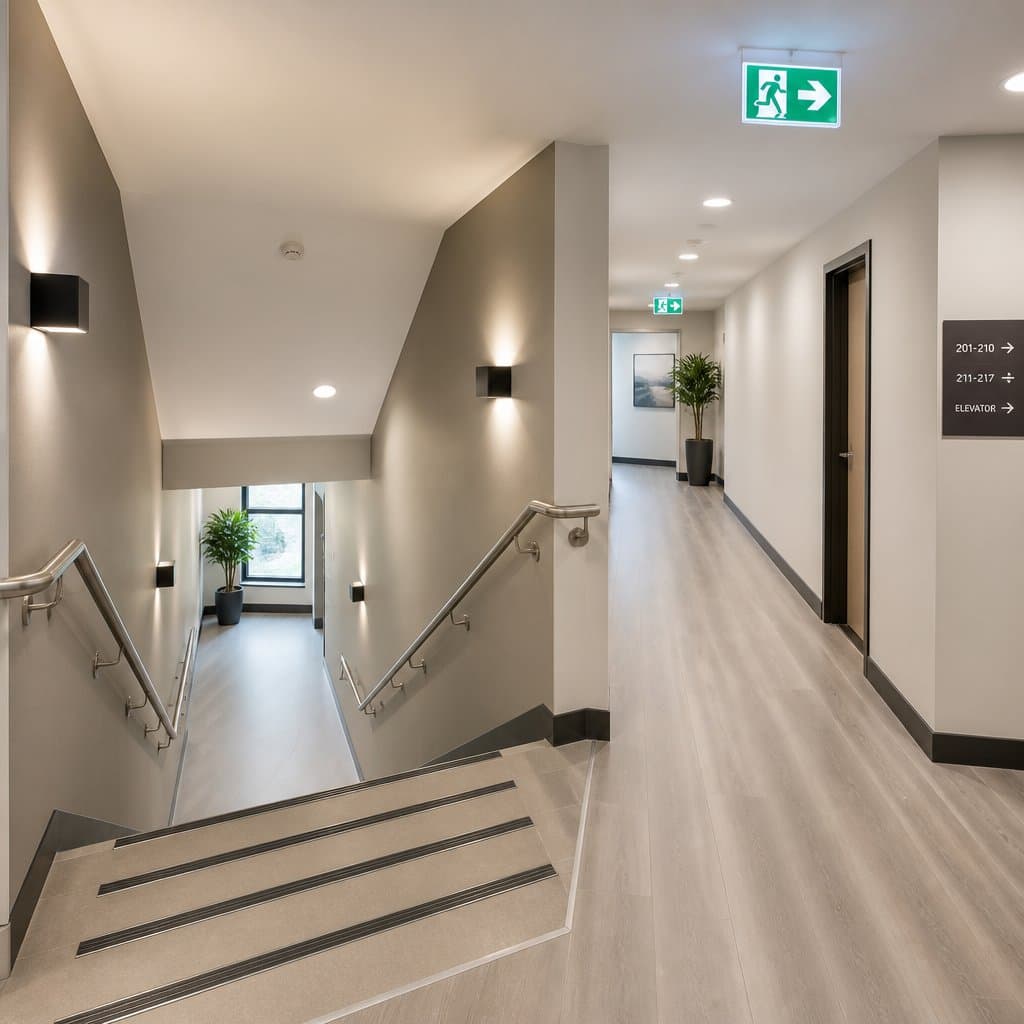
Your stairways and hallways should help you move through your home with confidence, not make you hesitate. Good home lighting improves visibility, supports home safety, and can really help prevent falls—especially if you’ve got kids, guests, or older adults around. The right setup also just makes life easier, from sunrise to bedtime.
The safest approach is to use even, well-placed light that reduces shadows, softens glare, and keeps steps and transitions easy to read. If you pay attention to lighting placement, fixture choice, and easy controls, you can cut fall risk without making your home feel harsh or overlit.
Key Takeaways
- Brightness should stay steady from one area to the next.
- Steps, turns, and landings need clear light from more than one angle.
- Simple controls make nighttime movement safer and less of a hassle.
Start With Even, Safe Illumination
Even light is the foundation of safer movement in stairways and hallways. You want enough ambient lighting to make edges, landings, and changes in level easy to spot, but you don’t want harsh hotspots that strain your eyes.
Older adults usually need more light to see contrast clearly, since age-related vision changes can make things look flatter. In Sacramento-area homes, where some hallways and stairs can feel dim or tight, balanced lighting can make a big difference.
Why Consistent Brightness Matters On Steps And In Transitions
Steps get risky when bright and dark areas alternate along the same path. If one section is much brighter than the next, your eyes might miss a tread edge or a turn. Keeping brightness steady helps your brain read the whole route.
Transitions—like the top and bottom of stairs, corners, and doorways—really benefit from smooth lighting. It just makes the path feel more predictable and safer, no matter the time of day.
How To Balance Ambient, Overhead, And Task Lighting
Ambient lighting fills the space and keeps things visible. Overhead lights give general coverage, while task lights help at spots where you need extra clarity—like a stair landing or a hallway entry.
Spread light evenly with good placement; don’t expect one fixture to do it all. Diffusers help soften the output and cut glare, which is a relief for folks sensitive to bright points of light.
Choosing Lumens And Color Temperature For Clearer Navigation
Lumens measure how much light a bulb or fixture gives off, but more isn’t always better if it’s glaring. You want enough output to light steps and edges without washing out contrast.
A warm to neutral color temperature usually feels comfortable and still lets you see well. If your hallway or stairs seem too yellow and dim, or too blue and harsh, tweaking the color temperature can help without a full redesign.
Light The Stair Run From Top To Bottom
Stairway lighting works best when it follows the entire run—not just one end. You want every tread, landing, and wall edge visible so your eyes can track the path naturally.
You can use recessed lighting, ceiling-mounted lights, wall sconces, or led strip lights to brighten up stairs without leaving dark gaps.
Best Fixture Types For Treads, Landings, And Stairwells
Recessed lighting and similar fixtures give clean, controlled light from above. Flush mount ceiling lights work for broader coverage in tight stairwells.
Wall sconces add helpful side light and cut shadows on the stairs. Accent lights and led strips can guide your eyes along treads and landings, especially in staircases with dark corners or decorative details.
Where Stair Lights Should Go To Limit Shadows
Put stair lights where they cover both the tread surface and the riser edge. If light comes from the wrong angle, your foot might cast a shadow just where you need to see the next step.
Fixtures should also support the top and bottom landings, since those spots are common for missteps. In longer runs, adding light from a few spots keeps things steady from end to end.
How To Make Staircase Lighting Safer At Night
At night, you need lower intensity light that still gives clear shape and depth. Led strip lights under handrails, along base trim, or beneath step nosing can guide you gently without waking everyone up.
If you prefer overhead light, look for fixtures that turn on fast and spread light evenly. For homes in Roseville, Elk Grove, or Folsom, AAA Electrical Services offers same-day help if a dark stairway is caused by a bad fixture, loose switch, or wiring problem.
Make Hallways Easy To Navigate Day And Night
Hallways should stay readable from end to end, even when the sun’s down. The goal is to remove dark gaps so your path feels continuous, not broken up into bright and dim spots.
Nightlights, motion-activated lights, and good lighting controls can make bedrooms, bathrooms, and shared corridors a lot safer—especially for those late-night bathroom runs.
How To Eliminate Dark Gaps In Long Corridors
Long hallways often do better with several smaller light sources instead of one bright fixture in the middle. That way, visibility stays steady and you avoid that weird tunnel effect where the center’s bright but the ends are gloomy.
Under-cabinet lighting helps in nearby storage, linen, or mudroom areas, and can add useful spill light near the hallway edge. The main thing is to make the whole route feel connected.
Night Lighting For Bedrooms And Bathroom Routes
Nightlights near bedroom doors, hall corners, and bathroom entries can make late-night trips safer. These lights should be soft enough to avoid glare, but still bright enough to show floor changes, thresholds, and furniture edges.
If you live with older adults or kids, pick lighting controls that let you leave low-level illumination on without hunting for switches in the dark.
Safer Options For Narrow, Busy, Or Windowless Hallways
Narrow hallways do best with wall-mounted lights that don’t crowd the space. Busy hallways need fixtures that stay out of the way of doors, carts, and foot traffic. Windowless hallways need extra attention to brightness and placement.
Motion-activated lights help in these spaces when your hands are full, and they also improve visibility in basement routes or utility corridors where light is usually lacking.
Choose Smarter Controls For Convenience And Safety
Lighting controls are just as important as fixture choice—they decide how quickly you get light when you need it. Smart controls can make life easier, cut wasted energy, and support safer movement through stairs and hallways.
The best controls are simple, reliable, and match the way your household actually moves around.
When Motion Sensors And Occupancy Sensors Help Most
Motion-activated lights and occupancy sensors shine in entry halls, stair landings, and routes between bedrooms and bathrooms. They’re great when your hands are full, when guests don’t know your layout, or when you need quick light at night.
These controls also help in garages, basements, and utility spaces where people might forget to flip a switch. For Sacramento homes with busy families, that automatic response adds a nice layer of safety.
Using Dimmer Switches Without Creating Unsafe Light Levels
Dimmer switches make lighting more flexible, as long as the lowest setting still lets you see safely. If you dim too much, shadows can hide step edges and hallway obstacles.
It’s a good idea to keep dimmed light for relaxing areas, then turn it up for stairs, turns, and nighttime movement. Your electrician can help you pick controls that keep things safe without making rooms feel harsh.
Smart Bulbs And Smart Lighting Systems For Easier Control
Smart bulbs and smart lighting systems let you adjust brightness, schedules, and scenes from an app or with your voice. That’s handy if you want brighter lighting for evening movement and softer light late at night.
Smart lighting systems also help keep things consistent across several fixtures, which is useful in bigger homes in Carmichael, Natomas, or Rancho Cordova where one hallway might connect a bunch of spaces. A licensed electrician can help set up lighting controls that work reliably and keep your home future-ready.
Pick Fixtures And Bulbs That Improve Comfort
The right fixtures and bulbs should make your home feel calm, clear, and easy to use. Go for dependable LED lighting that supports safety without adding glare or clutter.
Comfort matters—a lot. People are more likely to use lighting that feels natural in daily life, whether it’s in hallways, basement entries, or outdoor paths.
LED Lighting Benefits For Reliability And Efficiency
LED bulbs last longer than older types and use less energy, which makes them a practical pick for lights that run often. They turn on quickly, which is important when you need instant light on stairs or in a dark hallway.
Energy-efficient lighting can lower maintenance and reduce the chance a burned-out bulb leaves a risky area dark. Long-term reliability matters in busy homes and rentals alike.
How To Reduce Glare And Harsh Contrast
Glare makes a bright fixture less safe because it hides details and weakens contrast. Pick fixtures with shades, frosted covers, or diffusers so light spreads more evenly.
Wall sconces, recessed lights, and flush mount ceiling lights all work well if you position them to avoid direct eye-level brightness. The idea is to light the floor, not your line of sight.
Matching Decorative Choices To Safety Needs
Decorative fixtures can still be safe if you choose them with placement and output in mind. Outdoor lighting, pathway lights, and wall sconces should look good and help you see edges, landings, and elevation changes.
For homes in the Sacramento region where you want both style and practicality, a licensed electrician can help you select fixtures that match your home without sacrificing safety.
Inspect, Maintain, And Upgrade Trouble Spots
Even well-designed lighting needs regular attention. Burned-out bulbs, flickering fixtures, and weak outdoor lighting can all create hazards that make falls more likely.
A simple inspection routine helps you catch trouble early so you can fix it before anyone gets hurt.
Maintenance Tips For Burned-Out Bulbs And Failing Fixtures
Swap out burned bulbs quickly and clean fixtures so dust doesn’t block the light. Check for loose covers, buzzing sounds, flickering, or uneven brightness—those usually mean a fixture needs service.
Lighting that seems “good enough” during the day might leave stairs and hallways too dim at night. Staying on top of maintenance like this helps keep your home safer with fewer surprises.
When Lighting Problems Point To Electrical Repairs
If a light keeps failing, a switch feels warm, or several fixtures flicker at once, you might have a bigger problem than just a bulb. Those signs can mean wiring, switch, or circuit issues that need a pro’s attention.
Same-day service from licensed electricians can be a lifesaver when dark stairs, failed hallway lights, or weak outdoor lighting are creating a safety risk. AAA Electrical Services uses fully stocked vehicles to finish many repairs fast and with less hassle.
Planning Professional Upgrades For Long-Term Reliability
Some homes need a full lighting upgrade instead of another quick fix. That could mean better stairway coverage, improved hallway controls, new outdoor lighting, or updated switches that make daily use easier.
Professional upgrades can also help with bigger electrical goals, like future-proofing your home for smart lighting, EV chargers, or panel planning. With transparent flat-rate pricing and respectful techs, you can handle repairs and upgrades with more confidence and less stress.
Frequently Asked Questions
What types of lighting work best for making stairs easier and safer to use?
The best stair lighting usually combines overhead coverage with side or step-level light. Recessed fixtures, wall sconces, and led strips can work well together when they reduce shadows and show each tread clearly.
Where should lights be placed on stair walls, steps, and ceilings to reduce shadows?
Place lights so they illuminate the full stair run from top to bottom, including both landings. Wall-mounted fixtures and ceiling-mounted lights should be positioned to avoid throwing your foot or rail into shadow.
Are motion-sensor or auto-on lights a good choice for stairways and hallways?
Yes, motion-activated lights and occupancy sensors are a smart choice in many homes, especially for nighttime use. They are helpful when your hands are full, when the area is dark, or when quick light is needed for safer movement.
How bright should stairwell and hallway lighting be for clear visibility at night?
You want enough light to spot step edges, thresholds, or anything that might trip you up, but not so much that it blinds you. I’d go for a mix—steady ambient light with a few focused spots on stairs or tricky corners. One super-bright overhead light just doesn’t cut it and can make things feel harsh.
What are some good lighting options for basement stairwells that feel dark or enclosed?
Basement stairwells can feel a bit claustrophobic, so try recessed lights, wall sconces, or even LED strips along the steps. These don’t eat up space and make the path obvious. If you don’t go down there much, motion-activated lights are a lifesaver—no fumbling for switches in the dark.
How can outdoor stairway lighting be set up to prevent slips while avoiding glare?
Try using pathway lights, wall sconces, or even some low-key spotlights aimed just right to highlight the steps and landings—without that annoying glare in your eyes. Go for diffused fixtures and play around with placement so you can actually spot wet patches or uneven spots at night.