You can keep your home in Rio Oso safer from sudden voltage spikes by installing a whole-home surge protector at your electrical panel. A well-installed surge protector guards your wiring and appliances from lightning, utility issues, and big appliance surges—it can save you a lot of money and headaches in the long run.
Ever thought about what you’d lose if a surge fried your fridge or HVAC? Here’s a look at the types of protectors, how pros pick the right one, what installation involves, and when it’s time to replace your current protector.
If you’re around Sacramento, AAA Electrical Services offers same-day visits, certified techs, flat-rate pricing, and vans stocked with gear to get most jobs done in one go.
Why Surge Protector Installation Is Essential in Rio Oso
A whole-house surge protector stops big voltage spikes right at your electrical panel, protects sensitive equipment, and lowers fire risk. Homes near Rio Oso, with their weather quirks and older wiring, see real local benefits from installing one.
Protecting Electronics from Power Surges
Power surges can come from lightning, utility switching, or even nearby equipment failures. These spikes can destroy TVs, computers, fridges, and HVAC controls in a flash.
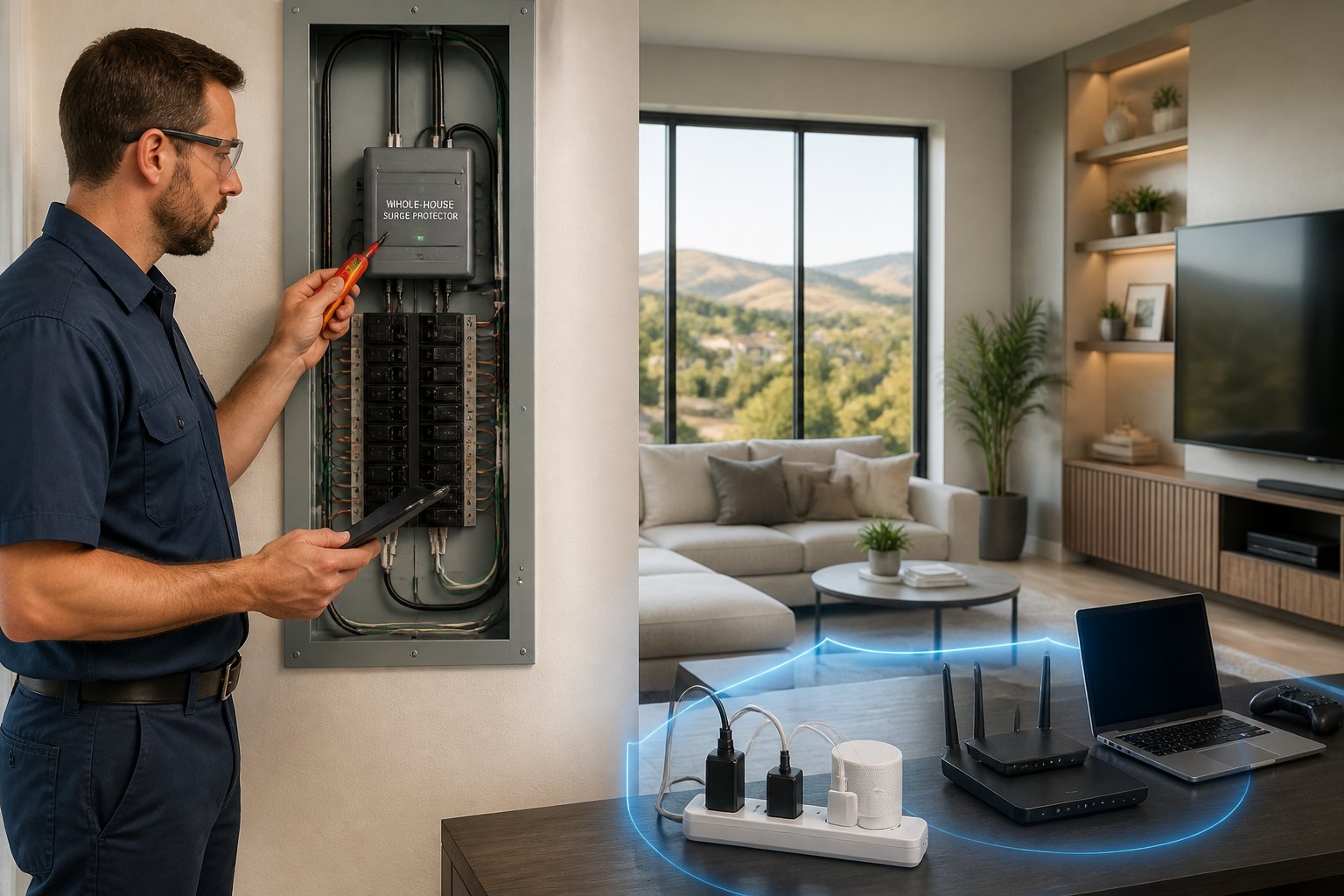
A panel-mounted surge protector grabs that high voltage before it can travel through your home’s wiring. That means every outlet gets protection, not just one or two. If you work from home, have smart TVs, or rely on medical devices, this can save you from expensive repairs.
Look for a protector with a quick response time and a solid surge rating. Licensed electricians know how to match the device to your panel and wiring, and they’ll swap out worn modules to keep your protection strong.
Minimizing Fire Hazards
Big surges can overheat wires, outlets, and appliance parts, making electrical fires more likely. Older homes around Rio Oso with aging panels face even higher risks without surge protection.
A whole-house device takes the stress off breakers and wiring by sending excess voltage straight to ground. This cuts down on abnormal heating at connections and appliances. Proper installation keeps grounding paths solid and follows local codes.
Hire a licensed technician who checks your panel, tightens connections, and tests grounding. That hands-on work reduces both immediate dangers and long-term wear.
Safeguarding Home Automation Devices
Smart thermostats, security systems, door locks, and lighting controls all depend on stable power. A surge can corrupt firmware or kill sensors—suddenly you’re without remote access or alerts.
Whole-home protection shields the control panel that powers these devices. Surge strips at key outlets add another layer. This helps keep your systems reliable and avoids pricey service calls or replacements.
When you’re installing or upgrading, have a certified electrician size the protection for your smart-home load. AAA Electrical Services can often get your automation back online the same day.
Types of Surge Protectors for Homes and Businesses
You’ve basically got three main options: units that protect your whole electrical panel, smaller ones for specific outlets or devices, and portable models you can move around.
Whole-House Surge Protectors
Whole-house surge protectors mount at your main electrical panel or meter. They stop big voltage spikes before they can run through your wiring. These are built for higher surges and protect appliances like fridges, HVAC, and built-in ovens.
A pro matches the protector to your panel and wires it to the service entrance. Look for UL 1449 listing, clamping voltage under 400 V, and replaceable modules or clear end-of-life indicators. You get broad coverage and easier maintenance, which helps keep major systems running and cuts repair risks.
AAA Electrical Services installs whole-house units with safety in mind, same-day service, and flat-rate pricing if you’re local.
Point-of-Use Surge Protection Devices
Point-of-use devices plug into outlets or mount on dedicated circuits to protect sensitive gear. They’re ideal for TVs, computers, routers, and audio gear. Use them with a whole-house protector for double defense.
Pick units with decent joule ratings (higher is better) and low clamping voltage. Features like multiple outlets, coax/Ethernet protection, LED status lights, and thermal fuses are handy. They’re easy to install, but make sure the rating fits your device load so you’re not under-protected.
Point-of-use devices shine when you need targeted protection and extra outlets for grouped electronics.
Portable Surge Protectors
Portable surge protectors—usually in a power-strip style—move wherever you need quick, temporary protection. They’re good for laptops, chargers, holiday lights, or tools in the garage. Quality varies a lot, so check ratings before buying.
Look for a clear joule rating, surge indicator light, and a grounded plug. Avoid ungrounded two-prong units for sensitive stuff. For job sites, grab models with heavy-duty cords and safety certifications. Just remember, portable strips only protect what’s plugged in—surges can still sneak in through other wiring without extra ports.
Use portable units as flexible backup, not your main line of defense.
How to Choose the Right Surge Protector
Pick a surge protector that fits your panel, covers your most important devices, and meets safety standards. Focus on protection type, energy-absorption rating, and verified certifications.
Key Features to Compare
Look for whole-house protection at your main panel, plus point-of-use units for sensitive gear. Whole-house units block big spikes before they travel through your wiring. Plug-in protectors add extra help for TVs, computers, and home-office stuff.
Check response time (quicker is better), clamping voltage (lower is better), and whether it protects both lines-to-neutral and lines-to-ground. Review the warranty and equipment protection policy—some brands cover damaged devices. Make sure a licensed electrician can wire it safely and that it fits your panel space.
Understanding Joule Ratings
The joule rating shows how much energy a protector can take before giving out. More joules means longer life and better protection against repeated surges. Whole-house units should have several thousand joules; point-of-use strips usually run a few hundred to a couple thousand.
Joules matter, but they’re not the whole story. Pair a solid joule rating with low clamping voltage and fast response. Ask your installer how many joules make sense for your setup and local weather. That way, you get protection that matches your real needs—not just the marketing.
UL Certification and Safety Standards
Always get units tested by recognized labs, like UL 1449 for surge devices. UL listing means the device passed strict safety and performance tests. Check for a label with the UL standard and model number.
Also, make sure the interrupting ratings and breaker coordination match your panel. A licensed electrician can confirm the unit fits and proper grounding. AAA Electrical Services techs always check UL markings and follow a safety-first process for your home.
Professional Surge Protector Installation in Rio Oso
You want a local, safety-first install that protects both your panel and appliances. Costs, permits, and the step-by-step install all matter for a job done right.
Licensed Electricians and Local Expertise
You need a licensed electrician who knows Rio Oso homes and local codes. Licensed techs check your panel, main service amperage, and grounding before picking a surge protector. That prevents mismatches that leave you exposed.
Ask to see their license, insurance, and background checks. A local crew familiar with Sacramento inspections can speed things up. Techs who show up with stocked vans can often finish the job same day, so there’s less waiting around.
Make sure your installer follows safety-first practices and treats your home with care. It’s not just about protection—it’s about peace of mind, too.
Evaluating Installation Costs
Installation cost depends on panel access, panel age, and the protector you choose. A basic whole-home surge protector at the main panel usually costs less than a setup that adds point-of-use devices.
Permits and electrical upgrades can bump up the price. If your panel needs a grounding upgrade, more breaker space, or even a replacement, expect to pay more. Ask for flat-rate, upfront pricing so you’re not surprised.
Watch for local deals, new-customer discounts, or membership savings. You might save a bit while still getting licensed, insured work.
Typical Installation Process
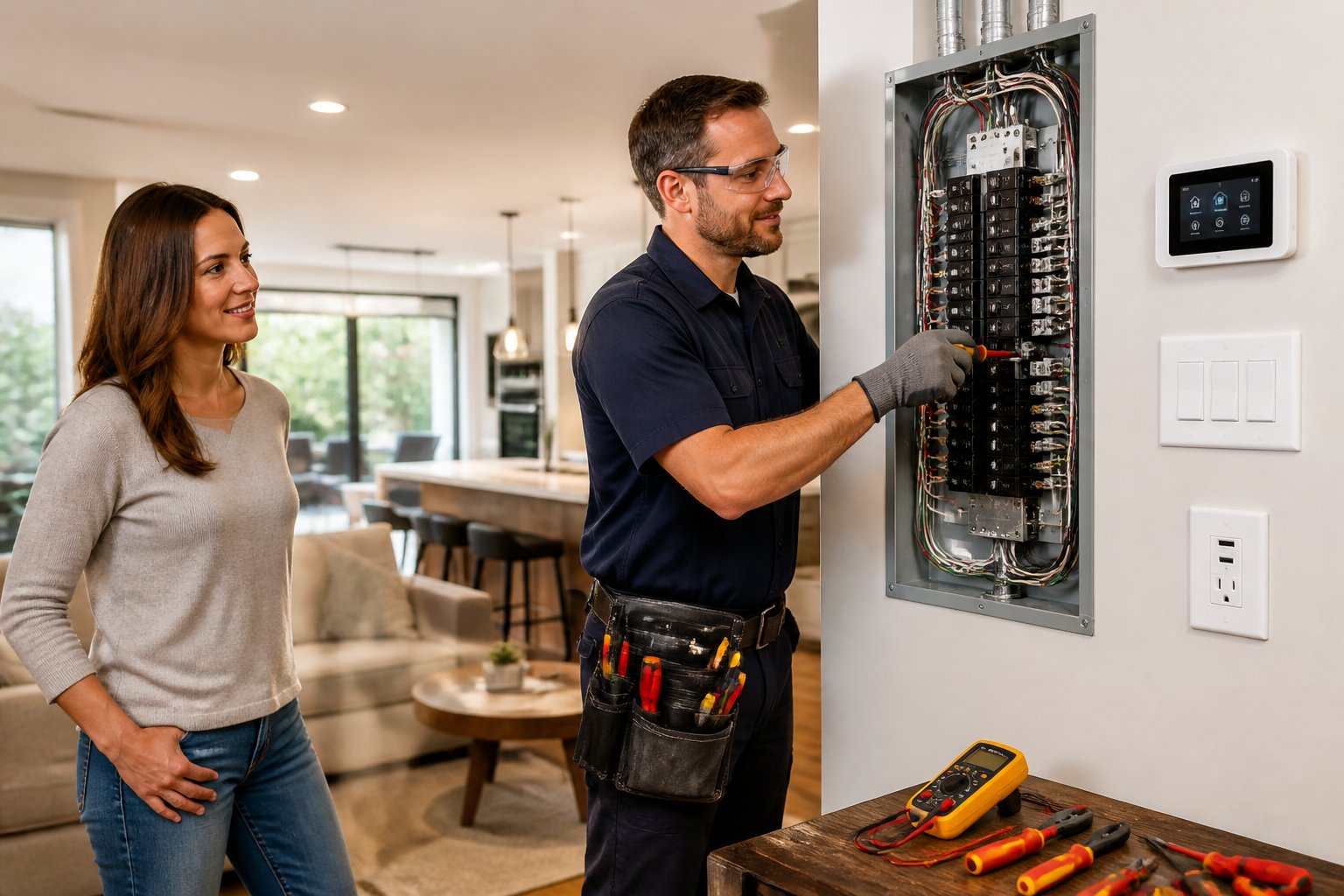
A licensed electrician kicks things off with a site visit and inspection to confirm your panel’s capacity and grounding. They’ll figure out where to mount the surge device and which breaker or lugs to use.
They shut off the power, wire the surge protector to the panel, and bond it to the panel ground. Then comes testing for voltage and protection. The tech cleans up and documents the work.
Final steps? Label the panel, explain maintenance, and leave warranty info. With stocked vans and same-day service, most jobs wrap up in a single visit.
Maintenance and Testing After Installation
Keep your surge protector working by doing simple checks and replacing units when they stop protecting. Focus on visual inspections, periodic testing, and prompt replacement to keep your home and devices safe.
Routine Inspections
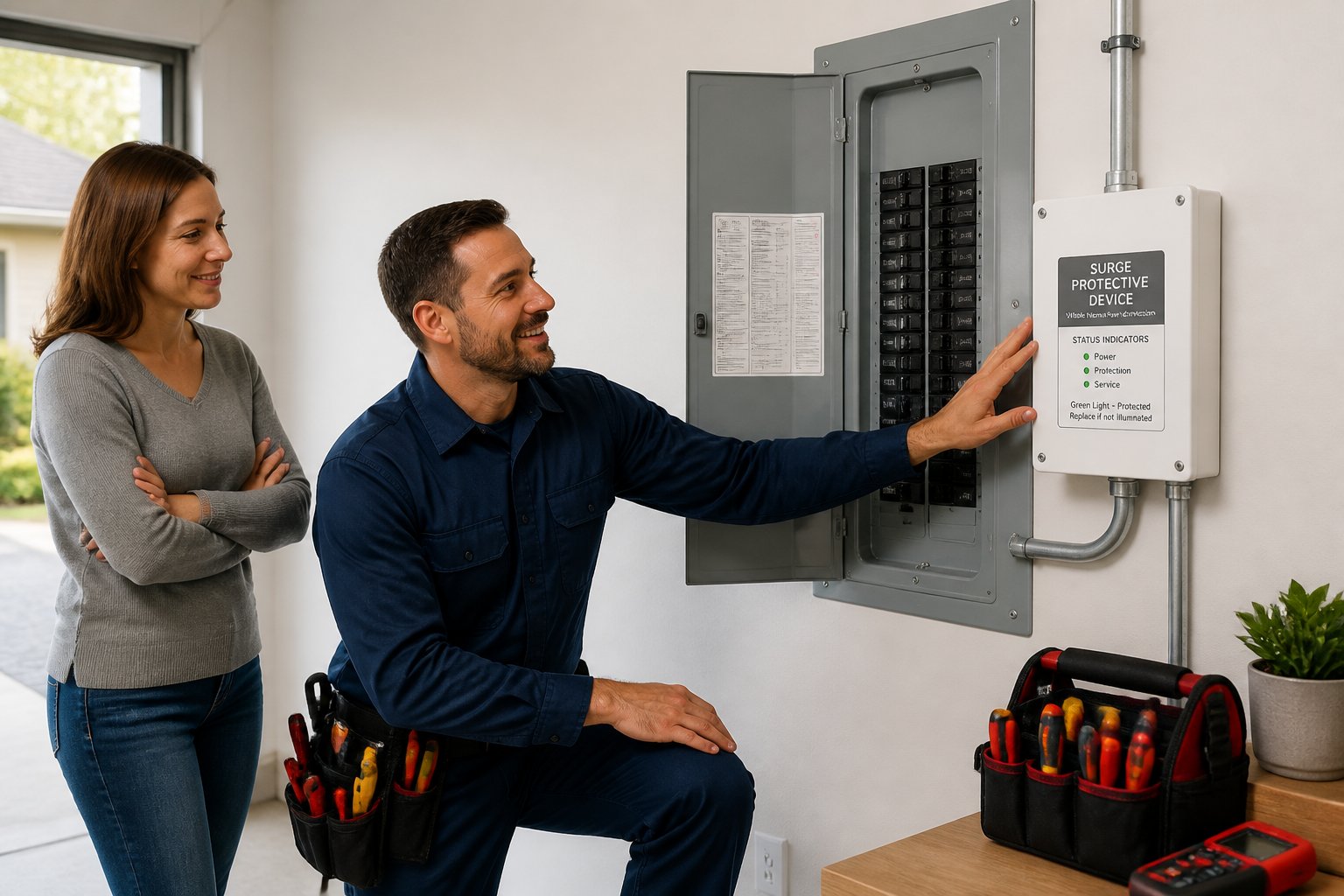
Check your surge protector and panel every 6–12 months. Look for scorch marks, loose wires, tripped breakers, or a dead status light. If the light’s off or shows a fault, assume the unit’s not working.
Test the device during a regular electrical inspection. A licensed electrician can measure clamping voltage and ground continuity, and check that the protector responds to test surges. Ask for written results so you have a record.
Keep vents and the area around the unit clear. Dust, moisture, and bad airflow can shorten its life. If you’re in Sacramento or nearby, you can get same-day inspections to fix issues quickly.
Replacing Outdated Units
Swap out units every 5–10 years, or sooner if they show wear or fail tests. Standards and tech change, so older models might not offer enough protection. Replace after a major lightning strike or big utility surge, even if the unit looks fine.
Choose a panel-mounted, whole-home protector that matches your panel’s amperage and wiring. Always use a licensed, insured electrician—they’ll cut power safely and check the new unit’s ratings.
Hang onto receipts and warranty info. That helps if a covered device gets damaged and makes service calls smoother with trusted teams like AAA Electrical Services.
Common Signs You Need a New Surge Protector
If you keep seeing electrical problems, spot visible damage, or still use an old surge device, it’s probably time for a replacement. A fresh protector keeps your electronics safe and helps avoid sneaky wiring damage.
Frequent Power Surges
If lights flicker or electronics reset during storms, you’re likely dealing with frequent surges. These can wear down a surge protector’s insides even when it seems fine. Track when issues happen—storms, certain appliances, or time of day—to find patterns.
Repeated surges shorten the life of TVs, computers, and smart devices. If several things fail at once or act weird after storms, replace the protector. A whole-home unit at the panel blocks surges before they reach outlets and expensive gear.
Visible Damage or Wear
Check for burn marks, melted plastic, cracked cases, or discolored outlets. Any of these mean the protector might not be safe. Also, look at indicator lights; if the status light is missing or off, it probably isn’t protecting anything.
If plugs feel loose or cords are frayed, stop using the unit and get a new one. Damaged protectors can cause shocks or even fires. Have a licensed tech check hardwired or panel-mounted units if you spot any wear.
Old or Non-Functioning Units
Most surge protectors just don’t last forever. If yours is more than 5–10 years old, it’s probably time for a change—even if it still looks okay. Old models usually can’t keep up with today’s safety standards and often fall short when it comes to protecting newer electronics.
If the diagnostic light’s off or it won’t power up after a surge, the protector’s probably shot. Whole-house units and panel connections need a pro’s touch to test. AAA Electrical Services can swing by for same-day inspections and offers flat-rate pricing if you’re facing a replacement.
Benefits of Hiring Local Surge Protector Experts
Local electricians really get the area—they know the rules, they’ve seen the wiring quirks, and they show up fast. When a surge strikes, you want someone nearby who can get things sorted quickly and make sure the job meets local standards.
Quick Response Times
When a surge fries your equipment, every minute counts. Local teams usually make it out the same day, and most have well-stocked vans so repairs or new installs can wrap up in a single visit. That means your appliances and HVAC aren’t left hanging.
The sooner you get a surge protector on your panel, the less likely you’ll see repeat damage to stuff like your fridge, smart thermostat, or home office setup. If you’re in a pinch, ask about same-day service and whether the tech has what they need on the truck.
Knowledge of Local Electrical Codes
Local pros actually know Sacramento-area codes and all the odd little permitting rules in places like Rio Oso, Folsom, or Roseville. They install surge protectors to code, so you’re less likely to run into headaches if you upgrade your panel or put your house on the market.
Their code know-how keeps things safe, too. Techs familiar with local wiring practices can choose the right surge unit and wire it straight to your panel for whole-house protection. This cuts down on errors and keeps your insurance and inspection paperwork clean. If you’d rather not deal with permits, AAA Electrical Services can handle that for you.
Enhancing Home Safety With Surge Protection Upgrades
Upgrading to a whole-home surge protector helps shield your devices and wiring from sudden voltage spikes. By blocking surges at the main panel, you’re much less likely to get stuck with fried appliances or expensive repairs.
A pro will wire the protector right into your electrical panel so all your circuits get covered. Licensed techs usually cut the power briefly, mount the device near the panel, and wire it to your main lines for quick response to any spike.
If you’re thinking about panel upgrades or better breakers, pairing them with surge protection just makes sense. Newer panels and properly rated breakers help your surge device work like it should and lower the risk of fire.
Regular inspections and basic maintenance keep your protection working. A tech can check response levels and swap out worn parts—often in the same visit, since they usually bring what’s needed.
Prices can vary, so look for clear, flat-rate quotes and stick with licensed installers you trust. AAA Electrical Services does safety-first electrical work and offers on-the-spot repairs to help keep your family and home safe.
Frequently Asked Questions
Got questions about whole-house surge protector installation in Rio Oso? Here’s a quick rundown on steps, prices, product types, wiring basics, where to put it, and what to expect from a real pro.
What are the steps for installing a whole house surge protector?
A licensed electrician starts by shutting off power to your main panel and making sure it’s safe to work.
They’ll mount the surge protector near the main breaker, connect its leads to the incoming line and neutral/ground, then secure everything and flip the power back on.
The tech tests the protector and panel to make sure it’s actually working.
They’ll also check that downstream devices are covered and jot down installation details for warranty records.
How much does it typically cost to have a surge protector installed in a home?
Most folks pay somewhere between a few hundred and about a thousand bucks.
The price depends on the protector model, your panel, and whether you need extra wiring or a panel upgrade.
Ask for flat-rate, upfront pricing from local pros so you’re not caught off guard.
It’s worth checking if there are same-day appointments or any new-customer deals.
What is the best kind of surge protector for a residential property?
Go with a Type 2 (panel-mounted) protector for whole-house coverage; it goes right at your main electrical panel.
Look for one rated for your panel’s voltage, with a solid surge current rating (kA) and a warranty that actually covers your stuff.
For extra peace of mind, combine the panel-mounted unit with plug-in protectors at sensitive electronics.
Have a licensed, state-certified tech double-check compatibility with your panel.
Can you provide a wiring diagram for a whole house surge protector installation?
A basic layout shows the surge protector with three wires: hot (line), neutral, and ground.
Hot connects to the incoming phase conductors, neutral to the panel’s neutral bus, and ground to the panel ground or grounding electrode.
Only a licensed electrician should handle the final wiring and installation.
They’ll follow local code, manufacturer diagrams, and safety checks.
Where is the ideal location to install a surge protector in my home?
Mount the unit at or right next to your main electrical panel where utility power comes in.
That way, it protects all your circuits and big appliances before surges can travel through your wiring.
If you’ve got a subpanel or a separate service for an EV charger or generator, you’ll want protection there too.
A certified tech can check your setup and suggest the best spots for full coverage.
What are the different types of surge protectors available for installation?
Type 1 devices go in at the service entrance, right before the meter, and you'll mostly see these in certain commercial setups or manufactured homes.
Type 2 protectors install at the main panel—these are what most people use in their houses.
Point-of-use, or Type 3, protectors just plug into outlets and handle protection for a single device.
Some folks like to mix things up, using both panel-mounted units and outlet protectors for a little extra peace of mind.