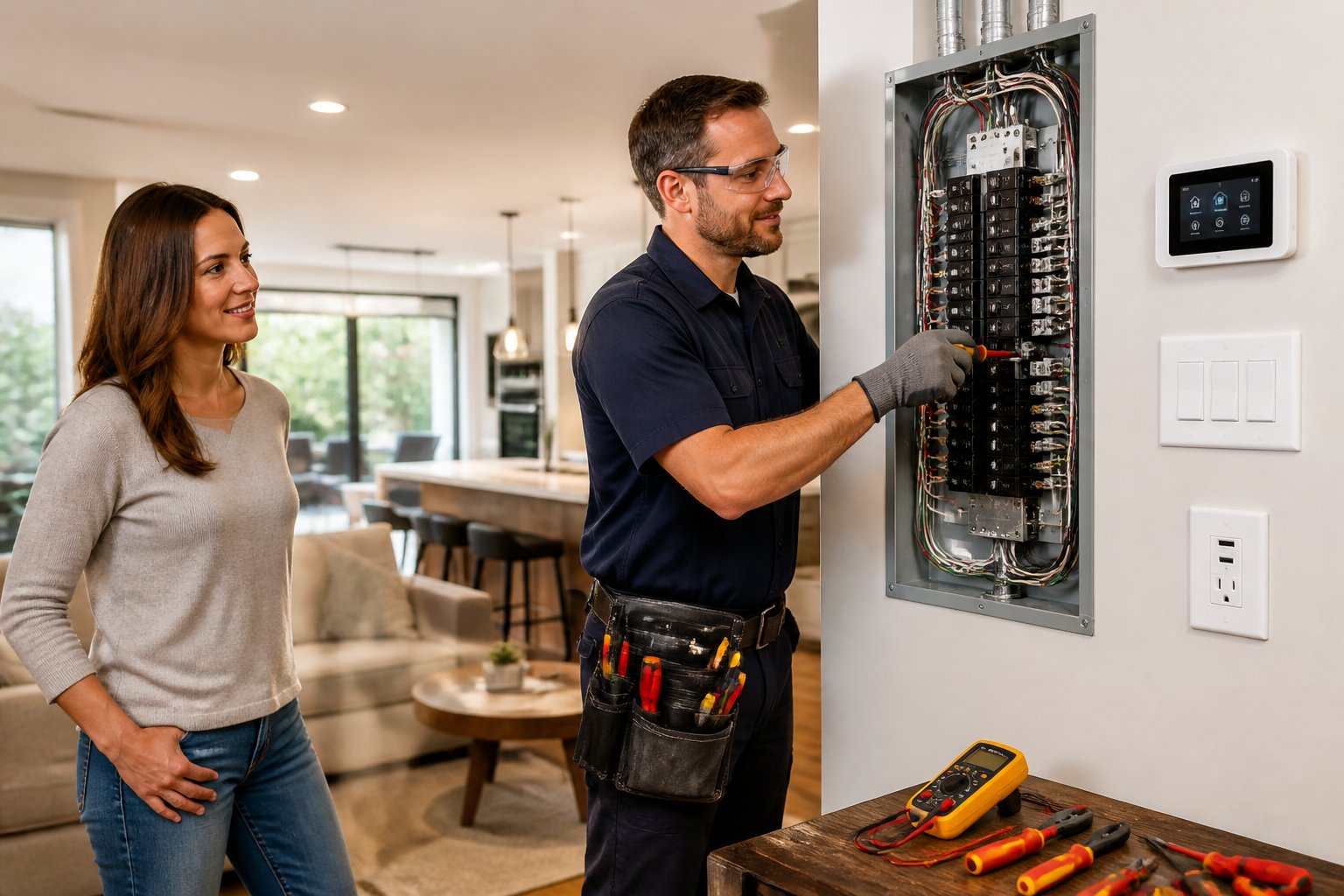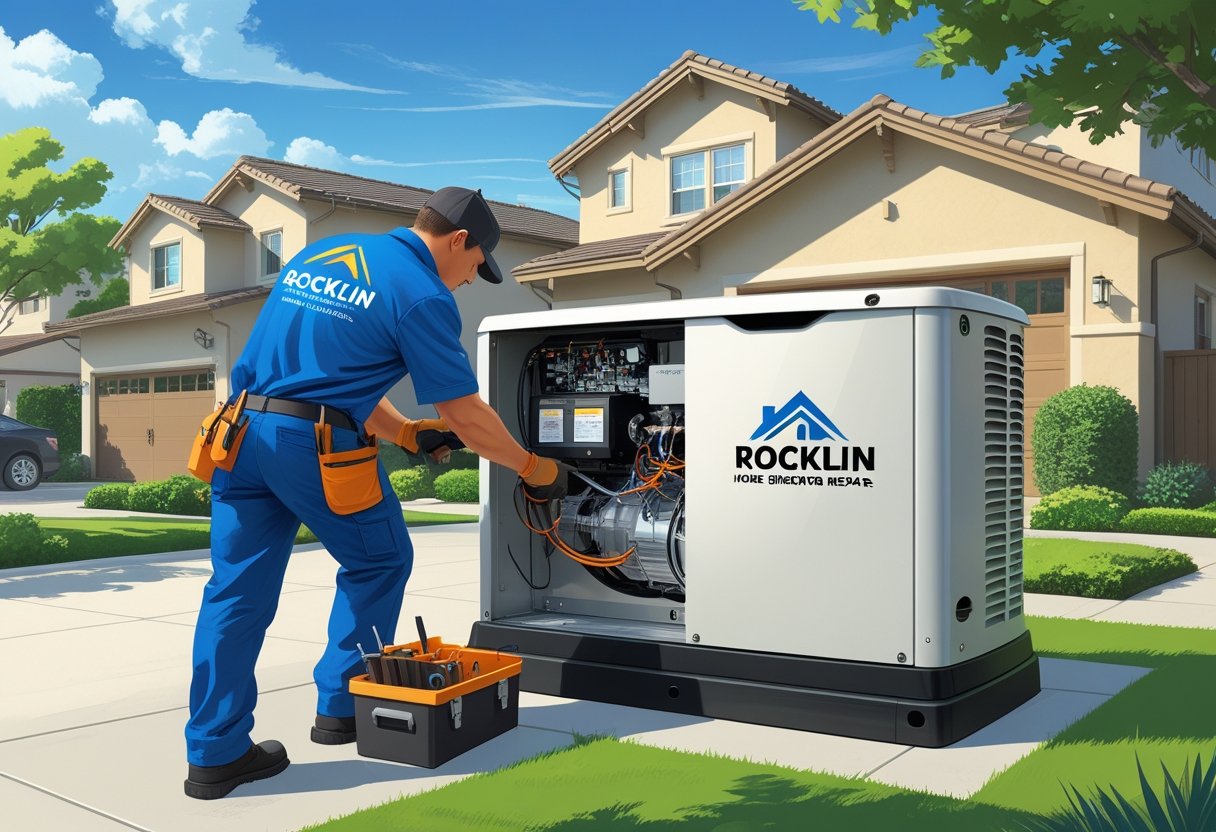
Power can fail without warning in Rocklin, and your home generator has to work when you need it most. If your generator won’t start, runs rough, or shuts down, a fast repair from a licensed team keeps your lights, fridge, and medical devices safe. We’ll look at warning signs, common repairs, and how professional techs save you time by showing up ready with parts and offering same-day service.
You want a clear plan for choosing a local company that puts family safety first and gives you honest, flat-rate pricing. This article covers repair costs, maintenance tips for Rocklin’s weather, and how certified technicians deliver fast, honest fixes so your home stays comfortable and secure.
Already have a service in mind? Here’s how to schedule repairs, what to expect during a visit, and a few tips on simple maintenance that can prevent a lot of headaches. AAA Electrical Services delivers safety-first work, stocked vans for quick fixes, and a satisfaction guarantee across Sacramento and nearby areas.
Why Home Generator Repair Matters in Rocklin
A working generator keeps your lights on, your fridge running, and your family safe during storms or outages. Timely repairs help you avoid long blackouts, expensive damage, and unsafe conditions at home.
Ensuring Reliable Backup Power
A generator that starts and runs reliably gives you power when the grid fails. Check batteries, fuel lines, and automatic transfer switches so the unit powers essential circuits like heating, refrigeration, and medical equipment right away.
Schedule inspections at least once a year, and after long periods of not using your generator. Technicians can spot worn parts, clogged filters, and weak batteries before they cause problems.
If you notice trouble, ask for same-day service. With stocked vans, certified techs can often fix common faults in one visit—you won’t be left waiting for parts.
Preventing Costly Breakdowns
Small problems get expensive fast if you ignore them. A leaking fuel line, corroded connection, or failing starter can lead to engine damage or even a full system replacement.
Routine maintenance and quick repairs keep costs down and help your generator last longer. Flat-rate pricing and upfront quotes let you know what you’re in for, no surprises.
Protecting Home Appliances
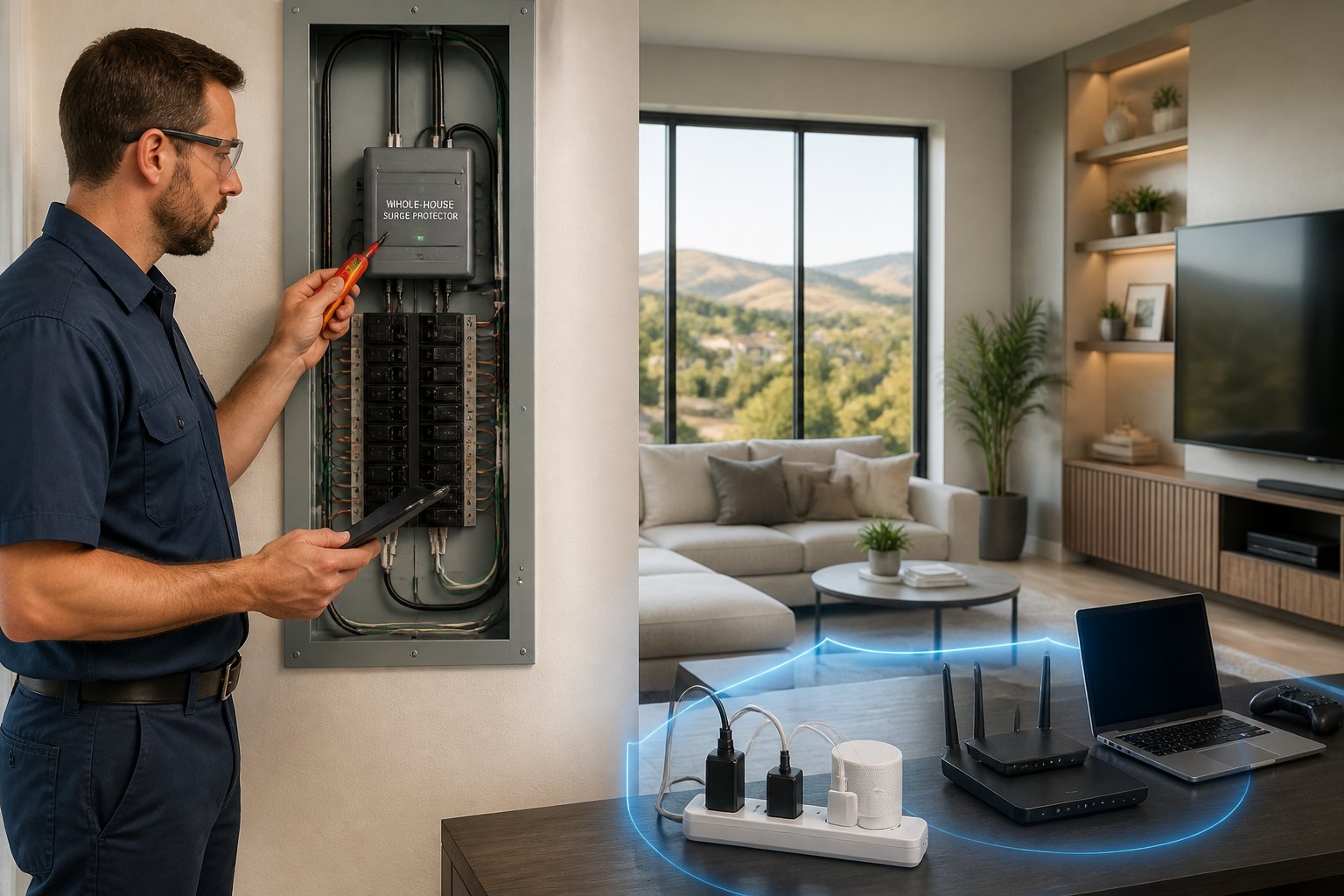
Power surges and unstable voltage from a failing generator can fry your fridge, HVAC, or electronics. Good repairs and calibration keep output steady and protect your stuff.
Technicians check voltage regulation, transfer timing, and grounding to prevent spikes and brownouts. That way, your expensive appliances are less likely to need repair or replacement after an outage.
Go with licensed, safety-focused pros who use the right parts and test under load. It’s the best way to keep your appliances safe and your home comfortable during and after outages.
Common Signs Your Home Generator Needs Repair
Watch for starting trouble, weird noises, and unstable power. These issues usually mean fuel, electrical, or mechanical problems that need prompt attention.
Difficulty Starting
If your generator struggles to start or needs several tries, check fuel and oil first. Old or bad fuel, low oil, or a weak battery are usual suspects.
A generator that cranks slowly or not at all probably has a bad starter, corroded battery terminals, or a dead battery. Take a look at the connections and make sure the battery holds a charge.
If it starts and then stalls, the fuel line, carburetor, or air filter might be blocked. Dirty spark plugs or a bad ignition system can also cause the engine to stop.
Fixing these issues quickly prevents engine damage and keeps your backup power ready.
Unusual Noises
Grinding, knocking, or loud rattling usually mean something’s wrong inside. Knocking could be worn bearings or connecting rod problems—don’t wait on that.
High-pitched squeals are often loose belts or pulleys. Fixing belt issues early saves you from bigger headaches later.
Sputtering, popping, or uneven engine sounds might be fuel delivery problems or misfiring spark plugs. Electrical arcing or buzzing from the alternator or control panel is a fire risk—get it checked out.
A good technician with a stocked van can often diagnose and fix these problems the same day.
Frequent Power Fluctuations
If lights dim, flicker, or appliances surge when the generator’s running, the voltage regulator or automatic transfer switch (ATS) could be failing. These parts keep power steady and protect your devices.
Intermittent power might also come from loose wiring, corroded terminals, or a failing alternator. Check circuit connections and the transfer switch for any visible damage.
Voltage spikes can ruin electronics and shorten appliance life. Have a licensed tech test output voltage and inspect control systems.
Flat-rate pricing and same-day service help you get back to stable, reliable power fast.
Popular Types of Home Generators in Rocklin
There are three main generator types for homes in Rocklin. Each fits different needs: backup for essentials, whole-house automatic power, or quiet, portable use.
Portable Generators
Portable generators run on gasoline or propane and cost less up front. You can move them to power tools, a fridge, or a few circuits during short outages. They require manual setup: you’ll need to refuel, connect extension cords or a transfer switch, and keep them outside at least 20 feet from windows to avoid carbon monoxide risks.
Maintenance is simple but frequent—think oil changes, spark plug checks, and fuel stabilizer if you’re storing them. If you call AAA Electrical Services, their stocked vans often let techs fix common portable issues the same day.
Go with a portable if you want flexible power for short outages or outdoor work. Just know they usually can’t run an entire modern home for long.
Standby Generators
Standby generators connect permanently to your home and a natural gas or propane line. They turn on automatically when the power goes out and can run most or all of your house, depending on size. Perfect for long outages, medical equipment, or when you want backup with zero hassle.
Installation and repair need certified techs and permits. Look for licensed pros who provide flat-rate pricing and professional crews. Routine service covers load testing, oil and filter changes, and annual inspections to keep transfer switches reliable.
Standby units cost more but deliver seamless power, safety, and convenience for families in areas with frequent outages.
Inverter Generators
Inverter generators make clean, stable power that’s safe for electronics like laptops and TVs. They’re usually quieter and more fuel-efficient than traditional portables. You get variable engine speed that adjusts to load, saving fuel and cutting noise when you don’t need much power.
They’re lighter and easy to carry. Maintenance is about the same as other small engines—oil, air filters, and keeping the fuel fresh. They’re great for small to medium loads but usually can’t handle a whole house.
Pick an inverter generator if you want quiet operation and protection for sensitive devices during short or moderate outages.
Typical Generator Repair Services
You get fast, straightforward fixes that keep your backup power ready. Techs focus on the engine, battery, and fuel system to restore reliable operation and safety.
Engine Troubleshooting
Your generator might fail to start, run rough, or stall under load. A tech will check spark plugs, air filter, oil level, and compression to find the problem.
They use diagnostic tools to read error codes and test ignition timing. This helps pinpoint issues like fouled spark plugs, clogged air intake, low oil pressure, or worn valves.
Repairs often mean swapping spark plugs, cleaning or replacing air filters, changing oil and filters, and adjusting valves. If there’s internal damage—like a failed starter or worn bearings—the tech will explain your options before starting.
After repairs, safety checks cover mounts, vibration isolation, and muffler condition to help prevent future breakdowns.
Battery Replacement
A weak or dead battery is one of the most common reasons generators won’t start. Techs test voltage, cold cranking amps, and charging system output to check battery health.
They’ll inspect terminals and cables for corrosion or loose connections that could block a good charge.
If the battery’s shot, they’ll replace it with the right size and specs for your model. Terminals get cleaned, anti-corrosion applied, and the starting cycle tested after install.
You’ll get advice on battery maintenance, lifespan, and when to swap it out—especially in Rocklin, where temps swing a lot.
Fuel System Repair
Fuel issues cause poor running, hard starts, or shutdowns. A tech checks fuel quality, filter condition, fuel lines, and the tank for junk or water.
For natural gas or propane systems, they’ll check pressure and regulator function; for diesel or gasoline, they’ll look at carburetors or injectors.
Common fixes: replacing clogged fuel filters, cleaning carburetors, flushing old fuel, repairing leaks. Techs also test the fuel pump and solenoid.
After repairs, they’ll run the generator under load to make sure fuel delivery is stable and safe. Stocked vans mean many repairs get done the same day so your system’s ready for the next outage.
Key Benefits of Professional Generator Repair
Professional repairs keep your generator safe and help it last longer. You get trained technicians, the right parts, and quick service so your home stays powered when you need it.
Safety Assurance
You cut fire, carbon monoxide, and electrical shock risks when a licensed tech checks and fixes your generator. They’ll go over fuel lines, exhaust seals, grounding, and transfer switch wiring to make sure everything meets code and works safely with your home panel.
Techs use meters to find hidden issues like loose neutral connections or voltage swings. They’ll swap out worn parts—spark plugs, filters, batteries—so the unit runs clean and burns fuel right.
Pick a service that sends certified, background-checked techs who follow clear safety steps. AAA Electrical Services offers same-day service and stocked vans, so many repairs finish in one visit and you’re not stuck with risky temporary fixes.
Extended Lifespan of Equipment
Regular maintenance from a pro stops small problems from wrecking big components. Changing filters, oil, tightening belts, and calibrating regulators keeps the engine and alternator from overheating or wearing out.
Techs log service history and spot patterns that hint at future trouble, like steady voltage drift or oil contamination. Catching those early saves you from shelling out for a new alternator or engine.
Using OEM or high-quality parts and proper lubrication keeps warranties good and maximizes runtime. With flat-rate pricing and stocked vans, you get honest, quick repairs that keep your generator reliable for years in Rocklin and nearby spots.
How to Choose a Trusted Generator Repair Company in Rocklin
Look for proof the company is qualified, has happy local customers, and stands behind its work with clear guarantees. Focus on licenses, nearby references, and written promises so you know your home will be safe and powered when you need it.
Verifying Certifications and Licenses
Ask for the technician’s license number and check it with the California Contractors State License Board. Make sure the company carries general liability and worker’s comp insurance—ask to see proof.
Check for manufacturer training or brand certifications for your generator model. That matters for warranty work and proper parts handling. Also, confirm techs doing electrical work are licensed electricians, not just general handymen.
Ask about background checks and ongoing training. Companies listing state certifications, Nexstar training, or similar show they invest in safety and skill. Write down license numbers and save photos of certificates just in case.
Checking Local References
Request recent Rocklin-area references or reviews and call a couple of homeowners if you can. Ask about punctuality, if the tech explained the problem clearly, and whether they left the area clean.
Look for stories of same-day repairs or on-the-spot fixes from a “warehouse on wheels” van. Locals appreciate that—it means fewer return visits and faster power restoration.
Make sure the company works in nearby neighborhoods like Roseville and Sacramento. Local work history shows they know Rocklin codes and typical generator needs here.
Comparing Service Guarantees
Get clear, written details on warranties for parts and labor before any work starts. A written warranty protects you if the repair fails soon after.
Ask about satisfaction guarantees and if they offer flat-rate, upfront pricing. Transparent pricing keeps you from getting blindsided by fees and makes it easier to compare bids.
Check if they stock common parts for same-day fixes and commit to response times. Ask about new customer discounts or membership savings so you know the final cost up front.
Maintenance Tips to Prevent Generator Problems
Keep your generator ready by checking key parts, storing fuel properly, and keeping up with oil changes. Small, regular steps help you avoid bigger failures and keep your home powered when it matters.
Regular Inspections
Inspect your generator monthly if you use it often, or at least every three months for standby units. Watch for loose or corroded battery terminals, frayed wires, fuel leaks, and cracked hoses. Run a manual exercise cycle to make sure the automatic transfer switch works and the unit starts and transfers load as it should.
Jot down each check in a maintenance log so you can spot recurring issues. Swap out dirty air filters, and clear debris from vents and cooling fins. If you notice electrical burning smells, heavy corrosion, or if it keeps refusing to start, call a licensed technician for a closer look.
Proper Storage Guidelines
Store fuel in approved containers, in a cool, dry spot away from living spaces and flames. If you’re storing gasoline for more than a month, add fuel stabilizer and rotate your supply every 6–12 months to keep carburetors and injectors from gumming up. For diesel, use anti-gel additives during cold months if the manufacturer recommends it.
If you’re putting the generator away for a season, follow the manual to drain the fuel system or run the engine dry after adding stabilizer. Take out the battery and keep it on a smart charger in a warm place, or at least disconnect the terminals to avoid drain and corrosion.
Routine Oil Changes
Change the oil after the first 20–30 hours on a new generator, then stick to the manual—usually every 100 hours or once a year, whichever comes first. Always use the oil grade the manufacturer calls for. Running with old or low oil can wear out bearings and overheat the engine.
Before you change the oil, let the generator run a few minutes to warm things up, then drain while it’s still warm so it flows out easier. Swap the oil filter at each oil change if your model has one. Keep some spare oil and filters handy in your van or home kit so you can do quick, clean swaps when needed—this helps you avoid drawn-out repairs.
Home Generator Repair Costs in Rocklin
Repair costs depend on the part, labor time, and whether parts or permits are needed. In Rocklin, repairs range from minor tune-ups to major engine or control-panel work. Sometimes, same-day fixes can actually lower your total bill.
Factors That Influence Pricing
Parts usually drive most of the cost. Simple things like spark plugs or filters might be under $100, while control modules, starter motors, or a whole new fuel system can set you back several hundred. Labor rates in Rocklin reflect what local electricians charge and how long the job takes.
Service calls and diagnostics often come with a flat fee. If a permit is needed, inspections will add to the cost and time. Weather, how easy it is to get to your generator, and whether you have a warranty all play a role. Some techs carry parts in stocked vans, so they can often finish repairs on the first visit and save you some labor charges.
Options for Repair vs Replacement
Small fixes make sense if they cost less than half of what a replacement would run you and your generator still has good years left. Typical repairs include tune-ups, fuel-system cleaning, battery swaps, and control-board fixes.
If you’re dealing with frequent repairs or major engine, alternator, or frame damage, it might be time to replace. New models come with warranty protection and better efficiency. Always ask for a written estimate showing the parts, labor, and any permit fees. AAA Electrical Services gives flat-rate, upfront pricing and same-day service options to help you decide.
Scheduling Home Generator Repair in Rocklin
When your generator acts up, call for service right away to protect your family and home. You can book repairs online or by phone, and lots of local teams offer same-day service to get your power back fast.
Have some basic info ready before you schedule: generator make and model, a quick description of the problem, and any recent maintenance. This helps the tech show up with the right parts and often finish the job in one visit.
Pick a time window that works for you, and ask about flat-rate pricing so you know what you’re in for. Mention any access notes—gate codes, pets, whatever—to keep the visit smooth and safe.
Go with a provider that uses licensed, insured, and background-checked technicians who follow a safety-first approach. AAA Electrical Services sends Nexstar-trained pros, stocked vans, and backs work with a 100% satisfaction guarantee—details that make it easier to trust your choice.
Need help even faster? Ask about emergency or same-day slots. Don’t forget to check for membership discounts or new-customer offers—you might save on future service and skip surprise fees.
Preparing Your Generator for Rocklin Weather
Rocklin winters bring cool, wet storms, and summers get hot and dry. Check your generator before each season so it’s ready when you need it. Keep a simple checklist near the unit.
Check fuel and oil levels weekly during storm season. Old fuel or low oil can stop your generator cold. Change oil and fuel filters as the manufacturer recommends.
Keep the area around the generator clear—no leaves, trash, or overgrown plants. Good airflow helps prevent overheating and cuts fire risk. Move flammable stuff several feet away.
Use a weatherproof cover made for generators to protect from rain and dust. Don’t block vents or exhaust. Make sure the base stays level so fuel doesn’t pool.
Test the automatic transfer switch and run the generator under load every few months. Short, regular tests help you catch fuel, battery, or starter issues early. If you don’t want to mess with it, schedule checks—AAA Electrical Services offers same-day service and stocked vans for quick repairs.
Check the battery and charging system before storms. Cold weather and long idle times can drain batteries. Keep jumper cables and a charged spare battery if you rely on frequent starts.
Keep spare parts and a basic tool kit handy: spark plugs, air filter, oil, and a wrench set. Label parts and jot down model numbers for easy ordering. Honest, safety-first work by licensed pros saves time and headaches.
Frequently Asked Questions
Here are answers to common repair signs, service choices, maintenance schedules, simple DIY checks, cost drivers, and ways to keep your generator running longer.
What are the signs that my home generator needs repair?
If your generator struggles to start, makes odd noises, or idles rough, it probably needs service.
Watch for warning lights on the control panel, smoke, or burning smells—those are urgent.
Loss of power output or frequent automatic shutdowns also mean trouble.
If your unit won’t transfer load to the house during an outage, don’t wait—call a pro.
Can you recommend a reliable service provider for generator maintenance?
Pick a licensed, insured company with certified techs and clear pricing.
AAA Electrical Services offers same-day service, flat-rate pricing, and stocked vans for fast on-site repairs.
Check reviews, make sure techs are background-checked, and look for a satisfaction guarantee.
Ask about parts availability and whether they’re trained on your generator brand.
How often should a residential generator be serviced?
Service your generator at least once a year and after any long run during an outage.
Annual inspection should cover oil change, filter checks, coolant inspection, and load testing.
If you use the unit a lot or live in extreme weather, think about service every six months.
Stick to the manufacturer schedule for spark plugs, belts, and other parts.
Are there any DIY fixes for minor generator issues?
You can check fuel level, battery charge, and fluid levels yourself.
Tighten loose battery connections and clear debris from the air intake.
Don’t mess with fuel system, electrical, or engine repairs on your own.
Unsafe DIY work can void warranties and cause injury—call a qualified technician instead.
What factors influence the cost of repairing a home generator?
Parts, labor time, and how complex the failure is will drive the cost.
Big-ticket items like alternators, control modules, or engine parts cost more.
Brand, unit age, and whether parts must be ordered also matter.
Same-day service and stocked vans can cut down on time and sometimes lower your total cost.
How can I extend the lifespan of my home generator through maintenance?
Try running test starts every week or month, and don’t forget to load-test it now and then. That way, you’ll know things are working when you actually need them.
Stick to the oil and filter change schedule your manufacturer suggests—it’s there for a reason.
Keep the generator clean, clear away any plants or junk, and set it up on stable ground so you don’t run into unnecessary issues.
Get a pro to check things out once a year, and jump on repairs quickly. It’s way easier to fix little problems before they blow up into bigger ones.