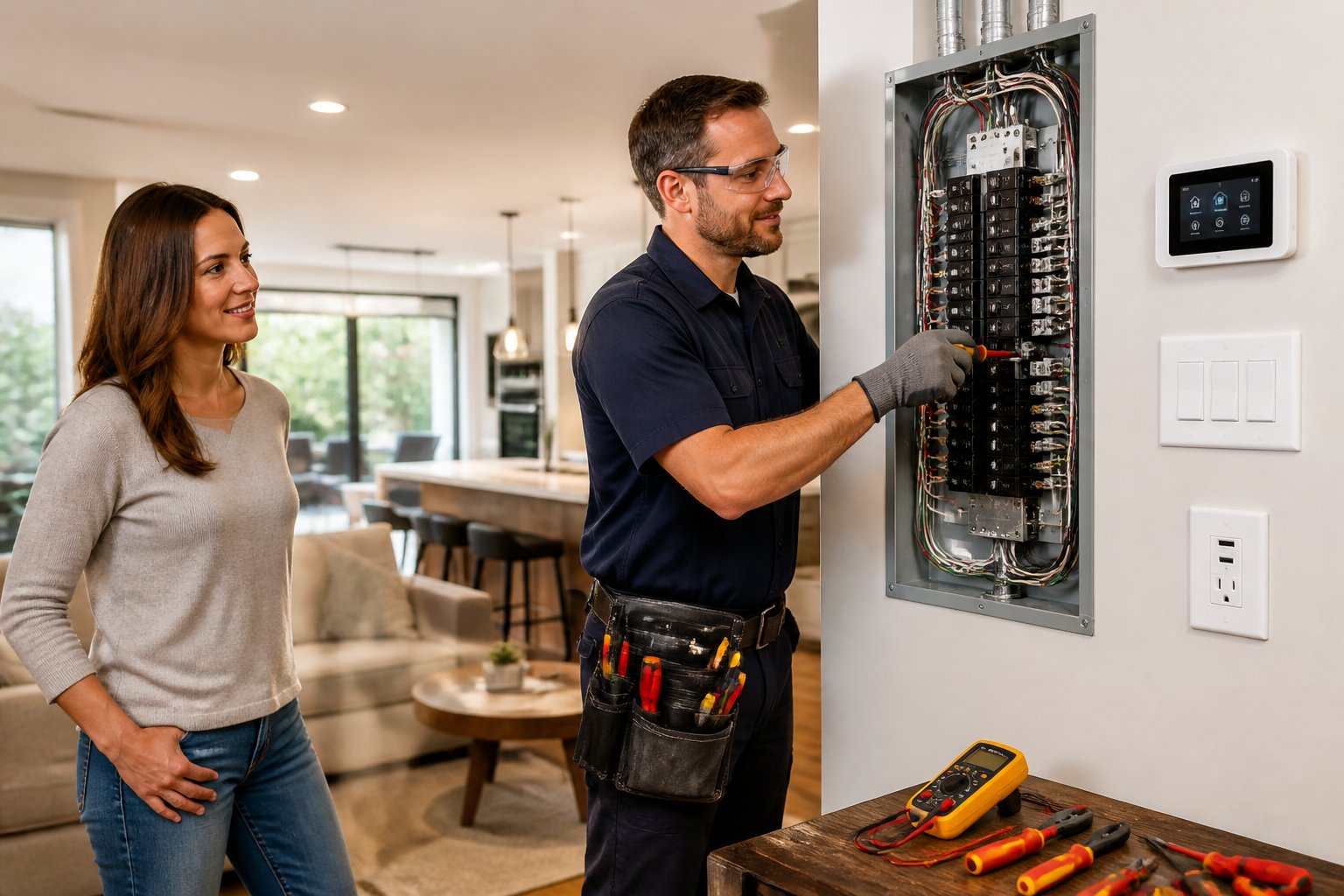
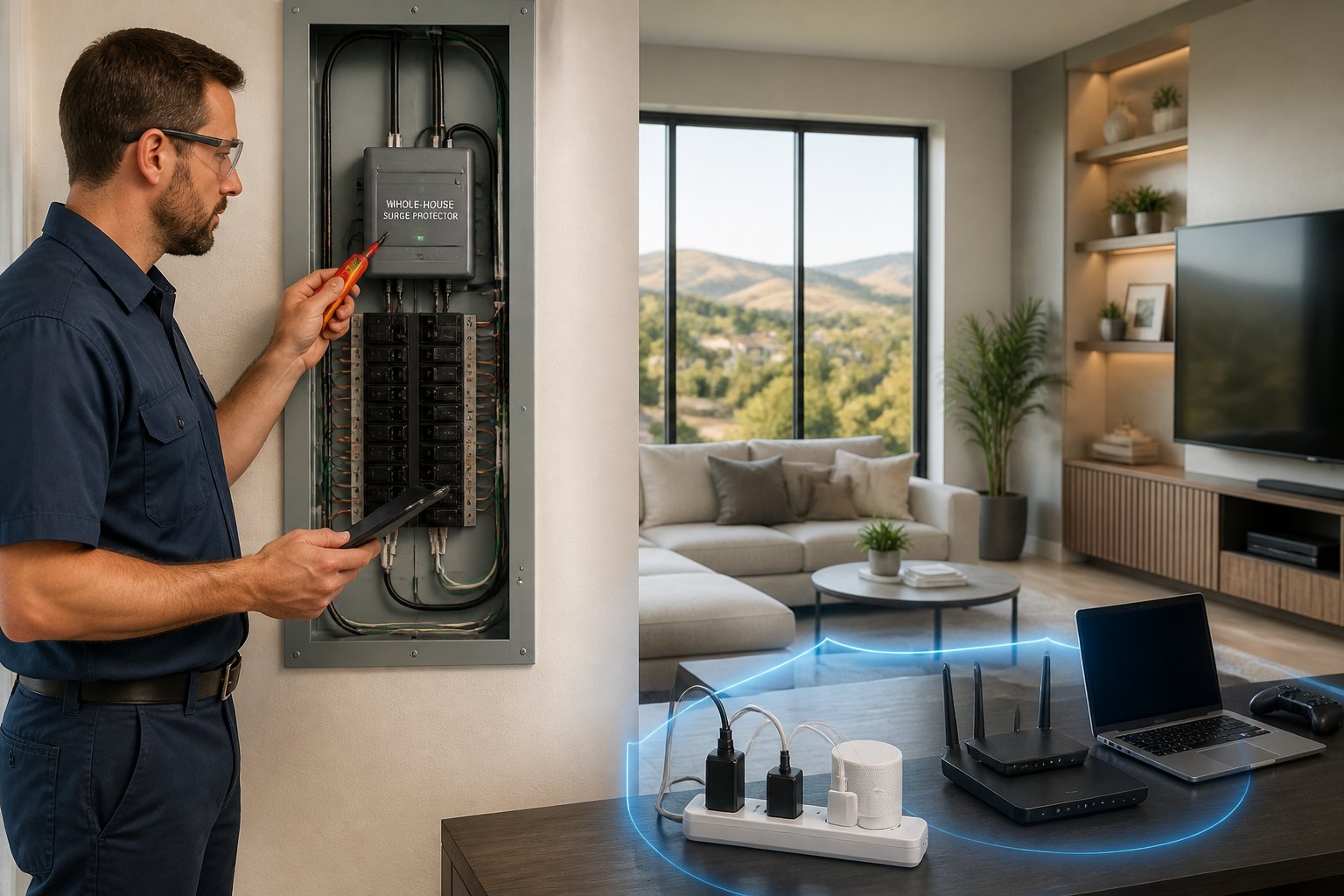
Holiday gatherings can really push your home’s electrical system to its limits—think ovens, heaters, lights, decorations, and all those extra gadgets your guests bring. If you’re wondering how to safely manage power demands during holidays and gatherings, the best bet is to plan ahead, spread out what you’re plugging in, and keep your eyes peeled for warning signs before a small hiccup turns into a tripped breaker or something worse.
That’s especially true in places like Sacramento, Roseville, Elk Grove, Folsom, and nearby cities, where holiday cooking, chilly weather, and longer nights all hit at once. A bit of prep can help you keep things running smoothly and save you some hassle.
Key Takeaways
- Spread out heavy power use to different circuits.
- Replace worn decorations and cords before plugging anything in.
- Call a licensed electrician early if your system seems stressed.
Know What Your Home Can Handle Before You Plug Anything In
Before you add a bunch of lights, appliances, or guest devices, it’s worth knowing how much your home can safely support. Electrical panels, circuit breakers, and individual circuits all have their limits—and those limits matter a lot when you’re running several things at once.
What Electrical Load Means In Everyday Terms
Electrical load just means how much power your home’s using right now. Every toaster, oven, space heater, or string of holiday lights adds to that.
If you pile too many devices onto a single circuit, the wiring can get overwhelmed. That’s how a little holiday convenience can turn into real stress on your system and frequent breaker trips.
How To Read Basic Limits At The Circuit Breaker Panel
Your circuit breaker panel shows which breakers protect each circuit. The breaker’s size gives you a rough idea of how much it can handle before it shuts off for safety.
If the same breaker keeps tripping, that’s usually a sign that circuit’s overloaded. A licensed electrician can help you check the panel, spot the busiest circuits, and suggest safer ways to balance things out.
Why Older Electrical Panels Need Extra Caution
Older panels often weren’t built for all the electronics, kitchen gadgets, and comfort devices we use now.
If your panel’s outdated, uses old parts, or trips a lot, take holiday demand seriously. It’s a good idea to schedule an inspection before guests show up—especially if you’re in an older Sacramento, Carmichael, or Auburn home.
Spread Holiday Power Use Across Your Home Safely
It’s safer to avoid putting too much demand in one spot. Cooking, lighting, heating, and decorations all pull power, so try to spread them out instead of stacking everything in the same area.
Map High-Demand Areas Like Kitchens And Living Rooms
Kitchens and living rooms usually draw the most power during holidays. You’ve got appliances, TV setups, chargers, lamps, and plenty of decorative lighting.
Take a quick walk around before hosting and note which rooms will be the busiest. That way, you can spread devices out and avoid overloading the circuits in those popular spaces.
Avoid Overloading Circuits With Decor, Cooking, And Heaters
Overloading happens when a circuit gets asked to do too much. Holiday lights, crockpots, air fryers, portable heaters, and entertainment gear can add up fast.
Try not to plug high-demand items into the same outlet cluster. If you need a space heater, give it its own wall outlet and skip the extension cords for extra safety.
Simple Ways To Stagger Appliance Use During Gatherings
You can help prevent circuit overload by not running everything at once. For example, run the dishwasher after dinner, not while the oven, microwave, and warming trays are all going.
This little trick works for laundry, extra cooking, and guest-room comfort devices too. Just spreading things out a bit can make a noticeable difference.
Choose Safer Lighting, Cords, And Plug-In Devices
Holiday decorations should make your home feel festive—not put it at risk. The safest picks are efficient, in good shape, and rated for what you need.
Why LED Holiday Lights Reduce Strain And Heat
LED holiday lights use way less energy than old-school incandescent ones, so they cut down on both strain and heat. They’re a smart move if you want a bright display without overloading your circuits.
LEDs also last longer, so you’re less likely to deal with burnt-out strands halfway through the season. For big displays, that means fewer headaches.
Check Decorations For Frayed Wires And Broken Bulbs
Before you hang anything up, check cords for frayed wires, cracked sockets, and broken bulbs. Damaged decorations can cause shocks, sparks, or just not work right.
Test each strand before it goes on the tree, window, or roof. If something looks sketchy, swap it out instead of trying to squeeze one more year out of it.
When Surge Protectors And Smart Plugs Make Sense
Surge protectors work well for electronics and entertainment gear, especially when you’ve got valuable stuff on the same circuit. Smart plugs can help you schedule lights and cut down on wasted energy.
Just use both with care and pick products rated for what you’re plugging in. They’re handy tools, but they won’t fix a circuit that’s already maxed out.
Watch For Warning Signs That Your System Is Under Stress
Your electrical system usually lets you know when something’s off. Catching these signs early can save you a lot of trouble.
What Tripped Breakers Are Telling You
Tripped breakers protect your home from too much demand. If one trips once, maybe too many things were on at the same time.
But if the same breaker keeps tripping, there’s probably a deeper issue. You might need load balancing, a dedicated circuit, or a closer look at your wiring and panel.
Warm Outlets, Flickering Lights, And Other Red Flags
Warm outlets, flickering lights, buzzing sounds, or a burning smell? Those are red flags. They can mean loose connections, overloads, or worn-out parts.
Don’t ignore them, even when you’re busy hosting. If a room feels off, stop using that outlet and get it checked out.
How Ground Fault Circuit Interrupters Add Protection
Ground fault circuit interrupters (GFCIs) protect you from shocks in spots where moisture’s a risk—kitchens, bathrooms, garages, outdoors.
They don’t replace good wiring, but they’re a solid safety layer. If GFCIs won’t reset or keep tripping, it’s time to call for help.
Use Smart Monitoring And Seasonal Checkups To Stay Ahead
A little monitoring lets you catch problems before guests show up. Seasonal checkups help you fix small things before they become big headaches.
How Energy Monitors Help You Track Demand
Energy monitors show how much power your home’s using in real time. That way, you can spot peaks when the oven, heater, and TV are all running.
If you host a lot, these gadgets can reveal patterns you’d never notice otherwise. They make it easier to plan when to run appliances and reduce strain.
Using Smart Thermostats To Reduce Peak Usage
Smart thermostats help you avoid extra heating demand during gatherings. You can tweak the temperature ahead of time so your furnace isn’t competing with the oven when guests arrive.
A small adjustment can ease pressure on your system and keep things comfy—especially during those colder Sacramento Valley nights.
Why Safety Inspections Matter Before Busy Hosting Weeks
Safety inspections help you catch loose outlets, aging breakers, and overloaded circuits before they cause real trouble. A licensed electrician can check your system and explain what needs attention in plain language.
If you want some peace of mind before a big meal or party, scheduling an inspection early is a smart call. AAA Electrical Services regularly helps folks across Natomas, Folsom, and nearby areas get their homes ready for heavy use, often with same-day service when you need it fast.
Know When It Is Time To Call A Professional
Some electrical issues just aren’t safe to tackle yourself. Knowing when to call in a pro protects your home, your guests, and your sanity.
Problems That Need A Licensed Electrician Right Away
Call a licensed electrician right away if you see repeated breaker trips, scorch marks, warm outlets, buzzing panels, or smell burning plastic. Also get help if lights dim a lot when appliances turn on, or if an outlet stops working after a trip.
These are signs of wiring or panel problems that need expert eyes. Fast repairs with stocked service vehicles can be a lifesaver when you’re about to host.
When A Panel Upgrade Or Added Circuits May Be The Better Fix
If your home keeps hitting its limits, a panel upgrade or extra circuits might work better than quick fixes. That’s common in homes with modern kitchens, EV chargers, generators, or big holiday displays.
A good electrician will tell you if it’s just one circuit, the whole panel, or your home’s overall capacity. Clear recommendations help you plan for reliability, not just limp through one event.
What Homeowners Can Expect From Safe Professional Service
Safe, professional service should feel straightforward and respectful. You should get honest communication, clean technicians, and work that puts your family’s safety first.
A solid service visit includes practical next steps and upfront flat-rate pricing, so you know what’s happening and why. That kind of approach lets you move forward confidently—whether it’s a quick fix or a bigger upgrade.
Frequently Asked Questions
What’s the safest way to use extension cords and power strips when hosting guests?
Use extension cords only for short-term needs, and make sure the cord matches the device’s rating. Don’t daisy-chain cords or power strips, and never run them under rugs, through water, or where folks might trip.
How can I prevent tripped breakers when cooking with multiple appliances at once?
Stagger your biggest appliances instead of running everything together. If you need the oven, microwave, dishwasher, and slow cooker, try to put them on different circuits if possible.
What should I check on my home’s electrical system before a big party or holiday meal?
Look for tripped breakers, warm outlets, damaged cords, and flickering lights. It’s also smart to test GFCIs, check holiday lighting, and make sure your panel can handle the extra load.
How do I know if I’m overloading an outlet or circuit during a gathering?
If an outlet feels warm, lights dim when appliances start, or a breaker trips more than once, that circuit’s probably overloaded. Move some devices elsewhere or have an electrician check it out.
What are the best practices for using space heaters and electric blankets around guests?
Plug space heaters directly into a wall outlet—never a power strip or extension cord. Give them plenty of space, and turn them off when unattended. Use electric blankets according to the manufacturer’s safety instructions.
How can I set up holiday lights and decorations to avoid electrical hazards?
Go for LED holiday lights—they use less power and don’t heat up as much. Before you start, take a good look at every cord and plug; toss anything with broken bulbs or frayed wires. Don’t just cram everything into one outlet, either. Try to spread your decorations across different circuits if you can. For anything outside, stick with weather-rated stuff. It’s a bit of a hassle, but it really does make things safer.